Results by title
28164 books match the query 'History' and 932 start with l
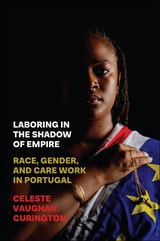
Laboring in the Shadow of Empire
Race, Gender, and Care Work in PortugalCeleste Vaughan Curington
Rutgers University Press, 2024
Winner of the ASA Race, Gender, and Class section's Distinguished Contribution to Scholarship Award
Winner of the ASA Racial and Ethnic Minorities section’s Oliver Cromwell Cox Book Award
Laboring in the Shadow of Empire: Race, Gender, and Care Work in Portugal examines the everyday lives of an African-descendant care service workforce that labors in an ostensibly “anti-racial” Europe and against the backdrop of the Portuguese colonial empire. While much of the literature on global care work has focused on Asian and Latine migrant care workers, there is comparatively less research that explicitly examines African care workers and their migration histories to Europe. Sociologist Celeste Vaughan Curington focuses on Portugal—a European setting with comparatively liberal policies around family settlement and naturalization for migrants. In this setting, rapid urbanization in the late twentieth century, along with a national push to reconcile work and family, has shaped the growth of paid home care and cleaning service industries. Many researchers focus on informal work settings, where immigrant rights are restricted and many workers are undocumented or without permanent residence status. Curington instead examines workers who have accessed citizenship or permanent residence status and also explores African women’s experiences laboring in care and service industries in the formal market, revealing how deeply colonial and intersectional logics of a racialized and international division of reproductive labor in Portugal render these women “hyper-invisible” and “hyper-visible” as “appropriate” workers in Lisbon.
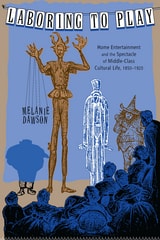
Laboring to Play
Home Entertainment and the Spectacle of Middle-Class Cultural Life, 1850-1920Melanie Dawson
University of Alabama Press, 2005
Where Leisure Became Labor and the Parlor Became a Stage for American Middle-Class Identity.
The changing styles of middle-class home entertainments, Melanie Dawson argues, point to evolving ideas of class identity in U.S. culture. Drawing from 19th- and early-20th-century fiction, guidebooks on leisure, newspaper columns, and a polemical examination of class structures, Laboring to Play interrogates the ways that leisure performances (such as parlor games, charades, home dramas, and tableaux vivants) encouraged participants to test out the boundaries that were beginning to define middle-class lifestyles.
From 19th-century parlor games involving grotesque physical contortions to early-20th-century recitations of an idealized past, leisure employments mediated between domestic and public spheres, individuals and class-based affiliations, and ideals of egalitarian social life and visible hierarchies based on privilege. Negotiating these paradigms, home entertainments provided their participants with unique ways of performing displays of individual ambitions within a world of polite social interaction.
Laboring to Play deals with subjects as wide ranging as social performances, social history (etiquette and gentility), literary history, representations of childhood, and the history of the book.
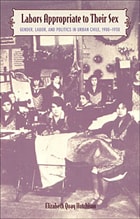
Labors Appropriate to Their Sex
Gender, Labor, and Politics in Urban Chile, 1900–1930Elizabeth Quay Hutchison
Duke University Press, 2001
In addition to population and industrial censuses, Hutchison culls published and archival sources to illuminate such misconceptions and to reveal how women’s paid labor became a locus of anxiety for a society confronting social problems—both real and imagined—that were linked to industrialization and modernization. The limited options of working women were viewed by politicians, elite women, industrialists, and labor organizers as indicative of a society in crisis, she claims, yet their struggles were also viewed as the potential springboard for reform. Labors Appropriate to Their Sex thus demonstrates how changing norms concerning gender and work were central factors in conditioning the behavior of both male and female workers, relations between capital and labor, and political change and reform in Chile.

Labour Statistics for a Market Economy
Challenges and Solutions in the Transition Countries of Central and Eastern Europe and the Former Soviet UnionIgor Chernyshev
Central European University Press, 1995
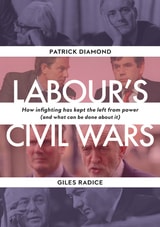
Labour's Civil Wars
How Infighting has Kept the Left from Power (and What Can Be Done About It)Patrick Diamond and Giles Radice
Haus Publishing, 2023
The biblical adage that “if a house be divided against itself, that house cannot stand” remains sound theological advice. It is also essential counsel for any political party that aspires to win elections. When a party is riven with division, the public does not know what it stands for. Though both major UK parties have been subject to internal conflict over the years, the Labour Party has been more prone to damaging splits. The divide exposed by the Corbyn insurgency is only the most recent example in almost a century of destructive infighting. Indeed, it has often seemed as though Labour has been more adept at fighting itself than in defeating the Tory party. This book examines the history of Labour’s civil wars and the underlying causes of the party’s schisms, from the first split of 1931, engineered by Ramsay MacDonald, to the ongoing battle for the future between the incumbent, Keir Starmer, and those who fundamentally altered the party’s course under his predecessor, Jeremy Corbyn.
Labyrinths
Explorations in the Critical History of IdeasRichard Wolin
University of Massachusetts Press, 1995
This book offers a series of probing reflections on issues at the heart of recent debates in philosophy, literary theory, and intellectual history. In ten powerfully articulated essays, Richard Wolin calls into question the implied radicalism of the so-called postmodern turn, exposes the unstated agenda of neoconservative cultural theory, and provides a major reinterpretation of Walter Benjamin’s place in contemporary cultural studies.
At the center of the book lie the peculiar and troubling affinities between two groups of cultural critics usually seen as antithetical: the radical conservative thinkers of Germany’s Weimar Republic and the French poststructuralists who came to the prominence in the aftermath of the May 1968 uprising.
Wolin concludes the volume with a cogent reappraisal of “antihumanism” as a leitmotif of postwar French intellectual culture, along with a reassessment of the “de Man affair” and its implications for the poststructuralist interpretation of fascism.
Lacan in Public
Psychoanalysis and the Science of RhetoricChristian Lundberg
University of Alabama Press, 2012
Lacan in Public argues that Lacan’s contributions to the theory of rhetoric are substantial and revolutionary and that rhetoric is, in fact, the central concern of Lacan’s entire body of work.
Lacan’s conception of rhetoric, Christian Lundberg argues in Lacan in Public, upsets and extends the received wisdom of American rhetorical studies—that rhetoric is a science, rather than an art; that rhetoric is predicated not on the reciprocal exchange of meanings, but rather on the impossibility of such an exchange; and that rhetoric never achieves a correspondence with the real-world circumstances it attempts to describe.
As Lundberg shows, Lacan’s work speaks directly to conversations at the center of current rhetorical scholarship, including debates regarding the nature of the public and public discourses, the materiality of rhetoric and agency, and the contours of a theory of persuasion.

Ladie Borlase's Receiptes Booke
David E. Schoonover
University of Iowa Press, 1998
Ladies Errant
Wayward Women and Social Order in Early Modern ItalyDeanna Shemek
Duke University Press, 1998
Seeing errancy as an act of resistance rather than of error, Shemek carries her study beyond the didactic and prescriptive literature on femininity in early modern Italy to an arena in which theories about femininity are considered jointly with real and fictional instances of women’s waywardness. As prostitutes, warriors, lovers, and poets, the women of Shemek’s study are found in canonical texts, marginal works, and popular artistic activity, appearing, for instance, in literature, paintings, legal proceedings, and accounts of public festivals. By juxtaposing these varied places of errancy—from Ariosto’s chivalric Orlando furioso to the prostitutes’ race in the Palio di San Giorgio—Shemek points to the important contact between elite and popular cultures in early modernity, revealing the strength and flexibility of a gender boundary fundamental to early modern conceptions of social order.
Ladies of the Canyons
A League of Extraordinary Women and Their Adventures in the American SouthwestLesley Poling-Kempes
University of Arizona Press, 2015
Educated, restless, and inquisitive, Natalie Curtis, Carol Stanley, Alice Klauber, and Mary Cabot Wheelwright were plucky, intrepid women whose lives were transformed in the first decades of the twentieth century by the people and the landscape of the American Southwest. Part of an influential circle of women that included Louisa Wade Wetherill, Alice Corbin Henderson, Mabel Dodge Luhan, Mary Austin, and Willa Cather, these ladies imagined and created a new home territory, a new society, and a new identity for themselves and for the women who would follow them.
Their adventures were shared with the likes of Theodore Roosevelt and Robert Henri, Edgar Hewett and Charles Lummis, Chief Tawakwaptiwa of the Hopi, and Hostiin Klah of the Navajo. Their journeys took them to Monument Valley and Rainbow Bridge, into Canyon de Chelly, and across the high mesas of the Hopi, down through the Grand Canyon, and over the red desert of the Four Corners, to the pueblos along the Rio Grande and the villages in the mountains between Santa Fe and Taos.
Although their stories converge in the outback of the American Southwest, the saga of Ladies of the Canyons is also the tale of Boston’s Brahmins, the Greenwich Village avant-garde, the birth of American modern art, and Santa Fe’s art and literary colony.
Ladies of the Canyons is the story of New Women stepping boldly into the New World of inconspicuous success, ambitious failure, and the personal challenges experienced by women and men during the emergence of the Modern Age.

Ladies of the Lights
Michigan Women in the U.S. Lighthouse ServicePatricia Majher
University of Michigan Press, 2010
"A great read about some great ladies, Pat Majher's Ladies of the Lights pays long overdue homage to an overlooked part of Great Lakes maritime history in which a select group of stalwart women beat the odds to succeed in a field historically reserved for men."
---Terry Pepper, Executive Director of Great Lakes Lighthouse Keeper's Association
Michigan once led the country in the number of lighthouses, and they're still a central part of the mystique and colorful countryside of the state. What even the region's lighthouse enthusiasts might not know is the rich history of female lighthouse keepers in the area.
Fifty women served the sailing communities on Lakes Huron, Michigan, and Superior, as well as on the Detroit River, for more than 100 years. From Catherine Shook, who raised eight children while maintaining the Pointe Aux Barques light at the entrance to Saginaw Bay; to Eliza Truckey, who assumed responsibility for the lighthouse in Marquette while her husband fought for four years in the Civil War; to Elizabeth Whitney, whose combined service on Beaver Island and in Harbor Springs totaled forty-one years---the stories of Michigan's "ladies of the light" are inspiring.
This is no technical tome documenting the minutiae of Michigan's lighthouse specifications. Rather, it's a detailed, human portrait of the women who kept those lighthouses running, defying the gender expectations of their time.
Patricia Majher is Editor of Michigan History magazine, published by the Historical Society of Michigan. Prior, she was Assistant Director of the Michigan Women's Historical Center and Hall of Fame in Lansing, Michigan. In addition, she has been writing both advertising and editorial copy for almost thirty years and has been a frequent contributor to Michigan newspapers and magazines.
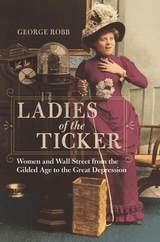
Ladies of the Ticker
Women and Wall Street from the Gilded Age to the Great DepressionGeorge Robb
University of Illinois Press, 2017
George Robb’s pioneering study explores the financial methods, accomplishments, and careers of three generations of women. Plumbing sources from stock brokers’ ledgers to media coverage, Robb reveals the many ways women invested their capital while exploring their differing sources of information, approaches to finance, interactions with markets, and levels of expertise. He also rediscovers the forgotten women bankers, brokers, and speculators who blazed new trails--and sparked public outcries over women’s unsuitability for the predatory rough-and-tumble of market capitalism.
Entertaining and vivid with details, Ladies of the Ticker sheds light on the trailblazers who transformed Wall Street into a place for women’s work.
Ladies' Pages
African American Women's Magazines and the Culture That Made ThemRooks, Noliwe M
Rutgers University Press, 2004
Beginning in the late nineteenth century, mainstream magazines established ideal images of white female culture, while comparable African American periodicals were cast among the shadows. Noliwe M. Rooks’s Ladies’ Pages sheds light on the most influential African American women’s magazines––Ringwood’s Afro-American Journal of Fashion, Half-Century Magazine for the Colored Homemaker, Tan Confessions, Essence, and O, the Oprah Magazine––and their little-known success in shaping the lives of black women.
Ladies’ Pages demonstrates how these rare and thought-provoking publications contributed to the development of African American culture and the ways in which they in turn reflect important historical changes in black communities. What African American women wore, bought, consumed, read, cooked, and did at home with their families were all fair game, and each of the magazines offered copious amounts of advice about what such choices could and did mean. At the same time, these periodicals helped African American women to find work and to develop a strong communications network. Rooks reveals in detail how these publications contributed to the concepts of black sexual identity, rape, migration, urbanization, fashion, domesticity, consumerism, and education. Her book is essential reading for everyone interested in the history and culture of African Americans.

Lady Daredevils
American Women and Early AviationBarbara Ganson
University of Illinois Press, 2026
Women aviators challenged social norms that considered them inept with machinery and incapable of handling early flight’s very real dangers. Ganson follows how the New Woman ethos of freedom of movement and career inspired engagement with aviation. Despite resistance, women pushed limits by setting records for speed, altitude, distance, and endurance. The fashions of airwomen, meanwhile, reflected changing attitudes of women toward traditional roles and the pursuit of their career aspirations.
Informed by interviews and rare archival information, Lady Daredevils tells the stories of the pioneering women of early aviation history and reveals their dynamic interactions with social and technological change.

Lady Dicks and Lesbian Brothers
Staging the Unimaginable at the WOW Café TheatreKate Davy
University of Michigan Press, 2010
"A rich and detailed picture of a particular historical moment that has now passed . . . I found myself immersed in the world of the East Village theatre scene and its connections to the larger world of feminism, theatre, and politics. Davy's long-standing association with this world pays off handsomely---it is impossible to imagine that anyone could write a more informative portrait."
---Charlotte Canning, University of Texas at Austin
"After hosting two annual international women's performance festivals in 1980 and '81, Peggy Shaw, Lois Weaver, and comrades put on such extravaganzas as the Freudian Slip party and the Debutante Ball (a coming-out party if ever there was one) to raise the first several months' rent for a narrow vestibule on East 11th Street, where they could keep the creativity going year-round. There, on a stage no bigger than a queen-sized mattress, . . . artists honed their craft, giving birth to a celebratory feminist-and-tinsel-tinged queer aesthetic. By the mid '80s . . . the rent quadrupled, and WOW moved to a city-owned building on East 4th Street, where it has flourished ever since, presenting hundreds---if not thousands---of plays, solo shows, concerts, dance pieces, cabarets, and sundry performances that defy classification."
---Alisa Solomon, Village Voice
Out of a small, hand-to-mouth, women's theater collective called the WOW Café located on the lower east side of Manhattan, there emerged some of the most important theater troupes and performance artists of the 1980s and 1990s, including the Split Britches Company, the Five Lesbian Brothers, Carmelita Tropicana, Holly Hughes, Lisa Kron, Deb Margolin, Reno, Peggy Shaw, and Lois Weaver. The WOW (Women's One World) Café Theatre appeared on the cultural scene at a critical turning point in both the women's movement and feminist theory, putting a witty, hilarious, gender-bending and erotically charged aesthetic on the stage for women in general and lesbians in particular.
The storefront that became the WOW Café Theatre saw dozens of excitingly original and enormously funny performances created, performed, and turned over at lightning speed---a kind of "hit and run" theater. As the demands on the space increased, the women behind WOW organized as a collective and moved their theater to an abandoned doll factory where it continues to operate today. For three decades the WOW Café has nurtured fledgling women writers, designers, and performers who continue to create important performance work.
Lady Dicks and Lesbian Brothers provides a critical history of this avant-garde venture whose ongoing "system of anarchy" has been largely responsible for its thirty-year staying power, after dozens of other women's theaters have collapsed. WOW artists were creating a wholly original cultural landscape across which women could represent themselves on their own terms. Parody, cross-dressing, zany comedy, and an unbridled eroticism are hallmarks of WOW's aesthetic, combined---importantly and powerfully---with a presumptive address to the audience as if everyone onstage, in the audience, and in the world is lesbian. Author Kate Davy's extensive research included in-depth interviews with WOW veterans; newspaper reviews of the earliest productions; and rare, unpublished photographs. The book also includes a chronology of productions that have highlighted WOW's performance schedule since the early '80s.
Kate Davy is currently Provost and Vice Chancellor for Academic Affairs at the University of Michigan-Dearborn. Her previous books include Richard Foreman: Plays and Manifestos and Richard Foreman and the Ontological-Hysteric Theatre.
Lady Lushes
Gender, Alcoholism, and Medicine in Modern AmericaMcClellan, Michelle L
Rutgers University Press, 2017
In Lady Lushes, medical historian Michelle L. McClellan traces the story of the female alcoholic from the late-nineteenth through the twentieth century. She draws on a range of sources to demonstrate the persistence of the belief that alcohol use is antithetical to an idealized feminine role, particularly one that glorifies motherhood. Lady Lushes offers a fresh perspective on the importance of gender role ideology in the formation of medical knowledge and authority.
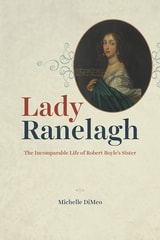
Lady Ranelagh
The Incomparable Life of Robert Boyle's SisterMichelle DiMeo
University of Chicago Press, 2021
Philosophers, mathematicians, politicians, and religious authorities sought her opinion on everything from decimalizing the currency to producing Hebrew grammars. She practiced medicine alongside distinguished male physicians, treating some of the most elite patients in London. Her medical recipes, political commentaries, and testimony concerning the philosophers’ stone gained international circulation. She was an important influence on Boyle and a formidable thinker in her own right.
Drawing from a wealth of new archival sources, Michelle DiMeo fills out Lady Ranelagh’s legacy in the context of a historically sensitive and nuanced interpretation of gender, science, and religion. The book re-creates the intellectual life of one of the most respected and influential women in seventeenth-century Europe, revealing how she managed to gain the admiration of diverse contemporaries, effect social change, and shape contemporary science.

Lafayette and the Liberal Ideal 1814-1824
Politics and Conspiracy in an Age of ReactionSylvia Neely
Southern Illinois University Press, 1991
Sylvia Neely provides both the first scholarly study of Lafayette’s life after the French Revolution and a detailed analysis of French politics during the early Restoration.
Lafayette, advocating a liberalism based on the American example, used both legal and illegal means to overturn a conservative government. The personification of liberalism for many of his contemporaries, he and his friends Benjamin Constant, Voyer d’Argenson, and Charles Goyet saw themselves as fighters in an international struggle that set liberalism against the forces of reaction and obscurantism. Although he ultimately failed, Lafayette was convinced that the liberal ideals derived from the Enlightenment and from his personal mentor, George Washington, would prevail.
Neely makes Lafayette’s actions clear by considering seriously the principles that guided his life and by describing the political climate of the early nineteenth century. She discloses previously overlooked features of the revolutions of the 1820s which account for the divisions among the revolutionary groups. She also examines relationships between Lafayette and the prominent writers and thinkers of the period, among them Augustin Thierry, Jeremy Bentham, Lady Morgan, and Frances Wright.
Lahore in Motion
Infrastructure, History and Belonging in Urban PakistanEdited by Ammara Maqsood, Chris Moffat, and Fizzah Sajjad
University College London, 2025
Follow Lahore’s Orange Line metro corridor to discover the tensions between development and displacement, progress and preservation, in one of the world’s great metropolises.
Lahore is a city in constant flux, and the frictions that characterize urban life are vividly apparent along the tracks of its first metro rail corridor, opened in 2020. Lahore in Motion follows the Orange Line’s 27-kilometer path, bringing together reflections from academics, activists, artists, and architects on the ways that infrastructure shapes urban belonging. The book offers a novel methodology for assessing how this mega-project has reconfigured neighborhoods, sparked new desires for modernity, and deepened existing social differences while destabilizing others.
Each chapter unfolds through the lens of a particular metro stop, providing intimate glimpses into the frictions generated by development where connectivity and fragmentation, aspiration and dispossession collide. Engaging with broader debates on urban transformation in the Global South, Lahore in Motion goes against familiar narratives of top-down development, revealing a city animated by resistance and reinventing itself in response. An eye-opening, beautifully written work for all interested in urbanism, infrastructure, politics, and the intimate rhythms of everyday life in one of the world’s most dynamic cities.
Lakanal the Regicide
John Charles Dawson
University of Alabama Press, 1948
Revolution, Republic, and Reform: The Life of a French Enlightenment Statesman in an Age of Upheaval.
After being comparatively neglected for several generations, Joseph Lakanal received many posthumous honors. These memorials of esteem were the tribute of the men of the Third French Republic to an outstanding character of the First Republic, established by the National Convention in 1792.
In numerous towns and cities of France streets and boulevards were named for Lakanal, among them Paris, Tours, Toulouse, and Montpellier. Elementary schools received his name at Perigueux, Cette, Beziers. Secondary schools were named in his honor, such as the Lycee Lakanal at Paris and the College Lakanal at Beziers. At least two monuments were erected to his memory, the more imposing of which was a life-sized statue in bronze at Foix in his native Ariege. The ancient adage that a prophet is not without honor save in his own country was not true of Lakanal.
Lakanal belonged to a group of thinkers at the end of the eighteenth century known as Ideologists, a derogatory term applied to them by First Consul Bonaparte. When, during the period of the Consulate, Bonaparte had signed a Concordat with the Pope whereby Catholicism was restored to France, and when in 1802 he had sought to put into force the terms of the Concordat, he found a stumbling-block to his plans in the membership of the Class of Moral and Political Sciences of the lnstitut de France. In this group were to be found the most influential free-thinkers of the day: Lakanal, Garat, Cabanis, Volney, Ginguene, Mercier, Naigeon, Destutt de Tracy and others who had been consistently hostile to the Church, and who had become hostile to the ambition of Bonaparte.
On the political side, Lakanal was an austere democrat, and remained one all his life. Had he been willing to compromise, he would undoubtedly have gone far under Napoleon. His career is quite in contrast with that of Talleyrand, whose chameleon-like qualities enabled him to occupy high place in the Revolution, the Consulate, the Empire, the Restoration, and the more liberal government of Louis Philippe.
In his profound belief in democracy and public education, and in the wide variety of his knowledge and interest in the various sciences, Lakanal is to be compared with Thomas Jefferson. The two men were of the same school of thought and possessed much in, common. In his passion for public education Lakanal may also be compared to Horace Mann.
Lake Effect
Along Superior’s ShoresErika Alin
University of Minnesota Press, 2003
Personal reflections on the natural splendors and human history of the Lake Superior shoreline
The 2,900-mile shoreline of Lake Superior offers some of the most beautiful scenery in the world: stunning juxtapositions of shape, color, and texture, from the birch and evergreen forests of Minnesota’s north shore and the maple-clad slopes of Wisconsin to Ontario’s granite outcrops and Michigan's sandstone shelves. Inhabited by hundreds of species of mammals, birds, and insects, the diverse ecosystems around Superior have also experienced human habitation for millennia.
In Lake Effect, writer Erika Alin explores both the natural and the human landscapes of Lake Superior, meditating on the rich geological, historical, and cultural events that have shaped the region. She begins her journey around Superior at the St. Louis River near Duluth and continues along the shores of the lake to Temperance River State Park, Grand Marais’s Artist’s Point, and Lake Superior Provincial Park. Following the Michigan and Wisconsin coasts, Alin visits the Keweenaw Peninsula, the Porcupine Mountains, and Chequamegon Bay before concluding at the south shore’s Brule River. Inspired by these and other places on the lake, Alin’s engaging essays delve into such diverse topics as the origins of river names, early Native American settlement, the exploits of seventeenth-century French-Canadian voyageurs, the breeding habits of ring-billed gulls, the contributions of women botanists, Canada’s Group of Seven painters, and aboriginal rock art. A holistic and deeply personal reflection on Superior’s shoreline, Lake Effect reveals a profound sensitivity to the natural world and a penetrating historical imagination.
Lake Mead National Recreation Area
A History of America’s First National PlaygroundJonathan Foster
University of Nevada Press, 2016
First named the Boulder Dam Recreation Area, this parkland was created in 1936 by a memorandum of agreement between the National Park Service and the U.S. Bureau of Reclamation. Over the course of its existence, the area has served as a model for a subsequent system of National Recreation Areas. The area’s extreme popularity has, in combination with changing public attitudes regarding preservation and safety, presented the National Park Service with tremendous challenges in recent decades. Jonathan Foster’s examination of these challenges and the responses to them reveal an increasingly anxious relationship between the government, the public, and special interest groups in the American West.
Lake Methodism
Jasper Cragwall
The Ohio State University Press, 2013
Lake Superior
Grace Lee Nute
University of Minnesota Press, 2000
The captivating history of the world’s largest freshwater lake.
This classic history of Lake Superior, from the earliest explorations to the explosion of industry on its shores, takes the reader on a tour from Duluth to Isle Royale, from Thunder Bay to Sault Ste. Marie, from Pictured Rocks to the Apostle Islands. Grace Lee Nute tells the fascinating stories of the Native Americans, voyageurs, missionaries, and others who created the way of life that many generations have known on the edge of this magnificent body of water.
Lake Superior Copper and the Indians
Miscellaneous Studies of Great Lakes PrehistoryEdited by James B. Griffin
University of Michigan Press, 1951
Lake|Flato Houses
Embracing the LandscapeLake|Flato Architects
University of Texas Press, 2014
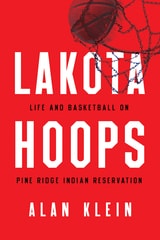
Lakota Hoops
Life and Basketball on Pine Ridge Indian ReservationAlan Klein
Rutgers University Press, 2020
In Lakota Hoops, anthropologist Alan Klein trains his experienced eye on the ways that Lakota traditions find a seamless expression in the sport. In a variety of way such as weaving time-honored religious practices into the game or extending the warrior spirit of Crazy Horse to the players on the court, basketball has become a preferred way of finding continuity with the past. But the game is also well suited to the present and has become the largest regular gathering for all Lakota, promoting national pride as well as a venue for the community to creatively and aggressively confront white bigotry when needed.
Richly researched and filled with interviews with Pine Ridge residents, including both male and female players, Lakota Hoops offers a compelling look at the highs and lows of a community that has made basketball its own.
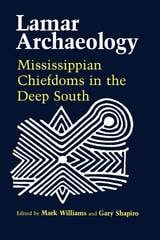
Lamar Archaeology
Mississippian Chiefdoms in the Deep SouthEdited by Mark Williams and Gary Shapiro
University of Alabama Press, 1990
A Dan Josselyn Memorial Publication
Lamar Archaeology provides a comprehensive and detailed review of our knowledge of the late prehistoric Indian societies in the Southern Appalachian area and its peripheries. These Lamar societies were chiefdom-level groups who built most of the mounds in this large region and were ancestors of later tribes, including the Creeks and Cherokees. This book begins with a history of the last 50 years of archaeological and historical research and brings together for the first time all the available data on this early culture. It also provides an invaluable model for books about Southeastern Indian societies by combining purely descriptive information with innovative analyses, advancing our knowledge of the past while remaining firmly grounded in the archaeological evidence as fact.
Contributors include:
Frankie Snow, Chad O. Braley, James B. Langford Jr., Marvin T. Smith, Daniel T. Elliott, Richard R. Polhemus, C. Roger Nance, Gary Shapiro, Mark Williams, John F. Scarry, David G. Anderson, andCharles M. Hudson
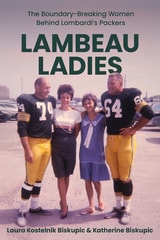
Lambeau Ladies
The Boundary-Breaking Women Behind Lombardi’s PackersLaura Kostelnik Biskupic
Wisconsin Historical Society Press, 2026
A book for anyone who thinks they know everything there is to know about the Green Bay Packers!
Long before NFL players had teams of trainers, nutritionists, therapists, agents, and other specialists, the dynastic Green Bay Packers of the 1960s relied on a different kind of support staff: their wives. In Lambeau Ladies, mother and daughter Laura Kostelnik Biskupic and Katherine Biskupic tell the remarkable, largely untold story of the women who helped to keep the Lombardi-era Packers performing at a championship level. From preparing game-day sandwiches, nursing injuries, and reviewing game film to managing households, hosting social gatherings, and providing emotional strength to their spouses, these women were a driving force behind one of the greatest teams in football history.
Through intimate interviews and vivid storytelling, the authors bring to life the experiences of Cherry Starr, Vicky Aldridge, Barbara Gregg, Ruth Pitts, Peggy Kostelnik, and many other wives who formed deep friendships and carved out lives of meaning far from their hometowns, often in the face of social and racial barriers. With humor and candor, they describe making ends meet on modest salaries, feeding hungry young players who wandered into their kitchens, boosting their husbands’ confidence, and coming up with ingenious strategies for staying warm—and stylish—on the sidelines during Green Bay’s frigid winters.
Their stories reach far beyond football. Some of these women helped integrate Green Bay during the civil rights movement. One became one of the district’s first Black teachers; another was half of one of the NFL’s first interracial marriages. Others made contributions in their own singular ways—fostering children, launching a business and a community organization, becoming a voice in local media. And at the center of it all was Marie Lombardi, the coach’s wife and the de facto mentor of the entire wives’ cohort, whose influence extended from locker-room culture to community life.
Lambeau Ladies paints a rich portrait of midcentury Green Bay—a place where championship football, small-town rhythms, and national social change converged—and reveals how the Packers’ dynasty was shaped as much in living rooms, kitchens, and carpool lanes as on the frozen turf of Lambeau Field.
Warm, funny, and deeply inspiring, Lambeau Ladies celebrates the extraordinary women who helped build a dynasty—and, in the process, changed their town, their team, and each other.
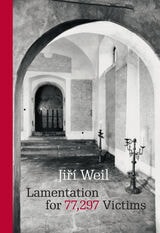
Lamentation for 77,297 Victims
Jirí Weil
Karolinum Press, 2020
So begins Jiří Weil’s unforgettable prose poem, Lamentation for 77, 297 Victims, his literary monument to the Czech Jews killed during the Holocaust. A Czech-Jewish writer who worked at Prague’s Jewish Museum both during and after the Nazi Occupation—he survived the Holocaust by faking his own death and hiding out until the war had ended—Weil wrote Lamentation while he served as the museum’s senior librarian in the 1950s. This remarkable literary experiment presents a number of innovative approaches to writing about a horror many would deem indescribable, combining a narrative account of the Shoah with newspaper-style reportage on a handful of the lives ended by the Holocaust and quotes from the Hebrew Bible to create a specific and powerful portrait of loss and remembrance. Translated by David Lightfoot, Lamentation for 77,297 Victims is a startling and singular introduction to a writer whose works have been acclaimed by Philip Roth, Michiko Kakutani, and Siri Hustvedt.
Lancaster, Ohio, 1800–2000
FRONTIER TOWN TO EDGE CITYDavid R. Contosta
The Ohio State University Press, 2000
In explaining why Lancaster has remained a small but relatively successful community for some twenty decades, Contosta looks at various factors, including location, natural resources, technology, transportation systems, local leaders, historic preservation, awareness of local history, and national as well as international events.
As the twenty-first century begins, the widespread use of the automobile, advances in technology, and Lancaster’s proximity to the state capital, Columbus, are transforming the community into something new—part town, part city, and part suburb—a phenomenon that is emerging in hundreds of older communities throughout the United States. Contosta’s history of the development of one small town, and the over one hundred illustrations enhancing the text, offer a microcosm of the profound changes in American life over two centuries.
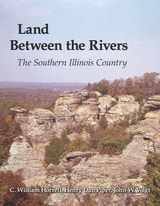
Land Between the Rivers
The Southern Illinois CountryC. William Horrell, Henry Dan Piper, John W. Voigt
Southern Illinois University Press, 1973
Surveying the area in words and pictures, the authors sensitively and appreciatively portray the region’s special qualities. Land Between the Rivers, a perennial classic since it was first published in 1973, provides an uncommon portrayal of American life in a distinct region, a memorable journey in both time and place.
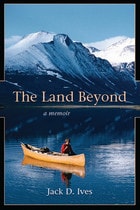
Land Beyond
A MemoirJack Ives
University of Alaska Press, 2010
Geographer Jack Ives moved to Canada in 1954, and soon after he played an instrumental role in the establishment of the McGill Sub-Arctic Research Laboratory in central Labrador-Ungava. This fascinating account of his fifty-plus years living and working in the arctic is simultaneously a light-hearted, winning memoir and a call to action on the issues of environmental awareness and conservation that are inextricably intertwined with life in the north. Mixing personal impressions of key figures of the postwar scientific boom with the intellectual drama of field research, The Land Beyond is a memorable depiction of a life in science.
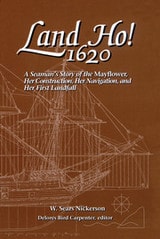
Land Ho! 1620
A Seaman's Story of the Mayflower, Her Construction, Her Navigation, and Her First LandfallW. Sears Nickerson
Michigan State University Press, 1997
With an original 1931 press run of only seven hundred and fifty, surviving copies of Land Ho! 1620 are now either in archives or exist as valued collector's editions. Acclaimed by the Cape Cod Pilgrim Memorial Association in 1957 as "the most authentic, interesting, and best written book on the voyage of the Pilgrims and their lives," Nickerson's work is now available in this handsome paperback edition, complete with all original illustrations and maps. Nickerson scholar Delores Bird Carpenter updated all one hundred and seventy- nine annotations, checking them against original sources. In addition, she has prepared a new bibliography and an extensive, new introduction that places Land Ho! 1620 into its historical and historiographical context.
Divided into four parts, the first describes "the Voyage"; the second, told with the skill of a shipbuilder, describes "the Ship," which includes drawings of the deck plan, the passenger quarters, and the elevation and the sail plan. Also included in this section are discussions of the ship's speed, instruments, and personnel. The Third, "the backside of Cape Cod," addresses the problem of where the Mayflower first saw land, and its subsequent course. Nickerson concludes with "the Landfall and the Landing." Of great significance is his map, The Back Side of Cape Cod Today—1930 and Yesterday—1620.
Land Hunger
Ohio and the Western FrontiersMansel G. Blackford
Ohio University Press, 2025
Land Made from Water
Appropriation and the Evolution of Colorado's Landscape, Ditches, and Water InstitutionsRobert R. Crifasi
University Press of Colorado, 2016
A Land Made from Water chronicles how the appropriation and development of water and riparian resources in Colorado changed the face of the Front Range—an area that was once a desert and is now an irrigated oasis suitable for the habitation and support of millions of people. This comprehensive history of human intervention in the Boulder Creek and Lefthand Creek valleys explores the complex interactions between environmental and historical factors to show how thoroughly the environment along the Front Range is a product of human influence.
Author Robert Crifasi examines the events that took place in nineteenth-century Boulder County, Colorado, and set the stage for much of the water development that occurred throughout Colorado and the American West over the following century. Settlers planned and constructed ditches, irrigation systems, and reservoirs; initiated the seminal court decisions establishing the appropriation doctrine; and instigated war to wrest control of the region from the local Native American population. Additionally, Crifasi places these river valleys in the context of a continent-wide historical perspective.
By examining the complex interaction of people and the environment over time, A Land Made from Water links contemporary issues facing Front Range water users to the historical evolution of the current water management system and demonstrates the critical role people have played in creating ecosystems that are often presented to the public as “natural” or “native.” It will appeal to students, scholars, professionals, and general readers interested in water history, water management, water law, environmental management, political ecology, or local natural history.
Land Uprising
Native Story Power and the Insurgent Horizons of Latinx IndigeneitySimón Ventura Trujillo
University of Arizona Press, 2020
Trujillo situates his inquiry in the cultural production of La Alianza Federal de Mercedes, a formative yet understudied organization of the Chicanx movement of the 1960s and 1970s. La Alianza sought to recover Mexican and Spanish land grants in New Mexico that had been dispossessed after the Mexican-American War. During graduate school, Trujillo realized that his grandparents were activists in La Alianza. Written in response to this discovery, Land Uprising bridges La Alianza’s insurgency and New Mexican land grant struggles to the writings of Leslie Marmon Silko, Ana Castillo, Simon Ortiz, and the Zapatista Uprising in Chiapas, Mexico. In doing so, the book reveals uncanny connections between Chicanx, Latinx, Latin American, and Native American and Indigenous studies to grapple with Native land reclamation as the future horizon for Chicanx and Latinx indigeneities.

Land Utilization in Minnesota
A State Program for the Cut-Over LandsCommittee Committee on Land Utilization
University of Minnesota Press, 1934
Land and Desire in Early Zionism
Boaz Neumann
Brandeis University Press, 2011
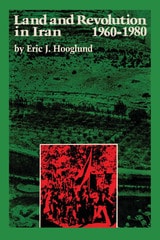
Land and Revolution in Iran, 1960–1980
By Eric J. Hooglund
University of Texas Press, 1982
Carried out by the government of the shah between 1962 and 1971, the Iranian land reform was one of the most ambitious such undertakings in modern Middle Eastern history. Yet, beneath apparent statistical success, the actual accomplishments of the program, in terms of positive benefits for the peasantry, were negligible. Later, the resulting widespread discontent of thousands of Iranian villagers would contribute to the shah's downfall.
In the first major study of the effects of this widely publicized program, Eric Hooglund's analysis demonstrates that the primary motives behind the land reform were political. Attempting to supplant the near-absolute authority of the landlord class over the countryside, the central government hoped to extend its own authority throughout rural Iran. While the Pahlavi government accomplished this goal, its failure to implement effective structural reform proved to be a long-term liability.
Hooglund, who conducted field research in rural Iran throughout the 1970s and who witnessed the unfolding of the revolution from a small village, provides a careful description of the development of the land reform and of its effects on the main groups involved: landlords, peasants, local officials, merchants, and brokers. He shows how the continuing poverty in the countryside forced the migration of thousands of peasants to the cities, resulting in serious shortages of agricultural workers and an oversupply of unskilled urban labor. When the shah's government was faced with mass opposition in the cities in 1978, not only did a disillusioned rural population fail to support the regime, but thousands of villagers participated in the protests that hastened the collapse of the monarchy.
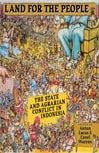
Land for the People
The State and Agrarian Conflict in IndonesiaAnton Lucas
Ohio University Press, 2013
Half of Indonesia’s massive population still lives on farms, and for these tens of millions of people the revolutionary promise of land reform remains largely unfulfilled. The Basic Agrarian Law, enacted in the wake of the Indonesian revolution, was supposed to provide access to land and equitable returns for peasant farmers. But fifty years later, the law’s objectives of social justice have not been achieved.
Land for the People provides a comprehensive look at land conflict and agrarian reform throughout Indonesia’s recent history, from the roots of land conflicts in the prerevolutionary period and the Sukarno and Suharto regimes, to the present day, in which democratization is creating new contexts for people’s claims to the land. Drawing on studies from across Indonesia’s diverse landscape, the contributors examine some of the most significant issues and events affecting land rights, including shifts in policy from the early postrevolutionary period to the New Order; the Land Administration Project that formed the core of land policy during the late New Order period; a long-running and representative dispute over a golf course in West Java that pitted numerous local farmers against the government and local elites; Suharto’s notorious “million hectare” project that resulted in loss of access to land and resources for numerous indigenous farmers in Kalimantan; and the struggle by Bandung’s urban poor to be treated equitably in the context of commercial land development. Together, these essays provide a critical resource for understanding one of Indonesia’s most pressing and most influential issues.
Contributors: Afrizal, Dianto Bachriadi, Anton Lucas, John McCarthy, John Mansford Prior, Gustaaf Reerink, Carol Warren, and Gunawan Wiradi.
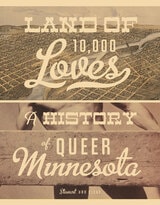
Land of 10,000 Loves
A History of Queer MinnesotaStewart Van Cleve
University of Minnesota Press, 2012
For too long, LGBTQ communities—including Minnesota’s—have been maligned, misrepresented, and often outright ignored. Myths regarding the queer experience have grown and become embedded in local and national consciousness. The absence of queer stories over time in local historical and popular writing only served to further this ignorance, but great strides have been made in recent decades to celebrate Minnesota’s vibrant queer history. Add to this rising chorus an enchanting new voice: Land of 10,000 Loves, Stewart Van Cleve’s wide-ranging and unprecedented illustrated history of queer life in Minnesota.
Drawing from the renowned Tretter Collection at the University of Minnesota—a vast collection of books, photographs, films, and other historical artifacts that Van Cleve calls “one of the most comprehensive accounts of international queer history in the world”—Land of 10,000 Loves blends oral history, archival narrative, newspaper accounts, and fascinating illustrations to paint a remarkable picture of Minnesota’s queer history. More than 120 concise historical essays lead readers from the earliest evidences of queer life in Minnesota before the Second World War—for example, Oscar Wilde’s visit to Minnesota and “rumors” at the Alexander Ramsey house—to riverfront vice districts, protest and parade sites, bars, 1970s collectives, institutions, public spaces, and private homes. More than 130 illustrations illuminate these histories with images of pride guides, archival photographs, and advertisements from local queer bars among other extraordinary pieces of ephemera and artifacts. Many of the stories and images are well known, while others have been all but forgotten, until now.
Building on foundational works of regional queer history such as The Evening Crowd at Kirmser’s and Queer Twin Cities, the historical vignettes of Land of 10,000 Loves show us that Minnesota—from its biggest cities to its smallest towns—has been, as Van Cleve notes, “queer, to a certain extent, since the very beginning.” Land of 10,000 Loves honors this rich and diverse legacy and is a compelling testament to the sacrifices, scandals, and victories that have affected and continue to affect the lives of queer Minnesotans.

Land of Big Rivers
French and Indian Illinois, 1699-1778M. J. Morgan
Southern Illinois University Press, 2010
Drawing on research from a variety of academic fields, such as archaeology, history, botany, ecology, and physical science, M. J. Morgan explores the intersection of people and the environment in early eighteenth-century Illinois Country—a stretch of fecund, alluvial river plain along the Mississippi river. Arguing against the traditional narrative that describes Illinois as an untouched wilderness until the influx of American settlers, Morgan illustrates how the story began much earlier.
She focuses her study on early French and Indian communities, and later on the British, nestled within the tripartite environment of floodplain, riverine cliffs and bluffs, and open, upland till plain/prairie and examines the impact of these diverse groups of people on the ecological landscape. By placing human lives within the natural setting of the period—the abundant streams and creeks, the prairies, plants and wildlife—she traces the environmental change that unfolded across almost a century. She describes how it was a land in motion; how the occupying peoples used, extracted, and extirpated its resources while simultaneously introducing new species; and how the flux and flow of life mirrored the movement of the rivers. Morgan emphasizes the importance of population sequences, the relationship between the aboriginals and the Europeans, the shared use of resources, and the effects of each on the habitat.
Land of Big Rivers is a unique, many-themed account of the big-picture ecological change that occurred during the early history of the Illinois Country. It is the first book to consider the environmental aspects of the Illinois Indian experience and to reconsider the role of the French and British in environmental change in the mid-Mississippi Valley. It engagingly recreates presettlement Illinois with a remarkable interdisciplinary approach and provides new details that will encourage understanding of the interaction between physical geography and the plants, animals, and people in the Illinois Country. Furthermore, it exhibits the importance of looking at the past in the context of environmental transformation, which is especially relevant in light of today’s global climate change.
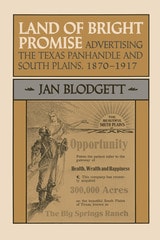
Land of Bright Promise
Advertising the Texas Panhandle and South Plains, 1870-1917By Jan Blodgett
University of Texas Press, 1988
“It shall be the chosen land, perpetual sunshine shall kiss its trees and vines, and, being storied in luscious fruits and compressed into ruddy wine, will be sent to the four points of the compass to gladden the hearts of all mankind . . . They will breathe the pure and bracing air, bask in the healing sunshine, drink the invigorating wine, and eat the life prolonging fruit.” —from a brochure advertising the Staked Plains from the Missouri Pacific Railway Company, 1889
Land of Bright Promise is a fascinating exploration of the multitude of land promotions and types of advertising that attracted more than 175,000 settlers to the Panhandle–South Plains area of Texas from the late years of the nineteenth century to the early years of the twentieth. Shunned by settlers for decades because of its popular but forbidding image as a desert filled with desperados, savage Indians, and solitary ranchers, the region was seen as an agricultural and cultural wasteland. The territory, consequently, was among the last to be settled in the United States.
But from 1890 to 1917, land companies and agents competed to attract new settlers to the plains. To this end, the combined efforts of local residents, ranchers and landowners, railroads, and professional real estate agents were utilized. Through brochures, lectures, articles, letters, fairs, and excursion trips, midwestern farmers were encouraged to find new homes on what was once feared as the “Great American Desert.” And successful indeed were these efforts: from 13,787 in 1890, the population grew to 193,371 in 1920, with a corresponding increase in the amount of farms and farm acreage.
The book looks at the imagination, enthusiasm, and determination of land promoters as they approached their task, including their special advertisements and displays to show the potential of the area. Treating the important roles of the cattlemen, the railroads, the professional land companies, and local boosters, Land of Bright Promise also focuses on the intentions and expectations of the settlers themselves. Of special interest are the fifteen historical photographs and reproductions of promotional pieces from the era used to spur the land boom. What emerges is an engaging look at a critical period in the development of the Texas Panhandle and an overview of the shift from cattle to agriculture as the primary industry in the area.
Land of Hope
Chicago, Black Southerners, and the Great MigrationJames R. Grossman
University of Chicago Press, 1989
Land of Necessity
Consumer Culture in the United States–Mexico BorderlandsAlexis McCrossen, ed.
Duke University Press, 2009
In Land of Necessity, historians and anthropologists unravel the interplay of the national and transnational and of scarcity and abundance in the region split by the 1,969-mile boundary line dividing Mexico and the United States. This richly illustrated volume, with more than 100 images including maps, photographs, and advertisements, explores the convergence of broad demographic, economic, political, cultural, and transnational developments resulting in various forms of consumer culture in the borderlands. Though its importance is uncontestable, the role of necessity in consumer culture has rarely been explored. Indeed, it has been argued that where necessity reigns, consumer culture is anemic. This volume demonstrates otherwise. In doing so, it sheds new light on the history of the U.S.-Mexico borderlands, while also opening up similar terrain for scholarly inquiry into consumer culture.
The volume opens with two chapters that detail the historical trajectories of consumer culture and the borderlands. In the subsequent chapters, contributors take up subjects including smuggling, tourist districts and resorts, purchasing power, and living standards. Others address home décor, housing, urban development, and commercial real estate, while still others consider the circulation of cinematic images, contraband, used cars, and clothing. Several contributors discuss the movement of people across borders, within cities, and in retail spaces. In the two afterwords, scholars reflect on the U.S.-Mexico borderlands as a particular site of trade in labor, land, leisure, and commodities, while also musing about consumer culture as a place of complex political and economic negotiations. Through its focus on the borderlands, this volume provides valuable insight into the historical and contemporary aspects of the big “isms” shaping modern life: capitalism, nationalism, transnationalism, globalism, and, without a doubt, consumerism.
Contributors. Josef Barton, Peter S. Cahn, Howard Campbell, Lawrence Culver, Amy S. Greenberg, Josiah McC. Heyman, Sarah Hill, Alexis McCrossen, Robert Perez, Laura Isabel Serna, Rachel St. John, Mauricio Tenorio-Trillo, Evan R. Ward
Land of Opportunity
One Family's Quest for the American Dream in the Age of CrackWilliam M. Adler
University of Michigan Press, 2021

Land of Shame and Glory
Britain 2021–22Peter Hennessy
Haus Publishing, 2023
2021 and 2022 were two of the most turbulent and disruptive years experienced by Britain in peacetime. Land of Shame and Glory: Britain 2021–22 addresses a series of unprecedented challenges that laid bare the fragility of Britain and the Union during this time. Beginning with the chaotic Fall of Kabul, which exposed Britain's military dependence on the United States, through the prolonged, unsatisfying removal of a prime minister—and the economically catastrophic, short-lived tenure of his successor—that further exposed the vulnerabilities of an unwritten constitution; to the country sweltering in record-breaking temperatures amid dire warnings of climate catastrophe; and finally, to the death of a much-loved monarch, who was a point of consistency during decades of tremendous social and technological change. Peter Hennessy considers the continuities and upheavals of the last seventy years, asking whether there can be said to have been a second Elizabethan Age and lamenting that the post-war period came to its close amid such upheaval and loss.
Land of Smoke and Mirrors
A Cultural History of Los AngelesBrook, Vincent
Rutgers University Press, 2013
Unlike the more forthrightly mythic origins of other urban centers—think Rome via Romulus and Remus or Mexico City via the god Huitzilopochtli—Los Angeles emerged from a smoke-and-mirrors process that is simultaneously literal and figurative, real and imagined, material and metaphorical, physical and textual. Through penetrating analysis and personal engagement, Vincent Brook uncovers the many portraits of this ever-enticing, ever-ambivalent, and increasingly multicultural megalopolis. Divided into sections that probe Los Angeles’s checkered history and reflect on Hollywood’s own self-reflections, the book shows how the city, despite considerable remaining challenges, is finally blowing away some of the smoke of its not always proud past and rhetorically adjusting its rear-view mirrors.
Part I is a review of the city’s history through the early 1900s, focusing on the seminal 1884 novel Ramona and its immediate effect, but also exploring its ongoing impact through interviews with present-day Tongva Indians, attendance at the 88th annual Ramona pageant, and analysis of its feature film adaptations.
Brook deals with Hollywood as geographical site, film production center, and frame of mind in Part II. He charts the events leading up to Hollywood’s emergence as the world’s movie capital and explores subsequent developments of the film industry from its golden age through the so-called New Hollywood, citing such self-reflexive films as Sunset Blvd.,Singin’ in the Rain, and The Truman Show.
Part III considers LA noir, a subset of film noir that emerged alongside the classical noir cycle in the 1940s and 1950s and continues today. The city’s status as a privileged noir site is analyzed in relation to its history and through discussions of such key LA noir novels and films as Double Indemnity, Chinatown, and Crash.
In Part IV, Brook examines multicultural Los Angeles. Using media texts as signposts, he maps the history and contemporary situation of the city’s major ethno-racial and other minority groups, looking at such films as Mi Familia (Latinos), Boyz N the Hood (African Americans), Charlotte Sometimes (Asians), Falling Down (Whites), and The Kids Are All Right (LGBT).
Land of the Dacotahs
Bruce Nelson
University of Minnesota Press, 1946