Results by title
2335 books match the query 'Modern' and 70 start with l
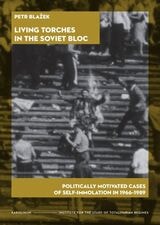
Living Torches in the Soviet Bloc
Politically Motivated Cases of Self-Immolation, 1966–1989Petr Blažek
Karolinum Press, 2025
Living Torches in the Soviet Bloc presents the lives of those who chose self-immolation as a radical form of protest against the political oppression of Communist regimes in the Soviet Bloc between 1966–1989. While more than fifty such cases were identified during the relevant period, Petr Blažek focuses here on the twenty-one cases in which at least partial political motivation is apparent from historical sources.
Many of the cases of the “living torches” were a radical response to the August 1968 occupation of Czechoslovakia by the armies of five Warsaw Pact member states and the suppression of the Prague Spring. After January 1969, the self-immolation of Jan Palach evoked a large wave of followers not only in Czechoslovakia, but also abroad, and greatly influenced other cases of “living torches” which continued to appear in the Soviet Bloc until the end of the 1980s.
Although the conditions in the Soviet Bloc states were sometimes fundamentally different, these cases of self-immolation across states share a common disapproval of the totalitarian form of rule. They were often drastic responses from members of occupied nations, most of whom were Czechs, Lithuanians, Ukrainians, and Poles, who rejected the enforced Communist regime and Soviet military presence. Some decided to sacrifice their lives to wake others from indifference and resignation. Even several decades later, their shocking acts not only provoke, but also lead us to reflect on fundamental questions of human life.
Living Translation
Gayatri Chakravorty Spivak
Seagull Books, 2022
Living Translation offers a powerful perspective on the work of distinguished thinker and writer Gayatri Chakravorty Spivak, revealing how, throughout her long career, she has made translation a central concern of the comparative humanities.
Starting with her landmark “Translator’s Preface” to Jacques Derrida’s Of Grammatology in 1976, and continuing with her foreword to Mahasweta Devi’s Draupadi and afterword to Devi’s Chotti MundaandHis Arrow, Spivak has tackled questions of translatability. She has been interested in interrogating the act of translation from the ground up and at the political limit. She sees at play at border checkpoints, at sites of colonial pedagogy, in acts of resistance to monolingual regimes of national language, at the borders of minor literature and schizo-analysis, in the deficits of cultural debt and linguistic expropriation, and, more generally, at theory’s edge, which is to say, where practical criticism yields to theorizing in untranslatables. This volume also addresses how Spivak’s institution-building as director of comparative literature at the University of Iowa—and in her subsequent places of employment—began at the same time. From this perspective, Spivak takes her place within a distinguished line-up of translator-theorists who have been particularly attuned to the processes of cognizing in languages, all of them alive to the coproductivity of thinking, translating, writing.
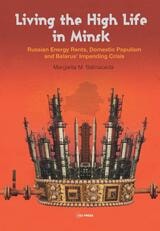
Living the High Life in Minsk
Russian Energy Rents, Domestic Populism and Belarus' Impending CrisisMargarita M. Balmaceda
Central European University Press, 2014
Living the High Life in Minsk looks at the sources of stability and instability in post-Soviet authoritarian states through the case study of President Lukashenka’s firm hold on power in Belarus. In particular, it seeks to understand the role of energy relations, policies, and discourses in the maintenance of this power. The central empirical question Balmaceda seeks to answer is what has been the role of energy policies in the maintenance of Lukashenka’s power in Belarus? In particular, it analyzes the role of energy policies in the management of Lukashenka’s relationship with three constituencies crucial to his hold on power: Russian actors, the Belarusian nomenklatura, and the Belarusian electorate.
In terms of foreign relations, the book focuses on the factors explaining Lukashenka’s ability to project Belarus’ power in its relationship with Russia in such a way as to compensate for its objective high level of dependency, assuring high levels of energy subsidies and rents continuing well beyond the initial worsening of the relationship in c. 2004. In terms of domestic relations, Balmaceda examines Lukashenka’s specific use of those energy rents in such a way as to assure the continuing support of both the Belarusian nomenklatura and the Belarusian electorate.
Logic and Pragmatism
Selected Essays by Giovanni VailatiClaudia Arrighi, Paola Cantu, Mauro de Zan, and Patrick Suppes
CSLI, 2009
Logic and Pragmatism features a number of the key writings of Giovanni Vailati (1863–1909), the Italian mathematician and philosopher renowned for his work in mechanics, geometry, logic, and epistemology. The selections in this book—many of which are available here for the first time in English—focus on Vailati’s significant contributions to the field of pragmatism. Accompanying these pieces are introductory essays by the volume’s editors that outline the traits of Vailati’s pragmatism and provide insights into the scholar’s life.

Logic and Sin in the Writings of Ludwig Wittgenstein
Philip R. Shields
University of Chicago Press, 1992
"Shields argues that the appearance throughout Wittgenstein's writings of such concepts as ritual, limit, transgression, a change of will, pride, temptation, and judgment implies a relation between religion and the logical aspects of Wittgenstein's philosophy."—Choice
"Of the many recent books about Wittgenstein, Logic and Sin is one of the very few that are well worth having"—Fergus Kerr, Modern Theology
"What Shields has uncovered in Wittgenstein's religious sensibility is something genuine and profound. . . . Shields has not just written an important book on Wittgenstein but an enlightening work that invites further reflection."—Eric O. Springsted, Cross Currents
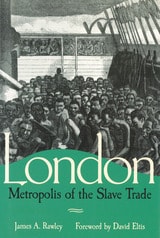
London, Metropolis of the Slave Trade
James A. Rawley & Foreword by David Eltis
University of Missouri Press, 2003
"The recognition that ordinary people could and did trade in slaves, as well as the fact that ordinary people became slaves, is, indeed, the beginning of comprehending the enormity of the forced migration of eleven million people and the attendant deaths of many more."
Rawley draws on material from the year 1700 to the American Civil War as he explores the role of London in the trade. He covers its activity as a port of departure for ships bound for Africa; its continuing large volume after the trade extended to Bristol and Liverpool; and the controversy between London’s parliamentary representatives, who defended the trade, and the abolitionist movement that was quartered there.
Sweeping in scope and thorough in its analysis, this collection of essays from a seasoned scholar will be welcomed by historians concerned with slavery and the slave trade, as well as by students just beginning their exploration of this subject.
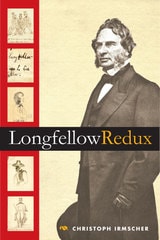
Longfellow Redux
Christoph Irmscher
University of Illinois Press, 2005
Looking South
The Evolution of Latin Americanist Scholarship in the United States, 1850-1975Helen Delpar
University of Alabama Press, 2007
The definitive history of how Latin American studies became a major field in American scholarship.
Looking South: The Evolution of Latin Americanist Scholarship in the United States, 1850-1975 is the first comprehensive history of the development of Latin American studies as a field of academic inquiry in the United States. In this ambitious and insightful work, historian Helen Delpar traces more than a century of intellectual engagement with Latin America, revealing how generations of historians, anthropologists, geographers, economists, sociologists, and political scientists shaped American understandings of the region and transformed Latin American studies into a recognized academic discipline.
A central contribution of the book lies in its exploration of the relationship between scholarship and historical context. Delpar demonstrates that academic interest in Latin America was never isolated from larger political, economic, and cultural developments in the United States. The expansion of hemispheric trade, the Good Neighbor era, World War II, the Cold War, and the Cuban Revolution all influenced how American scholars approached the region and what questions they considered important. By examining these intersections, she reveals how academic knowledge is shaped by changing national priorities, international events, and institutional support networks.
Beyond its contributions to Latin American history, Looking South is a major work of intellectual and academic history. It offers a compelling account of how scholarly fields are created, how academic communities develop, and how knowledge about world regions is produced, organized, and disseminated. Delpar's careful attention to both individual scholars and larger institutional structures makes the book an essential resource for understanding the history of area studies, the social sciences, and higher education in the United States.
Looking South remains an indispensable guide to the origins and evolution of Latin Americanist scholarship. It is essential reading for historians, Latin Americanists, anthropologists, political scientists, educators, and anyone interested in the intellectual history of the Americas and the development of knowledge across national and cultural boundaries.
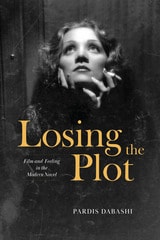
Losing the Plot
Film and Feeling in the Modern NovelPardis Dabashi
University of Chicago Press, 2023
The modernist novel sought to escape what Virginia Woolf called the “tyranny” of plot. Yet even as twentieth-century writers pushed against the constraints of plot-driven Victorian novels, plot kept its hold on them through the influence of another medium: the cinema. Focusing on the novels of Nella Larsen, Djuna Barnes, and William Faulkner—writers known for their affinities and connections to classical Hollywood—Pardis Dabashi links the moviegoing practices of these writers to the tensions between the formal properties of their novels and the characters in them. Even when they did not feature outright happy endings, classical Hollywood films often provided satisfying formal resolutions and promoted normative social and political values. Watching these films, modernist authors were reminded of what they were leaving behind—both formally and in the name of aesthetic experimentalism—by losing the plot.

Loss and Redemption at St. Vith
The 7th Armored Division in the Battle of the BulgeGregory Fontenot, Colonel, US Army, Retired
University of Missouri Press, 2020
Lost Literacies
Experiments in the Nineteenth-Century US Comic StripAlex Beringer
The Ohio State University Press, 2024
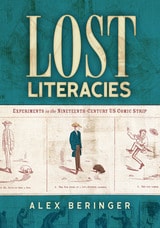
Lost Literacies is the first full-length study of US comic strips from the period prior to the rise of Sunday newspaper comics. Where current histories assume that nineteenth-century US comics consisted solely of single-panel political cartoons or simple “proto-comics,” Lost Literacies introduces readers to an ambitious group of artists and editors who were intent on experimenting with the storytelling possibilities of the sequential strip, resulting in playful comics whose existence upends prevailing narratives about the evolution of comic strips.
Over the course of the nineteenth century, figures such as artist Frank Bellew and editor T. W. Strong introduced sequential comic strips into humor magazines and precursors to graphic novels known as “graphic albums.” These early works reached audiences in the tens of thousands. Their influences ranged from Walt Whitman’s poetry to Mark Twain’s travel writings to the bawdy stage comedies of the Bowery Theatre. Most importantly, they featured new approaches to graphic storytelling that went far beyond the speech bubbles and panel grids familiar to us today. As readers of Lost Literacies will see, these little-known early US comic strips rival even the most innovative modern comics for their diversity and ambition.
Lost Missions
American Indians, Religion, and Shifting Landscapes of MemorySean T. Jacobson
University of Massachusetts Press, 2026
Tracing how shuttered mission schools became contested commemorative landscapes
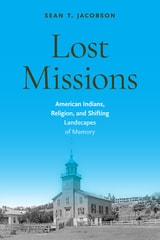
During the Early Republic and Jacksonian eras, Euro-American colonists and Native nations in the South and Old Northwest established mission schools intended to Christianize Indigenous peoples. In Lost Missions, Sean T. Jacobson recovers the histories and afterlives of these institutions, arguing that they played a far more consequential role in Native–settler relations than scholars have previously acknowledged. Mission schools advanced a spiritual vision of a multiethnic Christian America—one that ultimately collapsed amid the federally sponsored Indian Removal campaigns of the 1830s and 1840s.
Following the closure of these schools, their physical and symbolic landscapes became powerful sites of memory. Euro-American Christians later transformed former missions into commemorative spaces that celebrated “frontier” piety and national expansion. Through monuments, pageantry, and local histories, Protestant and Catholic Americans alike recast missionary labor as a foundational component of American nation-building. In doing so, these narratives framed the Christianization of Native peoples as a benevolent civilizing project, one that implicitly—and sometimes explicitly—sanitized the coercion, dispossession, and violence that accompanied westward expansion and the forced removal of Indigenous nations.
By the late twentieth century, however, these commemorative narratives faded. Suburban development, commercialization, and shifting cultural priorities rendered many mission sites once again “lost,” stripped of the civic meaning they once held. Yet Jacobson shows that these landscapes still speak, especially when viewed from Indigenous perspectives. Reinterpreted through Native histories of endurance and survival, former missions reveal counternarratives of persistence amid profound loss. As tribal nations increasingly engage with these sites today, Lost Missions probes their contested status as places of memory and conscience, illuminating how public history continues to shape and challenge understandings of America’s colonial past.
Lost in the Shadow of the Word
Space, Time, and Freedom in Interwar Eastern EuropeBenjamin Paloff
Northwestern University Press, 2016
Scholars of modernism have long addressed how literature, painting, and music reflected the radical reconceptualization of space and time in the early twentieth century—a veritable revolution in both physics and philosophy that has been characterized as precipitating an “epistemic trauma” around the world. In this wide-ranging study, Benjamin Paloff contends that writers in Central and Eastern Europe felt this impact quite distinctly from their counterparts in Western Europe. For the latter, the destabilization of traditional notions of space and time inspired works that saw in it a new kind of freedom. However, for many Central and Eastern European authors, who were writing from within public discourses about how to construct new social realities, the need for escape met the realization that there was both nowhere to escape to and no stable delineation of what to escape from. In reading the prose and poetry of Czech, Polish, and Russian writers, Paloff imbues the term “Kafkaesque” with a complexity so far missing from our understanding of this moment in literary history.
Lothario's Corpse
Libertine Drama and the Long-Running Restoration, 1700-1832Daniel Gustafson
Bucknell University Press, 2020
Published by Bucknell University Press. Distributed worldwide by Rutgers University Press.
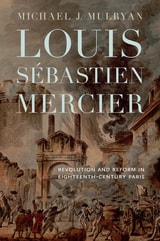
Louis Sébastien Mercier
Revolution and Reform in Eighteenth-Century ParisMichael J. Mulryan
Bucknell University Press, 2023

Love Game
A History of Tennis, from Victorian Pastime to Global PhenomenonElizabeth Wilson
University of Chicago Press, 2016
No one is better equipped to tell this story than novelist and historian Elizabeth Wilson. With a penchant for tennis’s inherent drama, she finds its core: a psychological face off between flamboyant personalities navigating the ebbs and flows of fortune in the confines of a 78 x 36–foot box—whether of clay, grass, or DecoTurf. Walking the finely kempt lawns of Victorian England, she shows how tennis’s early role as a social pastime that included both men and women—and thus, lots of sexual tension—set it apart from most other sports and their dominant masculine appeal. Even today, when power and endurance are more important than ever, tennis still demands that the body behave gracefully and with finesse. In this way, Wilson shows, tennis has retained the vibrant spectacle of human drama and beauty that have always made it special, not just to sports fans but to popular culture.
Telling the stories of all the greats, from the Renshaw brothers to Novak Djokovic, and of all the advances, from wooden racquets to network television schedules, Wilson offers a tennis book like no other, keeping the court square in our sights as history is illuminated around it.
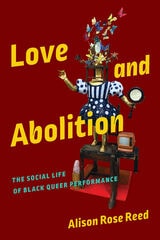
Love and Abolition
The Social Life of Black Queer PerformanceAlison Rose Reed
The Ohio State University Press, 2022
Reed identifies abolition literature as an emergent field of inquiry that emphasizes social relationships in the ongoing struggle to dismantle systems of coercion, criminalization, and control. Focusing on love as an affective modality and organizing tool rooted in the Black radical tradition’s insistence on collective sociality amidst unrelenting state violence, Reed provides fresh readings of visionaries such as James Baldwin, Ntozake Shange, Sharon Bridgforth, and vanessa german. Both abolitionist manifesto and examination of how Black queer performance offers affective modulations of tough and tender love, Love and Abolition ultimately calls for a critical reconsideration of the genre of prison literature—and the role of the humanities—during an age of mass incarceration.
Lukács After Communism
Interviews with Contemporary IntellectualsEva L. Corredor
Duke University Press, 1997
The scholars featured in this collection—Etienne Balibar, Peter Bürger, Terry Eagleton, Fredric Jameson, Jacques Leenhardt, Michael Löwy, Roberto Schwarz, George Steiner, Susan Suleiman, and Cornel West—discuss a broad array of literary and political topics and present provocative views on gender, race, and economic relations. Corredor’s introduction provides a biographical synopsis of Lukács and discusses a number of his most important theoretical concepts. Maintaining the ongoing vitality of Lukács’s work, these interviews yield insights into Lukács as a philosopher and theorist, while offering anecdotes that capture him in his role as a teacher-mentor.
Lviv – Wroclaw, Cities in Parallel?
Myth, Memory and Migration, c. 1890-PresentJan Fellerer
Central European University Press, 2020
After World War II, Europe witnessed the massive redrawing of national borders and the efforts to make the population fit those new borders. As a consequence of these forced changes, both Lviv and Wrocław went through cataclysmic changes in population and culture. Assertively Polish prewar Lwów became Soviet Lvov, and then, after 1991, it became assertively Ukrainian Lviv. Breslau, the third largest city in Germany before 1945, was in turn "recovered" by communist Poland as Wrocław. Practically the entire population of Breslau was replaced, and Lwów's demography too was dramatically restructured: many Polish inhabitants migrated to Wrocław and most Jews perished or went into exile. The forced migration of these groups incorporated new myths and the construction of official memory projects.
The chapters in this edited book compare the two cities by focusing on lived experiences and "bottom-up" historical processes. Their sources and methods are those of micro-history and include oral testimonies, memoirs, direct observation and questionnaires, examples of popular culture, and media pieces. The essays explore many manifestations of the two sides of the same coin—loss on the one hand, gain on the other—in two cities that, as a result of the political reality of the time, are complementary.
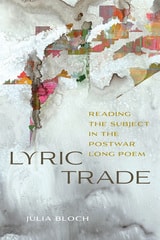
Lyric Trade
Reading the Subject in the Postwar Long PoemJulia Bloch
University of Iowa Press, 2024
Engaging with poets such as Gwendolyn Brooks, H.D., Lorine Niedecker, Alice Notley, and Myung Mi Kim, this book asks: What does lyric mean, and why should it matter to poets and readers? Lyric Trade argues that lyric in the postwar long poem not only registers the ideological contradictions of modernism’s insistence on new forms, but that it also maps spaces for formal reimaginings of the subject.