Results by title
3258 books match the query 'Performing Arts' and 90 start with l
Lines of Activity
Performance, Historiography, Hull-House DomesticityShannon Jackson
University of Michigan Press, 2001
This groundbreaking book demonstrates how performance analysis can contribute to the historical study of American reform as well as to critical inquiry on the arts and social change. She develops connections between performativity and sex/gender difference by interpreting Hull-House as a sphere of queer kinship and alternative gender performance. Lines of Activity also engages a variety of debates on the nature of historical representation, and the role of "theory" in historical writing.
As the notion of "performance historiography" gains currency, Jackson's study exposes the gender politics of such scholarly trends. By selecting the Progressive Era and Hull-House as arenas of inquiry, Jackson foregrounds how past discourses of domesticity, pragmatism, transnationalism, and environmentalism already contain performance-centered notions of identity, space, and community. Through these and other arguments, Lines of Activity reveals the intimate connection between a history of Hull-House performance and the performance of Hull-House history.
Shannon Jackson is Assistant Professor of Rhetoric and of Dramatic Art and Dance, University of California, Berkeley.

Liquor Store Theatre
Maya Stovall
Duke University Press, 2020
Listening with a Feminist Ear
Soundwork in Bombay CinemaPavitra Sundar
University of Michigan Press, 2023
Honorable Mention of the 2023 MLA Aldo and Jeanne Scaglione Prize for South Asian Studies
- Longlist Finalist of the 2024 Kraszna-Krausz Foundation Moving Image Book Award
Listening with a Feminist Ear is a study of the cultural politics and possibilities of sound in cinema. Eschewing ocularcentric and siloed disciplinary formations, the book takes seriously the radical theoretical and methodological potential of listening. It models a feminist interpretive practice that is not just attuned to how power and privilege are materialized in sound, but that engenders new, counter-hegemonic imaginaries.
Focusing on mainstream Bombay cinema, Sundar identifies singing, listening, and speaking as key sites in which gendered notions of identity and difference take form. Charting new paths through seven decades of film, media, and cultural history, Sundar identifies key shifts in women’s playback voices and the Islamicate genre of the qawwali. She also conceptualizes spoken language as sound, and turns up the volume on a capacious, multilingual politics of belonging that scholarly and popular accounts of nation typically render silent. All in all, Listening with a Feminist Ear offers a critical sonic sensibility that reinvigorates debates about the gendering of voice and body in cinema, and the role of sound and media in conjuring community.
Literatures of Liberation
Non-European Universalisms and Democratic ProgressMukti Lakhi Mangharam
The Ohio State University Press, 2017
In this way, she posits that these universalisms reconceptualize democratic ideals not as Western imports into precolonial societies but as regional phenomena tied to local relations of power and resistance. In charting these alternative democratic trajectories, Mangharam examines oft-overlooked regional and vernacular literary forms and provides a fresh approach to current theorizations of postcolonial and world literatures.
Little Caesar
Edited, with an introduction by Gerald Peary; Tino T. Balio, Series Editor
University of Wisconsin Press, 1981
Little Caesar, a 1931 Hollywood gangster classic, is viewed in revivals today with nearly as much audience enthusiasm as it enjoyed a half-century ago, in the depths of the Great Depression.
In general, the Hollywood film industry responded to the dark economic conditions of the 1930s with escapist and non-topical films. The fascinating exception was the gangster film, through which the studios joined in the debate over the spiritual and economic health of the nation. Little Caesar, considered by many to be an architype of the genre, is one of the most memorable dramatizations of the discontent and alienation, the deep anxiety and hostility shared by millions of Americans during those dark years.
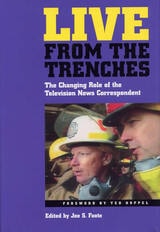
Live From the Trenches
The Changing Role of the Television News CorrespondentEdited by Joe S. Foote. Foreword by Ted Koppel
Southern Illinois University Press, 1998
From Edward R. Murrow to "Sixty Minutes" and CNN, the television news correspondent has become a fixture of American journalism in the latter half of the twentieth century. The correspondent's role has changed, however, as centralized control, changing technology, "infotainment," and profit margin have influenced the way that television networks operate and television news is reported.
In spite of the flood of literature dealing with the American television networks, the evening anchors, and prime-time personalities, little has been written about the "the foot soldier of network news." Live from the Trenches fills that gap, providing the first examination of television news correspondents and their work, with much of the analysis coming from the correspondents themselves.
The correspondents:
Jim Bittermann, a former ABC Paris correspondent, has been the CNN Paris correspondent since 1996. He received a National News Emmy for his coverage of the 1988 Sudan famine.
Chris Bury, correspondent for "Nightline" since 1993, has covered foreign and domestic stories from Waco to Whitewater.
Michael Murrie, after a dozen years in television news at KSDK in St. Louis, is an associate professor and director of the Telecommunications Master's Program for the Department of Radio-Television at Southern Illinois University at Carbondale.
Roger O'Neil, NBC News Denver bureau chief and correspondent since 1983, was the lead reporter for NBC during the Oklahoma City bombing trial of Timothy McVeigh.
Walter C. Rodgers, bureau chief and correspondent in Jerusalem, joined CNN in 1993 as the Berlin correspondent. Prior to joining CNN, he worked for ABC for twelve years.
Marlene Sanders broke barriers for women throughout her career and has won three Emmies. As a correspondent at ABC News in 1964, she was the first woman to anchor a prime-time network newscast.
George Strait is the primary ABC News correspondent for medical and health news. Among his many awards are the Alfred I. duPont Award and Gold Medal Award from the National Association of Black Journalists.
Ed Turner is CNN's first editor-at-large. Based in Washington, he represents the CNN News Group globally.
Garrick Utley joined CNN in 1997 after thirty years covering more than seventy countries for ABC.
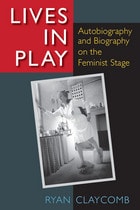
Lives in Play
Autobiography and Biography on the Feminist StageRyan Claycomb
University of Michigan Press, 2014
Lives in Play explores the centrality of life narratives to women's drama and performance from the 1970s to the present moment. In the early days of second-wave feminism, the slogan was "The personal is the political." These autobiographical and biographical "true stories" have the political impact of the real and have also helped a range of feminists tease out the more complicated aspects of gender, sex, and sexuality in a Western culture that now imagines itself to be "postfeminist."
The book covers a broad range of texts and performances, from performance artists like Karen Finley, Holly Hughes, and Bobby Baker to playwrights like Suzan-Lori Parks, Maria Irene Fornes, and Sarah Kane. The book examines biography and autobiography together to link their narrative tactics and theatrical approaches and show the persistent and important uses of life writing strategies for theater artists committed to advancing women's rights and remaking women's representations.
Lives in Play argues that these writers and artists have not only responded to the vibrant conversations in feminist theory but also have anticipated and advanced these ideas, theorizing gender onstage for specific ends. Ryan Claycomb demonstrates how these performances work through tensions between performative identity and the essentialized body, between the truth value of life stories and the constructed nature of gender and narrative alike, and between writing and performing as modes of feminist representation.
The book will appeal to scholars in performance studies, women's studies, and literature, including those in the growing field of auto/biography studies.
Living Color
Race and Television in the United StatesSasha Torres, ed.
Duke University Press, 1998
Ranging across television genres, historical periods, and racial formations, Living Color—as it positions race as a key element of television’s cultural influence—moves the discussion out of a black-and-white binary and illustrates how class, gender, and sexuality interact with images of race. In addition to essays on representations of "Oriental" performers and African Americans in the early years of television, this collection also examines how the celebrity of the late MTV star Pedro Zamora countered racist and homophobic discourses; reveals how news coverage on drug use shifted from the white middle-class cocaine user in the early 1980s to the black "crack mother" of the 1990s; and takes on TV coverage of the Rodney King beating and the subsequent unrest in Los Angeles. Other essays consider O.J. Simpson’s murder trial, comparing television’s treatment of Simpson to that of Michael Jackson, Magic Johnson, Michael Jordan, and Clarence Thomas and look at the racism directed at Asian Americans by the recurring "Dancing Itos" on Jay Leno’s Tonight Show.
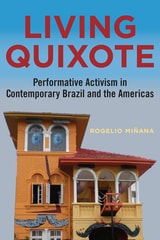
Living Quixote
Performative Activism in Contemporary Brazil and the AmericasRogelio Minana
Vanderbilt University Press, 2020
In this book, Cervantes scholar Rogelio Miñana examines long-term, Quixote-inspired activist efforts at the ground level. Through what the author terms performative activism, Quixote-inspired theater companies and nongovernmental organizations deploy a model for rewriting and enacting new social roles for underprivileged youth. Unique in its transatlantic, cross-historical, and community-based approach, Living Quixote offers both a new reading of Don Quixote and an applied model for cultural activism—a model based, in ways reminiscent of Paulo Freire, on the transformative potential of performance, literature, and art.
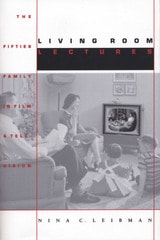
Living Room Lectures
The Fifties Family in Film and TelevisionBy Nina C. Leibman
University of Texas Press, 1995
With a breadwinner dad, a homemaker mom, and squeaky-clean kids, the 1950s television family has achieved near mythological status as a model of what real families "ought" to be. Yet feature films of the period often portrayed families in trouble, with parents and children in conflict over appropriate values and behaviors. Why were these representations of family apparently so far apart?
Nina Leibman analyzes many feature films and dozens of TV situation comedy episodes from 1954 to 1963 to find surprising commonalities in their representations of the family. Redefining the comedy as a family melodrama, she compares film and television depictions of familial power, gender roles, and economic attitudes. Leibman's explorations reveal how themes of guilt, deceit, manipulation, anxiety, and disfunctionality that obviously characterize such movies as Rebel without a Cause,A Summer Place, and Splendor in the Grass also crop up in such TV shows as The Adventures of Ozzie and Harriet,Father Knows Best,Leave It to Beaver,The Donna Reed Show, and My Three Sons.
Drawing on interviews with many of the participants of these productions, archival documents, and trade journals, Leibman sets her discussion within a larger institutional history of 1950s film and television. Her discussions shed new light not only on the reasons for both media's near obsession with family life but also on changes in American society as it reconfigured itself in the postwar era.
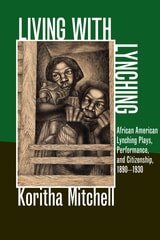
Living with Lynching
African American Lynching Plays, Performance, and Citizenship, 1890-1930Koritha Mitchell
University of Illinois Press, 2012
In closely analyzing the political and spiritual uses of black theatre during the Progressive Era, Mitchell demonstrates that audiences were shown affective ties in black families, a subject often erased in mainstream images of African Americans. Examining lynching plays as archival texts that embody and reflect broad networks of sociocultural activism and exchange in the lives of black Americans, Mitchell finds that audiences were rehearsing and improvising new ways of enduring in the face of widespread racial terrorism. Images of the black soldier, lawyer, mother, and wife helped readers assure each other that they were upstanding individuals who deserved the right to participate in national culture and politics. These powerful community coping efforts helped African Americans band together and withstand the nation's rejection of them as viable citizens.
The Left of Black interview with author Koritha Mitchell begins at 14:00.
An interview with Koritha Mitchell at The Ohio Channel.
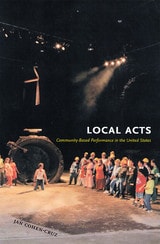
Local Acts
Community-Based Performance in the United StatesCohen-Cruz, Jan
Rutgers University Press, 2005
An eclectic mix of art, theatre, dance, politics, experimentation, and ritual,community-based performance has become an increasingly popular art movement in the United States. Forged by the collaborative efforts of professional artists and local residents, this unique field brings performance together with a range of political, cultural, and social projects, such as community-organizing, cultural self-representation, and education. Local Acts presents a long-overdue survey of community-based performance from its early roots, through its flourishing during the politically-turbulent 1960s, to present-day popular culture. Drawing on nine case studies, including groups such as the African American Junebug Productions, the Appalachian Roadside Theater, and the Puerto Rican Teatro Pregones, Jan Cohen-Cruz provides detailed descriptions of performances and processes, first-person stories, and analysis. She shows how the ritual side of these endeavors reinforces a sense of community identification while the aesthetic side enables local residents to transgress cultural norms, to question group habits, and to incorporate a level of craft that makes the work accessible to individuals beyond any one community. The book concludes by exploring how community-based performance transcends even national boundaries, connecting the local United States with international theater and cultural movements.
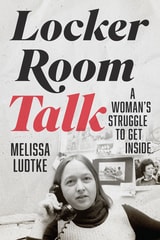
Locker Room Talk
A Woman’s Struggle to Get InsideMelissa Ludtke
Rutgers University Press, 2024
While sportswriters rushed into Major League Baseball locker rooms to talk with players, MLB Commissioner Bowie Kuhn barred the lone woman from entering along with them. That reporter, 26-year-old Sports Illustrated reporter Melissa Ludtke, charged Kuhn with gender discrimination, and after the lawyers argued Ludtke v. Kuhn in federal court, she won. Her 1978 groundbreaking case affirmed her equal rights, and the judge’s order opened the doors for several generations of women to be hired in sports media.
Locker Room Talk is Ludtke’s gripping account of being at the core of this globally covered case that churned up ugly prejudices about the place of women in sports. Kuhn claimed that allowing women into locker rooms would violate his players’ “sexual privacy.” Late-night television comedy sketches mocked her, as newspaper cartoonists portrayed her as a sexy, buxom looker who wanted to ogle the naked athletes’ bodies. She weaves these public perspectives throughout her vivid depiction of the court drama overseen by Judge Constance Baker Motley, the first Black woman to serve on the federal bench. She recounts how her lawyer, F.A.O. “Fritz” Schwarz, employed an ingenious legal strategy that persuaded Judge Motley to invoke the Fourteenth Amendment’s Equal Protection Clause in giving Ludtke access identical to that of her male counterparts. Locker Room Talk is both an inspiring story of one woman’s determination to do a job dominated by men and an illuminating portrait of a defining moment for women’s rights.
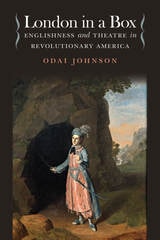
London in a Box
Englishness and Theatre in Revolutionary AmericaOdai Johnson
University of Iowa Press, 2017
If one went looking for the tipping point in the prelude to the American Revolution, it would not be the destruction of the tea in Boston Harbor, or the blockade of Boston by British warships, or even the gathering of the first Continental Congress; rather, it was the Congress’s decision in late October of 1774 to close the theatres. In this remarkable feat of historical research, Odai Johnson pieces together the surviving fragments of the story of the first professional theatre troupe based in the British North American colonies. In doing so, he tells the story of how colonial elites came to decide they would no longer style themselves British gentlemen, but instead American citizens.
London in a Box chronicles the enterprise of David Douglass, founder and manager of the American Theatre, from the 1750s to the climactic 1770s. The ambitious Scotsman’s business was teaching provincial colonials to dress and behave as genteel British subjects. Through the plays he staged, the scenery and costumes, and the bearing of his actors, he displayed London fashion and London manners. He counted among his patrons the most influential men in America, from British generals and governors to local leaders, including the avid theatre-goers George Washington and Thomas Jefferson. By 1774, Douglass operated a monopoly of theatres in six colonies and the Anglophone Caribbean, from Jamaica to Charleston and northward to New York City. (Boston remained an impregnable redoubt against theatre.)
How he built this network of patrons and theatres and how it all went up in flames as the revolution began is the subject of this witty history. A treat for anyone interested in the world of the American Revolution and an important study for historians of the period.
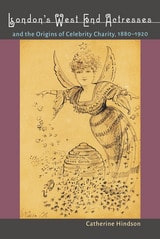
London's West End Actresses and the Origins of Celebrity Charity, 1880-1920
Catherine Hindson
University of Iowa Press, 2016
In the late nineteenth century, theatre’s fundraising for charitable causes shifted from male-dominated and private to female-directed and public. Although elite women had long been involved in such enterprises, they took on more authority in this period. At the same time, regular, high-profile public charity events became more important and much more visible than private philanthropy. Actresses became key figures in making the growing number of large and heavily publicized fundraisers successful. By 1920, the attitude was “Get an actress first. If you can’t get an actress, then get a duchess.” Actresses’ star power, their ability to orchestrate large events quickly, and their skill at performing a kind of genteel extortion made them essential to this model of charity. Actresses also benefited from this new role. Taking a prominent, public, offstage position was crucial in making them, individually and collectively, respectable professionals.
Author Catherine Hindson reveals this history by examining the major types of charity events at the turn of the twentieth century, including fundraising matinees, charity bazaars and costume parties, theatrical tea and garden parties, and benefit performances. Her study concludes with a look at the involvement of actresses in raising funds for British soldiers serving in the Anglo-Boer War and the First World War.
Long Suffering
American Endurance Art as Prophetic WitnessKaren Gonzalez Rice
University of Michigan Press, 2016
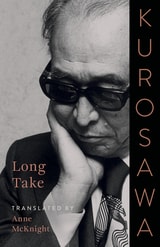
Long Take
Akira Kurosawa
University of Minnesota Press, 2025
A multifaceted portrait of the great Japanese director
For years, Akira Kurosawa resisted writing about himself. “It would turn out to be nothing but talk about movies,” he said. “In other words, take myself, subtract movies, and the result is zero.” The memoir he finally started serializing in 1978, Something like an Autobiography, ended with Rashomon, the film that launched him on the world’s stage in 1950. Long Take, first published in Japan shortly after Kurosawa’s death in 1998, at last tells the story of the rest of his life.
By turns intimate, provocative, and revealing, Long Take creates a dynamic portrait of Kurosawa from his own writings; his conversations with writer Inoue Hisashi and director Yamada Yōji; and essays by his daughter and colleague Kurosawa Kazuko, who details the collaborative history of the “Kurosawa crew.” It features a wealth of industry lore, cultural reference points, inside jokes with other filmmakers and writers, and backstories for his own productions, from the earliest to the last. Of particular interest to all cinephiles is an annotated list of Kurosawa’s 100 favorite films.
A survey of Kurosawa’s prodigious career, this book situates the visionary in the media milieu of his youth, in the literature and performing arts of twentieth-century Japan and Hollywood, and among the myriad films he loved, admired, and referenced, including Japanese silent film and comedy as well as productions from India, Iran, and Soviet-era Russia. Now available to English readers for the first time, Long Take offers a lasting picture of the peerless filmmaker in his element.
Look Closer
Suburban Narratives and American Values in Film and TelevisionCoon, David R
Rutgers University Press, 2013
In recent years, the media landscape in the United States has followed a pattern similar to that of the physical landscape by becoming increasingly suburbanized. Although it is a far cry from reality, the fantasy of a perfect suburban life still exists in the collective imagination of millions of Americans. This dream of suburban perfection is built around a variety of such ideologically conservative values and ideals as the importance of tradition, the centrality of the nuclear family, the desire for a community of like-minded neighbors, the need for clearly defined gender roles, and the belief that with hard work and determination, anyone can succeed.
Building on the relationships between suburban life and American identity, Look Closer examines and interprets recent narratives that challenge the suburban ideal to reveal how directors and producers are mobilizing the spaces of suburbia to tell new kinds of stories about America. David R. Coon argues that the myth of suburban perfection, popularized by postwar sitcoms and advertisements, continues to symbolize a range of intensely debated issues related to tradition, family, gender, race, and citizenship. Through close examinations of such films as American Beauty, The Truman Show, and Mr. & Mrs. Smith as well as such television series as Desperate Housewives, Weeds, and Big Love, the book demonstrates how suburbia is used to critique the ideologies that underpin the suburban American Dream.
Looking Into the Abyss
Essays on ScenographyArnold Aronson
University of Michigan Press, 2005
Theater is, first and foremost, a visual art; Looking Into the Abyss examines the ways in which the visual theater affects our understanding of the dramatic event. Arnold Aronson, an internationally prominent historian and theorist of theater set design, opens with an overview of scenographic concepts, including postmodern design and the use of new media in the theater, and continues with analyses of the work of specific designers (including Richard Foreman and David Rockwell) and scenographic responses to playwrights like Chekhov and Tony Kushner. These essays serve to open a dialogue that will bring the physical aspect of theater back into its proper place: an element as integral to the performance as the spoken word, and they will inspire theater-goers to become more aware of their role as seers of the theater.
Arnold Aronson is Professor of Theater, Columbia University. He is author of American Avant-Garde Theatre: A History; Architect of Dreams: The Theatrical Vision of Joseph Urban; American Set Design; and The History and Theory of Environmental Scenography.
Looking Past the Screen
Case Studies in American Film History and MethodJon Lewis and Eric Smoodin, eds.
Duke University Press, 2007
Focusing on Hollywood cinema from the teens to the 1970s, these case studies show the value of this extraordinary range of historical materials in developing interdisciplinary approaches to film stardom, regulation, reception, and production. The contributors examine State Department negotiations over the content of American films shown abroad; analyze the star image of Clara Smith Hamon, who was notorious for having murdered her lover; and consider film journalists’ understanding of the arrival of auteurist cinema in Hollywood as it was happening during the early 1970s. One contributor chronicles the development of film studies as a scholarly discipline; another offers a sociopolitical interpretation of the origins of film noir. Still another brings to light Depression-era film reviews and Production Code memos so sophisticated in their readings of representations of sexuality that they undermine the perception that queer interpretations of film are a recent development. Looking Past the Screen suggests methods of historical research, and it encourages further thought about the modes of inquiry that structure the discipline of film studies.
Contributors. Mark Lynn Anderson, Janet Bergstrom, Richard deCordova, Kathryn Fuller-Seeley, Sumiko Higashi, Jon Lewis, David M. Lugowski, Dana Polan, Eric Schaefer, Andrea Slane, Eric Smoodin, Shelley Stamp
Looking for Carrascolendas
From a Child's World to Award-Winning TelevisionBy Aida Barrera
University of Texas Press, 2001
If your childhood friends were Agapito, the bombastic, bilingual lion; Campamocha, the fix-it man; Caracoles, the restaurant owner; Uncle Andy, the shoe seller; Berta and Dyana, the life-size dolls; and Señorita Barrera, then you grew up watching Carrascolendas. This award-winning show, which originally aired on PBS in the 1970s and was subsequently broadcasted throughout the country in the 1980s and 1990s, was the first Spanish and English children's educational television program broadcast to national audiences in the United States.
In this engagingly written memoir, creator-producer Aida Barrera describes how the mythical world of Carrascolendas grew out of her real-life experiences as a Mexican American child growing up in the Valley of South Texas. She recalls how she drew on those early experiences to create television programming that specifically addressed the needs of Hispanic children, even as it remained accessible and entertaining to children of other cultural backgrounds.
In addition to her personal story, Barrera recounts the long-term struggles for network acceptance and funding that made the production of Carrascolendas something of a miracle. This off-camera story adds an important chapter to the history of Anglo-Mexican cultural politics during the 1970s. Given the fact that Latino characters are still under- and stereotypically represented on network television, Carrascolendas remains an important reminder of what is possible and what has been lost in authentically multicultural television programming.
Lost City, Found Pyramid
Understanding Alternative Archaeologies and Pseudoscientific PracticesEdited by Jeb J. Card and David S. Anderson
University of Alabama Press, 2016
A critical investigation into how modern myths shape interpretations of the ancient past.
Lost City, Found Pyramid delves into the fascinating world of sensational “pseudoarchaeology,” from perennial discoveries of lost pyramids or civilizations to contemporary ghost-hunting and reality TV. It examines how nonscientific pursuit of myths and legends warps both public perceptions of archaeology and of human history itself.
A collection of twelve engaging and insightful essays, Lost City, Found Pyramid does far more than argue for the simple debunking of false archaeology. Rather, it brings into focus the value of understanding how and why pseudoarchaeology captures the public imagination. By comprehending pseudoarchaeology’s appeal as a media product, cultural practice, and communication strategy, archaeologists can enhance and enliven how they communicate about real archaeology in the classroom and in the public arena.
The first part of Lost City, Found Pyramid provides numerous case studies. Some examine the work of well-intentioned romantics who project onto actual archaeological data whimsical interpretative frameworks or quixotic “proofs” that confirm legends, such as that of the Lost White City of Honduras, or other alternative claims. Other case studies lay bare how false claims may inadvertently lead to the perpetuation of ethnic stereotypes, economic exploitation, political adventurism, and a misunderstanding of science.
Offering much of interest to scholars and students of archaeology, archaeology buffs, as well as policy-makers involved in the discovery, curation, and care of archaeological sites and relics, Lost City, Found Pyramid provides an invaluable corrective and hopeful strategy for engaging the public’s curiosity with the compelling world of archaeological discovery.
Lost in Translation
Orientalism, Cinema, and the Enigmatic SignifierHomay King
Duke University Press, 2010
Lost in the Fifties
Recovering Phantom HollywoodWheeler Winston Dixon
Southern Illinois University Press, 2005
Lost in the Fifties: Recovering Phantom Hollywood reveals two 1950s: an era glorified in Hollywood movies and a darker reality reflected in the esoteric films of the decade. Renowned film scholar Wheeler Winston Dixon turns to the margins—the television shows and films of a hidden Hollywood—to offer an authentic view of the 1950s that counters the Tinsel-town version. Dixon examines the lost films and directors of the decade. Contrasting traditional themes of love, marriage, and family, Dixon’s 1950s film world unveils once-taboo issues of rape, prostitution, and gangs. Television shows such as Captain Midnight and Ramar of the Jungle are juxtaposed with the cheerful world of I Love Lucy and Howdy Doody. Highlighting directors including Herbert L. Strock, Leslie Martinson, Arnold Laven, and Charles Haas, Dixon provides new insights on the television series Racket Squad, Topper, and The Rifleman and the teen films I Was a Teenage Werewolf and High School Confidential.
Geared for scholars and students of film and pop culture, Lost in the Fifties includes twenty-five photos—many previously unpublished—and draws on rare interviews with key directors, actors, and producers. The volume provides the first detailed profile of the most prolific producer in Hollywood history, Sam Katzman, and his pop culture classics Rock Around the Clock and Earth vs. The Flying Saucers. Dixon profiles, for the first time, B-movie phenomenon Fred F. Sears, who directed more than fifty touchstone films of a generation, including the noir thriller Chicago Syndicate, the criminal career story Cell 2455 Death Row, and the 3-D color western The Nebraskan. Also profiled is Ida Lupino, the only woman to direct in Hollywood in the 1950s, who tackled issues of bigamy, teenage pregnancy, and sports corruption in The Bigamist, The Hitch-Hiker, Outrage, Never Fear, Not Wanted, and Hard, Fast and Beautiful, when no major studio would touch such controversial topics. Dixon also looks at the era’s social guidance films, which instructed adolescents in acceptable behavior, proper etiquette, and healthy hygiene.
Lothario's Corpse
Libertine Drama and the Long-Running Restoration, 1700-1832Daniel Gustafson
Bucknell University Press, 2020
Published by Bucknell University Press. Distributed worldwide by Rutgers University Press.
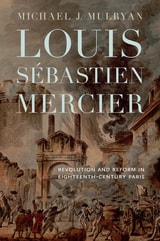
Louis Sébastien Mercier
Revolution and Reform in Eighteenth-Century ParisMichael J. Mulryan
Bucknell University Press, 2023
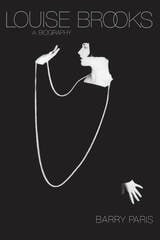
Louise Brooks
A BiographyBarry Paris
University of Minnesota Press, 2000
The long-awaited republication of this captivating account of the star’s life.
Louise Brooks left Wichita, Kansas, for New York City at age fifteen and lived the kind of life of which legends are made. From her beginnings as a dancer to her years in Hollywood, Berlin, and beyond, she was hailed and reviled as a new type of woman: independent, intellectually daring, and sexually free. In this widely acclaimed, first and only comprehensive biography, Barry Paris traces Brooks’s trajectory from her childhood through her fall into obscurity and subsequent "resurrection" as a brilliant writer and enduring film icon.
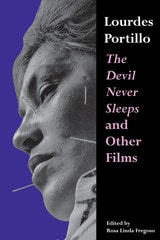
Lourdes Portillo
The Devil Never Sleeps and Other FilmsEdited by Rosa Linda Fregoso
University of Texas Press, 2001
Filmmaker Lourdes Portillo sees her mission as "channeling the hopes and dreams of a people." Clearly, political commitment has inspired her choice of subjects. With themes ranging from state repression to AIDS, Portillo's films include: Después del Terremoto, the Oscar-nominated Las Madres: The Mothers of the Plaza de Mayo,La Ofrenda: The Days of the Dead,The Devil Never Sleeps, and Corpus: A Home Movie for Selena.
The first study of Portillo and her films, this collection is collaborative and multifaceted in approach, emphasizing aspects of authorial creativity, audience reception, and production processes typically hidden from view. Rosa Linda Fregoso, the volume editor, has organized the book into three parts: interviews (by Fregoso and Kathleen Newman and B. Ruby Rich); critical perspectives (essays by Fregoso, Yvonne Yarbro-Bejarano, Sylvie Thouard, Norma Iglesias, and Barbara McBane); and production materials (screenplays, script notes, storyboards, etc.).
This innovative collection provides "inside" information on the challenges of making independent films. By describing the production constraints Portillo has surmounted, Fregoso deepens our appreciation of this gifted filmmaker's life, her struggles, and the evolution of her art.
Love Rules
Silent Hollywood And The Rise Of The Managerial ClassMark Garrett Cooper
University of Minnesota Press, 2003
Traces the surprising connections between silent films and the rise of bureaucracy
Arguing for a sweeping new consideration of the shift from print to cinema as a governing system for organizing modern American social relations, this book uncovers an intimate connection between Hollywood romances of the silent era and the empowerment of a managerial class.
During the 1910s and 1920s, American movies told love stories through what rapidly became ubiquitous images. Again and again, silent features showed lovers separated by seeming happenstance and reunited as if by magical forces. Mark Garrett Cooper argues that this “magic” implies the expertise of the corporate movie studio with its hierarchies of professional experts. In other words, the Hollywood love story amounts to a managerial technique. Through close study of such films as Birth of a Nation, Enoch Arden, The Crowd, Why Change Your Wife? and The Jazz Singer, Love Rules shows how cinematic romance offers an object lesson in how to arrange American society—a lesson that implies that such work can be accomplished only by a managerial class.Love Rules offers a boldly original account of how the Hollywood feature film supplanted the “imagined community” of print culture and, in doing so, played a key role in the transformation of American mass culture.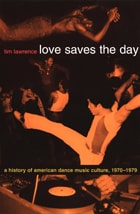
Love Saves the Day
A History of American Dance Music Culture, 1970-1979Tim Lawrence
Duke University Press, 2003
Tales of nocturnal journeys, radical music making, and polymorphous sexuality flow through the arteries of Love Saves the Day like hot liquid vinyl. They are interspersed with a detailed examination of the era’s most powerful djs, the venues in which they played, and the records they loved to spin—as well as the labels, musicians, vocalists, producers, remixers, party promoters, journalists, and dance crowds that fueled dance music’s tireless engine.
Love Saves the Day includes material from over three hundred original interviews with the scene's most influential players, including David Mancuso, Nicky Siano, Tom Moulton, Loleatta Holloway, Giorgio Moroder, Francis Grasso, Frankie Knuckles, and Earl Young. It incorporates more than twenty special dj discographies—listing the favorite records of the most important spinners of the disco decade—and a more general discography cataloging some six hundred releases. Love Saves the Day also contains a unique collection of more than seventy rare photos.
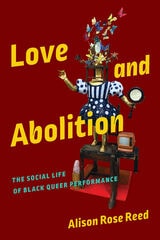
Love and Abolition
The Social Life of Black Queer PerformanceAlison Rose Reed
The Ohio State University Press, 2022
Reed identifies abolition literature as an emergent field of inquiry that emphasizes social relationships in the ongoing struggle to dismantle systems of coercion, criminalization, and control. Focusing on love as an affective modality and organizing tool rooted in the Black radical tradition’s insistence on collective sociality amidst unrelenting state violence, Reed provides fresh readings of visionaries such as James Baldwin, Ntozake Shange, Sharon Bridgforth, and vanessa german. Both abolitionist manifesto and examination of how Black queer performance offers affective modulations of tough and tender love, Love and Abolition ultimately calls for a critical reconsideration of the genre of prison literature—and the role of the humanities—during an age of mass incarceration.
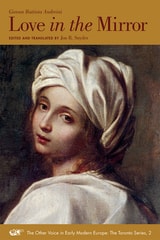
Love in the Mirror
A Bilingual EditionGiovan Battista Andreini
Iter Press, 2009
Originally published in 1622, Love in the Mirror tells the unforgettable and path-breaking story of a passionate love affair between two women in early modern Florence. Despite the risk of social sanctions, Florinda and Lidia freely consent to love each other “breast to breast and mouth to mouth,” with some surprising consequences for the institution of marriage.
This bilingual edition of the play introduces the English-speaking reader to one of the most remarkable creative artists of the Baroque age, Giovan Battista Andreini (1576–1654). Actor, playwright, and son of the first great diva of the European stage, Isabella Andreini, Giovan Battista was renowned in his lifetime as an avant-garde theatrical innovator. While drawing on the Italian commedia dell’arte, his comedies go far beyond its limits in order— like Calderón, Corneille and Shakespeare—to subvert traditional views of the relationship between art and life, representation and reality.
Love in the Mirror, which was lost from view for centuries, is here translated for the first time into a highly accessible and fully annotated English version. The volume includes a wideranging introduction to this experimental comic masterpiece, as well as to the life and works of G.B. Andreini.
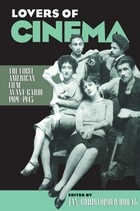
Lovers of Cinema
The First American Film Avant-Garde, 1919–1945Jan-Christopher Horak
University of Wisconsin Press, 1998
Also included in the book is a listing of all American avant-garde films produced in the years before World War II as well as a bibliography of the most relevant criticism, literature, and news accounts.
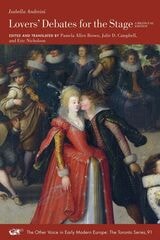
Lovers’ Debates for the Stage
A Bilingual EditionIsabella Andreini
Iter Press, 2022
The actress and author Isabella Andreini won international renown playing the bold, versatile, and intellectual inamorata of the commedia dell’arte. After her death, her husband Francesco Andreini continued publishing her works, among them the thirty-one amorosi contrasti—or lovers’ debates— presented in this volume. Available in English for the first time, Lovers' Debates enables readers to envision the commedia dell’arte through the words of its most revered diva. Lovers flirt boldly, trade bawdy insults, exhibit their learning, and drive each other mad in stage dialogues that showcase Isabella’s skill in composition and drama. Sparkling with wit and bursting with dynamic energy, these brilliant lovers’ dialogues for the stage hold strong appeal not only for specialists in early modern literature and women’s studies, but for enthusiasts, scholars, and practitioners of classic and contemporary theatre.
Lowering the Boom
Critical Studies in Film SoundEdited by Jay Beck and Tony Grajeda
University of Illinois Press, 2007
As the first collection of new work on sound and cinema in over a decade, Lowering the Boom addresses the expanding field of film sound theory and its significance in rethinking historical models of film analysis. The contributors consider the ways in which musical expression, scoring, voice-over narration, and ambient noise affect identity formation and subjectivity. Lowering the Boom also analyzes how shifting modulation of the spoken word in cinema results in variations in audience interpretation. Introducing new methods of thinking about the interaction of sound and music in films, this volume also details avant-garde film sound, which is characterized by a distinct break from the narratively based sound practices of mainstream cinema. This interdisciplinary, global approach to the theory and history of film sound opens the eyes and ears of film scholars, practitioners, and students to film's true audio-visual nature.
Contributors are Jay Beck, John Belton, Clark Farmer, Paul Grainge, Tony Grajeda, David T. Johnson, Anahid Kassabian, David Laderman, James Lastra, Arnt Maasø, Matthew Malsky, Barry Mauer, Robert Miklitsch, Nancy Newman, Melissa Ragona, Petr Szczepanik, Paul Théberge, and Debra White-Stanley.
Lucrecia Martel
Gerd Gemünden
University of Illinois Press, 2019
Luis Buñuel
The Red Years, 1929–1939Román Gubern
University of Wisconsin Press, 2011
The turbulent years of the 1930s were of profound importance in the life of Spanish film director Luis Buñuel (1900–1983). He joined the Surrealist movement in 1929 but by 1932 had renounced it and embraced Communism. During the Spanish Civil War (1936–39), he played an integral role in disseminating film propaganda in Paris for the Spanish Republican cause.
Luis Buñuel: The Red Years, 1929–1939 investigates Buñuel’s commitment to making the politicized documentary Land without Bread (1933) and his key role as an executive producer at Filmófono in Madrid, where he was responsible in 1935–36 for making four commercial features that prefigure his work in Mexico after 1946. As for the republics of France and Spain between which Buñuel shuttled during the 1930s, these became equally embattled as left and right totalitarianisms fought to wrest political power away from a debilitated capitalism.
Where it exists, the literature on this crucial decade of the film director’s life is scant and relies on Buñuel’s own self-interested accounts of that complex period. Román Gubern and Paul Hammond have undertaken extensive archival research in Europe and the United States and evaluated Buñuel’s accounts and those of historians and film writers to achieve a portrait of Buñuel’s “Red Years” that abounds in new information.
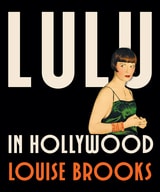
Lulu In Hollywood
Expanded EditionLouise Brooks
University of Minnesota Press, 2000
Essential writings by this icon of the silent era—rereleased in print and now available as an e-book 100 years after Louise Brooks arrived in Hollywood
Lulu in Hollywood is an intimate collection of eight autobiographical essays by Louise Brooks, silent film darling and icon of the flapper era. Ranging from her childhood in Kansas and her early days as a Denishawn and Ziegfeld Follies dancer to her friendships with Martha Graham, Charles Chaplin, W. C. Fields, Humphrey Bogart, William Paley, G. W. Pabst, and others, Brooks’s writing offers a rare glimpse into her extraordinary life. Including her revelatory “Why I Will Never Write My Memoirs,” Lulu in Hollywood also features Kenneth Tynan’s 1979 essay “The Girl in the Black Helmet,” which revived interest in Brooks’s work and was the best discussion of her film work to appear in her lifetime.
Lying in the Middle
Musical Theater and Belief at the Heart of AmericaJake Johnson
University of Illinois Press, 2021
Vibrant and strikingly original, Lying in the Middle discovers some of the most potent musical theater taking place in the hoping, beating hearts of Americans.
Lyric Personhood
On the Aesthetics of Being Someone in the WestDan Wang
University of Chicago Press, 2025
What does it mean to be a person? One might think of the possession of certain rights, having the capacity for love, or being self-determined. But if words like “person” or “love” seem to carry an internal meaning, where does this meaningfulness come from? Lyric Personhood contends that to be encultured in the modern West is to learn, on top of everything else, an unspoken and mostly felt sense of what it means to be someone, a sense transmitted not only in language but also through encounters with aesthetic form. Through close readings that span nineteenth-century European opera, commercial cinema, and amateur YouTube proposal videos, Dan Wang shows that a “person” has become an aesthetic concept—and not just a legal, moral, political, or philosophical one—in the last two hundred years of Western culture.
It’s hard to let go of the organizing promise of romantic love, the dream of therapeutic “health,” and the aspiration to belong to national culture, Wang argues, because these longings have been shaped by an archive of sentimental and melodramatic works that trains people's expectations for life, genre, and even the knowing promised in theory itself. Tracing a surprisingly continuous imagination of personhood through opera and film aesthetics, Lyric Personhood introduces modes of reading audiovisual works that allow a longer story to be told about the forms that make personhood sensible in the West.