Results by title
2285 books match the query 'Women' and 83 start with l
Like Wine Through Water
A NovelKathleen Hill
Northwestern University Press, 2027
A pivotal summer in the life of Maria Branwell, the mother of the Brontë sisters
In imagined diary entries from the summer of 1812, twenty-nine-year-old Maria Branwell is pondering a momentous choice. Far from her Cornish home, working with her aunt and uncle at their Methodist boys’ school on the moors of Yorkshire, she has just been introduced to the Irish clergyman Patrick Brontë. The two are powerfully drawn to one another, resulting in a proposal Maria accepts wholeheartedly—yet reservations begin to surface. From her earliest years she has felt marked by an uncommon destiny, one she had assumed incompatible with an ordinary life of marriage and children. Does marriage fit into that destiny? Or is there a different path to take? The choice of this woman forgotten by history will alter the course of literature forever.
Like a Captive Bird
Gender and Virtue in PlutarchLunette Warren
Lever Press, 2023
The full extent of Plutarch’s moral educational program remains largely understudied, at least in those aspects pertaining to women and the gendered other. As a result, scholarship on his views on women have differed significantly in their conclusions, with some scholars suggesting that he is overwhelmingly positive towards women and marriage and perhaps even a “precursor to feminism,” and others arguing that he was rather negative on the issue. Like a Captive Bird: Gender and Virtue in Plutarch is an examination of these educational methods employed in Plutarch’s work to regulate the expression of gender identity in women and men. In six chapters, author Lunette Warren analyzes Plutarch’s ideas about women and gender in Moralia and Lives. The book examines the divergences between real and ideal, the aims and methods of moral philosophy and psychagogic practice as they relate to identity formation, and Plutarch’s theoretical philosophy and metaphysics.
Warren argues that gender is a flexible mode of being that expresses a relation between body and soul, and that gender and virtue are inextricably entwined. Plutarch’s expression of gender is also an expression of a moral condition that signifies relationships of power, Warren claims, especially power relationships between the husband and wife. Uncovered in these texts is evidence of a redistribution of power, which allows some women to dominate other women and, in rare cases, men too. Like a Captive Bird offers a unique and fresh interpretation of Plutarch’s metaphysics which centers gender as one of the organizational principles of nature. It is aimed at scholars of Plutarch, ancient philosophy, and ancient gender studies, especially those who are interested in feminist studies of antiquity.
Listen to Me Good
The Story of an Alabama MidwifeMargaret Charles Smith and Linda Janet Holmes
The Ohio State University Press, 1996
Margaret Charles Smith, a ninety-one-year-old Alabama midwife, has thousands of birthing stories to tell. Sifting through nearly five decades of providing care for women in rural Greene County, she relates the tales that capture the life-and-death struggle of the birthing experience and the traditions, pharmacopeia, and spiritual attitudes that influenced her practice. She debunks images of the complacent southern “granny” midwife and honors the determination, talent, and complexity of midwifery.
Fascinating to read, this book is part of the new genre of writing that recognizes the credibility of midwives who have emerged from their own communities and were educated through apprenticeship and personal experience. Past descriptions of southern black midwives have tended to denigrate their work in comparison with professional established medicine. Believed to be the oldest living (though retired) traditional African American midwife in Alabama, Smith is one of the few who can recount old-time birthing ways. Despite claims that midwives contributed to high infant mortality rates, Smith’s story emphasizes midwives' successes in facing medical challenges and emergencies.
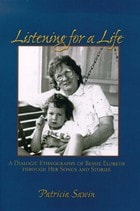
Listening For a Life
A Dialogic Ethnography of Bessie Eldreth through Her Songs and StoriesPatricia Sawin
Utah State University Press, 2004
Drawing on Bahktinian and feminist theory, Sawin pushes forward our understanding of the interactive roles of ethnographer and subject and in the process gives us a deeper understanding of folk singer and storyteller Bessie Eldreth and her greatest art, herself.

Little Lost River
A NovelPamela Johnston
University of Nevada Press, 2008
Live Form
Women, Ceramics, and CommunityJenni Sorkin
University of Chicago Press, 2016
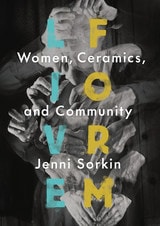
Sorkin focuses on three Americans who promoted ceramics as an advanced artistic medium: Marguerite Wildenhain, a Bauhaus-trained potter and writer; Mary Caroline (M. C.) Richards, who renounced formalism at Black Mountain College to pursue new performative methods; and Susan Peterson, best known for her live throwing demonstrations on public television. Together, these women pioneered a hands-on teaching style and led educational and therapeutic activities for war veterans, students, the elderly, and many others. Far from being an isolated field, ceramics offered a sense of community and social engagement, which, Sorkin argues, crucially set the stage for later participatory forms of art and feminist collectivism.
Live Wire
Women and Brotherhood in the Electrical IndustryAuthored by Fran Moccio
Temple University Press, 2010
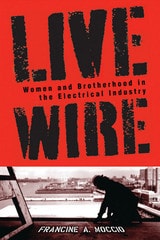
Belonging to a union can bring higher wages, fringe benefits, greater job security and, sometimes, training. But unions—still known as "brotherhoods"—often remain rigidly segregated by gender, despite the fact that sexual harassment and discrimination in employment are illegal. Live Wire is an in-depth case study of Local 3 of the International Brotherhood of Electrical Workers, arguably the most powerful and influential building trades local in the United States. Francine Moccio brings to life forty years of public policy failure that has resulted in restricted opportunities for women in skilled blue-collar jobs.
Live Wire is a unique foray into the gender dynamics of one trade and one union in historical depth, based on extensive primary, secondary, and archival research. It contributes much-needed research about sex segregation in blue-collar occupations, particularly in unions and fraternal organizations. And it provides important insights into complex interactions of work, union, and family life.
Lives, Letters, and Quilts
Women and Everyday Rhetorics of ResistanceVanessa Kraemer Sohan
University of Alabama Press, 2020
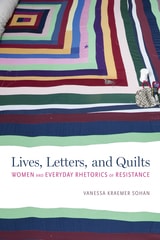
In Lives, Letters, and Quilts: Women and Everyday Rhetorics of Resistance, Vanessa Kraemer Sohan applies a translingual and transmodal framework informed by feminist rhetorical practice to three distinct case studies that demonstrate women using unique and effective rhetorical strategies in political, religious, and artistic contexts. These case studies highlight a diverse set of actors uniquely situated by their race, gender, class, or religion, but who are nevertheless connected by their capacity to envision and recontextualize the seemingly ordinary means and materials available to them in order to effectively persuade others.
The Great Depression provides the backdrop for the first case study, a movement whereby thousands of elderly citizens proselytized and fundraised for a monthly pension plan dreamt up by a California doctor in the hopes of lifting themselves out of poverty. Sohan investigates how the Townsend Plan’s elderly supporters—the Townsendites—worked within and across language, genre, mode, and media to enable them for the first time to be recognized by others, and themselves, as a viable political constituency.
Next, Sohan recounts the story of Quaker minister Eliza P. Kirkbride Gurney who met President Abraham Lincoln in 1862. Their subsequent epistolary exchanges concerning conscientious objectors made such an impression on him that one of her letters was rumored to be in his pocket the night of his assassination. Their exchanges and Gurney’s own accounts of her transnational ministry in her memoir provide useful examples of how, throughout history, women rhetors have adopted and transformed typically underappreciated forms of rhetoric—such as the epideictic—for their particular purposes.
The final example focuses on the Gee’s Bend quiltmakers—a group of African American women living in rural Alabama who repurpose discarded work clothes and other cast-off fabrics into the extraordinary quilts for which they are known. By drawing on the means and materials at hand to create celebrated works of art in conditions of extreme poverty, these women show how marginalized artisans can operate both within and outside the bounds of established aesthetic traditions and communicate the particulars of their experience across cultural and economic divides.
Living Rooms as Factories
Class, Gender, and the Satelite Factory System in TaiwanPing-Chun Hsiung
Temple University Press, 1996
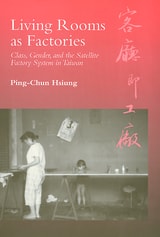
In Taiwan, small-scale subcontracting factories of thirty employees or less make items for export, like the wooden jewelry boxes that Ping-Chun Hsiung made when she worked in six such factories. These factories are found in rice fields and urban areas, front yards and living rooms, mostly employing married women in line with the government slogan that promotes work in the home—"Living Rooms as Factories."
Hsiung studies the experiences of the married women who work in this satellite system of factories, and how their work and family lives have contributed to Taiwan's 9.1 percent GNP growth over the last three decades, the "economic miracle." This vivid portrayal of the dual lives of these women as wives, mothers, daughters-in-law and as manufacturing workers also provides sophisticated analyses of the links between class and gender stratification, family dynamics, state policy, and global restructuring within the process of industrialization.
Hsiung uses ethnographic data to illustrate how, in this system of intersecting capitalist logic and patriarchal practices, some Taiwanese women experience upward mobility by marrying into the owners' family, while others remain home and wage workers. Although women in both groups acknowledge gender inequality, this commonality does not bridge divergent class affiliations. Along with a detailed account of the oppressive labor practices, this book reveals how workers employ clandestine tactics to defy the owners' claims on their labor.
Living the Changes
Joan Turner
University of Manitoba Press, 1990
Living with Lupus
Women and Chronic Illness in EcuadorBy Ann Miles
University of Texas Press, 2013
Once associated only with the wealthy and privileged in Latin America, lifelong illnesses are now emerging among a wider cross section of the population as an unfortunate consequence of growing urbanization and increased life expectancy. One of these diseases is the chronic autoimmune disorder lupus erythematosus. Difficult to diagnose and harder still to effectively manage, lupus challenges the very foundations of women’s lives, their real and imagined futures, and their carefully constructed gendered identities. While the illness is validated by medical science, it is poorly understood by women, their families, and their communities, which creates multiple tensions as women attempt to make sense of an unpredictable, expensive, and culturally suspect medically managed illness.
Living with Lupus vividly chronicles the struggles of Ecuadorian women as they come to terms with the experience of debilitating chronic illness. Drawing on years of ethnographic research, Ann Miles sensitively portrays the experiences and stories of Ecuadorian women who suffer with the intractable and stigmatizing disease. She uses in-depth case histories, rich in ethnographic detail, to explore not only how chronic illness can tear at the seams of women’s precarious lives, but also how meanings are reconfigured when a biomedical illness category moves across a cultural landscape. One of the few books that deals with the meanings and experiences of chronic illness in the developing world, Living with Lupus contributes to our understanding of a significant global health transition.

Lizards on the Mantel, Burros at the Door
A Big Bend MemoirBy Etta Koch with June Cooper Price
University of Texas Press, 1999
A woman who went West with her husband in the 1840s must have expected hardships and privation, but during the 1940s, when Etta Koch stopped off in Big Bend with her young family and a 23-foot travel trailer in tow, she anticipated no more than a civilized camping trip between her old home in Ohio and a new one in Arizona. It was only when she found herself moving into an old rock house without plumbing or electricity in the new Big Bend National Park that Etta realized, "From the sheltered life of a city girl of moderate circumstances, I too would have to face the reality of frontier living."
In this book based on her journals and letters, Etta Koch and her daughter June Cooper Price chronicle their family's first years (1944-1946) in the Big Bend. Etta describes how her photographer husband Peter Koch became captivated by the region as a place for natural history filmmaking-and how she and their three young daughters slowly adapted to a pioneer lifestyle during his months' long absences on the photo-lecture circuit. In vivid, often humorous anecdotes, she describes making the rock house into a home, getting to know the Park Service personnel and other neighbors, coping with the local wildlife, and, most of all, learning to love the rugged landscape and the hardy individuals who call it home.
Lolas' House
Filipino Women Living with WarM. Evelina Galang
Northwestern University Press, 2017
During World War II more than one thousand Filipinas were kidnapped by the Imperial Japanese Army. Lolas’ House tells the stories of sixteen surviving Filipino “comfort women.”
M. Evelina Galang enters into the lives of the women at Lolas’ House, a community center in metro Manila. She accompanies them to the sites of their abduction and protests with them at the gates of the Japanese embassy. Each woman gives her testimony, and even though the women relive their horror at each telling, they offer their stories so that no woman anywhere should suffer wartime rape and torture.
Lolas’ House is a book of testimony, but it is also a book of witness, of survival, and of the female body. Intensely personal and globally political, it is the legacy of Lolas’ House to the world.

Lonesome Cowgirls and Honky-Tonk Angels
The Women of Barn Dance RadioKristine M. McCusker
University of Illinois Press, 2007
Drawing on personal interviews and rich archival material from the Grand Ole Opry, Kristine M. McCusker examines the gendered politics of the images through the lives and careers of six women performers: Linda Parker, the Girls of the Golden West (Milly and Dolly Good), Lily May Ledford, Minnie Pearl, and Rose Lee Maphis.
Loss, A Love Story
Imagined Histories and Brief EncountersSophie Ratcliffe
Northwestern University Press, 2024
Part memoir, part imagined history, this unique personal essay depicts the intimate experience of childhood bereavement, lost love affairs, and the complicated realities of motherhood and marriage. Framed by an extended train journey, author Sophie Ratcliffe turns to the novels, novelists, and heroines who have shaped her emotional and romantic landscapes. She transports us with her to survey the messiness of everyday life, all while reflecting on steam propulsion and pop songs, handbags and honeymoons, Anna Karenina and Anthony Trollope, former lovers and forgotten muses. Frank, funny, tender, and transporting, Loss, A Love Story asks why we fall in, and out, of love—and how we might understand doing so amid the ongoing upheavals and unwritten futures of the twenty-first century.
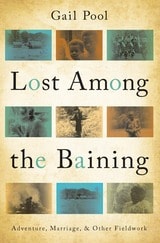
Lost Among the Baining
Adventure, Marriage, and Other FieldworkGail Pool
University of Missouri Press, 2015
In the late sixties, Gail Pool and her husband set off for an adventure in New Guinea. He was a graduate student in anthropology; she was an aspiring writer. They prepared, as academics do, by reading, practicing with language tapes, consulting with the nearest thing to experts, and then, excited and optimistic, off they went. But all their research could not prepare them for the reality of life in the jungle. As they warded off gargantuan insects, slogged through seemingly endless mud, and turned on each other in fatigue and frustration, they struggled to somehow connect with their enigmatic hosts, the Baining—a people who showed no desire to be studied.
Sixteen months later they returned home. Despite months of trying, they had not been able to make sense of the Baining’s culture. Worse yet, their lives no longer seemed to make sense. Pool put her journals away. Her husband abandoned the study of anthropology.
Decades later, Pool returned to her journals and found in her jumbled notes the understanding that had eluded her twenty-three–year-old self. Finally, she and her husband returned to New Guinea for a shorter visit and a warm reunion with the tribe that challenged them on so many levels and, Pool now realized, made their journey and lives deeper and richer.
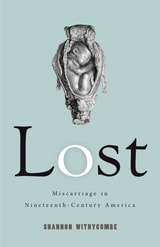
Lost
Miscarriage in Nineteenth-Century AmericaWithycombe, Shannon
Rutgers University Press, 2019
In Lost, medical historian Shannon Withycombe weaves together women’s personal writings and doctors’ publications from the 1820s through the 1910s to investigate the transformative changes in how Americans conceptualized pregnancy, understood miscarriage, and interpreted fetal tissue over the course of the nineteenth century. Withycombe’s pathbreaking research reveals how Americans construed, and continue to understand, miscarriage within a context of reproductive desires, expectations, and abilities. This is the first book to utilize women’s own writings about miscarriage to explore the individual understandings of pregnancy loss and the multiple social and medical forces that helped to shape those perceptions. What emerges from Withycombe’s work is unlike most medicalization narratives.
Lottie Deno
A Novel of the Civil War and the American SouthwestFrank Thurmond
Parkhurst Brothers, Inc., 2024
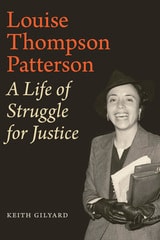
Louise Thompson Patterson
A Life of Struggle for JusticeKeith Gilyard
Duke University Press, 2017
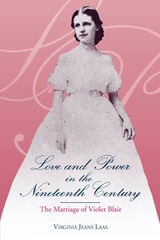
Love and Power in the Nineteenth Century
The Marriage of Violet BlairVirginia Jeans Laas
University of Arkansas Press, 1998
Winner, 1999 Missouri Conference on History Book Award
This fascinating biography of a marriage in the Gilded Age closely examines the dynamic flow of power, control, and love between Washington blue blood Violet Blair and New Orleans attorney Albert Janin. Based on their voluminous correspondence as well as Violet’s extensive diaries, it offers a thoroughly intimate portrait of a fifty-four-year union which, in many ways, conformed to societal strictures, yet always created its own definition of itself in order to fit the flux of needs of both husband and wife.
Central to their story is Violet’s fierce determination to maintain her autonomy within the patriarchic institution of marriage. An enduring belle who thought, talked, and acted with the assurance and self-confidence of one whose wishes demanded obedience, she rejected the Victorian ideal of women as silent, submissive consorts. Yet her feminism was a private one, not played out on a public stage but kept to the confines of her own daily life and marriage.
With abundant documentary evidence to draw upon, Laas ties this compelling story to broader themes of courtiship behavior, domesticity, gender roles, extended family bonds, elitism, and societal stereotyping. Deeply researched and beautifully written, Love and Power in the Nineteenth Century has the dual virtue of making an important historical contribution while also appealing to a broad popular audience.

Love in the Time of Zika
Environmental Crisis and the Future of ReproductionPaige Marie Patchin
Duke University Press, 2026

Love's Sweet Return
The Harlequin StoryMargaret Ann Jensen
University of Wisconsin Press, 1984
Love’s $weet Return examines the phenomenon of romance fiction, focusing specifically on one of the most successful book publishers in the world, the Canadian-based Harlequin Enterprises. Margaret Jensen details the rise of the company, examines the Harlequin formula, and evaluates the growth and impact of both Harlequin and its competition. She also assesses recent shifts in the content of Harlequins, particularly as they pertain to women's changing roles in society.
Love, Anarchy, & Emma Goldman
A BiographyFalk, Candace
Rutgers University Press, 1990
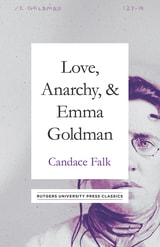
Love, Anarchy, & Emma Goldman
A BiographyCandace Serena Falk
Rutgers University Press, 2019
“Fascinating …With marvelous clarity and depth, Candace Falk illuminates for us an Emma Goldman shaped by her time yet presaging in her life the situation and conflicts of women in our time.” —Tillie Olsen
One of the most famous political activists of all time, Emma Goldman was also infamous for her radical anarchist views and her “scandalous” personal life. In public, Goldman was a firebrand, confidently agitating for labor reform, anarchism, birth control, and women’s independence. But behind closed doors she was more vulnerable, especially when it came to the love of her life.
Love, Anarchy, & Emma Goldman is an account of Goldman’s legendary career as a political activist. But it is more than that—it is a biography that offers an intimate look at how Goldman’s passion for social reform dovetailed with her passion for one man: Chicago activist, hobo king, and red-light district gynecologist Ben Reitman. Candace Falk takes us into the heart of their tumultuous love affair, finding that even as Goldman lectured on free love, she confronted her own intense jealousy.
As director of the Emma Goldman papers, Falk had access to over 40,000 writings by Goldman—including her private letters and notes—and she draws upon these archives to give us a rare insight into this brilliant, complex woman’s thoughts. The result is both a riveting love story and a primer on an exciting, explosive era in American politics and intellectual life.
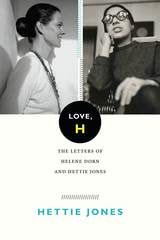
Love, H
The Letters of Helene Dorn and Hettie JonesHettie Jones
Duke University Press, 2016
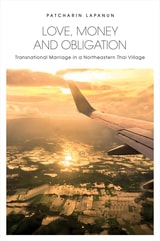
Love, Money and Obligation
Transnational Marriage in a Northeastern Thai VillagePatcharin Lapanun
National University of Singapore Press, 2019
Northeast Thailand has seen an increase in marriages between Thai women and farang (Western) men. Often the women are less well off and from rural areas in the country, while the men largely come from the United States and Europe and settle permanently in Thailand. These unions have created a new social class, with distinctive consumption patterns and lifestyles. And they are challenging gender relations and local perceptions of sexuality, marriage, and family.
In Love, Money and Obligation, Patcharin Lapanun offers an exploration of these marriages and their larger effect on Thai communities. Her interviews with women and men engaging in these transnational relationships highlight the complexities of the associations, as they are shaped by love, money, and gender obligations on the one hand and the dynamics of socio-cultural and historical contexts on the other. Her in-depth and even-handed examination highlights the importance of women’s agency and the strength and creativity of people seeking to forge meaningful lives in the processes of social transition and in the face of local and global encounters.
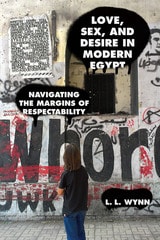
Love, Sex, and Desire in Modern Egypt
Navigating the Margins of RespectabilityBy L. L. Wynn
University of Texas Press, 2018
Cairo is a city obsessed with honor and respectability—and love affairs. Sara, a working-class woman, has an affair with a married man and becomes pregnant, only to be abandoned by him; Ayah and Zeid, a respectably engaged couple, argue over whether Ayah’s friend is a prostitute or a virgin; Malak, a European belly dancer who sometimes gets paid for sex, wants to be loved by a man who won’t treat her like a whore just because she’s a dancer; and Alia, a Christian banker who left her abusive husband, is the mistress of a wealthy Muslim man, Haroun, who encourages business by hosting risqué parties for other men and their mistresses.
Set in transnational Cairo over two decades, Love, Sex, and Desire in Modern Egypt is an ethnography that explores female respectability, male honor, and Western theories and fantasies about Arab society. L. L. Wynn uses stories of love affairs to interrogate three areas of classic anthropological theory: mimesis, kinship, and gift. She develops a broad picture of how individuals love and desire within a cultural and political system that structures the possibilities of, and penalties for, going against sexual and gender norms. Wynn demonstrates that love is at once a moral horizon, an attribute that “naturally” inheres in particular social relations, a social phenomenon strengthened through cultural concepts of gift and kinship, and an emotion deeply felt and desired by individuals.
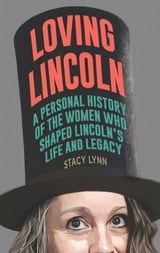
Loving Lincoln
A Personal History of the Women Who Shaped Lincoln's Life and LegacyStacy Lynn
Southern Illinois University Press, 2025
WINNER, 2026 Illinois State Historical Society Russell P. Strange Book of the Year Award!
Rediscovering Lincoln through the female gaze
Abraham Lincoln belongs to everybody. The women he interacted with helped forge the outstanding moral character of America's greatest president. This unique Abraham Lincoln biography features thirty historical and personal essays, and within them, the stories of more than ninety women, each with their own mini biographies in an appendix. Among them are Lincoln’s friends, clients, and extended family, as well as writers, artists, and—blurring the lines between history and memoir—author Stacy Lynn herself.
As a professional Lincoln scholar and editor, Lynn was often frustrated that male historians often overlooked Lincoln’s love for and friendship with women. Here, she posits a new paradigm—one that, instead of downplaying women, lifts up their interactions with Lincoln.
Lincoln understood the importance of the women in his life, and he put women’s wellbeing at the center of his personal, professional, and political ethos. He was loved by two strong pioneer mothers as well as sisters, friends, nieces, friends’ daughters, and his wife. He served women clients during his long legal career. As president, he met with women, dedicating time to hear their concerns despite the burdens of office. He replied to letters women wrote him. He believed in their capabilities and revolutionized the role of women in the workforce. After Lincoln’s death, women continued to shape his legacy. Mary Lincoln ensured his burial among friends, artist Vinnie Ream sculpted his statue in the US Capitol, and biographer Ida Tarbell provided a nuanced portrayal of his life. Harriet Monroe and Ruth Painter Randall further cemented his place in literature and history.
Lynn presents a fresh perspective on Lincoln, connecting his story to the stories of women and showcasing his kindness, sensitivity, and moral center. She explores how women shaped Lincoln’s inspirational legacy and pays homage to all the women who gave Lincoln to the world. Lynn’s unique blending of history, biography, and her own story reveals the ways in which an emotional connection to the historical figures one studies opens the door to richer human and historical understanding. By inviting readers to feel the past as well as read it, Lynn demonstrates that history matters most when it engages our minds and hearts.

Lucky Tomorrow
StoriesDeborah Jiang-Stein
University of Minnesota Press, 2025
Lives of longing and resilience, searching and belonging in a debut story collection from a memoirist and renowned advocate for change
For a Lucky Tomorrow Buy a Flower Today. Is it true? a prospective customer asks. About the luck? “Absolutely!” Felma says. Flowers, she knows, are all that’s anchored in this world, even if not for long, and like others in these luminous stories, Felma knows what it is to be rootless. In Lucky Tomorrow, Deborah Jiang-Stein presents an unforgettable cast of characters dreaming of redemption, purpose, and connection in a wounded yet beautiful world.
A young girl stuck working at her family’s candy stand. A former priest trapped on a crowded train. A prisoner robbed of the book she’s been writing. A father haunted by his broken family. A woman confined to a psych ward. A reverend caring for her dying housemate. And Felma, a flower vendor, searching for the daughter she gave birth to while in prison, who was swiftly bundled away. Felma’s story leads us in, through, and around the others—a central beating heart for these lives on the fringes, where Jiang-Stein finds a singular, tenacious humanity.
The stories in Lucky Tomorrow move through settings drawn from the path of the author’s own life: Seattle, where she grew up after being born in an Appalachian prison; Tokyo, where she once lived; the Twin Cities, where she currently resides; and the American South, where she travels for much of her advocacy work with women in prison. Pushing the boundaries of genre, Jiang-Stein delicately layers the stories of these outcasts, eccentrics, and visionaries, gathering them in from the shadows with remarkable empathy and candor, laying bare our shared sorrows and joys.
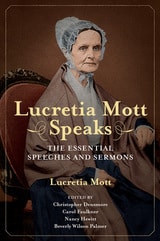
Lucretia Mott Speaks
The Essential Speeches and SermonsLucretia Mott. Edited by Christopher Densmore, Carol Faulkner, Nancy Hewitt, and Beverly Wilson Palmer
University of Illinois Press, 2017
Drawing on widely scattered archives, newspaper accounts, and other sources, Lucretia Mott Speaks unearths the essential speeches and remarks from Mott's remarkable career. The editors have chosen selections representing important themes and events in her public life. Extensive annotations provide vibrant context and show Mott's engagement with allies and opponents. The speeches illuminate her passionate belief that her many causes were all intertwined. The result is an authoritative resource, one that enriches our understanding of Mott's views, rhetorical strategies, and still-powerful influence on American society.
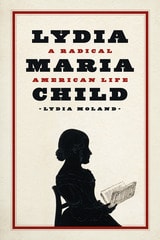
Lydia Maria Child
A Radical American LifeLydia Moland
University of Chicago Press, 2022
By 1830, Lydia Maria Child had established herself as something almost unheard of in the American nineteenth century: a beloved and self-sufficient female author. Best known today for the immortal poem “Over the River and through the Wood,” Child had become famous at an early age for spunky self-help books and charming children’s stories. But in 1833, Child shocked her readers by publishing a scathing book-length argument against slavery in the United States—a book so radical in its commitment to abolition that friends abandoned her, patrons ostracized her, and her book sales plummeted. Yet Child soon drew untold numbers to the abolitionist cause, becoming one of the foremost authors and activists of her generation.
Lydia Maria Child: A Radical American Life tells the story of what brought Child to this moment and the extraordinary life she lived in response. Through Child’s example, philosopher Lydia Moland asks questions as pressing and personal in our time as they were in Child’s: What does it mean to change your life when the moral future of your country is at stake? When confronted by sanctioned evil and systematic injustice, how should a citizen live? Child’s lifetime of bravery, conviction, humility, and determination provides a wealth of spirited guidance for political engagement today.
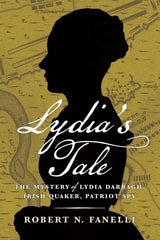
Lydia's Tale
The Mystery of Lydia Darragh, Irish Quaker, Patriot SpyRobert N. Fanelli
Westholme Publishing, 2025
Lydia’s Tale:The Mystery of Lydia Darragh, Irish Quaker, Patriot Spy by Robert N. Fanelli uncovers a myriad of previously unknown records, knitting together for the first time the life and experiences of this remarkable heroine of the American Revolution who lived in the heart of Philadelphia. Behind her story we find an assertive woman who took an active hand in the affairs of her family and her community. Drawing on genealogical sources, legal documents, and other correspondence, the author reconstructs Lydia Darragh’s early life in Dublin, her livelihood in Pennsylvania, and how the Revolution shaped her and her children’s lives. Exploring the context of Lydia’s tale sheds light on the activities of women in Revolutionary Philadelphia, reveals the complex issues faced by pacifist Quakers in a time of war, and brings to light the contributions of Irish immigrants in securing America’s freedom.
The author’s careful research reveals little known details and corrects historians’ common misapprehensions about the Revolutionary period. Along the way, we meet often overlooked figures, including diarist Christopher Marshall and his family, the irascible Quaker recluse Bathsheba Bowers, and Blair McClenachan, the wealthy Patriot financier who also served his adopted country as a common soldier. Lydia Darragh is frequently included among that small group of women cited as Revolutionary heroines. This detailed microhistory demonstrates how legend can inform the study of history, describing how one woman’s personal reminiscence morphed into a piece of American mythology, now recovered in the historical context it deserves.
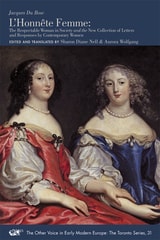
L’Honnête Femme
The Respectable Woman in Society and the New Collection of Letters and Responses by Contemporary WomenJacques Du Bosc
Iter Press, 2014
—Reverend John J. Conley, SJ
Knott Professor of Philosophy, Loyola University Maryland