Results by title
3388 books match the query 'Fiction' and 128 start with l
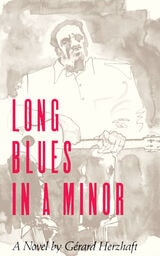
Long Blues in A Minor
A NovelGerard Herzhaft
University of Arkansas Press, 1988
Long Live the Counter-Revolution
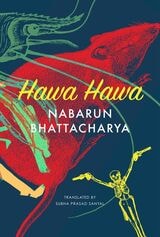
Hawa Hawa' and Other StoriesNabarun Bhattacharya
Seagull Books, 2022
In this wildly inventive collection of Nabarun Bhattacharya’s stories, we meet characters such as a trigger-happy cop in an authoritarian police state, a man who holds on to a piece of rope from a deadly noose, a retired revolutionary thrilled by delusions of grandeur, and people working for a corporation that arranges lavish suicides for a price. Ranging from scathing satires of society to surreal investigations of violence and love, these stories are also a window onto the political and social climate in Bengal, tracing both pan-Indian developments like the 1975 Emergency and local ones like militant-leftist Naxalism and the decades-long Communist reign in the state. Expertly translated from the Bengali, Hawa Hawa and Other Stories is a journey through the mind of one of the most daring countercultural writers of India, one with particular resonance in these chaotic times.
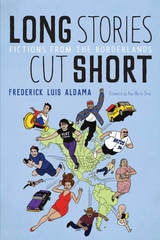
Long Stories Cut Short
Fictions from the BorderlandsFrederick Luis Aldama; Foreword by Ana María Shua
University of Arizona Press, 2017
Xbox videogamer cholo cyberpunks. Infants who read before they talk. Vatos locos, romancing abuelos, border crossers and border smugglers, drug kingpins, Latina motorbike riders, philosophically musing tweens, and so much more.
The stories in this dynamic bilingual prose-art collection touch on the universals of romance, family, migration and expulsion, and everyday life in all its zany configurations. Each glimpse into lives at every stage—from newborns and children to teens, young adults, and the elderly—further submerges readers in psychological ups and downs. In a world filled with racism, police brutality, poverty, and tensions between haves and have-nots, these flashes of fictional insight bring gleaming clarity to life lived where all sorts of borders meet and shift.
Frederick Luis Aldama and graphic artists from Mapache Studios give shape to ugly truths in the most honest way, creating new perceptions, thoughts, and feelings about life in the borderlands of the Américas. Each bilingual prose-art fictional snapshot offers an unsentimentally complex glimpse into what it means to exist at the margins of society today. These unflinching and often brutal fictions crisscross spiritual, emotional, and physical borders as they give voice to all those whom society chooses not to see.

Lookalikes
Thomas Meinecke
Diaphanes, 2026
A literary tour de force through the symbolic landscapes of recent cultural history, Lookalikes is a text in which everything is as it seems and nothing is as it is.
Thomas Meinecke’s lookalikes resemble many people––Marlon Brando, Shakira, Justin Timberlake, or Josephine Baker to name a few––but never themselves. Illusion is their capital; imitation is their business. They stroll through Düsseldorf's posh Königsallee, reading, quoting, and plagiarizing their way through the history of pop culture and philosophy, exploring categories of realness in parallel worlds and digital chat forums. At the same time, yet another Thomas wanders Brazil in disguise, tracing the journey of Hubert Fichte and his doppelgänger Jäcki. In this endless play of similarities, all identity is lost.
Between literary and sexual genres, mimesis and authenticity, fiction and reality, these lookalikes only ever find the Other, just as Meinecke’s text duplicates itself in the furor of allusions and reference systems, constantly branching out anew, never remaining the same, always changing these so-called original signs.
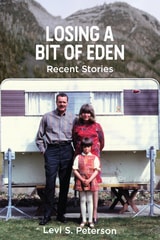
Losing a Bit of Eden
Recent StoriesLevi S. Peterson
Signature Books, 2021
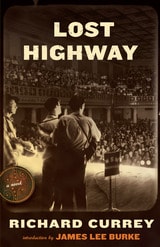
Lost Highway
RICHARD CURRY
West Virginia University Press, 2005
Richard Currey's Lost Highway has attracted a legion of admirers since its initial publication in 1997. The book depicts the epic struggle of an ordinary person living his dreams and following his passion. Lost Highway is the story of Sapper Reeves, a gifted country musician from the small town of Maxwell, West Virginia. Sapper’s story covers the events of more than half a century, from his birth in a poor coal mining town through his travels on the back roads of Appalachia in search of recognition and respect. Along the way, Sapper’s embattled love for his wife and struggle to come to terms with his combat-wounded son form the basis of his artistic and personal redemption.
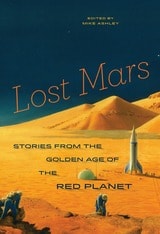
Lost Mars
Stories from the Golden Age of the Red PlanetEdited by Mike Ashley
University of Chicago Press, 2018
An antique-shop owner gets a glimpse of the Red Planet through an intriguing artifact. A Martian’s wife contemplates the possibility of life on Earth. A resident of Venus describes his travels across the two alien planets. From an arid desert to an advanced society far superior to that of Earth, portrayals of Mars have differed radically in their attempts to uncover the truth about our neighboring planet.
Since the 1880s, after an astronomer first described “channels” on the surface of Mars, writers have been fascinated with the planet, endlessly speculating on what life on Mars might look like and what might happen should we make contact with the planet's inhabitants. This wonderful collection offers ten wildly imaginative short stories from the golden age of science fiction by such classic sci-fi writers as H.G. Wells, Ray Bradbury, and J. G. Ballard, as well as hard-to-find stories by unjustly forgotten writers from the genre.
Assembled and introduced by acclaimed anthologist Mike Ashley, these stories vividly evoke a time when notions of life on other planets—from vegetation and water to space invaders and utopian societies—were new and startling. As we continue to imagine landing people on Mars, these stories are well worth revisiting as gripping and vivid dispatches from futurists past.
Lost in the City
Tree of Desire and Serafin: Two novels by Ignacio SolaresBy Ignacio Solares
University of Texas Press, 1998
Cristina, the young protagonist of Tree of Desire, and her little brother Joaquín run away from a home that is outwardly normal, but inwardly disfunctional. Lost on the streets of Mexico City, they confront some of the most terrifying aspects of city life. Or is it all a dream? The story suggests, without confirming, that sexual abuse has driven Cristina to her desperate escape. But is it an escape? Are they awakening from a dream, or reentering a nightmare?
Serafín, too, is lost in the city. Searching for his father who has deserted the family, he is virtually helpless amid the city dangers. Serafín finds compassion in surprising places, but will he survive to return to his mother and their rural village?
These two novels by one of Mexico's premier writers illuminate many aspects of contemporary Mexican life. Solares describes Mexico's different social classes with Dickensian realism. His focus on young protagonists, unusual in Mexican literature, opens a window onto problems of children's vulnerability that know no national borders. At the same time, his use of elements of the fantastic and the paranormal, and his evocative writing style, make reading his novels a most pleasurable experience.
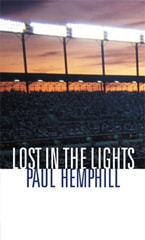
Lost in the Lights
Sports, Dreams, and LifePaul Hemphill
University of Alabama Press, 2003
A veteran journalist’s collection of sportswriting on the blue-collar South.
Sport mirrors life. Or, in Paul Hemphill's opinion, “Sport is life.” The 15 pieces in this compelling collection are arranged along the timeline for an aspiring athlete's dream: “The Dawning,” with stories about boys hoping and trying to become men, “The Striving,” about athletes at work, defining themselves through their play, and “The Gloaming,” about the twilight time when athletes contend with broken dreams and fading powers. Through all the pieces, Hemphill exhibits his passion for the sports he covers and a keen eye for the dramas, details, and hopes that fire the lives of athletes, allowing them to become prototypes of all human existence.
Most of the stories have been previously published in such national magazines as Sports Illustrated, True, Life, Today’s Health, and Sport. In “White Bread and Baseball,” the author chronicles his own boyhood infatuation with the minor-league Birmingham Barons, while in “Yesterday’s Hero” he details the sad end of a former All-American football player named Bob Suffridge, a portrait of a lion in winter. “It’s a Mad, Mad, Mad Whirl” covers nights on the road with the roller derby, and “Saturday Night at Dixie Speedway” captures all the raucous glory of a stock-car dirt track under the hot lights. “Big Night, Big City” tells of an anxious, small-town high school basketball team facing their crucial chance for glory at a state tournament in Atlanta, and the classic “Mister Cobb” details a personal lesson on sliding the young author received from “the greatest player in the history of baseball.”
These stories are often bittersweet, emotional, and mythic: little dramas bearing impact and psychological “size.” Some of them are distinctively “Dixie,” but they ultimately transcend time and place. Frye Gaillard, author of Kyle at 200 MPH: A Sizzling Season in the Petty-NASCAR Dynasty, writes, “For more than 30 years, Paul Hemphill has been one of the finest writers in the South, and I think he proves it again in this collection. He exudes a natural feel for the players and the game, drawing out the real-life themes of struggle and desire, occasional triumph, and the omnipresent possibilities of heartache and failure.”
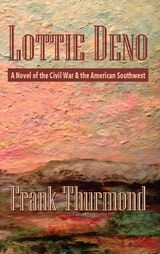
Lottie Deno
A Novel of the Civil War and the American SouthwestFrank Thurmond
Parkhurst Brothers, Inc., 2024

Love
Tomas Espedal
Seagull Books, 2022
Love narrates celebrated Norwegian writer Tomas Espedal’s search for death. The decision blossoms within I—the I-person—"like some interior bloom, black and beautiful” on a warm spring day in May, and it is this resolution that fills his self-imposed final year with meaning: Death. It can be so beautiful. One must create this beauty for oneself. One must submit to this naturalness, one must choose it, like pulling the duvet over oneself in bed or jumping off a bridge. But almost immediately life deals I a wildcard: a new love affair brings some of the best days he’s ever known and threatens his pact with death. Will he be able to leave Aka and the child she’s carrying? He has put an endpoint on his life to intensify experience but is he sure that disappearing from their lives, becoming an absent father, is the best thing for all of them? Set against Espedal’s constant reference, the ebb and flow of the seasons, something close to ecstasy propels this most introspective of narratives towards a universal truth.
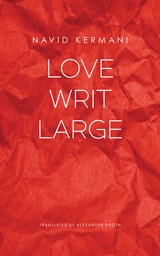
Love Writ Large
Navid Kermani
Seagull Books, 2018
For a fifteen-year-old, falling in love can eclipse everything else in the world, and make a few short weeks feel like a lifetime of experience. In Love Writ Large, Navid Kermani captures those intense feelings, from the emotional explosion of a first kiss to the staggering loss of a first breakup. As his teenage protagonist is wrapped up in these all-consuming feelings, however, Germany is in the crosshairs of the Cold War—and even the personal dramas of a small-town grammar school are shadowed by the threat of the nuclear arms race. Kermani’s novel manages to capture these social tensions without sacrificing any of the all-consuming passion of first love and, in a unique touch, sets the boy’s struggles within the larger frame of the stories and lives of numerous Arabic and Persian mystics. His becomes a timeless tale that reflects on the multiple ways love, loss, and risk weigh on our everyday lives.
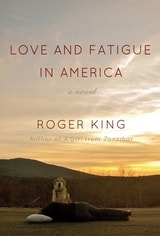
Love and Fatigue in America
Roger King
University of Wisconsin Press, 2012
Love and Fatigue in America records an Englishman’s decade-long journey through his newly adopted country in the company of a mystifying illness and a charismatic dog.
When he receives an unexpected invitation from an unfamiliar American university, he embraces it as a triumphant new beginning. Instead, on arrival, he is stricken with a persistent inability to stand up or think straight, and things quickly go wrong. Diagnosed with ME disease—chronic fatigue syndrome—he moves restlessly from state to state, woman to woman, and eccentric doctor to eccentric doctor, in a search for a love and a life suited to his new condition. The journey is simultaneously brave, absurd, and instructive.
Finding himself prostrate on beds and couches from Los Alamos to Albany, he hears the intimate stories offered by those he encounters—their histories, hurts, and hopes—and from these fragments an unsentimental map emerges of the inner life of a nation. Disability has shifted his interest in America from measuring its opportunities to taking the measure of its humanity. Forced to consider for himself the meaning of a healthy life and how best to nurture it, he incidentally delivers a report on the health of a country.
By turns insightful, comic, affecting, and profound, Roger King’s Love and Fatigue in America briskly compresses an illness, a nation, and an era through masterly blending of literary forms. In a work that defies categorization, and never loses its pace or poise, the debilitated narrator is, ironically, the most lively and fully awake figure in the book.
“As the disease drives the narrator city to city, woman to woman, and doctor to doctor, it brings into relief many of America’s follies and excesses, most notably our health-care system, which King portrayed as antiquated, bureaucratic, and inhumane. After more than fifteen years, America brings the narrator ‘not aspiration realized, nor a largeness of life fitting to its open spaces, but the nascent ability to be satisfied with less.’”—The New Yorker
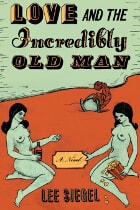
Love and the Incredibly Old Man
A NovelLee Siegel
University of Chicago Press, 2008
Summoned with cold hard cash and a pinch of flattery, a professor and novelist named Lee Siegel finds himself in Eagle Springs, Florida, attempting to give form to the life of the man who, contrary to popular and historical opinion, did indeed find the Fountain of Youth. Spending humid days listening to the romantic ramblings of the old man and sleepless nights doubting yet trying to craft these reminiscences into a narrative that will satisfy the literary aspirations of his subject, Siegel the ghostwriter spins an improbable tale filled with Native Americans, insatiable monarchs, philandering cantors, deliriously passionate nuns, delicate actresses, androgynous artists, and deceptions small and large. For de León, and for Siegel too, centuries of conquest and colonialism, fortune and identity, are all refracted through the memories of the conquistador’s lovers, each and every one of them adored “more than any other woman ever.”
Comic, melancholic, lusty, and fully engaged with the act of invention, whether in love or on the page, Love and the Incredibly Old Man continues the real Lee Siegel’s exuberant exploration of that sentiment which Ponce de León confesses has “transported me to the most joyous heights, plunged me to the most dismal depths, and dropped me willy-nilly and dumbfounded at all places in between.”
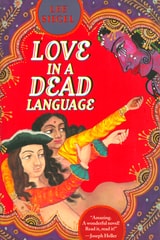
Love in a Dead Language
Lee Siegel
University of Chicago Press, 1999
"Rare is the book that makes one stop and wonder: Is this a literary masterpiece or do I need my head examined? But such is the alternately awe-inspiring and goofy thrall cast by Lee Siegel's Love in a Dead Language. . . . His work stands out as a book that is not simply a novel but its own genus of rollicking, narrative scholarship . . . it is just the cerebral aphrodisiac we need." —Carol Lloyd, Salon
"Immensely clever and libidinously hilarious. . . . [T]he most astonishing thing about Love in a Dead Language is its ingenious construction. Insofar as any printed volume can lay claim to being a multimedia work, this book earns that distinction." —Paul di Filippo, Washington Post Book World
"Now along comes Lee Siegel, who mixes a bit of Borges with some Nabokov and then adds an erotic gloss from the Kama Sutra to write Love in a Dead Language, a witty, bawdy, language-rich farce of academic life. . . . Whether it is post-modern or not, Love in a Dead Language is pulled off with such unhinged élan by Mr. Siegel that it is also plain good fun, a clever, literate satire in which almost everything is both travestied and, strangely, loved by its author." —Richard Bernstein, The New York Times
"Love in a Dead Language deserves space on the short, high shelf of literary wonders." —Tom LeClair, New York Times Book Review
1999 New York Times Book Review Notable Book of the Year
Love, Dirt
Bruce Johnson
University of Iowa Press, 2025

Loving Her
Community-Building as Crime ControlUniversity Press of New England, 1997
Loving Little Egypt
A NovelThomas McMahon
University of Chicago Press, 1986
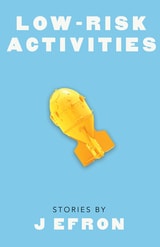
Low-Risk Activities
StoriesJ Efron
University of Alabama Press, 2025
Formally daring and emotionally disarming, Low-Risk Activities spins out twenty-two uncanny stories that feel like dispatches from a future already here—and already unraveling.
J Efron’s Low-Risk Activities is a genre-defying collection that slips between interview transcript, personal confession, government form, and speculative fable—told through the voices of orphans, immortals, office workers, digital nomads, and posthuman survivors. These are characters in limbo, each trying to make sense of a fractured world where logic doesn’t always follow law.
The book opens with Lan Caihe, a faux-memoir in which a gender-fluid, possibly immortal narrator navigates trauma, desire, and the politics of being unclassifiable—part myth, part autofiction, and entirely singular. Later entries mimic psychological evaluations, immigration interrogations, and philosophical questionnaires, inviting the reader not just to observe, but to participate.
Structured like a psychic excavation, Low-Risk Activities questions how we define personhood, how language shapes identity, and how systems reduce people to data—only to lose the meaning of what that data once held. Efron’s voice is intimate yet disorienting, full of humor, dread, and lyrical estrangement. Fans of Anne Carson, Jenny Boully, and Rivka Galchen will find familiar resonance in this work that refuses to resolve neatly—and in doing so, reveals something startlingly true.
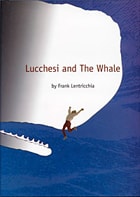
Lucchesi and The Whale
Frank Lentricchia
Duke University Press, 2001
Having become “a mad Ahab of reading,” who is driven to dissect the “artificial body of Melville’s behemothian book” to grasp its truth, Lucchesi allows his thoughts to wander and loop from theory to dream to reality to questionable memory. But his black humor-tinged musings are often as profoundly moving as they are intellectual, such as the section in which he ponders the life and philosophy of Ludwig Wittgenstein in relation to the significance of a name—and then attempts to share these thoughts with a sexy, middle-aged flight attendant—or another in which he describes a chance meeting with a similarly-named mafia don.
Despite apparent spiritual emptiness, Lucchesi in the end does find “a secret meaning” to Moby-Dick. And Lentricchia’s creations—both Lucchesi and The Whale and its main character—reveal this meaning through a series of ingeniously self-reflective metaphors, in much the way that Melville himself did in and through Moby-Dick. Vivid, humorous, and of unparalleled originality, this new work from Frank Lentricchia will inspire and console all who love and ponder both great literature and those who would write it.
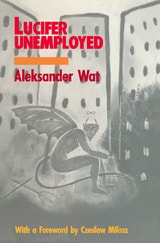
Lucifer Unemployed
Aleksander Wat
Northwestern University Press, 1990
The title story finds a superbly ironic Lucifer wandering the Europe of the late 1920s in search of a mission: what impact can a devil have in a godless time? What is his sorcery in a society far more diablical than the devil himself? Too idealistic for a world full of modern cruelties, the unemployable Lucifer finally finds the only means of guaranteed immortality. In "The Eternally Wandering Jew," steady Jewish conversion to Christianity results in Nathan the Talmudist reigning as Pope Urban IX. The hilarious satire on power, "Kings in Exile," unfolds with the dethroned monarchs of Europe meeting to found their own republic in an uninhabited island in the Indian Ocean.
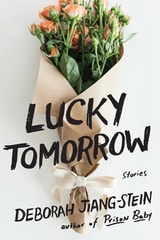
Lucky Tomorrow
StoriesDeborah Jiang-Stein
University of Minnesota Press, 2025
Lives of longing and resilience, searching and belonging in a debut story collection from a memoirist and renowned advocate for change
For a Lucky Tomorrow Buy a Flower Today. Is it true? a prospective customer asks. About the luck? “Absolutely!” Felma says. Flowers, she knows, are all that’s anchored in this world, even if not for long, and like others in these luminous stories, Felma knows what it is to be rootless. In Lucky Tomorrow, Deborah Jiang-Stein presents an unforgettable cast of characters dreaming of redemption, purpose, and connection in a wounded yet beautiful world.
A young girl stuck working at her family’s candy stand. A former priest trapped on a crowded train. A prisoner robbed of the book she’s been writing. A father haunted by his broken family. A woman confined to a psych ward. A reverend caring for her dying housemate. And Felma, a flower vendor, searching for the daughter she gave birth to while in prison, who was swiftly bundled away. Felma’s story leads us in, through, and around the others—a central beating heart for these lives on the fringes, where Jiang-Stein finds a singular, tenacious humanity.
The stories in Lucky Tomorrow move through settings drawn from the path of the author’s own life: Seattle, where she grew up after being born in an Appalachian prison; Tokyo, where she once lived; the Twin Cities, where she currently resides; and the American South, where she travels for much of her advocacy work with women in prison. Pushing the boundaries of genre, Jiang-Stein delicately layers the stories of these outcasts, eccentrics, and visionaries, gathering them in from the shadows with remarkable empathy and candor, laying bare our shared sorrows and joys.
Lucy's Dance
Deb Vanasse
University of Alaska Press, 2011
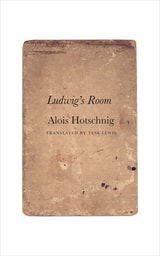
Ludwig's Room
Alois Hotschnig
Seagull Books, 2014
As the story unfolds, it becomes clear that the entire village adheres to an old and widely understood agreement not to expose the many members in the community who had been involved with a nearby prison camp during World War II. This knowledge wraps the entire community—those involved, and those who know of the involvement—in inescapable guilt for generations. Translated from the original German by Tess Lewis, Ludwig’s Room is a story of love, betrayal, honor, and cowardice, as well as the burden of history and the moral demands of the present.
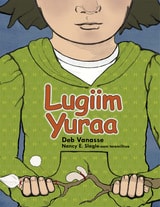
Lugiim Yuraa
Deb Vanasse
University of Alaska Press, 2011
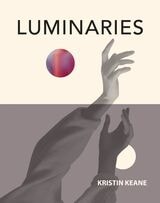
Luminaries
Kristin Keane
Omnidawn, 2021
Luminaries is the winner of the Omnidawn Fabulist Fiction Novelette/Chapbook Prize, selected by Kellie Wells.
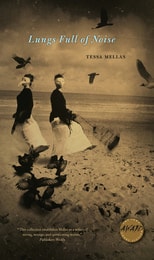
Lungs Full of Noise
Tessa Mellas
University of Iowa Press, 2013
Figure skaters screw skate blades into the bones of their feet to master elusive jumps. A divorcee steals the severed arm of her ex to reclaim the fragments of a dissolved marriage. Following the advice of a fashion magazine, teenaged girls binge on grapes to dye their skin purple and attract prom dates. And a college freshman wages war on her roommate from Jupiter, who has inadvertently seduced all the boys in their dorm with her exotic hermaphroditic anatomy.
But it isn’t just the characters who are in crisis. In Lungs Full of Noise, personal disasters mirror the dissolution of the natural world. Written in lyrical prose with imagination and humor, Tessa Mellas’s collection is an aviary of feathered stories that are rich, emotive, and imbued with the strength to suspend strange new worlds on delicate wings.

Lyric Novella
Annemarie Schwarzenbach
Seagull Books, 2011
Schwarzenbach’s clear, psychologically acute prose makes this novella an evocative narrative, with many intriguing parallels to her own life.
Annemarie Schwarzenbach—journalist, novelist, antifascist, archaeologist, and traveler—has become a European cult figure for bohemian free spirits since the rediscovery of her works in the late 1980s. Lyric Novella is her story of a young man’s obsession with a Berlin variété actress. Despite having his future career mapped out for him in the diplomatic service, the young man begins to question all his family values under Sibylle’s spell. His family, future, and social standing become irrelevant when set against his overriding compulsion to pick her up every night from the theater so they can go for a drive. Bringing the story back to her own life, Schwarzenbach admitted after publication that her hero was in fact a young woman, not a man, leaving little doubt that Lyric Novella is a literary tale of lesbian love during socially and politically turbulent times.