Results by title
4155 books match the query 'State & Local' and 163 start with l
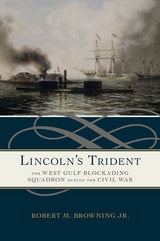
Lincoln's Trident
The West Gulf Blockading Squadron during the Civil WarRobert M. Browning Jr.
University of Alabama Press, 2014
Lincoln’s Trident is the definitive account of the US Navy’s West Gulf Blockading Squadron’s quarantine of the Confederacy in the central and western Gulf of Mexico and adjacent river systems.
In Lincoln’s Trident, Coast Guard historian Robert M. Browning Jr. continues his magisterial series about the Union’s naval blockade of the Confederacy during the American Civil War. Established by the Navy Department in 1862, the West Gulf Blockading Squadron operated from St. Andrews Bay (Panama City), Florida to the Rio Grande River. As with the Navy’s blockade squadrons operating in the Atlantic, the mission of the West Gulf Blockading Squadron was to cripple the South’s economy by halting imports and disrupting cotton exports, the South’s main source of hard currency. The blockade also limited transportation within the South and participated in combined operations with Union land forces.
The history of the squadron comprises myriad parts and players, deployed in a variety of missions across the thousand-mile-wide Western Theater. From disorganized beginnings, the squadron’s leaders and sailors had to overcome setbacks, unfulfilled expectations, and lost opportunities. Browning masterfully captures the many variables that influenced the strategic choices of Navy commanders as they both doggedly pursued unchanging long-term goals as well as improvised and reacted to short-term opportunities.
Notable among its leaders was David Glasgow Farragut, believed by many to be America’s greatest naval hero, who led the squadron through most of the war and the climactic Battle of Mobile Bay. Under his legendary leadership, the squadron not only sealed Confederate sea ports, but also made feints and thrusts up the Mississippi River as far north as Vicksburg, Mississippi.
Knowing the Navy’s role in isolating the Confederate economy and preventing the movement of troops and supplies within the South is crucial to understanding of the outcomes of the Civil War, as well as the importance of naval power in military conflicts. With thirty-five maps and illustrations, Lincoln’s Trident expounds upon an essential part of the Civil War as well as naval and American history.
Lingering Inland
A Literary Tour of the MidwestEdited by Andy Oler Foreword by José Olivarez
University of Illinois Press, 2025
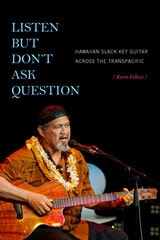
Listen but Don't Ask Question
Hawaiian Slack Key Guitar across the TransPacificKevin Fellezs
Duke University Press, 2019
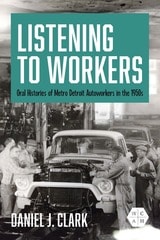
Listening to Workers
Oral Histories of Metro Detroit Autoworkers in the 1950sDaniel J. Clark
University of Illinois Press, 2024
Historians and readers alike often overlook the everyday experiences of workers. Drawing on years of interviews and archival research, Daniel J. Clark presents the rich, interesting, and sometimes confounding lives of men and women who worked in Detroit-area automotive plants in the 1950s.
In their own words, the interviewees frankly discuss personal matters like divorce and poverty alongside recollections of childhood and first jobs, marriage and working women, church and hobbies, and support systems and workplace dangers. Their frequent struggles with unstable jobs and economic insecurity upend notions of the 1950s as a golden age of prosperity while stories of domestic violence and infidelity open a door to intimate aspects of their lives. Taken together, the narratives offer seldom-seen accounts of autoworkers as complex and multidimensional human beings.
Compelling and surprising, Listening to Workers foregoes the union-focused strain of labor history to provide ground-level snapshots of a blue-collar world.
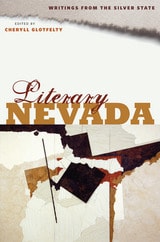
Literary Nevada
Writings from the Silver StateCheryll Glotfelty
University of Nevada Press, 2008
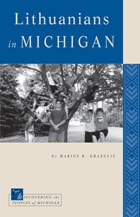
Lithuanians in Michigan
Marius K. Grazulis
Michigan State University Press, 2009
In Lithuanians in Michigan Marius Grazulis recounts the history of an immigrant group that has struggled to maintain its identity. Grazulis estimates that about 20 percent of the 1.6 million Lithuanians who immigrated to the United States arrived on American shores between 1860 and 1918.
While first-wave immigrants stayed mostly on the east coast, by 1920 about one-third of newly immigrated Lithuanians lived in Michigan, working in heavy industry and mining.
With remarkable detail, Grazulis traces the ways these groups have maintained their ethnic identity in Michigan in the face of changing demographics in their neighborhoods and changing interests among their children, along with the challenges posed by newly arriving "modern" Lithuanian immigrants, who did not read the same books, sing the same songs, celebrate the same holidays, or even speak the same language that previous waves of Lithuanian immigrants had preserved in America. Anyone interested in immigrant history will find Lithuanians in Michigan simultaneously familiar, fascinating, and moving.
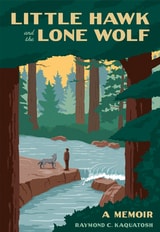
Little Hawk and the Lone Wolf
A MemoirRaymond Kaquatosh
Wisconsin Historical Society Press, 2014
After his father’s death, eight-year-old Ray was sent to an Indian boarding school in Keshena. There he experienced isolation and despair, but also comfort and kindness. Upon his return home, Ray remained a lonely boy in a full house until he met and befriended a lone timber wolf. The unusual bond they formed would last through both their lifetimes. As Ray grew into a young man, he left the reservation more frequently. Yet whenever he returned—from school and work, from service in the Marines, and finally from postwar Wausau with his future wife—the wolf waited.
In this rare first-person narrative of a Menominee Indian’s coming of age, Raymond Kaquatosh shares a story that is wise and irreverent, often funny, and in the end, deeply moving.
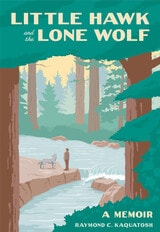
Little Hawk and the Lone Wolf
A MemoirRaymond Kaquatosh
Wisconsin Historical Society Press, 2022
After his father’s death, eight-year-old Ray was sent to an Indian boarding school in Keshena. There he experienced isolation and despair, but also comfort and kindness. Upon his return home, Ray remained a lonely boy in a full house until he met and befriended a lone timber wolf. The unusual bond they formed would last through both their lifetimes. As Ray grew into a young man, he left the reservation more frequently. Yet whenever he returned—from school and work, from service in the Marines, and finally from postwar Wausau with his future wife—the wolf waited.
In this rare first-person narrative of a Menominee Indian’s coming of age, Raymond Kaquatosh shares a story that is wise and irreverent, often funny, and in the end, deeply moving.
Little Helpers
Harry Vaughan, His Cronies, and Corruption in the Truman AdministrationJohn Robert Greene
University of Missouri Press, 2024
Greene begins with the story of how Truman and Vaughan met during World War I, then examines Vaughan’s support for Truman for the Senate and later as President. The majority of the book, however, considers the various cronies that surrounded Vaughan and illustrates the significance of his relationship with Truman—and the president’s inability to rein him in.
Drawing from primary and archival sources, many never before published, Little Helpers is further distinguished by its use of the correspondence between Vaughan and Truman. Greene also provides a dramatic narrative account of the inner workings of the Truman administration, making the book accessible to the general reader as well as the specialist.
Little Italy in the Great War
Philadelphia's Italians on the Battlefield and Home FrontRichard N. Juliani
Temple University Press, 2020
The Great War challenged all who were touched by it. Italian immigrants, torn between their country of origin and country of relocation, confronted political allegiances that forced them to consider the meaning and relevance of Americanization. In his engrossing study, Little Italy in the Great War, Richard Juliani focuses on Philadelphia’s Italian community to understand how this vibrant immigrant population reacted to the war as they were adjusting to life in an American city that was ambivalent toward them.
Juliani explores the impact of the Great War on many immigrant soldiers who were called to duty as reservists and returned to Italy, while other draftees served in the U.S. Army on the Western Front. He also studies the impact of journalists and newspapers reporting the war in English and Italian, and reactions from civilians who defended the nation in industrial and civic roles on the home front.
Within the broader context of the American experience, Little Italy in the Great War examines how the war affected the identity and cohesion of Italians as a population still passing through the assimilation process.
Littlefield Lands
Colonization on the Texas Plains, 1912–1920By David B. Gracy II
University of Texas Press, 1968
The phenomenon of colonization by big land companies, common throughout the history of the United States, came late to the Panhandle-Plains of West Texas. Ranchers held sway there up into the 20th century. Then, realizing that the future followed the plow, they, joined by business owners and speculators, founded towns on their land, competed for railroad connections, provided irrigation wells and other improvements, and engaged in a variety of advertising activities to interest prospective settlers and to sell the land to farmers at a profit. Trainloads of such "prospectors" were brought in to tour the land; and salesmen of all kinds roamed all the more settled states painting enticing pictures of the fertile lands which their employers offered for sale.
Major George W. Littlefield created the Littlefield Lands Company and founded the town of Littlefield, Texas, in 1912, in order to sell as farmland a part of his Yellow House Ranch. His sales manager, Arthur P. Duggan (his nephew by marriage, and grandfather of the author of this study), used many of the techniques then current to attract buyers for the Lamb County land in and around Littlefield. He dug wells and operated a demonstration farm; he planted trees, planned a park, and otherwise beautified the town; he helped to create and maintain a school, a bank, and a number of businesses; and he negotiated contracts and coordinated the activities of innumerable independent land agents.
Because the role of the big land company in the settlement of the United States has not, on the whole, received the attention which it deserves, this detailed examination of the operations of one such company is of particular significance. Most of the book is devoted to the creation of the company, the steps taken to make the area attractive to potential settlers, and the problems which beset the building of the community. One chapter discusses the techniques and the difficulties of selling land through independent agents. The final chapter considers the people who moved onto the Littlefield tracts—where they came from, why they came, what their reactions were to the plains country, and how they learned to cope with their new environment. An appendix gives pertinent information about all land transactions conducted by the company between 1912 and 1920, and about each buyer.
For this study the author made use of previously unknown records discovered while he was gathering information for a biography of Major Littlefield.

Lives and Legends of the Christmas Tree Ships
Fred Neuschel
University of Michigan Press, 2007
Lives and Legends of the Christmas Tree Ships brings the maritime heritage of the Great Lakes to life, using the tragic story of the schooner Rouse Simmons as a porthole into the robust but often forgotten communities that thrived along Lake Michigan from the Civil War to World War I.
Memorialized in songs, poems, fiction, and even a musical, the infamous ship that went down in a Thanksgiving storm while delivering Christmas trees to Chicago has long been shrouded in myth and legend. As a result, the larger story of the captain, crew, and affected communities has often been overlooked. Fred Neuschel delves into this everyday life of camaraderie, drudgery, ambition, and adventure—with tales of the Midwest’s burgeoning immigrant groups and rapid industrialization—to create a true story that is even more fascinating than the celebrated legends.
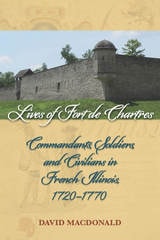
Lives of Fort de Chartres
Commandants, Soldiers, and Civilians in French Illinois, 1720–1770David MacDonald
Southern Illinois University Press, 2016
Fort de Chartres, built in 1719-1720 in the heart of what would become the American Midwest, embodied French colonial power for half a century. Lives of Fort de Chartres, by David MacDonald, details the French colonial experience in Illinois from 1720 to 1770 through vivid depictions of the places, people, and events around the fort and its neighboring villages.
In the first section, MacDonald explores the fascinating history of French Illinois and the role of Fort de Chartres in this history, focusing on native peoples, settlers, slaves, soldiers, villages, trade routes, military administration, and the decline of French rule in Illinois. The second section profiles the fort’s twelve distinctive and often colorful commandants, who also served as administrative heads of French Illinois. These men’s strong personalities served them well when dealing simultaneously with troops, civilians, and Indians and their multifaceted cultures. In the third section, MacDonald presents ten thought-provoking biographies of people whose lives intersected with Fort de Chartres in various ways, from a Kaskaskia Indian woman known as “the Mother of French Illinois” to an ill-fated chicken thief and a European aristocrat. Subjects treated in the book include French–Native American relations, the fur trade, early Illinois agriculture, and tensions among different religious orders. Together, the biographies and historical narrative in the volume illuminate the challenges that shaped the French colonies in America.
The site of Fort de Chartres, recognized as a National Historic Landmark in 1966, still exists today as a testament to the ways in which French, British, Spanish, and American histories have intertwined. Both informative and entertaining, Lives of Fort de Chartres contributes to a more complete understanding of the French colonial experience in the Midwest and portrays a vital and vigorous community well worth our appreciation.
Living In The Country Growing Weird
A Deep Rural AdventureDennis Parks
University of Nevada Press, 2001
Parks created a pottery school that attracts students from around the world and developed for himself an international reputation as the creator of powerful, innovative works in clay. Meanwhile, he and his family had to master the skills required of those who choose to live in the back country--growing and hunting their own food, renovating or building from scratch the structures they needed for residences or studios, resolving conflicts with neighbors, inventing their own amusements. The transformation from middle-class urbanity to small-town simplicity is, as Parks reveals, a lurching and sometimes hilarious process, and the achievement of self-sufficiency is similarly fraught with unexpected challenges.
Living Waters
The Springs of MissouriLoring Bullard
Moon City Press, 2020
From the earliest times, springs were also sources of fascination. “Where does all that water come from? Why is it so cold?” Bullard gives us the science of spring hydrogeology; at the same time, he reminds us that springs were once revered symbols of renewal, purification, and everlasting life. They are no longer as central to the lives of Missourians. But are they still important to us? The answer to that question (and others) can be found in Living Waters.
Living a Country Year
Wit and Wisdom from the Good Old DaysJerry Apps
Wisconsin Historical Society Press, 2018
“Even with the all the hard work, we had more time (perhaps we took more time) to enjoy what was all around us: nights filled with starlight, days with clear blue skies and puffy clouds. Wonderful smells everywhere—fresh mown hay, wildflowers, and apple blossoms. Interesting sounds—the rumble of distant thunder, an owl calling in the woods, a flock of Canada geese winging over in the fall.”
In this paperback edition of a beloved Jerry Apps classic, the rural historian tells stories from his childhood days on a small central Wisconsin dairy farm in the 1930s and 1950s. From a January morning memory of pancakes piled high after chores, to a June day spent learning to ride a pony named Ginger, Jerry moves through the turn of the seasons and teaches gentle lessons about life on the farm. With recipes associated with each month and a new introduction exclusive to this 2nd edition, Living a Country Year celebrates the rhythms of rural life with warmth and humor.
Living a Land Ethic
A History of Cooperative Conservation on the Leopold Memorial ReserveStephen A. Laubach
University of Wisconsin Press, 2014
Living a Land Ethic chronicles the formation of the 1,600-acre reserve surrounding the Shack. When the Leopold Memorial Reserve was founded in 1967, five neighboring families signed an innovative agreement to jointly care for their properties in ways that honored Aldo Leopold's legacy. In the ensuing years, the Reserve's Coleman and Leopold families formed the Sand County Foundation and the Aldo Leopold Foundation. These organizations have been the primary stewards of the Reserve, carrying on a tradition of ecological restoration and cooperative conservation. Author Stephen A. Laubach draws from the archives of both foundations, including articles of incorporation, correspondence, photos, managers' notes, and interviews to share with readers the Reserve's untold history and its important place in the American conservation movement.
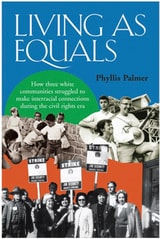
Living as Equals
How Three White Communities Struggled to Make Interracial Connections During the Civil Rights EraPhyllis Palmer
Vanderbilt University Press, 2008
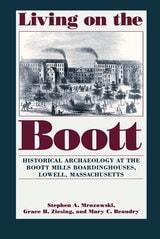
Living on the Boott
Historical Archaeology at the Boott Mills Boardinghouses of Lowell, MassachusettsStephen A. Mrozowski
University of Massachusetts Press, 1996
Lowell, Massachusetts was the first fully planned industrial city in the United States, and the Boott Mill, established in the 1820s along the Merrimack River, stood at the center of this bold experiment in industrial capitalism. For decades, the company-owned boardinghouses that housed the mills' workers were as much a part of the Lowell system as the looms themselves: a managed, closely supervised domestic world where the rhythms of mill life extended from the factory floor into every corner of daily existence.
Living on the Boott brings this vanished world back to life through rigorous historical archaeology. Drawing on excavations conducted at the Boott Mills boardinghouse complex, Stephen A. Mrozowski, Grace H. Ziesing, and Mary C. Beaudry examine the material remains of the men and women who lived and worked in Lowell's textile industry from the early nineteenth century through its long decline. Through painstaking analysis of ceramics, faunal assemblages, tobacco-related artifacts, and other recovered objects, the authors reconstruct the daily lives, diets, domestic routines, and social relationships of successive generations of boardinghouse residents—from the young "mill girls" recruited from rural New England who made Lowell famous, to the Irish immigrant workers who increasingly replaced them as the century progressed.
The result is a richly documented social history written not from official records alone, but from the objects people actually used, discarded, and left behind. The book illuminates how class, gender, ethnicity, and labor intersected in the intimate spaces of the boardinghouse, and documents the profound changes in living conditions as the Lowell system evolved and the workforce transformed. A landmark contribution to historical archaeology, industrial archaeology, and the history of American labor, Living on the Boott demonstrates the unique power of archaeological evidence to recover the lives of those too often overlooked by conventional historical sources.
Living on the Edge
An American Generation’s Journey through the Twentieth CenturyRichard A. Settersten Jr., Glen H. Elder Jr., and Lisa D. Pearce
University of Chicago Press, 2021
Drawing from the iconic longitudinal Berkeley Guidance Study, Living on the Edge reveals the hopes, struggles, and daily lives of the 1900 generation. Most surprising is how relevant and relatable the lives and experiences of this generation are today, despite the gap of a century. From the reorganization of marriage and family roles and relationships to strategies for adapting to a dramatically changing economy, the challenges faced by this earlier generation echo our own time. Living on the Edge offers an intimate glimpse into not just the history of our country, but the feelings, dreams, and fears of a generation remarkably kindred to the present day.
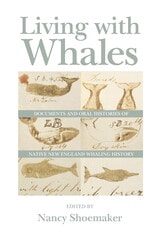
Living with Whales
Documents and Oral Histories of Native New England Whaling HistoryNancy Shoemaker
University of Massachusetts Press, 2014
Native Americans along the coasts of southern New England and Long Island have had close ties to whales for thousands of years. They made a living from the sea and saw in the world's largest beings special power and meaning. After English settlement in the early seventeenth century, the region's natural bounty of these creatures drew Natives and colonists alike to develop whale hunting on an industrial scale. By the nineteenth century, New England dominated the world in whaling, and Native Americans contributed substantially to whaleship crews.
In Living with Whales, Nancy Shoemaker reconstructs the history of Native whaling in New England through a diversity of primary documents: explorers' descriptions of their “first encounters,” indentures, deeds, merchants' accounts, Indian overseer reports, crew lists, memoirs, obituaries, and excerpts from journals kept by Native whalemen on their voyages. These materials span the centuries-long rise and fall of the American whalefishery and give insight into the far-reaching impact of whaling on Native North American communities. One chapter even follows a Pequot Native to New Zealand, where many of his Maori descendants still reside today.
Whaling has left behind a legacy of ambivalent emotions. In oral histories included in this volume, descendants of Wampanoag and Shinnecock whalemen reflect on how whales, whaling, and the ocean were vital to the survival of coastal Native communities in the Northeast, but at great cost to human life, family life, whales, and the ocean environment.

Living with the Coast of Alaska
Owen Mason, William Neal, and Orrin H. Pilkey
Duke University Press, 1997
Facing two oceans and three seas, Alaska's coastline stretches through bays, fjords, and around islands for 45,000 miles. Living with the Coast of Alaska, a new volume in the Living with the Shore series, is a user's guide for both present and future inhabitants of Alaska. Providing individual property owners in all regions of the state with the fundamentals of hazard recognition and mitigation strategy, the authors discuss the geological history of Alaska and its relation to the area's cultural history and present customized hazard risk assessments for coastal communities.
Describing the dynamic nature of natural seismic events and coastal processes in Alaska, the authors emphasize the multiplicity of potential effects that result from a unique combination of geology, climate, and the sea. Earthquakes, volcanic eruptions, tsunami waves, avalanches, glacial advances, storm surges, flash flooding, wind channeling, and shoreline erosion combined with human-induced hazards such as oil spills, fire, and beach and offshore mining accidents make living with danger a way of life in Alaska. The authors provide information on federal and state laws and programs regarding natural disasters and coastal zone management as well as practical suggestions for the design and construction of buildings. For private, commercial, and public developments, this book offers a manual to help Alaskans make informed decisions to minimize, if not avoid, damage and danger.
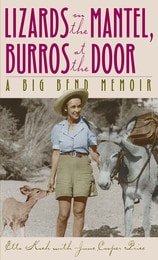
Lizards on the Mantel, Burros at the Door
A Big Bend MemoirBy Etta Koch with June Cooper Price
University of Texas Press, 1999
A woman who went West with her husband in the 1840s must have expected hardships and privation, but during the 1940s, when Etta Koch stopped off in Big Bend with her young family and a 23-foot travel trailer in tow, she anticipated no more than a civilized camping trip between her old home in Ohio and a new one in Arizona. It was only when she found herself moving into an old rock house without plumbing or electricity in the new Big Bend National Park that Etta realized, "From the sheltered life of a city girl of moderate circumstances, I too would have to face the reality of frontier living."
In this book based on her journals and letters, Etta Koch and her daughter June Cooper Price chronicle their family's first years (1944-1946) in the Big Bend. Etta describes how her photographer husband Peter Koch became captivated by the region as a place for natural history filmmaking-and how she and their three young daughters slowly adapted to a pioneer lifestyle during his months' long absences on the photo-lecture circuit. In vivid, often humorous anecdotes, she describes making the rock house into a home, getting to know the Park Service personnel and other neighbors, coping with the local wildlife, and, most of all, learning to love the rugged landscape and the hardy individuals who call it home.
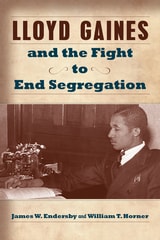
Lloyd Gaines and the Fight to End Segregation
James W. Endersby and William T. Horner
University of Missouri Press, 2016
Winner, 2017 Missouri Conference on History Book Award
In 1936, Lloyd Gaines’s application to the University of Missouri law school was denied based on his race. Gaines and the NAACP challenged the university’s decision. Missouri ex rel. Gaines v. Canada (1938) was the first in a long line of decisions by the U.S. Supreme Court regarding race, higher education, and equal opportunity. The court case drew national headlines, and the NAACP moved Gaines to Chicago after he received death threats. Before he could attend law school, he vanished.
This is the first book to focus entirely on the Gaines case and the vital role played by the NAACP and its lawyers—including Charles Houston, known as “the man who killed Jim Crow”—who advanced a concerted strategy to produce political change. Horner and Endersby also discuss the African American newspaper journalists and editors who mobilized popular support for the NAACP’s strategy. This book uncovers an important step toward the broad acceptance of racial segregation as inherently unequal.
This is the inaugural volume in the series Studies in Constitutional Democracy, edited by Justin Dyer and Jeffrey Pasley of the Kinder Institute on Constitutional Democracy.
Lone Star Vistas
Travel Writing on Texas, 1821-1861By Astrid Haas
University of Texas Press, 2021
Every place is a product of the stories we tell about it—stories that do not merely describe but in fact shape geographic, social, and cultural spaces. Lone Star Vistas analyzes travelogues that created the idea of Texas. Focusing on the forty-year period between Mexico’s independence from Spain (1821) and the beginning of the US Civil War, Astrid Haas explores accounts by Anglo-American, Mexican, and German authors—members of the region’s three major settler populations—who recorded their journeys through Texas. They were missionaries, scientists, journalists, emigrants, emigration agents, and military officers and their spouses. They all contributed to the public image of Texas and to debates about the future of the region during a time of political and social transformation. Drawing on sources and scholarship in English, Spanish, and German, Lone Star Vistas is the first comparative study of transnational travel writing on Texas. Haas illuminates continuities and differences across the global encounter with Texas, while also highlighting how individual writers’ particular backgrounds affected their views on nature, white settlement, military engagement, Indigenous resistance, African American slavery, and Christian mission.

Lone Stars III
A Legacy of Texas Quilts, 1986-2011By Karoline Patterson Bresenhan and Nancy O'Bryant Puentes
University of Texas Press, 2011
From frontier times in the Republic of Texas until today, Texans have been making gorgeous quilts. Karoline Patterson Bresenhan and Nancy O'Bryant Puentes documented the first 150 years of the state's rich heritage of quilt art in Lone Stars: A Legacy of Texas Quilts, 1836–1936 and Lone Stars II: A Legacy of Texas Quilts, 1936–1986. Now in Lone Stars III, they bring the Texas quilt story into the twenty-first century, presenting two hundred traditional and art quilts that represent "the best of the best" quilts created since 1986.
The quilts in Lone Stars III display the explosion of creativity that has transformed quilting over the last quarter century. Some of the quilts tell stories, create landscapes, record events, and memorialize people. Others present abstract designs that celebrate form and color. Their makers have embraced machine quilting, as well as hand sewing, and they often embellish their quilts with buttons, beads, lace, ribbon, and even more exotic items. Each quilt is pictured in its entirely, and some entries also include photographs of quilt details. The accompanying text describes the quilt's creation, its maker, and its physical details.
With 16.3 million American quilters who spend $3.6 billion annually on their pastime, the quilting community has truly become a force to reckon with both artistically and socially. Lone Stars III is the perfect introduction to this world of creativity.
Lonesome Landscapes
Stories from National Conservation LandsAndrew Gulliford
University of Utah Press, 2026
While the National Park Service is widely known, far fewer Americans are familiar with the Bureau of Land Management’s vast National Conservation Lands—thirty-seven million acres spanning eleven western states and Alaska. Lonesome Landscapes is the first comprehensive history of this system from public domain lands to the designation of national monuments and conservation areas in the twenty-first century.
Drawing from archives, interviews, and field reporting, Gulliford reveals the unsung heroes who safeguarded these lands, from pioneering rangers to grassroots advocates in Native American and Hispanic communities. With vivid stories of explorers, cowboys, hermits, and even an alligator named Clem, this book blends scholarship with storytelling. Lonesome Landscapes is both a definitive history and a call to keep America’s wild places in public hands—an essential read for anyone passionate about the West.
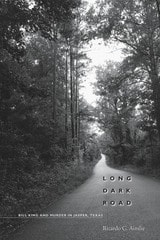
Long Dark Road
Bill King and Murder in Jasper, TexasBy Ricardo C. Ainslie
University of Texas Press, 2004
On a long dark road in deep East Texas, James Byrd Jr. was dragged to his death behind a pickup truck one summer night in 1998. The brutal modern-day lynching stunned people across America and left everyone at a loss to explain how such a heinous crime could possibly happen in our more racially enlightened times. Many eventually found an answer in the fact that two of the three men convicted of the murder had ties to the white supremacist Confederate Knights of America. In the ex-convict ringleader, Bill King, whose body was covered in racist and satanic tattoos, people saw the ultimate monster, someone so inhuman that his crime could be easily explained as the act of a racist psychopath. Few, if any, asked or cared what long dark road of life experiences had turned Bill King into someone capable of committing such a crime.
In this gripping account of the murder and its aftermath, Ricardo Ainslie builds an unprecedented psychological profile of Bill King that provides the fullest possible explanation of how a man who was not raised in a racist family, who had African American friends in childhood, could end up on death row for viciously killing a black man. Ainslie draws on exclusive in-prison interviews with King, as well as with Shawn Berry (another of the perpetrators), King's father, Jasper residents, and law enforcement and judicial officials, to lay bare the psychological and social forces—as well as mere chance—that converged in a murder on that June night. Ainslie delves into the whole of King's life to discover how his unstable family relationships and emotional vulnerability made him especially susceptible to the white supremacist ideology he adopted while in jail for lesser crimes.
With its depth of insight, Long Dark Road not only answers the question of why such a racially motivated murder happened in our time, but it also offers a frightening, cautionary tale of the urgent need to intervene in troubled young lives and to reform our violent, racist-breeding prisons. As Ainslie chillingly concludes, far from being an inhuman monster whom we can simply dismiss, "Bill King may be more like the rest of us than we care to believe."
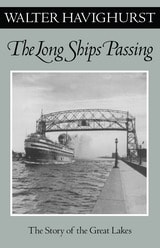
Long Ships Passing
The Story Of The Great LakesWalter Havighurst
University of Minnesota Press, 2002
A dramatic account of three centuries of people and ships that sailed the Great Lakes
A popular history of navigation on the Great Lakes and life on their shores, The Long Ships Passing brings us aboard the crafts that have plowed the waves of the treacherous "five sisters" carrying the grain, lumber, and minerals that fed and built the cities of America. Walter Havighurst paints vivid pictures of life—and death—on the lakes, mysterious accounts of wooden ships and iron men that sank to freshwater graves, especially along the immigrant route where the wrecks lie thick. In rich and marvelous detail, this classic history recounts the saga of an inland marine empire.

Long Walk Home
Reflections on Bruce SpringsteenJonathan D. Cohen
Rutgers University Press, 2019
Contributors to Long Walk Home include novelists like Richard Russo, rock critics like Greil Marcus and Gillian Gaar, and other noted Springsteen scholars and fans such as A. O. Scott, Peter Ames Carlin, and Paul Muldoon. They reveal how Springsteen’s albums served as the soundtrack to their lives while also exploring the meaning of his music and the lessons it offers its listeners. The stories in this collection range from the tale of how “Growin’ Up” helped a lonely Indian girl adjust to life in the American South to the saga of a group of young Australians who turned to Born to Run to cope with their country’s 1975 constitutional crisis. These essays examine the big questions at the heart of Springsteen’s music, demonstrating the ways his songs have resonated for millions of listeners for nearly five decades.
Commemorating the Boss’s seventieth birthday, Long Walk Home explores Springsteen’s legacy and provides a stirring set of testimonials that illustrate why his music matters.
Long Way Round
Through the Heartland by RiverJohn Hildebrand
University of Wisconsin Press, 2022
Wisconsin is in the midst of an identity crisis, torn by new political divisions and the old gulf between city and countryside. Cobbling rivers together, from the burly Mississippi to the slender wilds of Tyler Forks, Hildebrand navigates the beautiful but complicated territory of home. In once prosperous small towns, he discovers unsung heroes—lockmasters, river rats, hotelkeepers, mechanics, environmentalists, tribal leaders, and perennial mayors—struggling to keep their communities afloat.
While history doesn't flow in a circle, it doesn't always move in a straight line either. Hildebrand charts the improbable ox-bows along its course. Long Way Round shows us the open road as a river with possibility around the next bend.
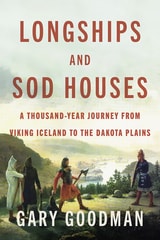
Longships and Sod Houses
A Thousand-Year Journey from Viking Iceland to the Dakota PlainsGary Goodman
University of Minnesota Press, 2026
A direct descendant of a tenth-century Viking marauder traces his lineage from medieval Iceland to the Dakota plains
Gary Goodman first heard that his 24x great-grandfather was a tenth-century Viking pirate and mercenary at a family reunion, when a cousin told him that they were the direct descendants of an Icelandic poet and cold-blooded killer named Egil Skallagrímsson. Also known as “Egil the Bastard,” Goodman’s forefather was the subject of Egil’s Saga, one of the great Icelandic epics of the early Middle Ages. Spurred by this revelation of his family’s lineage, Goodman set out to discover the route his ancestors had traveled from medieval Iceland to the North Dakota plains in the later 1800s.
Drawing on Egil’s Saga, family records, and travels through Iceland, England, and Ireland, Goodman traces his ancestral line from Iceland—the family’s homeland for over a thousand years until a volcanic eruption forced them to migrate—to the hardscrabble plains of the Dakota Territory. His panoramic view ranges from the Viking invasion of England in the early Middle Ages to the disappearance of a short-lived Icelandic settlement on the Mouse River in North Dakota in the late 1800s. Along the way, Goodman sketches the highlights of Egil’s Saga, making the centuries-old epic accessible to today’s readers.
With candor, dry wit, and some bemusement, Goodman shares his trip through history from the perspective of a descendant of an original Viking marauder. An innovative, time-bending family history, Longships and Sod Houses is a noteworthy saga in its own right.
Retail e-book files for this title are screen-reader friendly with images accompanied by short alt text and/or extended descriptions.
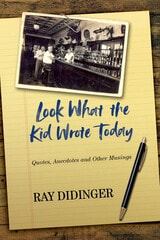
Look What the Kid Wrote Today
Quotes, Anecdotes and Other MusingsRay Didinger
Temple University Press, 2026
When Ray Didinger was a young sports columnist, his proud grandfather would tape his articles on the mirror of his Southwest Philadelphia bar and tell his customers, “Look what the kid wrote today.” That phrase is now the title of Didinger’s latest book, a fond look back on his award-winning career.
In Look What the Kid Wrote Today, Didinger reflects on walking the historic Merion golf course with Jack Nicklaus, shooting pool with Mean Joe Greene, touring Foxcatcher Farms with John du Pont and hanging out with Mark Wahlberg on the set of Invincible. He also writes about helping to heal the rift between the Philadelphia Eagles and arguably their greatest player, Chuck Bednarik. It is a story that went untold until now.
Didinger takes the reader through the many stages of his fifty-plus years in sports media, from his time as an Emmy Award-winning producer at NFL Films, which involved writing scripts for the likes of Tom Selleck, Gary Busey, and Oscar winner James Coburn. Now a playwright, Didinger also devotes a chapter to the 2025 premiere of his critically acclaimed production Spinner.
Candid and insightful, Look What the Kid Wrote Today is Didinger at his best.
Looking for America on the New Jersey Turnpike
Gillespie, Angus K
Rutgers University Press, 1992
Looking for America on the New Jersey Turnpike, Second Edition
Angus Kress Gillespie
Rutgers University Press, 2024
When Angus Gillespie and Michael Rockland wrote Looking for America on the New Jersey Turnpike in 1989, they simply wanted to express their fascination with a road that many commuters regarded with annoyance or indifference. Little did they expect that it would be hailed as a classic, listed by the state library alongside works by Whitman and Fitzgerald as one of the ten best books ever written about New Jersey or by a New Jerseyan.
Now Looking for America on the New Jersey Turnpike is back in a special updated and expanded edition, examining how this great American motorway has changed over the past thirty-five years. You’ll learn how the turnpike has become an icon inspiring singers and poets. And you’ll meet the many people it has affected, including the homeowners displaced by its construction, the highway patrol and toll-takers who work on it, and the drivers who speed down its lanes every day.
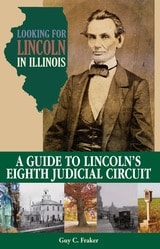
Looking for Lincoln in Illinois
A Guide to Lincoln's Eighth Judicial CircuitGuy C. Fraker
Southern Illinois University Press, 2017
For twenty-three years Abraham Lincoln practiced law on the Eighth Judicial Circuit in east central Illinois, and his legal career is explored in Looking for Lincoln in Illinois: A Guide to Lincoln’s Eighth Judicial Circuit. Guy C. Fraker directs readers and travelers through the prairies to the towns Lincoln visited regularly. Twice a year, spring and fall, Lincoln’s work took him on a journey covering more than four hundred miles. As his stature as a lawyer grew, east central Illinois grew in population and influence, and the Circuit provided Lincoln with clients, friends, and associates who became part of the network that ultimately elevated him to the presidency.
This guidebook to the Circuit features Illinois courthouses, Looking for Lincoln Wayside Exhibits, and other Lincoln points of interest. Fraker guides travelers down the long stretches of quiet country roads that gave Lincoln time to read and think to the locations where Lincoln’s broad range of cases expanded his sense of the economic and social forces changing America.
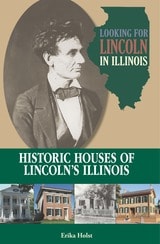
Looking for Lincoln in Illinois
Historic Houses of Lincoln’s IllinoisErika Holst
Southern Illinois University Press, 2018
This richly illustrated compendium of twenty-two historic buildings in the Abraham Lincoln National Heritage Area includes houses, a hotel, and an art center, all of which are open to the public. Each site links today’s visitors with a place Lincoln lived, a home of a Lincoln friend or colleague, or a spot that illuminates Lincoln’s era and legacy in central Illinois. Along with dozens of modern and historical photographs, entries contain explorations of historical connections to Lincoln and detailed information about exceptional features and artifacts. Complete with maps, this showcase of Illinois heritage is a handy guide for day trips, extended tours, or armchair adventures.
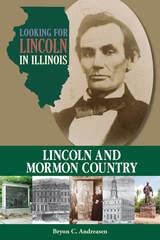
Looking for Lincoln in Illinois
Lincoln and Mormon CountryBryon C. Andreasen
Southern Illinois University Press, 2015
Although they inhabited different political, social, and cultural arenas, Abraham Lincoln and the pioneer generation of Latter-day Saints, or Mormons, shared the same nineteenth-century world. Bryon C. Andreasen’s Looking for Lincoln in Illinois: Lincoln and Mormon Country relates more than thirty fascinating and surprising stories that show how the lives of Lincoln and the Mormons intersected.
This richly illustrated and carefully researched book expands on some of the storyboards found on the Looking for Lincoln Story Trail, from the Mormon capital of Nauvoo to the state capital of Springfield. Created by the Looking for Lincoln Heritage Coalition, this trail consists of wayside exhibits posted in sites of significance to Lincoln’s life and career across fifty-two communities in Illinois. The book’s keyed maps, historic photos, and descriptions of battles, Mormon expeditions, and events at inns, federal buildings, and even Lincoln’s first Illinois log cabin connect the stories to their physical locations.
Exploring the intriguing question of whether Lincoln and Mormon founder Joseph Smith ever met, the book reveals that they traveled the same routes and likely stayed at the same inns. The book also includes colorful and engaging looks at key figures such as Brigham Young, various Mormon apostles, and more. Anyone inspired by Lincoln, as well as Mormon and Illinois history enthusiasts, will appreciate this look back at a long-past, but not forgotten, landscape.
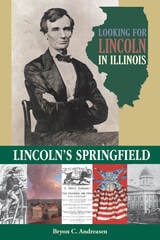
Looking for Lincoln in Illinois
Lincoln's SpringfieldBryon C. Andreasen
Southern Illinois University Press, 2015
Winner, ISHS Certificate of Excellence Award, 2016
Presenting fifty Abraham Lincoln stories—some familiar and beloved, some fresh and unexpected—Looking for Lincoln in Illinois: Lincoln’s Springfield is a carefully researched, richly illustrated guide to the Springfield, Illinois, locations on the Looking for Lincoln Story Trail. Created by the Looking for Lincoln Heritage Coalition, this trail consists of more than two hundred illustrated storyboards posted at sites of significance to Lincoln’s life and career across fifty-two communities in Illinois. The storyboards connect Lincoln-related tales to the geographical locations where they occurred, giving visitors, and now readers, a tour of the social and cultural landscape of Lincoln’s nineteenth-century world while revealing the very human Lincoln known by friends and associates.
This book celebrates the trail as a rich historical resource, featuring the original storyboards produced for Springfield and including twelve additional stories and more than 150 illustrations. Engaging stories in the book bring Lincoln’s Springfield to life: Lincoln created controversy with his Temperance Address, which he delivered in a church on Fourth Street in February 1842. He unexpectedly married Mary Todd in her sister’s home on the edge of Springfield later that year. The Lincolns’ sons used to harness dogs and cats to small wagons and drive them around the dirt streets of town. When Lincoln visited his dentist, he applied his own chloroform, because the practice of analgesia was not yet common. He reportedly played the ball game Fives in a downtown alley while waiting for news of his presidential nomination. And boxing heavyweight champion John C. Heenan visited the presidential candidate in October 1860. Through texts, historic photographs and images, and maps, including one keyed to the story locations in downtown Springfield, readers of this fascinating volume are invited to imagine social and cultural landscapes that have been lost in time.

Lord, Please Don't Take Me in August
African-Americans in Newport and Saratoga Springs, 1870-1930Myra B. Young Armstead
University of Illinois Press, 1999
The lives built by Black Americans in a pair of summer resort towns
In the late nineteenth and early twentieth centuries, northern resort towns were in their heyday as celebrated retreats for America's wealthy. Lord, Please Don't Take Me in August documents the experiences of African Americans in Saratoga Springs, New York, and Newport, Rhode Island--towns that provided a recurring season of expanded employment opportunities, enhanced social life, cosmopolitan experience, and, in a good year, enough money to last through the winter.
Affirming that the decision to live in their tiny resort communities was conscious and deliberate, Myra B. Young Armstead shows how Afro-Saratogians and Afro-Newporters organized their rhythms, their routines, and their communities to create meaningful identities for themselves. Living on streets close to their churches, developing social organizations that promoted their standards of gentility and respectability, and lobbying for wider opportunities, these African Americans actively shaped their lives within the structures and limitations imposed on them.
Armstead situates the resort town between the poles of the rural South and the large industrial cities of the North. She shows how these small northern towns, with their seasonal economic rhythms and domestic wage work, permitted an important continuity between rural and urban lifestyles and a path from rural South to urban North besides the jarring, disruptive journey that often ended in the ghetto.
"Lord, Please Don't Take Me in August" tells a story that is at once American and uniquely African American: a story of economic imperatives and enlarged social aspirations culminating in a season--June, July, and August--that brought Blacks as close as they could get to the American Dream.
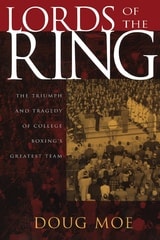
Lords of the Ring
The Triumph and Tragedy of College Boxing's Greatest TeamDoug Moe
University of Wisconsin Press, 2005
Under legendary and beloved coach John Walsh, the most successful coach in the history of American collegiate boxing, University of Wisconsin boxers won eight NCAA team championships and thirty-eight individual titles from 1933 to 1960. Badger boxers included heroes like Woody Swancutt, who later helped initiate the Strategic Air Command, and rogues like Sidney Korshak, later the most feared mob attorney in the United States. A young fighter from Louisville named Cassius Clay also boxed in the Wisconsin Field House during this dazzling era.
But in April 1960, collegiate boxing was forever changed when Charlie Mohr— Wisconsin’s finest and most popular boxer, an Olympic team prospect—slipped into a coma after an NCAA tournament bout in Madison. Suddenly, not just Mohr’s life but the entire sport of college boxing was in peril. It was to be the last NCAA boxing tournament ever held. Lords of the Ring tells the whole extraordinary story of boxing at the University of Wisconsin, based on dozens of interviews and extensive examination of newspaper microfilm, boxing records and memorabilia.
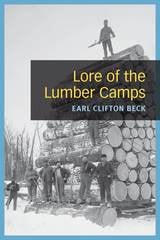
Lore of the Lumber Camps
Earl Clifton Beck
University of Michigan Press, 1948
The text discusses the cultural life of the lumberjacks, who, despite their rugged lifestyle, adhered to a chivalrous code of conduct. Beck details their traditions, storytelling, music, and dance, emphasizing the rich folklore that emerged from the camps. The book promises further exploration of the log-marking system, notable lumber figures, and the impact of deforestation on Michigan’s landscape.
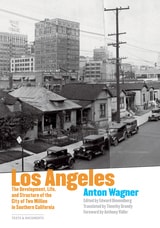
Los Angeles
The Development, Life, and Structure of the City of Two Million in Southern CaliforniaAnton Wagner
J. Paul Getty Trust, The, 2022
No book on the emergence of Los Angeles, today a metropolis of more than four million people, has been more influential or elusive than this volume by Anton Wagner. Originally published in German in 1935 as Los Angeles: Werden, Leben und Gestalt der Zweimillionenstadt in Südkalifornien, it is one of the earliest geographical investigations of a city understood as a series of layered landscapes. Wagner demonstrated that despite its geographical disadvantages, Los Angeles grew rapidly into a dominant urban region, bolstered by agriculture, real estate development, transportation infrastructure, tourism, the oil and automobile industries, and the film business. Although widely reviewed upon its initial publication, his book was largely forgotten until reintroduced by architectural historian Reyner Banham in his 1971 classic Los Angeles: The Architecture of Four Ecologies.
This definitive translation is annotated by Edward Dimendberg and preceded by his substantial introduction, which traces Wagner's biography and intellectual formation in 1930s Germany and contextualizes his work among that of other geographers. It is an essential work for students, scholars, and curious readers interested in urban geography and the rise of Los Angeles as a global metropolis.
“This fine new translation by Timothy Grundy of Anton Wagner's Los Angeles with Edward Dimendberg's lucidly probing introduction constitutes a major contribution to urban history and our understanding of one of the world's most enigmatic and significant cities.”
—Thomas S. Hines, Research Professor of History and Architecture and Urban Design, UCLA
“Edward Dimendberg has done a remarkable job bringing Anton Wagner's classic study of Los Angeles to a wider readership. This landmark publication will enable many strands of urban scholarship to enter into dialogue for the first time.”
—Matthew Gandy, Professor of Geography, University of Cambridge, and author of Natura Urbana: Ecological Constellations in Urban Space (2022)
“Anton Wagner was a prescient and troubling historical figure. Nearly a century ago, with his camera in hand, he walked Los Angeles in fervent exploration of metropolitan growth. This beautiful and expert book takes Wagner every bit as seriously as he took Los Angeles.”
—William Deverell, Director, Huntington-USC Institute on California and the West
"Anton Wagner’s geographic and ethnographic history of the urbanization of Los Angeles has long been unavailable to English-speaking readers. This early study, accompanied by Edward Dimendberg’s comprehensive introduction, will be of interest to all who, like Reyner Banham, admire its impressive scholarship and firsthand account of a city and ecology already in the throes of dynamic transformation."
—Joan Ockman, Vincent Scully Visiting Professor of Architectural History, Yale School of Architecture
"Encompassing copious photographs, insightful commentary, and thorough reconstruction of Wagner’s life and times, this new translation of Anton Wagner’s Los Angeles provides the missing link in scholarship about the metropolis during the early twentieth century. Its continuing relevance and controversial edge will appeal to urban researchers and college students beyond Southern California."
—Michael Dear, Professor Emeritus of City & Regional Planning, University of California, Berkeley
"Scholars of Los Angeles, or any city, must rejoice at this first proper English-language publication of Wagner's brilliant, if problematic, urban studies masterpiece. The edition is made accessible and relevant by Edward Dimendberg's indispensable prefatory material and contextualization."
—Roger Keil, Professor of Environmental and Urban Change, York University
“Finally translating this fascinating book into English fills an important gap in our historical knowledge of Los Angeles and its interpretation. Edward Dimendberg's invaluable introduction situates Anton Wagner in a comprehensive intellectual context. Of more than merely historical interest, this in-depth picture of Los Angeles in 1933 is essential reading for anyone interested in cities.”
—Margaret Crawford, Professor of Architecture, University of California, Berkeley
“This key text from 1935 for understanding Los Angeles urbanism is finally available in an excellent English translation by Timothy Grundy. Revelatory introductory essays by Anthony Vidler and Edward Dimendberg explain how German geographer (and later Nazi Party member) Anton Wagner was able to map and conceptualize the radical originality of this archetypal American metropolis in ways that deeply influenced Reyner Banham and so many subsequent writers on the city.”
—Robert Fishman, Taubman College of Architecture and Planning, University of Michigan
"Expertly annotated by Edward Dimendberg, Anton Wagner’s book on the growth of Los Angeles, which first appeared in German in 1935, is a landmark study in the history of urbanization. At the same time, it can be read as an example of transnational and comparative history, in which an observer from one country commented on developments in another. This volume will interest historians of the modern city, both in America and in Germany."
—Andrew Lees, Distinguished Professor of History Emeritus, Rutgers University
“Blending his wide knowledge and his acute wit, Edward Dimendberg has meticulously reconstructed the genesis of a forgotten doctoral thesis, which had remained unread for more than eighty years, despite its acknowledgement by Reyner Banham. This pioneering scholarly study of the Southern Californian metropolis is now available for the first time in English, inscribed with subtlety in both its German and its American contexts on the basis of thorough investigations.”
—Jean-Louis Cohen, Sheldon H. Solow Professor in the History of Architecture, Institute of Fine Arts, New York University
"This is the odyssey of a book written and published in 1930s Nazi Germany, forgotten after the war, and rediscovered by Reyner Banham in the ‘70s. Los Angeles is a seminal text of modern architectural history and confronts readers in the present with the paradox of an unknown classic.“
—Wolfgang Schivelbusch, author of The Railway Journey
“Finally, a translation of Anton Wagner’s Los Angeles, with extensive notes and a superb and deeply researched introduction by Edward Dimendberg, has arrived. It turns out that it was worth the wait. This volume is not only an important historic document, but a still-unrivaled portrait of a great city.”
—Robert Bruegmann, Distinguished Professor Emeritus of Art History, Architecture, and Urban Planning at the University of Illinois at Chicago and author of Sprawl: A Compact History
"Scholars of Los Angeles can rejoice that Anton Wagner’s legendary study of early 1930s Los Angeles is at last available in a masterful translation, with a luminous introduction by Edward Dimendberg that captures Wagner’s analytical brilliance as well as his troubling politics and racial views. An essential addition to any library of Southern California."
—Louis S. Warren, W. Turrentine Jackson Professor of Western U.S. History, University of California, Davis
“Anton Wagner’s study provides an invaluable and frequently perceptive window into the evolution of Los Angeles during the early twentieth century, showing how human agency transformed regional resources into a booming major city. The translation is immensely enhanced by Edward Dimendberg’s skillful provision of context, including fascinating intellectual history.”
—Stephen Bell, Professor of Geography and History, UCLA
"Los Angeles: The Development, Life, and Structure of the City of Two Million in Southern California has always had an elusive presence in the conversation about the explosive growth of the Southern California metropolis at the beginning of the twentieth century: an arcane text known to exist, but only accessible to very few. This expert first translation in English almost ninety years after it originally appeared in German is prefaced by a complex and engaging introduction by Edward Dimendberg that situates the original study in a multidisciplinary conversation. It elucidates the many ways this landmark essay on Los Angeles’s urban geography was not only filtered into subsequent scholarship on the city—Reyner Banham’s iconic Los Angeles: The Architecture of Four Ecologies in particular—but also how it resonates with contemporary debates about cities as complex social organisms. This book will be essential reading not only for historians of Los Angeles but for those interested in the theorization of the modern metropolis more broadly. That the volume editor addresses Wagner’s problematic views on race and territorial conquest front and center, within their historic context, only adds to the significance of this undertaking."
—Martino Stierli, The Philip Johnson Chief Curator of Architecture and Design, The Museum of Modern Art, New York
Los Tucsonenses
The Mexican Community in Tucson, 1854–1941Thomas E. Sheridan
University of Arizona Press, 1986
Los Yarderos
Mexican Yard Workers in Transborder ChicagoSergio Lemus
University of Illinois Press, 2025
Sergio Lemus explores the lives of these migrants and looks at the struggles they face as they work to make the city their home. Drawing on fieldwork in South Chicago, Lemus tells the stories of first and second-generation yarderos and discusses the historical, economic, cultural, and political ramifications they face as they acquire their working-class identity. Lemus’s compassionate portrait places them within America’s ongoing tradition as a nation of immigrants while analyzing their place within today’s transborder cultural moment.
Perceptive and humane, Los Yarderos reveals how a group of Mexican immigrants navigates the crossings of the borders that divide class, color hierarchies, gender, and belonging.
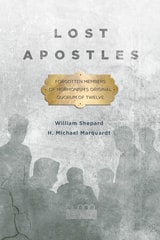
Lost Apostles
Forgotten Members of Mormonism's Original Quorum of the TwelveWilliam Shepard
Signature Books, 2013
Of the twelve men selected, nine would eventually be pruned from the vineyard themselves, to varying degrees. Seven were excommunicated, one of whom was reinstated to his position in the Twelve. Of the other six, the subjects of this book, none returned to the apostleship and four never came back to the Church at all. Those who left faded into obscurity except for when they are occasionally still mentioned in sermons as cautionary tales. But two of them made their marks in other areas of society, John Boynton becoming a successful dentist, a popular lecturer, geologist, and inventor with dozens of important patents to his name, while Lyman Johnson became a prominent attorney and business owner. Even though Luke Johnson, Thomas B. Marsh, William McLellin, and William Smith became religious wanderers and tried unsuccessfully to adjust to life outside of the Church, their experiences were interesting and comprise valuable case studies in belief and disaffection.

Lost Boston
Jane Holtz Kay
University of Massachusetts Press, 2006
At once a fascinating narrative and a visual delight, Lost Boston brings the city's past to life. This updated edition includes a new section illustrating the latest gains and losses in the struggle to preserve Boston's architectural heritage.
With an engaging text and more than 350 seldom-seen photographs and prints, Lost Boston offers a chance to see the city as it once was, revealing architectural gems lost long ago. An eminently readable history of the city's physical development, the book also makes an eloquent appeal for its preservation. Jane Holtz Kay traces the evolution of Boston from the barren, swampy peninsula of colonial times to the booming metropolis of today. In the process, she creates a family album for the city, infusing the text with the flavor and energy that makes Boston distinct. Amid the grand landmarks she finds the telling details of city life: the neon signs, bygone amusement parks, storefronts, and windows plastered with images of campaigning politicians-sights common in their time but even more meaningful in their absence today.
Kay also brings to life the people who created Boston-architects like Charles Bulfinch and H. H. Richardson, landscape architect and master park-maker Frederick Law Olmsted, and such colorful political figures as Mayors John “Honey Fitz” Fitzgerald and James Michael Curley.
The new epilogue brings Boston's story to the end of the twentieth century, showing elements of the city's architecture that were lost in recent years as well as those that were saved and others threatened as the city continues to evolve.
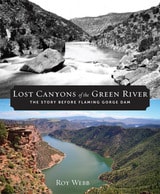
Lost Canyons of the Green River
The Story before Flaming Gorge DamRoy Webb
University of Utah Press, 2012
After more than 50 years of plans to dam the Green River, it finally happened in 1963 as part of the Colorado River Storage Project. Today many people enjoy boating and fishing on the resultant Flaming Gorge Reservoir, but few know about what lies under the water. Compared to Glen Canyon, Flaming Gorge has received little attention. In Lost Canyons of the Green River, Roy Webb takes the reader back in time to discover what lay along this section of the Green River before the Flaming Gorge Dam was built, and provides a historical account of this section of the Colorado River system.
A historian and a lifetime lover of rivers, Webb has spent decades exploring the region, digging into archives, and running the length of the Green River. The book chronicles the history that is most closely linked to the river and its bottomlands, sharing the stories of those who traveled the Green through Flaming Gorge and the other canyons now flooded by the reservoir, as well as those who lived, trapped, farmed, or ranched along its banks. In depicting the river of the past, Webb considers his book “a guidebook for a river you can no longer run.”
Finalist for the Utah Book Award in Nonfiction.
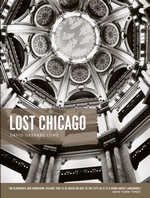
Lost Chicago
David Garrard Lowe
University of Chicago Press, 2010
The City of Big Shoulders has always been our most quintessentially American—and world-class—architectural metropolis. In the wake of the Great Fire of 1871, a great building boom—still the largest in the history of the nation—introduced the first modern skyscrapers to the Chicago skyline and began what would become a legacy of diverse, influential, and iconoclastic contributions to the city’s built environment. Though this trend continued well into the twentieth century, sour city finances and unnecessary acts of demolishment left many previous cultural attractions abandoned and then destroyed.
Lost Chicago explores the architectural and cultural history of this great American city, a city whose architectural heritage was recklessly squandered during the second half of the twentieth century. David Garrard Lowe’s crisp, lively prose and over 270 rare photographs and prints, illuminate the decades when Gustavus Swift and Philip D. Armour ruled the greatest stockyards in the world; when industrialists and entrepreneurs such as Cyrus McCormick, Potter Palmer, George Pullman, and Marshall Field made Prairie Avenue and State Street the rivals of New York City’s Fifth Avenue; and when Louis Sullivan, Daniel Burnham, and Frank Lloyd Wright were designing buildings of incomparable excellence. Here are the mansions and grand hotels, the office buildings that met technical perfection (including the first skyscraper), and the stores, trains, movie palaces, parks, and racetracks that thrilled residents and tourists alike before falling victim to the wrecking ball of progress.
“Lost Chicago is more than just another coffee table gift, more than merely a history of the city’s architecture; it is a history of the whole city as a cultural creation.”—New York Times Book Review
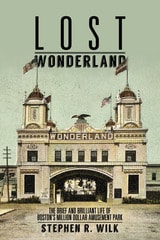
Lost Wonderland
The Brief and Brilliant Life of Boston's Million Dollar Amusement ParkStephen R. Wilk
University of Massachusetts Press, 2020
If you take Boston's Blue Line to its northern end, you'll reach the Wonderland stop. Few realize that a twenty-three-acre amusement park once sat nearby—the largest in New England, and grander than any of the Coney Island parks that inspired it. Opened in Revere on Memorial Day in 1906 to great fanfare, Wonderland offered hundreds of thousands of visitors recreation by the sea, just a short distance from downtown Boston.
The story of the park's creation and wild, but brief, success is full of larger-than-life characters who hoped to thrill attendees and rake in profits. Stephen R. Wilk describes the planning and history of the park, which featured early roller coasters, a scenic railway, a central lagoon in which a Shoot-the-Chutes boat plunged, an aerial swing, a funhouse, and more. Performances ran throughout the day, including a daring Fires and Flames show; a Wild West show; a children's theater; and numerous circus acts. While nothing remains of what was once called “Boston's Regal Home of Pleasure” and the park would close in 1910, this book resurrects Wonderland by transporting readers through its magical gates.