Results by title
18284 books match the query 'United States' and 698 start with l
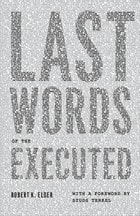
Last Words of the Executed
Robert K. Elder
University of Chicago Press, 2010
Some beg for forgiveness. Others claim innocence. At least three cheer for their favorite football teams.
Death waits for us all, but only those sentenced to death know the day and the hour—and only they can be sure that their last words will be recorded for posterity. Last Words of the Executed presents an oral history of American capital punishment, as heard from the gallows, the chair, and the gurney.
The product of seven years of extensive research by journalist Robert K. Elder, the book explores the cultural value of these final statements and asks what we can learn from them. We hear from both the famous—such as Nathan Hale, Joe Hill, Ted Bundy, and John Brown—and the forgotten, and their words give us unprecedented glimpses into their lives, their crimes, and the world they inhabited. Organized by era and method of execution, these final statements range from heartfelt to horrific. Some are calls for peace or cries against injustice; others are accepting, confessional, or consoling; still others are venomous, rage-fueled diatribes. Even the chills evoked by some of these last words are brought on in part by the shared humanity we can’t ignore, their reminder that we all come to the same end, regardless of how we arrive there.
Last Words of the Executed is not a political book. Rather, Elder simply asks readers to listen closely to these voices that echo history. The result is a riveting, moving testament from the darkest corners of society.
Lasting Legacy to the Carolinas
The Duke Endowment, 1924–1994Robert F. Durden
Duke University Press, 1998
In this volume, Robert F. Durden explores how the propriety of linking together a tax-free foundation and an investor-owned, profit-seeking business like the Duke Power Company has significantly changed over the course of the century. Explaining the implications of the Tax Reform Act of 1969 for J. B. Duke’s dream, Durden shows how the philanthropist’s plan to have the Duke Endowment virtually own and ultimately control Duke Power (which, in turn, would supply most of the Endowment’s income) dissolved after the death of daughter Doris Duke in 1993, when the trustees of the Endowment finally had the unanimous votes needed to sever that tie. Although the Endowment’s philanthropic projects—higher education (including Duke University), hospitals and health care, orphan and child care in both North and South Carolina, and the rural Methodist church in North Carolina—continue to be served, this study explains the impact of a century of political and social change on one man’s innovative charitable intentions. It is also a testimony to the many staff members and trustees who have invested their own time and creative energies into further benefiting these causes, despite decades of inevitable challenges to the Endowment.
This third volume of Durden’s trilogy relating to the Dukes of Durham will inform not only those interested in the continuing legacy of this remarkable family but also those involved with philanthropic boards, charitable endowments, medical care, child-care institutions, the rural church, and higher education.
Late Pleistocene Geochronology and the Paleo-Indian Penetration into the Lower Michigan Peninsula
Ronald J. Mason
University of Michigan Press, 1958
Late Prehistoric Bison Procurement in Southeastern New Mexico
The 1977 Season at the Garnsey SiteJohn D. Speth and William J. Parry
University of Michigan Press, 1978
Late Prehistoric Bison Procurement in Southeastern New Mexico
The 1978 Season at the Garnsey Site (LA-18399)John D. Speth and William J. Parry
University of Michigan Press, 1980

Late Quaternary Environments of the United States
Volume 2H.E. Wright Jr., Editor
University of Minnesota Press, 1983
Late Quaternary Environments of the United States was first published in 1983. Minnesota Archive Editions uses digital technology to make long-unavailable books once again accessible, and are published unaltered from the original University of Minnesota Press editions.
In the late 1970s American and Russian scientists met twice in conferences on Quaternary paleoclimates sponsored by the U.S.-U.S.S.R. Bilateral Agreement on the Environment. The conferees agreed to prepare volumes summarizing the current status of research in the two countries. Late-Quaternary Environments of the United States provides a two-volume overview of new and significant information on research of the last fifteen years, since the 1965 publication of Quaternary of the United States,edited by H E. Wright, Jr., and D. G. Frey. The volume on the late Quaternary in the Soviet Union will also be published by the University of Minnesota Press.
Volume 1 of Late-Quaternary Environments of the United States covers the Late Pleistocene, the interval between 25,000 and 10,000 years ago—a time of extreme environmental stress as the world passed from full-glacial conditions of the last ice age into the present interglacial age. The interval of geologic time since the last glacial period—termed the Holocene—is the subject of Volume 2. The complexity of the natural changes occurring in the late Quaternary, and their interrelationships, make it impossible for a single scientific discipline to encompass them. Thus the papers in both volumes come from authors in many research fields—geology, ecology, physical geography, archaeology, geochemistry, geophysics, limnology, soil science, paleontology, and climatology. Many of the hypotheses presented—especially on the dynamic Late Pleistocene environments—are still hotly debated and will require additional testing as scientists strive to reconstruct the changing world of the glacial and postglacial ages.
Late Woodland Cultures of Southeastern Michigan
James E. Fitting
University of Michigan Press, 1965
Latent Destinies
Cultural Paranoia and Contemporary U.S. NarrativePatrick O Donnell
Duke University Press, 2000
O’Donnell argues that paranoia on the broadly cultural level is essentially a narrative process in which history and postmodern identity are negotiated simultaneously. The result is an erasure of historical temporality—the past and future become the all-consuming, self-aware present. To explain and exemplify this, O’Donnell looks at such books and films as Libra, JFK, The Crying of Lot 49, The Truman Show, Reservoir Dogs, Empire of the Senseless, Oswald’s Tale, The Executioner’s Song, Underworld, The Killer Inside Me, and Groundhog Day. Organized around the topics of nationalism, gender, criminality, and construction of history, Latent Destinies establishes cultural paranoia as consonant with our contradictory need for multiplicity and certainty, for openness and secrecy, and for mobility and historical stability.
Demonstrating how imaginative works of novels and films can be used to understand the postmodern historical condition, this book will interest students and scholars of American literature and cultural studies, postmodern theory, and film studies.

Latin America in Caricature
By John J. Johnson
University of Texas Press, 1993
“Not many readers will thank the author as he deserves, for he has told us more about ourselves than we perhaps wish to know,” predicted Latin America in Books of Latin America in Caricature—an exploration of more than one hundred years of hemispheric relations through political cartoons collected from leading U.S. periodicals from the 1860s through 1980.
The cartoons are grouped according to recurring themes in diplomacy and complementing visual imagery. Each one is accompanied by a lengthy explanation of the incident portrayed, relating the drawing to public opinion of the day. Johnson’s thoughtful introduction and the comments that precede the individual chapters provide essential background for understanding U.S. attitudes and policies toward Latin America.
Latin* Students in Engineering
An Intentional Focus on a Growing PopulationLara Perez-Felkner
Rutgers University Press, 2024
Winner of the American Association of Hispanics in Higher Education Edited Volume Book of the Year Award
Winner of the 2026 Distinguished Contributions to Gender Equity in Educational Research Award from the American Educational Research Association
The growing population of engineering students who identify as Latin* are underrepresented in the field of engineering. Latin* refers to an individual of Latin American origin or descent, without restricting to a specific gender. The asterisk (*) includes related identity terms such as Latina/é/o/u/x.There is, however, a rising need to train U.S. students in engineering skills to meet the demands of our increasingly technological workforce. Structurally excluding Latin* students hinders their economic and educational opportunities in engineering. Latin* Students in Engineering examines the state of Latin* engineering education at present as well as considerations for policy and practice regarding engineering education aimed at enhancing opportunity and better serving Latin* students. The essays in this volume first consider, theoretically and empirically, the experiences of Latin* students in engineering education and then expand beyond the student level to focus on institutional and social structures that challenge Latin* students' success and retention. Finally, it illuminates emergent work and considers future research, policy, and practice.
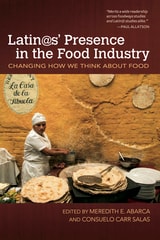
Latin@s' Presence in the Food Industry
Changing How We Think about FoodMeredith E. Abarca
University of Arkansas Press, 2016
The networks Latin@s create, the types of identities they fashion through food, and their relationship to the US food industry are analyzed to understand Latin@s as active creators of food-based communities, as distinctive cultural representations, and as professionals. This vibrant new collection acknowledges issues of labor conditions, economic politics, and immigration laws—structural vulnerabilities that certainly cannot be ignored—and strives to understand more fully the active and conscious ways that Latina@s create spaces to maneuver global and local food systems.
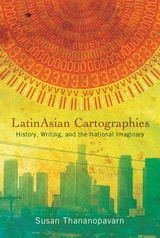
LatinAsian Cartographies
History, Writing, and the National ImaginaryThananopavarn, Susan
Rutgers University Press, 2018
Thananopavarn creates a new “LatinAsian” view of the United States that emphasizes previously suppressed aspects of national history, including imperialism, domestic racism during World War II, Cold War operations in Latin America and Asia, and the politics of borders in an age of globalization. LatinAsian Cartographies ultimately reimagines national narratives in a way that transforms dominant ideas of what it means to be American.
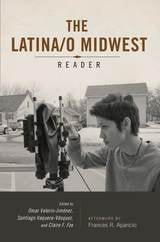
Latina/o Midwest Reader
Omar Valerio-Jimenez , Santiago Vaquera-Vasquez
University of Illinois Press, 2017
Eye-opening and provocative, The Latina/o Midwest Reader rewrites the conventional wisdom on today's Latina/o community and how it faces challenges—and thrives—in the heartland.
Contributors: Aidé Acosta, Frances R. Aparicio, Jay Arduser, Jane Blocker, Carolyn Colvin, María Eugenia Cotera, Theresa Delgadillo, Lilia Fernández, Claire F. Fox, Felipe Hinojosa, Michael D. Innis-Jiménez, José E. Limón, Marta María Maldonado, Louis G. Mendoza, Amelia María de la Luz Montes, Kim Potowski, Ramón H. Rivera-Servera, Rebecca M. Schreiber, Omar Valerio-Jiménez, Santiago Vaquera-Vásquez, Darrel Wanzer-Serrano, Janet Weaver, and Elizabeth Willmore
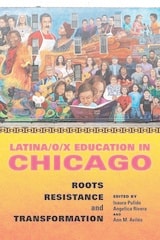
Latina/o/x Education in Chicago
Roots, Resistance, and TransformationEdited by Isaura Pulido, Angelica Rivera, and Ann M. Aviles
University of Illinois Press, 2022
Insightful and enlightening, Latina/o/x Education in Chicago brings to light the ongoing struggle for educational equity in the Chicago Public Schools.
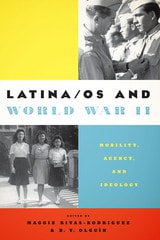
Latina/os and World War II
Mobility, Agency, and IdeologyEdited by Maggie Rivas-Rodriguez and B.V. Olguín
University of Texas Press, 2014
The first book-length study of Latina/o experiences in World War II over a wide spectrum of identities and ancestries—from Cuban American, Spanish American, and Mexican American segments to the under-studied Afro-Latino experience—Latina/os and World War II probes the controversial aspects of Latina/o soldiering and citizenship in the war, the repercussions of which defined the West during the twentieth century. The editors also offer a revised, more accurate tabulation of the number of Latina/os who served in the war.
Spanning imaginative productions, such as vaudeville and the masculinity of the soldado razo theatrical performances; military segregation and the postwar lives of veterans; Tejanas on the homefront; journalism and youth activism; and other underreported aspects of the wartime experience, the essays collected in this volume showcase rarely seen recollections. Whether living in Florida in a transformed community or deployed far from home (including Mexican Americans who were forced to endure the Bataan Death March), the men and women depicted in this collection yield a multidisciplinary, metacritical inquiry. The result is a study that challenges celebratory accounts and deepens the level of scholarly inquiry into the realm of ideological mobility for a unique cultural crossroads. Taking this complex history beyond the realm of war narratives, Latina/os and World War II situates these chapters within the broader themes of identity and social change that continue to reverberate in postcolonial lives.
Latinamericanism after 9/11
John Beverley
Duke University Press, 2011
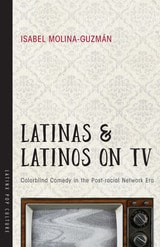
Latinas and Latinos on TV
Colorblind Comedy in the Post-racial Network EraIsabel Molina-Guzmán
University of Arizona Press, 2018
Sofia Vergara became the highest paid woman and Latina on TV for her starring role on Modern Family. In the first successful dramedy starring a Latina since ABC’s Ugly Betty, Gina Rodriguez gained critical acclaim for her role on the CW’s Jane the Virgin. And the first Latina leading lady of TV, America Ferrera (Ugly Betty), returned to TV stardom in NBC’s Superstore.
This period of diversity brought U.S. Latina and Latino lives to the screen, yet a careful look at TV comedic content and production reveals a more troubling terrain for Latinas/os producers, writers, actors, and audiences.
Interweaving discussions about the ethnic, racial, and linguistic representations of Latinas/os within network television comedies, Isabel Molina-Guzmán probes published interviews with producers and textual examples from hit programs like Modern Family, The Office, and Scrubs to understand how these primetime sitcoms communicate difference in the United States.
Understanding the complex ways that audiences interpret these programs, Molina-Guzmán situates her analysis within the Obama era, a period when ethnicity and race became increasingly grounded in “hipster racism,” and argues that despite increased inclusion, the feel-good imperative of TV comedies still inevitably leaves racism, sexism, and homophobia uncontested.
Latinas on the Line
Invisible Information Workers in TelecommunicationsMelissa Villa-Nicholas
Rutgers University Press, 2022
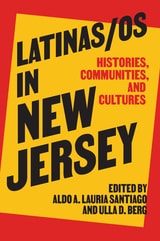
Latinas/os in New Jersey
Histories, Communities, and CulturesAldo A. Lauria Santiago
Rutgers University Press, 2025
Contributors: Yamil Avivi; Jennifer Ayala; Ulla D. Berg; Giovani Burgos; Elsa Candelario; Laura Curran; Lilia Fernández; Ismael García Colón; Olga Jiménez de Wagenheim; Benjamin Lapidus; Aldo A. Lauria Santiago; Johana Londoño; Kathleen Lopez; Giancarlo Muschi; Melanie Z. Plasencia; Ana Y. Ramos-Zayas; Elena Sabogal; Raymond Sanchez Mayers; William Suárez Gómez; Alex F. Trillo; Daniela Valdez; Anil Venkatesh; Lyna L. Wiggins
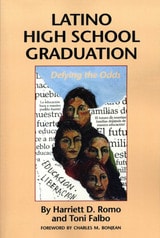
Latino High School Graduation
Defying the OddsBy Harriett D. Romo and Toni Falbo
University of Texas Press, 1996
While high school drop-out rates have steadily declined among white and African American students over the 1970s and 1980s a constant 35 percent of Latino students continued to quit school before graduation. In this pioneering work, Harriett Romo and Toni Falbo reveal how a group of at-risk Latino students defied the odds and earned a high school diploma.
Romo and Falbo tracked the progress of 100 students in Austin, Texas, from 1989 to 1993. Drawing on interviews with the students and their parents, school records, and fieldwork in the schools and communities, the authors identify both the obstacles that caused many students to drop out and the successful strategies that other students and their parents pursued to ensure high school graduation.
The authors conclude with seven far-reaching recommendations for changes in the public schools. Sure to provoke debate among all school constituencies, this book will be required reading for school administrators, teachers, parents, legislators, and community leaders.
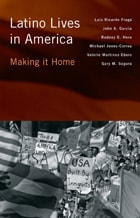
Latino Lives in America
Making It HomeLuis R. Fraga, John A. Garcia, Rodney E. Hero, Michael Jones-Correa, Valerie Martinez-Ebers and Gary Segura
Temple University Press, 2010
Latinos are the largest and fastest growing ethnic group in the United States, with increased levels of political mobilization and influence. In the timely and thoroughgoing Latino Lives in America, six prominent Latino scholars explore the profound implications of Latinos’ population growth and geographic dispersion for American politics and society, tracking key changes and continuities in Latinos' attitudes, behavior, and social experiences.
Utilizing a unique set of “narratives” from focus group interviews, supplemented with quantitative findings from the 2006 Latino National Survey, the authors provide a snapshot of Latino life in America. The Latinos interviewed provide their thoughts regarding their sense of belonging and group identification, assimilation and transnationalism, housing, education, civic engagement, and perceptions of discrimination, as well as their experiences in new destinations, where they are trying to realize the “Americano” dream.
Latino Lives in America uses these conversations and the survey data to offer both a micro and macro look at how Latinos are transforming various aspects of American politics, culture, and life and how their experiences in the United States are changing them and their families.
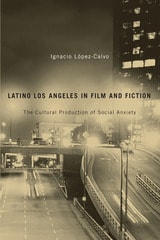
Latino Los Angeles in Film and Fiction
The Cultural Production of Social AnxietyIgnacio López-Calvo
University of Arizona Press, 2014
Latino Los Angeles in Film and Fiction sets out to reconfigure the scope of Latino literary and cultural studies. Integrating histories of different regions and nations, the book sets the interplay of unresolved contradictions in this particular metropolitan area. The novelists studied here stem from multiple areas, including the U.S. Southwest, Guatemala, and Chile. The study also incorporates non-Latino writers who have contributed to the Latino culture of the city.
The first chapter examines Latino cultural production from an ecocritical perspective on urban interethnic relations. Chapter 2 concentrates on the representation of daily life in the barrio and the marginalization of Latino urban youth. The third chapter explores the space of women and how female characters expand their area of operations from the domestic space to the public space of both the barrio and the city.
A much-needed contribution to the fields of urban theory, race critical theory, Chicana/o–Latina/o studies, and Los Angeles writing and film, López-Calvo offers multiple theoretical perspectives—including urban theory, ecocriticism, ethnic studies, gender studies, and cultural studies— contextualized with notions of transnationalism and post-nationalism.
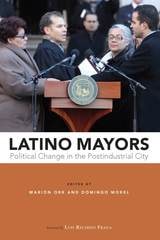
Latino Mayors
Political Change in the Postindustrial CityMarion Orr
Temple University Press, 2018
As recently as the early 1960s, Latinos were almost totally excluded from city politics. This makes the rise of Latino mayors in the past three decades a remarkable American story—one that explains ethnic succession, changing urban demography, and political contexts. The vibrant collection Latino Mayors features case studies of eleven Latino mayors in six American cities: San Antonio, Los Angeles, Denver, Hartford, Miami, and Providence.
The editors and contributors analyze Latino mayors for their governing styles and policies. They describe how candidates shaped race, class, and economic issues—particularly in deracialized campaigns. Latino Mayors also addresses coalition politics, political incorporation, and how community groups operate, as well as the challenges these pioneers have faced in office from political tensions and governance issues that sometimes even harm Latinos.
Ultimately, Latino Mayors charts the performances, successes, and failures of these elected officials to represent their constituents in a changing economic and urban environment.
Contributors include: Stefanie Chambers, Carlos E. Cuéllar, Emily M. Farris, Maria Ilcheva, Robert Preuhs, Heywood T. Sanders, Ellen Shiau, and the editors.
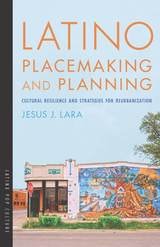
Latino Placemaking and Planning
Cultural Resilience and Strategies for ReurbanizationJesus J. Lara
University of Arizona Press, 2018
Latino Placemaking and Planning offers a pathway to define, analyze, and evaluate the role that placemaking can have with respect to Latino communities in the context of contemporary urban planning, policy, and design practices. Using strategically selected case studies, Jesus J. Lara examines how Latinos contribute to the phenomenon of urban revitalization through the (re)appropriation of physical space for their own use and the consequent transformation of what were previously economically downtrodden areas into vibrant commercial and residential centers.
The book examines the formation of urban cultures and reurbanization strategies from the perspective of Latino urbanism and is divided into four key sections, which address (1) emerging new urban geographies; (2) the power of place and neighborhood selection; (3) Latino urbanism case studies; and (4) lessons and recommendations for “reurbanizing” the city. Latino Placemaking and Planning illustrates the importance of placemaking for Latino communities and provides accessible strategies for planners, students, and activists to sustainable urban revitalization.
Latinos and American Law
Landmark Supreme Court CasesBy Carlos R. Soltero
University of Texas Press, 2006
To achieve justice and equal protection under the law, Latinos have turned to the U.S. court system to assert and defend their rights. Some of these cases have reached the United States Supreme Court, whose rulings over more than a century have both expanded and restricted the legal rights of Latinos, creating a complex terrain of power relations between the U.S. government and the country's now-largest ethnic minority. To map this legal landscape, Latinos and American Law examines fourteen landmark Supreme Court cases that have significantly affected Latino rights, from Botiller v. Dominguez in 1889 to Alexander v. Sandoval in 2001.
Carlos Soltero organizes his study chronologically, looking at one or more decisions handed down by the Fuller Court (1888-1910), the Taft Court (1921-1930), the Warren Court (1953-1969), the Burger Court (1969-1986), and the Rehnquist Court (1986-2005). For each case, he opens with historical and legal background on the issues involved and then thoroughly discusses the opinion(s) rendered by the justices. He also offers an analysis of each decision's significance, as well as subsequent developments that have affected its impact. Through these case studies, Soltero demonstrates that in dealing with Latinos over issues such as education, the administration of criminal justice, voting rights, employment, and immigration, the Supreme Court has more often mirrored, rather than led, the attitudes and politics of the larger U.S. society.
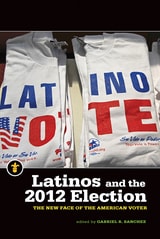
Latinos and the 2012 Election
The New Face of the American VoterGabriel R. Sanchez
Michigan State University Press, 2015
Latinos and the 2016 Election
Latino Resistance and the Election of Donald TrumpGabriel R. Sanchez
Michigan State University Press, 2020
Latinos in Chicago
Quest for a Political VoiceWilfredo Cruz
Southern Illinois University Press, 2022
The path to political power for Latinos in Chicago
In the Midwest’s largest city, Latinos have been fighting for political representation for more than half a century. In this exploration of urban politics in Chicago, Wilfredo Cruz shows for the first time how Latinos went from being ignored by the Irish-controlled political machine to becoming a respected constituency.
Beginning with the Latino community’s first attempt to acquire a political voice in Chicago politics in 1911 and continuing through Latino officeholders of the early twenty-first century, Cruz surveys not only the struggles of this community—specifically the two largest Latino groups in the city, Mexicans and Puerto Ricans—but also the ways in which Chicago’s Latinos overcame those challenges to gain their political voice.
For most of the twentieth century, Chicago politicians ignored the growing Latino community. This disregard changed with the 1983 election of Mayor Harold Washington, an African American who defied the political machine and actively recruited Latinos to his administration and helped them win city and statewide political offices. His actions opened the doors of government for Latinos in Chicago. Subsequent mayors, seeing the political success of Washington’s move, continued his policies.
Many up-and-coming Latino politicians making strides in Chicago, including state representative Aarón Ortíz, Alderman Andre Vasquez, and Alderman Rossana Rodríguez-Sanchez, contribute their takes on the struggle for political power and the challenges facing the rising new generation of elected officials. With this book, Cruz asks and answers this question: What does the future hold for Latinos politically in Chicago?
Latinos in Michigan
David A. Badillo
Michigan State University Press, 2003
Latinos in Nevada
A Political, Economic, and Social ProfileJohn P. Tuman
University of Nevada Press, 2021
This extensive study by a distinguished and multidisciplinary team of scholars discusses the impact of the Latinx population from the early development of the state of Nevada and highlights their roles in society, as well as the specific implications of their growing presence in the state. It also contemplates the future of the Latinx population and the role they will continue to play in politics and the economy.
This in-depth examination of a large and relatively understudied population will be of interest to scholars and students who study disparities in health and education opportunities as well as the political and economic climate among Latinos and other groups in Nevada and beyond. A political, economic, and demographic profile, this book:
- Explores the history, growth, and diversity of the Latinx population.
- Draws on an array of census data, voter surveys, statistics, interviews, and health, education, employment, wages, and immigration statistics.
- Evaluates key trends in employment, education, religion, and health.
- Analyzes the dynamics of political participation, including implications of a growing Latino political electorate in a western swing state.
- Assesses key determinants of health disparities, educational inequities, and civic engagement among Latinos in the state.
- Demonstrates the impact of the Great Recession of 2008 and provides a preliminary assessment of the COVID-19 pandemic on Latino employment.
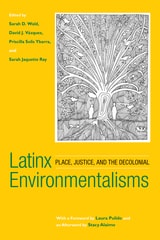
Latinx Environmentalisms
Place, Justice, and the DecolonialSarah D. Wald
Temple University Press, 2019
The whiteness of mainstream environmentalism often fails to account for the richness and variety of Latinx environmental thought. Building on insights of environmental justice scholarship as well as critical race and ethnic studies, the editors and contributors to Latinx Environmentalisms map the ways Latinx cultural texts integrate environmental concerns with questions of social and political justice.
Original interviews with creative writers, including Cherríe Moraga, Helena María Viramontes, and Héctor Tobar, as well as new essays by noted scholars of Latinx literature and culture, show how Latinx authors and cultural producers express environmental concerns in their work. These chapters, which focus on film, visual art, and literature—and engage in fields such as disability studies, animal studies, and queer studies—emphasize the role of racial capitalism in shaping human relationships to the more-than-human world and reveal a vibrant tradition of Latinx decolonial environmentalism.
Latinx Environmentalisms accounts for the ways Latinx cultures are environmental, but often do not assume the mantle of “environmentalism.”
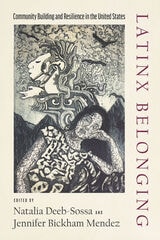
Latinx Belonging
Community Building and Resilience in the United StatesEdited by Natalia Deeb-Sossa and Jennifer Bickham Mendez
University of Arizona Press, 2022
What does it mean to be Latinx? This pressing question forms the core of Latinx Belonging, which brings together cutting-edge research to discuss the multilayered ways this might be answered.
Latinx Belonging is anchored in the claim that Latinx people are not defined by their marginalization but should instead be understood as active participants in their communities and contributors to U.S. society. The volume’s overarching analytical approach recognizes the differences, identities, and divisions among people of Latin American origin in the United States, while also attending to the power of mainstream institutions to shape their lives and identities. Contributors to this volume view “belonging” as actively produced through struggle, survival, agency, resilience, and engagement.
This work positions Latinxs’ struggles for recognition and inclusion as squarely located within intersecting power structures of gender, race, sexuality, and class and as shaped by state-level and transnational forces such as U.S. immigration policies and histories of colonialism. From the case of Latinxs’ struggles for recognition in the arts, to queer Latinx community resilience during COVID-19 and in the wake of mass shootings, to Indigenous youth’s endurance and survival as unaccompanied minors in Los Angeles, the case studies featured in this collection present a rich and textured picture of the diversity of the U.S. Latinx experience in the twenty-first century.
Contributors
Andrés Acosta
Jack “Trey” Allen
Jennifer Bickham Mendez
Stephanie L. Canizales
Christopher Cuevas
Natalia Deeb-Sossa
Yvette G. Flores
Melanie Jones Gast
Monika Gosin
Pierrette Hondagneu-Sotelo
Nolan Kline
Verónica Montes
Yvonne Montoya
Michael De Anda Muñiz
Suzanne Oboler
Gilda L. Ochoa
Dina G. Okamoto
Marco Antonio Quiroga
Michelle Téllez
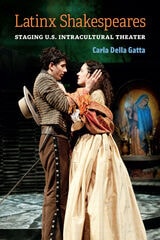
Latinx Shakespeares
Staging U.S. Intracultural TheaterCarla Della Gatta
University of Michigan Press, 2023
2024 American Society for Theatre Research Barnard Hewitt Award Finalist
- 2023 Theatre Library Association George Freedley Memorial Award Finalist
- Best Academic-Themed Book, College-Level - English at the International Latino Book Awards Honorable Mention
Latinx peoples and culture have permeated Shakespearean performance in the United States for over 75 years—a phenomenon that, until now, has been largely overlooked as Shakespeare studies has taken a global turn in recent years. Author Carla Della Gatta argues that theater-makers and historians must acknowledge this presence and influence in order to truly engage the complexity of American Shakespeares. Latinx Shakespeares investigates the history, dramaturgy, and language of the more than 140 Latinx-themed Shakespearean productions in the United States since the 1960s—the era of West Side Story. This first-ever book of Latinx representation in the most-performed playwright’s canon offers a new methodology for reading ethnic theater looks beyond the visual to prioritize aural signifiers such as music, accents, and the Spanish language.
The book’s focus is on textual adaptations or performances in which Shakespearean plays, stories, or characters are made Latinx through stage techniques, aesthetics, processes for art-making (including casting), and modes of storytelling. The case studies range from performances at large repertory theaters to small community theaters and from established directors to emerging playwrights. To analyze these productions, the book draws on interviews with practitioners, script analysis, first-hand practitioner insight, and interdisciplinary theoretical lenses, largely by scholars of color. Latinx Shakespeares moves toward healing by reclaiming Shakespeare as a borrower, adapter, and creator of language whose oeuvre has too often been mobilized in the service of a culturally specific English-language whiteness that cannot extricate itself from its origins within the establishment of European/British colonialism/imperialism.
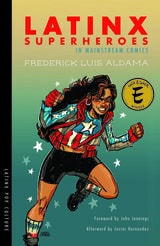
Latinx Superheroes in Mainstream Comics
Frederick Luis Aldama; Foreword by John Jennings; Afterword by Javier Hernandez
University of Arizona Press, 2017
Whether good or evil, beautiful or ugly, smart or downright silly, able-bodied or differently abled, gay or straight, male or female, young or old, Latinx superheroes in mainstream comic book stories are few and far between. It is as if finding the Latinx presence in the DC and Marvel worlds requires activation of superheroic powers.
Latinx Superheroes in Mainstream Comics blasts open barriers with a swift kick. It explores deeply and systematically the storyworld spaces inhabited by brown superheroes in mainstream comic book storyworlds: print comic books, animation, TV, and film. It makes visible and lets loose the otherwise occluded and shackled. Leaving nothing to chance, it sheds light on how creators (authors, artists, animators, and directors) make storyworlds that feature Latinos/as, distinguishing between those that we can and should evaluate as well done and those we can and should evaluate as not well done.
The foremost expert on Latinx comics, Frederick Luis Aldama guides us through the full archive of all the Latinx superheros in comics since the 1940s. Aldama takes us where the superheroes live—the barrios, the hospitals, the school rooms, the farm fields—and he not only shows us a view to the Latinx content, sometimes deeply embedded, but also provokes critical inquiry into the way storytelling formats distill and reconstruct real Latinos/as.
Thoroughly entertaining but seriously undertaken, Latinx Superheroes in Mainstream Comics allows us to truly see how superhero comic book storyworlds are willfully created in ways that make new our perception, thoughts, and feelings.
Latinx Theater in the Times of Neoliberalism
Patricia A. Ybarra
Northwestern University Press, 2018
Patricia A. Ybarra examines IMF interventions, NAFTA, shifts in immigration policy, the escalation of border industrialization initiatives, and austerity programs. She demonstrates how these policies have created the conditions for many of the most tumultuous events in the Americas in the last forty years, including dictatorships in the Southern Cone; the 1994 Cuban Rafter Crisis; femicides in Juárez, Mexico; the Zapatista uprising in Chiapas, Mexico; and the rise of narcotrafficking as a violent and vigorous global business throughout the Americas.
Latinx artists have responded to these crises by writing and developing innovative theatrical modes of representation about neoliberalism. Ybarra analyzes the work of playwrights María Irene Fornés, Cherríe Moraga, Michael John Garcés, Caridad Svich, Quiara Alegría Hudes, Victor Cazares, Jorge Ignacio Cortiñas, Tanya Saracho, and Octavio Solis. In addressing histories of oppression in their home countries, these playwrights have newly imagined affective political and economic ties in the Americas. They also have rethought the hallmark movements of Latin politics in the United States—cultural nationalism, third world solidarity, multiculturalism—and their many discontents.
Latvians in Michigan
Silvija D. Meija
Michigan State University Press, 2005
Latvians have contributed to the cultural mosaic and economy of Michigan far more than one might imagine. There are three large Latvian communities in Michigan—Kalamazoo, Detroit, and Grand Rapids—with several smaller enclaves elsewhere in the state. An underlying goal of Latvians who now live in Michigan, as well as other parts of the United States and Canada, is to maintain their language and culture. More than five thousand Latvians came to Michigan after World War II, found gainful employment, purchased homes, and became a part of the Michigan population. Most sought to reeducate themselves and struggled to educate their children in Michigan’s many colleges and universities. Latvians in Michigan examines Latvia and its history, and describes how World War II culminated in famine, death, and eventual flight from their homeland by many Latvian refugees. After the war ended, most Latvian emigrants eventually made their way to Sweden or Germany, where they lived in displaced persons camps. From there, the emigrants were sponsored by individuals or organizations and they moved once again to other parts of the world. Many came to the United States, where they established new roots and tried to perpetuate their cultural heritage while establishing new lives.

Laud Humphreys
Prophet of Homosexuality and SociologyJohn F. Galliher, Wayne Brekhus, and David P. Keys
University of Wisconsin Press, 2004
Laudonniere & Fort Caroline
History and DocumentsCharles Bennett and foreword by Jerald T. Milanich
University of Alabama Press, 2001
This classic historical resource remains the most complete work on the establishment of Fort Caroline, which heralded the start of permanent settlement by Europeans in North America. America's history was shaped in part by the clash of cultures that took place in the southeastern United States in the 1560s. Indians, French, and Spaniards vied to profit from European attempts to colonize the land Juan Ponce de Leon had named La Florida.
Rene de Goulaine de Laudonniere founded a French Huguenot settlement on the St. Johns River near present-day Jacksonville and christened it Fort Caroline in 1564, but only a year later the hapless colonists were expelled by a Spanish fleet led by Pedro Menendez de Aviles. The Spanish in turn established a permanent settlement at St. Augustine, now the oldest city in the United States, and blocked any future French claims in Florida.
Using documents from both French and Spanish archives, Charles E. Bennett provides the first comprehensive account of the events surrounding the international conflicts of this 16th-century colonization effort, which was the actual "threshold" of a new nation. The translated Laudonniere documents also provide a wealth of information about the natural wonders of the land and the native Timucua Indians encountered by the French. As a tribe, the Timucua would be completely gone by the mid-1700s, so these accounts are invaluable to ethnologists and anthropologists.
With this republication of Laudonniere & Fort Caroline, a new generation of archaeologists, anthropologists, and American colonial historians can experience the New World through the adventures of the French explorers. Visitors to Fort Caroline National Memorial will also find the volume fascinating reading as they explore the tentative early beginnings of a new nation.

Laughing to Keep from Dying
African American Satire in the Twenty-First CenturyDanielle Fuentes Morgan
University of Illinois Press, 2020
Adventurous and perceptive, Laughing to Keep from Dying reveals how African American satirists unmask the illusions and anxieties surrounding race in the twenty-first century.
Laura Ingalls Wilder and Rose Wilder Lane
Authorship, Place, Time, and CultureJohn E. Miller
University of Missouri Press, 2008
Interpreting these writers in their larger historical and cultural contexts, Miller reconsiders their formidable artistic, political, and literary contributions to American cultural life in the 1930s. He looks at what was happening in 1932—from depression conditions and politics to chain stores and celebrity culture—to shed light on Wilder’s life, and he shows how actual “little houses” established ideas of home that resonated emotionally for both writers.
In considering each woman’s ties to history, Miller compares Wilder with Frederick Jackson Turner as a frontier mythmaker and examines Lane’s unpublished history of Missouri in the context of a contemporaneous project, Thomas Hart Benton’s famous Jefferson City mural. He also looks at Wilder’s Missouri Ruralist columns to assess her pre–Little House values and writing skills, and he readdresses her literary treatment of Native Americans. A final chapter shows how Wilder’s and Lane’s conservative political views found expression in their work, separating Lane’s more libertarian bent from Wilder’s focus on writing moralist children’s fiction.
These nine thoughtful essays expand the critical discussion on Wilder and Lane beyond the Little House. Miller portrays them as impassioned and dedicated writers who were deeply involved in the historical changes and political challenges of their times—and contends that questions over the books’ authorship do not do justice to either woman’s creative investment in the series. Miller demystifies the aura of nostalgia that often prevents modern readers from seeing Wilder as a real-life woman, and he depicts Lane as a kindred artistic spirit, helping readers better understand mother and daughter as both women and authors.

Lavender Sounds
From Lesbian Radio to Queer Feminist SoundworkStacey Copeland
University of Michigan Press, 2026
Stacey Copeland’s Lavender Sounds explores lesbian radio history and its evolution into queer feminist podcasting today, exploring the politics, aesthetics, and cultural activism embedded in queer feminist soundwork. Through deeply personal and archival explorations, Stacey Copeland traces the emergence of queer feminist soundwork—a unique blend of community-led storytelling, political resistance, and creative expression rooted in feminist and LGBTQ+ activism. At the heart of the book lies a powerful idea: sound is not just heard but felt, connecting generations through shared voices and struggles. In conversation with award-winning and cutting-edge queer and feminist podcast producers from across Canada and the U.S., Lavender Sounds invites us to turn a feminist-embodied ear to the past to uncover the ways gender, race, and sexual orientations are embedded in our everyday media listening practices. From pioneering Canadian radio shows like Vancouver's The Lesbian Show and Montreal's Dykes on Mykes to today’s queer chumcasts and audio documentary, Lavender Sounds is a journey through auditory landscapes where joy, protest, intimacy, and identity intersect. This book opens a vibrant conversation about how radio and podcasting are vital tools for marginalized communities to connect, create, and claim space in the media world.

Law And Order And School
Daily Life In Educ Program For Juv DelinqShira Birnbaum
Temple University Press, 2001
As educational and justice agencies increasingly turn to private subcontractors to deliver an array of services and growing numbers of young people are channeled into non-traditional educational settings and correctional institutions, it is imperative that educators and the general public understand how these institutions work and what problems their students and staffs encounter. This on-the-ground examination of the education within the juvenile justice system will open your eyes to how we educate some of our neediest children.
Law Stories
Gary Bellow and Martha Minow, Editors
University of Michigan Press, 1998
Law Touched Our Hearts
A Generation Remembers Brown v. Board of EducationMildred Wigfall Robinson
Vanderbilt University Press, 2008
What Brown did was to elevate race from the country's dirty secret to its most urgent topic of conversation. This book stands alone in presenting, in one source, stories of black and white Americans, men and women, from all parts of the nation, who were public school students during the years immediately after Brown. All shared an epiphany. Some became aware of race and the burden of racial separation. Others dared to hope that the yoke of racial oppression would at last be lifted.
The editors surveyed 4750 law professors born between 1936 and 1954, received 1000 responses, and derived these forty essays from those willing to write personal accounts of their childhood experiences in the classroom and in their communities. Their moving stories of how Brown affected them say much about race relations then and now. They also provide a picture of how social change can shape the careers of an entire generation in one profession.
Contributors provide accounts from across the nation. Represented are
-de jure states, those segregated by law at the time of Brown, including Alabama, Florida, Georgia, Louisiana, Maryland, Mississippi, North Carolina, South Carolina, Tennessee, Virginia, as well as the District of Columbia
-de facto states, those where segregation was illegal but a common practice, including California, Illinois, Kansas, Massachusetts, Missouri, New Jersey, New York, Ohio, Washington, and Wisconsin.
Law Without Values
The Life, Work, and Legacy of Justice HolmesAlbert W. Alschuler
University of Chicago Press, 2000
Law and Democracy in the Empire of Force
H. Jefferson Powell and James Boyd White, editors
University of Michigan Press, 2009
James Boyd White is Hart Wright Professor of Law emeritus and Professor of English emeritus, at the University of Michigan. His latest book is Living Speech: Resisting the Empire of Force.
"An extraordinary collection of provocative, insightful, and inspiring essays on the future of law and democracy in the twenty-first century."
---Geoffrey R. Stone, Edward H. Levi Distinguished Service Professor of Law, University of Chicago
"These thoughtful essays diagnose democracy's perilous present, and---more importantly---they explore avenues to democracy's rescue through humanization of law."
---Kenneth L. Karst, David G. Price and Dallas P. Price Professor of Law Emeritus, UCLA
Contributors
Martin Böhmer, Universidad de San Andres, Buenos Aires, Argentina
M. Cathleen Kaveny, University of Notre Dame
Howard Lesnick, University of Pennsylvania
The Honorable John T. Noonan Jr., Ninth Circuit Court of Appeals
H. Jefferson Powell, Duke University
Jedediah Purdy, Duke University
Jed Rubenfeld, Yale University
A.W. Brian Simpson, University of Michigan
Barry Sullivan, Jenner and Block LLP, Chicago
Joseph Vining, University of Michigan
Robin West, Georgetown University
James Boyd White, University of Michigan
Law and Economic Policy in America
The Evolution of the Sherman Antitrust ActWilliam Letwin
University of Chicago Press, 1981
Law and Mourning
Austin Sarat
University of Massachusetts Press, 2017
In addition to the editors, the contributors include Andrea Brady, Catherine Kellogg, Shai Lavi, Ray Madoff, Ann Pelligrini, and Mark Sanders.
Law and Public Choice
A Critical IntroductionPhilip P. Frickey and Daniel A. Farber
University of Chicago Press, 1991
“Law and Public Choice is a most valuable contribution to the burgeoning literature. It
should be of great interest to lawyers, political scientists, and all others interested in issues at the intersection of government and law.”—Cass R. Sunstein, University of Chicago Law
School
Law and the Conditions of Freedom in the Nineteenth-Century United States
James Willard Hurst
University of Wisconsin Press, 1964
In these essays J. Willard Hurst shows the correlation between the conception of individual freedom and the application of law in the nineteenth-century United States—how individuals sought to use law to increase both their personal freedom and their opportunities for personal growth. These essays in jurisprudence and legal history are also a contribution to the study of social and intellectual history in the United States, to political science, and to economics as it concerns the role of public policy in our economy. The nonlawyer will find in them demonstration of how "technicalities" express deep issues of social values.