Results by title
18284 books match the query 'United States' and 698 start with l
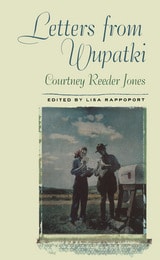
Letters from Wupatki
Courtney Reeder Jones; Edited by Lisa Rappoport
University of Arizona Press, 1995
The year was 1938, and the newlyweds had come to Wupatki National Monument as full-time National Park Service caretakers for the ruin. Remote in time and place, their story as described in Courtney's letters will take readers into a dramatic landscape of red rocks, purple volcanoes, and endless blue sky. Here, some 60 years ago, two young people came to terms with their new life together and with their nearly total reliance upon each other and their Navajo neighbors.
"They helped us in any way that a neighbor would, and we helped them as we could," wrote Courtney in her memoirs years later. Vivid and engaging, her letters home spill over with descriptions of their friendship with local Navajo families, their sings and celebrations, and her good luck in being able to be a part of it all.
Letters from Wupatki captures a more innocent era in southwestern archaeology and the history of the National Park Service before the post-war years brought paved roads, expanded park facilities, and ever-increasing crowds of visitors. Courtney's letters to her family and friends reflect all the charm of the earlier time as they convey the sense of rapid transition that came after the war.
Tracking those changes in the development of Wupatki National Monument and the National Park Service, the letters also—and perhaps more important—reveal changes in the Joneses themselves. Of particular interest to anthropologists and historians, their story also gives the general reader captivating glimpses of a partnership between two people who only grew stronger for the struggles they shared together.
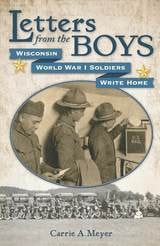
Letters from the Boys
Wisconsin World War I Soldiers Write HomeCarrie A Meyer
Wisconsin Historical Society Press, 2018
On the 100th anniversary of the arrival of the flood of American troops in Europe that would shift the tide of World War I in favor of the Allies, Letters from the Boys brings to life this terrible war as experienced by Wisconsinites writing home.
Technology had transformed the battlefield in alarming ways. Automatic rifles mowed down the young men who went “over the top” to attack enemy trenches; airplanes and improved artillery brought death unseen from miles away; terrifying clouds of poison gas choked and burned the European countryside; the internal combustion engine brought tanks to the battlefield for the first time and revolutionized the way troops deployed.
In the thick of it were young men from Wisconsin who found themselves caught up in geopolitical events half a world away. Professor Carrie A. Meyer combed through three newspapers in Green County, Wisconsin, to collect and synthesize the letters from the boys into a narrative that is both unique and representative, telling the stories of several Green County boys and what they saw, from preparing for war, to life among French families near the front, to the terror of the battlefield. Meyer gracefully removes the veil of obscurity and anonymity hanging over soldiers who participated in a war fought so long ago by great numbers of men, reminding us that armies are made of individuals who strove to do their part and then return to their families.
Letters from the Federal Farmer to the Republican
Walter Bennett
University of Alabama Press, 1978
The Federal Farmer’s letters were written in opposition to the Constitution in the form in which it had come from the Federal Convention of 1787. Their immediate objective was to secure amendments to the Constitution before it was ratified by state convention. But the letters are valuable also for the basic political philosophy that they represent, specifically, the political philosophy of the revolution and the Bill of Rights. This philosophy stresses principles of federalism and republicanism and exemplifies the liberal idealism that took root in America during the Revolutionary War era.
Letters from the Front, 1898-1945
Michael E. Stevens
Wisconsin Historical Society Press, 1992
This volume tells the stories of 62 men and women from Wisconsin who served in the Spanish-American War, World War I, and World War II. Letters from the Front is a vivid social history of wartime as told by those who took part in these foreign conflicts. Most of them are "ordinary" people, uprooted from farms, factories, and offices, who took part in extraordinary events. This work explores how war changed their lives and reveals the emotions they felt in uniform, in remote outposts, in combat, and in prison camps. These letters, diaries, oral histories, newspapers, and contemporary accounts provide a history of adaptation to military life; they also reflect the changes that occurred over the half-century encompassing these confilcts, an era of great technological innovation — and one in which America's vision of itself also changed.
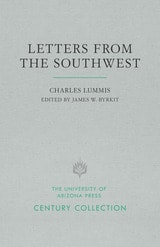
Letters from the Southwest
Charles Lummis; Edited by James W. Byrkit
University of Arizona Press, 0
In the fall of 1884, journalist Charles Lummis set out on foot from Ohio to California on assignment for the Los Angeles Times. The reports he mailed ahead to that newspaper were later refashioned for the book A Tramp Across the Continent, a work that helped to establish Lummis as the most active promoter of Southwestern culture who ever lived.
Lummis wrote another set of letters during his journey, however, which he sent back to Ohio for publication by the Chillicothe Leader. Although these letters contain basically the same narrative as those sent to Los Angeles and later found in A Tramp, the Ohio letters more closely reflect the author’s thoughts and observations while on the journey. In fact, a comparison of the two drafts indicates that Lummis spent considerable effort removing spontaneous details from the Ohio letters in favor or a more commercial, self-promoting, and politic reporting for the California paper.
The twenty-four Ohio letters, assembled here by James W. Byrkit, offer a far more candid look at the Southwest than Lummis was later to bring to print, as well as greater insight into the author’s own personality. Byrkit’s introductory essay provides the background for Lummis’s career, compares the three bodies of work relating to the trek, and offers an account of Lummis’s transformation from chronicler to promoter.
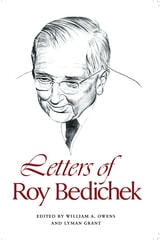
Letters of Roy Bedichek
Edited by William A. Owens and Lyman Grant
University of Texas Press, 1985
Although Roy Bedichek published less than his more famous friends J. Frank Dobie and Walter Prescott Webb, he wrote voluminously and, many say, with more distinction than the others. In addition to his four published books, Bedichek produced a great number of letters through which he communicated his broad interests and deep learning to a wide variety of correspondents.
Prefaced by a biographical sketch, this volume presents a collection of Bedichek letters that give us an insight into his literary and creative development—from his earliest years through his career at the University of Texas and on into his later years. They include letters to his closest associates, J. Frank Dobie and Walter Prescott Webb, and to many old friends, such as William A. Owens, John A. Lomax, and John Henry Faulk. Also included is Bedichek's correspondence with other contemporaries, not all old friends, among them Texas Governor James Ferguson, the recipient of some of Bedichek's most trenchant criticism. Throughout this collection, Bedichek's sparkling wit and profound learning are evident as he discusses his favorite subjects, among them ecology, education, literature, politics, and history, frequently related to Texas.
When Roy Bedichek gave his collection of letters to the Barker Collection in the University of Texas Library, he designated William A. Owens as the authorized editor of the letters, with the restriction that none of them be published until seven years following his death, which came in 1959.
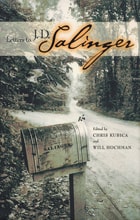
Letters to J. D. Salinger
Edited by Chris Kubica and Will Hochman
University of Wisconsin Press, 2014
Salinger continues to maintain his silence, but Holden Caulfield, Franny and Zooey, and Seymour Glass—the unforgettable characters of his novel and short stories—continue to speak to generations of readers and writers. Letters to Salinger includes more than 150 personal letters addressed to Salinger from well-known writers, editors, critics, journalists, and other luminaries, as well as from students, teachers, and readers around the world, some of whom have just discovered Salinger for the first time. Their voices testify to the lasting impressions Salinger’s ideas and emotions have made on so many diverse lives.
Contributors include Marvin Bell, Frederick Busch, Stephen Collins, Nicholas Delbanco, Warren French, Herbert Gold, W. P. Kinsella, Molly McQuade, Stewart O’Nan, Robert O’Connor, Ellis Paul, Molly Peacock, Sanford Pinsker, George Plimpton, Gerald Rosen, Sid Salinger, David Shields, Joseph Skibell, Melanie Rae Thon, Alma Luz Villanueva, Katharine Weber, and many others
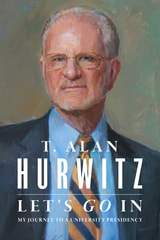
Let’s Go In
My Journey to a University PresidencyT. Alan Hurwitz
Gallaudet University Press, 2020
Additional images, videos, and supplemental readings are available at the Gallaudet University Press/Manifold online platform.
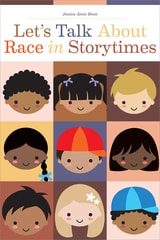
Let’s Talk About Race in Storytimes
Jessica Anne Bratt
American Library Association, 2021
Foreword by Kirby McCurtis
With the help of this book’s adaptable storytime activities, tools for self-reflection, and discussion starters, children’s librarians will learn how to put anti-racism work into their professional practice while fostering an environment that celebrates all identities.As the weekly lists of best-sellers demonstrate, many people want to engage with racial issues. But when it comes to talking about race, they often don’t know how or are hesitant to take the first steps. This includes children's librarians, who are taking seriously our profession’s calls for diversity, equity, and inclusion. They already know that popular storytimes can be an effective way to increase community representation and belonging at the library. Incorporating race into storytimes is an ideal way to foster inclusion by normalizing conversations about these issues. This book will help public and school librarians face their own biases, showing them how to have honest discussions with children, their caregivers, and storytime attendees, as well as their colleagues. In this book, you will discover
- several ready-to-use library storytimes that incorporate racial themes, complete with sample activities and booklists;
- an anti-oppression framework, based on the author’s own real-world practice, that is customizable for different settings and situations;
- concrete suggestions for overcoming fears and awkwardness when it comes to talking about race, with advice on practicing new language, making space to connect around appropriate cultural books for read alouds, and evaluating books for storytime;
- interactive self-reflecting worksheets which explore planning picture book introductions and songs for inclusive storytimes, providing age-appropriate glimpses into history, and suggested affirmations in describing skin tone, hair, and language;
- advocacy talking points centered on social justice that will encourage discussion with co-workers and other library staff; and
- guidance on community engagement, relationship building, and intentionally trying to diversify your world in order to truly become an anti-bias practitioner.
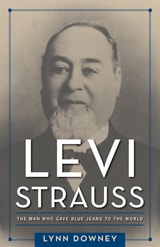
Levi Strauss
The Man Who Gave Blue Jeans to the WorldLynn Downey
University of Massachusetts Press, 2016
Blue jeans are globally beloved and quintessentially American. They symbolize everything from the Old West to the hippie counter-culture; everyone from car mechanics to high-fashion models wears jeans. And no name is more associated with blue jeans than Levi Strauss & Co., the creator of this classic American garment.
As a young man Levi Strauss left his home in Germany and immigrated to America. He made his way to San Francisco and by 1853 had started his company. Soon he was a leading businessman in a growing commercial city that was beginning to influence the rest of the nation. Family-centered and deeply rooted in his Jewish faith, Strauss was the hub of a wheel whose spokes reached into nearly every aspect of American culture: business, philanthropy, politics, immigration, transportation, education, and fashion.
But despite creating an American icon, Levi Strauss is a mystery. Little is known about the man, and the widely circulated "facts" about his life are steeped in mythology. In this first full-length biography, Lynn Downey sets the record straight about this brilliant businessman. Strauss's life was the classic American success story, filled with lessons about craft and integrity, leadership and innovation.
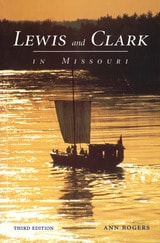
Lewis and Clark in Missouri
Ann Rogers
University of Missouri Press, 2002

Libby Larsen
Composing an American LifeDenise Glahn
University of Illinois Press, 2017
Denise Von Glahn’s in-depth examination of Larsen merges traditional biography with a daring scholarly foray: an ethnography of one active artist. Drawing on musical analysis, the composer’s personal archive, and seven years of interviews with Larsen and those in her orbit, Von Glahn illuminates the polyphony of achievements that make up Larsen’s public and private lives. In considering Larsen’s musical impact, Von Glahn delves into how elements of the personal—a 1950s childhood, spiritual seeking, love of nature, and status as an “important woman artist”—inform her work. The result is a portrait of a musical pathfinder who continues to defy expectations and reject labels.
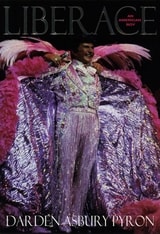
Liberace
An American BoyDarden Asbury Pyron
University of Chicago Press, 2000
Liberace's career follows the trajectory of the classic American dream. Born in the Midwest to Polish-Italian immigrant parents, he was a child prodigy who, by the age of twenty, had performed with the Chicago Symphony Orchestra. Abandoning the concert stage for the lucrative and glittery world of nightclubs, celebrities, and television, Liberace became America's most popular entertainer. While wildly successful and good natured outwardly, Liberace, Pyron reveals, was a complicated man whose political, social, and religious conservativism existed side-by-side with a lifetime of secretive homosexuality. Even so, his swishy persona belied an inner life of ferocious aggression and ambition. Pyron relates this private man to his public persona and places this remarkable life in the rapidly changing cultural landscape of twentieth-century America.
Pyron presents Liberace's life as a metaphor, for both good and ill, of American culture, with its shopping malls and insatiable hunger for celebrity. In this fascinating biography, Pyron complicates and celebrates our image of the man for whom the streets were paved with gold lamé.
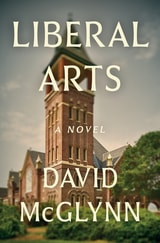
Liberal Arts
A NovelDavid McGlynn
Northwestern University Press, 2027
A kaleidoscopic novel-in-stories set at a fictional Midwest college
Two centuries old and covered in ivy, Wisconsin’s Buchanan College is populated by an eclectic mix of students, staff, and professors hailing from the nearby suburbs to the far corners of the globe. From the outside, Buchanan seems an idyllic world of higher learning. Yet behind its bucolic exterior, a series of interconnected dramas play out: a slew of first-year students mysteriously disappear within days of moving in; an injured hockey star discovers an unlikely fountain of youth; an alumna returns to campus after fifty years in the hope of reconnecting with a former love. And throughout the novel we follow the story of Jenny Ramirez, a social worker and the wife of a popular professor, who commits an act that alters how the college sees her, and how she sees herself. Over a span of four years, from orientation to graduation, the characters in Liberal Arts are forced to weigh their ideals and aspirations against the harsh and often ridiculous realities of the world, and are left asking what, if anything, a liberal arts education has left to teach them.
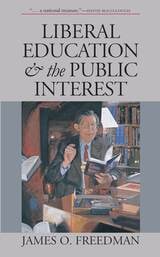
Liberal Education Public Interest
James O. Freedman
University of Iowa Press, 2003
In 1996 James Freedman published Idealism and Liberal Education, which discussed the ideals that shaped his life as an intellectual, a law professor, and a college and university president. In this new collection of essays, he convincingly explores his firm belief that a liberal education is the “surest instrument yet devised for developing those civilizing qualities of mind and character that enable men and women to lead satisfying lives and to make significant contributions to a democratic society.”
Freedman concentrates directly upon the problems facing university presidents and all university administrators. A passionate and beautifully written argument for the benefits of a liberal education, this book
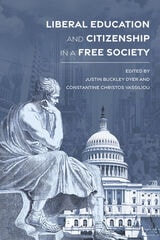
Liberal Education and Citizenship in a Free Society
Justin Buckley Dyer
University of Missouri Press, 2023
With Liberal Education and Citizenship in a Free Society, a collection of 19 original essays, editors Justin Dyer and Constantine Vassiliou present the work of a diverse group of scholars to assess the value of a liberal arts education in the face of market, technological, cultural, and political forces shaping higher learning today.
Liberal Suppression
Section 501(c)(3) and the Taxation of SpeechPhilip Hamburger
University of Chicago Press, 2018
Tracing the history of American liberalism, including theological liberalism and its expression in nativism, Hamburger shows the centrality of turbulent popular anxieties about the Catholic Church and other potentially orthodox institutions. He argues persuasively that such theopolitical fears about the political speech of churches and related organizations underlay the adoption, in 1934 and 1954, of section 501(c)(3)’s speech limits. He thereby shows that the speech restrictions have been part of a broad majority assault on minority rights and that they are grossly unconstitutional.
Along the way, Hamburger explores the role of the Ku Klux Klan and other nativist organizations, the development of American theology, and the cultural foundations of liberal “democratic” political theory. He also traces important legal developments such as the specialization of speech rights and the use of law to homogenize beliefs. Ultimately, he examines a wide range of contemporary speech restrictions and the growing shallowness of public life in America.
His account is an unflinching look at the complex history of American liberalism and at the implications for speech, the diversity of belief, and the nation’s future.
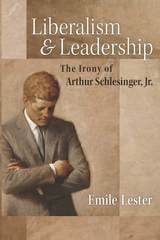
Liberalism and Leadership
The Irony of Arthur Schlesinger, Jr.Emile Lester
University of Michigan Press, 2019
Most scholars and pundits today view Franklin Delano Roosevelt and John F. Kennedy as aggressive liberal leaders, while viewing Schlesinger’s famous histories of their presidencies as celebrations of their steadfast progressive leadership. A more careful reading of Schlesinger’s work demonstrates that he preferred an ironic political outlook emphasizing the virtues of restraint, patience, and discipline. For Schlesinger, Roosevelt and Kennedy were liberal heroes and models as much because they respected the constraints on their power and ideals as because they tested traditional institutions and redefined the boundaries of presidential power.
Aggressive liberalism involves the use of inspirational rhetoric and cunning political tactics to expand civil liberties and insure economic equality. Schlesinger’s emphasis on the crucial role that irony has played and should play in liberalism poses a challenge to the aggressive liberalism advocated by liberal activists, political thinkers, and pundits. That his counsel was grounded in conservative insights as well as liberal values makes it accessible to leaders across the political spectrum.
Liberalism and the Culture of Security
The Nineteenth-Century Rhetoric of ReformKatherine Henry
University of Alabama Press, 2011
Rethinking the language of liberty, protection, and citizenship in nineteenth-century America.
Figures of protection and security are everywhere in American public discourse, from the protection of privacy or civil liberties to the protection of marriage or the unborn, and from social security to homeland security. Liberalism and the Culture of Security traces a crucial paradox in historical and contemporary notions of citizenship: in a liberal democratic culture that imagines its citizens as self-reliant, autonomous, and inviolable, the truth is that claims for citizenship—particularly for marginalized groups such as women and slaves—have just as often been made in the name of vulnerability and helplessness.
Katherine Henry traces this turn back to the eighteenth-century opposition of liberty and tyranny, which imagined our liberties as being in danger of violation by the forces of tyranny and thus in need of protection. She examines four particular instances of this rhetorical pattern. The first chapters show how women’s rights and antislavery activists in the antebellum era exploited the contradictions that arose from the liberal promise of a protected citizenry: first by focusing primarily on arguments over slavery in the 1850s that invoke the Declaration of Independence, including Harriet Beecher Stowe’s fiction and Frederick Douglass’s “Fourth of July” speech; and next by examining Angelina Grimké’s brief but intense antislavery speaking career in the 1830s.
New conditions after the Civil War and Emancipation changed the way arguments about civic inclusion and exclusion could be advanced. Henry considers the issue of African American citizenship in the 1880s and 1890s, focusing on the mainstream white Southern debate over segregation and the specter of a tyrannical federal government, and then turning to Frances E. W. Harper’s fictional account of African American citizenship in Iola Leroy. Finally, Henry examines Henry James’s 1886 novel The Bostonians, in which arguments over the appropriate role of women and the proper place of the South in post–Civil War America are played out as a contest between Olive Chancellor and Basil ransom for control over the voice of the eloquent girl Verena Tarrant.
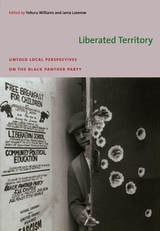
Liberated Territory
Untold Local Perspectives on the Black Panther PartyYohuru Williams and Jama Lazerow, eds.
Duke University Press, 2008
The histories and character of the party branches vary as widely as their locations. The Cape Verdeans of New Bedford, Massachusetts, were initially viewed as a particular challenge for the local Panthers but later became the mainstay of the Boston-area party. In the early 1970s, the Winston-Salem, North Carolina, chapter excelled at implementing the national Black Panther Party’s strategic shift from revolutionary confrontation to mainstream electoral politics. In Detroit, the Panthers were defined by a complex relationship between their above-ground activities and an underground wing dedicated to armed struggle. While the Milwaukee chapter was born out of a rising tide of black militancy, it ultimately proved more committed to promoting literacy and health care and redressing hunger than to violence. The Alabama Black Liberation Front did not have the official imprimatur of the national party, but it drew heavily on the Panthers’ ideas and organizing strategies, and its activism demonstrates the broad resonance of many of the concerns articulated by the national party: the need for jobs, for decent food and housing, for black self-determination, and for sustained opposition to police brutality against black people. Liberated Territory reveals how the Black Panther Party’s ideologies, goals, and strategies were taken up and adapted throughout the United States.
Contributors: Devin Fergus, Jama Lazerow, Ahmad A. Rahman, Robert W. Widell Jr., Yohuru Williams
Liberating Hollywood
Women Directors and the Feminist Reform of 1970s American CinemaSmukler, Maya M
Rutgers University Press, 2019
Liberating Hollywood examines the professional experiences and creative output of women filmmakers during a unique moment in history when the social justice movements that defined the 1960s and 1970s challenged the enduring culture of sexism and racism in the U.S. film industry. Throughout the 1970s feminist reform efforts resulted in a noticeable rise in the number of women directors, yet at the same time the institutionalized sexism of Hollywood continued to create obstacles to closing the gender gap. Maya Montañez Smukler reveals that during this era there were an estimated sixteen women making independent and studio films: Penny Allen, Karen Arthur, Anne Bancroft, Joan Darling, Lee Grant, Barbara Loden, Elaine May, Barbara Peeters, Joan Rivers, Stephanie Rothman, Beverly Sebastian, Joan Micklin Silver, Joan Tewkesbury, Jane Wagner, Nancy Walker, and Claudia Weill. Drawing on interviews conducted by the author, Liberating Hollywood is the first study of women directors within the intersection of second wave feminism, civil rights legislation, and Hollywood to investigate the remarkable careers of these filmmakers during one of the most mythologized periods in American film history.
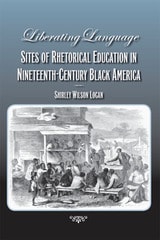
Liberating Language
Sites of Rhetorical Education in Nineteenth-Century Black AmericaShirley Wilson Logan
Southern Illinois University Press, 2008
Liberating Language identifies experiences of nineteenth-century African Americans—categorized as sites of rhetorical education—that provided opportunities to develop effective communication and critical text-interpretation skills. Author Shirley Wilson Logan considers how nontraditional sites, which seldom involved formal training in rhetorical instruction, proved to be effective resources for African American advancement.
Logan traces the ways that African Americans learned lessons in rhetoric through language-based activities associated with black survival in nineteenth-century America, such as working in political organizations, reading and publishing newspapers, maintaining diaries, and participating in literary societies. According to Logan, rhetorical training was manifested through places of worship and military camps, self-education in oratory and elocution, literary societies, and the black press. She draws on the experiences of various black rhetors of the era, such as
Frederick Douglass, Frances Harper, Fanny Coppin, Charles Chesnutt, Ida B. Wells, and the lesser-known Oberlin-educated Mary Virginia Montgomery, Virginia slave preacher "Uncle Jack," and former slave "Mrs. Lee."
Liberating Language addresses free-floating literacy, a term coined by scholar and writer Ralph Ellison, which captures the many settings where literacy and rhetorical skills were acquired and developed, including slave missions, religious gatherings, war camps, and even cigar factories. In Civil War camp- sites, for instance, black soldiers learned to read and write, corresponded with the editors of black newspapers, edited their own camp-based papers, and formed literary associations.
Liberating Language outlines nontraditional means of acquiring rhetorical skills and demonstrates how African Americans, faced with the lingering consequences of enslavement and continuing oppression, acquired rhetorical competence during the late eighteenth century and throughout the nineteenth century.
Liberating Memory
Our Work and Our Working-Class ConsciousnessZandy, Janet
Rutgers University Press, 1994
Liberating Service Learning and the Rest of Higher Education Civic Engagement
Randy Stoecker
Temple University Press, 2016
Randy Stoecker has been “practicing” forms of community-engaged scholarship, including service learning, for thirty years now, and he readily admits, “Practice does not make perfect.” In his highly personal critique, Liberating Service Learning and the Rest of Higher Education Civic Engagement, the author worries about the contradictions, unrealized potential, and unrecognized urgency of the causes as well as the risks and rewards of this work.
Here, Stoecker questions the prioritization and theoretical/philosophical underpinnings of the core concepts of service learning: 1. learning, 2. service, 3. community, and 4. change. By “liberating” service learning, he suggests reversing the prioritization of the concepts, starting with change, then community, then service, and then learning. In doing so, he clarifies the benefits and purpose of this work, arguing that it will create greater pedagogical and community impact.
Liberating Service Learning and the Rest of Higher Education Civic Engagement challenges—and hopefully will change—our thinking about higher education community engagement.
Liberation and Education
Perspectives on Black Educational ThoughtRonald E. Chennault
Rutgers University Press, 2026
Liberation and Education brings together a collection of essays about Black educators’ and organizations’ quests to cultivate and employ educational strategies for the liberation of Black people. The contributions examine the enduring nature of Black people’s thinking about education prior to and through enslavement to the present. It documents a variety of critical accounts of how Black people have developed ways to free themselves mentally from the legacies of slavery, the view of Black inferiority, and historical and systemic racism.
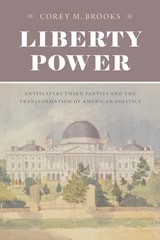
Liberty Power
Antislavery Third Parties and the Transformation of American PoliticsCorey M. Brooks
University of Chicago Press, 2015
As Corey M. Brooks explains, abolitionist trailblazers who organized first the Liberty Party and later the more moderate Free Soil Party confronted formidable opposition from a two-party system expressly constructed to suppress disputes over slavery. Identifying the Whigs and Democrats as the mainstays of the southern Slave Power’s national supremacy, savvy abolitionists insisted that only a party independent of slaveholder influence could wrest the federal government from its grip. A series of shrewd electoral, lobbying, and legislative tactics enabled these antislavery third parties to wield influence far beyond their numbers. In the process, these parties transformed the national political debate and laid the groundwork for the success of the Republican Party and the end of American slavery.
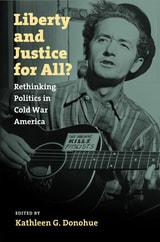
Liberty and Justice for All?
Rethinking Politics in Cold War AmericaKathleen G. Donohue
University of Massachusetts Press, 2012
From the congressional debate over the “fall of China” to the drama of the Army–McCarthy hearings to the kitchen faceoff between Richard Nixon and Nikita Khrushchev, the political history of the early Cold War was long dominated by studies of presidential administrations, anticommunism, and foreign policy. In Liberty and Justice for All? a group of distinguished historians representing a variety of disciplinary perspectives—social history, cultural history, intellectual history, labor history, urban history, women's history, African American studies, and media studies—expand on the political history of the early Cold War by rethinking the relationship between politics and culture. How, for example, did folk music help to keep movement culture alive throughout the 1950s? How did the new medium of television change fundamental assumptions about politics and the electorate? How did American experiences with religion in the 1950s strengthen the separation of church and state? How did race, class, and gender influence the relationship between citizens and the state? These are just some of the questions addressed in this wide-ranging set of essays.
In addition to volume editor Kathleen G. Donohue, contributors include Howard Brick, Kari Frederickson, Andrea Friedman, David Greenberg, Grace Elizabeth Hale, Jennifer Klein, Laura McEnaney, Kevin M. Schultz, Jason Scott Smith, Landon R. Y. Storrs, and Jessica Weiss.

Liberty's Grid
A Founding Father, a Mathematical Dreamland, and the Shaping of AmericaAmir Alexander
University of Chicago Press, 2024
Seen from an airplane, much of the United States appears to be a gridded land of startling uniformity. Perpendicular streets and rectangular fields, all precisely measured and perfectly aligned, turn both urban and rural America into a checkerboard landscape that stretches from horizon to horizon. In evidence throughout the country, but especially the West, the pattern is a hallmark of American life. One might consider it an administrative convenience—an easy way to divide land and lay down streets—but it is not. The colossal grid carved into the North American continent, argues historian and writer Amir Alexander, is a plan redolent with philosophical and political meaning.
In 1784 Thomas Jefferson presented Congress with an audacious scheme to reshape the territory of the young United States. All western lands, he proposed, would be inscribed with a single rectilinear grid, transforming the natural landscape into a mathematical one. Following Isaac Newton and John Locke, he viewed mathematical space as a blank slate on which anything is possible and where new Americans, acting freely, could find liberty. And if the real America, with its diverse landscapes and rich human history, did not match his vision, then it must be made to match it.
From the halls of Congress to the open prairies, and from the fight against George III to the Trail of Tears, Liberty’s Grid tells the story of the battle between grid makers and their opponents. When Congress endorsed Jefferson’s plan, it set off a struggle over American space that has not subsided. Transcendentalists, urban reformers, and conservationists saw the grid not as a place of possibility but as an artificial imposition that crushed the human spirit. Today, the ideas Jefferson associated with the grid still echo through political rhetoric about the country’s founding, and competing visions for the nation are visible from Manhattan avenues and Kansan pastures to Yosemite’s cliffs and suburbia’s cul-de-sacs. An engrossing read, Liberty’s Grid offers a powerful look at the ideological conflict written on the landscape.

Liberty, Equality, and Justice
Civil Rights, Women’s Rights, and the Regulation of Business, 1865–1932Ross Evans Paulson
Duke University Press, 1997
Surveying a crucial period in the formation of the modern state and society, Paulson examines the prevailing conflicts of the time and the limitations of various attempts to institute reform, radical change, or ritualistic renewal of American society. His reading of existing scholarship highlights contested social constructs, clashing priorities, changing meanings of key terms, and shifting institutional dynamics in light of their contributions to a complex tragedy in which all parties fell short of the demands for democratic mutuality. Along with discussions of the movements and manipulations of presidential, congressional, and judicial politics, he integrates the experiences of diverse populations—including African Americans, women, Asian immigrants, Native Americans, and working people—and offers a new interpretation of the ways in which social change and political events interact to reframe the many possibilities of American society.

Librarian's Guide to Intellectual Property in the Digital Age
American Library Association, 2002

Librarians Serving Diverse Populations
Challenges AndLori Mestre
Assoc of College & Research Libraries, 2011
Librarians as Community Partners
An Outreach HandbookCarol Smallwood
American Library Association, 2010
Libraries Designed for Kids
Nolan Lushington
American Library Association, 2008
Libraries Got Game
Aligned Learning through Modern Board GamesBrian Mayer
American Library Association, 2009
Libraries and Democracy
Nancy Kranich
American Library Association, 2001
Libraries and the Affordable Care Act
Helping the Community Understand Health-Care OptionsFrancisca American Library Association
American Library Association, 2015
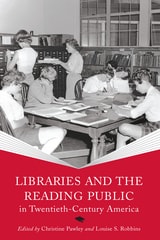
Libraries and the Reading Public in Twentieth-Century America
Edited by Christine Pawley and Louise S. Robbins
University of Wisconsin Press, 2013

Libraries and the Substance Abuse Crisis
Supporting Your CommunityCindy Grove
American Library Association, 2020
The opioid epidemic, and other behavioral health issues such as alcohol and drug abuse, directly impact every community across the nation; and, by extension, public libraries’ daily work. Because libraries are not only trusted guardians of information but also vital community centers, people struggling with addictive behaviors as well as their family members and friends often turn to the library for help. But many library workers feel overwhelmed, finding themselves unprepared for serving these patrons in an effective and empathetic way. This book encourages readers to turn their fears and uncertainty into strengths and empowerment, offering to-the-point guidance on welcoming people with substance use disorders and their loved ones through policy, materials, outreach, collaboration, programs, and services. Written by a frontline librarian whose personal experiences inform the book, this resource
- explores the library’s role in the fight against addiction and how to become part of the solution by combating stigma;
- provides background on understanding how substance abuse and related behaviors affect different age groups and populations;
- explains how to be proactive regarding library safety and security by carefully crafting library policies and effectively communicating them to staff;
- offers real world guidance on training library staff, including pointers on recognizing observable signs of drug abuse and responding appropriately and safely to uncomfortable or potentially dangerous situations;
- discusses safeguards such as a needle disposal unit, defibrillator, and Naloxone;
- gives tips on marketing, outreach, and programming, from putting together displays of materials and resources to partnering with local organizations; and
- recommends useful websites, documentaries, and additional resources for further learning.
Libraries that Learn
Keys to Managing Organizational KnowledgeJennifer A. Bartlett
American Library Association, 2019
Library Collections for Teens
Manga and Graphic NovelsAmerican Library Association, 2010
Library Consortia
Models for Collaboration and SustainabilityValerie Horton
American Library Association, 2014
Library Management 101
A Practical GuideDiane L. Velasquez
American Library Association, 2013
Library Management 101
A Practical GuideLisa K. Hussey
American Library Association, 2019
Just because a set of responsibilities isn’t formally called management doesn’t mean that it isn’t management. And this vital text speaks to a reality that all current professionals already know: that is, everyone studying to enter the profession needs an introduction to the topic of management. Because no matter what one’s role in an academic or public library context, it will involve decision-making, planning, and organization skills. Newly revised and updated, this book pulls together management best practices from library management experts teaching in LIS programs across the U.S. and Canada. Among the many topics discussed are
- classic and contemporary theories of management, and how they apply to the library;
- human resource planning;
- marketing and public relations;
- negotiations, mediation, and financial management of the library;
- facilities management;
- information technology management and future trends;
- change management, organizational culture; and
- ethics and confidentiality.
Library Marketing and Communications
Strategies to Increase Relevance and ResultsCordelia Anderson
American Library Association, 2020
Effectively marketing libraries by persuasively communicating their relevance is key to ensuring their future. Speaking directly to those in senior leadership positions, Anderson lays out the structural and organizational changes needed to help libraries answer the relevance question and maximize their marketing and communications efforts. Focusing on big-picture strategies, she shares lessons learned from her 20+ year career in library marketing and communications. No matter what type or size of library you help to lead, by reading this book you will
- gain insight into why libraries need to tell their stories more effectively than they are today;
- be able to craft a strategic roadmap for marketing your library and communicating its value in a variety of ways that resonate with key audiences;
- see why improvements to the structure of your marketing and communications team can lead to better results;
- learn practical methods for incorporating audience research into your planning;
- know how to remove customer barriers and discontinue practices that are thwarting your marketing efforts;
- receive guidance on preparing for potential crises;
- understand how to be more community-focused by forming and sustaining partnerships; and
- feel confident in engaging with stakeholders so that they become your library’s best ambassadors.
Library Next
Seven Action Steps for ReinventionCatherine Murray-Rust
American Library Association, 2021
After a career of more than 40 years, Murray-Rust, former Dean of Libraries at Georgia Tech and a self-proclaimed library disrupter, sees our profession’s central challenge as simply this: how to turn the library outward in order to make a difference in the lives of individuals and the community. In this book she encourages readers to look an uncertain library future square in the eye. She shares stories from her transformational years at Georgia Tech Libraries which present both inspiration and practical advice on how to stand up for values while changing the ways we act upon them. Organized around seven action steps for change, this book offers takeaways and activities you can adapt to your work style and organizational culture. You will learn from such stories and lessons as
- the three different kinds of information you need for measuring impact;
- using new frameworks, outside fragmented, risk-adverse library structures, to get the work done;
- the limitations of trying to manage your way through major cultural change;
- embedding in the community to develop visions and strategies for improvement;
- painful and challenging times that set Murray-Rust on a path of self-learning;
- how an uncomfortable assignment led to a sought-after seat at the table for a university-wide capital construction project;
- the bold promise that got the library onto the high-priority list for renovation;
- visiting a Toyota plant to learn how to encourage employee engagement and creativity; and
- learning to listen with the "turning outward" philosophy of Harwood Institute.
Library Partnerships in International Liberal Arts Education
Building Relationships Across Cultural and Institutional LinesJeff H. iroshi Gima
Assoc of College & Research Libraries, 2020
Library Service And Learning
Empowering Students, InspiringTheresa McDevitt
American Library Association, 2018
Library Services and Incarceration
Recognizing Barriers, Strengthening AccessJeanie Austin
American Library Association, 2021
As part of our mission to enhance learning and ensure access to information for all library patrons, our profession needs to come to terms with the consequences of mass incarceration, which have saturated the everyday lives of people in the United States and heavily impacts Black, Indigenous, and people of color; LGBTQ people; and people who are in poverty. Jeanie Austin, a librarian with San Francisco Public Library's Jail and Reentry Services program, helms this important contribution to the discourse, providing tools applicable in a variety of settings. This text covers practical information about services in public and academic libraries, and libraries in juvenile detention centers, jails, and prisons, while contextualizing these services for LIS classrooms and interdisciplinary scholars. It powerfully advocates for rethinking the intersections between librarianship and carceral systems, pointing the way towards different possibilities. This clear-eyed text
- begins with an overview of the convergence of library and information science and carceral systems within the United States, summarizing histories of information access and control such as book banning, and the ongoing work of incarcerated people and community members to gain more access to materials;
- examines the range of carceral institutions and their forms, including juvenile detention, jails, immigration detention centers, adult prisons, and forms of electronic monitoring;
- draws from research into the information practices of incarcerated people as well as individual accounts to examine the importance of information access while incarcerated;
- shares valuable case studies of various library systems that are currently providing both direct and indirect services, including programming, book clubs, library spaces, roving book carts, and remote reference;
- provides guidance on collection development tools and processes;
- discusses methods for providing reentry support through library materials and programming, from customized signage and displays to raising public awareness of the realities of policing and incarceration;
- gives advice on supporting community groups and providing outreach to transitional housing;
- includes tips for building organizational support and getting started, with advice on approaching library management, creating procedures for challenges, ensuring patron privacy, and how to approach partners who are involved with overseeing the functioning of the carceral facility; and
- concludes with a set of next steps, recommended reading, and points of reflection.
Libraryland
It's All about the StoryBen Bizzle
American Library Association, 2020
Libraries are community connectors, places where people come together, think together, and learn together. Libraries support and nurture strong, resilient communities. Day in and day out, the library workers at these institutions are doing much more than ensuring equal and equitable access to information; and their impact stretches far beyond the books, programs, and services they facilitate. Featuring contributions from such library leaders as Rebekkah Smith Aldrich, the late Nicolette Sosulski, and Erica Freudenberger, this collection of inspiring first-hand stories from across libraryland spotlights the countless ways in which library staff are making a difference for their communities. A sharing of the hearts, minds, and spirits of library staff from across the country, the uplifting personal narratives in this book include
- when a routine reference query inspired a librarian to reach out to a senior patron;
- how a public library’s annual Diwali celebration has strengthened the social fabric of the surrounding community;
- the story of a library that burned down, was hit by a hurricane, got sued twice, and yet still reemerged stronger than ever;
- how the team at the Fayetteville Free Library (FFL) of New York has strategically nurtured a culture of innovation by integrating Syracuse University students into the staff, holding technology “open houses,” and developing other initiatives; and
- the intervention of a public library staff member that helped a mother keep her son enrolled in school and receive his diploma.
Library workers change and save lives every day, and this book is a powerful and nourishing reminder of exactly why libraries are essential.

Licensing Digital Content
A Practical Guide for LibrariansLesley Ellen Harris
American Library Association, 2018