Results by title
28164 books match the query 'History' and 932 start with l
Letters From The Promised Land
Swedes in America, 1840-1914H. Arnold Barton
University of Minnesota Press, 2000
Swedish immigrants tell their own stories in this collection of letters, diaries, and memoirs—a perfect book for those interested in history, immigration, or just the daily lives of early Swedish-American settlers.
Letters Home to Sarah
The Civil War Letters of Guy C. Taylor, Thirty-Sixth Wisconsin VolunteersGuy C. Taylor; Edited by Kevin L. Alderson and Patsy Alderson; Introduction by Kathryn Shively Meier
University of Wisconsin Press, 2012
From the initial mustering and training of his regiment at Camp Randall in Wisconsin, through the siege of Petersburg in Virginia, General Lee’s surrender at Appomattox, and the postwar Grand Review of the Armies parade in Washington, D.C., Taylor conveys in vivid detail his own experiences and emotions and shows himself a keen observer of all that is passing around him. While at war, he contracts measles, pneumonia, and malaria, and he writes about the hospitals, treatments, and sanitary conditions that he and his comrades endured during the war. Amidst the descriptions of soldiering, Taylor’s letters to Sarah are threaded with the concerns of a young married couple separated by war but still coping together with childrearing and financial matters. The letters show, too, Taylor’s transformation from a lonely and somewhat disgruntled infantryman to a thoughtful commentator on the greater ideals of the war.
This remarkable trove of letters, which had been left in the attic of Taylor’s former home in Cashton, Wisconsin, was discovered by local historian Kevin Alderson at a household auction. Recognizing them for the treasure they are, Alderson bought the letters and, aided by his wife Patsy, painstakingly transcribed the letters and researched Taylor’s story in Wisconsin and at historical sites of the Civil War. The Aldersons’ preface and notes are augmented by an introduction by Civil War historian Kathryn Shively Meier, and the book includes photographs, maps, and illustrations related to Guy Taylor’s life and letters.
Letters and Orations
Cassandra Fedele
University of Chicago Press, 2000
Letters from Alabama, 1817–1822
Anne Newport Royall
University of Alabama Press, 1969
Anne Royall was a prominent woman journalist for more than a quarter of a century before her death in 1854, publishing some ten books of travel accounts, one novel, and two successive weekly newspapers in Washington, and sponsoring causes, often unpopular, in the manner of latter-day "muckrakers." She was a well-known habitue of the halls of Congress, looking for news and subscribers, sniffing out irregularities in governmental departments, and pressing claims for a pension which she believed should have been hers from her Revolutionary War husband. For those who helped her she had high, often inordinate, praise; for those who refused her or crossed her path she was a "holy terror," lashing out against them often in intemperate language. Through the columns of her paper she debated such public issues as the Bank, antiMasonry, Nullification, and the franking privilege; she was forever attacking what she considered a very diabolical plot to unite church and state. There was never a doubt where she stood on any of the issues on which she spoke out; she was no compromiser or "fence-straddler." She has the distinction of being the only woman in our national history who was tried (and convicted) for being a "common scold." She was, in short, an aggressive, intolerant, outspoken, suspicious, meddlesome, nonconforming but patriotic, and fascinating woman.
Anne Royall, we might say, began her journalistic career in Alabama. Although the letters were not published until 1830, some four years after Sketches of History, Life and Manners in the United States, they were her :first literary effort. Ostensibly written to a young lawyer friend “Matt” in Virginia, the letters are dated from November 28, 1817 to June 8, 1822.. The letters include, in addition to personal matters and comments on the inconveniences of travel, a considerable amount of description of the country through which she traveled and discussions -often lengthy-of religion, literature, education, social injustices, crops, and important personages she met in her travels. While she is often outspoken, her comments in these letters are more temperate than those in her later works.
Letters from Alabama
Chiefly Relating to Natural HIstoryPhilip Henry Gosse, introduction by Harvey H. Jackson III, edited by Virginia Hamilton
University of Alabama Press, 1993
A naturalist's captivating portrait of Alabama's wildlife, landscapes, and people.
Philip Henry Gosse (1810-1888), a British naturalist, left home at age 17 and made his way to Alabama in 1838, where he had heard educated people were in demand. He was employed by Judge Reuben Saffold at Pleasant Hill in Dallas County as a teacher for about a dozen children of local landowners, but his principal interest was natural history. During the eight months he lived in th Black Belt he watched, listened, thought, took notes, and made sketches--activities that eventually led to Letters from Alabama. He lived among Alabamians, talked and listened to them, saw them at their best and their worst, and came to understand their hopes and fears. They were a part of the natural world, and he paid attention to them as any good scientist would. With the skills of a scientist and the temperament of an artist, Gosse set down an account of natural life in frontier Alabama that has no equal. Written to no one in particular, a common literary device of the period, the letters were first published in a magazine, and in 1859 appeared as a book. By that time Gosse was an established scholar and one of England’s most noted scientific illustrators.
Letters from Alabama
Chiefly Relating to Natural HistoryPhilip Henry Gosse, Edited by Gary R. Mullen and Taylor D. Littleton
University of Alabama Press, 2013
New and improved edition of a naturalist's captivating portrait of Alabama's wildlife, landscapes, and people.
Philip Henry Gosse (1810–1888), a British naturalist, left home at age seventeen and made his way to Alabama in 1838. He was employed by Judge Reuben Saffold and other planters near Pleasant Hill in Dallas County as a teacher for about a dozen of their children, but his principal interest was natural history. Letters from Alabama is a personalized record of Gosse’s perceptive observations during his eight-month residence in this small antebellum community. The work addresses a Victorian readership, including entomologists, who Gosse believed were relatively uninformed about the novelty and beauty of this “hilly region of the State of Alabama.” Written in an engaging literary style and organized as a series of epistolary discussions, the book is unparalleled in its detailed evocations of the natural history and cultural conditions of frontier Alabama. By the time Letters from Alabama appeared in 1859, Gosse’s scientific publications and fine illustrations had led to his being elected a Fellow of the Royal Society of London.
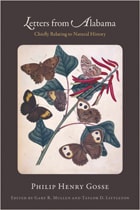
Edited by Gary R. Mullen and Taylor D. Littleton, this authoritative edition features thirty grayscale lithographs shot directly from the 1859 edition, reset type for easier reading, a new introduction and index by the two foremost scholars of Gosse in Alabama, a new appendix that provides modern scientific and common names for the plant and animal species described by Gosse, and a four-color cover featuring one of the plates from Gosse’s Entomologia Alabamensis.
Letters from Clara
One Intrepid Woman's Travels on the Eve of War, 1936-1939Janet Newman
Wisconsin Historical Society Press, 2022
Letters from Red Farm
The Untold Story of the Friendship between Helen Keller and Journalist Joseph Edgar ChamberlinElizabeth Emerson
University of Massachusetts Press, 2021
Informed by previously unpublished letters and extensive research, Letters from Red Farm explores for the first time Keller's deep and enduring friendship with the man who became her literary mentor and friend for over forty years. Written by Chamberlin's great-great granddaughter, this engaging story imparts new insights into Keller's life and personality, introduces the irresistible Chamberlin to a modern public, and follows Keller's burgeoning interest in social activism, as she took up the causes of disability rights, women's issues, and pacifism.
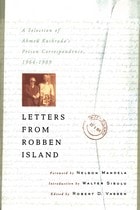
Letters from Robben Island
A Selection of Ahmed Kathrada's Prison Correspondence, 1964-1989Robert D. Vassen
Michigan State University Press, 1999
Late one night in July, 1963, a South African police unit surrounded the African National Congress headquarters in Rivonia and arrested a group of Movement leaders gathered inside. Eventually eight of them, including Nelson Mandela, who was already serving a sentence, Walter Sisulu, Dennis Goldberg, Govan Mbeki, Raymond Mhlaba, Elias Motsoledi, Andrew Mangeni, and Ahmed Kathrada, were convicted of sabotage and, on June 12, 1964, sentenced to life in prison. Soon, these men became widely known as the "Rivonia Trialists." Despite their imprisonment, the Trialists played active roles in the struggle against South Africa's racist regime. Instead of being forgotten, as apartheid officials had hoped, they became enduring symbols in a struggle against injustice and racism.
Kathrada and his colleagues were classified as high security prisoners, segregated from others and closely watched. Every activity was regulated and monitored. Among the many indignities visited upon them, the prisoners were prohibited from keeping copies of incoming and outgoing correspondence. Kathrada, or "Kathy" as he is known, successfully hid both.
Letters From Robben Island contains a selection of 86 of the more than 900 pieces of correspondence Ahmed Kathrada wrote during his 26 years on Robben Island and at Pollsmoor Prison. Some were smuggled out by friends; others were written in code to hide meaning and content from prison censors. These are among his most poignant, touching, and eloquent communications. They are testimonies to Kathrada, his colleagues, and to their commitment to obtaining human dignity and freedom for all South Africans.
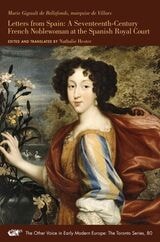
Letters from Spain
A Seventeenth-Century French Noblewoman at the Spanish Royal CourtMarie Gigault de Bellefonds
Iter Press, 2021
This volume includes her surviving letters from Madrid to her friend Madame de Coulanges and an appendix of her letters sent from Paris and Turin. The letters from Spain, written between 1679 and 1681, paint a vivid and engaging picture of the royal court and its new queen.
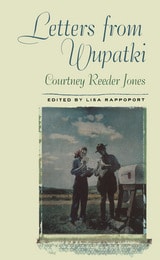
Letters from Wupatki
Courtney Reeder Jones; Edited by Lisa Rappoport
University of Arizona Press, 1995
The year was 1938, and the newlyweds had come to Wupatki National Monument as full-time National Park Service caretakers for the ruin. Remote in time and place, their story as described in Courtney's letters will take readers into a dramatic landscape of red rocks, purple volcanoes, and endless blue sky. Here, some 60 years ago, two young people came to terms with their new life together and with their nearly total reliance upon each other and their Navajo neighbors.
"They helped us in any way that a neighbor would, and we helped them as we could," wrote Courtney in her memoirs years later. Vivid and engaging, her letters home spill over with descriptions of their friendship with local Navajo families, their sings and celebrations, and her good luck in being able to be a part of it all.
Letters from Wupatki captures a more innocent era in southwestern archaeology and the history of the National Park Service before the post-war years brought paved roads, expanded park facilities, and ever-increasing crowds of visitors. Courtney's letters to her family and friends reflect all the charm of the earlier time as they convey the sense of rapid transition that came after the war.
Tracking those changes in the development of Wupatki National Monument and the National Park Service, the letters also—and perhaps more important—reveal changes in the Joneses themselves. Of particular interest to anthropologists and historians, their story also gives the general reader captivating glimpses of a partnership between two people who only grew stronger for the struggles they shared together.
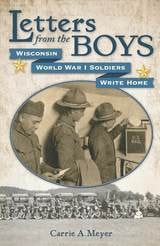
Letters from the Boys
Wisconsin World War I Soldiers Write HomeCarrie A Meyer
Wisconsin Historical Society Press, 2018
On the 100th anniversary of the arrival of the flood of American troops in Europe that would shift the tide of World War I in favor of the Allies, Letters from the Boys brings to life this terrible war as experienced by Wisconsinites writing home.
Technology had transformed the battlefield in alarming ways. Automatic rifles mowed down the young men who went “over the top” to attack enemy trenches; airplanes and improved artillery brought death unseen from miles away; terrifying clouds of poison gas choked and burned the European countryside; the internal combustion engine brought tanks to the battlefield for the first time and revolutionized the way troops deployed.
In the thick of it were young men from Wisconsin who found themselves caught up in geopolitical events half a world away. Professor Carrie A. Meyer combed through three newspapers in Green County, Wisconsin, to collect and synthesize the letters from the boys into a narrative that is both unique and representative, telling the stories of several Green County boys and what they saw, from preparing for war, to life among French families near the front, to the terror of the battlefield. Meyer gracefully removes the veil of obscurity and anonymity hanging over soldiers who participated in a war fought so long ago by great numbers of men, reminding us that armies are made of individuals who strove to do their part and then return to their families.
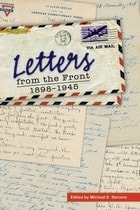
Letters from the Front, 1898-1945
Michael E. Stevens
Wisconsin Historical Society Press, 1992
This volume tells the stories of 62 men and women from Wisconsin who served in the Spanish-American War, World War I, and World War II. Letters from the Front is a vivid social history of wartime as told by those who took part in these foreign conflicts. Most of them are "ordinary" people, uprooted from farms, factories, and offices, who took part in extraordinary events. This work explores how war changed their lives and reveals the emotions they felt in uniform, in remote outposts, in combat, and in prison camps. These letters, diaries, oral histories, newspapers, and contemporary accounts provide a history of adaptation to military life; they also reflect the changes that occurred over the half-century encompassing these confilcts, an era of great technological innovation — and one in which America's vision of itself also changed.
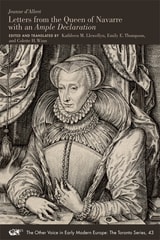
Letters from the Queen of Navarre with an Ample Declaration
Jeanne d’Albret
Iter Press, 2016
This edition presents in English, for the first time, Jeanne d’Albret’s Letters to the king, his mother, his brother, her own brother-in-law, and the queen of England, together with her Ample Declaration (1568) defending her decampment to the Protestant stronghold of La Rochelle. A historical-biographical introduction situates these writings in the larger context of Reformation politics and examines in detail the specific literary characteristics of her memoir. In her works, Jeanne d’Albret asserts her own position as legal sovereign of Béarn and Navarre and situates herself at the nexus of overlapping political, religious, and familial tensions.
Letters from the Southwest
Charles Lummis; Edited by James W. Byrkit
University of Arizona Press, 0
In the fall of 1884, journalist Charles Lummis set out on foot from Ohio to California on assignment for the Los Angeles Times. The reports he mailed ahead to that newspaper were later refashioned for the book A Tramp Across the Continent, a work that helped to establish Lummis as the most active promoter of Southwestern culture who ever lived.
Lummis wrote another set of letters during his journey, however, which he sent back to Ohio for publication by the Chillicothe Leader. Although these letters contain basically the same narrative as those sent to Los Angeles and later found in A Tramp, the Ohio letters more closely reflect the author’s thoughts and observations while on the journey. In fact, a comparison of the two drafts indicates that Lummis spent considerable effort removing spontaneous details from the Ohio letters in favor or a more commercial, self-promoting, and politic reporting for the California paper.
The twenty-four Ohio letters, assembled here by James W. Byrkit, offer a far more candid look at the Southwest than Lummis was later to bring to print, as well as greater insight into the author’s own personality. Byrkit’s introductory essay provides the background for Lummis’s career, compares the three bodies of work relating to the trek, and offers an account of Lummis’s transformation from chronicler to promoter.
Letters on Ethics
To LuciliusLucius Annaeus Seneca
University of Chicago Press, 2015
Written as much for a general audience as for Lucilius, these engaging letters offer advice on how to deal with everything from nosy neighbors to sickness, pain, and death. Seneca uses the informal format of the letter to present the central ideas of Stoicism, for centuries the most influential philosophical system in the Mediterranean world. His lively and at times humorous expositions have made the Letters his most popular work and an enduring classic. Including an introduction and explanatory notes by Margaret Graver and A. A. Long, this authoritative edition will captivate a new generation of readers.
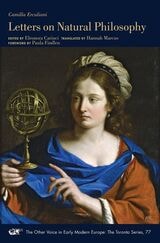
Letters on Natural Philosophy
The Scientific Correspondence of a Sixteenth-Century Pharmacist, with Related TextsCamilla Erculiani
Iter Press, 2020
This edition presents the first full English translation of Erculiani’s book and other relevant texts, bringing to light the cultural context and scientific thought of this unique natural philosopher.
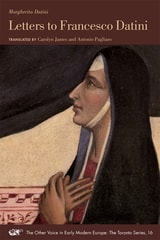
Letters to Francesco Datini
Margherita Datini
Iter Press, 2012
—Jane Tylus
Professor of Italian Studies and vice provost for academic affairs, New York University
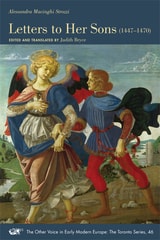
Letters to Her Sons, 1447–1470
Alessandra Macinghi Strozzi
Iter Press, 2016
The seventy-three surviving letters written by Florentine widow, Alessandra Macinghi Strozzi (c.1406–1471), to her distant sons first appeared in print well over a century ago, but are here translated into English in their entirety for the first time. Whether for the professional historian or for the general reader interested in Renaissance Florence, they constitute a most precious testimony regarding both private and public life in the mid-fifteenth century, with themes ranging from familial relations, motherhood, marriage, and aspects of material culture to the harsh realities of political exile meted out by the Medici to their perceived opponents, these latter including her husband and, subsequently, her sons.
Letters, 1-91
Saint Ambrose
Catholic University of America Press, 1954
Letters, 121-150
Owen J. Peter Damian
Catholic University of America Press, 2004
Letters, 151-180
Owen J. Peter Damian
Catholic University of America Press, 2005
Letters, Kinship, and Social Mobility in Nigeria
Olufemi Vaughan
University of Wisconsin Press, 2023
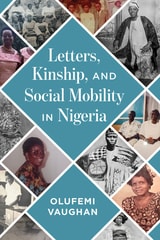
Letter writing was a dominant form of communication for Western-educated elites in colonial Africa, especially in Nigeria. Exposure to the modern world and a growing sense of nationalism were among the factors that led people to begin exchanging letters, particularly in their interactions with British colonial authorities. Through careful textual analysis and broad contextualization, Vaughan reconstructs dominant storylines, including themes such as kinship, social mobility, Western education, modernity, and elite consolidation in colonial and post-colonial Nigeria. Vaughan brings his prodigious skills as an interdisciplinary scholar to bear on this wealth of information, bringing to life a portrait, at once intimate and expansive, of a community during a transformative period in African history.
Letters, Volume 1
John Barsanuphius and John
Catholic University of America Press, 2006
Letters, Volume 1 (1–185)
Saint Basil
Catholic University of America Press, 1951
Letters, Volume 1 (1–82)
Saint Augustine
Catholic University of America Press, 1951
Letters, Volume 2
John Barsanuphius and John
Catholic University of America Press, 2006
Letters, Volume 2 (186–368)
Saint Basil
Catholic University of America Press, 1955
Letters, Volume 2 (83–130)
Saint Augustine
Catholic University of America Press, 1953
Letters, Volume 3 (131-164)
Saint Augustine
Catholic University of America Press, 1953
Letters, Volume 4 (165–203)
Saint Augustine
Catholic University of America Press, 1955
Letters, Volume 5 (204–270)
Saint Augustine
Catholic University of America Press, 1956
Letters, Volume 6 (1*–29*)
Saint Augustine
Catholic University of America Press, 1989
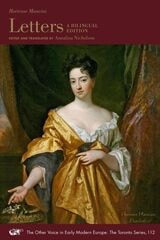
Letters
A Bilingual EditionHortense Mancini
Iter Press, 2025
During the seventeenth century, Hortense Mancini, Duchess of Mazarin (1646–99), became an icon of women’s emancipation. In 1668, she shocked Europe when she fled her coercive husband and began a nomadic exile. Her notoriety increased in 1675 with the publication of her memoir—one of the first to appear in French by a woman—and was later magnified by her stint as the royal mistress of Charles II of England and by her establishment of a freethinking salon in London. As a salonnière, an exile, and a litigant fighting for legal separation from her husband, Mancini’s letters were a means of connection, collusion, and survival as well as cultural collaboration. Collected and translated here for the first time, this correspondence charts her struggle for autonomy in her own words.
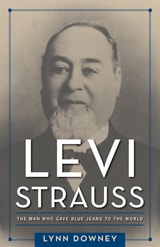
Levi Strauss
The Man Who Gave Blue Jeans to the WorldLynn Downey
University of Massachusetts Press, 2016
Blue jeans are globally beloved and quintessentially American. They symbolize everything from the Old West to the hippie counter-culture; everyone from car mechanics to high-fashion models wears jeans. And no name is more associated with blue jeans than Levi Strauss & Co., the creator of this classic American garment.
As a young man Levi Strauss left his home in Germany and immigrated to America. He made his way to San Francisco and by 1853 had started his company. Soon he was a leading businessman in a growing commercial city that was beginning to influence the rest of the nation. Family-centered and deeply rooted in his Jewish faith, Strauss was the hub of a wheel whose spokes reached into nearly every aspect of American culture: business, philanthropy, politics, immigration, transportation, education, and fashion.
But despite creating an American icon, Levi Strauss is a mystery. Little is known about the man, and the widely circulated "facts" about his life are steeped in mythology. In this first full-length biography, Lynn Downey sets the record straight about this brilliant businessman. Strauss's life was the classic American success story, filled with lessons about craft and integrity, leadership and innovation.
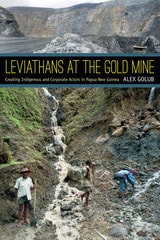
Leviathans at the Gold Mine
Creating Indigenous and Corporate Actors in Papua New GuineaAlex Golub
Duke University Press, 2014
Levirate Marriage and the Family in Ancient Judaism
Dvora E. Weisberg
Brandeis University Press, 2009
Lewd and Notorious
Female Transgression in the Eighteenth CenturyKatharine Kittredge, Editor
University of Michigan Press, 2003
Lewis and Clark in Missouri
Ann Rogers
University of Missouri Press, 2002
Lexikon of the Hispanic Baroque
Transatlantic Exchange and TransformationEdited by Evonne Levy and Kenneth Mills
University of Texas Press, 2014
Over the course of some two centuries following the conquests and consolidations of Spanish rule in the Americas during the late fifteenth and early sixteenth centuries—the period designated as the Baroque—new cultural forms sprang from the cross-fertilization of Spanish, Amerindian, and African traditions. This dynamism of motion, relocation, and mutation changed things not only in Spanish America, but also in Spain, creating a transatlantic Hispanic world with new understandings of personhood, place, foodstuffs, music, animals, ownership, money and objects of value, beauty, human nature, divinity and the sacred, cultural proclivities—a whole lexikon of things in motion, variation, and relation to one another.
Featuring the most creative thinking by the foremost scholars across a number of disciplines, the Lexikon of the Hispanic Baroque is a uniquely wide-ranging and sustained exploration of the profound cultural transfers and transformations that define the transatlantic Spanish world in the Baroque era. Pairs of authors—one treating the peninsular Spanish kingdoms, the other those of the Americas—provocatively investigate over forty key concepts, ranging from material objects to metaphysical notions. Illuminating difference as much as complementarity, departure as much as continuity, the book captures a dynamic universe of meanings in the various midst of its own re-creations. The Lexikon of the Hispanic Baroque joins leading work in a number of intersecting fields and will fire new research—it is the indispensible starting point for all serious scholars of the early modern Spanish world.
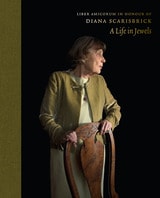
Liber Amicorum in Honour of Diana Scarisbrick
A Life in JewelsEdited by Beatriz Chadour-Sampson, Sandra Hindman, and Carla Van De Puttelaar
Paul Holberton Publishing, 2022
Coinciding with Diana Scarisbrick’s ninety-fourth birthday, this work honors her extraordinary career as the “world’s leading jewelry historian.”
Through twenty contributions by noted scholars, Liber Amicorum explores the pioneering research accomplished by jewelry historian Diana Scarisbrick. These collected pieces celebrate both the length of Scarisbrick’s career and its wide-ranging nature, touching upon her work with everything from gems, rings, chalices, bindings, and crown jewels to contemporary jewelry production, jewel theft, and individual collections.
Throughout the book, the insightful historical research of the contributors is beautifully supported by high-quality illustrations. These bring their essays to life, highlighting the splendor and fragility of some of the objects that are discussed as each delves into the work of this eminent scholar.
Liberal Christianity and Women's Global Activism
The YWCA of the USA and the Maryknoll SistersAmanda L. Izzo
Rutgers University Press, 2018
Focusing on the histories of two highly influential groups, the Young Women’s Christian Association of the USA, an interdenominational Protestant organization, and the Maryknoll Sisters, a Roman Catholic religious order, Izzo offers new perspectives on the contributions of these women to transnational social movements, women’s history, and religious studies, as she traces the connections between turn-of-the-century Christian women’s reform culture and liberal and left-wing religious social movements of the 1960s and 1970s. Izzo suggests that shared ethical, theological, and institutional underpinnings can transcend denominational divides, and that strategies for social change often associated with secular feminism have ties to spiritually inspired social movements.
Liberal Suppression
Section 501(c)(3) and the Taxation of SpeechPhilip Hamburger
University of Chicago Press, 2018
Tracing the history of American liberalism, including theological liberalism and its expression in nativism, Hamburger shows the centrality of turbulent popular anxieties about the Catholic Church and other potentially orthodox institutions. He argues persuasively that such theopolitical fears about the political speech of churches and related organizations underlay the adoption, in 1934 and 1954, of section 501(c)(3)’s speech limits. He thereby shows that the speech restrictions have been part of a broad majority assault on minority rights and that they are grossly unconstitutional.
Along the way, Hamburger explores the role of the Ku Klux Klan and other nativist organizations, the development of American theology, and the cultural foundations of liberal “democratic” political theory. He also traces important legal developments such as the specialization of speech rights and the use of law to homogenize beliefs. Ultimately, he examines a wide range of contemporary speech restrictions and the growing shallowness of public life in America.
His account is an unflinching look at the complex history of American liberalism and at the implications for speech, the diversity of belief, and the nation’s future.
Liberalism Ancient and Modern
Leo Strauss
University of Chicago Press, 1995
Liberalism and Empire
A Study in Nineteenth-Century British Liberal ThoughtUday Singh Mehta
University of Chicago Press, 1999
Ironically, it is in the conservative Edmund Burke—a severe critic of Britain's arrogant, paternalistic colonial expansion—that Mehta finds an alternative and more capacious liberal vision. Shedding light on a fundamental tension in liberal theory, Liberalism and Empire reaches beyond post-colonial studies to revise our conception of the grand liberal tradition and the conception of experience with which it is associated.
Liberalism and Leadership
The Irony of Arthur Schlesinger, Jr.Emile Lester
University of Michigan Press, 2019
Most scholars and pundits today view Franklin Delano Roosevelt and John F. Kennedy as aggressive liberal leaders, while viewing Schlesinger’s famous histories of their presidencies as celebrations of their steadfast progressive leadership. A more careful reading of Schlesinger’s work demonstrates that he preferred an ironic political outlook emphasizing the virtues of restraint, patience, and discipline. For Schlesinger, Roosevelt and Kennedy were liberal heroes and models as much because they respected the constraints on their power and ideals as because they tested traditional institutions and redefined the boundaries of presidential power.
Aggressive liberalism involves the use of inspirational rhetoric and cunning political tactics to expand civil liberties and insure economic equality. Schlesinger’s emphasis on the crucial role that irony has played and should play in liberalism poses a challenge to the aggressive liberalism advocated by liberal activists, political thinkers, and pundits. That his counsel was grounded in conservative insights as well as liberal values makes it accessible to leaders across the political spectrum.
Liberalism and Transformation
The Global Politics of Violence and InterventionDillon Stone Tatum
University of Michigan Press, 2021
Liberalism and Transformation is the first scholarly work that explores the historical, philosophical, and intellectual development of global liberalism since the nineteenth century in the context of the deployment of violence, force, and intervention. Using an approach that includes interpretive and contextual analysis of texts from writers, philosophers, and policy-makers across nearly two centuries, as well as historiographical and historical analysis of archival documents (some of which have been recently declassified) and other media, Liberalism and Transformation narrates the messy history of emancipatory liberalism and its engagement with issues of war and peace. The book contributes to both a rethinking of liberal democracy and its relationship to world politics, as well as the effects of liberal internationalism on global processes. Furthermore, Liberalism and Transformation invites readers to reflect on global ethics and transformation in world politics. In the first place, it shows how ethical imaginings of the world have direct effects on actions of transformative importance. In the second place, it suggests that discourses are fluid, changing, and complex.
Liberalism and the Culture of Security
The Nineteenth-Century Rhetoric of ReformKatherine Henry
University of Alabama Press, 2011
Normal0falsefalsefalseMicrosoftInternetExplorer4
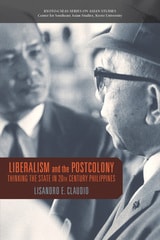
Liberalism and the Postcolony
Thinking the State in 20th-Century PhilippinesLisandro E. Claudio
National University of Singapore Press, 2017
Through the biographies of four Filipino scholar-bureaucrats—Camilo Osias, Salvador Araneta, Carlos P. Romulo, and Salvador P. Lopez—Lisandro E. Claudio argues that liberal thought served as the grammar of Filipino democracy in the twentieth century. Melding political philosophy and narrative history, he takes us through various articulations of liberalism in pedagogy, international affairs, economics, and literature. In this first book on Filipino liberals in the twentieth century, Claudio brings to light an obscured history of the Philippine state and also argues for a new liberalism rooted in the postcolonial experience, a timely intervention in light of the ascent of President Rodrigo Duterte and the current developments in Southeast Asian politics.

Liberalism in the Jungle
Race, Rubber, and the State in the Ecuadorian AmazonMatthew Ford
University of Texas Press, 0
The untold story of how liberal reform, Indigenous resistance, and the rubber trade transformed Ecuador’s Amazon.
Ecuador’s 1895 Liberal Revolution was a turning point for the nation. Along with crippling the power of the Catholic Church, the new Liberal government expanded the ranks of political participation, spearheaded projects to soften endemic regionalism, integrated the national economy into global markets through an export-oriented economic strategy, and launched a program of “Indian Redemption” aimed at “civilizing” what elites deemed as the “backward” Indigenous masses. The cacao economy was essential to the Liberal state reform, as it facilitated infrastructure modernizatoin and the ability to provide unprecedented public goods and services.
East of the Andes, the Liberal state launched the first attempt to incorporate the Amazonian frontier (the “Oriente”) and expand state power into the region. But, as Matthew Ford shows, a very different global commodity was transforming the Oriente. Unlike most economic booms, the global demand for rubber debilitated state efforts in the region. Liberalism in the Jungle traces how local, national, and global forces shaped the contours of Liberal efforts in the Amazon. By the end, readers will understand how the region transformed from an isolated outpost to the heart of the national economy and home to one of the world’s most powerful social movements.