Results by title
314 books match the query 'African' and 22 start with m
Malaria, Poems
Cameron Conaway
Michigan State University Press, 2014
Malian Women at the Crossroads
Blending Literature and ArtCheryl Toman
Michigan State University Press, 2027
Mali’s history is defined by crossroads—geographic, cultural, and intellectual—linking to the Sahara and to long-standing trade routes. Francophone Malian women’s writing reflects this convergence, positioning literature as a site where diverse artistic and cultural traditions meet and evolve. In Malian Women at the Crossroads: Blending Literature and Art, writers such as Aoua Kéita, Aïcha Fofana, Adame Ba Konaré, Fatoumata Sidibé, Zakiyatou oualett Halatine, and Fadimata walett Oumar blur the boundaries between text and artistic practice, incorporating storytelling, visual arts, music, textile design, and other creative forms into their work. These interdisciplinary expressions both honor and reinterpret tradition, illuminating Mali’s cultural diversity while challenging divisions rooted in gender and ethnicity.
The voices of these writers denounce the conflict that has plagued Mali for over a decade and opt instead for showcasing creativity that preserves the memory of more promising times.
Mandela's Dark Years
A Political Theory of DreamingSharon Sliwinski
University of Minnesota Press, 2015
Inspired by one of Nelson Mandela’s recurring nightmares, Mandela’s Dark Years offers a political reading of dream-life. Sharon Sliwinski guides the reader through the psychology of apartheid, recasting dreaming as a vital form of resistance to political violence, away from a rational binary of thinking.
This short, provocative study blends political theory with clinical psychoanalysis, opening up a new space to consider the politics of reverie.
Forerunners is a thought-in-process series of breakthrough digital works. Written between fresh ideas and finished books, Forerunners draws on scholarly work initiated in notable blogs, social media, conference plenaries, journal articles, and the synergy of academic exchange. This is gray literature publishing: where intense thinking, change, and speculation take place in scholarship.
Mapping Modernisms
Art, Indigeneity, ColonialismElizabeth Harney and Ruth B. Phillips, editors
Duke University Press, 2018
Contributors. Bill Anthes, Peter Brunt, Karen Duffek, Erin Haney, Elizabeth Harney, Heather Igloliorte, Sandra Klopper, Ian McLean, Anitra Nettleton, Chika Okeke-Agulu, Ruth B. Phillips, W. Jackson Rushing III, Damian Skinner, Nicholas Thomas, Norman Vorano
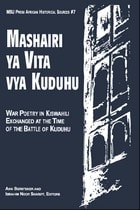
Mashairi ya Vita vya Kuduhu
War Poetry in Kiswahili Exchanged at the Time of the Battle of KuduhuAnn Biersteker
Michigan State University Press, 1995
Mashairi Ya Vita Vya Kuduhu is a presentation and discussion of both manuscript and published versions of poems written by Lamu poets around the time of the Battle of Kuduhu. The poetic dialogue studied in this volume has played a significant role in the history of Swahili poetry, and its primary concern is to inform continued work in this area. The poems contained in this work were transmitted and preserved by speakers of Kiswahili and later collected and preserved by scholars. Chapter One contains the edited poems; Chapter Two consists of the translations. Subsequent chapters include accounts of the Battle of Kuduhu, editing and translating practices, and annotated poems and source versions. This work is presented as an example of the importance of research, fieldwork, and the consideration of available versions and alternative styles of presentation in the study of Swahili poetry.
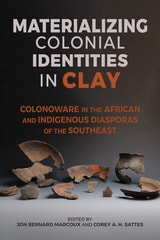
Materializing Colonial Identities in Clay
Colonoware in the African and Indigenous Diasporas of the SoutheastEdited by Jon Bernard Marcoux and Corey A. H. Sattes
University of Alabama Press, 2024
An interdisciplinary excavation of colonoware as a material archive of African, Indigenous, and colonial entanglements across the early American South.
In Materializing Colonial Identities in Clay, Jon Bernard Marcoux, Corey A. H. Sattes, and contributors examine colonoware to explore the active roles that African Americans and Indigenous people played in constructing southern colonial culture and part of their shared history with Europeans.
Colonoware was most likely produced by African and Indigenous potters and used by all colonial groups for cooking, serving, and storing food. It formed the foundation of colonial foodways in many settlements across the southeastern United States. Even so, compared with other ceramics from this period, less has been understood about its production and use because of the lack of documentation. This collection of essays fills this gap with valuable, recent archaeological data from which much may be surmised about the interaction among Europeans, Indigenous, and Africans, especially within the contexts of the African and Indigenous slave trade and plantation systems.
The chapters represent the full range of colonoware research: from the beginning to the end of its production, from urban to rural contexts, and from its intraregional variation in the Lowcountry to the broad patterns of colonialism across the early American Southeast. The book summarizes current approaches in colonoware research and how these may bridge the gaps between broader colonial American studies, Indigenous studies, and African Diaspora studies.
A concluding discussion contextualizes the chapters through the perspectives of intersectionality and Black feminist theory, drawing attention to the gendered and racialized meanings embodied in colonoware, and considering how colonialism and slavery have shaped these cultural dimensions and archaeologists’ study of them.
Materializing Imaginaries in Senegal
Modern African Literature and Global 1968Fatoumata Seck
Duke University Press, 2026
Media Primitivism
Technological Art in AfricaDelinda Collier
Duke University Press, 2020
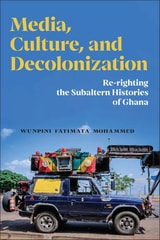
Media, Culture, and Decolonization
Re-righting the Subaltern Histories of GhanaWunpini Fatimata Mohammed
Rutgers University Press, 2026
Media, Culture, and Decolonization: Re-righting the Subaltern Histories of Ghana invites us to look at media and culture from a decolonial perspective. Through Dagbaŋ epistemologies and knowledge systems, this book examines media by highlighting how African languages, cultures, and traditions can shift how we think of knowledge. It is an offering to anyone curious about the relationship between culture, language, and media. By focusing on African language media in Ghana such as film, television, and radio, the book emphasizes the importance of espousing a decolonial politic and praxis in the process of co-creating knowledge with Indigenous communities. It connects the struggles of global majority countries and demonstrates the ways in which (neo)colonialism and imperialism impede the work toward liberatory futures. This book demonstrates the potential that African language media hold as tools of cultural and epistemological decolonization.
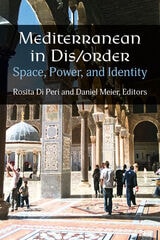
Mediterranean in Dis/order
Space, Power, and IdentityRosita Di Peri and Daniel Meier, Editors
University of Michigan Press, 2023
Mediterranean in Dis/order reveals the connection between space and politics by examining the role that space has played in insurgencies, conflicts, uprisings, and mobilities in the Mediterranean region. With this approach, the authors are able to challenge well-established beliefs about the power structure of the state across different disciplines (including political science, history, sociology, geography, and anthropology), and its impact on the conception, production, and imagination of space in the broader Mediterranean. Further, they contribute to particular areas of studies, such as migration, political Islam, mobilization, and transition to democracy, among others. The book, infusing critical theory, unveils original and revelatory case studies in Tunisia, Libya, Lebanon, Turkey, Syria, Morocco, and the EU Mediterranean policy, through a various set of actors and practices—from refugees and migrations policies, to Islamist or students’ movements, architectural sites, or movies. This multidisciplinary perspective on space and power provides a valuable resource for practitioners interested in how space, context, and time interact to produce institutions, political subjectivities, and asymmetries of power, particularly since the turning point of the Arab uprisings. The book also helps readers understand the conditions under which the uprisings develop, giving a clearer picture about various national, regional, and international dynamics.
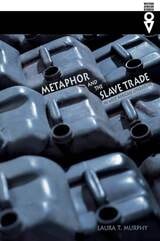
Metaphor and the Slave Trade in West African Literature
Laura T. Murphy
Ohio University Press, 2012
Metaphor and the Slave Trade provides compelling evidence of the hidden but unmistakable traces of the transatlantic slave trade that persist in West African discourse. Through an examination of metaphors that describe the trauma, loss, and suffering associated with the commerce in human lives, this book shows how the horrors of slavery are communicated from generation to generation.
Laura T. Murphy’s insightful new readings of canonical West African fiction, autobiography, drama, and poetry explore the relationship between memory and metaphor and emphasize how repressed or otherwise marginalized memories can be transmitted through images, tropes, rumors, and fears. By analyzing the unique codes through which West Africans have represented the slave trade, this work foregrounds African literary contributions to Black Atlantic discourse and draws attention to the archive that metaphor unlocks for scholars of all disciplines and fields of study.
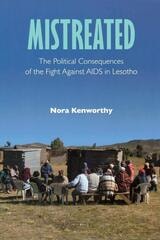
Mistreated
The Political Consequences of the Fight against AIDS in LesothoNora Kenworthy
Vanderbilt University Press, 2017
In Lesotho, which has the world's second highest HIV prevalence, HIV treatment has had unintentional but pervasive political costs, distancing citizens from the government, fostering distrust of health programs, and disrupting the social contract. Based on ethnographic observation between 2008 and 2014, this book chillingly anticipates the political violence and instability that swept through Lesotho in 2014.
This book is a recipient of the Norman L. and Roselea J. Goldberg Prize from Vanderbilt University Press for the best book in the area of medicine.
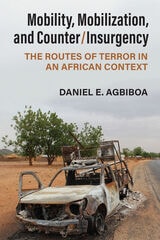
Mobility, Mobilization, and Counter/Insurgency
The Routes of Terror in an African ContextDaniel E. Agbiboa
University of Michigan Press, 2022
In Mobility, Mobilization, and Counter/Insurgency, Daniel Agbiboa takes African insurgencies back to their routes by providing a transdisciplinary perspective on the centrality of mobility to the strategies of insurgents, state security forces, and civilian populations caught in conflict. Drawing on one of the world’s deadliest insurgencies, the Boko Haram insurgency in northeast Nigeria and the Lake Chad region, this well-crafted and richly nuanced intervention offers fresh insights into how violent extremist organizations exploit forms of local immobility and border porosity to mobilize new recruits, how the state’s “war on terror” mobilizes against so-called subversive mobilities, and how civilian populations in transit are treated as could-be terrorists and subjected to extortion and state-sanctioned violence en route. The multiple and intersecting flows analyzed here upend Eurocentric representations of movement in Africa as one-sided, anarchic, and dangerous. Instead, this book underscores the contradictions of mobility in conflict zones as simultaneously a resource and a burden. Intellectually rigorous yet clear, engaging, and accessible, Mobility, Mobilization, and Counter/Insurgency is a seminal contribution that lays bare the neglected linkages between conflict and mobility.
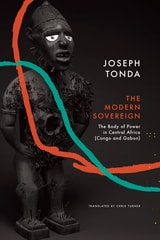
Modern Sovereign
The Body of Power in Central Africa (Congo and Gabon)Joseph Tonda
Seagull Books, 2020
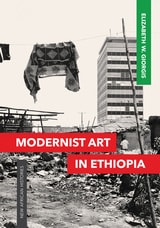
Modernist Art in Ethiopia
Elizabeth W. Giorgis
Ohio University Press, 2019
Short-listed for the Fage & Oliver Prize for outstanding scholarly work published on Africa.
Finalist, African Studies Association Book Prize.
Finalist, ASA Bethwell A. Ogot Prize for best book in east African studies.
If modernism initially came to Africa through colonial contact, what does Ethiopia’s inimitable historical condition—its independence save for five years under Italian occupation—mean for its own modernist tradition? In Modernist Art in Ethiopia—the first book-length study of the topic—Elizabeth W. Giorgis recognizes that her home country’s supposed singularity, particularly as it pertains to its history from 1900 to the present, cannot be conceived outside the broader colonial legacy. She uses the evolution of modernist art in Ethiopia to open up the intellectual, cultural, and political histories of it in a pan-African context.
Giorgis explores the varied precedents of the country’s political and intellectual history to understand the ways in which the import and range of visual narratives were mediated across different moments, and to reveal the conditions that account for the extraordinary dynamism of the visual arts in Ethiopia. In locating its arguments at the intersection of visual culture and literary and performance studies, Modernist Art in Ethiopia details how innovations in visual art intersected with shifts in philosophical and ideological narratives of modernity. The result is profoundly innovative work—a bold intellectual, cultural, and political history of Ethiopia, with art as its centerpiece.
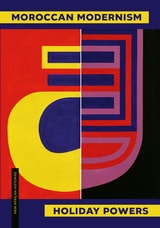
Moroccan Modernism
Holiday Powers
Ohio University Press, 2024
In the years after independence, new art forms and practices flourished at the Casablanca École des beaux-arts, transforming the colonial relic into a wellspring of Moroccan modernism. Casablanca School artists, including Farid Belkahia, Mohammed Chebaa, and Mohammed Melehi, defined the modernist movement in Morocco. Their visual arts activism was displayed at their iconic outdoor exhibition in the Djemaa al-Fna plaza in Marrakech, in their collaborations with the cultural and political journal Souffles, through their radical anticolonial pedagogy, and through their use of abstraction to expand the horizons of postcolonial national culture.
In Moroccan Modernism, Holiday Powers argues that the pedagogy and transnational solidarities of this generation of artists were intrinsic to their broader artistic projects. She advances a novel reading of Moroccan modernism that is rooted in its cosmopolitan national context and in Pan-Africanism and Pan-Arabism, the transnational anticolonial intellectual movements that defined the era.
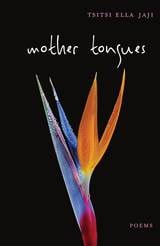
Mother Tongues
PoemsTsitsi Ella Jaji
Northwestern University Press, 2020
Winner of the 2018 Cave Canem Northwestern University Press Poetry Prize
Tsitsi Ella Jaji’s second full-length collection of poems, Mother Tongues, begins at home, with the first words and loves we learn, and the most intimate vows we swear. How deep does your language go back? Jaji’s artful verse is a three-tiered gourd of sustenance, vessel, and folklore. The tongues speak the beginnings and the present; they capture and claim the losses, the ironies, and a poet’s human evolution. Mother Tongues is a collection of language unto itself that translates directly to the heart.
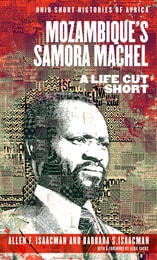
Mozambique’s Samora Machel
A Life Cut ShortAllen F. Isaacman
Ohio University Press, 2020
The precipitous rise and controversial fall of a formidable African leader.
Samora Machel (1933–1986), the son of small-town farmers, led his people through a war against their Portuguese colonists and became the first president of the People’s Republic of Mozambique.
Machel’s military successes against a colonial regime backed by South Africa, Rhodesia, the United States, and its NATO allies enhanced his reputation as a revolutionary hero to the oppressed people of Southern Africa. In 1986, during the country’s civil war, Machel died in a plane crash under circumstances that remain uncertain.
Allen and Barbara Isaacman lived through many of these changes in Mozambique and bring personal recollections together with archival research and interviews with others who knew Machel or participated in events of the revolutionary or post-revolutionary years.

Mrs. Shaw
A NovelMukoma Wa Ngugi
Ohio University Press, 2015

Multi-Party Politics in Kenya
The Kenyatta and Moi States and the Triumph of the System in the 1992 ElectionDavid Throup
Ohio University Press, 1997
This book uses the Kenyan political system to address issues relevant to recent political developments throughout Africa.
The authors analyze the construction of the Moi state since 1978. They show the marginalization of Kikuyu interests as the political economy of Kenya has been reconstructed to benefit President Moi’s Kalenjin people and their allies. Mounting Kikuyu dissatisfaction led to the growth of demands for multi-party democracy.
The book places contemporary Kenyan politics and the 1992 election in their historical context, contrasting the present multi-party era with the previous one during the sixties.
The authors question the hopes for a “second independence” in Africa by demonstrating the problems faced by fledgling opposition parties in weak civil societies.

Musho!
Zulu Popular PraisesLiz Gunner
Michigan State University Press, 1991
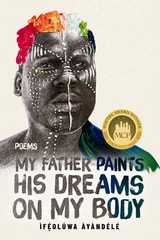
My Father Paints His Dreams on My Body
PoemsÌféolúwa Áyàndélé
Moon City Press, 2026
How do our ancestors inhabit the world that they have abandoned? What is the place of our family in our hearts? In this stunning debut collection, Ìfẹ́olúwa Àyàndélé reveals this interior world in which the past sings its lament in the present moment. The father is Àyàndélé’s connection to the deep past and his ancestors, who move through love and the Nigerian-Biafran war, but also through the luxuriant landscape of rivers and forests. How does one person balance the past and the present? Animals can show us the way of nature. Prayer can form a river of the soul as it chants, praises, and reveres the terrible beauty of this world.