Results by title
1218 books match the query 'African Americans' and 47 start with m
Macbeth in Harlem
Black Theater in America from the Beginning to Raisin in the SunClifford Mason
Rutgers University Press, 2020
2021 PROSE Awards Finalist, Music & the Performing Arts
In 1936 Orson Welles directed a celebrated all-black production of Macbeth that was hailed as a breakthrough for African Americans in the theater. For over a century, black performers had fought for the right to perform on the American stage, going all the way back to an 1820s Shakespearean troupe that performed Richard III, Othello, and Macbeth, without relying on white patronage.
"Macbeth" in Harlem tells the story of these actors and their fellow black theatrical artists, from the early nineteenth century to the dawn of the civil rights era. For the first time we see how African American performers fought to carve out a space for authentic black voices onstage, at a time when blockbuster plays like Uncle Tom’s Cabin and The Octoroon trafficked in cheap stereotypes. Though the Harlem Renaissance brought an influx of talented black writers and directors to the forefront of the American stage, they still struggled to gain recognition from an indifferent critical press.
Above all, "Macbeth" in Harlem is a testament to black artistry thriving in the face of adversity. It chronicles how even as the endemic racism in American society and its theatrical establishment forced black performers to abase themselves for white audiences’ amusement, African Americans overcame those obstacles to enrich the nation’s theater in countless ways.
Make Way for Liberty
Wisconsin African Americans in the Civil WarJeff Kannel
Wisconsin Historical Society Press, 2020
Making Minnesota Liberal
Civil Rights And The Transformation Of The Democratic PartyJennifer A. Delton
University of Minnesota Press, 2002
Making Race, Making Power
North Carolina's Road to DisfranchisementKent Redding
University of Illinois Press, 2003
Far from being a low-level, localized trend, the struggle for power in North Carolina would be felt across the entire country as race-and class-based organizing challenged the dominant models of making and holding power.
Redding reveals how the ruling class operates with motivations and methods very similar to those of the black voters and Populist farmers they fought against. He tracks how the elites co-opted the innovative mobilizing strategies of the subaltern groups to effectively use their own weapons against them.
At the core of Making Race, Making Power is an insightful dissection of the concrete connections between political strategies of solidarity and exclusion and underlying patterns of race relations.

Making Their Own Way
Southern Blacks' Migration to Pittsburgh, 1916-30Peter Gottlieb
University of Illinois Press, 1987
on that momentous movement historians know as the Great Migration. Peter
Gottlieb shatters the received portrait of southern migrants as bewildered,
premodern folk, 'utterly unprepared' for the complexities of urban life.
African Americans in his account emerge as complex, creative agents, exploiting
old solidarities and building new ones, transforming the urban landscape
even as it transformed them." -- James Campbell, Northwestern University
"Engagingly written and well organized. . . . A major addition to
the fields of Afro-American, urban, and working-class history." --
Howard N. Rabinowitz, Georgia Historical Quarterly
"Gottlieb uses oral histories, corporate records, and primary and
secondary scholarship to present a useful picture of an important part
of the Great Migration that followed World War I." -- George Lipsitz,
Choice
"Sensitive and yet also incisive. . . . clear and often compelling.
An outstanding study." -- James R. Barrett, Journal of American
Ethnic History
Publication of this work was supported in part by a grant from the
Andrew W. Mellon Foundation.
Making the Second Ghetto
Race and Housing in Chicago 1940-1960Arnold R. Hirsch
University of Chicago Press, 1998
"In this excellent, intricate, and meticulously researched study, Hirsch exposes the social engineering of the post-war ghetto."—Roma Barnes, Journal of American Studies
"According to Arnold Hirsch, Chicago's postwar housing projects were a colossal exercise in moral deception. . . . [An] excellent study of public policy gone astray."—Ron Grossman, Chicago Tribune
"An informative and provocative account of critical aspects of the process in [Chicago]. . . . A good and useful book."—Zane Miller, Reviews in American History
"A valuable and important book."—Allan Spear, Journal of American History
Making the Second Ghetto
Race and Housing in Chicago, 1940-1960Arnold R. Hirsch
University of Chicago Press, 2021
Hirsch’s classic and groundbreaking work of urban history is a revelatory look at Chicago in the decades after the Great Depression, a period when the city dealt with its rapidly growing Black population not by working to abolish its stark segregation but by expanding and solidifying it. Even as the civil rights movement rose to prominence, Chicago exploited a variety of methods of segregation—including riots, redevelopment, and a host of new legal frameworks—that provided a national playbook for the emergence of a new kind of entrenched inequality. Hirsch’s chronicle of the strategies employed by ethnic, political, and business interests in reaction to the Great Migration of Southern Blacks in the mid-twentieth century makes startingly clear how the violent reactions of an emergent white population found common ground with policy makers to segregate first a city and then the nation.
This enlarged edition of Making the Second Ghetto features a visionary afterword by historian N. D. B. Connolly, explaining why Hirsch’s book still crackles with “blistering relevance” for contemporary readers.
Malady of Monoculture
Pellagra, Public Health, and the Pathologies of Cotton's CapitalismDana Landress
University of Chicago Press, 2027
How the cotton industry restricted sharecroppers’ access to nutritious food, a public health crisis that spurred a wave of influential and inspiring activism.
Pellagra, a nutritional deficiency disease, was once widespread in the southern United States, where it was concentrated in areas of high-yield cotton production. This wasn’t a coincidence. In the early twentieth century, pellagra was ubiquitous in regions where monocultural cotton production foreclosed cotton workers’ access to nutritious foods. Planters paid sharecroppers and millworkers in their own currency—tokens, coins, and other substitutes for money—and sold them unhealthy and overpriced food in company-owned stores. Employers kept workers poor through wage theft, predatory credit systems, and labor coercion, all of which maintained a system of food scarcity.
In Malady of Monoculture, Dana Landress reveals how the unrelenting demands of the cotton economy during the Jim Crow South created a public health crisis in the form of pellagra. She carefully details a “closed food system” that restricted workers’ diets through employer-generated currency; the use of food as an instrument of labor compulsion; manufactured debt structures; alliances between government and private industry; and restrictions on foraging, gardening, and land use. Though official public health programs framed pellagra in personal and behavioral terms, those afflicted with the illness actively challenged the closed food system through union organizing, community health care, freedom farms, and collective action lawsuits. Excavating the landmark contributions of Black nutritionists to the field of public health, Landress spotlights the many constituencies that worked tirelessly to combat hunger and foregrounds their creativity, resilience, and determination.
Malcolm X's Michigan Worldview
An Exemplar for Contemporary Black StudiesRita Kiki Edozie
Michigan State University Press, 2024
Malicious Intent
Murder and the Perpetuation of Jim Crow Health CareDavid Barton Smith
Vanderbilt University Press, 2023
Race-related disparities in American death rates, exacerbated once again by the COVID-19 pandemic, have persisted since the birth of the modern US medical system a century ago. A unique but perpetually unequal history has prevented the United States from providing the kind of health care assurances that are taken for granted in other industrialized nations. The underlying story is one of political, medical, and bureaucratic machinations, all motivated by a deliberate Jim Crow systemic design. In Malicious Intent, David Barton Smith traces the Jean Cowsert story and the cold case of her death as a through line to explain the construction and fulfillment of an unequal health care system that would rather sacrifice many than provide for Black Americans.
Cowsert’s suspicious death came at a key moment in the struggle for universal health care in the wealthiest country on earth. Malicious Intent is a history of those failed efforts and a story of selective amnesia about one doctor’s death and the movement she fought for.
Man on a Mission
James Meredith and the Battle of Ole MissAram Goudsouzian
University of Arkansas Press, 2022
In 1962, James Meredith famously desegregated the University of Mississippi (a.k.a. Ole Miss). As the first Black American admitted to the school, he demonstrated great courage amidst the subsequent political clashes and tragic violence. After President Kennedy summoned federal troops to help maintain order, the South—and America at large—would never be the same.
Man on a Mission depicts Meredith’s relentless pursuit of justice, beginning with his childhood in rural Mississippi and culminating with the confrontation at Ole Miss. A blend of historical research and creative inspiration, this graphic history tells Meredith’s dramatic story in his own singular voice.
From the dawn of the modern civil rights movement, Meredith has offered a unique perspective on democracy, racial equality, and the meaning of America. Man on a Mission presents his captivating saga for a new generation in the era of Black Lives Matter.
Mapping Yorùbá Networks
Power and Agency in the Making of Transnational CommunitiesKamari Maxine Clarke
Duke University Press, 2004
Examining how the development of a deterritorialized network of black cultural nationalists became aligned with a lucrative late-twentieth-century roots heritage market, Clarke explores the dynamics of Òyótúnjí Village’s religious and tourist economy. She discusses how the community generates income through the sale of prophetic divinatory consultations, African market souvenirs—such as cloth, books, candles, and carvings—and fees for community-based tours and dining services. Clarke accompanied Òyótúnjí villagers to Nigeria, and she describes how these heritage travelers often returned home feeling that despite the separation of their ancestors from Africa as a result of transatlantic slavery, they—more than the Nigerian Yorùbá—are the true claimants to the ancestral history of the Great Òyó Empire of the Yorùbá people. Mapping Yorùbá Networks is a unique look at the political economy of homeland identification and the transnational construction and legitimization of ideas such as authenticity, ancestry, blackness, and tradition.
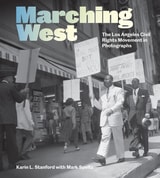
Marching West
The Los Angeles Civil Rights Movement in PhotographsKarin L. Stanford
J. Paul Getty Trust, The, 2026
This volume presents the first visual history of the people and organizations that led the fight for change during the civil rights era in Los Angeles.
During a 1963 speech to a crowd of nearly forty thousand at Wrigley Field in Los Angeles, Dr. Martin Luther King Jr. addressed the question of how Angelenos could contribute to the civil rights movement: “The most important thing that you can do is to set Los Angeles free, because you have segregation and discrimination here, and police brutality.”
Marching West illuminates the dynamic history of civil rights activism in Los Angeles and explores how the medium of photography both witnessed and advanced the fight for Black equality. Over one hundred images, some of which have never been previously published, reveal connections between the local and national movements and document the actions of Western coalitions, religious leaders, Hollywood stars, and concerned citizens. Drawn from the Tom & Ethel Bradley Center at California State University, Northridge (CSUN), the Getty Research Institute, and other Southern California collections—including prints by Harry Adams, Howard Bingham, Charles Brittin, Joe Flowers, Vera Jackson, and Charles Williams—this unprecedented volume presents less familiar but essential stories about American progress toward social justice.
Maria Baldwin's Worlds
A Story of Black New England and the Fight for Racial JusticeKathleen Weiler
University of Massachusetts Press, 2019
Maria Baldwin (1856–1922) held a special place in the racially divided society of her time, as a highly respected educator at a largely white New England school and an activist who carried on the radical spirit of the Boston area's internationally renowned abolitionists from a generation earlier.
African American sociologist Adelaide Cromwell called Baldwin “the lone symbol of Negro progress in education in the greater Boston area” during her lifetime. Baldwin used her respectable position to fight alongside more radical activists like William Monroe Trotter for full citizenship for fellow members of the black community. And, in her professional and personal life, she negotiated and challenged dominant white ideas about black womanhood. In Maria Baldwin's Worlds, Kathleen Weiler reveals both Baldwin's victories and what fellow activist W. E. B. Du Bois called her “quiet courage” in everyday life, in the context of the wider black freedom struggle in New England.
Marked, Unmarked, Remembered
A Geography of American MemoryAndrew Lichtenstein
West Virginia University Press, 2017
These powerful photographs by award-winning photojournalist Andrew Lichtenstein are interspersed with short essays by some of the leading historians of the United States. The book is introduced with substantive meditations on meaning and landscape by Alex Lichtenstein, editor of the American Historical Review, and Edward T. Linenthal, former editor of the Journal of American History. Individually, these images convey American history in new and sometimes startling ways. Taken as a whole, the volume amounts to a starkly visual reckoning with the challenges of commemorating a violent and conflictual history of subjugation and resistance that we forget at our peril.
Marked
Race, Crime, and Finding Work in an Era of Mass IncarcerationDevah Pager
University of Chicago Press, 2007
Nearly every job application asks it: have you ever been convicted of a crime? For the hundreds of thousands of young men leaving American prisons each year, their answer to that question may determine whether they can find work and begin rebuilding their lives.
The product of an innovative field experiment, Marked gives us our first real glimpse into the tremendous difficulties facing ex-offenders in the job market. Devah Pager matched up pairs of young men, randomly assigned them criminal records, then sent them on hundreds of real job searches throughout the city of Milwaukee. Her applicants were attractive, articulate, and capable—yet ex-offenders received less than half the callbacks of the equally qualified applicants without criminal backgrounds. Young black men, meanwhile, paid a particularly high price: those with clean records fared no better in their job searches than white men just out of prison. Such shocking barriers to legitimate work, Pager contends, are an important reason that many ex-prisoners soon find themselves back in the realm of poverty, underground employment, and crime that led them to prison in the first place.
“Using scholarly research, field research in Milwaukee, and graphics, [Pager] shows that ex-offenders, white or black, stand a very poor chance of getting a legitimate job. . . . Both informative and convincing.”—Library Journal
“Marked is that rare book: a penetrating text that rings with moral concern couched in vivid prose—and one of the most useful sociological studies in years.”—Michael Eric Dyson
Martin Luther King
Godfrey Hodgson
University of Michigan Press, 2010
Dr. Martin Luther King Jr. is as relevant today as he was when he led civil rights campaigns in the 1950s and 1960s. He was an agent and a prophet of political change in this country, and the election of President Barack Obama is his direct legacy.
Now from one of Britain's most experienced political observers comes a new, accessible biography of the man and his works. The story of King is dramatic, and Godfrey Hodgson presents it with verve, clarity, and acute insight based in part on his own reporting on-scene at the time. He interviewed King half a dozen times or more; heard his speech at the March on Washington; was in Birmingham, Selma and Chicago; and met many of the characters in King's life story. Martin Luther King combines the best of his own reporting, plus the work of other biographers and researchers, to trace the iconic civil rights leader's career from his birth in Atlanta in 1929, through the campaigns that made possible the Civil Rights Act of 1964 and the Voting Rights Act of 1965, to his assassination in Memphis in 1968. Hodgson sheds light on every aspect of an extraordinary life: the Black Baptist culture in which King grew up, his theology and political philosophy, his physical and moral courage, his insistence on the injustice of inequality, his campaigning energy, his repeated sexual infidelities.
Hodgson describes the political minefield in which King operated; follows how he gradually persuaded President Kennedy that he could not stand by and allow the civil rights movement to be frustrated; and describes how, on the verge of success, his career was threatened by President Johnson's anger at King's principled decision to come out against the Vietnam War. He also puts King's career into the context of American history in the crisis of the 1960s. In his life, King was frustrated; but in death, he has been triumphant.
Martin Luther King allows the charisma and power of King's personality to shine through, showing in gripping narrative style exactly how one man helped America to progress toward its truest ideals. Hodgson's extensive research and detail help paint an accurate, complex portrait of one of America's most important leaders.
Godfrey Hodgson has worked in Britain and America as a newspaper and magazine journalist; as a television reporter, documentary maker and anchor; as a university teacher and lecturer; and as the author of a dozen well-received books about U.S. politics and recent history, including America in Our Time, a history of the United States in the 1960s; More Equal than Others, on politics and society in twentieth-century America; and most recently, a biography of Senator Daniel Patrick Moynihan, The Gentleman from New York. Hodgson met King on a number of occasions between 1956 and 1967. He recently retired as director of the Reuters Foundation Programme at Oxford University and is a visiting journalism professor at City University in London.
PRAISE FOR America in Our Time
"A critique so stimulating and compelling that I can only say read it."
---Richard Lingeman, The New York Times
"It simply gets right, without great fuss, the detail and proportion of things like the civil rights movement, student unrest, the stages of our Vietnam engagement."
---Garry Wills, The New York Review of Books
PRAISE FOR More Equal than Others
"The most thoughtful, thorough and sorrowful book imaginable on what has happened in these years."
---Bernard Crick, The Independent
Mary McLeod Bethune and Black Women's Political Activism
Joyce A. Hanson
University of Missouri Press, 2003
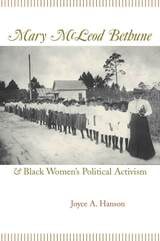
Mary McLeod Bethune was a significant figure in American political history. She devoted her life to advancing equal social, economic, and political rights for blacks. She distinguished herself by creating lasting institutions that trained black women for visible and expanding public leadership roles. Few have been as effective in the development of women’s leadership for group advancement. Despite her accomplishments, the means, techniques, and actions Bethune employed in fighting for equality have been widely misinterpreted.
Examining the historical evolution of African American women’s activism in the critical period between 1920 and 1950, a time previously characterized as “doldrums” for both feminist and civil rights activity, Mary McLeod Bethune and Black Women’s Political Activism is important for understanding the centrality of black women to the political fight for social, economic, and racial justice.
Masculinist Impulses
Toomer, Hurston, Black Writing, and ModernityNathan Grant
University of Missouri Press, 2004
Grant’s book provides close readings of Jean Toomer (Cane and Natalie Mann) and Zora Neale Hurston (Moses, Man of the Mountain, Seraph of the Suwanee, and Their Eyes Were Watching God), for whom the American South was a crucial locus of the African American experience. Toomer and Hurston were virtually alone among the Harlem Renaissance writers of prose who returned to the South for their literary materials. That return, however, allowed their rediscovery of key black masculine values and charted the northern route of those values in the twentieth century to their compromise and destruction.
Grant then moves on to three more recent writers—John Edgar Wideman, Gloria Naylor, and Toni Morrison—who expanded upon and transformed the themes of Toomer and Hurston. Like Toomer and Hurston, these later authors recognized the need for the political union of black men and women in the effort to realize the goals of equity and justice.
Masculinist Impulses discusses nineteenth- and twentieth-century black masculinity as both a feature and a casualty of modernism. Scholars and students of African American literature will find Grant’s nuanced and creative readings of these key literary texts invaluable.
Materializing Colonial Identities in Clay
Colonoware in the African and Indigenous Diasporas of the SoutheastEdited by Jon Bernard Marcoux and Corey A. H. Sattes
University of Alabama Press, 2024
An interdisciplinary excavation of colonoware as a material archive of African, Indigenous, and colonial entanglements across the early American South.
In Materializing Colonial Identities in Clay, Jon Bernard Marcoux, Corey A. H. Sattes, and contributors examine colonoware to explore the active roles that African Americans and Indigenous people played in constructing southern colonial culture and part of their shared history with Europeans.
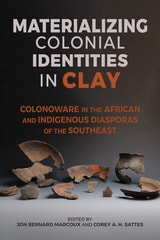
Colonoware was most likely produced by African and Indigenous potters and used by all colonial groups for cooking, serving, and storing food. It formed the foundation of colonial foodways in many settlements across the southeastern United States. Even so, compared with other ceramics from this period, less has been understood about its production and use because of the lack of documentation. This collection of essays fills this gap with valuable, recent archaeological data from which much may be surmised about the interaction among Europeans, Indigenous, and Africans, especially within the contexts of the African and Indigenous slave trade and plantation systems.
The chapters represent the full range of colonoware research: from the beginning to the end of its production, from urban to rural contexts, and from its intraregional variation in the Lowcountry to the broad patterns of colonialism across the early American Southeast. The book summarizes current approaches in colonoware research and how these may bridge the gaps between broader colonial American studies, Indigenous studies, and African Diaspora studies.
A concluding discussion contextualizes the chapters through the perspectives of intersectionality and Black feminist theory, drawing attention to the gendered and racialized meanings embodied in colonoware, and considering how colonialism and slavery have shaped these cultural dimensions and archaeologists’ study of them.

Medgar Evers
Mississippi MartyrMichael Vinson Williams
University of Arkansas Press, 2011
Medicating Race
Heart Disease and Durable Preoccupations with DifferenceAnne Pollock
Duke University Press, 2012
Memoirs of Elleanor Eldridge
Frances H. Whipple
West Virginia University Press, 2013
Memphis Tennessee Garrison
The Remarkable Story of a Black Appalachian WomanAncella R. Bickley
Ohio University Press, 2001
As a black Appalachian woman, Memphis Tennessee Garrison belonged to a demographic category triply ignored by historians.
The daughter of former slaves, she moved to McDowell County, West Virginia, at an early age and died at ninety-eight in Huntington. The coalfields of McDowell County were among the richest seams in the nation. As Garrison makes clear, the backbone of the early mining work force—those who laid the railroad tracks, manned the coke ovens, and dug the coal—were black miners. These miners and their families created communities that became the centers of the struggle for unions, better education, and expanded civil rights. Memphis Tennessee Garrison, an innovative teacher, administrative worker at U.S. Steel, and vice president of the National Board of the NAACP at the height of the civil rights struggle (1963-66), was involved with all of these struggles.
In many ways, this oral history, based on interview transcripts, is the untold and multidimensional story of African American life in West Virginia, as seen through the eyes of a remarkable woman. She portrays a courageous people who organize to improve their working conditions, send their children to school and then to college, own land, and support a wide range of cultural and political activities.
Men, Mobs, and Law
Anti-Lynching and Labor Defense in U.S. Radical HistoryRebecca N. Hill
Duke University Press, 2008
As Hill explains, labor defense activists first drew on populist logic, opposing the masses to the state in their campaigns, while anti-lynching activists went in the opposite direction, castigating “the mob” and appealing to the law. Showing that this difference stems from the different positions of whites and Blacks in the American legal system, Hill’s comparison of anti-lynching organizing and radical labor defenses reveals the conflicts and intersections between antiracist struggle and socialism in the United States.
Message to Our Folks
The Art Ensemble of ChicagoPaul Steinbeck
University of Chicago Press, 2017
In Message to Our Folks, Paul Steinbeck combines musical analysis and historical inquiry to give us the definitive study of the Art Ensemble. In the book, he proposes a new theory of group improvisation that explains how the band members were able to improvise together in so many different styles while also drawing on an extensive repertoire of notated compositions. Steinbeck examines the multimedia dimensions of the Art Ensemble’s performances and the ways in which their distinctive model of social relations kept the group performing together for four decades. Message to Our Folks is a striking and valuable contribution to our understanding of one of the world’s premier musical groups.
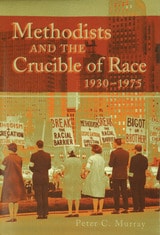
Methodists and the Crucible of Race, 1930-1975
Peter C. Murray
University of Missouri Press, 2004
During the Civil Rights movement, American churches confronted issues of racism that they had previously ignored. No church experienced this confrontation more sharply than the Methodist Church. When Methodists reunited their northern and southern halves in 1939, their new church constitution created a segregated church structure that posed significant issues for Methodists during the Civil Rights movement.
Of the six jurisdictional conferences that made up the Methodist Church, only one was not based on a geographic region: the Central Jurisdiction, a separate conference for “all Negro annual conferences.” This Jim Crow arrangement humiliated African American Methodists and embarrassed their liberal white allies within the church. The Supreme Court’s Brown v. Board of Education decision awakened many white Methodists from their complacent belief that the church could conform to the norms of the South without consequences among its national membership.
Murray places the struggle of the Methodist Church within the broader context of the history of race relations in the United States. He shows how the effort to destroy the barriers in the church were mirrored in the work being done by society to end segregation. Immensely readable and free of jargon, Methodists and the Crucible of Race, 1930–1975, will be of interest to a broad audience, including those interested in the Civil Rights movement and American church history.
Miss Muriel and Other Stories
Ann Petry, foreword by Jamilah Lemieux
Northwestern University Press, 2017
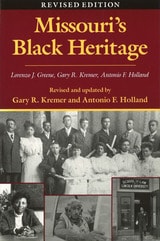
Missouri's Black Heritage, Revised Edition
Gary R. Kremer & Antonio F. Holland & With a Personal Reminiscence by Lorenzo J. Greene
University of Missouri Press, 1993
Originally written in 1980 by the late Lorenzo J. Greene, Gary R. Kremer, and Antonio F. Holland, Missouri's Black Heritage remains the only book-length account of the rich and inspiring history of the state's African American population. It has now been revised and updated by Kremer and Holland, incorporating the latest scholarship into its pages. This edition describes in detail the struggles faced by many courageous African Americans in their efforts to achieve full civil and political rights against the greatest of odds.
Documenting the African American experience from the horrors of slavery through present-day victories, the book touches on the lives of people such as John Berry Meachum, a St. Louis slave who purchased his own freedom and then helped countless other slaves gain emancipation; Hiram Young, a Jackson County free black whose manufacturing of wagons for Sante Fe Trail travelers made him a legendary figure; James Milton Turner, who, after rising from slavery to become one of the best-educated blacks in Missouri, worked with the Freedmen's Bureau and the State Department of Education to establish schools for blacks all over the state after the Civil War; and Annie Turnbo Malone, a St. Louis entrepreneur whose business skills made her one of the state's wealthiest African Americans in the early twentieth century.
A personal reminiscence by the late Lorenzo J. Greene, a distinguished African American historian whom many regard as one of the fathers of black history, offers a unique view of Missouri's racial history and heritage.
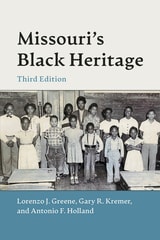
Missouri’s Black Heritage, Third Edition
Lorenzo J. Greene
University of Missouri Press, 2026
Originally written in 1980 by the Lorenzo J. Greene, Gary R. Kremer, and Antonio F. Holland and revised and updated in 1993 by Kremer and Holland, Missouri's Black Heritage, now in a greatly expanded third edition, remains the only book-length account of the rich and inspiring history of the Show-Me State's African American population. With more than one hundred photographs, most of them new to this third edition, Kremer and Holland incorporate the latest scholarship as they describe in detail the struggles many Black Missourians continue to face in the aftermath of their ancestors’ arduous and courageous struggles since Emancipation to achieve their full civil and political rights as U.S. citizens.
Documenting the African American experience from the horrors of slavery through the great victories over many generations, the book touches on the lives of people such as John Berry Meachum, a St. Louis slave who purchased his own freedom and then helped countless other slaves gain emancipation; Hiram Young, a Jackson County free black whose manufacturing of wagons for Sante Fe Trail travelers made him a legendary figure; James Milton Turner, who, after rising from slavery to become one of the best-educated blacks in Missouri worked with the Freedmen's Bureau and the State Department of Education to establish schools for blacks all over the state after the Civil War; and Annie Turnbo Malone, a St. Louis entrepreneur whose business skills made her one of the state's wealthiest African Americans in the early twentieth century.
A personal reminiscence by the late Lorenzo J. Greene, a distinguished African American historian whom many regard as one of the fathers of Black history, offers a unique view of Missouri's racial history and heritage, as do Kremer and Holland, in their new preface and introduction to the third edition.
Missouri’s War
The Civil War in DocumentsSilvana R. Siddali
Ohio University Press, 2009
Winner of a 2011 “Distinguished Achievement in Literature” award, Missouri Humanities Council
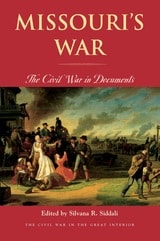
Civil War Missouri stood at the crossroads of America. As the most Southern-leaning state in the Middle West, Missouri faced a unique dilemma. The state formed the gateway between east and west, as well as one of the borders between the two contending armies. Moreover, because Missouri was the only slave state in the Great Interior, the conflicts that were tearing the nation apart were also starkly evident within the state. Deep divisions between Southern and Union supporters, as well as guerrilla violence on the western border, created a terrible situation for civilians who lived through the attacks of bushwhackers and Jayhawkers.
The documents collected in Missouri's War reveal what factors motivated Missourians to remain loyal to the Union or to fight for the Confederacy, how they coped with their internal divisions and conflicts, and how they experienced the end of slavery in the state. Private letters, diary entries, song lyrics, official Union and Confederate army reports, newspaper editorials, and sermons illuminate the war within and across Missouri's borders.
Missouri's War also highlights the experience of free and enslaved African Americans before the war, as enlisted Union soldiers, and in their effort to gain rights after the end of the war. Although the collection focuses primarily on the war years, several documents highlight both the national sectional conflict that led to the outbreak of violence and the effort to reunite the conflicting forces in Missouri after the war.
Mobilizing Public Opinion
Black Insurgency and Racial Attitudes in the Civil Rights EraTaeku Lee
University of Chicago Press, 2002
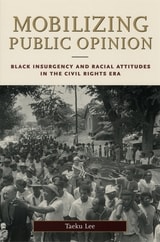
Ultimately, Mobilizing Public Opinion is a timely, cautionary tale about how we view public opinion and a compelling testament to the potential power of ordinary citizens.
Modernism and the Harlem Renaissance
Houston A. Baker Jr.
University of Chicago Press, 1989
Mojo Workin'
The Old African American Hoodoo SystemKatrina Hazzard-Donald
University of Illinois Press, 2013
A bold reconsideration of Hoodoo belief and practice
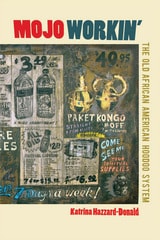
Katrina Hazzard-Donald explores African Americans' experience and practice of the herbal, healing folk belief tradition known as Hoodoo. She examines Hoodoo culture and history by tracing its emergence from African traditions to religious practices in the Americas. Working against conventional scholarship, Hazzard-Donald argues that Hoodoo emerged first in three distinct regions she calls "regional Hoodoo clusters" and that after the turn of the nineteenth century, Hoodoo took on a national rather than regional profile. The spread came about through the mechanism of the "African Religion Complex," eight distinct cultural characteristics familiar to all the African ethnic groups in the United States.
The first interdisciplinary examination to incorporate a full glossary of Hoodoo culture, Mojo Workin': The Old African American Hoodoo System lays out the movement of Hoodoo against a series of watershed changes in the American cultural landscape. Hazzard-Donald examines Hoodoo material culture, particularly the "High John the Conquer" root, which practitioners employ for a variety of spiritual uses. She also examines other facets of Hoodoo, including rituals of divination such as the "walking boy" and the "Ring Shout," a sacred dance of Hoodoo tradition that bears its corollaries today in the American Baptist churches. Throughout, Hazzard-Donald distinguishes between "Old tradition Black Belt Hoodoo" and commercially marketed forms that have been controlled, modified, and often fabricated by outsiders; this study focuses on the hidden system operating almost exclusively among African Americans in the Black spiritual underground.
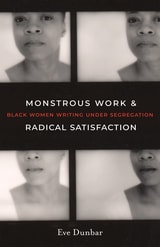
Monstrous Work and Radical Satisfaction
Black Women Writing under SegregationEve Dunbar
University of Minnesota Press, 2024
Radical Black feminist refusal through the works of mid-twentieth-century African American women writers
Monstrous Work and Radical Satisfaction offers new and insightful readings of African American women’s writings in the 1930s–1950s, illustrating how these writers centered Black women’s satisfaction as radical resistance to the false and incomplete promise of liberal racial integration. Eve Dunbar examines the writings of Ann Petry, Dorothy West, Alice Childress, and Gwendolyn Brooks to show how these women explored self-fulfillment over normative and sanctioned models of national belonging.
Paying close attention to literary moments of disruption, miscommunication, or confusion rather than ease, assimilation, or mutual understanding around race and gender, Dunbar tracks these writers’ dissatisfaction with American race relations. She shows how Petry, West, Childress, and Brooks redeploy the idea of monstrous work to offer potential modalities for registering Black women’s capacity to locate satisfaction within the domestic and interpersonal.
While racial integration may satisfy the national idea of equality and inclusion, it has not met the long-term needs of Black people’s quest for equity. Dunbar responds, demonstrating how these mid-century women offer new blueprints for Black life by creating narrative models for radical satisfaction: Black women’s completeness, joy, and happiness outside the bounds of normative racial inclusion.
More Than Black
Multiracial Identity & New Racial OrderG. Reginald Daniel
Temple University Press, 2001
Tracing the centuries-long evolution of Eurocentrism, a concept geared to protecting white racial purity and social privilege, Daniel shows how race has been constructed and regulated in the United States. The so-called one-drop rule (i.e., hypodescent) obligated individuals to identify as black or white, in effect erasing mixed-race individuals from the social landscape. For most of our history, many mixed-race individuals of African American descent have attempted to acquire the socioeconomic benefits of being white by forming separate enclaves or "passing." By the 1990s, however, interracial marriages became increasingly common, and multiracial individuals became increasingly political, demanding institutional changes that would recognize the reality of multiple racial backgrounds and challenging white racial privilege.
More Than Black? regards the crumbling of the old racial order as an opportunity for substantially more than an improvement in U.S. race relations; it offers no less than a radical transformation of the nation's racial consciousness and the practice of democracy.
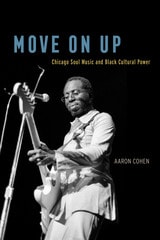
Move On Up
Chicago Soul Music and Black Cultural PowerAaron Cohen
University of Chicago Press, 2019
A Booklist Top 10 Arts Book of 2019
A No Depression Top Music Book of 2019
Curtis Mayfield. The Chi-Lites. Chaka Khan. Chicago’s place in the history of soul music is rock solid. But for Chicagoans, soul music in its heyday from the 1960s to the 1980s was more than just a series of hits: it was a marker and a source of black empowerment. In Move On Up, Aaron Cohen tells the remarkable story of the explosion of soul music in Chicago. Together, soul music and black-owned businesses thrived. Record producers and song-writers broadcast optimism for black America’s future through their sophisticated, jazz-inspired productions for the Dells and many others. Curtis Mayfield boldly sang of uplift with unmistakable grooves like “We’re a Winner” and “I Plan to Stay a Believer.” Musicians like Phil Cohran and the Pharaohs used their music to voice Afrocentric philosophies that challenged racism and segregation, while Maurice White of Earth, Wind, and Fire and Chaka Khan created music that inspired black consciousness. Soul music also accompanied the rise of African American advertisers and the campaign of Chicago’s first black mayor, Harold Washington, in 1983. This empowerment was set in stark relief by the social unrest roiling in Chicago and across the nation: as Chicago’s homegrown record labels produced rising stars singing songs of progress and freedom, Chicago’s black middle class faced limited economic opportunities and deep-seated segregation, all against a backdrop of nationwide deindustrialization.
Drawing on more than one hundred interviews and a music critic’s passion for the unmistakable Chicago soul sound, Cohen shows us how soul music became the voice of inspiration and change for a city in turmoil.

Moving Against the System
The 1968 Congress of Black Writers and the Shaping of Global Black ConsciousnessEdited by David Austin
Pluto Press, 2018
Against a backdrop of widespread racism in the West and ongoing colonialism and imperialism in the Global South, this group of activists, writers, and political figures gathered to discuss the history and struggles of people of African descent and the meaning of black power.
For the first time since 1968, David Austin brings alive the speeches and debates of the most important international gathering of black radicals of the era. With never-before-seen texts from Stokely Carmichael, Walter Rodney and C.L.R. James, these documents will prove invaluable to anyone interested in black radical thought and political activism of the 1960s.

Mu, 49 Marks of Abolition
Sora Y. Han
Duke University Press, 2024
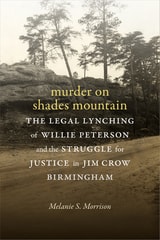
Murder on Shades Mountain
The Legal Lynching of Willie Peterson and the Struggle for Justice in Jim Crow BirminghamMelanie S. Morrison
Duke University Press, 2018
In Murder on Shades Mountain Melanie S. Morrison tells the gripping and tragic story of the attack and its aftermath—events that shook Birmingham to its core. Having first heard the story from her father—who dated Nell's youngest sister when he was a teenager—Morrison scoured the historical archives and documented the black-led campaigns that sought to overturn Peterson's unjust conviction, spearheaded by the NAACP and the Communist Party. The travesty of justice suffered by Peterson reveals how the judicial system could function as a lynch mob in the Jim Crow South. Murder on Shades Mountain also sheds new light on the struggle for justice in Depression-era Birmingham. This riveting narrative is a testament to the courageous predecessors of present-day movements that demand an end to racial profiling, police brutality, and the criminalization of black men.

Music in Black American Life, 1600-1945
A University of Illinois Press AnthologyCompiled by Laurie Matheson. Introduction by Sandra Jean Graham
University of Illinois Press, 2022
Eclectic and essential, Music in Black American Life, 1600–1945 offers specialists and students alike a gateway to the history and impact of Black music in the United States.
Contributors: R. Reid Badger, Rae Linda Brown, Samuel A. Floyd Jr., Sandra Jean Graham, Jeffrey Magee, Robert M. Marovich, Harriet Ottenheimer, Eileen Southern, Katrina Dyonne Thompson, Stephen Wade, and Charles Wolfe

Music in Black American Life, 1945-2020
A University of Illinois Press AnthologyCompiled by Laurie Matheson. Introduction by Tammy L. Kernodle
University of Illinois Press, 2022
Part sourcebook and part survey of historic music scholarship, Music in Black American Life, 1945–2020 collects groundbreaking work that redefines our view of Black music and its place in American music history.
Contributors: Nelson George, Wayne Everett Goins, Claudrena N. Harold, Eileen M. Hayes, Loren Kajikawa, Robin D. G. Kelley, Tammy L. Kernodle, Cheryl L. Keyes, Gwendolyn Pough, Bernice Johnson Reagon, Mark Tucker, and Sherrie Tucker
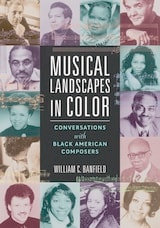
Musical Landscapes in Color
Conversations with Black American ComposersWilliam C. Banfield
University of Illinois Press, 2023
Composers featured: Michael Abels, H. Leslie Adams, Lettie Beckon Alston, Thomas J. Anderson, Dwight Andrews, Regina Harris Baiocchi, David Baker, William C. Banfield, Ysaye Maria Barnwell, Billy Childs, Noel DaCosta, Anthony Davis, George Duke, Leslie Dunner, Donal Fox, Adolphus Hailstork, Jester Hairston, Herbie Hancock, Jonathan Holland, Anthony Kelley, Wendell Logan, Bobby McFerrin, Dorothy Rudd Moore, Jeffrey Mumford, Gary Powell Nash, Stephen Newby, Coleridge-Taylor Perkinson, Michael Powell, Patrice Rushen, George Russell, Kevin Scott, Evelyn Simpson-Curenton, Hale Smith, Billy Taylor, Frederick C. Tillis, George Walker, James Kimo Williams, Julius Williams, Tony Williams, Olly Wilson, and Michael Woods

Mutual Reflections
Jews and Blacks in American ArtHeyd, Milly
Rutgers University Press, 1998
Mutual Reflections is the first book to examine this many-layered relationship through its visual dimension. Milly Heyd investigates how artists of both backgrounds have viewed each other during the last hundred years-how the visual languages and the-matic choices of their art have reflected changing concerns from symbiosis to disillusionment. She explores a wide range of artistic mediums: painting, sculpture, cartoons, comic strips, and installations. Interviews with artists provide additional insight. The post modern discourse poses questions problematizing ethnic and racial stereotyping.
As Heyd states, when an artist of one group investigates the other group, that person is embarking on a journey of self-discovery. And while that journey can lead to disillusionment and criticism, the artist's vision-and final work of art-very often can help put all of us on our own paths of self-discovery.
My Culture, My Color, My Self
Heritage, Resilience, and Community in the Lives of Young AdultsToby S. Jenkins
Temple University Press, 2013
In her vibrant ethnography My Culture, My Color, My Self, Toby Jenkins provides engrossing, in-depth interviews and poignant snapshots of young adults talking about their lives and culture. She recounts D'Leon's dream to become a positive example for African American men, and Francheska describing how her late mother inspired her appreciation of her Boricua heritage. In these and other portraits, Jenkins considers the role that cultural education and engagement plays in enhancing educational systems, neighborhood programs, and community structures.
My Culture, My Color, My Self also features critical essays that focus on broader themes such as family bonds, education, and religion. Taken together, Jenkins shows how people of color use their culture as both a politic of social survival and a tool for social change.
My Father's Name
A Black Virginia Family after the Civil WarLawrence P. Jackson
University of Chicago Press, 2012
My Father’s Name is a family story full of twists and turns—and one of haunting familiarity to many Americans, who may question whether the promises of emancipation have ever truly been fulfilled. It is also a resolute look at the duties that come with reclaiming and honoring Americans who survived slavery and a thoughtful meditation on its painful and enduring history.
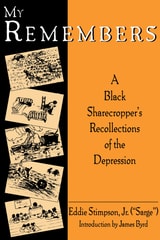
My Remembers
A Black Sharecropper's Recollections of the DepressionEddie Stimpson Jr.
University of North Texas Press, 1996