Results by title
239 books match the query 'Agriculture' and 4 start with m

Madrid Codex
New Approaches to Understanding an Ancient Maya ManuscriptGabrielle Vail
University Press of Colorado, 2004
Contributors include: Harvey M. Bricker, Victoria R. Bricker, John F. Chuchiak IV, Christine L. Hernández, Bryan R. Just, Merideth Paxton, and John Pohl. Additional support for this publication was generously provided by the Eugene M. Kayden Fund at the University of Colorado.
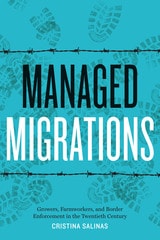
Managed Migrations
Growers, Farmworkers, and Border Enforcement in the Twentieth CenturyBy Cristina Salinas
University of Texas Press, 2018
2020 National Association for Chicana and Chicano Studies (NACCS) Book Award Winner
Honorable Mention, Ramirez Family Award for Most Significant Scholarly Book, Texas Institute of Letters, 2019
Managed Migrations examines the concurrent development of a border agricultural industry and changing methods of border enforcement in the Rio Grande Valley of Texas during the past century.
Needed at one moment, scorned at others, Mexican agricultural workers have moved back and forth across the US–Mexico border for the past century. In South Texas, Anglo growers’ dreams of creating a modern agricultural empire depended on continuous access to Mexican workers. While this access was officially regulated by immigration laws and policy promulgated in Washington, DC, in practice the migration of Mexican labor involved daily, on-the-ground negotiations among growers, workers, and the US Border Patrol. In a very real sense, these groups set the parameters of border enforcement policy.
Managed Migrations examines the relationship between immigration laws and policy and the agricultural labor relations of growers and workers in South Texas and El Paso during the 1940s and 1950s. Cristina Salinas argues that immigration law was mainly enacted not in embassies or the halls of Congress but on the ground, as a result of daily decisions by the Border Patrol that growers and workers negotiated and contested. She describes how the INS devised techniques to facilitate high-volume yearly deportations and shows how the agency used these enforcement practices to manage the seasonal agricultural labor migration across the border. Her pioneering research reveals the great extent to which immigration policy was made at the local level, as well as the agency of Mexican farmworkers who managed to maintain their mobility and kinship networks despite the constraints of grower paternalism and enforcement actions by the Border Patrol.

Michigan Family Farms and Farm Buildings
Landscapes of the Heart and MindHemalata Dandekar
University of Michigan Press, 2010
Eight family-farm case studies display farm buildings' relationship to the land they sit on, their function on the farm, the materials they're made with, the farm enterprises themselves, and the families who own them. Photographs, plans, elevations, and sections of typical, exemplary traditional farm buildings show the aesthetic and architectural qualities of those types of buildings across the state.
The ways in which the buildings serve the productive activities of the farm, shelter and nourish the people and livestock, yield a living, and enable the aspirations of farm people are shown in the words and photographs of the farmers themselves. The buildings form a window into the lives of Michigan's family farms and into the hearts and minds of the people who have lived and worked in them their entire lives.
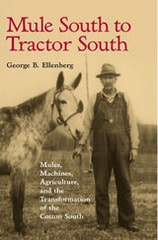
Mule South to Tractor South
Mules, Machines, and the Transformation of the Cotton SouthGeorge B. Ellenberg
University of Alabama Press, 2013
The adoption of the mule as the major agricultural resource in the American South and its later displacement by the mechanical tractor.
The author describes the adoption of the mule as the major agricultural resource in the American South and its later displacement by the mechanical tractor. After describing the surprising slowness of southern farmers to realize the superiority of the mule over the horse for agricultural labor, Ellenberg strives to capture the symbiosis that emerged between animal and man to illuminate why and how the mule became a standard feature in Southern folk culture.
Having been slow to adopt the mule, southern farmers were then reluctant to set it aside in favor of the tractor. Ellenberg describes the transformation as the tractor gradually displaced the mule and the role of the U.S. Department of Agriculture in this process.
The work not only becomes a survey of the development of southern agriculture as revealed through an examination of this premier work animal but also follows the emergence of the animal as a cultural icon, as it figures in southern literature, folklore, and music.