Results by title
240 books match the query 'Agriculture & Food' and 19 start with m
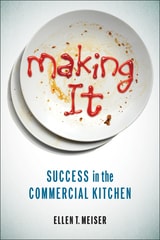
Making It
Success in the Commercial KitchenEllen T. Meiser
Rutgers University Press, 2025
Making It explores how the career path of restaurant workers depends on their accumulation of kitchen capital, a cultural asset based not only on their ability to cook but also on how well they can fit into the workplace culture and negotiate its hierarchical structures. After spending 120 hours working in a restaurant kitchen and interviewing fifty chefs and cooks from fine-dining establishments and greasy-spoon diners across the country, sociologist Ellen Meiser discovers many strategies for accumulating kitchen capital. For some, it involves education and the performance of expertise; others climb the ranks by controlling their own emotions or exerting control over coworkers. Making It offers a close and personal look at how knowledge, power, and interpersonal skills come together to determine who succeeds and who fails in the high-pressure world of the restaurant kitchen.
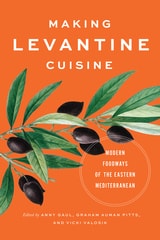
Making Levantine Cuisine
Modern Foodways of the Eastern MediterraneanEdited by Anny Gaul, Graham Auman Pitts, and Vicki Valosik
University of Texas Press, 2021
Melding the rural and the urban with the local, regional, and global, Levantine cuisine is a mélange of ingredients, recipes, and modes of consumption rooted in the Eastern Mediterranean. Making Levantine Cuisine provides much-needed scholarly attention to the region’s culinary cultures while teasing apart the tangled histories and knotted migrations of food. Akin to the region itself, the culinary repertoires that constitute Levantine cuisine endure and transform—are unified but not uniform. This book delves into the production and circulation of sugar, olive oil, and pistachios; examines the social origins of kibbe, Adana kebab, shakshuka, falafel, and shawarma; and offers a sprinkling of family recipes along the way. The histories of these ingredients and dishes, now so emblematic of the Levant, reveal the processes that codified them as national foods, the faulty binaries of Arab or Jewish and traditional or modern, and the global nature of foodways. Making Levantine Cuisine draws from personal archives and public memory to illustrate the diverse past and persistent cultural unity of a politically divided region.
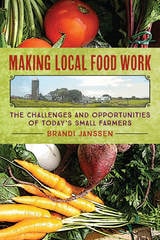
Making Local Food Work
The Challenges and Opportunities of Today's Small FarmersBrandi Janssen
University of Iowa Press, 2017
By listening to and working alongside people trying to build a local food system in Iowa, Janssen uncovers the complex realities of making it work. Although the state is better known for its vast fields of conventionally grown corn and soybeans, it has long boasted a robust network of small, diverse farms, community supported agriculture enterprises, and farmers’ markets. As she picks tomatoes, processes wheatgrass, and joins a parents’ committee trying to buy local lettuce for a school lunch, Janssen asks how small farmers and CSA owners deal with farmers’ market regulations, neighbors who spray pesticides on crops or lawns, and sanitary regulations on meat processing and milk production. How can they meet the needs of large buyers like school districts? Who does the hard work of planting, weeding, harvesting, and processing? Is local food production benefitting rural communities as much as advocates claim?
In answering these questions, Janssen displays the pragmatism and level-headedness one would expect of the heartland, much like the farmers and processors profiled here. It’s doable, she states, but we’re going to have to do more than shop at our local farmers’ market to make it happen. This book is an ideal introduction to what local food means today and what it might be tomorrow.
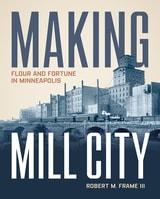
Making Mill City
Flour and Fortune in MinneapolisRobert M. Frame III
University of Minnesota Press, 2026
A richly illustrated history of the flour factories that transformed the milling industry worldwide—and forever changed the culture and architecture of Minneapolis
Among the most consequential advances of the Industrial Revolution was the invention of the modern roller mill, which sent the traditional millstone into obsolescence and fundamentally changed the production of a key ingredient to feeding the world. The culture and landscape of its hometown, Minneapolis, Minnesota, was altered as well, and Making Mill City tells the story of how revolutionary technologies originating at St. Anthony Falls on the Mississippi River put Minneapolis on the map and cemented its global status as “Mill City.”
With deep historical detail and abundant illustrations, Robert M. Frame III charts the dramatic transformation of Minneapolis milling—and urban life—between the early 1870s and 1920s. Two machines propelled this change: the middlings purifier and the modern roller mill. Enabling millers to grind hard Upper Midwestern spring wheat, these innovations gave rise to the “mammoth mills” and ever-expanding flour factories that would soon dominate the Minneapolis riverfront. Prominent entrepreneurs like those who gave their names to the Washburn and Pillsbury A Mills were significant, but Frame foregrounds the crucial roles of the millers, millwrights, and engineers who designed and equipped the massive new factories, as well as the editor of the legendary weekly trade publication Northwestern Miller, to paint a picture of the vibrant and diverse culture that grew around this industrial phenomenon.
A rich narrative describing how Minneapolis became the largest producer and exporter of wheat flour for more than fifty years, Making Mill City captures a critical chapter in the history of the city. Art and architecture inspired by mills and millers stand today as National Historic Landmarks, and the development and success of the current thriving metropolis have strong foundations in its milling history.
Meanings of Maple
An Ethnography of SugaringMichael Lange
University of Arkansas Press, 2017
Readers will go deep into a Vermont sugar bush and its web of plastic tubes, mainline valves, and collection tanks. They will visit sugarhouses crammed with gas evaporators and reverse-osmosis machines. And they will witness encounters between sugar makers and the tourists eager to invest Vermont with mythological fantasies of rural simplicity.
So much more than a commodity study, Meanings of Maple frames a new approach for evaluating the broader implications of iconic foodways, and it will animate conversations in food studies for years to come.
Meat Makes People Powerful
A Global History of the Modern EraWilson J. Warren
University of Iowa Press, 2018
From large-scale cattle farming to water pollution, meat— more than any other food—has had an enormous impact on our environment. Historically, Americans have been among the most avid meat-eaters in the world, but long before that meat was not even considered a key ingredient in most civilizations’ diets. Labor historian Wilson Warren, who has studied the meat industry for more than a decade, provides this global history of meat to help us understand how it entered the daily diet, and at what costs and benefits to society.
Spanning from the nineteenth century to current and future trends, Warren walks us through the economic theory of food, the discovery of protein, the Japanese eugenics debate around meat, and the environmental impact of livestock, among other topics. Through his comprehensive, multifaceted research, he provides readers with the political, economic, social, and cultural factors behind meat consumption over the last two centuries. With a special focus on East Asia, Meat Makes People Powerful reveals how national governments regulated and oversaw meat production, helping transform virtually vegetarian cultures into major meat consumers at record speed.
As more and more Americans pay attention to the sources of the meat they consume, Warren’s compelling study will help them not only better understand the industry, but also make more informed personal choices. Providing an international perspective that will appeal to scholars and nutritionists alike, this timely examination will forever change the way you see the food on your plate.
Meat!
A Transnational AnalysisSushmita Chatterjee and Banu Subramaniam, editors
Duke University Press, 2021
Contributors. Neel Ahuja, Irina Aristarkhova, Sushmita Chatterjee, Mel Y. Chen, Kim Q. Hall, Jennifer A. Hamilton, Anita Mannur, Elspeth Probyn, Parama Roy, Banu Subramaniam, Angela Willey, Psyche Williams-Forson
Meat, Modernity, and the Rise of the Slaughterhouse
Paula Young Lee
University of New Hampshire Press, 2008
Contributors include: Dorothee Brantz, Kyri Claflin, Jared Day, Roger Horowitz, Lindgren Johnson, Ian MacLachlan, Christopher Otter, Dominic Pacyga, Richard Perren, Jeffrey Pilcher, and Sydney Watts.
Mexican-Origin Foods, Foodways, and Social Movements
Decolonial PerspectivesDevon Peña
University of Arkansas Press, 2017
This collection of new essays offers groundbreaking perspectives on the ways that food and foodways serve as an element of decolonization in Mexican-origin communities.
The writers here take us from multigenerational acequia farmers, who trace their ancestry to Indigenous families in place well before the Oñate Entrada of 1598, to tomorrow’s transborder travelers who will be negotiating entry into the United States. Throughout, we witness the shifting mosaic of Mexican-origin foods and foodways in the fields, gardens, and kitchen tables from Chiapas to Alaska.
Global food systems are also considered from a critical agroecological perspective, including the ways colonialism affects native biocultural diversity, ecosystem resilience, and equality across species, human groups, and generations.
Mexican-Origin Foods, Foodways, and Social Movements is a major contribution to the understanding of the ways that Mexican-origin peoples have resisted and transformed food systems. It will animate scholarship on global food studies for years to come.
Mezcal in Oaxaca
A Craft Spirit for the Global MarketplaceRonda L. Brulotte
University of Texas Press, 2025
An ethnography of mezcal and how it has become a global, "artisanal" good.
Mezcal is booming. Once considered a peasant drink—the rough, lowbrow cousin of the more refined tequila—the smoky spirit is now prized by connoisseurs the world over. It is also hailed as a savior of Oaxaca, powering a craft industry that can uphold rural economies and Indigenous traditions.
Ronda L. Brulotte traces mezcal’s swift rise and its effects on communities that have distilled and enjoyed the beverage for generations. Only in the late 1990s did mezcal begin to escape its longstanding associations with Indigenous and working-class life, even as these very qualities supply the “authenticity” that elite consumers crave. Through a detailed ethnography of the spirits industry in Oaxaca, Brulotte compares the ideal of the artisanal economy with the reality of participation in global markets. Her findings—focused on tourism-led development and gentrification, the exploitation of women and smallholders, and swelling regional migration pressures—raise troubling questions about the ecological and social sustainability of a new craft imaginary that rebrands rustic products as luxury goods.
Midwest Maize
How Corn Shaped the U.S. HeartlandCynthia Clampitt
University of Illinois Press, 2015

Midwestern Native Shrubs and Trees
Gardening Alternatives to Nonnative Species: An Illustrated GuideCharlotte Adelman, Bernard L. Schwartz
Ohio University Press, 2016

Milk Money
Cash, Cows, and the Death of the American Dairy FarmKirk Kardashian
Brandeis University Press, 2025
The dairy business is at the heart of the culture and economy of Vermont, just as it is in many other states. That fact meant little to Kirk Kardashian until he started taking his daughter to daycare at a dairy farm a few miles from his Vermont home. The farm had been owned by the same family for generations but struggled to make ends meet in a market where retail milk prices have held steady for decades while the prices paid to farmers have plummeted. Suddenly, the abstractions of economics and commodities markets were replaced by the flesh and blood of a farm family whom he greeted every day.
In the tradition of Michael Pollan and Eric Schlosser, Kardashian asks whether it is right that family farmers in America should toil so hard, produce a food so wholesome and so popular, and still lose money. His investigation uncovers the hidden forces behind dairy farm consolidation and explains why milk—a staple subject to both government oversight and industry collusion—has proven so tricky to stabilize, even as scores of small dairy farms close. This new edition brings the story up to date, as farmers grapple with an ever-changing landscape that includes shifting consumer preferences, immigration issues, climate change, and bird flu.

Milk Shake
Abundance and Loss in America’s DairylandGarbo Wedde
Wisconsin Historical Society Press, 2027
The story of how today’s dairy farmers are navigating a historic crossroads of agriculture and rural life in a rapidly changing world.
For generations, the dairy farmer has embodied the character, resilience, and values of the Midwest. Yet between 2005 and 2020, Wisconsin—known as America’s Dairyland—lost half of its dairy farms, marking one of the most profound economic and cultural transformations in its history. In Milk Shake: Abundance and Loss in America’s Dairyland, journalist Garbo Wedde delivers a thorough and emotionally resonant portrait of the farm families living through this time of change in rural life.
Drawing on extensive research and candid conversations with dozens of dairy farmers and industry stakeholders, Wedde looks beyond statistics to reveal the human stories behind the decline of the small family dairy farm. At the heart of the book are four Wisconsin farm families grappling with an uncertain future and how to respond: one leaves the industry, one embraces automation, one finds hope in a new generation willing to carry on the work, and one faces mounting financial strain that culminates in tragedy.
Interwoven among these narratives is a penetrating examination of the rise of large-scale industrial farms, their economic and environmental impacts, and the ways communities are responding. Wedde also explores the political, economic, demographic, and cultural forces reshaping dairy farming, from environmental regulation and labor shortages to gerrymandering, changing consumer preferences, and growing consolidation of small farms into agribusiness.
Richly observed scenes—from dairy breakfasts and farm auctions to public hearings on concentrated animal feeding operations (CAFOs)—bring readers inside a world that is both quintessentially American and increasingly endangered. Part social history and part elegy, Milk Shake captures a pivotal moment in America’s Dairyland while exploring questions that reach far beyond Wisconsin: What is lost when family farms disappear, and what does that loss mean for the communities, traditions, and values they sustain?
Milking in the Shadows
Migrants and Mobility in America’s DairylandKeller, Julie C
Rutgers University Press, 2019
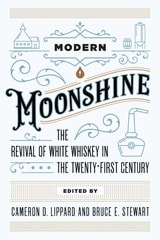
Modern Moonshine
The Revival of White Whiskey in the Twenty-First CenturyCameron D. Lippard
West Virginia University Press, 2019
The craft of making moonshine—an unaged white whiskey, often made and consumed outside legal parameters—nearly went extinct in the late twentieth century as law enforcement cracked down on illicit producers, and cheaper, lawful alcohol became readily available. Yet the twenty-first century has witnessed a resurgence of artisanal distilling, as both connoisseurs and those reconnecting with their heritage have created a vibrant new culture of moonshine. While not limited to Appalachia, moonshine is often entwined with the region in popular understandings.
The first interdisciplinary examination of the legal moonshine industry, Modern Moonshine probes the causes and impact of the so-called moonshine revival. What does the moonshine revival tell us about our national culture? How does it shape the image of Appalachia and rural America? Focusing mostly on southern Appalachia, the book’s eleven essays chronicle such popular figures as Popcorn Sutton and explore how and why distillers promote their product as “traditional” and “authentic.” This edited collection draws from scholars across the disciplines of anthropology, history, geography, and sociology to make sense of the legal, social, and historical shifts behind contemporary production and consumption of moonshine, and offers a fresh perspective on an enduring topic of Appalachian myth and reality.
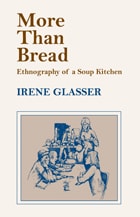
More Than Bread
Ethnography of a Soup KitchenIrene Glasser
University of Alabama Press, 2010
A powerful ethnographic portrait of hunger, dignity, and community in America.
In More than Bread: Ethnography of a Soup Kitchen, sociologist Irene Glasser presents a compelling and deeply human exploration of poverty, hunger, and community through the lens of an American soup kitchen. Drawing on immersive ethnographic research, Glasser moves beyond stereotypes and statistics to examine the daily experiences of individuals who depend on emergency food assistance, as well as the volunteers and staff who work to meet their needs.
Through firsthand observations and personal narratives, the book reveals the complex social relationships, challenges, and acts of resilience that unfold within this vital community institution. Glasser explores how issues such as homelessness, unemployment, inequality, mental health, and social isolation intersect in the lives of those seeking assistance, while also highlighting the dignity and humanity of people often overlooked in public discussions of poverty.
More than Bread invites readers to consider broader questions about social responsibility, public policy, and the effectiveness of charitable responses to human need. A valuable resource for understanding the realities of food insecurity in America, this book offers an informative and compassionate perspective on one of society's most pressing challenges. It is an essential read for students, scholars, social workers, policymakers, nonprofit professionals, and anyone interested in poverty, homelessness, and social justice.
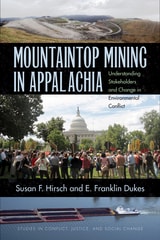
Mountaintop Mining in Appalachia
Understanding Stakeholders and Change in Environmental ConflictSusan F. Hirsch
Ohio University Press, 2014
Residents of the Appalachian coalfields share a history and heritage, deep connections to the land, and pride in their own resilience. These same residents are also profoundly divided over the practice of mountaintop mining—that is, the removal and disposal in nearby valleys of soil and rock in order to reach underlying coal seams. Companies and some miners claim that the practice has reduced energy prices, earned income for shareholders, and provided needed jobs. Opponents of mountaintop mining argue that it poisons Appalachia’s waters and devastates entire communities for the sake of short-term gains.
This conflict is emblematic of many other environmental disputes in the United States and around the world, disputes whose intensity derives not only from economic and environmental stakes but also from competing claims to individual and community identity. Looking beyond the slogans and seemingly irreconcilable differences, however, can reveal deeper causes of conflict, such as flawed institutions, politics, and inequality or the strongly held values of parties for whom compromise is difficult to achieve.
Mountaintop Mining in Appalachia focuses on the people of the region, the people who have the most at stake and have been the most active in trying to shift views and practices. By examining the experiences of these stakeholders and their efforts to effect change, Susan F. Hirsch and E. Franklin Dukes introduce key concepts and theories from the field of conflict analysis and resolution. They provide a compelling case study of how stakeholders challenge governance-as-usual, while offering insight into the causes of conflict over other environmental issues.
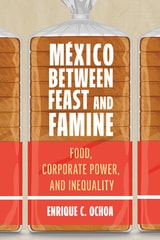
México Between Feast and Famine
Food, Corporate Power, and InequalityEnrique C. Ochoa
University of Arizona Press, 2025
As the birthplace of maize and a celebrated culinary destination, Mexico stands at the crossroads of gastronomic richness and stark social disparities. In México Between Feast and Famine Enrique C. Ochoa unveils the historical and contemporary forces behind Mexico’s polarized food systems.
México Between Feast and Famine provides one of the first comprehensive analyses of Mexico’s food systems and how they reflect the contradictions and inequalities at the heart of Mexico. Ochoa examines the historical roots and contemporary manifestations of neoliberal policies that have reshaped food production, distribution, and consumption in Mexico. Ochoa analyzes the histories of Mexico’s mega food companies, including GRUMA, Bimbo, Oxxo, Aurrera/Walmex, and reveals how corporations have captured the food system at the same time that diet-related diseases have soared. The author not only examines the economic and political dimensions of food production but also interrogates the social and cultural impacts.
As debates around food sovereignty, globalization, and sustainable development intensify globally, México Between Feast and Famine provides a timely analysis that counters conventional narratives about Mexican cuisine. Even as it looks back, this work looks to the future, where more equitable and sustainable food systems prioritize social justice and community well-being.