Results by title
702 books match the query 'America' and 40 start with m
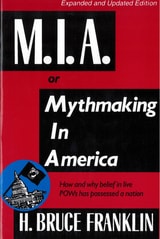
M.I.A. or Mythmaking in America
How and why belief in live POWs has possessed a nationFranklin, H. Bruce
Rutgers University Press, 1992
This paperback edition of M.I.A. or Mythmaking in America adds major new material about Ross Perot's role, the 1991-1992 Senate investigation, and illegal operations authorized by Ronald Reagan.
MAKING THE “AMERICA OF ART”
Cultural Nationalism and Nineteenth-Century Women WritersNaomi Z. Sofer
The Ohio State University Press, 2005
By the end of the 19th century it had become possible for American women to identify themselves as serious Artists. This was a relatively new phenomenon, one that became possible only after American women writers had dismantled the conceptual frameworks that had authorized their artistic production since the early days of the Republic.
Making the “America of Art” demonstrates that beginning in the 1850s, women writers challenged the terms of the Scottish Common Sense philosophy, which had made artistic endeavors acceptable in the new Republic by subordinating aesthetic motivation to moral and educational goals. Harriet Beecher Stowe and Augusta Jane Evans drew on Ruskin to argue for the creation of a religiously based national aesthetic. In the postbellum years Louisa May Alcott, Rebecca Harding Davis, Elizabeth Stuart Phelps, and Constance Fenimore Woolson continued the process in a series of writings that revolved around three central areas of concern: the place of the popular in the realm of high art; the role of the genius; and the legacy of the Civil War.
Sofer significantly revises the history of 19th-century American women’s authorship by detailing the gradual process that produced women writers wholly identified with literary high culture at the century’s end. Sofer argues that, counter to conventional wisdom, American women writers produced a large body of theoretical writing on the central aesthetic questions of the day. Although the writers Sofer studies were finally unable to construct viable new models for women’s artistic production, their attempts to do so are an essential piece of American literary history.

MURDER IN AMERICA
A HISTORYRoger Lane
The Ohio State University Press, 1997
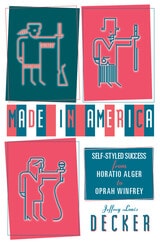
Made In America
Self-Styled Success from Horatio Alger to Oprah WinfreyJeffrey Louis Decker
University of Minnesota Press, 1997
The first look at self-made men and women from a multicultural perspective.
Brings gender, race, and ethnicity to bear on the myth of the “self-made man.”
Made in America presents the first look at self-made men and women from a multicultural perspective. Jeffrey Louis Decker discusses the emergence of self-starters like Andrew Carnegie, Booker T. Washington, Madam C. J. Walker, Younghill Kang, and Lee Iacocca in relation to the changing consumer markets of the twentieth century.Decker locates the new breed of entrepreneurs within the changing rhetoric of personal success, which shifted its emphasis over the past century from religious “character” to psychological “personality” to celebrity “image.” The book concludes by surveying the life stories of enterprising celebrities such as Oprah Winfrey and Arnold Schwarzenegger.Decker analyzes the autobiographical expressions of famous entrepreneurs, from Carnegie to Ross Perot, alongside more marginal ones in order to examine how mainstream society shapes and is shaped by the cultures of subordinate groups. In addition, he looks at the link between self-making and nation-building, and in doing so discovers the origins of another pervasive myth: the “American dream.”Underlying Decker’s study are these questions: What happened to the myth of self-making in America? If it is dead, what caused its demise? If it lives on, what form has it taken? Written in a lucid and engaging style, Made in America uncovers the richness, complexity, and diversity of self-styled success in our time. By bringing gender, race, and ethnicity to bear on the myth of the “self-made man,” this book provides a timely and fascinating reexamination of a traditional area of inquiry in American cultural studies.200 pages Translation rights: University of Minnesota Press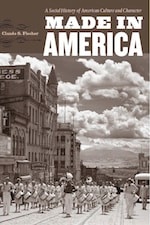
Made in America
A Social History of American Culture and CharacterClaude S. Fischer
University of Chicago Press, 2010
Our nation began with the simple phrase, “We the People.” But who were and are “We”? Who were we in 1776, in 1865, or 1968, and is there any continuity in character between the we of those years and the nearly 300 million people living in the radically different America of today?
With Made in America, Claude S. Fischer draws on decades of historical, psychological, and social research to answer that question by tracking the evolution of American character and culture over three centuries. He explodes myths—such as that contemporary Americans are more mobile and less religious than their ancestors, or that they are more focused on money and consumption—and reveals instead how greater security and wealth have only reinforced the independence, egalitarianism, and commitment to community that characterized our people from the earliest years. Skillfully drawing on personal stories of representative Americans, Fischer shows that affluence and social progress have allowed more people to participate fully in cultural and political life, thus broadening the category of “American” —yet at the same time what it means to be an American has retained surprising continuity with much earlier notions of American character.
Firmly in the vein of such classics as The Lonely Crowd and Habits of the Heart—yet challenging many of their conclusions—Made in America takes readers beyond the simplicity of headlines and the actions of elites to show us the lives, aspirations, and emotions of ordinary Americans, from the settling of the colonies to the settling of the suburbs.
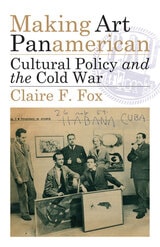
Making Art Panamerican
Cultural Policy and the Cold WarClaire F. Fox
University of Minnesota Press, 2013
Among the buildings on the National Mall in Washington, D.C., only the Pan American Union (PAU) houses an international organization. The first of many anticipated “peace palaces”constructed in the early twentieth century, the PAU began with a mission of cultural diplomacy, and after World War II its Visual Arts Section became a leader in the burgeoning hemispheric arts scene, proclaiming Latin America’s entrée into the international community as it forged connections between a growing base of middle-class art consumers on one hand and concepts of supranational citizenship and political and economic liberalism on the other.
Making Art Panamerican situates the ambitious visual arts programs of the PAU within the broader context of hemispheric cultural relations during the cold war. Focusing on the institutional interactions among aesthetic movements, cultural policy, and viewing publics, Claire F. Fox contends that in the postwar years, the PAU Visual Arts Section emerged as a major transfer point of hemispheric American modernist movements and played an important role in the consolidation of Latin American art as a continental object of study.
As it traces the careers of individual cultural policymakers and artists who intersected with the PAU in the two postwar decades—such as Concha Romero James, Charles Seeger, José Gómez Sicre, José Luis Cuevas, and Rafael Squirru—the book also charts the trajectories and displacements of sectors of the U.S. and Latin American intellectual left during a tumultuous interval that spans the Mexican Revolution, the Spanish Civil War, the New Deal, and the early cold war. Challenging the U.S. bias of conventional narratives about Panamericanism and the postwar shift in critical values from realism to abstraction, Making Art Panamerican illuminates the institutional dynamics that helped shape aesthetic movements in the critical decades following World War II.
Making Sense of the Americas
How Protest Related to America in the 1980s and BeyondEdited by Jan Hansen, Christian Helm, and Frank Reichherzer
Campus Verlag, 2015
Making Social Welfare Policy in America
Three Case Studies since 1950Edward D. Berkowitz
University of Chicago Press, 2020
Written in an accessible style and using a minimum of academic jargon, this book illuminates how three of our most important social welfare programs have come into existence and how they have fared over time.
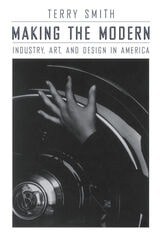
Making the Modern
Industry, Art, and Design in AmericaTerry Smith
University of Chicago Press, 1993
Mapping Nature across the Americas
Edited by Kathleen A. Brosnan & James R. Akerman
University of Chicago Press, 2021
Marginal Sights
Staging the Chinese in AmericaJames S. Moy
University of Iowa Press, 1994
Mark Twain & France
The Making of a New American IdentityPaula Harrington and Ronald Jenn
University of Missouri Press, 2017
While critics have generally dismissed Mark Twain’s relationship with France as hostile, Harrington and Jenn see Twain’s use of the French as a foil to help construct his identity as “the representative American.” Examining new materials that detail his Montmatre study, the carte de visite album, and a chronology of his visits to France, the book offers close readings of writings that have been largely ignored, such as The Innocents Adrift manuscript and the unpublished chapters of A Tramp Abroad, combining literary analysis, socio-historical context and biographical research.

Mark Twain on the Loose
A Comic Writer and the American SelfBruce Michelson
University of Massachusetts Press, 1995
Can we rediscover the wildness in Mark Twain’s humor? Can we understand how that wildness helped make him a national legend and a key figure in the expression of an American self? In Mark Twain on the Loose, Bruce Michelson writes about Twain as a body of literature, as a public personality, and as a myth. Michelson shows that many of Twain’s most ambitious and memorable works, from the very beginning to the end of his career, express a drive for absolute liberation from every social, psychological, and artistic limit.
The outrageous and anarchic sides of Twain play a vital role in his art. But these traits are undervalued even by his admirers, who often favor clean shapes and steady affirmations in Twain’s writing —not the dangerous comic outbreak, or the deep yearning to free the self from every definition and confinement.
Reviewing works from a wide range of Twain’s writings, Michelson brings to light those wild dimensions, their literary consequences, and their cultural importance. He reveals this great author as “the best escape artist in the American canon,” a reflexive, paradoxical, rule-shattering comic genius.
Mark Twain, Unsanctified Newspaper Reporter
James E. Caron
University of Missouri Press, 2008
Before Mark Twain became a national celebrity with his best-selling The Innocents Abroad, he was just another struggling writer perfecting his craft—but already “playin’ hell” with the world. In the first book in more than fifty years to examine the initial phase of Samuel Clemens’s writing career, James Caron draws on contemporary scholarship and his own careful readings to offer a fresh and comprehensive perspective on those early years—and to challenge many long-standing views of Mark Twain’s place in the tradition of American humor.
Tracing the arc of Clemens’s career from self-described “unsanctified newspaper reporter” to national author between 1862 and 1867, Caron reexamines the early and largely neglected writings—especially the travel letters from Hawaii and the letters chronicling Clemens’s trip from California to New York City. Caron connects those sets of letters with comic materials Clemens had already published, drawing on all known items from this first phase of his career—even the virtually forgotten pieces from the San Francisco Morning Call in 1864—to reveal how Mark Twain’s humor was shaped by the sociocultural context and how it catered to his audience’s sensibilities while unpredictably transgressing its standards.
Caron reveals how Sam Clemens’s contemporaries, notably Charles Webb, provided important comic models, and he shows how Clemens not only adjusted to but also challenged the guidelines of the newspapers and magazines for which he wrote, evolving as a comic writer who transmuted personal circumstances into literary art. Plumbing Mark Twain’s cultural significance, Caron draws on anthropological insights from Victor Turner and others to compare the performative aspects of Clemens’s early work to the role of ritual clowns in traditional societies
Brimming with fresh insights into such benchmarks as “Our Fellow Savages of the Sandwich Islands” and “Jim Smiley and His Jumping Frog,” this book is a gracefully written work that reflects both patient research and considered judgment to chart the development of an iconic American talent. Mark Twain, Unsanctified Newspaper Reporter should be required reading for all serious scholars of his work, as well as for anyone interested in the interplay between artistic creativity and the literary marketplace.
Marketing Marianne
French Propaganda in America, 1900-1940Robert J. Young
Rutgers University Press, 2003
Although historians have written extensively on propaganda during Napoleon III’s regime and Vichy, they have virtually ignored the Third Republic. Focusing on Third Republic policies, Marketing Marianne suggests that Americans’ long-lasting love affair with French culture is no accident. Robert J. Young argues that the French used subtle but effective means to influence U.S. policy in Europe. He examines French propaganda efforts and the methods of the French Foreign Ministry, always highlighting the wider cultural and social context of Franco-American relations. French propagandists believed that the steady promotion of their nation as the cultural capital of the world was the best way to foster goodwill among Americans. They slowly recognized the important role the United States played in maintaining the balance of power in Europe. Young argues that the French deliberately exploited America’s sense of cultural inferiority when faced with Europe’s rich heritage, and the rise of new technologies and modern forms of government in France encouraged the development of more sophisticated forms of propaganda.

Marketing the Wilderness
Outdoor Recreation, Indigenous Activism, and the Battle over Public LandsJoseph Whitson
University of Minnesota Press, 2025
How outdoor industry marketing promotes an image of “the wilderness” as an unpeopled haven
Marketing the Wilderness analyzes the relationship between the outdoor recreation industry, public lands in the United States, and Indigenous sovereignty and representation in recreational spaces. Combining social media analysis, digital ethnography, and historical research, Joseph Whitson offers nuanced insights into more than a century of the outdoor recreation industry’s marketing strategies, unraveling its complicity in settler colonialism.
Complicating the narrative of outdoor recreation as a universal good, Whitson introduces the concept of “wildernessing” to describe the physical, legal, and rhetorical production of pristine, empty lands that undergirds the outdoor recreation industry, a process that further disenfranchises Indigenous people from whom these lands were stolen. He demonstrates how companies such as Patagonia and REI align with the mining and drilling industries in their need to remove Indigenous peoples and histories from valuable lands. And he describes the ways Indigenous and decolonial activists are subverting and resisting corporate marketing strategies to introduce new narratives of place.
Through the lens of environmental justice activism, Marketing the Wilderness reconsiders the ethics of recreational land use, advocating for engagement with issues of cultural representation and appropriation informed by Indigenous perspectives. As he discusses contemporary public land advocacy around places such as Bears Ears National Monument, Whitson focuses on the deeply fraught relationship between the outdoor recreation industry and Indigenous communities. Emphasizing the power of the corporate system and its treatment of land as a commodity under capitalism, he shows how these tensions shape the American idea of “wilderness” and what it means to fight for its preservation.
Retail e-book files for this title are screen-reader friendly with images accompanied by short alt text and/or extended descriptions.
Marvelous Possessions
The Wonder of the New WorldStephen Greenblatt
University of Chicago Press, 1991
In a series of innovative readings of travel narratives, judicial documents, and official reports, Stephen Greenblatt shows that the experience of the marvelous, central to both art and philosophy, was cunningly yoked by Columbus and others to the service of colonial appropriation. He argues that the traditional symbolic actions and legal rituals through which European sovereignty was asserted were strained to the breaking point by the unprecedented nature of the discovery of the New World. But the book also shows that the experience of the marvelous is not necessarily an agent of empire: in writers as different as Herodotus, Jean de Léry, and Montaigne—and notably in Mandeville's Travels, the most popular travel book of the Middle Ages—wonder is a sign of a remarkably tolerant recognition of cultural difference.
Marvelous Possession is not only a collection of the odd and exotic through which Stephen Greenblatt powerfully conveys a sense of the marvelous, but also a highly original extension of his thinking on a subject that has occupied him throughout his career. The book reaches back to the ancient Greeks and forward to the present to ask how it is possible, in a time of disorientation, hatred of the other, and possessiveness, to keep the capacity for wonder from being poisoned?
"A marvellous book. It is also a compelling and a powerful one. Nothing so original has ever been written on European responses to 'The wonder of the New World.'"—Anthony Pagden, Times Literary Supplement
"By far the most intellectually gripping and penetrating discussion of the relationship between intruders and natives is provided by Stephen Greenblatt's Marvelous Possessions."—Simon Schama, The New Republic
"For the most engaging and illuminating perspective of all, read Marvelous Possessions."—Laura Shapiro, Newsweek
Marvelous Possessions
The Wonder of the New WorldStephen Greenblatt
University of Chicago Press, 2017

Mayan Drifter
Chicano Poet in the Lowlands of AmericaJuan Herrera
Temple University Press, 1997
Memorial Mania
Public Feeling in AmericaErika Doss
University of Chicago Press, 2010
In the past few decades, thousands of new memorials to executed witches, victims of terrorism, and dead astronauts, along with those that pay tribute to civil rights, organ donors, and the end of Communism have dotted the American landscape. Equally ubiquitous, though until now less the subject of serious inquiry, are temporary memorials: spontaneous offerings of flowers and candles that materialize at sites of tragic and traumatic death. In Memorial Mania, Erika Doss argues that these memorials underscore our obsession with issues of memory and history, and the urgent desire to express—and claim—those issues in visibly public contexts.
Doss shows how this desire to memorialize the past disposes itself to individual anniversaries and personal grievances, to stories of tragedy and trauma, and to the social and political agendas of diverse numbers of Americans. By offering a framework for understanding these sites, Doss engages the larger issues behind our culture of commemoration. Driven by heated struggles over identity and the politics of representation, Memorial Mania is a testament to the fevered pitch of public feelings in America today.
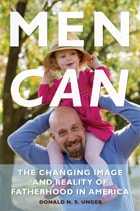
Men Can
The Changing Image and Reality of Fatherhood in AmericaDonald N.S. Unger
Temple University Press, 2010
Fatherhood is evolving in America. Stay at home dads are becoming more commonplace; men are becoming more visible in domestic, caregiving activities. In Men Can, writer, teacher, and father Donald Unger uses his personal experiences, stories of real-life families, as well as representations of fathers in film, on television, and in advertising, to illuminate the role of men in the increasingly fluid domestic sphere.
In thoughtful interviews, Don Unger tells the stories of a half dozen families—of varied ethnicities, geographical locations, and philosophical orientations—in which fathers are either primary or equally sharing parents, personalizing what is changing in how Americans care for their children. These stories are complemented by a discussion of how the language of parenting has evolved and how media representations of fathers have shifted over several decades.
Men Can shows how real change can take place when families divide up domestic labor on a gender-neutral basis. The families whose stories he tells offer insights into the struggles of—and opportunities for—men caring for children. When it comes to taking up the responsibility of parenting, his argument, ultimately, is in favor of respecting personal choices and individual differences, crediting and supporting functional families, rather than trying to force every household into a one-size-fits-all mold.
Messy Beginnings
Postcoloniality and Early American StudiesEdited by Malini Johar Schueller and Edward Watts
Rutgers University Press, 2003
When exploring the links between America and postcolonialism, scholars tend to think either in terms of contemporary multiculturalism, or of imperialism since 1898. This narrow view has left more than the two prior centuries of colonizing literary and political culture unexamined.
Messy Beginnings challenges the idea of early America’s immunity from issues of imperialism, that its history is not as “clean” as European colonialism. By addressing the literature ranging from the diaries of American women missionaries in the Middle East to the work of Benjamin Franklin and Nathaniel Hawthorne, and through appraisals of key postcolonial theorists such as Edward Said, Gayatri Spivak, and Homi Bhabha, the contributors to this volume explore the applicability of their models to early American culture.
Messy Beginnings argues against the simple concept that the colonization of what became the United States was a confrontation between European culture and the “other.” Contributors examine the formation of America through the messy or unstable negotiations of the idea of “nation.”
The essays forcefully show that the development of “Americanness” was a raced and classed phenomenon, achieved through a complex series of violent encounters, legal maneuvers, and political compromises. The complexity of early American colonization, where there was not one coherent “nation” to conquer, contradicts the simple label of imperialism used in other lands. The unique approach of Messy Beginnings will reshape both pre-conceived notions of postcolonialism, and how postcolonialists think about the development of the American nation.
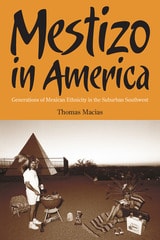
Mestizo in America
Generations of Mexican Ethnicity in the Suburban SouthwestThomas Macias
University of Arizona Press, 2006
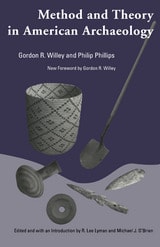
Method and Theory in American Archaeology
Gordon R. Willey
University of Alabama Press, 2001
A Dan Josselyn Memorial Publication
This invaluable classic provides the framework for the development of American archaeology during the last half of the 20th century.
In 1958 Gordon R. Willey and Philip Phillips first published Method and Theory in American Archaeology—a volume that went through five printings, the last in 1967 at the height of what became known as the new, or processual, archaeology. The advent of processual archaeology, according to Willey and Phillips, represented a "theoretical debate . . . a question of whether archaeology should be the study of cultural history or the study of cultural process."
Willey and Phillips suggested that little interpretation had taken place in American archaeology, and their book offered an analytical perspective; the methods they described and the structural framework they used for synthesizing American prehistory were all geared toward interpretation. Method and Theory served as the catalyst and primary reader on the topic for over a decade.
This facsimile reprint edition of the original University of Chicago Press volume includes a new foreword by Gordon R. Willey, which outlines the state of American archaeology at the time of the original publication, and a new introduction by the editors to place the book in historical context. The bibliography is exhaustive. Academic libraries, students, professionals, and knowledgeable amateurs will welcome this new edition of a standard-maker among texts on American archaeology.
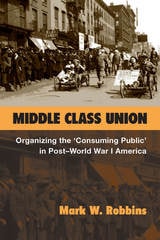
Middle Class Union
Organizing the ‘Consuming Public’ in Post-World War I AmericaMark W. Robbins
University of Michigan Press, 2017
Combining social history with interdisciplinary approaches to the study of consumption and symbolic space, Middle Class Union illustrates how acts of consumption, representations of the middle class in literary, journalistic, and artistic discourses, and ground-level organizing combined to enable white-collar activists to establish themselves as both the middle class and the backbone of the nation. This book contributes to labor history by examining the nexus of class and consumption to show how many white-collar workers drew on their consumer identity to express an anti-labor politics, later facilitating the struggles of unions throughout the post–World War I years. It also contributes to political history by emphasizing how these middle-class activists laid important groundwork for both 1920s business conservatism and New Deal liberalism. They exerted their political influence well before the post–World War II period, when a self-interested and powerful middle-class consumer identity is more widely acknowledged to have taken hold.
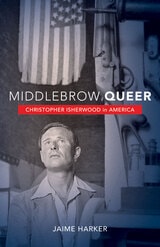
Middlebrow Queer
Christopher Isherwood in AmericaJaime Harker
University of Minnesota Press, 2013
How could one write about gay life for the mainstream public in Cold War America? Many midcentury gay American writers, hampered by external and internal censors, never managed to do it. But Christopher Isherwood did, and what makes his accomplishment more remarkable is that while he was negotiating his identity as a gay writer, he was reinventing himself as an American one. Jaime Harker shows that Isherwood refashioned himself as an American writer following his emigration from England by immersing himself in the gay reading, writing, and publishing communities in Cold War America.
Drawing extensively on Isherwood’s archives, including manuscript drafts and unpublished correspondence with readers, publishers, and other writers, Middlebrow Queer demonstrates how Isherwood mainstreamed gay content for heterosexual readers in his postwar novels while also covertly writing for gay audiences and encouraging a symbiotic relationship between writer and reader. The result—in such novels as The World in the Evening, Down There on a Visit, A Single Man, and A Meeting by the River—was a complex, layered form of writing that Harker calls “middlebrow camp,” a mode that extended the boundaries of both gay and middlebrow fiction.
Weaving together biography, history, and literary criticism, Middlebrow Queer traces the continuous evolution of Isherwood’s simultaneously queer and American postwar authorial identity. In doing so, the book illuminates many aspects of Cold War America’s gay print cultures, from gay protest novels to “out” pulp fiction.
Midwifery and Childbirth in America
Judith Rooks
Temple University Press, 1999
The author vividly describes the history of struggle among health care providers over the meaning and handling of the birth process. The medical model and the midwifery model continue to collide today, the former focusing on pathology and monitoring the patient for it, the latter focusing on birth as a normal, healthy process.
The education and professional training of those who care for women during pregnancy, childbirth, and the important postpartum period reflects these divisions. Obstetrics, family physicians, midwives, nurses, and others play roles in providing the necessary care. In focusing on midwives, Rooks deals fairly and sensitively between certified nurse-midwives and direct-entry midwives, most of whom lack formal educational preparation in midwifery.
This book describes clearly and with documented scientific evidence the specific benefits of the midwifery approach to the care of pregnant women and their families. In clear language accessible to the lay reader, Rooks summarizes the research on the unintended effects of obstetrical interventions, such as episiotomies, epidurals, C-sections, and continuous electronic fetal heart monitoring, and the effectiveness and important benefits of an approach that focuses on the positive potential of childbearing, as contrasted with a narrow focus of potential for pathology. While she acknowledges the importance of access to medical care, extensive research shows the advantages of the midwifery approach. Much that passes for "routine" obstetric care in the United States has been found to be unnecessary, ineffective, or even harmful when applied to women with normal pregnancies.
The arguments over the control of childbirth are set in the context of recent changes in health care, including the current transition to managed care; the impact of the women's movement and movements for natural childbirth, home birth, and breastfeeding; and women's fear of and concern about the pain associated with labor. Rooks also explains the influence of the reports and recommendations of prestigious scientific and health-policy commissions and of federal initiatives and programs on the care provided to pregnant women in this country. She contrasts U.S. practices with those of comparable industrialized countries like the European states, Canada, Australia, New Zealand, and Japan.

Migrant Sites
America, Place, and Diaspora LiteraturesDalia Kandiyoti
Dartmouth College Press, 2009
Militant Zionism in America
The Rise and Impact of the Jabotinsky Movement in the United States, 1926-1948Rafael Medoff
University of Alabama Press, 2006
This in-depth look at a controversial faction of American Zionism fills
a void in the story of American Zionism--and in the story of American Judaism.
This book recounts the fascinating and little-known story
of the militant American Zionists who lobbied Congress, rallied American
public opinion, and influenced British-American relations in their campaign
for Jewish statehood in the 1930s and 1940s. Although these activists have
been dismissed as fanatics who fragmented the American Zionist movement,
Rafael Medoff reveals that the faction--which included an Academy Award-winning
screenwriter and several future members of the Israeli parliament--was
more influential than has been previously acknowledged.
These militants stirred America's conscience by placing
controversial newspaper ads, lobbying conservative as well as liberal members
of Congress, and staging dramatic protest rallies. Through these tactics,
Medoff shows, they attracted a wave of support from an extraordinary cross-section
of leading Americans, including comedians Harpo Marx and Carl Reiner, actors
Vincent Price, Marlon Brando, and Jane Wyatt, musician Leonard Bernstein,
and rising young politicians Jacob Javits and Hubert Humphrey. Medoff also
describes the shadowy underground division that smuggled weapons to the
Holy Land in caskets, naming and interviewing for the first time members
of this gunrunning network.
Based on years of archival research and interviews and
written in a compelling style, Militant Zionism in America documents
events that reshaped the American Jewish community, influenced American
foreign policy, and contributed to one of the most extraordinary events
of modern history: the creation of the State of Israel.
Rafael Medoff is a Visiting Scholar at the State University of New York -- Purchase College.
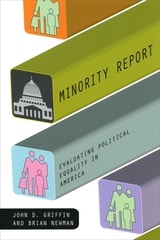
Minority Report
Evaluating Political Equality in AmericaJohn D. Griffin and Brian Newman
University of Chicago Press, 2008
Misconception
Social Class and Infertility in AmericaBell, Ann V.
Rutgers University Press, 2014
Miss Cutler and the Case of the Resurrected Horse
Social Work and the Story of Poverty in America, Australia, and BritainMark Peel
University of Chicago Press, 2011
Social workers produced thousands of case files about the poor during the interwar years. Analyzing almost two thousand such case files and traveling from Boston, Minneapolis, and Portland to London and Melbourne, Miss Cutler and the Case of the Resurrected Horse is a pioneering comparative study that examines how these stories of poverty were narrated and reshaped by ethnic diversity, economic crisis, and war.
Mixing Race, Mixing Culture
Inter-American Literary DialoguesEdited by Monika Kaup and Debra Rosenthal
University of Texas Press, 2002
Over the last five centuries, the story of the Americas has been a story of the mixing of races and cultures. Not surprisingly, the issue of miscegenation, with its attendant fears and hopes, has been a pervasive theme in New World literature, as writers from Canada to Argentina confront the legacy of cultural hybridization and fusion.
This book takes up the challenge of transforming American literary and cultural studies into a comparative discipline by examining the dynamics of racial and cultural mixture and its opposite tendency, racial and cultural disjunction, in the literatures of the Americas. Editors Kaup and Rosenthal have brought together a distinguished set of scholars who compare the treatment of racial and cultural mixtures in literature from North America, the Caribbean, and Latin America. From various angles, they remap the Americas as a multicultural and multiracial hemisphere, with a common history of colonialism, slavery, racism, and racial and cultural hybridity.
Mobilizing Interest Groups in America
Patrons, Professions, and Social MovementsJack L. Walker
University of Michigan Press, 1991
Mormons, Musical Theater, and Belonging in America
Jake Johnson
University of Illinois Press, 2019
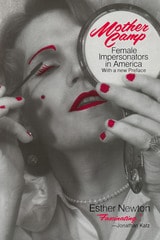
Mother Camp
Female Impersonators in AmericaEsther Newton
University of Chicago Press, 1979
"Newton's fascinating book shows how study of the extraordinary can brilliantly illuminate the ordinary—that social-sexual division of personality, appearance, and activity we usually take for granted."—Jonathan Katz, author of Gay American History
"A trenchant statement of the social force and arbitrary nature of gender roles."—Martin S. Weinberg, Contemporary Sociology

Moving Against the System
The 1968 Congress of Black Writers and the Shaping of Global Black ConsciousnessEdited by David Austin
Pluto Press, 2018
Against a backdrop of widespread racism in the West and ongoing colonialism and imperialism in the Global South, this group of activists, writers, and political figures gathered to discuss the history and struggles of people of African descent and the meaning of black power.
For the first time since 1968, David Austin brings alive the speeches and debates of the most important international gathering of black radicals of the era. With never-before-seen texts from Stokely Carmichael, Walter Rodney and C.L.R. James, these documents will prove invaluable to anyone interested in black radical thought and political activism of the 1960s.
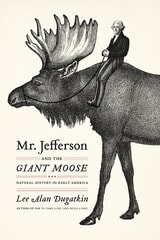
Mr. Jefferson and the Giant Moose
Natural History in Early AmericaLee Alan Dugatkin
University of Chicago Press, 2009
In the years after the Revolutionary War, the fledgling republic of America was viewed by many Europeans as a degenerate backwater, populated by subspecies weak and feeble. Chief among these naysayers was the French Count and world-renowned naturalist Georges-Louis Leclerc de Buffon, who wrote that the flora and fauna of America (humans included) were inferior to European specimens.
Thomas Jefferson—author of the Declaration of Independence, U.S. president, and ardent naturalist—spent years countering the French conception of American degeneracy. His Notes on Virginia systematically and scientifically dismantled Buffon’s case through a series of tables and equally compelling writing on the nature of his home state. But the book did little to counter the arrogance of the French and hardly satisfied Jefferson’s quest to demonstrate that his young nation was every bit the equal of a well-established Europe. Enter the giant moose.
The American moose, which Jefferson claimed was so enormous a European reindeer could walk under it, became the cornerstone of his defense. Convinced that the sight of such a magnificent beast would cause Buffon to revise his claims, Jefferson had the remains of a seven-foot ungulate shipped first class from New Hampshire to Paris. Unfortunately, Buffon died before he could make any revisions to his Histoire Naturelle, but the legend of the moose makes for a fascinating tale about Jefferson’s passion to prove that American nature deserved prestige.
In Mr. Jefferson and the Giant Moose, Lee Alan Dugatkin vividly recreates the origin and evolution of the debates about natural history in America and, in so doing, returns the prize moose to its rightful place in American history.
Murder and Its Consequences
Essays on Capital Punishment in AmericaLeigh B Bienen
Northwestern University Press, 2010
The essays in Murder and Its Consequences span several periods in the history of capital punishment in America and the professional career of Leigh Bienen, a leading researcher on the death penalty. “A Good Murder” describes the subtle relationship between high-profile murders and the death penalty, while “The Proportionality Review of Capital Cases” places the well-known study of proportionality in New Jersey within a nationwide context.
“Anomalies” suggests that the arcane protocols written for lethal injection have little to do with insuring humane executions, but rather are concerned with protecting the sensibilities of witnesses and the liability of corrections officials. Other essays address the groundbreaking developments surrounding the death penalty in Illinois, and take a retrospective look at the evolution of her own and the country’s thinking about this complex, divisive topic.
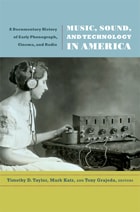
Music, Sound, and Technology in America
A Documentary History of Early Phonograph, Cinema, and RadioTimothy D. Taylor, Mark Katz, and Tony Grajeda, eds.
Duke University Press, 2012