Results by title
4413 books match the query 'Anthropology' and 260 start with m

Madagascar
A Short HistorySolofo Randrianja and Stephen Ellis
University of Chicago Press, 2009

Made In America
Self-Styled Success from Horatio Alger to Oprah WinfreyJeffrey Louis Decker
University of Minnesota Press, 1997
The first look at self-made men and women from a multicultural perspective.
Brings gender, race, and ethnicity to bear on the myth of the “self-made man.”
Made in America presents the first look at self-made men and women from a multicultural perspective. Jeffrey Louis Decker discusses the emergence of self-starters like Andrew Carnegie, Booker T. Washington, Madam C. J. Walker, Younghill Kang, and Lee Iacocca in relation to the changing consumer markets of the twentieth century.Decker locates the new breed of entrepreneurs within the changing rhetoric of personal success, which shifted its emphasis over the past century from religious “character” to psychological “personality” to celebrity “image.” The book concludes by surveying the life stories of enterprising celebrities such as Oprah Winfrey and Arnold Schwarzenegger.Decker analyzes the autobiographical expressions of famous entrepreneurs, from Carnegie to Ross Perot, alongside more marginal ones in order to examine how mainstream society shapes and is shaped by the cultures of subordinate groups. In addition, he looks at the link between self-making and nation-building, and in doing so discovers the origins of another pervasive myth: the “American dream.”Underlying Decker’s study are these questions: What happened to the myth of self-making in America? If it is dead, what caused its demise? If it lives on, what form has it taken? Written in a lucid and engaging style, Made in America uncovers the richness, complexity, and diversity of self-styled success in our time. By bringing gender, race, and ethnicity to bear on the myth of the “self-made man,” this book provides a timely and fascinating reexamination of a traditional area of inquiry in American cultural studies.200 pages Translation rights: University of Minnesota Press
Made from Bone
Trickster Myths, Music, and History from the AmazonJonathan D. Hill
University of Illinois Press, 2008
Made-from-Bone is the first work to provide a complete set of English translations of narratives about the mythic past and its transformations from the indigenous Arawak-speaking people of South America. Among the Arawak-speaking Wakuénai of southernmost Venezuela, storytellers refer to these narratives as "words from the primordial times," and they are set in an unfinished space-time before there were any clear distinctions between humans and animals, men and women, day and night, old and young, and powerful and powerless. The central character throughout these primordial times and the ensuing developments that open up the world of distinct peoples, species, and places is a trickster-creator, Made-from-Bone, who survives a prolonged series of life-threatening attacks and ultimately defeats all his adversaries.
Carefully recorded and transcribed by Jonathan D. Hill, these narratives offer scholars of South America and other areas the only ethnographically generated cosmogony of contemporary or ancient native peoples of South America. Hill includes translations of key mythic narratives along with interpretive and ethnographic discussion that expands on the myths surrounding this fascinating and enigmatic character with broad appeal throughout various folkloric traditions.
Made in China
Women Factory Workers in a Global WorkplacePun Ngai
Duke University Press, 2005
Pun Ngai conducted ethnographic work at an electronics factory in southern China’s Guangdong province, in the Shenzhen special economic zone where foreign-owned factories are proliferating. For eight months she slept in the employee dormitories and worked on the shop floor alongside the women whose lives she chronicles. Pun illuminates the workers’ perspectives and experiences, describing the lure of consumer desire and especially the minutiae of factory life. She looks at acts of resistance and transgression in the workplace, positing that the chronic pains—such as backaches and headaches—that many of the women experience are as indicative of resistance to oppressive working conditions as they are of defeat. Pun suggests that a silent social revolution is underway in China and that these young migrant workers are its agents.
Made of Salmon
Alaska Stories from the Salmon ProjectEdited by Nancy Lord
University of Alaska Press, 2016
Made of Salmon brings together more than fifty diverse Alaska voices to celebrate the salmon and its place in Alaska life. A mix of words and images, the book interweaves longer works by some of Alaska’s finest writers with shorter, more anecdotal accounts and stunning photographs of Alaskans fishing for, catching, preserving, and eating salmon throughout the state. A love letter to a fish that has been central to Alaska life for centuries, Made of Salmon is a reminder of the stakes of this great, ongoing conservation battle.
Made to Be Seen
Perspectives on the History of Visual AnthropologyEdited by Marcus Banks and Jay Ruby
University of Chicago Press, 2011
Made to be Seen brings together leading scholars of visual anthropology to examine the historical development of this multifaceted and growing field. Expanding the definition of visual anthropology beyond more limited notions, the contributors to Made to be Seen reflect on the role of the visual in all areas of life. Different essays critically examine a range of topics: art, dress and body adornment, photography, the built environment, digital forms of visual anthropology, indigenous media, the body as a cultural phenomenon, the relationship between experimental and ethnographic film, and more.
The first attempt to present a comprehensive overview of the many aspects of an anthropological approach to the study of visual and pictorial culture, Made to be Seen will be the standard reference on the subject for years to come. Students and scholars in anthropology, sociology, visual studies, and cultural studies will greatly benefit from this pioneering look at the way the visual is inextricably threaded through most, if not all, areas of human activity.

Madumo, a Man Bewitched
Adam Ashforth
University of Chicago Press, 2000
So begins this true story of witchcraft and friendship set against the turbulent backdrop of contemporary Soweto. Adam Ashforth, an Australian who has spent many years in the black township, finds his longtime friend Madumo in dire circumstances: his family has accused him of using witchcraft to kill his mother and has thrown him out on the street. Convinced that his life is cursed, Madumo seeks help among Soweto's bewildering array of healers and prophets. An inyanga, or traditional healer, confirms that he has indeed been bewitched. With Ashforth by his side, skeptical yet supportive, Madumo embarks upon a physically grueling treatment regimen that he follows religiously-almost to the point of death-despite his suspicion that it may be better to "Westernize my mind and not think about witchcraft."
Ashforth's beautifully written, at times poignant account of Madumo's struggle shows that the problem of witchcraft is not simply superstition, but a complex response to spiritual insecurity in a troubling time of political and economic upheaval. Post-apartheid Soweto, he discovers, is suffering from a deluge of witchcraft. Through Madumo's story, Ashforth opens up a world that few have seen, a deeply unsettling place where the question "Do you believe in witchcraft?" is not a simple one at all. The insights that emerge as Ashforth accompanies his friend on an odyssey through Soweto's supernatural perils have profound implications even for those of us who live in worlds without witches.
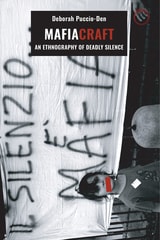
Mafiacraft
An Ethnography of Deadly SilenceDeborah Puccio-Den
HAU, 2021
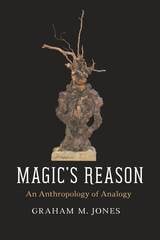
Magic's Reason
An Anthropology of AnalogyGraham M. Jones
University of Chicago Press, 2017
Using French magicians’ engagements with North African ritual performers as a case study, Jones shows how magic became enshrined in anthropological reasoning. Acknowledging the residue of magic’s colonial origins doesn’t require us to dispense with it. Rather, through this radical reassessment of classic anthropological ideas, Magic’s Reason develops a new perspective on the promise and peril of cross-cultural comparison.

Magic
A Theory from the SouthErnesto de Martino
HAU, 2015
Though his work was little known outside Italian intellectual circles for most of the twentieth century, anthropologist and historian of religions Ernesto de Martino is now recognized as one of the most original thinkers in the field. This book is testament to de Martino’s innovation and engagement with Hegelian historicism and phenomenology—a work of ethnographic theory way ahead of its time.
This new translation of Sud e Magia, his 1959 study of ceremonial magic and witchcraft in southern Italy, shows how De Martino is not interested in the question of whether magic is rational or irrational but rather in why it came to be perceived as a problem of knowledge in the first place. Setting his exploration within his wider, pathbreaking theorization of ritual, as well as in the context of his politically sensitive analysis of the global south’s historical encounters with Western science, he presents the development of magic and ritual in Enlightenment Naples as a paradigmatic example of the complex dynamics between dominant and subaltern cultures. Far ahead of its time, Magic is still relevant as anthropologists continue to wrestle with modernity’s relationship with magical thinking.
Magical Arrows
The Maori, The Greeks, And The Folklore Of The UniverseGregory A. Schrempp
University of Wisconsin Press, 1992
Schrempp suggests that perhaps the most noteworthy Zenoian insight is that paradox is intrinsic to cosmological speculation. But he points out that there are many other characteristics of Zeno’s approach, including the strategy of juxtaposing concrete images to mathematical forms of representation, that reappear persistently in Western intellectual history. Schrempp proceeds through a series of juxtapositions—between Zeno, Kant, Lovejoy, and Lévi-Strauss, and between Western cosmologists and those from other cultures—to highlight subtle similarities and differences among intellectual traditions and to examine the conceptual apparatus of Western social science.
Schrempp concludes that a meaningful comparative cosmology is possible and that the tradition of Zeno provides a propitious starting point for such a perspective.
Magical Criticism
The Recourse of Savage PhilosophyChristopher Bracken
University of Chicago Press, 2007
Christopher Bracken’s Magical Criticism brings the unacknowledged history of this racialization to light and shows how, even as we have rejected ethnocentric notions of “the savage,” they remain active today in everything from attacks on postmodernism to Native American land disputes. Here Bracken reveals that many of the most influential Western thinkers dabbled in savage philosophy, from Marx, Nietzsche, and Proust, to Freud, C. S. Peirce, and Walter Benjamin. For Bracken, this recourse to savage philosophy presents an opportunity to reclaim a magical criticism that can explain the very real effects created by the discourse of historians, anthropologists, philosophers, the media, and governments.
Magic’s Translations
Reality Politics in Colonial IndonesiaMargaret J. Wiener
Duke University Press, 2025
Maguey Journey
Discovering Textiles in GuatemalaKathryn Rousso
University of Arizona Press, 2010
In this fascinating book, Kathryn Rousso, an accomplished textile artist, takes a detailed look at the state of maguey culture, use, and trade in Guatemala. She has spent years traveling in Guatemala, highlighting maguey workers’ interactions in many locations and blending historical and current facts to describe their environments. Along the way, Rousso has learned the process of turning a raw leaf into beautiful and useful textile products and how globalization and modernization are transforming the maguey trade in Guatemala.
Featuring a section of full-color illustrations that follow the process from plant to weaving to product, Maguey Journey presents the story of this fiber over recent decades through the travels of an impassioned artist. Useful to cultural anthropologists, ethnobotanists, fiber artists, and interested travelers alike, this book offers a snapshot of how the industry stands now and seeks to honor those who keep the art alive in Guatemala.
Maithil Women's Tales
Storytelling on the Nepal-India BorderCoralynn V. Davis
University of Illinois Press, 2014
In Maithil Women’s Tales, Coralynn V. Davis examines how these storytellers weave together their own life experiences--the hardships and the pleasures--with age-old themes. In so doing, Davis demonstrates, they harness folk traditions to grapple personally as well as collectively with social values, behavioral mores, relationships, and cosmological questions.
Each chapter includes stories and excerpts that reveal Maithil women’s gift for rich language, layered plots, and stunning allegory. In addition, Davis provides ethnographic and personal information that reveal the complexity of women’s own lives, and includes works painted by Maithil storytellers to illustrate their tales. The result is a fascinating study of being and becoming that will resonate for readers in women’s and Hindu studies, folklore, and anthropology.
Make Prayers to the Raven
A Koyukon View of the Northern ForestRichard K. Nelson
University of Chicago Press, 1986
A powerful account of the deep connection between the Koyukon people of western Alaska and the natural world that sustains them
A blending of ethnography, personal reflections, and natural history, Make Prayers to the Raven is a moving account of the Koyukon people of western Alaska, who follow a traditional lifeway of hunting, trapping, and fishing in remote villages scattered across the boreal forest. Intimacy with nature is the foundation of their existence, and they have accumulated a masterly knowledge of their environment. The Koyukon hunter moves through a watchful forest, kills with humility and respect, and treats his catch as a being filled with power.
In Make Prayers to the Raven, Nelson describes, from a Koyukon point of view, , elements of the earth, sky, and atmosphere of the boreal forest, as well as the significant plants and animals. He retells their origins in the dreamlike Distant Time, their spirit powers, their behavior and personality, and the rules dictating their proper treatment by men and women. Make Prayers to the Raven leads the reader to an appreciation of the power and substantiality of Koyukon beliefs, and it serves the Koyukon people themselves by educating others about their way of life and by providing the Koyukon with a means of passing on traditional knowledge to their children.
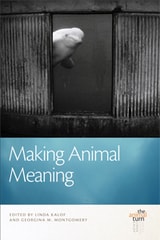
Making Animal Meaning
Linda Kalof
Michigan State University Press, 2012
An elucidating collection of ten original essays, Making Animal Meaning reconceptualizes methods for researching animal histories and rethinks the contingency of the human-animal relationship. The vibrant and diverse field of animal studies is detailed in these interdisciplinary discussions, which include voices from a broad range of scholars and have an extensive chronological and geographical reach. These exciting discourses capture the most compelling theoretical underpinnings of animal significance while exploring meaning-making through the study of specific spaces, species, and human-animal relations. A deeply thoughtful collection — vital to understanding central questions of agency, kinship, and animal consumption — these essays tackle the history and philosophy of constructing animal meaning.
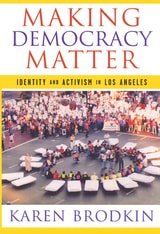
Making Democracy Matter
Identity and Activism in Los AngelesBrodkin, Karen
Rutgers University Press, 2007
This book seeks to answer these questions through conversations and interviews with a generation of activists who came of political age in Los Angeles during the 1990s. Politically schooled in the city's vibrant immigrant worker and youth-led campaigns against xenophobic and racist voter initiatives, these young activists created a new political cohort with its own signature of democratic practice and vision. Combining analytical depth, engaging oral history, and rich description, this absorbing and accessible book will appeal to all those interested in social movements, racial justice, the political activism of women and men of color, and the labor movement today.
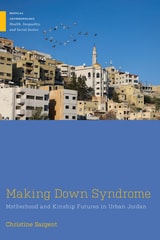
Making Down Syndrome
Motherhood and Kinship Futures in Urban JordanChristine Sargent
Rutgers University Press, 2026
Making Down Syndrome: Motherhood and Kinship Futures in Urban Jordan draws on ethnographic research conducted primarily in Jordan’s capital city of Amman to explore how the label and identity of Down syndrome is gaining increasing cohesiveness. Focused on the experiences of mothers, who serve as an entry point for understanding broader family dynamics and choices, the book argues that practices and ideologies of care play a central role in making Down syndrome’s embodied and political realities. They do so through the momentum of kinship futures, or futures imagined through the prism of kinship roles and relations, which shape how families organize and distribute care between and beyond kinship networks and under conditions of economic and political uncertainty. By approaching everyday life in Jordan through the lens of disability, Making Down Syndrome offers new insights into how people navigate structures of family, gender, power, inequality, and precarity, all while trying to maintain hope for and cultivate better futures.
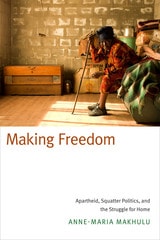
Making Freedom
Apartheid, Squatter Politics, and the Struggle for HomeAnne-Maria Makhulu
Duke University Press, 2015
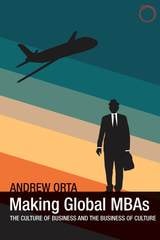
Making Global MBAs
The Culture of Business and the Business of CultureAndrew Orta
HAU, 2018
Based upon extensive field research at a set of leading US business schools, this groundbreaking ethnography shows how the culture of MBA training provides a window onto contemporary understandings of capitalism in the context of globalization. Orta details the rituals of MBA life and the ways MBA curricula cultivate at once habits of fast-paced technical competence and “softer” qualities and talents thought to be essential to unlocking the value of international cultural difference, while managing its risks. Making Global MBAs is an essential guide for prospective managers, for practitioners working internationally, and for students of globalization and of the contemporary business and politics of cultural differences.
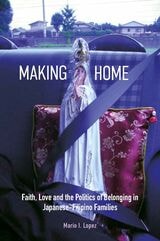
Making Home
Faith, Love and the Politics of Belonging in Japanese-Filipino FamiliesMario Ivan Lopez
National University of Singapore Press, 2026
How do faith, family, and migration intersect in the intimate lives of transnational couples? This ethnography examines Japanese-Filipino marriages in contemporary Japan to reveal how gendered Catholic practices, cultural negotiation, and the politics of belonging shape everyday life. Set in Northern Kyushu, Making Home explores the often tense dynamics of these relationships—how love, faith, and social expectations are navigated across multiple domains. Through long-term fieldwork, it shows how Filipino migrants and their Japanese partners create “contact zones” where faith becomes both a resource for connection and a site of struggle.
Religion, far from being a private matter, becomes a powerful tool for migrants to sustain family ties, negotiate identities, and transform the intimate spaces they live in. Centering religious practices within migration studies, this book offers fresh insights into the evolving landscape of transnational families in Japan.
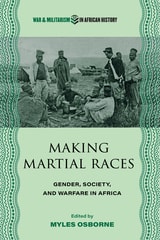
Making Martial Races
Gender, Society, and Warfare in AfricaMyles Osborne
Ohio University Press, 2024
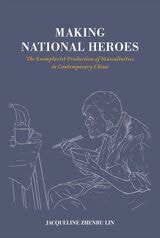
Making National Heroes
The Exemplarist Production of Masculinities in Contemporary ChinaJacqueline Zhenru Lin
Hong Kong University Press, 2024
Making National Heroes is an ethnography on the making of national heroes in the commemoration of the Second World War in contemporary China. Foregrounding the lived experience of men and women who participate in commemorative activities, it theorizes how masculinity and nationalism entangle in recollecting war memories. Taking the line of feminist inquiry, this anthropological study aims to capture the significance of creating exemplars that are the realization of hegemonic masculinities. It adds a gendered perspective to studies on the exemplarist moral theory and theorizes exemplary men’s cross-culture significance in defining masculinities. Researchers in the fields of critical masculinity studies, anthropology, feminist methodology, China studies, and war memories will be interested in this book.

Making Peace With Property
Traces of Post-Conflict ColombiaMeghan L. Morris
Duke University Press, 2027
Making Peace with Nature
Ecological Encounters along the Korean DMZEleana J. Kim
Duke University Press, 2022
Making Pictures in Stone
American Indian Rock Art of the NortheastEdward J. Lenik
University of Alabama Press, 2008
A full range of rock art appearances, including dendroglyphs, pictographs, and a selection of portable rock objects
The Indians of northeastern North America are known to us primarily through reports and descriptions written by European explorers, clergy, and settlers, and through archaeological evidence. An additional invaluable source of information is the interpretation of rock art images and their relationship to native peoples for recording practical matters or information, as expressions of their legends and spiritual traditions, or as simple doodling or graffiti. The images in this book connect us directly to the Indian peoples of the Northeast, mainly Algonkian tribes inhabiting eastern Pennsylvania, Maryland and the lower Potomac River Valley, New York, New Jersey, the six New EnglandStates, and Atlantic Canada. Lenik provides a full range of rock art appearances in the study area, including some dendroglyphs, pictographs, and a selection of portable rock objects. By providing a full analysis and synthesis of the data, including the types and distribution of the glyphs, and interpretations of their meaning to the native peoples, Lenik reveals a wealth of new information on the culture and lifeways of the Indians of the Northeast.
Making Refuge
Somali Bantu Refugees and Lewiston, MaineCatherine Besteman
Duke University Press, 2016
Making Scenes
Reggae, Punk, and Death Metal in 1990s BaliEmma Baulch
Duke University Press, 2007
Making Scenes is an exploration of the subtle politics of identity that took place within and among these scenes throughout the course of the 1990s. Participants in the different scenes often explained their interest in death metal, punk, or reggae in relation to broader ideas about what it meant to be Balinese, which reflected views about Bali’s tourism industry and the cultural dominance of Jakarta, Indonesia’s capital and largest city. Through dance, dress, claims to public spaces, and onstage performances, participants and enthusiasts reworked “Balinese-ness” by synthesizing global media, ideas of national belonging, and local identity politics. Making Scenes chronicles the creation of subcultures at a historical moment when media globalization and the gradual demise of the authoritarian Suharto regime coincided with revitalized, essentialist formulations of the Balinese self.
Making Senses of the Past
Toward a Sensory ArchaeologyEdited by Jo Day
Southern Illinois University Press, 2013
In ancient Peru, a site provides sensory surprises as voices resound beneath the ground and hidden carvings slowly reveal their secrets. In Canada and New Zealand, the flicker of reflected light from a lake dances on the faces of painted rocks and may have influenced when and why the pigment was applied. In Mesopotamia, vessels for foodstuffs build a picture of a past cuisine that encompasses taste and social activity in the building of communities. While perfume and flowers are examined in various cultures, in the chamber tombs of ancient Roman Palestine, we are reminded that not all smells are pleasant. Making Senses of the Past explores alternative ways to perceive past societies and offers a new way of wiring archaeology that incorporates the senses.

Making Uncertainty
Tuberculosis, Substance Use, and Pathways to Health in South AfricaAnna Versfeld
Rutgers University Press, 2023
Making Value
Music, Capital, and the SocialTimothy D. Taylor
Duke University Press, 2024
Making War in Côte d'Ivoire
Mike McGovern
University of Chicago Press, 2011
After a brief period of active combat in 2002, the conflict in Côte d’Ivoire settled into a pattern of neither war nor peace until the 2010 elections led to a new phase of direct conflict. During these taut years, short bursts of intense violence alternated with long periods of standoff. When things were peaceful, the Ivorian political elite and the press produced inflammatory rhetoric while soldiers and militias used the state of emergency as an excuse to shake down civilians at roadblocks. What kept this perpetually tense, dismal, and destructive situation simmering? In this groundbreaking book, Mike McGovern suggests the answer lies in understanding war as a process, not a series of events, and that rather than focusing on the role of political institutions, we should be paying attention to the flawed and unpredictable people within them.
McGovern argues that only deep knowledge of a region—its history, languages, literature, and popular culture—can yield meaningful insights into political decision making. Putting this theory into action, he examines an array of issues from the micro to the macro, including land tenure disputes, youth boredom, organized crime, and the international cocoa trade. Drawn from McGovern’s academic research and experience working for a conflict resolution think tank and the political access that position gave him, Making War in Côte D’Ivoire will be the definitive work on the Ivorian conflict and an innovative example of how anthropology can address the complexities of politics.
Making Women Pay
Microfinance in Urban IndiaSmitha Radhakrishnan
Duke University Press, 2022
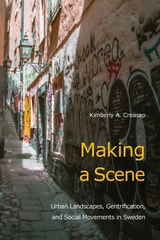
Making a Scene
Urban Landscapes, Gentrification, and Social Movements in SwedenKimberly A. Creasap
Temple University Press, 2022
In the three largest cities in Sweden, social movement “scenes”—networks of social movement actors and the places they inhabit—challenge threats such as gentrification. The geography of the built environment influences their ability to lay claim to urban space and to local political processes. In Making a Scene, Kimberly Creasap emphasizes that it is the centrality, concentration, and visibility of these scenes that make them most effective. Whereas some scenes become embedded as part of everyday life—as in Malmö—in contrast, scenes in Göteborg and Stockholm often fail to become part of the fabric of urban neighborhoods.
Creasap investigates key spaces for scenes, from abandoned industrial areas and punk clubs to street festivals, bookstores, and social centers, to show how activists create sites and develop structures of resistance that are anti-capitalist, anti-fascist, anti-gentrification, queer, and feminist. She also charts the relationship between scenes and city spaces to show these autonomous social movements create their own cultural landscapes. Making a Scene encourages critical thinking about spatiality and place in the sociology of social movements and the role of social movements as important actors in urban development.
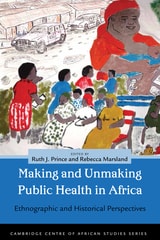
Making and Unmaking Public Health in Africa
Ethnographic and Historical PerspectivesRuth J. Prince
Ohio University Press, 2013
This volume explores how medical professionals and patients, government officials, and ordinary citizens approach questions of public health as they navigate contemporary landscapes of NGOs and transnational projects, faltering state services, and expanding privatization. Its contributors analyze the relations between the public and the private providers of public health, from the state to new global biopolitical formations of political institutions, markets, human populations, and health. Tensions and ambiguities animate these complex relationships, suggesting that the question of what public health actually is in Africa cannot be taken for granted. Offering historical and ethnographic analyses, the volume develops an anthropology of public health in Africa.
Contributors: P. Wenzel Geissler; Murray Last; Rebecca Marsland; Lotte Meinert; Benson A. Mulemi; Ruth J. Prince; and Noemi Tousignant.
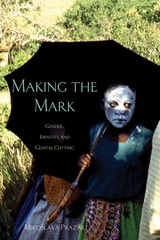
Making the Mark
Gender, Identity, and Genital CuttingMiroslava Prazak
Ohio University Press, 2016
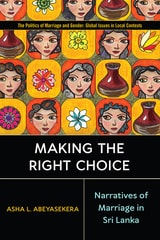
Making the Right Choice
Narratives of Marriage in Sri LankaAsha L. Abeyasekera
Rutgers University Press, 2021
Making the Right Choice unravels the entangled relationship between marriage, morality, and the desire for modernity as it plays out in the context of middle-class status concerns and aspirations for upward social mobility within the Sinhala-Buddhist community in urban Sri Lanka. By focusing on individual life-histories spanning three generations, the book illuminates how narratives about a gendered self and narratives about modernity are mutually constituted and intrinsically tied to notions of agency. The book uncovers how "becoming modern" in urban Sri Lanka, rather than causing inter-generational conflict, is a collective aspiration realized through the efforts of bringing up educated and independent women capable of making "right" choices. The consequence of this collective investment is a feminist conundrum: agency does not denote the right to choose, but the duty to make the "right" choice; hence agency is experienced not as a sense of "freedom," but rather as a burden of responsibility.
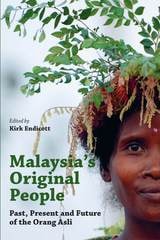
Malaysia's Original People
Past, Present and Future of the Orang AsliEdited by Kirk Endicott
National University of Singapore Press, 2015
The chapters in the present volume provide a comprehensive survey of current understandings of Malaysia’s Orang Asli communities, covering their origins and history, cultural similarities and differences, and they ways they are responding to the challenges posed by a rapidly changing world. The authors, a distinguished group of Malaysian (including Orang Asli) and international scholars with expertise in anthropology, archaeology, biology, education, therapy, geography and law, also show the importance of Orang Asli studies for the anthropological understanding of small-scale indigenous societies in general.

Malinowski's Kiriwina
Fieldwork Photography 1915-1918Michael W. Young
University of Chicago Press, 1998
Malinowski's Kiriwina presents nearly two hundred of Malinowski's previously unpublished photographs, taken between 1915 and 1918, of the Trobriand Islanders. The images are more than embellishments of his ethnography; they are a recreation in striking detail of a distant world. Michael Young, an anthropologist and Malinowski's authorized biographer, has selected the photographs based on one of Malinowski's unpublished studies of the region, and the plan of that abandoned project has helped structure this book.
Divided into fourteen sections, Malinowski's Kiriwina is a series of linked photo-essays based on Trobriand institutions and cultural themes as described by Malinowski. The introductory essay by Young appraises the founding anthropologist's photographic oeuvre, explains the historical circumstances and technical aspects of the images, and puts them in their colonial context. Young illuminates the photographs with quotations from Malinowski's diaries, letters, and field notes, thereby giving a biographical dimension to the collection. Commentaries on the images by contemporary Trobrianders add a further layer of interpretation. The result is a stunning record not only of a fascinating place, but of the mutual relationship between ethnography and the visual.
Malinowski, Rivers, Benedict and Others
Essays on Culture and PersonalityEdited by George W. Stocking, Jr.
University of Wisconsin Press, 1988
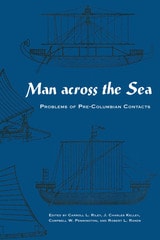
Man Across the Sea
Problems of Pre-Columbian ContactsEdited by Carroll L. Riley, J. Charles Kelley, Campbell W. Pennington, and Robert L. Rands
University of Texas Press, 1971
Whether humans crossed the seas between the Old World and the New in the times before Columbus is a tantalizing question that has long excited scholarly interest and tempted imaginations the world over. From the myths of Atlantis and Mu to the more credible, perhaps, but hardly less romantic tales of Viking ships and Buddhist missionaries, people have speculated upon what is, after all, not simply a question of contact, but of the nature and growth of civilization itself.
To the specialist, it is an important question indeed. If people in the Western Hemisphere and in the Eastern Hemisphere developed their cultures more or less independently from the end of the last Ice Age until the voyages of Columbus, the remarkable similarities between New World and Old World cultures reveal something important about the evolution of culture. If, on the other hand, there were widespread or sustained contacts between the hemispheres in pre-Columbian times, these contacts represent events of vast significance to the prehistory and history of humanity.
Originally delivered at a symposium held in May 1968, during the national meeting of the Society for American Archaeology, the papers presented here, by scholars eminent in the field, offer differing points of view and considerable evidence on the pros and cons of pre-Columbian contact between the Old World and the New. Various kinds of data—archaeological, botanical, geographical, and historical—are brought to bear on the problem, with provocative and original results. Introductory and concluding remarks by the editors pull together and evaluate the evidence and suggest ground rules for future studies of this sort.
Man across the Sea provides no final answers as to whether people from Asia, Africa, or Europe visited the American Indian before Columbus. It does, however, present new evidence, suggested lines of approach, and a fresh attempt to delineate the problems involved and to establish acceptable canons of evidence for the future.
Man Takes Control
Cultural Development and American AidCharles Erasmus
University of Minnesota Press, 1961
Man and the Sacred
Roger Caillois
University of Illinois Press, 1959
Drawing on a diverse array of ethnographic contexts, including the sexual rituals of the Ba-Thong of South Africa and evidence drawn from aboriginal Australian, Eskimo, and traditional Chinese social systems, Caillois analyzes the role of the forbidden in the social cohesion of the group. He examines the character of the sacred in the light of specific instances of taboos and transgressions, exploring wide differences in attitudes toward diet and sex and extreme behaviors associated with the sacred, such as rapture and paroxysm. He also discusses the festival--an exuberant explosion following a period of strict repression--and compares its functions with those of modern war.
A classic study of one of the most fundamental aspects of human social and spiritual life, Man and the Sacred--presented here in Meyer Barash's superb English translation--is a companion volume to Caillois's Man, Play and Games.
Man or Monster?
The Trial of a Khmer Rouge TorturerAlexander Laban Hinton
Duke University Press, 2016
Managing African Portugal
The Citizen-Migrant DistinctionKesha Fikes
Duke University Press, 2009
The ethnographic focus is a former undocumented fish market that at one time employed both Portuguese and Cape Verdean women. Both groups eventually sought work in low-wage professions as maids, nannies, and restaurant-kitchen help. The visibility of poor Portuguese women as domestics was thought to undermine the appearance of Portuguese modernity; by contrast, the association of poor African women with domestic work confirmed it. Fikes argues that we can better understand how Portugal interpreted its economic absorption into the EU by attending to the different directions in which working-poor Portuguese and Cape Verdean women were routed in the mid-1990s and by observing the character of the new work relationships that developed among them. In Managing African Portugal, Fikes pushes for a study of migrant phenomena that considers not only how the enactment of citizenship by the citizen manages the migrant, but also how citizens are simultaneously governed through their uptake and assumption of new EU citizen roles.
Managing Chronicity in Unequal States
Ethnographic Perspectives on CaringEdited by Laura Montesi and Melania Calestani
University College London, 2021
Managing Chronicity in Unequal States offers a global survey of how people experience chronic conditions—from Alzheimer’s patients institutionalized in the United Kingdom to homeless people with psychiatric disorders in India. Contributors explore how communities navigate stratified healthcare systems whose unspoken attitudes toward human worth negatively affect their wellbeing. Whether the state intrudes into their intimate lives or abandons them to a market-driven runaround, the authors find that people with chronic conditions must negotiate (inter)dependencies in both professional and personal relationships primarily defined by inequality.
Managing Motherhood, Managing Risk
Fertility and Danger in West Central TanzaniaDenise Roth Allen
University of Michigan Press, 2004
In Managing Motherhood, Managing Risk, Denise Roth Allen persuasively argues that development interventions in the Third World often have unintended and unacknowledged consequences. Based on twenty-two months of fieldwork in the Shinyanga Region of west central Tanzania, this rich and engaging ethnography of women's fertility-related experiences highlights the processes by which a set of seemingly well-intentioned international maternal health policy recommendations go awry when implemented at the local level.
An exploration of how threats to maternal health have been defined and addressed at the global, national, and local levels, Managing Motherhood, Managing Risk presents two contrasting, and oftentimes competing, definitions of risk: those that form the basis of international recommendations and national maternal health policies and those that do not. The effect that these contrasting definitions of risk have on women's fertility-related experiences at the local level are explored throughout the book.
This study employs an innovative approach to the analysis of maternal health risk, one that situates rural Tanzanian women's fertility-related experiences within a broader historical and sociocultural context. Beginning with an examination of how maternal health risk was defined and addressed during the early years of British colonial rule in Tanganyika and moving to a discussion of an internationally conceived maternal health initiative that was launched on the world stage in the late 1980s, the author explores the similarities in the language used and solutions proposed by health development experts over time.
This set of "official" maternal health risks is then compared to an alternative set of risks that emerge when attention is focused on women's experiences of pregnancy and childbirth at the local level. Although some of these latter risks are often spoken about as deriving from spiritual or supernatural causes, the case studies presented throughout the second half of the book reveal that the concept of risk in the context of pregnancy and childbirth is much more complex, involving the interplay of spiritual, physical, and economic aspects of everyday life.
Managing Turbulent Hearts
A Balinese Formula for LivingUnni Wikan
University of Chicago Press, 1990
Wikan's study of the Indonesian island of Bali is an absorbing debate with previous anthropological interpretations as well as an innovative development of the anthropology of experience.
"This is indeed an important book, a landmark in studies of Bali and one surely destined to have major theoretical impact on anthropological research well beyond that famous Indonesian island."—Anthony R. Walker, Journal of Asian and African Studies

Manifold Destiny
Arabs at an American Crossroads of Exceptional RuleJohn Tofik Karam
Vanderbilt University Press, 2021
At the border where Brazil, Paraguay, and Argentina meet under the scrutiny of the US and Mercosur (the large South American trade bloc), Arabs have long fulfilled what author John Tofik Karam calls a "manifold destiny." Karam casts Lebanese, Palestinians, and Syrians at this American border as circumstantial protagonists of a hemispheric saga.
For the more than six decades since they started settling at the trinational border between Brazil, Paraguay, and Argentina, Arabs have animated the hemisphere. Their transnational economic and social projects reveal a heretofore unacknowledged venue of exceptional rule in which the community accommodates and abides multiple states' varied suspensions of norms and laws. Arabs set up businesses and community centers at the border under authoritarian military governments between the 1950s and 1980s; thereafter, when denied full democratic enfranchisement, they instead underwent increasing surveillance from the 1990s to today. Karam reveals an unfinished history of exceptional rule that Arabs accommodate from an authoritarian past to a counterterrorist present.
Karam's riveting account draws on anthropological and historical research from each side of this trinational South American border, as well as from the US—where government bureaucrats still suspect Arabs at the border of would-be-terrorist subversion. Offering a fresh understanding of the hemisphere, Manifold Destiny brings the transnational turn of Middle Eastern studies to bear upon the fields of American studies, Brazilian studies, and Latin American studies.