Results by title
244 books match the query 'Arkansas' and 10 start with m

Madge's Mobile Home Park
Volume One of the Peavine ChroniclesJane F. Hankins
Parkhurst Brothers, Inc., 2012
This hilarious send-up of outlandish Southern characters includes a beautician, a luncheonette waitress, a radio evangelist, the widow of a gas and oil distributror and the residents of a fictional mobile home park in Arkansas as they find uproarious ways to enjoy life, needle each other, and remember the dear-departed.
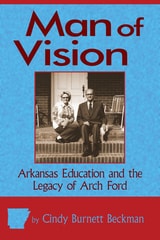
Man of Vision
Arkansas Education and the Legacy of Arch FordCindy Burnett Beckman
Butler Center for Arkansas Studies, 2016
As commissioner of the Arkansas Department of Education from 1953 to 1978, Arch Ford served under five governors. His vision was to expand educational opportunities because he believed education was the foundation for improving people’s lives. Throughout his career, he campaigned for increased educational funding, better-qualified teachers, and higher teachers’ salaries. Ford helped lead the state in peacefully integrating its schools and established twenty-three vocational-technical schools across the state. During Ford’s tenure, the Arkansas Children’s Colony was established to provide educational services to the developmentally disabled, and the Arkansas Educational Television Network was set up to provide instructional programming across the state.
The state also expanded educational opportunities to include kindergarten, special education, community colleges, and adult education. His leadership left Arkansas with a strong educational system that continued to advance. This was his legacy.
Martin Faber
The Story of a Criminal with "Confessions of a Murder"William Gilmore Simms
University of Arkansas Press, 2006
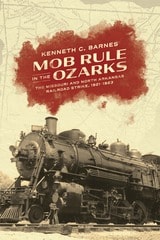
Mob Rule in the Ozarks
The Missouri and North Arkansas Railroad Strike, 1921-1923Kenneth C. Barnes
University of Arkansas Press, 2025
On January 15, 1923, a crowd of more than a thousand angry men assembled in Harrison, Arkansas, near the headquarters of the M&NA Railroad, which ran through the heart of the Ozark Mountains. The mob was prepared to use any measure necessary to end the strike of railroad employees that had dragged on for nearly two years, endangering livelihoods and businesses in an area with few other means of transportation. Supported by local officials, the mob terrorized strikers and sympathizers—many were stripped and beaten, and one man was lynched, hanged from the railroad bridge south of town. Over the next several days, similar riots broke out in other towns along the M&NA line, including Leslie and Heber Springs.
This violence effectively brought to a close one of the longest rail strikes in American history—the only one, in fact, ended by a mob uprising. In Mob Rule in the Ozarks, Kenneth C. Barnes documents how the M&NA Railroad strike reflected some of the major economic concerns that preoccupied the United States in the wake of World War I, and created a rupture within communities of the Ozarks that would take years to heal. The conflict also foreshadowed, for both the region and the country, the pendulum’s swing back to moneyed interests, away from Progressive Era gains for labor. Poignantly for Barnes, who sees parallels between this historic struggle and present-day political tensions, the strike revealed the fragile line between civil order and mob rule.

Monkey Secret
Diane Glancy
Northwestern University Press, 1995

Mountain Feds
Arkansas Unionists and the Peace SocietyJames J. Johnston
Butler Center for Arkansas Studies, 2018
In resistance to secession and to fighting for the Confederacy, they formed secret organizations—known commonly as the Arkansas Peace Society—and inaugurated their own leaders. Increased pressure from Richmond in the fall of 1861 for the Arkansas government to provide more soldiers pressed Arkansas’s yeomen farmers to enlist but only provided more incentive for the men to join the Arkansas Peace Society (later known as the Union League).
Many Arkansas communities forged home protective units or vigilance committees to protect themselves from slave uprisings and what they saw as federal invasion. Unionist mountaineers did the same, but their home protection organizations were secret because they were seeking protection from their secessionist neighbors and the state’s Confederate government.
In November 1861, the Arkansas Peace Society was first discovered in Clinton, Van Buren County, by the secessionist element, which rapidly formed vigilante committees to arrest and interrogate the suspects. The news and subsequent arrests spread to adjoining counties from the Arkansas River to the Missouri border. In most cases, the local militia was called out to handle the arrests and put down the rumored uprising.
While some Peace Society members fled to Missouri or hid in the woods, others were arrested and marched to Little Rock, where they were forced to join the Confederate army. Leaders who were prominent in the Peace Society recruited and led companies in Arkansas and Missouri Unionist regiments, returning to their homes to bring out loyalist refugees or to suppress Confederate guerrillas. A few of these home-grown leaders assumed leadership positions in civil government in the last months of the war, with the effects of their actions lingering for years to come.

Mourner's Bench
A NovelSanderia Faye
University of Arkansas Press, 2015
But first, Sarah would need to navigate the growing tensions of small-town Arkansas in the 1960s. Both smarter and more serious than her years (a “fifty-year-old mind in an eight-year-old body,” according to Esther), Sarah was torn between the traditions, religion, and work ethic of her community and the progressive civil rights and feminist politics of her mother, who had recently returned from art school in Chicago. When organizers from the Student Non-Violent Coordinating Committee (SNCC) came to town just as the revival was beginning, Sarah couldn’t help but be caught up in the turmoil. Most folks just wanted to keep the peace, and Reverend Jefferson called the SNCC organizers “the evil among us.” But her mother, along with local civil rights activist Carrie Dilworth, the SNCC organizers, Daisy Bates, attorney John Walker, and indeed most of the country, seemed determined to push Maeby toward integration.
With characters as vibrant and evocative as their setting, Mourner’s Bench is the story of a young girl coming to terms with religion, racism, and feminism while also navigating the terrain of early adolescence and trying to settle into her place in her family and community.
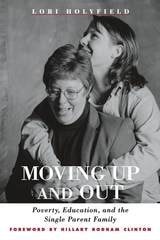
Moving Up And Out
Poverty, Education & Single Parent FamilyLori Holyfield, foreword by Hillary Rodham Clinton
Temple University Press, 2001

Muzzled Oxen
Reaping Cotton and Sowing Hope in 1920s ArkansasGenevieve Grant Sadler
Butler Center for Arkansas Studies, 2014
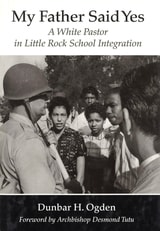
My Father Said Yes
A White Pastor in Little Rock School IntegrationDunbar H. Ogden
Vanderbilt University Press, 2008
My Father Said Yes is the untold story of the Reverend Dunbar Ogden, who became the pro-integration leader in Little Rock's white community. He responded to a call for support from Daisy Bates, co-owner of the town's black newspaper. Both faced fierce opposition from within as well as from outside. Reverend Ogden lost his church and Daisy Bates lost her newspaper.
This memoir is also a moving father-son story. In this frank account, the author discusses the depression his father battled for most of his life, as well as the family tragedy of his brother's suicide.