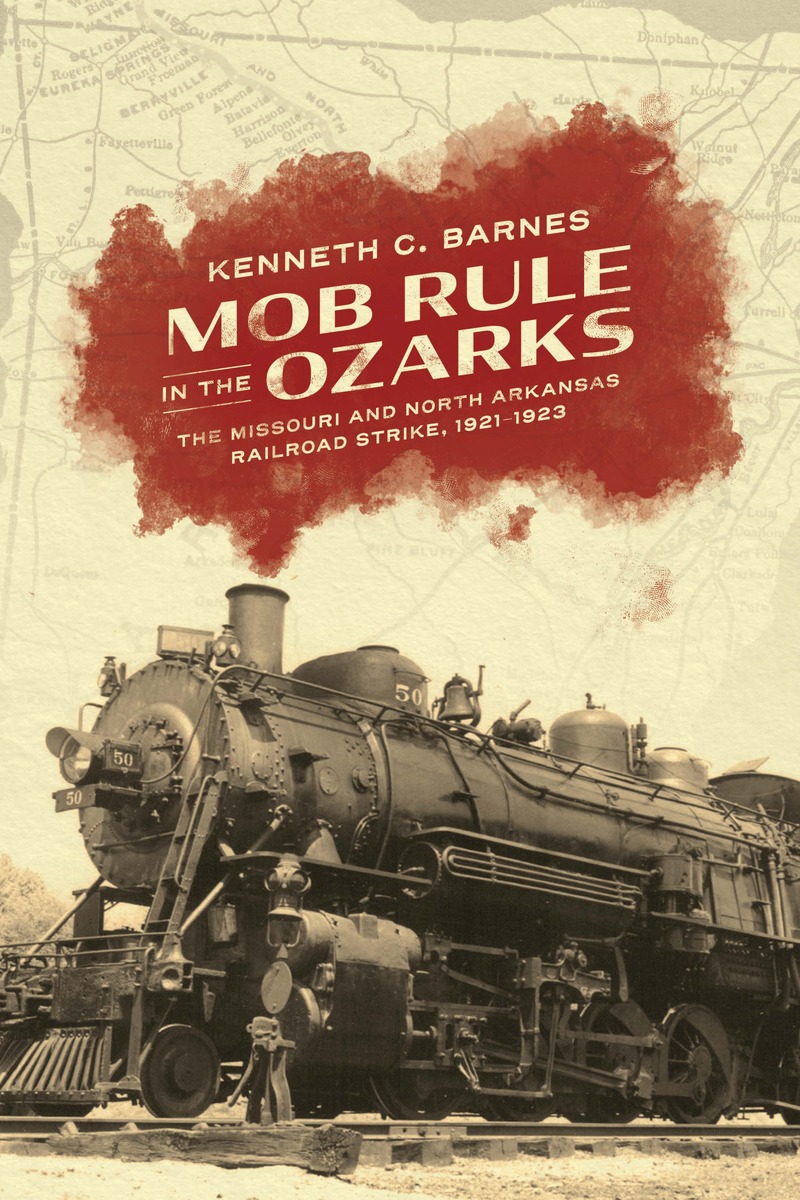
Mob Rule in the Ozarks: The Missouri and North Arkansas Railroad Strike, 1921-1923
University of Arkansas Press, 2025
Cloth: 978-1-68226-261-0 | Paper: 978-1-68226-262-7 | eISBN: 978-1-61075-828-4
Library of Congress Classification HD5325.R2 1921B37 2025
Dewey Decimal Classification 331.892813850977
Cloth: 978-1-68226-261-0 | Paper: 978-1-68226-262-7 | eISBN: 978-1-61075-828-4
Library of Congress Classification HD5325.R2 1921B37 2025
Dewey Decimal Classification 331.892813850977
ABOUT THIS BOOK | AUTHOR BIOGRAPHY | REVIEWS | TOC | REQUEST ACCESSIBLE FILE
ABOUT THIS BOOK
Winner, 2025 J.G. Ragsdale Award (Arkansas Historical Association)
On January 15, 1923, a crowd of more than a thousand angry men assembled in Harrison, Arkansas, near the headquarters of the M&NA Railroad, which ran through the heart of the Ozark Mountains. The mob was prepared to use any measure necessary to end the strike of railroad employees that had dragged on for nearly two years, endangering livelihoods and businesses in an area with few other means of transportation. Supported by local officials, the mob terrorized strikers and sympathizers—many were stripped and beaten, and one man was lynched, hanged from the railroad bridge south of town. Over the next several days, similar riots broke out in other towns along the M&NA line, including Leslie and Heber Springs.
This violence effectively brought to a close one of the longest rail strikes in American history—the only one, in fact, ended by a mob uprising. In Mob Rule in the Ozarks, Kenneth C. Barnes documents how the M&NA Railroad strike reflected some of the major economic concerns that preoccupied the United States in the wake of World War I, and created a rupture within communities of the Ozarks that would take years to heal. The conflict also foreshadowed, for both the region and the country, the pendulum’s swing back to moneyed interests, away from Progressive Era gains for labor. Poignantly for Barnes, who sees parallels between this historic struggle and present-day political tensions, the strike revealed the fragile line between civil order and mob rule.
See other books on: Arkansas | Missouri | Ozarks | Railroads | Strikes and lockouts
See other titles from University of Arkansas Press