Results by title
3258 books match the query 'Art' and 191 start with m
M/E/A/N/I/N/G
An Anthology of Artists' Writings, Theory, and CriticismSusan Bee and Mira Schor, eds.
Duke University Press, 2000
With its emphasis on artists’ perspectives of aesthetic and social issues, this anthology provides a unique opportunity to enter into the fray of the most hotly contested art issues of the past few decades: the visibility of women artists, sexuality and the arts, censorship, art world racism, the legacies of modernism, artists as mothers, visual art in the digital age, and the rewards and toils of a lifelong career in art. The stellar cast of contributing artists and art writers includes Nancy Spero, Richard Tuttle, David Humphrey, Thomas McEvilley, Laura Cottingham, Johanna Drucker, David Reed, Carolee Schneemann, Whitney Chadwick, Robert Storr, Leon Golub, Charles Bernstein, and Alison Knowles.
This compelling and theoretically savvy collection will be of interest to artists, art historians, critics, and a general audience interested in the views of practicing artists.
MAKING THE “AMERICA OF ART”
Cultural Nationalism and Nineteenth-Century Women WritersNaomi Z. Sofer
The Ohio State University Press, 2005
By the end of the 19th century it had become possible for American women to identify themselves as serious Artists. This was a relatively new phenomenon, one that became possible only after American women writers had dismantled the conceptual frameworks that had authorized their artistic production since the early days of the Republic.
Making the “America of Art” demonstrates that beginning in the 1850s, women writers challenged the terms of the Scottish Common Sense philosophy, which had made artistic endeavors acceptable in the new Republic by subordinating aesthetic motivation to moral and educational goals. Harriet Beecher Stowe and Augusta Jane Evans drew on Ruskin to argue for the creation of a religiously based national aesthetic. In the postbellum years Louisa May Alcott, Rebecca Harding Davis, Elizabeth Stuart Phelps, and Constance Fenimore Woolson continued the process in a series of writings that revolved around three central areas of concern: the place of the popular in the realm of high art; the role of the genius; and the legacy of the Civil War.
Sofer significantly revises the history of 19th-century American women’s authorship by detailing the gradual process that produced women writers wholly identified with literary high culture at the century’s end. Sofer argues that, counter to conventional wisdom, American women writers produced a large body of theoretical writing on the central aesthetic questions of the day. Although the writers Sofer studies were finally unable to construct viable new models for women’s artistic production, their attempts to do so are an essential piece of American literary history.
MET vol 48 num 1
The University of Chicago Press
University of Chicago Press Journals, 2014
MET vol 52 num 1
The University of Chicago Press
University of Chicago Press Journals, 2017
MET vol 53 num 1
The University of Chicago Press
University of Chicago Press Journals, 2018
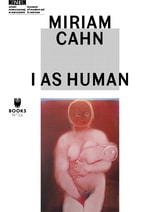
MIRIAM CAHN
I AS HUMANMarta Dziewanska et al.
Museum of Modern Art in Warsaw, 2019
Miriam Cahn: I as Human examines different facets of the artist’s prolific and troubling oeuvre, featuring contributions from art historians, critics, and philosophers including Kathleen Bühler, Paul B. Preciado, Elisabeth Lebovici, Adam Szymczyk, Natalia Sielewicz and .
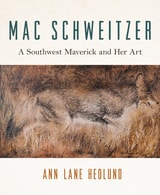
Mac Schweitzer
A Southwest Maverick and Her ArtAnn Lane Hedlund
University of Arizona Press, 2025
Southwest Books of the Year Top Pick
In Tucson during the 1950s, nearly everyone knew, or wanted to know, the southwestern artist Mac Schweitzer. Born Mary Alice Cox in Cleveland, Ohio, in 1921, she grew up a tomboy who adored horses, cowboys, and art. After training at the Cleveland School of Art and marrying, she adopted her maiden initials (M. A. C.) as her artistic name and settled in Tucson in 1946. With a circle of influential friends that included anthropologists, designer-craftsmen, and Native American artists, she joined Tucson’s “Early Moderns,” receiving exhibits, commissions, and awards for her artwork. When she died in 1962, Mac’s artistic legacy faded from public view, but her prize-winning works attest to a thriving career.
Author Ann Lane Hedlund draws from the artist’s letters, photo albums, and published reviews to tell the story of Mac’s creative and adventuresome life. Her watercolors, oil paintings, prints, and sculptures—a diverse body of work never before seen in public—range from naturalistic studies of Sonoran Desert animals to impressionistic landscapes to moody abstractions. A sharp observer of Indigenous life, she sketched and painted scenes of Navajo (Diné), Hopi, O’odham, and Yaqui people and events. These unique portrayals of the Southwest illustrate this saga of a maverick artist rediscovered.
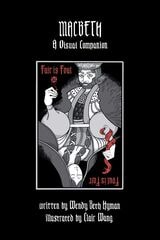
Macbeth
A Visual CompanionWendy Beth Hyman
Arizona Center for Medieval and Renaissance Studies, 2026
A collaboration between experienced Shakespeare scholar-educator Wendy Beth Hyman and her former student, emerging queer illustrator and animator Clair Wang, that seeks to visualize the literary language of Macbeth.
Macbeth: A Visual Companion offers a unique resource to readers, teachers, and performers of Shakespeare: an illustrated guide to those literary features of Shakespeare’s texts that can’t be represented on stage. How do you unravel a complex metaphor, an antiquated pun, an embedded allegory? What if allusions and images and similes could appear before the reader’s eyes? What if we could learn to read as Renaissance readers did: with fewer footnotes, but greater capacity to “see” literary language like chiasmus or equivocation? This is the aim of this creative collaboration.
Designed to be read alongside the free online editions provided by the Folger Shakespeare Library, Macbeth: A Visual Companion illuminates the most obscure features of a very complex play, empowering readers to unpack Shakespeare without reliance on watered-down modernizations or even staged productions. Hyman and Wang present a two-part strategy. One, illustrations that, rather than counterfeiting the action of drama, provide a visual representation of the inner worlds of language. And two, scholarly commentary that, rather than inertly explain or obtusely theorize difficulty, shows how literary devices themselves generate meaning. They thus model for readers how to access metaphors, allusions, and images in real time—just like Shakespeare’s original audience did. In the process, they aim to empower students and non-specialist teachers not only to understand Macbeth or Shakespeare more generally, but also to showcase a model for more confidently grappling with challenging literary texts of all kinds.
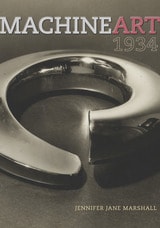
Machine Art, 1934
Jennifer Jane Marshall
University of Chicago Press, 2012
In 1934, New York’s Museum of Modern Art staged a major exhibition of ball bearings, airplane propellers, pots and pans, cocktail tumblers, petri dishes, protractors, and other machine parts and products. The exhibition, titled Machine Art, explored these ordinary objects as works of modern art, teaching museumgoers about the nature of beauty and value in the era of mass production.
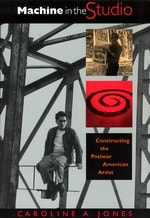
Machine in the Studio
Constructing the Postwar American ArtistCaroline A. Jones
University of Chicago Press, 1996
"Jones manages to analyze art works in their historical, political, and conceptual context, giving them a thickness of description rarely possible in standard art history. . . . This is one of the best books on the period I have read so far. To paraphrase Clement Greenberg, it gives contemporary art history a good name."—Serge Guilbaut, Bookforum
"Though we are some 30 years past the events of the '60s, our world is still largely responding to them, as this marvelous book amply demonstrates."—David McCarthy, New Art Examiner

Mackintosh's Masterwork
The Glassgow School of ArtEdited by William Buchanan
Rutgers University Press, 2004
Of the many practitioners of art nouveau in Great Britain, Charles Rennie Mackintosh (1868–1928) has outlasted them all. His work bridged the more ornate style of the later nineteenth century and the forms of international modernism that followed. Like Frank Lloyd Wright, with whom he is frequently compared, he is known for so thoroughly integrating art and decoration that the two became inseparable. His work has been honored by a major exhibition at the Metropolitan Museum of Art, and his designs have proliferated to such an extent that they can be found reproduced in posters, prints, jewelry, and even new buildings. His most important project was the Glasgow School of Art, which still functions as a highly prestigious art school. This glorious building is visited each year by thousands of tourists from around the world. Built over a dozen years, beginning in 1897, the Glasgow School of Art is Mackintosh’s greatest and most influential legacy.
This completely redesigned and heavily illustrated edition of Mackintosh’s Masterwork has been greatly expanded and contains newly discovered material about both the early life of the architect and the formative years in which his plans for the School of Art were executed.
Mad Men, Death and the American Dream
Elisabeth Bronfen
Diaphanes, 2016
We are drawn to Mad Men’s dapper cast of characters, argues Elisabeth Bronfen, because, although the series has drawn praise for its depiction of the 1960s and ’70s, it speaks equally well to cultural concerns of the present. The prototypical con man, Don makes a precarious journey from poverty to fame and prosperity that maps the pursuit of moral perfectionism that features prominently throughout American cultural history. Yet a lingering sense of dissatisfaction hints that the lifestyle Don strives for may be a mere manifestation of the illusory American dream—cemented in the same collective desires Don draws on to advertise cigarettes and luxury cars by day.
"Mad Men," Death and the American Dream takes readers through the cultural fantasies that underlie characters’ motivations in this sophisticated and immensely popular television series, showing how—then as now—we turn to fantasy in the face of conflicts that cannot be resolved in political reality. Fascinating and full of accessible insights, the book will appeal to the show’s many fans, as well as anyone interested in American studies, media studies, or cultural history.
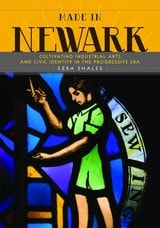
Made in Newark
Cultivating Industrial Arts and Civic Identity in the Progressive EraShales, Ezra
Rutgers University Press, 2010
This is the story of experimental exhibitions in the library and the founding of the Newark Museum Associationùa project in which cultural literacy was intertwined with civics and consumption. Local artisans demonstrated crafts, connecting the cultural institution to the department store, school, and factory, all of which invoked the ideal of municipal patriotism. Today, as cultural institutions reappraise their relevance, Made in Newark explores precedents for contemporary debates over the ways the library and museum engage communities, define heritage in a multicultural era, and add value to the economy.
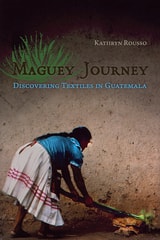
Maguey Journey
Discovering Textiles in GuatemalaKathryn Rousso
University of Arizona Press, 2010
In this fascinating book, Kathryn Rousso, an accomplished textile artist, takes a detailed look at the state of maguey culture, use, and trade in Guatemala. She has spent years traveling in Guatemala, highlighting maguey workers’ interactions in many locations and blending historical and current facts to describe their environments. Along the way, Rousso has learned the process of turning a raw leaf into beautiful and useful textile products and how globalization and modernization are transforming the maguey trade in Guatemala.
Featuring a section of full-color illustrations that follow the process from plant to weaving to product, Maguey Journey presents the story of this fiber over recent decades through the travels of an impassioned artist. Useful to cultural anthropologists, ethnobotanists, fiber artists, and interested travelers alike, this book offers a snapshot of how the industry stands now and seeks to honor those who keep the art alive in Guatemala.
Maine’s Lithographic Landscapes
Town and City Views, 1830-1870Earle G. Shettleworth Jr.
Brandeis University Press, 2020
During the nineteenth century, Americans celebrated their towns and cities through printed landscapes. In Maine, lithographs were commissioned from such leading artists as Fitz Henry Lane and talented, lesser known local artists, such as Esteria Butler. This book reproduces many of these works and provides insights into how these growing centers of commerce and industry viewed themselves and wished to be viewed by others.
It’s the perfect book for those who love Maine, both full-time residents and those who make it a beloved summer destination.
Published in association with the Bowdoin College Museum of Art on the occasion of the bicentennial of Maine statehood.
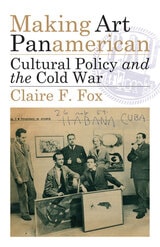
Making Art Panamerican
Cultural Policy and the Cold WarClaire F. Fox
University of Minnesota Press, 2013
Among the buildings on the National Mall in Washington, D.C., only the Pan American Union (PAU) houses an international organization. The first of many anticipated “peace palaces”constructed in the early twentieth century, the PAU began with a mission of cultural diplomacy, and after World War II its Visual Arts Section became a leader in the burgeoning hemispheric arts scene, proclaiming Latin America’s entrée into the international community as it forged connections between a growing base of middle-class art consumers on one hand and concepts of supranational citizenship and political and economic liberalism on the other.
Making Art Panamerican situates the ambitious visual arts programs of the PAU within the broader context of hemispheric cultural relations during the cold war. Focusing on the institutional interactions among aesthetic movements, cultural policy, and viewing publics, Claire F. Fox contends that in the postwar years, the PAU Visual Arts Section emerged as a major transfer point of hemispheric American modernist movements and played an important role in the consolidation of Latin American art as a continental object of study.
As it traces the careers of individual cultural policymakers and artists who intersected with the PAU in the two postwar decades—such as Concha Romero James, Charles Seeger, José Gómez Sicre, José Luis Cuevas, and Rafael Squirru—the book also charts the trajectories and displacements of sectors of the U.S. and Latin American intellectual left during a tumultuous interval that spans the Mexican Revolution, the Spanish Civil War, the New Deal, and the early cold war. Challenging the U.S. bias of conventional narratives about Panamericanism and the postwar shift in critical values from realism to abstraction, Making Art Panamerican illuminates the institutional dynamics that helped shape aesthetic movements in the critical decades following World War II.

Making Believe
Questions About Mennonites and ArtMagdalene Redekop
University of Manitoba Press, 2020
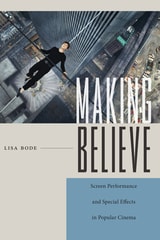
Making Believe
Screen Performance and Special Effects in Popular CinemaBode, Lisa
Rutgers University Press, 2017
Making Believe incorporates North American film reviews and editorials, actor and crew interviews, trade and fan magazine commentary, actor training manuals, and film production publicity materials to discuss the shifts in screen acting practice and philosophy around transfiguring makeup, doubles, motion capture, and acting to absent places or characters. Along the way it considers how performers and visual and special effects crew work together, and struggle with the industry, critics, and each other to define the aesthetic value of their work, in an industrial system of technological reproduction. Bode opens our eyes to the performing illusions we love and the tensions we experience in wanting to believe in spite of our knowledge that it is all make believe in the end.
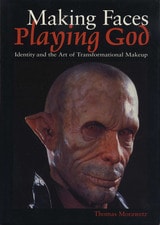
Making Faces, Playing God
Identity and the Art of Transformational MakeupBy Thomas Morawetz
University of Texas Press, 2001
Wearing a mask—putting on another face—embodies a fundamental human fantasy of inhabiting other bodies and experiencing other lives. In this extensively illustrated book, Thomas Morawetz explores how the creation of transformational makeup for theatre, movies, and television fulfills this fantasy of self-transformation and satisfies the human desire to become "the other."
Morawetz begins by discussing the cultural role of fantasies of transformation and what these fantasies reveal about questions of personal identity. He next turns to professional makeup artists and describes their background, training, careers, and especially the techniques they use to create their art. Then, with numerous before-during-and-after photos of transformational makeups from popular and little-known shows and movies, ads, and artist's demos and portfolios, he reveals the art and imagination that go into six kinds of mask-making—representing demons, depicting aliens, inventing disguises, transforming actors into different (older, heavier, disfigured) versions of themselves, and creating historical or mythological characters.
Making History Move
Five Principles of the Historical FilmKim Nelson
Rutgers University Press, 2024
Making Home in Havana
Pietropaolo, Vincenzo
Rutgers University Press, 2002
Havana is a city that rarely fails to captivate. But much of the unique beauty and culture of this historic city is rapidly disappearing. As Cuban society finds itself at a crossroads, Havana is more than ever a city on the edge, for although frozen in time as a consequence of Fidel Castro’s revolution, it has certainly not been well preserved. Time, climate, and neglect have eroded a rare architectural legacy, making the need to document this heritage even more pressing than ever before.
Making Home in Havana is an elegant book of photographs and testimonies, recording, questioning, and evoking the meaning of place — in particular, the meaning of home. The combination of fine photography and the words of residents of former palaces, humble apartments, and other dwellings offer us an irresistible portrait of Havana that might otherwise be lost forever.Vincenzo Pietropaolo and Cecelia Lawless have made numerous visits to Havana in order to fully understand and convey the essence of what home means to the inhabitants of the dwellings of the El Vedado and Centro Habana neighborhoods. Together, they—and we—explore how a building becomes a home through its human history as well as its architectural features. With some renovation already underway in colonial Havana, they concentrate on largely unexplored and unrecognized sections that continue to fall into ruin. The intimacy of their connection with the buildings and people offers us a rare combination of documentary realism and high art. Buildings and people speak their histories to us in classic humanistic style. Residents of Havana tell their stories of lifelong efforts to turn decay into beauty, while the photographer’s evocative pictures enable us to feel exactly what they are talking about — a creation of time and space called home.
Making Ideas Visible in the Eighteenth Century
Jennifer Milam
University of Delaware Press, 2022
Making It Up Together
The Art of Collective Improvisation in Balinese Music and BeyondLeslie A. Tilley
University of Chicago Press, 2019
Through two contrasting Balinese case studies—of the reyong gong chime’s melodic norot practice and the interlocking drumming tradition kendang arja—Tilley proposes and tests analytical frameworks for examining collectively improvised performance. At the micro-level, Tilley’s analyses offer insight into the note-by-note decisions of improvising performers; at the macro-level, they illuminate larger musical, discursive, structural, and cultural factors shaping those decisions. This multi-tiered inquiry reveals that unpacking how performers play and imagine as a collective is crucial to understanding improvisation and demonstrates how music analysis can elucidate these complex musical and interactional relationships.
Highlighting connections with diverse genres from various music cultures, Tilley’s examinations of collective improvisation also suggest rich potential for cross-genre exploration. The surrounding discussions point to larger theories of communication and interaction, creativity and cognition that will be of interest to a range of readers—from ethnomusicologists and music theorists to cognitive psychologists, jazz studies scholars, and improvising performers. Setting new parameters for the study of improvisation, Making It Up Together opens up fresh possibilities for understanding the creative process, in music and beyond.
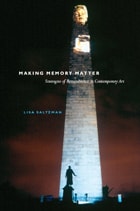
Making Memory Matter
Strategies of Remembrance in Contemporary ArtLisa Saltzman
University of Chicago Press, 2006
In an ancient account of painting’s origins, a woman traces the shadow of her departing lover on the wall in an act that anticipates future grief and commemoration. Lisa Saltzman shows here that nearly two thousand years after this story was first told, contemporary artists are returning to similar strategies of remembrance, ranging from vaudevillian silhouettes and sepulchral casts to incinerated architectures and ghostly processions.
Exploring these artists’ work, Saltzman demonstrates that their methods have now eclipsed painting and traditional sculpture as preeminent forms of visual representation. She pays particular attention to the groundbreaking art of Krzysztof Wodiczko, who is known for his projections of historical subjects; Kara Walker, who creates powerful silhouetted images of racial violence in American history; and Rachel Whiteread, whose work centers on making casts of empty interior spaces. Each of the artists Saltzman discusses is struggling with the roles that history and memory have come to play in an age when any historical statement is subject to question and doubt. In identifying this new and powerful movement, she provides a framework for understanding the art of our time.
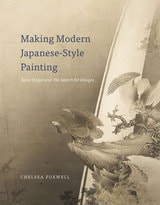
Making Modern Japanese-Style Painting
Kano Hogai and the Search for ImagesChelsea Foxwell
University of Chicago Press, 2015
Chelsea Foxwell sheds light on interlinked trends in Japanese nationalist discourse, government art policy, American and European commentary on Japanese art, and the demands of export. The seminal artist Kano Hogai (1828–88) is one telling example: originally a painter for the shogun, his art eventually evolved into novel, eerie images meant to satisfy both Japanese and Western audiences. Rather than simply absorbing Western approaches, nihonga as practiced by Hogai and others broke with pre-Meiji painting even as it worked to neutralize the rupture.
By arguing that fundamental changes to audience expectations led to the emergence of nihonga—a traditional interpretation of Japanese art for a contemporary, international market—Making Modern Japanese-Style Painting offers a fresh look at an important aspect of Japan’s development into a modern nation.
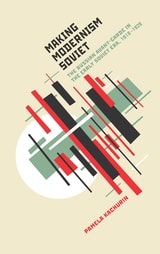
Making Modernism Soviet
The Russian Avant-Garde in the Early Soviet Era, 1918-1928Pamela Kachurin
Northwestern University Press, 2013
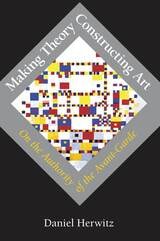
Making Theory/Constructing Art
On the Authority of the Avant-GardeDaniel Herwitz
University of Chicago Press, 1993
Spurred by the theoretical claims of Arthur Danto, a leader in the philosophy of the avant-garde, Herwitz reexamines the art and theory of major figures in the avant-garde movement including John Cage, Jean-François Lyotard, Jean Baudrillard, and Andy Warhol.
Making Things and Drawing Boundaries
Experiments in the Digital HumanitiesJentery Sayers
University of Minnesota Press, 2017
In Making Things and Drawing Boundaries, critical theory and cultural practice meet creativity, collaboration, and experimentation with physical materials as never before. Foregrounding the interdisciplinary character of experimental methods and hands-on research, this collection asks what it means to “make” things in the humanities. How is humanities research manifested in hand and on screen alongside the essay and monograph? And, importantly, how does experimentation with physical materials correspond with social justice and responsibility? Comprising almost forty chapters from ninety practitioners across twenty disciplines, Making Things and Drawing Boundaries speaks directly and extensively to how humanities research engages a growing interest in “maker” culture, however “making” may be defined.
Contributors: Erin R. Anderson; Joanne Bernardi; Yana Boeva; Jeremy Boggs; Duncan A. Buell; Amy Burek; Trisha N. Campbell; Debbie Chachra; Beth Compton; Heidi Rae Cooley; Nora Dimmock; Devon Elliott; Bill Endres; Katherine Faull; Alexander Flamenco; Emily Alden Foster; Sarah Fox; Chelsea A. M. Gardner; Susan Garfinkel; Lee Hannigan; Sara Hendren; Ryan Hunt; John Hunter; Diane Jakacki; Janelle Jenstad; Edward Jones-Imhotep; Julie Thompson Klein; Aaron D. Knochel; J. K. Purdom Lindblad; Kim Martin; Gwynaeth McIntyre; Aurelio Meza; Shezan Muhammedi; Angel David Nieves; Marcel O’Gorman; Amy Papaelias; Matt Ratto; Isaac Record; Jennifer Reed; Gabby Resch; Jennifer Roberts-Smith; Melissa Rogers; Daniela K. Rosner; Stan Ruecker; Roxanne Shirazi; James Smithies; P. P. Sneha; Lisa M. Snyder; Kaitlyn Solberg; Dan Southwick; David Staley; Elaine Sullivan; Joseph Takeda; Ezra Teboul; William J. Turkel; Lisa Tweten.
Making a Canon
Ananda K. Coomaraswamy, Sri Lanka, and the Place of Buddhist ArtJanice Leoshko
University of Chicago Press, 2024
An early interpreter of Buddhist art to the West, Ananda Kentish Coomaraswamy laid the foundation of what would become the South Asian visual canon, particularly through his efforts to understand how Buddhist art emerged and developed. In Making a Canon, Janice Leoshko examines how Coomaraswamy’s experience as the director of a mineralogical survey in Sri Lanka shaped his understanding of South Asian art and religion. Along the way, she reveals how Coomaraswamy’s distinctive repetition of Sri Lankan visual images in his work influenced the direction of South Asia’s canon formation and left a lasting impression on our understanding of Buddhist art.
Making the Modern
Industry, Art, and Design in AmericaTerry Smith
University of Chicago Press, 1993
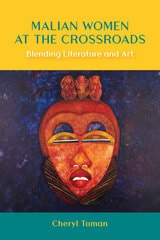
Malian Women at the Crossroads
Blending Literature and ArtCheryl Toman
Michigan State University Press, 2027
Mali’s history is defined by crossroads—geographic, cultural, and intellectual—linking to the Sahara and to long-standing trade routes. Francophone Malian women’s writing reflects this convergence, positioning literature as a site where diverse artistic and cultural traditions meet and evolve. In Malian Women at the Crossroads: Blending Literature and Art, writers such as Aoua Kéita, Aïcha Fofana, Adame Ba Konaré, Fatoumata Sidibé, Zakiyatou oualett Halatine, and Fadimata walett Oumar blur the boundaries between text and artistic practice, incorporating storytelling, visual arts, music, textile design, and other creative forms into their work. These interdisciplinary expressions both honor and reinterpret tradition, illuminating Mali’s cultural diversity while challenging divisions rooted in gender and ethnicity.
The voices of these writers denounce the conflict that has plagued Mali for over a decade and opt instead for showcasing creativity that preserves the memory of more promising times.
Mama's Gun
Black Maternal Figures and the Politics of TransgressionMarlo D. David
The Ohio State University Press, 2016
Taking inspiration from African American fiction, historical accounts of black life, Afrofuturism, and black popular culture in music and on screen, David turns her attention to Sapphire’s Push, Octavia Butler’s Dawn, and Suzan-Lori Parks’s Getting Mother’s Body as well as the performance art of Erykah Badu and the films of Tyler Perry. She draws out the implications of black maternal figures in these texts who balk at tradition and are far from “ideal.” David’s study shows how representations of blackness are deeply embedded in the neoliberal language of contemporary American politics and how black writers and performers resist such mainstream ideologies with their own transgressive black maternal figures.
Mamluk Jerusalem
An Architectural StudyMichael Hamilton Burgoyne
Council for British Research in the Levant, 1987
Manet's Modernism
or, The Face of Painting in the 1860sMichael Fried
University of Chicago Press, 1996
"Beautifully produced. . . . [Fried's] thought is always stimulating, if not provocative. This is an important book, which all students of modernism, in the broadest sense, will find rewarding."—Virginia Quarterly Review
"An astonishing piece of scholarship that will cause readers to rethink their understanding of Manet's influence, ambition, and achievement."—Gary Michael, Bloomsbury Review
"An audaciously brilliant book, long awaited and as essential reading for philosophers as for art historians."—Wayne Andersen, Common Knowledge
"Art history of the highest originality and distinction."—Arthur C. Danto, New York Times Book Review

Manifesto Now!
Instructions for Performance, Philosophy, PoliticsEdited by Laura Cull and Will Daddario
Intellect Books, 2013

Manifesto of Artistic Research
Silvia Henke, Dieter Mersch, Nicolaj van der Meulen, Thomas Strässle, and Jörg Wiesel
Diaphanes, 2020
Mantegna and Painting as Historical Narrative
Jack M. Greenstein
University of Chicago Press, 1992
"Greenstein has raised the level of sophistication of the historical criticism of Renaissance painting by at least one whole notch; at the same time, he has written a book for everyone interested in problems of interpretation."—David Summers, University of Virginia
Mao Zedong’s “Talks at the Yan’an Conference on Literature and Art”
A Translation of the 1943 Text with CommentaryBonnie S. McDougall
University of Michigan Press, 1980
Mapping
David Greenhood
University of Chicago Press, 1964
"This book should be welcomed by all students of mapping, for it will take them in uncomplicated stages through the complexities of compiling a map. . . . Mr. Greenwood is to be congratulated on an excellent book."—C.J. Angus, Canadian Geographical Journal
"For the baggy and middle-aged who cannot afford skiing in Austria or sailing off Bimini, Greenhood invites his readers to a sort of intellectual excitement which neither skiing nor sailing could equal. . . . Unless you work professionally with maps to the degree that a navigator does, for instance, this book will fascinate and enthrall you."—Monroe Bush, American Forests
"A teacher who wishes to go into the classroom with a storehouse of knowledge and ideas will find this a remarkable book. It is easy to read, and each page contains information which can be fed into the work in progress no matter which area of the world is being studied."—Instructor
Mapping Modernisms
Art, Indigeneity, ColonialismElizabeth Harney and Ruth B. Phillips, editors
Duke University Press, 2018
Contributors. Bill Anthes, Peter Brunt, Karen Duffek, Erin Haney, Elizabeth Harney, Heather Igloliorte, Sandra Klopper, Ian McLean, Anitra Nettleton, Chika Okeke-Agulu, Ruth B. Phillips, W. Jackson Rushing III, Damian Skinner, Nicholas Thomas, Norman Vorano
Mapping The Empty
Eight Artists And NevadaWilliam L. Fox
University of Nevada Press, 1999

Mapping an Indigenous Future
The Uppsala Map of Colonial Mexico CityJennifer R. Saracino
University of Texas Press, 0
The only known Indigenous-authored rendering of Mexico City from the sixteenth century.
Rediscovered in a Swedish library in the 1800s, the Uppsala Map of colonial Mexico City is a crucial Indigenous-authored document. Nearly a square meter, it was created by Nahua artists in 1540 shortly after the Spanish invasion. The Franciscan-trained artists have long been characterized as having passively adopted European aesthetics in their representation.
Jennifer Saracino challenges this view, arguing that the artists purposefully blended both Nahua and European visual strategies to legitimize and improve their position in colonial society. Building upon archival, ethnohistorical, and archaeological research, Saracino reinterprets the map’s network of roads and waterways, agricultural and urban features, glyphs, and depictions of Nahua people. Saracino argues that, amid dispossession and exploitation, the artists made a visual case for Nahuas to steward the local population and land in collaboration with colonial officials as privileged intermediaries. Challenging the assumption that the map was made merely in service to the crown, Mapping an Indigenous Future contends that these Nahua mapmakers capitalized on their proximity to viceregal elites to appeal for their rightful role as custodians of New Spain.
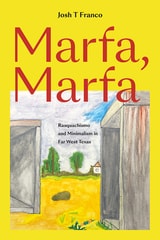
Marfa, Marfa
Rasquachismo and Minimalism in Far West TexasJosh T Franco
Duke University Press, 2026
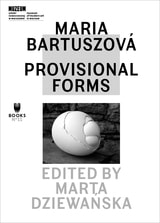
Maria Bartuszová
Provisional FormsEdited by Marta Dziewanska
Museum of Modern Art in Warsaw, 2015
Working alone behind the Iron Curtain, Bartuszová was one of a number of female artists who not only experimented formally and embarked intuitively on new themes, but who, because they were at odds with mainstream modernist trends, remained in isolation or in a marginalized position. Revealing her dynamic treatment of plaster—a material that, from a sculptor’s point of view, is both primitive and common—the book deftly reveals how Bartuszová experimented with materials, never hesitating to treat tradition, accepted norms, and trusted techniques as simply transitory and provisional. Offering a much-needed history of a vibrant body of work, Maria Bartuszová: Provisional Forms is an important contribution to the literature on great female artists.
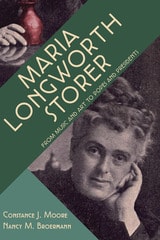
Maria Longworth Storer
From Music and Art to Popes and PresidentsConstance J. Moore; Nancy M. Broermann
Ohio University Press, 2019
Published by the University of Cincinnati Press
While the adage may go, “Behind every great man is a great woman,” the story of Maria Longworth Storer necessitates a new adage—at the front of every great city is a great woman. After being shunted into the biographies and history books of other people, Longworth Storer is now finally given center stage on the one hundred and seventieth anniversary of her birth.
Maria Longworth Storer: From Music and Art to Popes and Presidents is the most comprehensive biography of this one of a kind Cincinnatian. Known as the founder of the first female-run manufacturing company in the United States, Rookwood Pottery, Longworth Storer was passionate about women’s rights, her city, and issues of poverty and the arts. She owned Rookwood pottery for nine years, and then transferred ownership after earning recognition at the Exhibition of American Art Industry in Philadelphia and receiving a gold medal at the Exposition Universelle in Paris. Aside from her success with Rookwood, Longworth Storer was central to making the Queen City the major cultural landmark it is today. Although the rest of her life was no less remarkable as the wife of notorious diplomat Bellamy Storer, later embroiled in the famous Roosevelt-Storer scandal, little has been written about her contributions and exploits in diplomatic relations and her powerful influence on turn-of-the-twentieth-century political leaders.
Featuring new archival research, and never before seen photos of the Storer family, authors Constance J. Moore and Nancy M. Broermann have compiled a portrait of Maria Longworth Storer that is rich in detail, fitting to both the wide, often eclectic, breadth of Longworth Storer’s projects, and to the depth of her impact on leaders from Washington D.C. to Europe.
Moving through major moments in both American and Cincinnati history, and intersecting with significant historical figures including Teddy Roosevelt and William Howard Taft, Moore and Broermann expose the broader historical narrative of Longworth Storer’s life without letting her unique spirit and individual accomplishments become overshadowed by them.
Through thoughtful, balanced narrative, readers get to know a remarkable woman whose fascinating and dramatic life as a political figure, women’s rights advocate, and patron of the arts has had a long lasting legacy on the Queen City and the Shaping of our nation’s diplomatic policies.
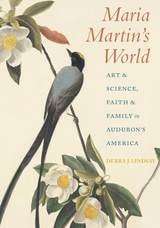
Maria Martin's World
Art and Science, Faith and Family in Audubon’s AmericaDebra J. Lindsay
University of Alabama Press, 2018
Maria Martin (1796–1863) was an evangelical Lutheran from Charleston, South Carolina, who became an accomplished painter within months of meeting John James Audubon. Martin met Audubon through her brother-in-law, Reverend John Bachman, who befriended Audubon while passing through Charleston on route to Florida where he expected to find new avian species. Martin was an amateur artist, but by the time Audubon left, she had familiarized herself with his style of drawing. Six months after their initial meeting, her background botanicals were deemed good enough to embellish Audubon’s exquisite bird paintings.
Martin’s botanicals and insects appeared in volumes two and four of The Birds of America (1830–1838). She painted snakes for John Edwards Holbrook’s North American Herpetology (1842) and assisted in drafting the descriptive taxonomies prepared by John Bachman—who later became her husband in 1848 following the death of her older sister—for The Viviparous Quadrupeds of North America (1846–1854). Until now, her contributions have been unknown to all but the most astute students of natural history and art history and a close circle of family and friends.
Maria Martin’s World is a heavily illustrated volume examining how Maria Martin learned to paint aesthetically beautiful botanicals with exacting accuracy. Drawing on deep research into archival documents and family-held artifacts, Debra Lindsay brings Maria Martin out from behind the curtain of obscurity and disinformation that has previously shrouded her and places her centrally in her own time and milieu. In the telling of Maria Martin’s story, Lindsay also uncovers many nuances of the behavior and actions of the two prominent men in her life that readers interested in Audubon and Bachman will find noteworthy.
Martin was a gifted artist recognized for having contributed beautiful paintings to a natural history. But beyond the natural world this is a biography of an evangelical Lutheran steeped in the faith of her German ancestors and raised to respect the patriarchal norms of her time. Maria Martin pursued her scientific and artistic interests only when they did not conflict with her religious and familial responsibilities.
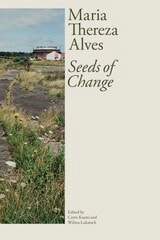
Maria Thereza Alves
Seeds of Changeedited by Carin Kuoni and Wilma Lukatsch
Amherst College Press, 2022
The project examines the influx and significance of imported plants, materializing at port cities across several continents: Marseille, Reposaari, Liverpool, Exeter and Topsham, Dunkerque, Bristol, Antwerp, and most recently New York, where it was awarded the Jane Lombard Prize for Art and Social Justice by the Vera List Center for Art and Politics at The New School. In each city, Seeds of Change has revealed the entangled relationship between “alien” plant species and the colonial maritime trade of goods and enslaved peoples, contrasting their seemingly innocuous beauty with the violent history associated with their arrival. By focusing on ballast flora, Alves invites us to de-border postcolonial historical narratives and consider a “borderless history.”
The first monograph of Alves’s historic project, Seeds of Change is edited by Carin Kuoni and Wilma Lukatsch and features essays by the artist as well as Katayoun Chamany, Seth Denizen, Jean Fisher, Yrjö Haila, Richard William Hill, Heli M. Jutila, J. Kēhaulani Kauanui, Lara Khaldi, Tomaž Mastnak, Marisa Prefer, and Radhika Subramaniam.
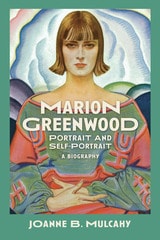
Marion Greenwood
Portrait and Self-Portrait—A BiographyJoanne B. Mulcahy
University of Alabama Press, 2025
This new biography reveals Marion Greenwood's central place in the pantheon of history’s remarkable women artists.
Marion Greenwood: Portrait and Self-Portrait—A Biography brings to life a woman who blazed through the twentieth-century art world. Born in Brooklyn in 1909, Greenwood thrived at storied institutions and arts centers such as the Art Students League, the studio of German modernist Winold Reiss, the Woodstock Colony, and Yaddo. In 1933, she catapulted to international fame as the first woman to paint a public mural in Mexico. Diego Rivera celebrated Greenwood as one of “the world’s greatest living women mural painters.” She traveled the globe to create award-winning portraits of people from diverse backgrounds, crossing racial, cultural, and class lines to reflect her vision for a more just world.
This biography, the first about Greenwood, is based on a decade of research and interviews. Author Joanne B. Mulcahy integrates the artist’s adventuresome personal life with her journey to artistic glory. Greenwood comes alive as a notable and spirited part of the heady art scenes of 1920s and 1930s Mexico, New York City, and Paris, and as one of two women artist-correspondents during World War II. After social realism and portraiture fell from favor, Greenwood doggedly stuck with what she called “the human thing” in art. Her freewheeling romantic life and independent spirit defied expectations for women, and she dismissed sexist critics who mixed acclaim for her work with commentary on her stunning beauty.
A feminist pioneer, Greenwood made a living as an artist in a time when few women could. In following Greenwood’s maverick path and artistic achievements, this book reveals her central place in the pantheon of history’s remarkable women artists.
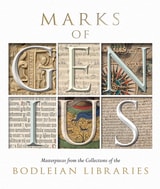
Marks of Genius
Masterpieces from the Collections of the Bodleian LibrariesStephen Hebron
Bodleian Library Publishing, 2014
Marks of Genius pays tribute to some of the most remarkable testaments to genius throughout human history, from ancient texts on papyrus and the extraordinary medieval manuscript The Douce Apocalypse to the renowned children’s work The Wind in the Willows. Bringing together some of the rarest and most impressive treasures in the collections of the Bodleian Libraries, it tells the story of each work’s creation and its journey through time, offering insight into the breadth and depth of its influence as well as and its power to fascinate.
Published to accompany an exhibition of the same name at the Morgan Library and Museum in New York, Marks of Genius celebrates with two hundred full-color illustrations works that constitute the pinnacle of human creativity and which we continue to restore and revisit—perhaps in the hopes that some of their remarkable brilliance will rub off.
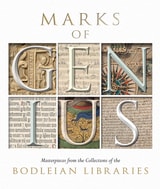
Marks of Genius
Masterpieces from the Collections of the Bodleian LibrariesStephen Hebron
Bodleian Library Publishing, 2014
Marks of Genius pays tribute to some of the most remarkable testaments to genius throughout human history, from ancient texts on papyrus and the extraordinary medieval manuscript The Douce Apocalypse to the renowned children’s work The Wind in the Willows. Bringing together some of the rarest and most impressive treasures in the collections of the Bodleian Libraries, it tells the story of each work’s creation and its journey through time, offering insight into the breadth and depth of its influence as well as and its power to fascinate.
Published to accompany an exhibition of the same name at the Morgan Library and Museum in New York, Marks of Genius celebrates with two hundred full-color illustrations works that constitute the pinnacle of human creativity and which we continue to restore and revisit—perhaps in the hopes that some of their remarkable brilliance will rub off.