Results by title
235 books match the query 'Attitudes' and 14 start with m
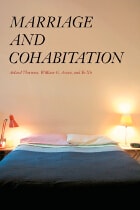
Marriage and Cohabitation
Arland Thornton, William G. Axinn, and Yu Xie
University of Chicago Press, 2007
In an era when half of marriages end in divorce, cohabitation has become more commonplace and those who do get married are doing so at an older age. So why do people marry when they do? And why do some couples choose to cohabit? A team of expert family sociologists examines these timely questions in Marriage and Cohabitation, the result of their research over the last decade on the issue of union formation.
Situating their argument in the context of the Western world’s 500-year history of marriage, the authors reveal what factors encourage marriage and cohabitation in a contemporary society where the end of adolescence is no longer signaled by entry into the marital home. While some people still choose to marry young, others elect to cohabit with varying degrees of commitment or intentions of eventual marriage. The authors’ controversial findings suggest that family history, religious affiliation, values, projected education, lifetime earnings, and career aspirations all tip the scales in favor of either cohabitation or marriage. This book lends new insight into young adult relationship patterns and will be of interest to sociologists, historians, and demographers alike.
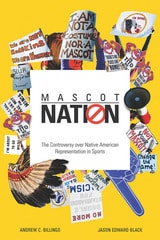
Mascot Nation
The Controversy over Native American Representations in SportsAndrew C. Billings, Jason Edward Black
University of Illinois Press, 2018
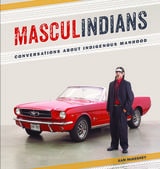
Masculindians
Conversations about Indigenous ManhoodSam McKegney
Michigan State University Press, 2014
Contributors: Taiaiake Alfred, Kim Anderson, Joanne Arnott, Joseph Boyden, Alison Calder, Warren Cariou, Jessica Danforth, Louise Halfe, Tomson Highway, Daniel Heath Justice, Janice C. Hill Kanonhsyonni, Lee Maracle, Neal McLeod, Daniel David Moses, Gregory Scofield, Thomas Kimeksum Thrasher, and Richard Van Camp.
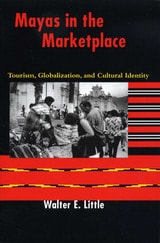
Mayas in the Marketplace
Tourism, Globalization, and Cultural IdentityBy Walter E. Little
University of Texas Press, 2004
2005 — Best Book Award – New England Council of Latin American Studies
Selling handicrafts to tourists has brought the Maya peoples of Guatemala into the world market. Vendors from rural communities now offer their wares to more than 500,000 international tourists annually in the marketplaces of larger cities such as Antigua, Guatemala City, Panajachel, and Chichicastenango. Like businesspeople anywhere, Maya artisans analyze the desires and needs of their customers and shape their products to meet the demands of the market. But how has adapting to the global marketplace reciprocally shaped the identity and cultural practices of the Maya peoples?
Drawing on over a decade of fieldwork, Walter Little presents the first ethnographic study of Maya handicraft vendors in the international marketplace. Focusing on Kaqchikel Mayas who commute to Antigua to sell their goods, he explores three significant issues:
- how the tourist marketplace conflates global and local distinctions.
- how the marketplace becomes a border zone where national and international, developed and underdeveloped, and indigenous and non-indigenous come together.
- how marketing to tourists changes social roles, gender relationships, and ethnic identity in the vendors' home communities.
Little's wide-ranging research challenges our current understanding of tourism's negative impact on indigenous communities. He demonstrates that the Maya are maintaining a specific, community-based sense of Maya identity, even as they commodify their culture for tourist consumption in the world market.
Men at Home
Imagining Liberation in Colonial and Postcolonial IndiaGyanendra Pandey
Duke University Press, 2025
Metroimperial Intimacies
Fantasy, Racial-Sexual Governance, and the Philippines in U.S. Imperialism, 1899-1913Victor Román Mendoza
Duke University Press, 2015
Millennials in Architecture
Generations, Disruption, and the Legacy of a ProfessionDarius Sollohub
University of Texas Press, 2019
Much has been written about Millennials, but until now their growing presence in the field of architecture has not been examined in depth. In an era of significant challenges stemming from explosive population growth, climate change, and the density of cities, Millennials in Architecture embraces the digitally savvy disruptors who are joining the field at a crucial time as it grapples with the best ways to respond to a changing physical world.
Taking a clear-eyed look at the new generation in the context of the design professions, Darius Sollohub begins by situating Millennials in a line of generations stretching back to early Modernism, exploring how each generation negotiates the ones before and after. He then considers the present moment, closely evaluating the significance of Millennial behaviors and characteristics (from civic-mindedness to collaboration, and time management in a 24/7 culture), all underpinned by fluency in the digital world. The book concludes with an assessment of the profound changes and opportunities that Millennial disruption will bring to education, licensure, and firm management. Encouraging new alliances, Millennials in Architecture is an essential resource for the architectural community and its stakeholders.
Misconceiving Merit
Paradoxes of Excellence and Devotion in Academic Science and EngineeringMary Blair-Loy and Erin A. Cech
University of Chicago Press, 2022
In Misconceiving Merit, sociologists Mary Blair-Loy and Erin A. Cech uncover the cultural foundations of a paradox. On one hand, academic science, engineering, and math revere meritocracy, a system that recognizes and rewards those with the greatest talent and dedication. At the same time, women and some racial and sexual minorities remain underrepresented and often feel unwelcome and devalued in STEM. How can academic science, which so highly values meritocracy and objectivity, produce these unequal outcomes?
Blair-Loy and Cech studied more than five hundred STEM professors at a top research university to reveal how unequal and unfair outcomes can emerge alongside commitments to objectivity and excellence. The authors find that academic STEM harbors dominant cultural beliefs that not only perpetuate the mistreatment of scientists from underrepresented groups but hinder innovation. Underrepresented groups are often seen as less fully embodying merit compared to equally productive white and Asian heterosexual men, and the negative consequences of this misjudgment persist regardless of professors’ actual academic productivity. Misconceiving Merit is filled with insights for higher education administrators working toward greater equity as well as for scientists and engineers striving to change entrenched patterns of inequality in STEM.
Missing
Youth, Citizenship, and Empire after 9/11Sunaina Marr Maira
Duke University Press, 2009
Bringing grounded ethnographic analysis to the critique of U.S. empire, Maira teases out the ways that imperial power affects the everyday lives of young immigrants in the United States. She illuminates the paradoxes of national belonging, exclusion, alienation, and political expression facing a generation of Muslim youth coming of age at this particular moment. She also sheds new light on larger questions about civil rights, globalization, and U.S. foreign policy. Maira demonstrates that a particular subjectivity, the “imperial feeling” of the present historical moment, is linked not just to issues of war and terrorism but also to migration and work, popular culture and global media, family and belonging.
Mobilizing Public Opinion
Black Insurgency and Racial Attitudes in the Civil Rights EraTaeku Lee
University of Chicago Press, 2002
Ultimately, Mobilizing Public Opinion is a timely, cautionary tale about how we view public opinion and a compelling testament to the potential power of ordinary citizens.
Monitoring Sweatshops
Workers, Consumers, And TheJill Esbenshade
Temple University Press, 2004
Mothers, Daughters, and Political Socialization
Two Generations at an American Women's CollegeKrista Jenkins
Temple University Press, 2013
Using a unique data set comparing mothers and daughters who attended Douglass College—the women's college of Rutgers University—twenty-five years apart, Krista Jenkins perceptively observes the changes in how women acquire their attitudes toward gender roles and behaviors in the post-women's movement years.
Mothers, Daughters, and Political Socialization examines the role of intergenerational transmission—the maternal influences on younger women—while also looking at differences among women in attitudes and behaviors relative to gender roles that might be attributed to the nature of the times during their formative years. How do daughters coming of age in an era when the women's movement is far less visible deal with gendered expectations compared to their mothers? Do they accept the contemporary status quo their feminist mothers fought so hard to achieve? Or, do they press forward with new goals?
Jenkins shows how contemporary women are socialized to accept or reject traditional gender roles that serve to undermine their equality.
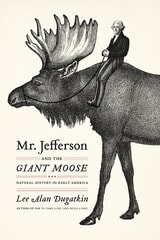
Mr. Jefferson and the Giant Moose
Natural History in Early AmericaLee Alan Dugatkin
University of Chicago Press, 2009
In the years after the Revolutionary War, the fledgling republic of America was viewed by many Europeans as a degenerate backwater, populated by subspecies weak and feeble. Chief among these naysayers was the French Count and world-renowned naturalist Georges-Louis Leclerc de Buffon, who wrote that the flora and fauna of America (humans included) were inferior to European specimens.
Thomas Jefferson—author of the Declaration of Independence, U.S. president, and ardent naturalist—spent years countering the French conception of American degeneracy. His Notes on Virginia systematically and scientifically dismantled Buffon’s case through a series of tables and equally compelling writing on the nature of his home state. But the book did little to counter the arrogance of the French and hardly satisfied Jefferson’s quest to demonstrate that his young nation was every bit the equal of a well-established Europe. Enter the giant moose.
The American moose, which Jefferson claimed was so enormous a European reindeer could walk under it, became the cornerstone of his defense. Convinced that the sight of such a magnificent beast would cause Buffon to revise his claims, Jefferson had the remains of a seven-foot ungulate shipped first class from New Hampshire to Paris. Unfortunately, Buffon died before he could make any revisions to his Histoire Naturelle, but the legend of the moose makes for a fascinating tale about Jefferson’s passion to prove that American nature deserved prestige.
In Mr. Jefferson and the Giant Moose, Lee Alan Dugatkin vividly recreates the origin and evolution of the debates about natural history in America and, in so doing, returns the prize moose to its rightful place in American history.
Muslims in a Post-9/11 America
A Survey of Attitudes and Beliefs and Their Implications for U.S. National Security PolicyRachel M. Gillum
University of Michigan Press, 2018
Muslims in a Post-9/11 America examines how public fears about Muslims in the United States compare with the reality of American Muslims’ attitudes on a range of relevant issues. While most research on Muslim Americans focuses on Arab Muslims, a quarter of the Muslim American population, Rachel Gillum includes perspectives of Muslims from various ethnic and national communities—from African Americans to those of Pakistani, Iranian, or Eastern European descent. Using interviews and one of the largest nationwide surveys of Muslim Americans to date, Gillum examines more than three generations of Muslim American immigrants to assess how segments of the Muslim American community are integrating into the U.S. social fabric, and how they respond to post-9/11 policy changes. Gillum’s findings challenge perceptions of Muslims as a homogeneous, isolated, un-American, and potentially violent segment of the U.S. population.
Despite these realities, negative political rhetoric around Muslim Americans persists. The findings suggest that the policies designed to keep America safe from terrorist attacks may have eroded one of law enforcement’s greatest assets in the fight against violent extremism—a relationship of trust and goodwill between the Muslim American community and the U.S. government. Gillum argues for policies and law enforcement tactics that will bring nuanced understandings of this diverse category of Americans and build trust, rather than alienate Muslim communities.