Results by title
56 books match the query 'Aviation & Space' and 6 start with m
ME109
Sreco Bradic
Amsterdam University Press, 2023
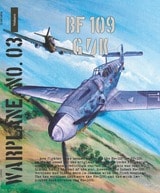
When the Messerschmitt design team headed by Walter Rethel started in 1934 with the work on a new fighter for the Luftwaffe this resulted in a fighter aircraft that gained the same fame as the British Spitfire. The new fighter type became known as the Me-109 (or Bf-109 where Bf stood for the original name Bayerische Flugzeugwerke) and when production started in 1937 this was continued until the end of the war. However, the latest ME-109 versions had little more in common with the first versions. The two versions that were in production until the end of the war were the Me-109G and the much improved last version the Me-109K.
[more]
Martin Mariner
Nico Braas
Amsterdam University Press, 2023
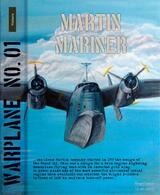
In 1937 The Glen Martin company started with the design of the model I62. This was a design for a twin engine high-wing monoplane flying boat with an inverted gull wing. As power plant one of the most powerful air-cooled radial engines then available was selected: the Wright R-200-6 Cyclone of 1600 hp maximum take-off power.
[more]
Master of the Air
William Tunner and the Success of Military AirliftRobert A. Slayton
University of Alabama Press, 2010
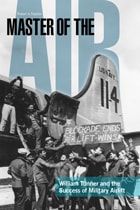
In 1948, just as the Cold War was settling into the form it would maintain for nearly half a century, major antagonists the US and the USSR began maneuvering into a series of dangerously hostile encounters. Trouble had broken out in Poland and Czechoslovakia, but it was in Germany, which had been at the heart of World Wars One and Two, that the first potentially explosive confrontation developed. The USSR, which had suffered more at Germany’s hands than the rest of the Allies combined, may have viewed developments there with heightened fear and irritability. When the western Allies moved to consolidate their areas of control in occupied Germany, the USSR responded by cutting off land access to West Berlin, holding over two million residents of that city hostage in an aggressive act of brinkmanship.
Into this difficult situation the US placed General William Henry Tunner. He was given a task that seemed doomed to failure—to supply a major city by air with everything it needed to survive from food to a winter’s supply of coal—and made it a brilliant success, astonishing the world in a major public relations defeat for the Soviets, and demonstrating the unexpected capacity of air fleets in a postwar world.
Into this difficult situation the US placed General William Henry Tunner. He was given a task that seemed doomed to failure—to supply a major city by air with everything it needed to survive from food to a winter’s supply of coal—and made it a brilliant success, astonishing the world in a major public relations defeat for the Soviets, and demonstrating the unexpected capacity of air fleets in a postwar world.
[more]
Mighty by Sacrifice
The Destruction of an American Bomber Squadron, August 29, 1944James L. Noles Sr. and James L. Noles Jr.
University of Alabama Press, 2009
The high cost of the Allied air offensive during World War II.
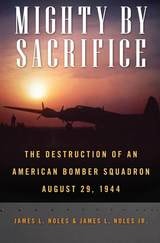
On August 29, 1944, the 15th U.S. Army Air Force unleashed 500 bombers against oil and rail targets throughout central Europe. It dispatched the 20th Squadron of the 2nd Bombardment Group on what they regarded as an easy assignment: attack the Privoser Oil Refinery and associated railroad yards at Moravska Ostrava, Czechoslovakia. This "milk run" deteriorated into the bloodiest day in the 2nd Bombardment Group's history: not a single one of the 20th Squadron's B-17 Flying Fortress bombers returned from the mission. Forty airmen were killed, another 46 spent the rest of the war as POWs, and only four, with the aid of the OSS and anti-German partisans, and sympathetic Czech civilians managed to evade capture.
The ninety airmen on the mission to Moravska Ostrava provide a remarkable personal window into the Allies' Combined Bomber Offensive at its height during WWII. In a microcosm, their stories encapsulate how the U.S. Army Air Forces built, trained, and employed one of the mightiest war machines ever seen. Their stories also illustrate, however, the terrible cost in lives demanded by that same machine.
[more]
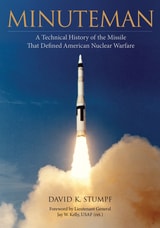
Minuteman
A Technical History of the Missile That Defined American Nuclear WarfareDavid K. Stumpf
University of Arkansas Press, 2021
In Minuteman: A Technical History of the Missile That Defined American Nuclear Warfare, David K. Stumpf demystifies the intercontinental ballistic missile program that was conceived at the end of the Eisenhower administration as a key component of the US nuclear strategy of massive retaliation. Although its nuclear warhead may have lacked power relative to that of the Titan II, the Minuteman more than made up for this in terms of numbers and readiness to launch—making it the ultimate ICBM.
Minuteman offers a fascinating look at the technological breakthroughs necessary to field this weapon system that has served as a powerful component of the strategic nuclear triad for more than half a century. With exacting detail, Stumpf examines the construction of launch and launch control facilities; innovations in solid propellant, lightweight inertial guidance systems, and lightweight reentry vehicle development; and key flight tests and operational flight programs—all while situating the Minuteman program in the context of world events. In doing so, the author reveals how the historic missile has adapted to changing defense strategies—from counterforce to mutually assured destruction to sufficiency.
Minuteman offers a fascinating look at the technological breakthroughs necessary to field this weapon system that has served as a powerful component of the strategic nuclear triad for more than half a century. With exacting detail, Stumpf examines the construction of launch and launch control facilities; innovations in solid propellant, lightweight inertial guidance systems, and lightweight reentry vehicle development; and key flight tests and operational flight programs—all while situating the Minuteman program in the context of world events. In doing so, the author reveals how the historic missile has adapted to changing defense strategies—from counterforce to mutually assured destruction to sufficiency.
[more]
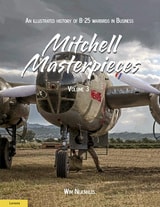
Mitchell Masterpieces 3
An Illustrated History of B-25 Warbirds in BusinessWim Nijenhuis
Amsterdam University Press, 2024
This is the third and final book about the North American B-25 Mitchell in service. The Volumes 1 and 2 of "Mitchell Masterpieces" dealt with the B-25s in military service. In this Volume 3, many B-25s are described which operated in civil service in all different countries.
After the Second World War, the B-25 got a role in civil aviation. Many airplanes were stripped of their armament and other military equipment and often came through auctions in the civilian market. They came in private hands and were deployed for transportation of personnel or goods, for training, fire fighting, agricultural spraying of other purposes. Some were converted into a luxury business plane and some were used in the film industry.
This book should serve as a general view of the companies, organisations and owners and the B-25s they flew. Moreover, the book would not be complete if no attention was paid to the civilian B-25s in the various museums and the warbird circuit. All this is described in detail and provided with about 750 pictures, many of which are in full colour.
[more]