Results by title
57 books match the query 'Aztecs' and 6 start with m
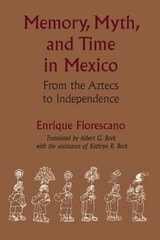
Memory, Myth, and Time in Mexico
From the Aztecs to IndependenceBy Enrique Florescano
University of Texas Press, 1994
In Memory, Myth, and Time in Mexico, noted Mexican scholar Enrique Florescano’s Memoria mexicana becomes available for the first time in English. A collection of essays tracing the many memories of the past created by different individuals and groups in Mexico, the book addresses the problem of memory and changing ideas of time in the way Mexicans conceive of their history. Original in perspective and broad in scope, ranging from the Aztec concept of the world and history to the ideas of independence, this book should appeal to a wide readership.
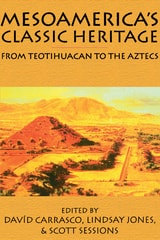
Mesoamerica's Classic Heritage
From Teotihuacan to the AztecsDavíd Carrasco
University Press of Colorado, 2000
The contributors to Mesoamerica's Classic Heritage offer a wide range of individual interpretations, but they agree that Teotihuacan, more than any other pre-Hispanic center, was a paradigmatic source that formed the art and architecture, cosmology and ritual life, and conceptions of urbanism and political authority for significant parts of the Mesoamerican world. This great city achieved the prestige of being the site of the creation of the cosmos and of effective social and political space in Mesoamerica through its capacity to symbolize, perform, and export its imperial authority. These essays reveal the different ways in which Teotihuacan's classic heritage both fed and fed on the dynamic interactivity of the entire area. Whether or not a paradigm shift in Mesoamerican studies is taking place, certainly a new contextual understanding of Teotihuacan and the diversities and unities of Mesoamerica is emerging in these pages.
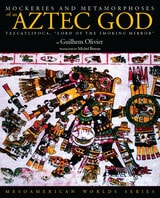
Mockeries and Metamorphoses of an Aztec God
Tezcatlipoca, "Lord of the Smoking Mirror"Guilhem Olivier
University Press of Colorado, 2003
An enigmatic and melodramatic figure, the Lord of the Smoking Mirror was both drunken seducer and mutilated transgressor and although he severely punished those who violated pre-Columbian moral codes, he also received mortal confessions. A patron deity to kings and warriors as well as a protector of slaves, Tezcatlipoca often clashed in epic confrontations with his "enemy brother" Quetzalcoatl, the famed Feathered Serpent. Yet these powers of Mesoamerican mythology collaborated to create the world, and their common attributes hint at a dual character.
In a sophisticated, systematic tour through the sources and problems related to Tezcatlipoca's protean powers and shifting meanings, Olivier guides readers through the symbolic names of this great god, from his representation on skins and stones to his relationship to ritual knives and other deities.
Drawing upon iconographic material, chronicles written in Spanish and in Nahuatl, and the rich contributions of ethnography, Mockeries and Metamorphoses of an Aztec God - like the mirror of Tezcatlipoca in which the fates of mortals were reflected - reveals an important but obscured portion of the cosmology of pre-Columbian Mexico.
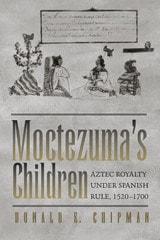
Moctezuma's Children
Aztec Royalty under Spanish Rule, 1520–1700By Donald E. Chipman
University of Texas Press, 2005
Though the Aztec Empire fell to Spain in 1521, three principal heirs of the last emperor, Moctezuma II, survived the conquest and were later acknowledged by the Spanish victors as reyes naturales (natural kings or monarchs) who possessed certain inalienable rights as Indian royalty. For their part, the descendants of Moctezuma II used Spanish law and customs to maintain and enhance their status throughout the colonial period, achieving titles of knighthood and nobility in Mexico and Spain. So respected were they that a Moctezuma descendant by marriage became Viceroy of New Spain (colonial Mexico's highest governmental office) in 1696.
This authoritative history follows the fortunes of the principal heirs of Moctezuma II across nearly two centuries. Drawing on extensive research in both Mexican and Spanish archives, Donald E. Chipman shows how daughters Isabel and Mariana and son Pedro and their offspring used lawsuits, strategic marriages, and political maneuvers and alliances to gain pensions, rights of entailment, admission to military orders, and titles of nobility from the Spanish government. Chipman also discusses how the Moctezuma family history illuminates several larger issues in colonial Latin American history, including women's status and opportunities and trans-Atlantic relations between Spain and its New World colonies.
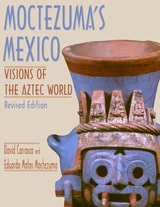
Moctezuma's Mexico
Visions of the Aztec World, Revised EditionDavíd Carrasco
University Press of Colorado, 2003
With nearly 150 full-color illustrations, Moctezuma’s Mexico is an important and handsome book that will appeal to scholars and students of Mexico’s indigenous past.
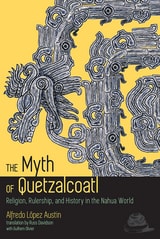
Myth of Quetzalcoatl
Religion, Rulership, and History in the Nahua WorldAlfredo López Austin
University Press of Colorado, 2015
The Myth of Quetzalcoatl is a translation of Alfredo López Austin’s 1973 book Hombre-Dios: Religión y politica en el mundo náhuatl. Despite its pervasive and lasting influence on the study of Mesoamerican history, religion in general, and the Quetzalcoatl myth in particular, this work has not been available in English until now.
The importance of Hombre-Dios and its status as a classic arise from its interdisciplinary approach, creative use of a wide range of source material, and unsurpassed treatment of its subject—the nature and content of religious beliefs and rituals among the native populations of Mesoamerica and the manner in which they fused with and helped sanctify political authority and rulership in both the pre- and post-conquest periods. Working from a wide variety of previously neglected documentary sources, incorporating myth, archaeology, and the ethnography of contemporary Native Americans including non-Nahua peoples, López Austin traces the figure of Quetzalcoatl as a “Man-God” from pre-conquest times, while Russ Davidson’s translator’s note, Davíd Carrasco's foreword, and López Austin’s introduction place the work within the context of modern scholarship.
López Austin’s original work on Quetzalcoatl is a pivotal work in the field of anthropology, and this long-overdue English translation will be of significance to historians, anthropologists, linguists, and serious readers interested in Mesoamerica.