Results by title
83 books match the query 'Birth' and 4 start with m

Making Security Social
Disability, Insurance, and the Birth of the Social Entitlement State in GermanyGreg Eghigian
University of Michigan Press, 2000

Meat and the Birth of Rome
Zooarchaeology, Foodways, and Religious RitualsVictoria C. Moses
University of Alabama Press, 2026
Meat and the Birth of Rome explores faunal remains from archaeological sites dating to the early Iron Age through early Republican period in Rome and its environs and challenges a prevailing view of Rome’s exceptionalism. Victoria C. Moses tempers the myth by illuminating the roles of meat production, distribution, and consumption and ritual sacrifice in the social hierarchy, economy, and religious practices as Rome grew. During the transformative period around the eighth century BCE, Romans conserved older foodways and their diverse ritual practices. These findings within the broader zooarchaeological data from peninsular Italy show that, despite Rome’s later success, it shared many early characteristics with its neighbors.
This compelling narrative adds to the current archaeological conversations and research on the history of the eternal city.
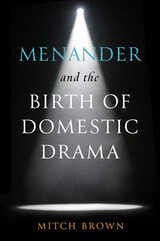
Menander and the Birth of Domestic Drama
Mitch Brown
University of Wisconsin Press, 2024
The design of the Greek stage was such that the interiors of houses were almost never shown, which posed difficulties for a playwright interested in staging the domestic lives of ordinary people. Here, Mitch Brown dissects how Menander responded to this challenge. As Brown demonstrates, Menander successfully conjured offstage action and even characters in the audiences’ imaginations; these offstage universes, Brown argues, are fundamental to understanding Menander’s dramaturgy and its reception in later centuries. Menander’s offstage methods and the new type of play (domestic drama) that he inaugurated directly influenced Western theater into the early modern period—and the impact of his innovations can still be seen indirectly today.
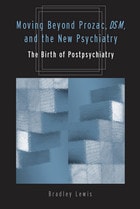
Moving Beyond Prozac, DSM, and the New Psychiatry
The Birth of PostpsychiatryBradley Lewis
University of Michigan Press, 2006
--Paul McHugh, Johns Hopkins University School of Medicine
"Remarkable in its breadth-an interesting and valuable contribution to the burgeoning literature of the philosophy of psychiatry."
--Christian Perring, Dowling College
Moving Beyond Prozac, DSM, and the New Psychiatry looks at contemporary psychiatric practice from a variety of critical perspectives ranging from Michel Foucault to Donna Haraway. This contribution to the burgeoning field of medical humanities contends that psychiatry's move away from a theory-based model (one favoring psychoanalysis and other talk therapies) to a more scientific model (based on new breakthroughs in neuroscience and pharmacology) has been detrimental to both the profession and its clients. This shift toward a science-based model includes the codification of the Diagnostic and Statistical Manual of Mental Disorders to the status of standard scientific reference, enabling mental-health practitioners to assign a tidy classification for any mental disturbance or deviation. Psychiatrist and cultural studies scholar Bradley Lewis argues for "postpsychiatry," a new psychiatric practice informed by the insights of poststructuralist theory.