Results by title
3071 books match the query 'Business & Economics' and 177 start with m
MIT and the Transformation of American Economics
E. Roy Weintraub
Duke University Press, 0
MRE vol 35 num 1
The University of Chicago Press
University of Chicago Press Journals, 2020

Macroeconomic Consequences of Farm Support Policies
A. B. Stoeckel, David Vincent and Sandy Cuthbertson
Duke University Press, 1989
The scholars and experts here assembled present for the first time a quantification and analysis of the impact upon the world economy of reduction or elimination of agricultural protectionism. They question why, give the magnitude of the problem, inferior policies endure despite the weight of evidence that they have failed. The answer they derive is that there is no general understanding of the true cost of the failure, and therefore it is necessary to initiate reform from outside agricultural circles.
Macroeconomic Linkage
Savings, Exchange Rates, and Capital FlowsEdited by Takatoshi Ito and Anne O. Krueger
University of Chicago Press, 1994
These fourteen papers are organized around four themes: the overall determinants of growth and trading relations in the East Asian region; monetary policies in relation to capital controls and capital accounts; the impact of exchange rate behavior on industrial structure; and the potential for greater regional integration. The contributors examine interactions among exchange rate movements, trade balances, and capital flows; how government monetary policy affects capital flows; the effect of exchange rates on industrial structure, inventories, and prices; and the extent of regional integration in East Asia.
Macroeconomic Policies and the Development of Markets in Transition Economies
Fabrizio Coricelli
Central European University Press, 1998
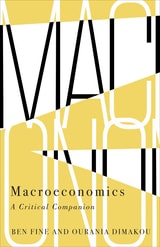
Macroeconomics
A Critical CompanionBen Fine and Ourania Dimakou
Pluto Press, 2016
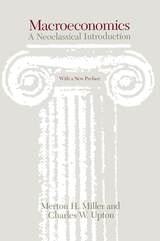
Macroeconomics
A Neoclassical IntroductionMerton H. Miller and Charles W. Upton
University of Chicago Press, 1986
"The most innovative approach to introducing macroeconomics that I have seen. . . . A 'classic' in the sense that every serious student of macroeconomics is likely to want it in his or her library."—John P. Gould, University of Chicago
"The task the authors set out to perform is ambitious: to write a macroeconomics textbook structured around a neoclassical growth model. And in this task they have succeeded."—Clifford W. Smith, Jr., Journal of Finance
"This is a superb book. As a vehicle for teaching economics I have to place it right behind Henderson and Quant (Microeconomics) and Dorfman, Samuelson, and Solow (Linear Programming). Moreover, it is an exciting book both to read and to think about. . . . It is not just that these authors have something to say, but their way of saying it is generally superior."—F. E. Banks, Kyklos
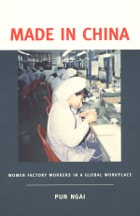
Made in China
Women Factory Workers in a Global WorkplacePun Ngai
Duke University Press, 2005
Pun Ngai conducted ethnographic work at an electronics factory in southern China’s Guangdong province, in the Shenzhen special economic zone where foreign-owned factories are proliferating. For eight months she slept in the employee dormitories and worked on the shop floor alongside the women whose lives she chronicles. Pun illuminates the workers’ perspectives and experiences, describing the lure of consumer desire and especially the minutiae of factory life. She looks at acts of resistance and transgression in the workplace, positing that the chronic pains—such as backaches and headaches—that many of the women experience are as indicative of resistance to oppressive working conditions as they are of defeat. Pun suggests that a silent social revolution is underway in China and that these young migrant workers are its agents.
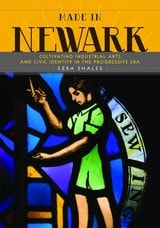
Made in Newark
Cultivating Industrial Arts and Civic Identity in the Progressive EraShales, Ezra
Rutgers University Press, 2010
This is the story of experimental exhibitions in the library and the founding of the Newark Museum Associationùa project in which cultural literacy was intertwined with civics and consumption. Local artisans demonstrated crafts, connecting the cultural institution to the department store, school, and factory, all of which invoked the ideal of municipal patriotism. Today, as cultural institutions reappraise their relevance, Made in Newark explores precedents for contemporary debates over the ways the library and museum engage communities, define heritage in a multicultural era, and add value to the economy.
Make Your Job a Calling Resource Guide
Bryan J. Dik
Templeton Press, 2014
It is designed to assist instructors, book study leaders, career counselors, human resources professionals, and individual readers who seek to delve deeper into the book, Make Your Job a Calling. In each chapter of the guide, the reader is given (1) a chapter summary, (2) general themes, (3) discussion questions, and (4) suggested activities. The suggested activities often involve a free write where you are encouraged to write your thoughts down without editing yourself. In a free-write you are not concerned with proper grammar or punctuation. Rather, you write your immediate thoughts down in a free-flowing manner. This allows for deep exploration and can inform rich discussion of ideas in a productive learning environment.
The elements in this guide are designed to facilitate the reflection and discussion process, providing readers with useful starting points. Of course, not all group leaders will find every question or activity useful for their particular group, which is why we encourage flexible use of the material. By all means, pick, choose, add to, and adapt according to your sense of what will be most helpful for the group you are leading.
Whether you feel stuck or overwhelmed, hopeful or uncertain, or energized and ready to go, this guide can assist you in that journey.
Make Your Job a Calling
How the Psychology of Vocation Can Change Your Life at WorkBryan J. Dik
Templeton Press, 2013
Make the Connection
Improve Your Communication at Work and at HomeAdubato, Steve
Rutgers University Press, 2006
In this collection of compelling and practical essays, Emmy Award–winning broadcaster, newspaper columnist, and motivational speaker Steve Adubato shares concrete tips and tools that will help you connect more effectively at work, at home, under pressure, in leadership roles, and in high-tech environments. From avoiding unnecessary arguments with your spouse to coaching a valuable, yet difficult employee, Adubato’s essays delve into the key factors that motivate people to act and respond the way that they do.
You will find answers to some of the most common questions about public speaking as well as advice on overcoming its anxieties. Whether the forum is a PTA meeting or a large professional function, essays explore topics such as:
- Why even practiced speakers sometimes experience stage fright
- How to keep your audience awake and interested in what you are saying
You will learn essential skills for interacting in the workplace, including:
- How to negotiate a good deal and still be honest and straight
- How to keep team projects from falling apart
- How to conduct yourself in confrontational situations, such as receiving a public insult
Drawing on examples set by public figures, including Bill Clinton, Rudy Giuliani, Mario Cuomo, Martha Stewart, Jack Welch, Joe Torre, and many others, Adubato addresses the unique communication challenges that those in leadership positions face. Essays examine:
· What ordinary people can learn from leaders in high-profile positions
· Why so many leaders have difficulty taking responsibility and apologizing for their actions
As technology continues to provide opportunities for quicker and more visual communication, Adubato also lets you know when hi-tech bells and whistles get in the way of making a more personal and human connection. For instance,
· Why do we hide behind e-mail messages when we have something very difficult to say?
· How does communication deteriorate when cell phones and e-mail are competing for our attention?
Finally, Adubato reminds us that communicating at home is no less important or any less difficult than communicating in public or at work. From contemporary challenges to age-old questions, essays explore:
· How you can more effectively talk with your kids about war and terrorism
· What forms of persuasion are more effective than nagging
Filled with timely examples and practical suggestions, Make the Connection is a must-read for everyone looking to improve their professional and personal relationships.
Making America Corporate, 1870-1920
Olivier Zunz
University of Chicago Press, 1992
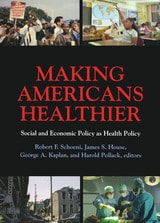
Making Americans Healthier
Social and Economic Policy as Health PolicyRobert F. Schoeni
Russell Sage Foundation, 2008
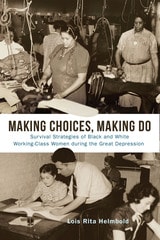
Making Choices, Making Do
Survival Strategies of Black and White Working-Class Women during the Great DepressionLois Rita Helmbold
Rutgers University Press, 2023
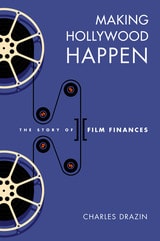
Making Hollywood Happen
Seventy Years of Film FinancesCharles Drazin
University of Wisconsin Press, 2022
Enter Film Finances. The company was founded in London in 1950 to insure against the risk that a film would exceed its original budget or not be completed on time. Its pioneering development of the “completion guarantee”—the financial instrument that provides the essential security for investors to support independent filmmaking—ultimately led to the creation of many thousands of films, including some of the most celebrated ever made: Moulin Rouge (1953), Dr. No (1962), The Outsiders (1982), Pulp Fiction (1994), Slumdog Millionaire (2008), La La Land (2016), and more.
Film Finances’s role in filmmaking was little known outside the industry until 2012, when it opened its historical archive to scholars. Drawing on these previously private documents as well as interviews with its executives, Making Hollywood Happen tells the company’s story through seven decades of postwar cinema history and chronicles the growth of the international independent film industry. Focusing on a business that has operated at the meeting point between money and art for more than seventy years, this lavishly illustrated book goes to the heart of how the movie business works.
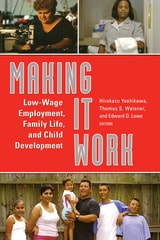
Making It Work
Low-Wage Employment, Family Life, and Child DevelopmentHirokazu Yoshikawa
Russell Sage Foundation, 2006
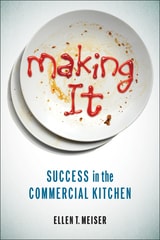
Making It
Success in the Commercial KitchenEllen T. Meiser
Rutgers University Press, 2025
Making It explores how the career path of restaurant workers depends on their accumulation of kitchen capital, a cultural asset based not only on their ability to cook but also on how well they can fit into the workplace culture and negotiate its hierarchical structures. After spending 120 hours working in a restaurant kitchen and interviewing fifty chefs and cooks from fine-dining establishments and greasy-spoon diners across the country, sociologist Ellen Meiser discovers many strategies for accumulating kitchen capital. For some, it involves education and the performance of expertise; others climb the ranks by controlling their own emotions or exerting control over coworkers. Making It offers a close and personal look at how knowledge, power, and interpersonal skills come together to determine who succeeds and who fails in the high-pressure world of the restaurant kitchen.

Making Local Food Work
The Challenges and Opportunities of Today's Small FarmersBrandi Janssen
University of Iowa Press, 2017
By listening to and working alongside people trying to build a local food system in Iowa, Janssen uncovers the complex realities of making it work. Although the state is better known for its vast fields of conventionally grown corn and soybeans, it has long boasted a robust network of small, diverse farms, community supported agriculture enterprises, and farmers’ markets. As she picks tomatoes, processes wheatgrass, and joins a parents’ committee trying to buy local lettuce for a school lunch, Janssen asks how small farmers and CSA owners deal with farmers’ market regulations, neighbors who spray pesticides on crops or lawns, and sanitary regulations on meat processing and milk production. How can they meet the needs of large buyers like school districts? Who does the hard work of planting, weeding, harvesting, and processing? Is local food production benefitting rural communities as much as advocates claim?
In answering these questions, Janssen displays the pragmatism and level-headedness one would expect of the heartland, much like the farmers and processors profiled here. It’s doable, she states, but we’re going to have to do more than shop at our local farmers’ market to make it happen. This book is an ideal introduction to what local food means today and what it might be tomorrow.
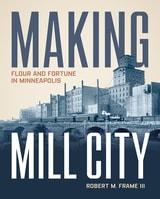
Making Mill City
Flour and Fortune in MinneapolisRobert M. Frame III
University of Minnesota Press, 2026
A richly illustrated history of the flour factories that transformed the milling industry worldwide—and forever changed the culture and architecture of Minneapolis
Among the most consequential advances of the Industrial Revolution was the invention of the modern roller mill, which sent the traditional millstone into obsolescence and fundamentally changed the production of a key ingredient to feeding the world. The culture and landscape of its hometown, Minneapolis, Minnesota, was altered as well, and Making Mill City tells the story of how revolutionary technologies originating at St. Anthony Falls on the Mississippi River put Minneapolis on the map and cemented its global status as “Mill City.”
With deep historical detail and abundant illustrations, Robert M. Frame III charts the dramatic transformation of Minneapolis milling—and urban life—between the early 1870s and 1920s. Two machines propelled this change: the middlings purifier and the modern roller mill. Enabling millers to grind hard Upper Midwestern spring wheat, these innovations gave rise to the “mammoth mills” and ever-expanding flour factories that would soon dominate the Minneapolis riverfront. Prominent entrepreneurs like those who gave their names to the Washburn and Pillsbury A Mills were significant, but Frame foregrounds the crucial roles of the millers, millwrights, and engineers who designed and equipped the massive new factories, as well as the editor of the legendary weekly trade publication Northwestern Miller, to paint a picture of the vibrant and diverse culture that grew around this industrial phenomenon.
A rich narrative describing how Minneapolis became the largest producer and exporter of wheat flour for more than fifty years, Making Mill City captures a critical chapter in the history of the city. Art and architecture inspired by mills and millers stand today as National Historic Landmarks, and the development and success of the current thriving metropolis have strong foundations in its milling history.
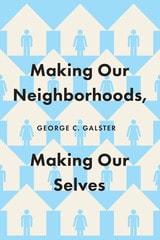
Making Our Neighborhoods, Making Our Selves
George C. Galster
University of Chicago Press, 2019
Urban theorists have tried for decades to define exactly what a neighborhood is. But behind that daunting existential question lies a much murkier problem: never mind how you define them—how do you make neighborhoods productive and fair for their residents? In Making Our Neighborhoods, Making Our Selves, George C. Galster delves deep into the question of whether American neighborhoods are as efficient and equitable as they could be—socially, financially, and emotionally—and, if not, what we can do to change that. Galster aims to redefine the relationship between places and people, promoting specific policies that reduce inequalities in housing markets and beyond.

Making Peace with the Earth
Vandana Shiva
Pluto Press, 2013
In this compelling and rigorously documented exposition, Vandana Shiva demolishes the myths propagated by corporate globalisation in its pursuit of profit and power and shows its devastating environmental impact.
Shiva argues that consumerism lubricates the war against the earth and that corporate control violates all ethical and ecological limits. She takes the reader on a journey through the world's devastated eco-landscape, one of genetic engineering, industrial development and land-grabs in Africa, Asia and South America. She concludes that exploitation of this order is incurring an ecological and economic debt that is unsustainable.
Making Peace with the Earth outlines how a paradigm shift to earth-centred politics and economics is our only chance of survival and how collective resistance to corporate exploitation can open the way to a new environmentalism.
Making Sense of Social Security Reform
Daniel Shaviro
University of Chicago Press, 2000
But what is the average person to make of all this? How many Americans know where the money for Social Security benefits really comes from, or who wins and loses from the system's overall operations? Few people understand the current Social Security system in even its broadest outlines. And yet Social Security reform is ranked among the most important social issues of our time.
With Making Sense of Social Security Reform, Daniel Shaviro makes an important contribution to the public understanding of the issues involved in reforming Social Security. His book clearly and straightforwardly describes the current system and the pressures that have been brought to bear upon it, before dissecting and evaluating the various reform proposals. Accessible to anyone who has an interest in the issue, Shaviro's new work is unique in offering a balanced, nonpartisan account.
Making Shift Happen
Directing ImpactMargareth de Wit
Amsterdam University Press, 2021
Margareth de Wit has inspired hundreds of professionals within the education sector to see themselves as playing the central role in providing better education through intelligent collaboration in self-managing school teams. Her experiences show that systematic attention to leadership and group dynamics creates organizations that are both successful and future-proof. Providing striking examples from her broad practice and experience, historical comparisons, human interactions, analytical schemes, and evidence-based methods, de Wit paints a picture of the road that leads to effective leadership. While this transition is never finished, it is nevertheless one that always leads to both personal and organizational improvement.
Making Work Pay
Bruce D. Meyer
Russell Sage Foundation, 2001
Making the Grade
The Economic Evolution of American School DistrictsWilliam A. Fischel
University of Chicago Press, 2009
A significant factor for many people deciding where to live is the quality of the local school district, with superior schools creating a price premium for housing. The result is a “race to the top,” as all school districts attempt to improve their performance in order to attract homebuyers. Given the importance of school districts to the daily lives of children and families, it is surprising that their evolution has not received much attention.
In this provocative book, William Fischel argues that the historical development of school districts reflects Americans’ desire to make their communities attractive to outsiders. The result has been a standardized, interchangeable system of education not overly demanding for either students or teachers, one that involved parents and local voters in its governance and finance. Innovative in its focus on bottom-up processes generated by individual behaviors rather than top-down decisions by bureaucrats, Making the Grade provides a new perspective on education reform that emphasizes how public schools form the basis for the localized social capital in American towns and cities.
Making the Work-Based Safety Net Work Better
Forward-Looking Policies to Help Low-Income FamiliesCarolyn J. Heinrich
Russell Sage Foundation, 2009
Malaysian "Bail Outs"?
Capital Controls, Restructuring and RecoveryTranslated by Wong Sook, K.S. Jomo, and Chin Kok Fay
National University of Singapore Press, 2005
Mama, PhD
Women Write about Motherhood and Academic LifeEvans, Elrena
Rutgers University Press, 2008
Amid these disadvantages, what is a Mama, PhD to do? This literary anthology brings together a selection of deeply felt personal narratives by smart, interesting women who explore the continued inequality of the sexes in higher education and suggest changes that could make universities more family-friendly workplaces.
The contributors hail from a wide array of disciplines and bring with them a variety of perspectives, including those of single and adoptive parents. They address topics that range from the level of policy to practical day-to-day concerns, including caring for a child with special needs, breastfeeding on campus, negotiating viable maternity and family leave policies, job-sharing and telecommuting options, and fitting into desk/chair combinations while eight months pregnant.
Candid, provocative, and sometimes with a wry sense of humor, the thirty-five essays in this anthology speak to and offer support for any woman attempting to combine work and family, as well as anyone who is interested in improving the university's ability to live up to its reputation to be among the most progressive of American institutions.
Managerial Capitalism
Ownership, Management, and the Coming New Mode of ProductionGérard Duménil and Dominique Lévy
Pluto Press, 2018
Drawing examples from the United States and Europe, the authors offer a historically rooted interpretation of major current economic and political trends. Without eschewing Marx’s theory of history and political economy, they update it to take account of the changes underway in class patterns and relationships to production. The result is a robust new Marxism for the present and the future.
Managerial Psychology
Managing Behavior in OrganizationsHarold J. Leavitt and Homa Bahrami
University of Chicago Press, 1988
Managing "Modernity"
Work, Community, and Authority in Late-Industrializing Japan and RussiaRudra Sil
University of Michigan Press, 2002
Managing "Modernity" engages a variety of intellectual perspectives in the social sciences. The theoretical approach represents a conscious effort to overcome the contentious debates in political science and sociology among proponents of historical institutionalism, cultural analysis, and rational-choice theory. The substantive argument draws on, and partially integrates, concepts and findings from comparative politics, economic sociology, industrial relations, organization theory, business management, and the political economy of Japan and Russia.
In light of ongoing debates over the significance and impact of "globalization," the eclectic and integrative approach in Managing "Modernity" offers a fresh and provocative contribution that will interest scholars and graduate students across a variety of disciplines and subfields. It offers compelling insights to anyone generally concerned with the social forces that facilitate or hinder the diffusion of ideas and institutions across national boundaries.
Rudra Sil is Janice and Julian Bers Assistant Professor in the Social Sciences, Department of Political Science, University of Pennsylvania.
Managing Archives and Archival Institutions
Edited by James Gregory Bradsher
University of Chicago Press, 1988
Managing Currency Crises in Emerging Markets
Edited by Michael P. Dooley and Jeffrey A. Frankel
University of Chicago Press, 2003
The contributions here explore the management process from the beginning of a crisis to the long-term effects of the techniques used to minimize it. The first three chapters focus on the earliest responses and the immediate defense of a currency under attack, exploring whether unnecessary damage to economies can be avoided by adopting the right response within the first few days of a financial crisis. Next, contributors examine the adjustment programs that follow, considering how to design these programs so that they shorten the recovery phase, encourage economic growth, and minimize the probability of future difficulties. Finally, the last four papers analyze the actual effects of adjustment programs, asking whether they accomplish what they are designed to do-and whether, as many critics assert, they impose disproportionate costs on the poorest members of society.
Recent high-profile currency crises have proven not only how harmful they can be to neighboring economies and trading partners, but also how important policy responses can be in determining their duration and severity. Economists and policymakers will welcome the insightful evaluations in this important volume, and those of its companion, Sebastian Edwards and Jeffrey A. Frankel's Preventing Currency Crises in Emerging Markets.
Managing Diversity in Organizations
Robert T. Golembiewski
University of Alabama Press, 1995
Managing Diversity in Organizations focuses on a key issue that organizations are facing—diversity. It is here, and it is growing. The only question now is how well we deal with diversity, especially in organizational contexts.
Golembiewski identifies the many forces and factors propelling us into the age of diversity in organizations—ethical, political, philosophic, demographic, and so on—and details the historical and contemporary approaches. Most practice has focused on a "level playing field" or equal opportunity and "tilting the playing field" or equal outcomes. This volume focuses on diversity as a strategic device rather than as a nicety rooted in behavioral and organizational research. Managing diversity successfully in organizations requires a thorough understanding of management infrastructure that is consistent with diversity--especially structures of work, policies, and procedures that institutionalize and build diversity.
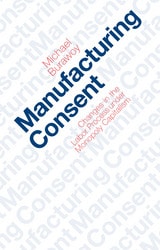
Manufacturing Consent
Changes in the Labor Process Under Monopoly CapitalismMichael Burawoy
University of Chicago Press, 1982
Manufacturing Consent, the result of Burawoy's research, combines rich ethnographical description with an original Marxist theory of the capitalist labor process. Manufacturing Consent is unique among studies of this kind because Burawoy has been able to analyze his own experiences in relation to those of Donald Roy, who studied the same factory thirty years earlier. Burawoy traces the technical, political, and ideological changes in factory life to the transformations of the market relations of the plant (it is now part of a multinational corporation) and to broader movements, since World War II, in industrial relations.
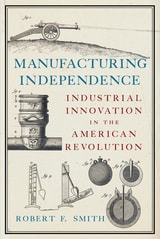
Manufacturing Independence
Industrial Innovation in the American RevolutionRobert F. Smith
Westholme Publishing, 2021
Benjamin Franklin was serious when he suggested the colonists arm themselves with the longbow. The American colonies were not logistically prepared for the revolution and this became painfully obvious in war’s first years. Trade networks were destroyed, inflation undermined the economy, and American artisans could not produce or repair enough weapons to keep the Continental Army in the field. The Continental Congress responded to this crisis by mobilizing the nation’s manufacturing sector for war. With information obtained from Europe through both commercial exchange and French military networks, Congress became familiar with the latest manufacturing techniques and processes of the nascent European industrial revolution. They therefore initiated an innovative program of munitions manufacturing under the Department of the Commissary General of Military Stores. The department gathered craftsmen and workers into three national arsenals where they were trained for the large-scale production of weapons. The department also engaged private manufacturers, providing them with materials and worker training, and instituting a program of inspecting their finished products.
As historian Robert F. Smith relates in Manufacturing Independence: Industrial Innovation in the American Revolution, the colonies were able to provide their military with the arms it needed to fight, survive, and outlast the enemy—supplying weapons for the victory at Saratoga, rearming their armies in the South on three different occasions, and providing munitions to sustain the siege at Yorktown. But this manufacturing system not only successfully supported the Continental Army, it also demonstrated new production ideas to the nation. Through this system, the government went on to promote domestic manufacturing after the war, becoming a model for how the nation could produce goods for its own needs. The War for Independence was not just a political revolution, it was an integral part of the Industrial Revolution in America.
Manufacturing Morals
The Values of Silence in Business School EducationMichel Anteby
University of Chicago Press, 2013
In an era when many organizations are focused on principles of responsibility, Harvard Business School has long tried to promote better business standards. Anteby’s rich account reveals the surprising role of silence and ambiguity in HBS’s process of codifying morals and business values. As Anteby describes, at HBS specifics are often left unspoken; for example, teaching notes given to faculty provide much guidance on how to teach but are largely silent on what to teach. Manufacturing Morals demonstrates how faculty and students are exposed to a system that operates on open-ended directives that require significant decision-making on the part of those involved, with little overt guidance from the hierarchy. Anteby suggests that this model—which tolerates moral complexity—is perhaps one of the few that can adapt and endure over time.
Manufacturing Morals is a perceptive must-read for anyone looking for insight into the moral decision-making of today’s business leaders and those influenced by and working for them.

Mapping Tourism
Stephen P. Hanna
University of Minnesota Press, 2003
Looks at tourism maps to offer new insights into the social construction of place
At first glance, the relationships among tourists, tourism maps, and the spaces of tourism seem straightforward enough: tourists use maps to find their way to and through the sites of history, culture, nature, or recreation represented there. Less apparent is how tourism maps and those using them construct such spaces and identities. As the essays in Mapping Tourism clearly demonstrate, the extraordinary interactions of work with leisure and the everyday with the exotic make tourism maps ideal sites for exploring the contested construction of place and identity.
Construction sites in the “New Berlin,” Alabama’s civil rights trail, Québec City, a California ghost town, and Bangkok’s sex trade are among the spaces the essays examine. Taken together, these essays allow us to see tourist space as it truly is: contested, ever changing, and replete with issues of power.Contributors: Mary Curran, Eastern Connecticut State U; Dydia DeLyser, Louisiana State U; Owen J. Dwyer, Indiana U; John R. Gold, Oxford Brookes U; Margaret M. Gold, U of North London; Rob Shields; Karen E. Till, U of Minnesota.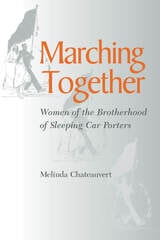
Marching Together
Women of the Brotherhood of Sleeping Car PortersMelinda Chateauvert
University of Illinois Press, 1998
The Brotherhood of Sleeping Car Porters (BSCP) was the first national trade union for African Americans. Standard BSCP histories focus on the men who built the union. Yet the union's Ladies' Auxiliary played an essential role in shaping public debates over black manhood and unionization, setting political agendas for the black community, and crafting effective strategies to win racial and economic justice.
Melinda Chateauvert explores the history of the Ladies' Auxiliary and the wives, daughters, and sisters of Pullman porters who made up its membership and used the union to claim respectability and citizenship. As she shows, the Auxiliary actively educated other women and children about the labor movement, staged consumer protests, and organized local and national civil rights campaigns ranging from the 1941 March on Washington to school integration to the Montgomery Bus Boycott. Chateauvert also sheds light on the plight of Pullman maids, who—relegated to the Auxiliary—found their problems as working women neglected in favor of the rhetoric of racial solidarity.
Marginal Gains
Monetary Transactions in Atlantic AfricaJane I. Guyer
University of Chicago Press, 2004
The answer is a rich diversity of economic practices responsive to both local and global circumstances. In Marginal Gains, Jane I. Guyer explores and explains these often bewildering practices, including trade with coastal capitalism and across indigenous currency zones, and within the modern popular economy. Drawing on a wide range of evidence, Guyer demonstrates that the region shares a coherent, if loosely knit, commercial culture. She shows how that culture actually works in daily practice, addressing both its differing scales of value and the many settings in which it operates, from crisis conditions to ordinary household budgets. The result is a landmark study that reveals not just how popular economic systems work in Africa, but possibly elsewhere in the Third World.
Marginal Workers, Marginal Jobs
The Underutilization of American WorkersBy Teresa A. Sullivan
University of Texas Press, 1978
Unemployment levels have received a great deal of attention and discussion in recent years. However, another labor category—underemployment—has virtually been ignored. Underutilized or underemployed workers are those who are experiencing inadequate hours of work, insufficient levels of income, and mismatch of occupation and skills. Marginal Workers, Marginal Jobs addresses two principal issues: how can we measure underemployment, and how can we explain its prevalence?
To answer the first question, Teresa Sullivan examines yardsticks in use, demonstrates their inadequacy, and develops a different measure that is easy to interpret and is usable by both demographers and economists. In answering the second, she analyzes 1960 and 1970 census data to determine the relative effects of population composition and job structure on levels of employment.
One of the important contributions of Sullivan's study is to distinguish between marginal workers and marginal jobs in explaining underutilization. Previous explanations, including the widely used dual market theory, have not stressed this analytic distinction. In addition, her work accounts separately for the various types of marginality and seeks to show the condition of workers who are marginal on more than one count—for example, those who are both young and black, or old and female.
A provocative study based on large samples of the U.S. population, this book raises important questions about a critical subject and makes a significant contribution to the theory of underutilization.
Marginalizing Colonialism
The Politics of Urban Growth in BolgatangaDomenico Cristofaro
Ohio University Press, 2026
Marginalizing Colonialism offers a social, political, and spatial history of Bolgatanga, a northern Ghanaian town whose colonial-era urban development has been largely overlooked in African historiography. Covering the late nineteenth century through the 1940s, the book traces how this settlement—long characterized as a remote hinterland of the British Empire—emerged as a commercial and political center in the region. Rather than depicting urbanization as an imperial project, it reveals how African actors actively shaped Bolgatanga’s growth and repeatedly marginalized, redirected, and evaded colonial authority.
The narrative follows Bolgatanga’s transformation from a dispersed settlement organized around kinship, ritual geographies, and earth shrines into a dynamic urban hub integrated into regional trade networks. Central to this shift were new land tenure systems, commercial expansion, and changing spatial practices. By the 1930s and 1940s, trade in kola, groundnuts, livestock, and other goods surged, stimulated by new roads and increased mobility. Population growth converted farmland into leased plots, permanent buildings replaced older compounds, and areas around the market became focal points of economic and social life.
These changes were driven not by the colonial state but rather by local negotiations and strategic adaptations. Chiefs, earth priests, merchants, and migrant traders mediated and reshaped colonial policies, while missionaries and settlers concluded land agreements beyond official oversight. Roads and marketplaces, planned through negotiations between colonial officials and local chiefs and built largely through African labor, became central infrastructures of local economic life. Even as colonial administrators sought to codify land tenure and regulate commerce, their influence remained largely nominal—a background presence in a story propelled by African initiative.
Drawing on archival documents, oral histories, and unpublished manuscripts by local intellectuals, Marginalizing Colonialism provides the first comprehensive urban history of Bolgatanga. It challenges dominant narratives in African colonial and urban historiography by exposing the silences of the colonial archive and highlighting the significance of medium-sized towns as arenas of negotiation and creativity. Ultimately, the book argues that Bolgatanga’s urbanization was a locally driven process that redefined power, space, and governance—leaving a legacy that continues to shape the city’s identity and regional role today.

Marine Resource Economics, volume 37 number 3 (July 2022)
The University of Chicago Press
University of Chicago Press Journals, 2022
Marine Resource Economics, volume 37 number 4 (October 2022)
The University of Chicago Press
University of Chicago Press Journals, 2022
Marine Resource Economics, volume 38 number 1 (January 2023)
The University of Chicago Press
University of Chicago Press Journals, 2023
Marine Resource Economics, volume 38 number 2 (April 2023)
The University of Chicago Press
University of Chicago Press Journals, 2023
Marine Resource Economics, volume 38 number 3 (July 2023)
The University of Chicago Press
University of Chicago Press Journals, 2023
Marine Resource Economics, volume 38 number 4 (October 2023)
The University of Chicago Press
University of Chicago Press Journals, 2023
Marine Resource Economics, volume 39 number 1 (January 2024)
The University of Chicago Press
University of Chicago Press Journals, 2024