Results by title
122 books match the query 'Business Aspects' and 9 start with m
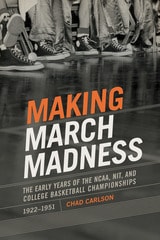
Making March Madness
The Early Years of the NCAA, NIT, and College Basketball Championships, 1922-1951Chad Carlson
University of Arkansas Press, 2017
Throughout the NCAA Tournament’s history, underdogs, Cinderella stories, and upsets have captured the attention and imagination of fans. Making March Madness is the story of this premiere tournament, from its early days in Kansas City, to its move to Madison Square Garden, to its surviving a point-shaving scandal in New York and taking its games to different sites across the country.Chad Carlson’s analysis places college basketball in historical context and connects it to larger issues in sport and American society, providing fresh insights on a host of topics that readers will find interesting, illuminating, and thought provoking.
Marketing to Moviegoers
A Handbook of Strategies and Tactics, Second EditionRobert Marich
Southern Illinois University Press, 2009
While Hollywood executives spend millions of dollars making movies, even more money is poured into selling those films to the public. In the second edition of his comprehensive guidebook, Marketing to Moviegoers, veteran film and TV journalist Robert Marich plumbs the depths of the strategies and tactics used by studios to market their films to consumers. Packed with real life examples and useful data, this new edition blends practical, up-to-date information with theory to clearly explain all aspects of promoting motion pictures.
Marketing to Moviegoers: A Handbook of Strategies and Tactics takes readers carefully through all of the key components of film marketing. From creative strategy, market research, and advertising to publicity, product placement, and distribution to theaters, Marich's book covers everything film professionals need to know to mount a successful marketing campaign. Each chapter contains a wealth of useful information—including the historical background of the business, sample market research documents and advertising budgets, comments from successful industry insiders, and over thirty-five tables—and offers intriguing insight into the strategies of modern promotion.
Most other film marketing books focus mainly on marketing by independent distributors, but Marich specifically outlines the marketing methods of the six major Hollywood studios, which are notoriously secretive about these methods, while also detailing the marketing plans of the independent and foreign film sectors. In addition, he examines in depth the effectiveness of both new and old media, especially the ways in which the advent of the Internet has both helped and hindered the movie marketing process.
While many books have been written on the business-to-business aspect of film promotion, Marich's volume is one of the few that focuses on the methods used to sell motion pictures to those who truly make or break a film's success—the public.
This essential reference contains detailed examples, more than twenty illustrations, and a comprehensive glossary of marketing terms. A highly navigable handbook that breaks down a complicated process into manageable strategies in an easy-to-read style, Marketing to Moviegoers is a must for all film professionals and filmmaking students.
Marketing to Moviegoers
A Handbook of Strategies and Tactics, Third EditionRobert Marich
Southern Illinois University Press, 2013
While Hollywood executives spend millions of dollars making movies, even more money is poured into selling those films to the public. In the third edition of his comprehensive guidebook, Marketing to Moviegoers: A Handbook of Strategies and Tactics, veteran film and TV journalist Robert Marich plumbs the depths of the methods used by studios to market their films to consumers. Updates to the third edition include a chapter on marketing movies using digital media; an insightful discussion of the use of music in film trailers; new and expanded materials on marketing targeted toward affinity groups and awards; fresh analysis of booking contracts between theaters and distributors; a brief history of indie film marketing; and explorations of the overlooked potential of the drive-in theater and the revival of third-party-financed movie campaigns.
While many books have been written on the business-to-business aspect of film promotion, Marich’s volume is one of the few that focuses on the techniques used to sell motion pictures to those in a position to truly make or break a film—the public. A highly navigable handbook that breaks down a complicated process into manageable strategies in an easy-to-read style, Marketing to Moviegoers is a must for all professionals and students in today’s rapidly evolving film industry.

Media Relations in Sport
Fifth EditionCraig Esherick
FiT Publishing, 2020
As sport media communication has become intertwined with the frenetic pace of technology, the bywords have become global interconnectivity and versatility. Media Relations in Sport 5th edition examines the intersection and trajectory of emerging technology, platforms and trends with foundational principles of communication to prepare students and industry professionals alike with a nuanced understanding of the communication tools at their disposal that will allow them to keep pace with and succeed in a kinetic, competitive industry.
Any student interested in a career in sports media must possess a distinct set of essential skills—how to interview, how to effectively create and distribute content, and how to deal with communications problems that, given the frenetic pace and global reach of web-based media, now seem amplified. Discussions of event management, publicity campaigns, ethics, regulations, and the law are still not only relevant, but essential for today’s sports media professionals, where news travels the world at the speed of a tweet. For undergraduate and graduate level students, the 5th edition of Media Relations in Sport blends and balances how sport media communication has traditionally been crafted, and molds it to ever-evolving strategies for remaining ahead of the game.
Media Relations in Sport
Fourth EditionCraig Esherick
FiT Publishing, 2013
In recent years the model of sport media communication has changed drastically, and it continues to evolve seemingly daily. The bywords of media communication are interconnectivity, interactivity, and mobility. The fourth edition of Media Relations in Sport provides readers information on the current trends and emerging areas in the field of sport communication from technology to social media to how the global outreach of sport has affected the sports media profession. While the fourth edition rightly goes into emerging areas of the field, it also retains the focus of the first three editions, specifically on the basics and principles of sports media that remain its foundations. Any student interested in a career in sports media has to know certain essentials -- how to interview, how to effectively create and distribute content, and how to deal with communications problems that will invariably arise. All of these subjects and more are addressed, as are more specialized topics such as those dealing with event management, publicity campaigns, and ethics.
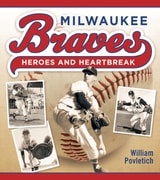
Milwaukee Braves
Heroes and HeartbreakWilliam Povletich
Wisconsin Historical Society Press, 2009
During their thirteen years in Wisconsin, the Milwaukee Braves never endured a losing season, won two National League pennants, and in 1957 brought Milwaukee its only World Series championship. With a lineup featuring future Hall of Famers Henry Aaron, Warren Spahn, Eddie Matthews, Red Schoendienst, and Phil Niekro, the team immediately brought Milwaukee "Big League" credentials, won the hearts of fans, and shattered attendance records. The Braves' success in Milwaukee prompted baseball to redefine itself as a big business—resulting in franchises relocating west, multi-league expansion, and teams leveraging cities for civically funded stadiums. But the Braves' instant success and accolades made their rapid fall from grace after winning the 1957 world championship all the more stunning, as declining attendance led the team to Atlanta in one of the ugliest divorces between a city and baseball franchise in sports history.
Featuring more than 100 captivating photos, many published here for the first time, Milwaukee Braves preserves the Braves' legacy for the team's many fans and introduces new generations to a fascinating chapter in sports history.
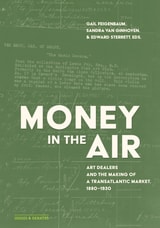
Money in the Air
Art Dealers and the Making of a Transatlantic Market, 1880–1930Gail Feigenbaum
J. Paul Getty Trust, The, 2024
“There was money in the air, ever so much money,” wrote Henry James in 1907, reflecting on the American appetite for art acquisitions. Indeed, collectors such as Henry Clay Frick and Andrew W. Mellon are credited with bringing noteworthy European art to the United States, with their collections forming the backbone of major American museums today. But what of the dealers, who possessed the expertise in art and recognized the potential of developing a new market model on both sides of the Atlantic?
Money in the Air investigates the often-overlooked role of these dealers in creating an international art world. Contributors examine the histories of well-known international firms like Duveen Brothers, M. Knoedler & Co., and Goupil & Cie and their relationships with American clients, as well as accounts of other remarkable dealers active in the transatlantic art market. Drawing on dealer archives, scholars reveal compelling findings, including previously unknown partnerships and systems of cooperation. This volume offers new perspectives on the development of art collections that formed the core of American art museums, such as the National Gallery of Art, the Metropolitan Museum of Art, and the Frick Collection.

Muhammad Ali
The Making of an IconMichael Ezra
Temple University Press, 2009
Muhammad Ali (born Cassius Clay) has always engendered an emotional reaction from the public. From his appearance as an Olympic champion to his iconic status as a national hero, his carefully constructed image and controversial persona has always been intensely scrutinized. In Muhammad Ali, Michael Ezra considers the boxer who calls himself “The Greatest” from a new perspective. He writes about Ali’s pre-championship bouts, the management of his career and his current legacy, exploring the promotional aspects of Ali and how they were wrapped up in political, economic, and cultural “ownership.”
Ezra’s incisive study examines the relationships between Ali’s cultural appeal and its commercial manifestations. Citing examples of the boxer’s relationship to the Vietnam War and the Nation of Islam—which serve as barometers of his “public moral authority”—Muhammad Ali analyzes the difficulties of creating and maintaining these cultural images, as well as the impact these themes have on Ali’s meaning to the public.
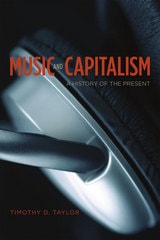
Music and Capitalism
A History of the PresentTimothy D. Taylor
University of Chicago Press, 2015
Taylor explores everything from the branding of musicians to the globalization of music to the emergence of digital technologies in music production and consumption. Drawing on interviews with industry insiders, musicians, and indie label workers, he traces both the constricting forces of bottom-line economics and the revolutionary emergence of the affordable home studio, the global internet, and the mp3 that have shaped music in different ways. A sophisticated analysis of how music is made, repurposed, advertised, sold, pirated, and consumed, Music and Capitalism is a must read for anyone who cares about what they are listening to, how, and why.