Results by title
145 books match the query 'Classical' and 19 start with m
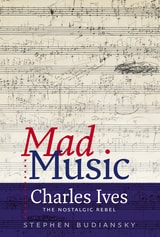
Mad Music
Charles Ives, the Nostalgic RebelStephen Budiansky
University Press of New England, 2014
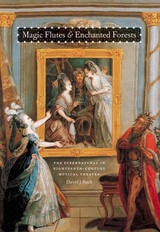
Magic Flutes and Enchanted Forests
The Supernatural in Eighteenth-Century Musical TheaterDavid J. Buch
University of Chicago Press, 2008
David J. Buch reveals that despite—and perhaps even because of—their fundamental irrationality, fantastic and exotic themes acquired extraordinary force and popularity during the period, pervading theatrical works with music in the French, German, and Italian mainstream. Considering prominent compositions by Gluck, Rameau, and Haydn, as well as many seminal contributions by lesser-known artists, Buch locates the origins of these magical elements in such historical sources as ancient mythology, European fairy tales, the Arabian Nights, and the occult. He concludes with a brilliant excavation of the supernatural roots of Mozart’s The Magic Flute and Don Giovanni, building a new foundation for our understanding of the magical themes that proliferated in Mozart’s wake.
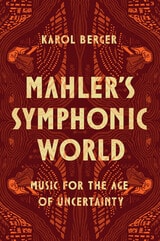
Mahler's Symphonic World
Music for the Age of UncertaintyKarol Berger
University of Chicago Press, 2025
Between 1888 and 1909 Gustav Mahler completed nine symphonies and the orchestral song cycle Das Lied von der Erde; his tenth symphony was left incomplete at his death in 1911. Mahler’s Symphonic World provocatively suggests that over his lifetime, the composer pursued a single vision and a single, ideal symphony that strived to capture his personal outlook on human existence. Writing at the turn of the twentieth century, when all trust in firm philosophical and spiritual foundations had evaporated, Mahler’s music reflected a deep preoccupation with human suffering and transience and a search for sources of possible consolation.
In Karol Berger’s reading, each of the symphonies follows a similar trajectory, with an opening quest leading to the final unveiling of a transcendent, consolatory vision. By juxtaposing single movements—the opening Allegros, the middle movements, the Finales—across different works, Berger traces recurring plotlines and imagery and discloses the works’ multiple interrelationships as well as their cohesiveness around a central idea. Ultimately, Mahler’s Symphonic World locates Mahler’s music within the matrix of intellectual currents that defined his epoch and offers a revelatory picture of his musical way of being in the world.
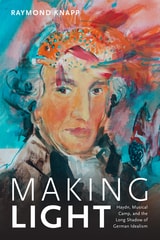
Making Light
Haydn, Musical Camp, and the Long Shadow of German IdealismRaymond Knapp
Duke University Press, 2018

Masterworks of the Orchestral Repertoire
A Guide for ListenersDonald N. Ferguson
University of Minnesota Press, 1968
Masterworks of the Orchestral Repertoire was first published in 1968. Minnesota Archive Editions uses digital technology to make long-unavailable books once again accessible, and are published unaltered from the original University of Minnesota Press editions.
The fullest enjoyment of an orchestral performance or a record concert comes with a background of knowledge about the music itself. This handbook is designed to help music lovers get the ultimate pleasure from their listening by providing them with that background about a large portion of the orchestral repertoire.
Professor Ferguson analyzes and interprets the most important classical symphonies, overtures, and concertos, as well as selected orchestral works of modern composers. He goes beyond a conventional analysis of structure since he believes (with a majority of the music-loving public) that great music is actually a communication -- that it expresses significant emotions. The great composers, on their own testimony, have striven not merely to create perfect forms but to interpret human experience. Mingled with the analyses, then, the reader will find comments on the expressive purport of the music.
For twenty-five years Professor Ferguson has supplied the program notes for the subscription concerts of the Minneapolis Symphony Orchestra, and this volume is an outgrowth of that activity. In preparing the material for book publication, however, he studied the musical compositions anew, and the resulting chapters provide a much deeper exploration of the musical subjects than did the program notes. The themes of important works are illustrated by musical notations, and a brief glossary explains technical terms.
Messa da Requiem for the Anniversary of the Death of Manzoni, 22 May 1874
Giuseppe Verdi Edited by David Rosen
University of Chicago Press, 1990
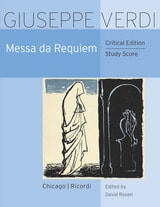
Messa da Requiem
Critical Edition Study ScoreGiuseppe Verdi
University of Chicago Press, 2016
This edition of Messa da Requiem is based on Verdi’s autograph score and other original sources. The appendices include two pieces from the compositional history of the Requiem: an early version of the Libera me, composed in 1869 as part of a collaborative work planned as a memorial to Rossini; and the Liber scriptus, which in the original score of the Manzoni memorial Requiem was composed as a fugue for chorus. The introduction to the score traces the complex compositional and performance histories of the Requiem and discusses the work’s problems of instrumentation and notation, while the critical commentary gives a full description of the sources and an account of all editorial decisions.
Mosè in Egitto
Azione tragico-sacra in Three Acts by Andrea Leone TottolaGioachino Rossini
University of Chicago Press, 2005
This critical edition presents the version performed in 1820 after Rossini had revised the unsuccessful and now lost third act of 1818. The edition includes an appendix with the original aria for Pharaoh written by Michele Carafa, which was performed throughout the nineteenth century even after Rossini replaced it with one of his own. Also featured are vocal ornamentation used in Paris performances and detailed information on the Paris productions between 1822 and 1840. This comprehensive critical edition provides a reliable source for interpretation and study of a work that Rossini called "sublime."
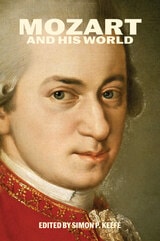
Mozart and His World
Edited by Simon P. Keefe
University of Chicago Press, 2026
A collection of essays that reinvigorates our understanding of some of Mozart's best-loved works.
One of the world’s most revered composers, Wolfgang Amadeus Mozart (1756–1791) wrote works in almost every genre. His life and work continue to fascinate scholars, performers, and music lovers alike. Mozart and His World brings original perspectives to perennially popular topics in Mozart studies. Through wide-ranging essays that address interpretive, biographical, and contextual themes, the volume simultaneously widens and refines our view of Mozart’s oeuvre.
Mozart and His World moves from studies of instrumental music and musicians to the interpretation and reception of Mozart’s operas, and finally to primary sources from the decade or so after Mozart’s death. Across original chapters and several archival documents, Mozart and His World points new ways forward in key areas of Mozart scholarship, including the study of intellectual and stylistic ideas informing his works and of musicians and institutions within his orbit. While the volume reshapes our understanding of some of Mozart’s best-loved works, including The Magic Flute and his other operas, it also probes works that have received less attention, such as his early string quartets, an opera parody, and wind-music culture and arrangements.
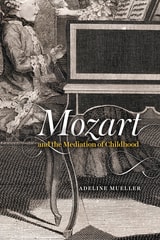
Mozart and the Mediation of Childhood
Adeline Mueller
University of Chicago Press, 2021
The story of Wolfgang Amadeus Mozart’s precocity is so familiar as to be taken for granted. In scholarship and popular culture, Mozart the Wunderkind is often seen as belonging to a category of childhood all by himself. But treating the young composer as an anomaly risks minimizing his impact. In this book, Adeline Mueller examines how Mozart shaped the social and cultural reevaluation of childhood during the Austrian Enlightenment. Whether in a juvenile sonata printed with his age on the title page, a concerto for a father and daughter, a lullaby, a musical dice game, or a mass for the consecration of an orphanage church, Mozart’s music and persona transformed attitudes toward children’s agency, intellectual capacity, relationships with family and friends, political and economic value, work, school, and leisure time.
Thousands of children across the Habsburg Monarchy were affected by the Salzburg prodigy and the idea he embodied: that childhood itself could be packaged, consumed, deployed, “performed”—in short, mediated—through music. This book builds upon a new understanding of the history of childhood as dynamic and reciprocal, rather than a mere projection or fantasy—as something mediated not just through texts, images, and objects but also through actions. Drawing on a range of evidence, from children’s periodicals to Habsburg court edicts and spurious Mozart prints, Mueller shows that while we need the history of childhood to help us understand Mozart, we also need Mozart to help us understand the history of childhood.
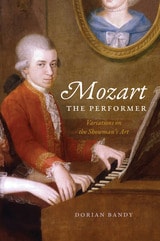
Mozart the Performer
Variations on the Showman's ArtDorian Bandy
University of Chicago Press, 2023
We know Mozart as one of history’s greatest composers. But his contemporaries revered him as a multi-instrumentalist, a dazzling improviser, and the foremost keyboard virtuoso of his time. When he composed, it was often with a single aim in mind: to set the stage, quite literally, for compelling and captivating performances. He wrote piano concertos not with an eye to posterity but to give himself a repertoire with which to flaunt his keyboard wizardry before an awestruck public. The same was true of his sonatas, string quartets, symphonies, and operas, all of which were painstakingly crafted to produce specific effects on those who played or heard them, amusing, stirring, and ravishing colleagues and consumers alike.
Mozart the Performer brings to life this elusive side of Mozart’s musicianship. Dorian Bandy traces the influence of showmanship on Mozart’s style, showing through detailed analysis and imaginative historical investigation how he conceived his works as a series of dramatic scripts. Mozart the Performer is a book for anyone who wishes to engage more deeply with Mozart’s artistry and legacy and understand why, centuries later, his music still captivates us.
Music Lessons
The Collège de France LecturesPierre Boulez
University of Chicago Press, 2018
Music Lessons marks the first publication in English of Pierre Boulez’s Collège de France lectures, written while he held the chair of Invention, Technique and Language in Music at the Collège between 1976 and 1995. Representing Boulez’s most significant writings from the period, the lectures offer a sustained intellectual engagement with one of the dominant figures of twentieth-century music, a consummate composer-conductor who remained central to the conversation around contemporary music until his death in 2016. Boulez explores, among other topics, the process through which a musical idea is realized in a full-fledged composition, the complementary roles of craft and inspiration and the degree to which the memory of other musical works can influence and change the act of creation. Boulez also gives a penetrating account of problems in classical music that are still present today, such as the conservatism of a musical community fixated on the repertory of the past. Woven into the discussion are stories of his own compositions and those of fellow composers whose work he engaged with in his many roles as teacher, thinker, and conductor: from Stravinsky to Stockhausen and Varèse, from Bartók to Berg, Debussy to Mahler and Wagner, and all the way back to his beloved J. S. Bach.
Including a foreword by semiologist Jean-Jacques Nattiez, who was for years close to the composer, this edition is also enriched by an illuminating preface by Jonathan Goldman. With an authoritative translation retaining Boulez’s fierce convictions, cutting opinions and signature wit, Music Lessons is an essential and entertaining volume.
Music Metropolis Berlin
Three Centuries of Musical Culture in the Capital CityPamela M. Potter
University of Chicago Press, 0
Tracing the development of Berlin as a center of music from the eighteenth century to the present, examining how its music survived despite its turbulent history.
Berlin is a music-lover’s paradise, offering up everything from operas to raves. Yet unlike Vienna, Leipzig, or even Nashville, Berlin does not immediately come to mind as a city of music. Instead, its turbulent history evokes images of industry, commerce, militarism, destruction, division, and resurrection. Over the past three centuries, Berlin was the capital of a kingdom, an empire, a republic, and a dictatorship; it was ravaged by war and occupied by foreign powers; and its division and reunification made it a powerful symbol of the Cold War. Through all these highs and lows, the music played on. Music Metropolis Berlin is the first full-length exploration of how Berlin became a city of music against all odds.
Unlike the other European music centers that stake their reputations on the fame of composers like Bach or Beethoven, Berlin is known for its ensembles, artists, theaters, organizers, intellectuals, and media stars. This is because Berlin took a very different, and almost accidental, route to becoming a city of music. Hampered for centuries by rulers who were more focused on military and industrial expansion than on cultural prestige, Berlin’s musical life prospered thanks to the ambitions of entrepreneurs and politicians who saw the value in serving the ever-changing music public in an expanding urban landscape. By focusing on Berlin as a rapidly developing global capital, Music Metropolis Berlin looks beyond the music, its creators, and its institutions to reveal how political, economic, and social forces fueled the creation of the Berlin metropolis and continue to nurture a vibrant and diverse musical life.
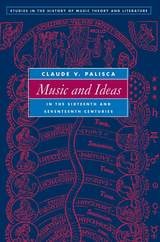
Music and Ideas in the Sixteenth and Seventeenth Centuries
Thomas Mathiesen
University of Illinois Press, 2017
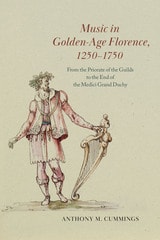
Music in Golden-Age Florence, 1250–1750
From the Priorate of the Guilds to the End of the Medici Grand DuchyAnthony M. Cummings
University of Chicago Press, 2023
Florence is justly celebrated as one of the world’s most important cities. It enjoys mythic status and occupies an enviable place in the historical imagination. But its musico-historical importance is not as well understood as it should be. If Florence was the city of Dante, Michelangelo, and Galileo, it was also the birthplace of the madrigal, opera, and the piano. Music in Golden-Age Florence, 1250–1750 recounts Florence’s principal contributions to music and the history of how music was heard and cultivated in the city, from civic and religious institutions to private patronage and the academies. This book is an invaluable complement to studies of the art, literature, and political thought of the late-medieval and early-modern eras and the quasi-legendary figures in the Florentine cultural pantheon.
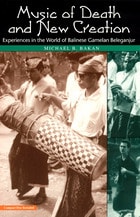
Music of Death and New Creation
Experiences in the World of Balinese Gamelan BeleganjurMichael B. Bakan
University of Chicago Press, 1999
Building from his own experiences as a beleganjur drummer, Bakan also takes us inside a distant musical world and into the lives of musicians connecting across vast cultural divides. Rich with musical examples, photographs, and an accompanying compact disc, Music of Death and New Creation is an unprecedented exploration of how music embodies and shapes life in contemporary Indonesia and beyond.
Music's Monisms
Disarticulating ModernismDaniel Albright
University of Chicago Press, 2021
Daniel Albright was one of the preeminent scholars of musical and literary modernism, leaving behind a rich body of work before his untimely passing. In Music’s Monisms, he shows how musical and literary phenomena alike can be fruitfully investigated through the lens of monism, a philosophical conviction that does away with the binary structures we use to make sense of reality. Albright shows that despite music’s many binaries—diatonic vs. chromatic, major vs. minor, tonal vs. atonal—there is always a larger system at work that aims to reconcile tension and resolve conflict.
Albright identifies a “radical monism” in the work of modernist poets such as T. S. Eliot and musical works by Wagner, Debussy, Britten, Schoenberg, and Stravinsky. Radical monism insists on the interchangeability, even the sameness, of the basic dichotomies that govern our thinking and modes of organizing the universe. Through a series of close readings of musical and literary works, Albright advances powerful philosophical arguments that not only shed light on these specific figures but also on aesthetic experience in general. Music’s Monisms is a revelatory work by one of modernist studies’ most distinguished figures.

Musique anodine--Album italiano
Gioachino Rossini
University of Chicago Press, 1996
During the last years of his life, Rossini gathered his numerous vocal and piano pieces into fourteen unpublished albums, which he called Pèchès de vieillesse ("sins of my old age"). In 1857 he presented Musique anodine, a Prélude and six songs, to his wife Olimpe, in gratitude for her care during his long illness. This was the thirteenth album in the series. The first was Album italiano, a dozen pieces for one, two, or four voices with piano. Among the best known of these pieces is "La regata veneziana," three canzonettas for mezzo-soprano in Venetian dialect, in which the heroine encourages her racing gondolier. Another song, "Le gittane," has never before been published with its Italian text.
Based on the composer's own manuscripts, this critical edition restores Rossini's expressively precise musical notation. Appendixes contain earlier versions of six songs, some with different texts from the final versions.
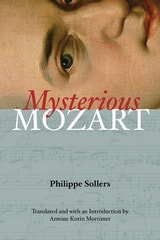
Mysterious Mozart
Philippe Sollers, Translated and with an Introduction by Armine Kotin Mortimer
University of Illinois Press, 2010
Both a beguiling portrait of the artist and an idiosyncratic self-portrait of the author, Mysterious Mozart is Philippe Sollers's alternately oblique and searingly direct interpretation of Wolfgang Amadeus Mozart's oeuvre and lasting mystique, audaciously reformulated for the postmodern age.
With a mix of slang, abstractions, quotations, first- and third-person narratives, and blunt opinion, French writer and critic Philippe Sollers taps into Mozart's playful correspondence and the lesser-known pieces of his enormous repertoire to analyze the popularity and public perceptions of his music. Detailing Mozart's drive to continue producing masterpieces even when saddled with debt and riddled with illness and anxiety, Sollers powerfully and meticulously analyzes Mozart's seven last great operas using a psychoanalytical approach to the characters' relationships.
As Sollers explores themes of constancy, prodigy, freedom, and religion, he offers up bits of his own history, revealing his affinity for the creative geniuses of the eighteenth century and a yearning to bring that era's utopian freedom to life in contemporary times. What emerges is an inimitable portrait of a man and a musician whose greatest gift is a quirky companionability, a warm and mysterious appeal that distinguishes Mozart from other great composers and is brilliantly echoed by Sollers's artful tangle of narrative.