Results by title
146 books match the query 'Collections, Catalogs, Exhibitions' and 19 start with m
MET vol 48 num 1
The University of Chicago Press
University of Chicago Press Journals, 2014
MET vol 52 num 1
The University of Chicago Press
University of Chicago Press Journals, 2017
MET vol 53 num 1
The University of Chicago Press
University of Chicago Press Journals, 2018
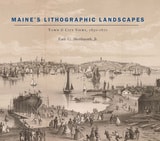
Maine’s Lithographic Landscapes
Town and City Views, 1830-1870Earle G. Shettleworth Jr.
Brandeis University Press, 2020
During the nineteenth century, Americans celebrated their towns and cities through printed landscapes. In Maine, lithographs were commissioned from such leading artists as Fitz Henry Lane and talented, lesser known local artists, such as Esteria Butler. This book reproduces many of these works and provides insights into how these growing centers of commerce and industry viewed themselves and wished to be viewed by others.
It’s the perfect book for those who love Maine, both full-time residents and those who make it a beloved summer destination.
Published in association with the Bowdoin College Museum of Art on the occasion of the bicentennial of Maine statehood.

Malinowski's Kiriwina
Fieldwork Photography 1915-1918Michael W. Young
University of Chicago Press, 1998
Malinowski's Kiriwina presents nearly two hundred of Malinowski's previously unpublished photographs, taken between 1915 and 1918, of the Trobriand Islanders. The images are more than embellishments of his ethnography; they are a recreation in striking detail of a distant world. Michael Young, an anthropologist and Malinowski's authorized biographer, has selected the photographs based on one of Malinowski's unpublished studies of the region, and the plan of that abandoned project has helped structure this book.
Divided into fourteen sections, Malinowski's Kiriwina is a series of linked photo-essays based on Trobriand institutions and cultural themes as described by Malinowski. The introductory essay by Young appraises the founding anthropologist's photographic oeuvre, explains the historical circumstances and technical aspects of the images, and puts them in their colonial context. Young illuminates the photographs with quotations from Malinowski's diaries, letters, and field notes, thereby giving a biographical dimension to the collection. Commentaries on the images by contemporary Trobrianders add a further layer of interpretation. The result is a stunning record not only of a fascinating place, but of the mutual relationship between ethnography and the visual.
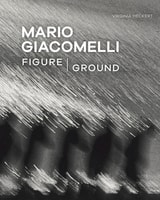
Mario Giacomelli
Figure/GroundVirginia Heckert
J. Paul Getty Trust, The, 2021
Mario Giacomelli (1925–2000) was born into poverty and lived his entire life in Senigallia, a seaside town along the Adriatic coast in Italy’s Marche region. He purchased his first camera in 1953 and quickly gained recognition for the raw expressiveness of his images. His preference for grainy, high-contrast film and paper produced bold, geometric compositions with glowing whites and deep blacks. Giacomelli most frequently focused his camera on the people, landscapes, and seascapes of the Marche, and he often spent several years expanding and reinterpreting a single body of work or repurposing an image made for one series for inclusion in another. By applying titles derived from poetry and literature to his photographs, he transformed ordinary subjects into meditations on time, memory, and existence.
Spanning the photographer’s earliest pictures to those made in the final years of his life, this publication celebrates the J. Paul Getty Museum’s extensive Giacomelli holdings, formed in large part through a significant gift from Daniel Greenberg and Susan Steinhauser.
This volume is published to accompany an exhibition on view at the J. Paul Getty Museum at the Getty Center from June 29 to October 10, 2021.
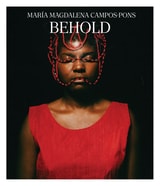
María Magdalena Campos-Pons
BeholdCarmen Hermo
J. Paul Getty Trust, The, 2023
María Magdalena Campos-Pons (b. 1959) makes powerful work that holds and beholds the stories of historically silenced peoples and urges societal change. Her journey as an artist, teacher, and activist has taken her from Cuba through the United States, and her autobiographical compositions honor her Nigerian and Chinese ancestors while also facing the future. With an artistic practice that crosses boundaries, intertwines media—from photography to sculpture, film to performance—and references traditions and beliefs ranging from feminism to Santería, Campos-Pons’s work is deeply layered and complex.
This volume, the first critical look at the artist’s oeuvre in nearly two decades, surveys the concerns, materials, and places invoked throughout her forty-year career. Thoughtful essays explore her vibrant, arresting artwork, which confronts issues of agency and the construction of race and belonging and challenges us to reckon with these issues in our own lives.
This volume, copublished with the Brooklyn Museum, accompanies an exhibition on view at the Brooklyn Museum from September 15, 2023, to January 14, 2024, the Nasher Museum of Art at Duke University from February 15 to June 9, 2024, the Frist Art Museum from September 27, 2024, to January 5, 2025, and the J. Paul Getty Museum at the Getty Center from February 11 to May 4, 2025.
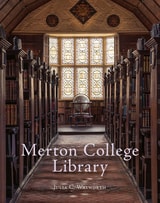
Merton College Library
Julia C. Walworth
Bodleian Library Publishing, 2020
Drawing on the remarkable wealth of documentation in the college’s archives, this is the first history of the library to explore collections, buildings, readers, and staff across more than seven hundred years. The story is told in part through stunning color images that depict not only exceptional treasures but also the library furnishings and decorations, and which show manuscripts, books, bindings, and artifacts of different periods in their changing contexts. Featuring a historical timeline and a floor plan of the college, this book will be of interest to historians, alumni, and tourists alike.
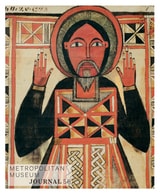
Metropolitan Museum Journal, volume 56 number 1 (January 2021)
The University of Chicago Press
University of Chicago Press Journals, 2021
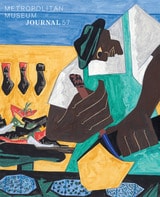
Metropolitan Museum Journal, volume 57 number 1 (January 2022)
The University of Chicago Press
University of Chicago Press Journals, 2022
Metropolitan Museum Journal, volume 58 number 1 (January 2023)
The University of Chicago Press
University of Chicago Press Journals, 2023
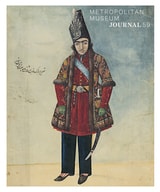
Metropolitan Museum Journal, volume 59 number 1 (January 2024)
The University of Chicago Press
University of Chicago Press Journals, 2024
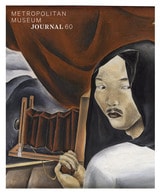
Metropolitan Museum Journal, volume 60 number 1 (2025)
The University of Chicago Press
University of Chicago Press Journals, 2025
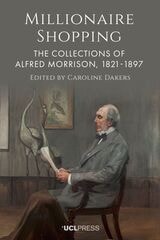
Millionaire Shopping
The Collections of Alfred Morrison, 1821–1897Edited by Caroline Dakers
University College London, 2025
Although his fame has faded with time, Alfred Morrison was one of the most influential and avid collectors and patrons of the arts in Victorian England. Morrison was an obsessive and comprehensive collector, using his extravagant wealth to accumulate old master paintings, autograph manuscripts, coins and medals, imperial Chinese porcelain, and other treasures, and his commissions were equally eclectic. Millionaire Shopping includes contributions by contemporary museum curators, scholars, and dealers in painting, sculpture, and decorative arts, with each chapter dedicated to a particular aspect of Morrison’s collecting and patronage. Extensive illustrations, including many never-before-seen images from private archives, help bring his impressive artistic footprint to life.
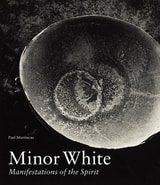
Minor White
Manifestations of the SpiritPaul Martineau
J. Paul Getty Trust, The, 2014
Controversial, misunderstood, and sometimes overlooked, Minor White (1908–1976) is one of the great photographers of the twentieth century, whose ideas exerted a powerful influence on a generation of photographers and still resonate today. His photographic career began in 1938 in Portland, Oregon, with assignments for the WPA (Works Progress Administration). After serving in World War II and studying art history at Columbia University, White’s focus shifted toward the metaphorical. He began creating images charged with symbolism and a critical aspect called equivalency, referring to the invisible spiritual energy present in a photograph made visible to the viewer.
This book brings together White’s key biographical information—his evolution as a photographer, teacher of photography, and editor of Aperture, as well as particularly insightful quotations from his journals, which he kept for more than forty years. The result is an engaging narrative that weaves through the main threads of White’s life, his growth as an artist, as well as his spiritual search and ongoing struggle with his own sexuality and self-doubt. He sought comfort in a variety of religious practices that influenced his continually metamorphosing artistic philosophy.
Museum Culture
Histories, Discourses, SpectaclesDaniel Sherman
University of Minnesota Press, 1994
Museum Pieces
Collectors and CollectionNeil Harris
University of Chicago Press, 0
An eminent historian assembles a career-long group of essays about art collecting and the leadership, strategies, and shifting cultural power of American art museums as they have emerged over the past 150 years.
Museums and their cultural power, and the vagaries of collecting in the United States have fascinated University of Chicago historian Neil Harris for more than sixty years. In this collection of eighteen lively essays from across his distinguished career, Harris addresses period rooms, visitor research, museum education, museum branding and merchandising, and the persistent influence of individual collectors and patrons such as J. Pierpont Morgan, among other important topics. Harris’s geographical range is broad, too, with considerations of museums in Boston, New York, Washington, D.C., Toledo, Chicago, Denver, and elsewhere.
Harris remains one of a very small number of art-minded scholars whose work on museums, taste, and collecting not only can be read by other historians of the United States but can be read with real profit. In a rich and reflective introduction, Harris connects his deep interest in recurring subjects to both his own intellectual biography and broader trends in American scholarship.
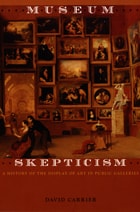
Museum Skepticism
A History of the Display of Art in Public GalleriesDavid Carrier
Duke University Press, 2006
Carrier illuminates the public role of art museums by describing the ways they influence how art is seen: through their architecture, their collections, the narratives they offer museum visitors. He insists that an understanding of the art museum must take into account the roles of collectors, curators, and museum architects. Toward that end, he offers a series of case studies, showing how particular museums and their collections evolved. Among those who figure prominently are Baron Dominique Vivant Denon, the first director of the Louvre; Bernard Berenson, whose connoisseurship helped Isabella Stewart Gardner found her museum in Boston; Ernest Fenollosa, who assembled much of the Asian art collection now in the Museum of Fine Arts, Boston; Albert Barnes, the distinguished collector of modernist painting; and Richard Meier, architect of the J. Paul Getty Center in Los Angeles. Carrier’s learned consideration of what the art museum is and has been provides the basis for understanding the radical transformation of its public role now under way.
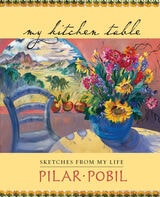
My Kitchen Table
Sketches from My LifePilar Pobil
University of Utah Press, 2007
Other stories describe her meeting in Mallorca with the Utah man who would become her husband, her journey to a faraway country, the birth of her children, and her discovery of her artistic impulses and abilities. All are woven with the threads of color and culture of her two homes. Filled with wit and insight, My Kitchen Table reveals foremost the voice of a woman determined to be true to herself and to her art.
Accompanying the narrative are some fifty color reproductions of the paintings and sculptures for which Pilar Pobil has become known. This is a volume that art lovers everywhere will treasure.
"Like her paintings, Pilar’s stories overflow their pages. They fold us into their embrace, so we feel and see her dancing in and out of our minds, a curious and mischievous child, a young woman in love coming to a foreign land with a foreign culture and tongue, the heartbreak of her losses, and the continual renewals that have ripened her art. Pilar’s book, like her house, is a magic kingdom and she is the fairy princess who presides. She paints her shoes for social engagements. The seats of her chairs beam faces. Her electrical wiring metamorphoses into fantastic snakes. The garden that leads to her studio is Salt Lake City’s Giverny. Paintings are everywhere and talk to each other with glittering non sequiturs. At the center of it all is her kitchen table, the place from which she serves the voices and visions of her life. The subtleties of her telling, like the bold clarity of her judgments, are those of an artist whose inspirations are a feast she graciously invites us to share."
— from the Foreword by Robert D. Newman, Dean of the College of Humanities, University of Utah
A finalist for the Utah Book Award in Nonfiction.