231 books match the query 'Colonies' and 8 start with m
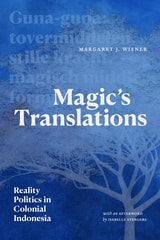
cover of Magic’s Translations: Reality Politics in Colonial Indonesia

Magic’s Translations

Reality Politics in Colonial Indonesia

Margaret J. Wiener

Duke University Press, 2025
“Do you believe in magic?” This familiar question suggests magic is easily recognized but unreal. In Magic’s Translations, Margaret J. Wiener argues that such views are shaped by historical power struggles, especially in Europe’s relations with the wider world. Focusing on nineteenth- and twentieth-century Dutch interactions with Indonesians, Wiener reveals how colonial agents framed unfamiliar practices, practitioners, and objects as “magic,” rendering distinct phenomena fundamentally alike and advancing colonizing projects that deemed magic antithetical to reason and reality. While colonial authorities, including ethnologists, mobilized the concept of magic to differentiate Europeans from Indonesians, nature from culture, reason from superstition, and fact from fetish, their efforts produced unexpected outcomes: Some Indonesian artifacts and acts not only retained their power but invaded European experiences. As anthropologists were among the key translators of magic throughout the world, Wiener intersperses accounts of magic’s translations in the Indies with reflections on anthropology’s ongoing engagement with the concept. She demonstrates that magic became an object of expert knowledge, political control, and popular fascination, rather than a self-evident category or relic of naïve belief.
[more]
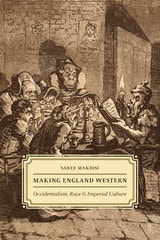
cover of Making England Western: Occidentalism, Race, and Imperial Culture

Making England Western

Occidentalism, Race, and Imperial Culture

Saree Makdisi

University of Chicago Press, 2013
The central argument of Edward Said’s Orientalism is that the relationship between Britain and its colonies was primarily oppositional, based on contrasts between conquest abroad and domestic order at home. Saree Makdisi directly challenges that premise in Making England Western, identifying the convergence between the British Empire’s civilizing mission abroad and a parallel mission within England itself, and pointing to Romanticism as one of the key sites of resistance to the imperial culture in Britain after 1815.
 
Makdisi argues that there existed places and populations in both England and the colonies that were thought of in similar terms—for example, there were sites in England that might as well have been Arabia, and English people to whom the idea of the freeborn Englishman did not extend. The boundaries between “us” and “them” began to take form during the Romantic period, when England became a desirable Occidental space, connected with but superior to distant lands. Delving into the works of Wordsworth, Austen, Byron, Dickens, and others to trace an arc of celebration, ambivalence, and criticism influenced by these imperial dynamics, Makdisi demonstrates the extent to which Romanticism offered both hopes for and warnings against future developments in Occidentalism. Revealing that Romanticism provided a way to resist imperial logic about improvement and moral virtue, Making England Western is an exciting contribution to the study of both British literature and colonialism.
[more]
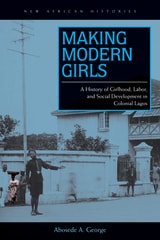
cover of Making Modern Girls: A History of Girlhood, Labor, and Social Development in Colonial Lagos

Making Modern Girls

A History of Girlhood, Labor, and Social Development in Colonial Lagos

Abosede A. George

Ohio University Press, 2014

Winner of the 2015 Aidoo-Snyder Book Prize for outstanding book on African women's experiences. (African Studies Association)
Honorable Mention, New York African Studies Association Book Prize

In Making Modern Girls, Abosede A. George examines the influence of African social reformers and the developmentalist colonial state on the practice and ideology of girlhood as well as its intersection with child labor in Lagos, Nigeria. It draws from gender studies, generational studies, labor history, and urban history to shed new light on the complex workings of African cities from the turn of the twentieth century through the nationalist era of the 1950s.

The two major schemes at the center of this study were the modernization project of elite Lagosian women and the salvationist project of British social workers. By approaching children and youth, specifically girl hawkers, as social actors and examining the ways in which local and colonial reformers worked upon young people, the book offers a critical new perspective on the uses of African children for the production and legitimization of national and international social development initiatives.

Making Modern Girls demonstrates how oral sources can be used to uncover the social history of informal or undocumented urban workers and to track transformations in practices of childhood over the course of decades. George revises conventional accounts of the history of development work in Africa by drawing close attention to the social welfare initiatives of late colonialism and by highlighting the roles that African women reformers played in promoting sociocultural changes within their own societies.
[more]
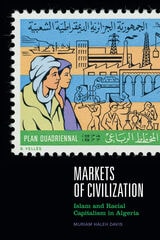
cover of Markets of Civilization: Islam and Racial Capitalism in Algeria

Markets of Civilization

Islam and Racial Capitalism in Algeria

Muriam Haleh Davis

Duke University Press, 2022
In Markets of Civilization Muriam Haleh Davis provides a history of racial capitalism, showing how Islam became a racial category that shaped economic development in colonial and postcolonial Algeria. French officials in Paris and Algiers introduced what Davis terms “a racial regime of religion” that subjected Algerian Muslims to discriminatory political and economic structures. These experts believed that introducing a market economy would modernize society and discourage anticolonial nationalism. Planners, politicians, and economists implemented reforms that both sought to transform Algerians into modern economic subjects and drew on racial assumptions despite the formally color-blind policies of the French state. Following independence, convictions about the inherent link between religious beliefs and economic behavior continued to influence development policies. Algerian president Ahmed Ben Bella embraced a specifically Algerian socialism founded on Islamic principles, while French technocrats saw Algeria as a testing ground for development projects elsewhere in the Global South. Highlighting the entanglements of race and religion, Davis demonstrates that economic orthodoxies helped fashion understandings of national identity on both sides of the Mediterranean during decolonization.
[more]
cover of Maya-British Conflict at the Edge of the Yucatecan Caste War

Maya-British Conflict at the Edge of the Yucatecan Caste War

Christine A. Kray

University Press of Colorado, 2023

Maya-British Conflict at the Edge of the Yucatecan Caste War interrogates the 1862 alliance forged between the San Pedro Maya and the British during the Caste War of Yucatán (1847–1901). Illuminating the complex interactions among Maya groups, Yucatecans of Spanish descent, and British settlers in what is now Belize, Christine A. Kray uses storytelling techniques, suspense, and humor, via historical documents and oral history interviews to tell a new story about the dynamics at the heart of the Social War.
 
Official British declarations of neutrality in the Caste War were confounded by a variety of political and economic factors, including competing land claims befuddled by a tangled set of treaties, mahogany extraction by British companies in contested territories, Maya rent demands, British trade in munitions to different groups of Maya combatants, and a labor system reliant on debt servitude. All these factors contributed to uneasy alliances and opportunistic crossings of imagined geopolitical borders in both directions, ultimately leading to a new military conflict in the western and northern regions of the territory claimed by Britain. What frequently began as hyper-local disputes spun out into international affairs as actors called upon more powerful groups for assistance. Evading reductionism, this work traces the decisions and actions of key figures as they maneuvered through the miasma of violence, abuse, deception, fear, flight, and glimpses of freedom.
 
Positioning the historiographic and ethnographic gaze on the English side without adopting the colonialist narratives and objectives found in English repositories, Maya-British Conflict at the Edge of the Yucatecan Caste War is an important and original contribution to a neglected area of study. It will appeal to students, scholars, and general readers interested in anthropology, Latin American cultures and history, Central American history, British imperialism, Indigenous rights, political anthropology, and colonialism and culture.
 
[more]
cover of Monsters and Revolutionaries: Colonial Family Romance and Metissage

Monsters and Revolutionaries

Colonial Family Romance and Metissage

Françoise Vergès

Duke University Press, 1999

In Monsters and Revolutionaries Françoise Vergès analyzes the complex relationship between the colonizer and colonized on the Indian Ocean island of Réunion. Through novels, iconography, and texts from various disciplines including law, medicine, and psychology, Vergès constructs a political and cultural history of the island’s relations with France. Woven throughout is Vergès’s own family history, which is intimately tied to the history of Réunion itself.
Originally settled by sugar plantation owners and their Indian and African slaves following a seventeenth-century French colonial decree, Réunion abolished slavery in 1848. Because plantation owners continued to import workers from India, Africa, Asia, and Madagascar, the island was defined as a place based on mixed heritages, or métissage. Vergès reads the relationship between France and the residents of Réunion as a family romance: France is the seemingly protective mother, La Mère-Patrie, while the people of Réunion are seen and see themselves as France’s children. Arguing that the central dynamic in the colonial family romance is that of debt and dependence, Verges explains how the republican ideals of the French Revolution and the Enlightenment are seen as gifts to Réunion that can never be repaid. This dynamic is complicated by the presence of métissage, a source of anxiety to the colonizer in its refutation of the “purity” of racial bloodlines. For Vergès, the island’s history of slavery is the key to understanding métissage, the politics of assimilation, constructions of masculinity, and emancipatory discourses on Réunion.
[more]
cover of Moorings: Portuguese Expansion and the Writing of Africa

Moorings

Portuguese Expansion and the Writing of Africa

Josiah Blackmore

University of Minnesota Press, 2008

How Africa was perceived in the early modern imaginary

In this first book to study Portuguese texts about Africa, Moorings brings an important but little-known body of European writings to bear on contemporary colonial thought. Images of Africa as monstrous, dangerous, and lush were created in early Portuguese imperial writings and dominated its representation in European literature. Moorings establishes these key works in their proper place: foundational to Western imperial discourse.

Attentive to history as well as the nuances of language, Josiah Blackmore leads readers from the formation of the “Moor” in medieval Iberia to the construction of a full colonial imaginary, as found in the works of two writers: the royal chronicler Gomes Eanes de Zurara and the epic poet Luís de Camões. Blackmore’s original work helps to explain how concepts and myths—such as the “otherness” of Africa and Africans—originated, functioned, and were perpetuated.Delving into the Portuguese imperial experience, Moorings enriches our understanding of historical and literary imagination during a significant period of Western expansion.
[more]
cover of Moving Home: Gender, Place, and Travel Writing in the Early Black Atlantic

Moving Home

Gender, Place, and Travel Writing in the Early Black Atlantic

Sandra Gunning

Duke University Press, 2021

In Moving Home, Sandra Gunning examines nineteenth-century African diasporic travel writing to expand and complicate understandings of the Black Atlantic. Gunning draws on the writing of missionaries, abolitionists, entrepreneurs, and explorers whose work challenges the assumptions that travel writing is primarily associated with leisure or scientific research. For instance, Yoruba ex-slave turned Anglican bishop Samuel Ajayi Crowther played a role in the Christianization of colonial Nigeria. Sarah Forbes Bonetta, a formerly enslaved girl "gifted" to Queen Victoria, traveled the African colonies as the wife of a prominent colonial figure and under the protection of her benefactress. Alongside Nancy Gardiner Prince, Martin R. Delany, Robert Campbell, and others, these writers used their mobility as African diasporic and colonial subjects to explore the Atlantic world and beyond while they negotiated the complex intersections between nation and empire. Rather than categorizing them as merely precursors of Pan-Africanist traditions, Gunning traces their successes and frustrations to capture a sense of the historical and geographical specificities that shaped their careers.
[more]