Results by title
15 books match the query 'Voluntarism'
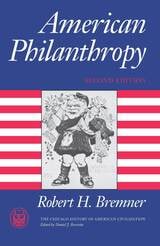
American Philanthropy
Robert H. Bremner
University of Chicago Press, 1988
"[This] book, as Bremner points out, is not encyclopedic. It is what he intended it to be, a pleasant narrative, seasoned with humorous comments, briefly but interestingly treating its principal persons and subjects. It should serve teacher and student as a springboard for further study of individuals, institutions and movements."—Karl De Schweinitz, American Historical Review
"[American Philanthropy] is the starting point for both casual readers and academic scholars. . . . a readable book, important beyond its diminutive size."—Richard Magat, Foundation News
Associative Democracy
New Forms of Economic and Social GovernancePaul Hirst
University of Massachusetts Press, 1994
Not simply a utopian idea, associative democracy calls for new forms of economic and social governance as supplements to representative democracy and market economies. It addresses the problems of the overload of big government by democratizing and empowering civil society. It transfers social provision to self-governing voluntary associations, while retaining public funding and political accountability. In the economic sphere, it advocates regional economic regulation through public-private partnerships, the promotion of self-governing industrial districts, and the democratization of the company.
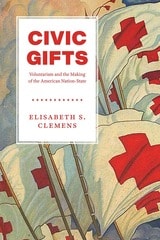
Civic Gifts
Voluntarism and the Making of the American Nation-StateElisabeth S. Clemens
University of Chicago Press, 2020
Civic Gifts
Voluntarism and the Making of the American Nation-StateElisabeth S. Clemens
University of Chicago Press, 2020
In Civic Gifts, Elisabeth S. Clemens takes a singular approach to probing the puzzle that is the United States. How, she asks, did a powerful state develop within an anti-statist political culture? How did a sense of shared nationhood develop despite the linguistic, religious, and ethnic differences among settlers and, eventually, citizens? Clemens reveals that an important piece of the answer to these questions can be found in the unexpected political uses of benevolence and philanthropy, practices of gift-giving and reciprocity that coexisted uneasily with the self-sufficient independence expected of liberal citizens Civic Gifts focuses on the power of gifts not only to mobilize communities throughout US history, but also to create new forms of solidarity among strangers. Clemens makes clear how, from the early Republic through the Second World War, reciprocity was an important tool for eliciting both the commitments and the capacities needed to face natural disasters, economic crises, and unprecedented national challenges. Encompassing a range of endeavors from the mobilized voluntarism of the Civil War, through Community Chests and the Red Cross to the FDR-driven rise of the March of Dimes, Clemens shows how voluntary efforts were repeatedly articulated with government projects. The legacy of these efforts is a state co-constituted with, as much as constrained by, civil society.
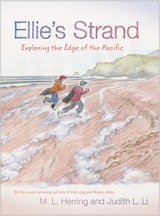
Ellie's Strand
Exploring the Edge of the PacificM. L. Herring
Oregon State University Press, 2018
Green Earth Book Award, Honor Book
There are days in late winter when the Pacific coast enjoys a brief spell of clear, warm weather. Most of the winter storms have passed and the summer fog has not yet settled in. This is when some coastal communities plan their annual beach clean-ups.
In this sequel to Ellie’s Log and Ricky’s Atlas, Ellie and Ricky travel to the Oregon coast from their home in the Cascade Mountains to help with a one-day beach clean-up. Hoping to find a prized Japanese glass float, they instead find more important natural treasures, and evidence of an ocean that needs its own global-scale clean-up.
Ellie and Ricky are amazed by their discoveries at the edge of the world’s largest ocean. Together, they realize the power of volunteering and grapple with the challenges of ocean conservation. In her journal Ellie records her observations of their adventures in her own words and pictures.
With charming pen-and-ink drawings and a compelling story, Ellie's Strand makes coastal science exciting for upper elementary school students. It will be a treasured companion for young beach explorers everywhere.
Federal Tax Policy and Charitable Giving
Charles T. Clotfelter
University of Chicago Press, 1985
Clotfelter focuses on empirical analysis of the effects of tax policy on charitable giving in four major areas: individual contributions, volunteering, corporate giving, and charitable bequests. For each area, discussions of economic theory and relevant tax law precede a review of the data and methodology used in econometric studies of charitable giving. In addition, new econometric analyses are presented, as well as empirical data on the effect of taxes on foundations.
While taxes are not the most important determinant of contributions, the results of the analyses presented here suggest that charitable deductions, as well as tax rates and other aspects of the tax system, are significant factors in determining the size and distribution of charitable giving. This work is a model for policy-oriented research efforts, but it also supplies a major (and very timely) addition to the evidence that must inform future proposals for tax reform.
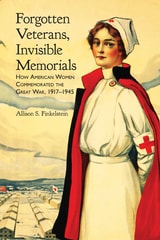
Forgotten Veterans, Invisible Memorials
How American Women Commemorated the Great War, 1917–1945Allison S. Finkelstein
University of Alabama Press, 2021
Investigates the groundbreaking role American women played in commemorating those who served and sacrificed in World War I
In Forgotten Veterans, Invisible Memorials: How American Women Commemorated the Great War, 1917–1945 Allison S. Finkelstein argues that American women activists considered their own community service and veteran advocacy to be forms of commemoration just as significant and effective as other, more traditional forms of commemoration such as memorials. Finkelstein employs the term “veteranism” to describe these women’s overarching philosophy that supporting, aiding, and caring for those who served needed to be a chief concern of American citizens, civic groups, and the government in the war’s aftermath. However, these women did not express their views solely through their support for veterans of a military service narrowly defined as a group predominantly composed of men and just a few women. Rather, they defined anyone who served or sacrificed during the war, including women like themselves, as veterans.
These women veteranists believed that memorialization projects that centered on the people who served and sacrificed was the most appropriate type of postwar commemoration. They passionately advocated for memorials that could help living veterans and the families of deceased service members at a time when postwar monument construction surged at home and abroad. Finkelstein argues that by rejecting or adapting traditional monuments or by embracing aspects of the living memorial building movement, female veteranists placed the plight of all veterans at the center of their commemoration efforts. Their projects included diverse acts of service and advocacy on behalf of people they considered veterans and their families as they pushed to infuse American memorial traditions with their philosophy. In doing so, these women pioneered a relatively new form of commemoration that impacted American practices of remembrance, encouraging Americans to rethink their approach and provided new definitions of what constitutes a memorial. In the process, they shifted the course of American practices, even though their memorialization methods did not achieve the widespread acceptance they had hoped it would.
Meticulously researched, Forgotten Veterans, Invisible Memorials utilizes little-studied sources and reinterprets more familiar ones. In addition to the words and records of the women themselves, Finkelstein analyzes cultural landscapes and ephemeral projects to reconstruct the evidence of their influence. Readers will come away with a better understanding of how American women supported the military from outside its ranks before they could fully serve from within, principally through action-based methods of commemoration that remain all the more relevant today.
Habitat For Humanity
Building Private Homes, Building Public ReligionJerome Baggett
Temple University Press, 2001
The author tells the story of Habitat's development and the special fervor it evokes among volunteers and those for whom it builds houses. Through interviews with staff, he also provides a look into the organizational dynamics of Habitat, a non-profit whose religious mission for social change is inevitably affected by the instrumental, bottom-line orientation of the state and the market.
Baggett argues that Habitat is an examine of a particular social form of religion, the paradenominational organization, that is uniquely adapted to the climate of the modern world. It is one of the vital forms that voluntarism takes today.
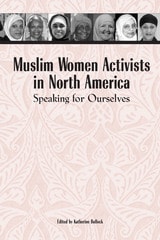
Muslim Women Activists in North America
Speaking for OurselvesEdited by Katherine Bullock
University of Texas Press, 2005
In the eyes of many Westerners, Muslim women are hidden behind a veil of negative stereotypes that portray them as either oppressed, subservient wives and daughters or, more recently, as potential terrorists. Yet many Muslim women defy these stereotypes by taking active roles in their families and communities and working to create a more just society. This book introduces eighteen Muslim women activists from the United States and Canada who have worked in fields from social services, to marital counseling, to political advocacy in order to further social justice within the Muslim community and in the greater North American society.
Each of the activists has written an autobiographical narrative in which she discusses such issues as her personal motivation for doing activism work, her views on the relationship between Islam and women's activism, and the challenges she has faced and overcome, such as patriarchal cultural barriers within the Muslim community or racism and discrimination within the larger society. The women activists are a heterogeneous group, including North American converts to Islam, Muslim immigrants to the United States and Canada, and the daughters of immigrants. Young women at the beginning of their activist lives as well as older women who have achieved regional or national prominence are included. Katherine Bullock's introduction highlights the contributions to society that Muslim women have made since the time of the Prophet Muhammad and sounds a call for contemporary Muslim women to become equal partners in creating and maintaining a just society within and beyond the Muslim community.
New Advances in the Study of Civic Voluntarism
Resources, Engagement, and RecruitmentCasey Klofstad
Temple University Press, 2016
Individuals who are civically active have three things in common: they have the capacity to do so, they want to, and they have been asked to participate. New Advances in the Study of Civic Voluntarism is dedicated to examining the continued influence of these factors—resources, engagement, and recruitment—on civic participation in the twenty-first century.
The contributors to this volume examine recent social, political, technological, and intellectual changes to provide the newest research in the field. Topics range from race and religion to youth in the digital age, to illustrate the continued importance of understanding the role of the everyday citizen in a democratic society.
Contributors include:Molly Andolina, Allison P. Anoll, Leticia Bode, Henry E. Brady, Traci Burch, Barry C. Burden, Andrea Louise Campbell, David E. Campbell, Sara Chatfield, Stephanie Edgerly, Zoltán Fazekas, Lisa García Bedoll, Peter K. Hatemi, John Henderson, Krista Jenkins, Yanna Krupnikov, Adam Seth Levine, Melissa R. Michelson, S. Karthick Ramakrishnan, Dinorah Sánchez Loza, Kay Lehman Schlozman, Dhavan Shah, Sono Shah, Kjerstin Thorson, Sidney Verba, Logan Vidal, Emily Vraga, Chris Wells, JungHwan Yang, and the editor.
Politics and Partnerships
The Role of Voluntary Associations in America's Political Past and PresentEdited by Elisabeth S. Clemens and Doug Guthrie
University of Chicago Press, 2011
But despite the ubiquity of the idea of volunteerism in public policy debates, analysis of its role in American governance has been fragmented. Bringing together a diverse set of disciplinary approaches, Politics and Partnerships is a thorough examination of the place of voluntary associations in political history and an astute investigation into contemporary experiments in reshaping that role. The essays here reveal the key role nonprofits have played in the evolution of both the workplace and welfare and illuminate the way that government’s retreat from welfare has radically altered the relationship between nonprofits and corporations.
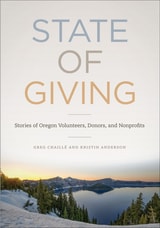
State of Giving
Stories of Oregon Nonprofits, Donors, and VolunteersGreg Chaillé
Oregon State University Press, 2015
much-needed manifesto for greater civic engagement. Chaillé and Anderson highlight the crucial
role that nonprofits play as pillars of Oregon’s civic structure through their engaging profiles of
the charismatic civic leaders, grassroots organizations, donors, and volunteers who are working
to combat some of Oregon’s most enduring problems, including:
• Education Inequity
• Environmental Conservation
• Social Inequity and Discrimination
• Hunger and Homelessness
• The Urban/Rural Divide
• Arts, Culture, and Heritage Funding
Traversing the state from a remote Great Basin field station to an intercultural center in north
Portland, State of Giving shows the many faces of public engagement in people like education
activist Ron Herndon, volunteer historians Gwen Carr and Willie Richardson, and Wallowa
County philanthropist and rancher Doug McDaniel. Their stories reveal that there are ways
in which we all—regardless of wealth, location, age, or background—can give back to our
communities.
In addition to introducing Oregon’s key areas of need and demonstrating diverse pathways
into civic engagement, the book provides extensive resources for prospective volunteers and
donors. Rousing, accessible, and enlivened by photographs of its people and places, State of Giving
is an essential reference for anyone interested in building a better Oregon, starting today.
The Making of Tocqueville's America
Law and Association in the Early United StatesKevin Butterfield
University of Chicago Press, 2015
Butterfield explains that the first generations of American citizens found in the concept of membership—in churches, fraternities, reform societies, labor unions, and private business corporations—a mechanism to balance the tension between collective action and personal autonomy, something they accomplished by emphasizing law and procedural fairness. As this post-Revolutionary procedural culture developed, so too did the legal substructure of American civil society. Tocqueville, then, was wrong to see associations as the training ground for democracy, where people learned to honor one another’s voices and perspectives. Rather, they were the training ground for something no less valuable to the success of the American democratic experiment: increasingly formal and legalistic relations among people.
The New Effective Voluntary Board of Directors
What It Is and How It WorksWilliam R. Conrad Jr.
Ohio University Press, 2003
More than one million nonprofit or voluntary organizations have been incorporated in the United States, and there are countless others throughout the world. Although they range in size and purpose from small social clubs to large and complex organizations such as universities and hospitals, they all have one thing in common: a board of directors of some type. What these boards do varies as much as the organizations themselves.
The New Effective Voluntary Board of Directors provides clear answers, illustrated with graphics, to previously ambiguous and bewildering questions, such as definitions of policy, the function of boards, the role of board members, and many other issues.
Dealing with the delicate balance in nonprofit organizations, the legal implications of serving on a board, the nonprofit leadership and management model, and other matters of concern, William Conrad applies his lifelong experience to providing a comprehensive, practical, and concise tool for those involved in the unique challenges associated with the leadership and management of nonprofit and voluntary groups.
With nearly 30,000 copies of earlier editions of this work in print, Swallow Press is pleased to publish the new, updated, and revised edition of this classic in its field.
The Voluntary City
Choice, Community, and Civil SocietyDavid T. Beito, Peter Gordon, and Alexander Tabarrok, Editors
University of Michigan Press, 2002