Results by title
148 books match the query 'Colonization' and 6 start with m
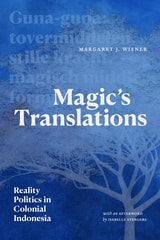
Magic’s Translations
Reality Politics in Colonial IndonesiaMargaret J. Wiener
Duke University Press, 2025
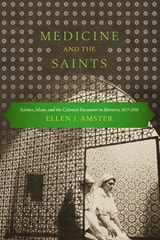
Medicine and the Saints
Science, Islam, and the Colonial Encounter in Morocco, 1877-1956By Ellen J. Amster
University of Texas Press, 2013
The colonial encounter between France and Morocco took place not only in the political realm but also in the realm of medicine. Because the body politic and the physical body are intimately linked, French efforts to colonize Morocco took place in and through the body. Starting from this original premise, Medicine and the Saints traces a history of colonial embodiment in Morocco through a series of medical encounters between the Islamic sultanate of Morocco and the Republic of France from 1877 to 1956.
Drawing on a wealth of primary sources in both French and Arabic, Ellen Amster investigates the positivist ambitions of French colonial doctors, sociologists, philologists, and historians; the social history of the encounters and transformations occasioned by French medical interventions; and the ways in which Moroccan nationalists ultimately appropriated a French model of modernity to invent the independent nation-state. Each chapter of the book addresses a different problem in the history of medicine: international espionage and a doctor’s murder; disease and revolt in Moroccan cities; a battle for authority between doctors and Muslim midwives; and the search for national identity in the welfare state. This research reveals how Moroccans ingested and digested French science and used it to create a nationalist movement and Islamist politics, and to understand disease and health. In the colonial encounter, the Muslim body became a seat of subjectivity, the place from which individuals contested and redefined the political.
Messy Beginnings
Postcoloniality and Early American StudiesEdited by Malini Johar Schueller and Edward Watts
Rutgers University Press, 2003
When exploring the links between America and postcolonialism, scholars tend to think either in terms of contemporary multiculturalism, or of imperialism since 1898. This narrow view has left more than the two prior centuries of colonizing literary and political culture unexamined.
Messy Beginnings challenges the idea of early America’s immunity from issues of imperialism, that its history is not as “clean” as European colonialism. By addressing the literature ranging from the diaries of American women missionaries in the Middle East to the work of Benjamin Franklin and Nathaniel Hawthorne, and through appraisals of key postcolonial theorists such as Edward Said, Gayatri Spivak, and Homi Bhabha, the contributors to this volume explore the applicability of their models to early American culture.
Messy Beginnings argues against the simple concept that the colonization of what became the United States was a confrontation between European culture and the “other.” Contributors examine the formation of America through the messy or unstable negotiations of the idea of “nation.”
The essays forcefully show that the development of “Americanness” was a raced and classed phenomenon, achieved through a complex series of violent encounters, legal maneuvers, and political compromises. The complexity of early American colonization, where there was not one coherent “nation” to conquer, contradicts the simple label of imperialism used in other lands. The unique approach of Messy Beginnings will reshape both pre-conceived notions of postcolonialism, and how postcolonialists think about the development of the American nation.
Monetary Authorities
Capitalism and Decolonization in the American Colonial PhilippinesAllan E. S. Lumba
Duke University Press, 2022
Moving Subjects
Gender, Mobility, and Intimacy in an Age of Global EmpireEdited by Tony Ballantyne and Antoinette Burton
University of Illinois Press, 2008
Moving Subjects is the first of its kind to make a case not simply for the necessity of a spatial analysis of imperial formations, but for the indispensability of an investigative approach that links space and movement with the domain of the intimate. Through careful archival research and a commitment to excavating the variety of "mobile intimacies" at the heart of imperial power, its agents, and its interlocutors, contributors offer new evidence and approaches for scholars engaged in capturing the historical nuances of imperial domination.
Contributors are Tony Ballantyne, Antoinette Burton, Adrian Carton, David Haines, Katherine Ellinghaus, Charlotte Macdonald, Michael A. McDonnell, Kirsten McKenzie, Michelle Moran, Fiona Paisley, Adele Perry, Dana Rabin, Christine M. Skwiot, Rachel Standfield, Frances Steel, Elizabeth Vibert, and Kerry Wynn.
Mozambique
The Africanization of a European Institution, The Zambesi Prazos, 1750–1902Allen F. Isaacman
University of Wisconsin Press, 0