Results by title
214 books match the query 'Constitutional' and 5 start with m
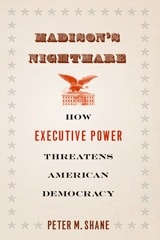
Madison's Nightmare
How Executive Power Threatens American DemocracyPeter M. Shane
University of Chicago Press, 2009
The George W. Bush administration’s ambitious—even breathtaking—claims of unilateral executive authority raised deep concerns among constitutional scholars, civil libertarians, and ordinary citizens alike. But Bush’s attempts to assert his power are only the culmination of a near-thirty-year assault on the basic checks and balances of the U.S. government—a battle waged by presidents of both parties, and one that, as Peter M. Shane warns in Madison’s Nightmare, threatens to utterly subvert the founders’ vision of representative government.
Tracing this tendency back to the first Reagan administration, Shane shows how this era of "aggressive presidentialism" has seen presidents exerting ever more control over nearly every arena of policy, from military affairs and national security to domestic programs. Driven by political ambition and a growing culture of entitlement in the executive branch—and abetted by a complaisant Congress, riven by partisanship—this presidential aggrandizement has too often undermined wise policy making and led to shallow, ideological, and sometimes outright lawless decisions. The solution, Shane argues, will require a multipronged program of reform, including both specific changes in government practice and broader institutional changes aimed at supporting a renewed culture of government accountability.
From the war on science to the mismanaged war on terror, Madison’s Nightmare outlines the disastrous consequences of the unchecked executive—and issues a stern wake-up call to all who care about the fate of our long democratic experiment.
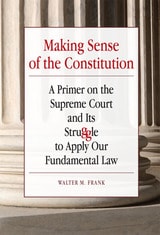
Making Sense of the Constitution
A Primer on the Supreme Court and Its Struggle to Apply Our Fundamental LawWalter M. Frank
Southern Illinois University Press, 2012
In Making Sense of the Constitution: A Primer on the Supreme Court and Its Struggle to Apply Our Fundamental Law, Walter Frank tackles in a comprehensive but lively manner subjects rarely treated in one volume.
Aiming at both the general reader and students of political science, law, or history, Frank begins with a brief discussion of the nature of constitutional law and why the Court divides so closely on many issues. He then proceeds to an analysis of the Constitution and subsequent amendments, placing them in their historical context. Next, Frank shifts to the Supreme Court and its decisions, examining, among other things, doctrinal developments, the Court’s decision making processes, how justices interact with each other, and the debate over how the Constitution should be interpreted.
The work concludes with a close analysis of Court decisions in six major areas of continuing controversy, including abortion, affirmative action, and campaign finance.
Outstanding by the University Press Books for Public and Secondary Schools
Mission Accomplished
On Founding Constitutional Adjudication in Central EuropeRadoslav Procházka
Central European University Press, 2002
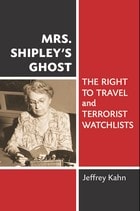
Mrs. Shipley's Ghost
The Right to Travel and Terrorist WatchlistsJeffrey Kahn
University of Michigan Press, 2014
Today, when a single person can turn an airplane into a guided missile, no one objects to rigorous security before flying. But can the state simply declare some people too dangerous to travel, ever and anywhere? Does the Constitution protect a fundamental right to travel? Should the mode of travel (car, plane, or boat) or itinerary (domestic or international) make a constitutional difference? This book explores the legal and policy questions raised by government travel restrictions, from passports and rubber stamps to computerized terrorist watchlists.
In tracing the history and scope of U.S. travel regulations, Jeffrey Kahn begins with the fascinating story of Mrs. Ruth Shipley, a federal employee who almost single-handedly controlled access to passports during the Cold War. Kahn questions how far national security policies should go and whether the government should be able to declare some individuals simply too dangerous to travel. An expert on constitutional law, Kahn argues that U.S. citizens’ freedom to leave the country and return is a fundamental right, protected by the Constitution.

Murder, Courts, and the Press
Issues in Free Press/Fair TrialPeter E. Kane. Foreword by Franklyn S. Haiman
Southern Illinois University Press, 1992
When murder is the crime, the clash in the courts is likely to be between two constitutionally enshrined rights—freedom of speech and the right to a fair trial.
Peter E. Kane shows what happened in seven famous court cases when First Amendment rights (concerning freedom of speech) conflicted with Sixth Amendment rights (concerning fair trial). He reports the circumstances of each crime, the court proceedings, and the conduct of the press in the trials of Sam Sheppard, Charles Manson and his followers, John Paul Stevenson, Claus von Bülow, and Arthur Shawcross and the cases involving the Kellie family and the Wayne Clapp murders. Kane’s narrative and analytical approach illuminates legal principles and shows the roles of actual human beings underlying the abstractions of court opinions.
In this revised and expanded edition, Kane considers two new topics stemming from recent court cases: cameras in the courtroom and a code of ethics for crime reporting. Kane explores the issue of cameras through the famous Claus von Bülow retrial, which featured live television broadcasts; regarding a journalistic code, Kane examines the massive pretrial reporting of the serial murders of Arthur Shawcross. Kane notes that sensational crime stories serve the interests of many people: the public wants to read them; journalists want to write them because they can make a reporter’s fortune and reputation; and editors and publishers want to sell papers. The sensational crime story serves everyone’s purpose except that of the accused.
In addition to exploring journalistic ethics and the proper procedures for trial judges in guaranteeing a fair trial, these cases also provide an introduction to the operation of the courts in criminal justice. "The trial court is the arena in which the conflicts between a free press and a fair trial are played out," Kane writes. "This play is described here as are the subsequent evaluations of that play by the appellate courts. Thus the legal process is considered from its beginning with the original crime to the final resolution of the case in the United States Supreme Court."