Results by title
90 books match the query 'Constitutional history' and 3 start with m

MacArthur's Japanese Constitution
Kyoko Inoue
University of Chicago Press, 1991
The Japanese constitution as revised by General MacArthur in 1946, while generally regarded to be an outstanding basis for a liberal democracy, is at the same time widely considered to be—in its Japanese form—an document which is alien and incompatible with Japanese culture. Using both linguistics and historical data, Kyoto Inoue argues that despite the inclusion of alien concepts and ideas, this constitution is nonetheless fundamentally a Japanese document that can stand on its own.
"This is an important book. . . . This is the most significant work on postwar Japanese constitutional history to appear in the West. It is highly instructive about the century-long process of cultural conflict in the evolution of government and society in modern Japan."—Thomas W. Burkman, Monumenta Nipponica
"This is an important book. . . . This is the most significant work on postwar Japanese constitutional history to appear in the West. It is highly instructive about the century-long process of cultural conflict in the evolution of government and society in modern Japan."—Thomas W. Burkman, Monumenta Nipponica
[more]
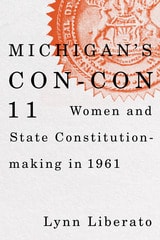
Michigan's Con-Con 11
Women and State Constitution-making in 1961Lynn Liberato
Michigan State University Press, 2025
Michigan’s Con-Con 11 highlights the contributions of the eleven female delegates to the 1961–1962 Michigan Constitutional Convention. As the first female delegates to a state of Michigan constitutional convention, these pioneers demonstrated that women were more than capable of helping to revise Michigan’s highest law. Their examples encouraged other women to enter politics during a time when few women held state or federal public office. Following the women’s Con-Con journey over seven and a half months, the book offers a general overview of what a state constitutional convention is and what it means to be a delegate. Michigan’s Con-Con 11 both educates the reader on constitution-making and sheds new light on an exciting moment in Michigan political history.
[more]
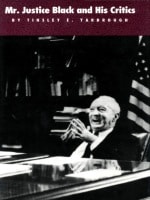
Mr. Justice Black and His Critics
Tinsley E. Yarbrough
Duke University Press, 1988
Many jurists give lip service to the idea that judicial interpretation of constitutional provisions should be based on the intent of the framers. Few, if any, have been as faithful to that conception as Hugo Black. As U.S. senator from Alabama, Black was a vigorous critic of the Supreme Court's use of the Constitution as a weapon against the Roosevelt New Deal. Once on the court he played a leading role in overturning those decisions and in attempting to establish for freedom of speech and other guarantees the interpretation he (and others) believe was warranted by the language and intent of the framers.
Late in his career, however, Black's commitment to literalism and intent led him to assume apparently conservative positions in civil liberties cases. In an era characterized by growing acceptance of the belief that judges should adapt the Constitution to changing social and ethical perceptions, many came to regard Black's position as unrealistic and irrelevant.
Tinsley E. Yarbrough analyzes Black's judicial and constitutional philosophy, as well as his approach to specific cases, through the eyes of Black's critics (such as Justices Frankfurter and Harlan) and through an assessment of scholarly opinion of his jurisprudence. The result is a stimulating and provocative addition to the study of Justice Black and the Supreme Court.
[more]