Results by title
429 books match the query 'Development' and 24 start with m
Macroeconomic Policies and the Development of Markets in Transition Economies
Fabrizio Coricelli
Central European University Press, 1998

Making Institutions Work in Peru
Democracy, Development and Inequality Since 1980Edited by John Crabtree
University of London Press, 2006
Contributors include Paulo Drino (University of Manchester), Cynthia Sanborn (Centro de Investigaciones, Universidad del Pacifico, Lima), Carlos Monge (Participacion Ciudadana, Lima), Fernando Rospigliosi (Instituto de Estudios Peruanos, Lima), Pedro Franck (Departamento de Economia, Universidad Catolica, Lima), Fernando Eguren (Centro Peruano de Ciencias Sociales, Lima), Rosemary Thorp (Queen Elizabeth House/St Antony's College, Oxford), Eduardo Dargent (University of Texas,Austin), Coletta Youngers (Washington Office on Latin America,Washington D.C.), Francisco Durand (University of Texas, San Antonio), Jose Tavara (Departamento de Economia, Universidad Catolica, Lima, and OSIPTEL), and Richard Webb (Instituto Cuanto and Central Bank of Peru).
Managing "Modernity"
Work, Community, and Authority in Late-Industrializing Japan and RussiaRudra Sil
University of Michigan Press, 2002
Managing "Modernity" engages a variety of intellectual perspectives in the social sciences. The theoretical approach represents a conscious effort to overcome the contentious debates in political science and sociology among proponents of historical institutionalism, cultural analysis, and rational-choice theory. The substantive argument draws on, and partially integrates, concepts and findings from comparative politics, economic sociology, industrial relations, organization theory, business management, and the political economy of Japan and Russia.
In light of ongoing debates over the significance and impact of "globalization," the eclectic and integrative approach in Managing "Modernity" offers a fresh and provocative contribution that will interest scholars and graduate students across a variety of disciplines and subfields. It offers compelling insights to anyone generally concerned with the social forces that facilitate or hinder the diffusion of ideas and institutions across national boundaries.
Rudra Sil is Janice and Julian Bers Assistant Professor in the Social Sciences, Department of Political Science, University of Pennsylvania.

Managing Complexity in Software Engineering
R.J. Mitchell
The Institution of Engineering and Technology, 1990

Many Happy Returns
Advocacy and the Development of ArchivesLarry J. Hackman
Society of American Archivists, 2011
Maps with the News
The Development of American Journalistic CartographyMark Monmonier
University of Chicago Press, 1989
"A most welcome and thorough investigation of a neglected aspect of both the history of cartography and modern cartographic practice."—Mapline
"A well-written, scholarly treatment of journalistic cartography. . . . It is well researched, thoroughly indexed and referenced . . . amply illustrated."—Judith A. Tyner, Imago Mundi
"There is little doubt that Maps with the News should be part of the training and on the desks of all those concerned with producing maps for mass consumption, and also on the bookshelves of all journalists, graphic artists, historians of cartography, and geographic educators."—W. G. V. Balchin, Geographical Journal
"A definitive work on journalistic cartography."—Virginia Chipperfield, Society of University Cartographers Bulletin
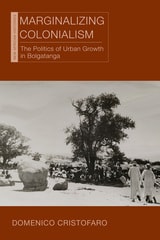
Marginalizing Colonialism
The Politics of Urban Growth in BolgatangaDomenico Cristofaro
Ohio University Press, 2026
Marginalizing Colonialism offers a social, political, and spatial history of Bolgatanga, a northern Ghanaian town whose colonial-era urban development has been largely overlooked in African historiography. Covering the late nineteenth century through the 1940s, the book traces how this settlement—long characterized as a remote hinterland of the British Empire—emerged as a commercial and political center in the region. Rather than depicting urbanization as an imperial project, it reveals how African actors actively shaped Bolgatanga’s growth and repeatedly marginalized, redirected, and evaded colonial authority.
The narrative follows Bolgatanga’s transformation from a dispersed settlement organized around kinship, ritual geographies, and earth shrines into a dynamic urban hub integrated into regional trade networks. Central to this shift were new land tenure systems, commercial expansion, and changing spatial practices. By the 1930s and 1940s, trade in kola, groundnuts, livestock, and other goods surged, stimulated by new roads and increased mobility. Population growth converted farmland into leased plots, permanent buildings replaced older compounds, and areas around the market became focal points of economic and social life.
These changes were driven not by the colonial state but rather by local negotiations and strategic adaptations. Chiefs, earth priests, merchants, and migrant traders mediated and reshaped colonial policies, while missionaries and settlers concluded land agreements beyond official oversight. Roads and marketplaces, planned through negotiations between colonial officials and local chiefs and built largely through African labor, became central infrastructures of local economic life. Even as colonial administrators sought to codify land tenure and regulate commerce, their influence remained largely nominal—a background presence in a story propelled by African initiative.
Drawing on archival documents, oral histories, and unpublished manuscripts by local intellectuals, Marginalizing Colonialism provides the first comprehensive urban history of Bolgatanga. It challenges dominant narratives in African colonial and urban historiography by exposing the silences of the colonial archive and highlighting the significance of medium-sized towns as arenas of negotiation and creativity. Ultimately, the book argues that Bolgatanga’s urbanization was a locally driven process that redefined power, space, and governance—leaving a legacy that continues to shape the city’s identity and regional role today.

Markets and Cultural Voices
Liberty vs. Power in the Lives of Mexican Amate PaintersTyler Cowen
University of Michigan Press, 2005
Cowen examines this cultural interaction between Mexico and the United States to see how globalization shapes the lives and the work of the artists and their families. The story of these three artists reveals that this exchange simultaneously creates economic opportunities for the artists, but has detrimental effects on the village.
A view of the daily village life of three artists connected to the larger art world, this book should be of particular interest to those in the fields of cultural economics, Latino studies, economic anthropology and globalization.
Markets of Dispossession
NGOs, Economic Development, and the State in CairoJulia Elyachar
Duke University Press, 2005
Julia Elyachar studied the efforts of bankers, social scientists, ngo members, development workers, and state officials to turn the craftsmen and unemployed youth of Cairo into the vanguard of a new market society based on microenterprise. She considers these efforts in relation to the alternative notions of economic success held by craftsmen in Cairo, in which short-term financial profit is not always highly valued. Through her careful ethnography of workshop life, Elyachar explains how the traditional market practices of craftsmen are among the most vibrant modes of market life in Egypt. Long condemned as backward, these existing market practices have been seized on by social scientists and development institutions as the raw materials for experiments in “free market” expansion. Elyachar argues that the new economic value accorded to the cultural resources and social networks of the poor has fueled a broader process leading to their economic, social, and cultural dispossession.
Mexican Women in American Factories
Free Trade and Exploitation on the BorderBy Carolyn Tuttle
University of Texas Press, 2012
Prior to the millennium, economists and policy makers argued that free trade between the United States and Mexico would benefit both Americans and Mexicans. They believed that NAFTA would be a “win-win” proposition that would offer U.S. companies new markets for their products and Mexicans the hope of living in a more developed country with the modern conveniences of wealthier nations. Blending rigorous economic and statistical analysis with concern for the people affected, Mexican Women in American Factories offers the first assessment of whether NAFTA has fulfilled these expectations by examining its socioeconomic impact on workers in a Mexican border town.
Carolyn Tuttle led a group that interviewed 620 women maquila workers in Nogales, Sonora, Mexico. The responses from this representative sample refute many of the hopeful predictions made by scholars before NAFTA and reveal instead that little has improved for maquila workers. The women’s stories make it plain that free trade has created more low-paying jobs in sweatshops where workers are exploited. Families of maquila workers live in one- or two-room houses with no running water, no drainage, and no heat. The multinational companies who operate the maquilas consistently break Mexican labor laws by requiring women to work more than nine hours a day, six days a week, without medical benefits, while the minimum wage they pay workers is insufficient to feed their families. These findings will make a crucial contribution to debates over free trade, CAFTA-DR, and the impact of globalization.
Microfoundations of Economic Growth
A Schumpeterian PerspectiveGunnar Eliasson and Christopher Green, Editors; Charles R. McCann, Jr., Associate Editor
University of Michigan Press, 1998
Microfoundations of Economic Growth
A Schumpeterian PerspectiveGunnar Eliasson and Christopher Green, Editors, and Charles R. McCann Jr., Associate Editor
University of Michigan Press, 1998
Migrant Returns
Manila, Development, and Transnational ConnectivityEric J. Pido
Duke University Press, 2017

Mining in Africa
Regulation and DevelopmentBonnie Campbell
Pluto Press, 2009
The continent of Africa is rich in minerals needed by Western economies, but rather than forming the basis for economic growth the mining industry contributes very little to African development
Investigating the impact of the 2003 Extractive Industries Review on a number of African countries, the contributors find that a key dimension of the problem lies in the regulatory frameworks imposed on the African countries by the IMF and World Bank. They aim to convince academics, governments and industry that regulation needs to be reformed to create a mining industry favourable to social and economic development and environmental protection.
The book takes a multidisciplinary approach and provides a historical perspective of each country, making it ideal for students of development studies and development organisations.

Misbehaving Science
Controversy and the Development of Behavior GeneticsAaron Panofsky
University of Chicago Press, 2014
In Misbehaving Science, Aaron Panofsky traces the field of behavior genetics back to its origins in the 1950s, telling the story through close looks at five major controversies. In the process, Panofsky argues that persistent, ungovernable controversy in behavior genetics is due to the broken hierarchies within the field. All authority and scientific norms are questioned, while the absence of unanimously accepted methods and theories leaves a foundationless field, where disorder is ongoing. Critics charge behavior geneticists with political motivations; champions say they merely follow the data where they lead. But Panofsky shows how pragmatic coping with repeated controversies drives their scientific actions. Ironically, behavior geneticists’ struggles for scientific authority and efforts to deal with the threats to their legitimacy and autonomy have made controversy inevitable—and in some ways essential—to the study of behavior genetics.
Mobilizing Communities
Asset Building as a Community Development StrategyEdited by Gary Paul Green and Ann Goetting
Temple University Press, 2013
Model-Based Requirements Engineering
Jon Holt
The Institution of Engineering and Technology, 2011

Modernismo, Modernity and the Development of Spanish American Literature
By Cathy L. Jrade
University of Texas Press, 1998
A CHOICE Outstanding Academic Book
Modernismo arose in Spanish American literature as a confrontation with and a response to modernizing forces that were transforming Spanish American society in the later nineteenth century. In this book, Cathy L. Jrade undertakes a full exploration of the modernista project and shows how it provided a foundation for trends and movements that have continued to shape literary production in Spanish America throughout the twentieth century.
Jrade opens with a systematic consideration of the development of modernismo and then proceeds with detailed analyses of works-poetry, narrative, and essays-that typified and altered the movement's course. In this way, she situates the writing of key authors, such as Rubén Darío, José Martí, and Leopoldo Lugones, within the overall modernista project and traces modernismo's influence on subsequent generations of writers.
Jrade's analysis reclaims the power of the visionary stance taken by these creative intellectuals. She firmly abolishes any lingering tendency to associate modernismo with affectation and effete elegance, revealing instead how the modernistas' new literary language expressed their profound political and epistemological concerns.
Modularity in Development and Evolution
Edited by Gerhard Schlosser and Günter P. Wagner
University of Chicago Press, 2004
A timely synthesis of a crucial topic, Modularity in Development and Evolution shows the invaluable insights modules can give into both developmental complexities and their evolutionary origins.

Monetarism and Liberalization
The Chilean ExperimentSebastian Edwards and Alejandra Cox Edwards
University of Chicago Press, 1991
"The Edwards's book is an indispensable guide to the policy reforms and mistakes that have taken the [Chilean] economy to its present state."—Philip L. Brock, Money, Credit, and Banking
"This book is a 'must' for anybody interested in development economies and the problems of liberalization."—Hansjorg Blochliger, Journal of International Economics
Money and Power
Great Predators in the Political Economy of DevelopmentSarah Bracking
Pluto Press, 2009
Sarah Bracking explores the role of governments and development finance institutions in managing the markets in which the poorest countries operate. These institutions -- the 'Great Predators' -- are trapping the populations of the south in a permanent cycle of austerity.
Bracking examines the political economy relations between states. She shows how pseudo-public 'development' institutions retain complete economic control over Southern markets, yet the international system is itself unregulated. Operating in the interests of North America and the European Union, they have a political purpose, and yet serve to cloud the brute power relations between states.
This book will be of interest to anyone studying debt and development, global financial institutions, and the way the world economy is regulated and governed.
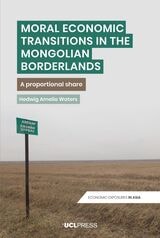
Moral Economic Transitions in the Mongolian Borderlands
A Proportional ShareHedwig Amelia Waters
University College London, 2023
In the early 1990s, Mongolia began a transition from socialism to a market democracy. In the process, the country became more than ever dependent on international mining revenue. Nearly thirty years later, many of Mongolia’s poor and rural feel that, rather than share in the prosperity the transition was supposed to spread, they have been forgotten.
Moral Economic Transitions in the Mongolian Borderlands analyzes this period of change from the viewpoint of the rural township of Magtaal on the Chinese border. After the end of socialism, the population of this resource-rich area found itself without employment or state institutions yet surrounded by lush nature and mere kilometers from the voracious Chinese market. A two-tiered resource-extractive political-economic system developed. At the same time as large-scale, formal, legally sanctioned conglomerates arrived to extract oil and other resources, local residents grew increasingly dependent on the Chinese-funded informal, illegal cross-border wildlife trade. More than a story about rampant capitalist extraction in the resource frontier, this book intimately details the complex inner worlds, moral ambiguities, and emergent collective politics constructed by individuals who feel caught in political-economic shifts that are largely outside of their control.

Moral Philosophy and Development
The Human Condition in AfricaTedros Kiros
Ohio University Press, 1992
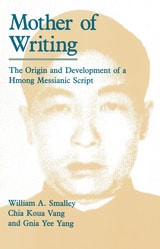
Mother of Writing
The Origin and Development of a Hmong Messianic ScriptWilliam A. Smalley, Chia Koua Vang, and Gnia Yee Yang
University of Chicago Press, 1990
An anthropological linguist who has worked among the Hmong, William A. Smalley joins Shong Lue's chief disciple, Chia Koua Vang, and one of his associates, to tell the fascinating story of how the previously unschooled farmer developed his remarkable writing system through four stages of increasing sophistication. The uniqueness of Shong Lue's achievement is highlighted by a comparison of Shong Lue's writing system to other known Hmong systems and to the history of writing as a whole.
In addition to a nontechnical linguistic analysis of the script and a survey of its current use, Mother of Writing provides an intriguing cultural account of Shong Lue's life. The book traces the twenty-year-long struggle to disseminate the script after Shong Lue's death, first by handwriting, then by primitive moveable type, an abortive attempt to design a wooden typewriter, and finally by modern wordprocessing. In a moving concluding chapter, Smalley discusses his own complex feelings about his coauthors' story.