808 books match the query 'Drama' and 41 start with m
cover of Macbeth

Macbeth

William Shakespeare

Arizona Center for Medieval and Renaissance Studies, 2021

In Migdalia Cruz’s Macbeth, the Witches run the world. The Macbeths live out a dark cautionary tale of love, greed, and power, falling from glory into calamity as the Witches spin their fate. Translating Shakespeare’s language for a modern audience, Nuyorican playwright Migdalia Cruz rewrites Macbeth with all the passion of the Bronx.  

This translation of Macbeth was presented in 2018 as part of the Play On! Shakespeare project, an ambitious undertaking from the Oregon Shakespeare Festival that commissioned new translations of 39 Shakespeare plays. These translations present the Bard’s work in language accessible to modern audiences while never losing the beauty of Shakespeare’s verse. Enlisting the talents of a diverse group of contemporary playwrights, screenwriters, and dramaturges from diverse backgrounds, this project reenvisions Shakespeare for the twenty-first century. These volumes make these works available for the first time in print—a new First Folio for a new era.

[more]
cover of Magical Muse: Millennial Essays on Tennessee Williams

Magical Muse

Millennial Essays on Tennessee Williams

Edited by Ralph F. Voss

University of Alabama Press, 2002

In this unique and engaging collection, twelve essays celebrate the legacy of one of America's most important playwrights and investigate Williams's enduring effect on America's cultural, theatrical, and literary heritage.
 
Like Faulkner before him, Tennessee Williams gave universal appeal to southern characters and settings. His major plays, from Cat on a Hot Tin Roof and The Glass Menagerie to A Streetcar Named Desire and Night of the Iguana, continue to capture America's popular imagination, a significant legacy. Though he died in 1983, only recently have Williams's papers become available to the public, bringing to light a number of intriguing discoveries—letters, drafts, and several unpublished and unproduced plays. These recent developments make a reassessment of Williams's life and work both timely and needed.

The essays in this collection originated as presentations at the 27th annual Alabama Symposium on English and American Literature at The University of Alabama in 1999. The book addresses a wide range of topics, among them the influence of popular culture on Williams's plays, and, in turn, his influence on popular culture; his relationship to Hollywood and his struggles with censorship, Hollywood standards, and the competing vision of directors such as Elia Kazan; his depictions of gender and sexuality; and issues raised by recently discovered plays.

Anyone interested in American literature and drama will find this collection of fresh, accessible essays a rewarding perspective on the life, work, and legacy of one of the bright stars of American theatre.


[more]
cover of Magnet Theatre: Three Decades of Making Space

Magnet Theatre

Three Decades of Making Space

Edited by Megan Lewis and Anton Krueger

Intellect Books, 2015

Cape Town’s Magnet Theatre has been a force in South African theater for three decades, a crucial space for theater, education, performance, and community throughout a turbulent period in South African history. Offering a dialogue between internal and external perspectives, as well as perspectives from performers, artists, and scholars, this book analyzes Magnet’s many productions and presents a rich compendium of the work of one of the most vital physical theater companies in Africa.
[more]
cover of Making The Black Jacobins: C. L. R. James and the Drama of History

Making The Black Jacobins

C. L. R. James and the Drama of History

Rachel Douglas

Duke University Press, 2019

C. L. R. James's The Black Jacobins remains one of the great works of the twentieth century and the cornerstone of Haitian revolutionary studies. In Making The Black Jacobins, Rachel Douglas traces the genesis, transformation, and afterlives of James's landmark work across the decades from the 1930s on. Examining the 1938 and 1963 editions of The Black Jacobins, the 1967 play of the same name, and James's 1936 play, Toussaint Louverture—as well as manuscripts, notes, interviews, and other texts—Douglas shows how James continuously rewrote and revised his history of the Haitian Revolution as his politics and engagement with Marxism evolved. She also points to the vital significance theater played in James's work and how it influenced his views of history. Douglas shows The Black Jacobins to be a palimpsest, its successive layers of rewriting renewing its call to new generations.
[more]
cover of Man from Nebraska: A Play

Man from Nebraska

A Play

Tracy Letts

Northwestern University Press, 2006

A luxury sedan, a church pew, a cafeteria table, a favorite TV show, and visits to a nursing home form the comfortable cycles of the dull daily life of middle-aged insurance salesman Ken Carpenter. Then one night, he awakens to find that he no longer believes in God. To the surprise of his very understanding (to a point) wife and his two grown daughters who think he has lost his mind, Ken decides to find himself and his faith by flying to London, where he was stationed while in the Air Force. He navigates through the new and somewhat dangerous realm of British counter-culture and ultimately finds his way back home. Tracy Letts's moving, funny, and spiritually complex play dares to ask the big questions, and by doing so, reveals the hidden yearning and emotion that spur the eccentric behavior of seemingly ordinary people.
[more]
cover of Marginal Sights: Staging the Chinese in America

Marginal Sights

Staging the Chinese in America

James S. Moy

University of Iowa Press, 1994

Since the beginning of the Western tradition in drama, dominant cultures have theatrically represented marginal or foreign racial groups as other—different form "normal" people, not completely human, uncivilized, quaint, exotic, comic. Playwrights and audiences alike have been fascinated with racial difference, and this fascination has depended upon a process of fetishization. By the time Asians appeared in the United States, the framework for their constructed Lotus Blossom and Charlie Chan stereotypes had preceded them. InMarginal Sights, James Moy dismantles these stereotypes in an unrelenting attack on Anglo American institutions of racial representation.
Reading the Chinese stereotype through several media, Moy notes the consistency of Anglo America's construction of what he terms Chineseness. He rejects the dominant cultural assertion that stereotypes contain a germ of truth, arguing instead that this so-called germ of truth is itself a construction the serves the evolving social and material concerns of an often sinophobic white America. Through time the stereotypes have taken on a life of their own, and those who sought to overturn them have often failed, thus seemingly validating them. Moy, on the other hand, spotlights the constructed Orientals so brilliantly that the real Asian Americans behind them can become visible at last. Consisting of ten readings of Chineseness in America, this sophisticated text reveals the source of representational racial oppression in America. Moy examines diverse sites of representation from museum displays, cartoons, and plays to early photographs, films, circus acts, performance art, and pornography. His persuasive assault on the responsible institutions is uncompromising. However, with surprising insouciance, Moy juxtaposes wit with the often grim details of America's representational legacy.
While Marginal Sights focuses on Chineseness in America, Moy makes explicit its applicability to all institutionally managed representations, racial and otherwise. Anyone interested in Anglo-American and Asian American studies, cultural and film studies, theatre history, communication, and psychology will need to read this book.
[more]
cover of Marketing the Bard: Shakespeare in Performance and Print, 1660-1740

Marketing the Bard

Shakespeare in Performance and Print, 1660-1740

Don-John Dugas

University of Missouri Press, 2006

To posterity, William Shakespeare may be the Bard of Avon, but to mid-seventeenth-century theatergoers he was just another dramatist. Yet barely a century later, he was England’s most popular playwright and a household name. In this intriguing study, Don-John Dugas explains how these changes came about and sealed Shakespeare’s reputation even before David Garrick performed his work on the London stage.

            Marketing the Bard considers the ways that performance and publication affected Shakespeare’s popularity. Dugas takes readers inside London’s theaters and print shops to show how the practices of these intersecting enterprises helped transform Shakespeare from a run-of-the-mill author into the most performed playwright of all time—persuasively demonstrating that by the 1730s commerce, not criticism, was the principal force driving Shakespeare’s cultural dominance.
            Displaying an impressive command of theater and publishing history, Dugas explains why adaptations of Shakespeare’s plays succeeded or failed on the stage and shows that theatrical and publishing concerns exerted a greater influence than aesthetics on the playwright’s popularity. He tells how revivals and adaptations of Shakespeare’s plays while he was relatively unknown fueled an interest in publication—exploited by the Tonson publishing firm with expensive collected editions marketed to affluent readers—which eventually led to competition between pricey collections and cheap single-play editions. The resulting price war flooded the market with Shakespeare, which in turn stimulated stage revivals of even his most obscure plays.
In tracing this curious reemergence of Shakespeare, Dugas considers why the Tonsons acquired the copyright to the plays, how the famous edition of 1709 differed from earlier ones, and what effect its publication had on Shakespeare’s popularity. He records all known performances of Shakespeare between 1660 and 1705 to document productions by various companies and to show how their performances shaped the public’s taste for Shakespeare. He also discloses a previously overlooked eighteenth-century engraving that sheds new light on the price war and Shakespeare’s reputation.
            Marketing the Bard is a thoroughly engaging book that ranges widely over the Restoration landscape, containing a wealth of information and insight for anyone interested in theater history, the history of the book, the origins of copyright, and of course Shakespeare himself. Dugas’s analysis of the complex factors that transformed a prolific playwright into the inimitable Bard clearly shows how business produces and packages great art in order to sell it.
[more]
cover of Masterpiece Theatre: An Academic Melodrama

Masterpiece Theatre

An Academic Melodrama

Sandra M Gilbert and Susan Gubar

Rutgers University Press, 1995

Is there a plot against the life of letters today?!!!!  A mysterious assailant has tied a nameless text to a railroad track near Boondock State University. While young untenured English professor Jane Marple enlists a group of odd and oddly rivalrous academicians to help her identify and save the text, a coalition of powerful conservatives begins to suspect and rally against a left-wing conspiracy. But all are foiled when the amnesiac text is abducted on the Euro-Centric Express, where Ms. Marple encounters a number of suspiciously eccentric theorists temporarily set loose from their usual haunts in Marxist, deconstructionist, new historicist, and postcolonial circles. You'll laugh with our heroine, you'll cry with her, but you'll never guess how--using the very latest technology and in the midst of sometimes sinister stage and screen celebrities--she brings the last of three thrilling episodes in the canon wars to an end at a WOW (Writers of the World) conference set in the heart of the Big Apple.

In this hilarious romp through the culture wars, Sandra M. Gilbert and Susan Gubar send up everyone including, sometimes, themselves, while at the same time they speculate seriously on the future of literature and literacy in a society where both are increasingly endangered. The cast includes well-known critics, politicians, writers, pop stars, media personalities, and a juicy assortment of technocrats, CEOs, and other culture vultures. Any similarities you find between these characters and actual persons, living or dead, are probably glaring. So, hum the opening notes of Masterpiece Theatre  as you sit back, relax, and consider (yes!) the fate of the printed word in Western civilization.

Masterpiece Theatre is the latest--and funniest--round in the culture wars. No member of Modern Language Association, lover of literature and literacy, cultural pundit, or talking head should be without a copy.

[more]
cover of Max Reinhardt: From Bourgeois Theater to Metropolitan Culture

Max Reinhardt

From Bourgeois Theater to Metropolitan Culture

Peter W. Marx, translated from the German by Robert E. Goodwin

Northwestern University Press, 2024

Max Reinhardt was one of the formative directors of modern theater. Starting as an actor, it soon became clear that he wanted more. His vision of a theater "that returns joy to the people" was vast and expansive: It included intimate theatrical arrangement as well as mass production in the circus arena. Reinhardt's aesthetics were not restricted to a single program but indulged in a playful eclecticism. Thus, his career as a director that lasted for almost 40 years comprises a broad variety of artists of various genres as well as many different styles.

At the same time, Reinhardt soon longed for an international range: guest performances throughout Europe and to the US soon made him into a global star – and even a brand. He represents a metropolitan culture that roots in the late nineteenth century but comes to an end when Fasicsm in Europe ended any hopes for an international culture. As a Jew, Reinhardt himself had to flee the Nazis but when he eventually arrived in the US, he could not follow up with his earlier successes. Marx provides a broad panorama of Reinhardt's work, portraying not only his work method and some of his best known productions, but also the cultural conditions of his visionary enterprise.
 
[more]
cover of May All Your Fences Have Gates: Essyas on the Drama of August Wilson

May All Your Fences Have Gates

Essyas on the Drama of August Wilson

Alan Nadel

University of Iowa Press, 1993

This stimulating collection of essays, the first comprehensive critical examination of the work of two-time Pulitzer Prize-winning playwright August Wilson, deals individually with his five major plays and also addresses issues crucial to Wilson's canon: the role of history, the relationship of African ritual to African American drama, gender relations in the African American community, music and cultural identity, the influence of Romare Bearden's collages, and the politics of drama. The collection includes essays by virtually all the scholars who have currently published on Wilson along with many established and newer scholars of drama and/or African American literature.
[more]
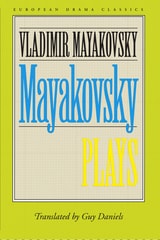
cover of Mayakovsky: Plays

Mayakovsky

Plays

Vladimir Mayakovsky

Northwestern University Press, 1995

One of Russia's greatest poets, Vladimir Mayakovsky (1893–1930) was a Futurist, early Bolshevik, and champion of the avant-garde. Despite his revolutionary youth, he became increasingly disillusioned with Soviet society, and three of his plays—all banned until after Stalin's death—reflect his changing assessments of the Revolution.

Mayakovsky: Plays includes Mystery Bouffe, a mock medieval mystery written in 1918 to celebrate the first anniversary of the Revolution; The Bathhouse, a sharp attack on Soviet bureaucracy subtitled "a drama of circus and fireworks"; and The Bedbug, in which a worker with bourgeois pretensions is frozen and resurrected fifty years later, when the world has become a material paradise. The collection also includes Mayakovsky's more personal first play, Vladimir Mayakovsky: A Tragedy.
[more]
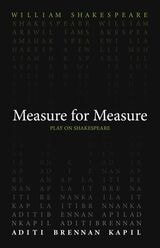
cover of Measure for Measure

Measure for Measure

William Shakespeare

Arizona Center for Medieval and Renaissance Studies, 2023

An accessible new translation of one of Shakespeare’s most interesting and challenging plays.
 
One of Shakespeare’s most difficult plays, Measure for Measure has long challenged performers and audiences alike. In reworking the play in her translation, Aditi Brennan Kapil honors the structure, rhythms, and themes of Shakespeare’s original. Kapil’s updated language makes this cautionary fable about frailty, power, and the perils of legislating morality accessible for today’s audiences.
 
This translation of Measure for Measure was written as part of the Oregon Shakespeare Festival’s Play On! project, which commissioned new translations of thirty-nine Shakespeare plays. These translations present the work of “The Bard” in language accessible to modern audiences while never losing the beauty of Shakespeare’s verse. Enlisting the talents of a diverse group of contemporary playwrights, screenwriters, and dramaturges from diverse backgrounds, this project reenvisions Shakespeare for the twenty-first century. These volumes make these works available for the first time in print—a new First Folio for a new era.
[more]
cover of Medea

Medea

Euripides

University of Chicago Press, 2014

In the centuries since it was first performed, Euripides’s Medea has established itself as one of the most influential of the Greek tragedies. The story of the wronged wife who seeks revenge against her unfaithful husband by murdering their children is lodged securely in the popular imagination, a touchstone for politics, law, and psychoanalysis and the subject of constant retellings and reinterpretations.

This new translation of Medea by classicist Oliver Taplin, originally published as part of the acclaimed third edition of Chicago’s Complete Greek Tragedies, brilliantly replicates the musicality and strength of Euripides’s verse while retaining the play’s dramatic and emotional impact. Taplin has created an edition of Medea that is particularly suited to performance, while not losing any of the power it has long held as an object of reading or study. This edition is poised to become the new standard, and to introduce a new generation of readers to the heights and depths of Greek tragedy.
[more]
cover of Medea’s Daughters: Forming and Performing the Woman Who Kills

Medea’s Daughters

Forming and Performing the Woman Who Kills

Jennifer Jones

The Ohio State University Press, 2003

In Medea's Daughters, Jennifer Jones explores the legal, cultural, and dramatic representations of six accused murderesses to look at how English-speaking society responded to and controlled anxiety over female transgressions. The woman who kills—in particular, the woman who kills a member of her own family—has not only broken the law, she has also violated gender expectations. Jones argues that dramatic representations of criminal women, especially women who kill, proliferate during times of heightened feminist activity and that theatrical narratives, as evidenced in plays, television, and film, serve to contain women and deflect attention away from issues of women’s systematic repression.

Medea’s Daughters focuses on six women (of whom Lizzie Borden, Susan Smith, and Louise Woodward are the best known) whose murder trials caught the attention of their respective cultures. This broad spectrum allows an examination of how women’s legal status has evolved over five centuries.

[more]
cover of Medical Readers' Theater: A Guide and Scripts

Medical Readers' Theater

A Guide and Scripts

Todd L. Savitt

University of Iowa Press, 2002

We have all had experiences with sickness, care giving, physicians, medical emergencies, hospitals, and doctors’ offices. Health concerns are not solely the domain of medical students, physicians, or nurses—we all deal with our personal well-being and the health of our loved ones on a daily basis. Sometimes these health problems cause us to consider larger social and ethical issues. How do we respond and relate to such matters? In order to help both lay people and medical professionals consider various health care issues, East Carolina University's Brody School of Medicine developed a medical readers' theater program. Compiled for the first time in a single text, Medical Readers’ Theater: A Guide and Scripts provides a vehicle for those who wish to engage in discussions among citizens and professionals about important, topical issues in contemporary medicine.
Consisting of fourteen readers’ theater scripts, a step-by-step guide to performing readers’ theater, and questions for post-performance discussions, this volume utilizes stories by William Carlos Williams, Susan Onthank Mates, Arthur Conan Doyle, Pearl Buck, and many more. Physician/patient relationships, organ donation, chronic illness, race and ethnicity, death and dying, and aging are just a few of the topics covered in this valuable text.
Medical Readers’ Theater can be used in classrooms, hospitals, libraries, or other community settings where citizens can consider views on issues of common concern in the medical world.
[more]
cover of Mehinaku: The Drama of Daily Life in a Brazilian Indian Village

Mehinaku

The Drama of Daily Life in a Brazilian Indian Village

Thomas Gregor

University of Chicago Press, 1980

Thomas Gregor sees the Mehinaku Indians of central Brazil as performers of roles, engaged in an ongoing improvisational drama of community life. The layout of the village and the architecture of the houses make the community a natural theater in the round, rendering the villagers' actions highly visible and audible. Lacking privacy, the Mehinaku have become masters of stagecraft and impression management, enthusiastically publicizing their good citizenship while ingeniously covering up such embarrassments as extramarital affairs and theft.
[more]
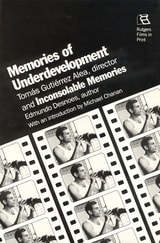
cover of Memories Of Underdevelopment

Memories Of Underdevelopment

Chanan, Michael

Rutgers University Press, 1990

Memories of Underdevelopment was the first great international success of Cuban cinema. The film provides a complex portrait of Sergio, a disaffected bourgeois intellectual who remains in Havana after the Revolution, suspended between two worlds. He can no longer accept the values of his family's reactionary past and yet boredom and the conditioning of his early life prevent him from committing himself to the new revolutionary society. Sergio's story is played out in the turbulent period of the Bay of Pigs invasion and the 1962 missile crisis, events he can only watch on his television screen or from his apartment balcony.The film, initially banned by the U.S. government as part of its trade quarantine of Cuba, was shown here five years after its original release. But American critics responded enthusiastically to it and the National Society of Film Critics bestowed an award on its director.

This double volume includes the complete continuity script of Memories, as well as the complete novel, Inconsolable Memories, upon which the film is based. An interview with Alea is reproduced here, as well as documentation of the political controversy that surrounded the film in this country. Michael Chanan's introduction places the film in the context of Cuban political and cultural history. The volume also includes a biographical sketch of Alea, a chronology of the Cuban Revolution, reviews, commentary, a filmography, and a bibliography.Michael Chanan lives in England, where he teaches and writes on film. He is the author of The Cuban Image: Cinema and Cultural Politics in Cuba.
[more]
cover of Memory of the Body: Essays on Theater and Death

Memory of the Body

Essays on Theater and Death

Jan Kott

Northwestern University Press, 1992

To see through the eyes of essayist and dramaturge Jan Kott is to gain in knowledge not just of the theater but also of human culture. Since his Shakespeare Our Contemporary appeared in English in 1964, Kott's work has altered—and strengthened—the way critics and the public approach the theater as a whole. The Memory of the Body highlights a number of dramatic personalities and personages: authors and directors Witkiewicz, Brecht, Kantor, Grotoswki, Ingmar Bergman, Wedekind; Tilly Newes on the stage in turn-of-the-century Vienna; the all-too-mortal, two-thirds divine Gilgamesh; and a shaman in rural Korea. In a style flecked with passion, poignancy, and wit, Kott moves beyond a mere discussion of theater to speak of eroticism, painting, love, and death.
[more]
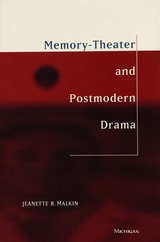
cover of Memory-Theater and Postmodern Drama

Memory-Theater and Postmodern Drama

Jeanette R. Malkin

University of Michigan Press, 1999

This book examines the theme of memory in a range of plays by contemporary American and European playwrights, including Samuel Beckett, Heiner Müller, Sam Shepard, Adrienne Kennedy, Suzan-Lori Parks, Thomas Bernhard, and Elfriede Jelinek. Jeanette R. Malkin proposes that postmodern drama--that is, drama since the 1970s--can be defined and examined according to the ways it recasts history and engages memories of the past. Details from our cultural and historical past are of course always fundamental elements of literature and theater: the past haunts the stage. But is the past as it is represented on stage actually the true past? In many of the plays examined in Malkin's book, the past is no longer grounded. Instead, it is a past which floats within the collective unconscious, in a place of fragmented collective identity. These plays "remember" in ways parallel to the theories of knowledge that inform them and thus become paradigms for a vision of the world. Malkin's study seeks answers to questions such as: what are the connections between contemporary drama and processes of memory? How do contemporary aesthetics shape these plays and the memories that they enact? What is remembered and how is the audience targeted? Why is memory so central to so many postmodern theater texts? In answering these questions, Malkin compellingly demonstrates how the past is made present within the double walls of memory and of the theater. "A very important book that bids to be a 'must have' on the timely topic of history versus memory as it is represented in theater." --John Rouse, University of California, San Diego Jeanette R. Malkin is Senior Lecturer in the Department of Theatre Studies, Hebrew University, Jerusalem.
[more]
cover of Menander "Misoumenos" or "The Hated Man": Introduction, Translation, and Commentary

Menander "Misoumenos" or "The Hated Man"

Introduction, Translation, and Commentary

William Furley

University of London Press, 2021

Based on recently discovered fragments, this is one of the most complete English-language publications of Misoumenos, or The Hated Man.
 
Menander’s Misoumenos, or The Hated Man, is one of his most popular plays to have survived from classical times. Dating to approximately 300 BCE, it tells the story of a mercenary soldier and the captive girl he acquires while on campaign in Cyprus. The play follows the soldier’s growing despair as the girl spurns his advances and slowly turns against him, culminating in his suicidal thoughts.

The play belongs to the ancient genre of New Comedy, of which Menander was the acknowledged master. This edition presents a significantly updated text and the fullest English language translation of the play to date. It aims to restore as much as possible of the action of Misoumenos, reconstructing the language, stagecraft, and theatrical dialogue of the original based on hypothesis and reconstruction. Some sections can be restored nearly in full, permitting access to brilliantly original theatrical dialogue which had been lost for over two millennia. Apart from meter and sophisticated idiom, the themes of love, despair, and sadness that Menander treats are utterly timeless.
[more]
cover of Menander and the Birth of Domestic Drama

Menander and the Birth of Domestic Drama

Mitch Brown

University of Wisconsin Press, 2024

Although few of his plays exist in full today, the fourth-century BCE Greek dramatist Menander was known far and wide throughout antiquity. He was one of the first to locate his dramas in the common household, rather than the mythic world of gods and heroes, and is now recognized as one of the pioneering figures of ancient Greek “New Comedy.” 

The design of the Greek stage was such that the interiors of houses were almost never shown, which posed difficulties for a playwright interested in staging the domestic lives of ordinary people. Here, Mitch Brown dissects how Menander responded to this challenge. As Brown demonstrates, Menander successfully conjured offstage action and even characters in the audiences’ imaginations; these offstage universes, Brown argues, are fundamental to understanding Menander’s dramaturgy and its reception in later centuries. Menander’s offstage methods and the new type of play (domestic drama) that he inaugurated directly influenced Western theater into the early modern period—and the impact of his innovations can still be seen indirectly today.
[more]
cover of Metamorphoses: A Play

Metamorphoses

A Play

Mary Zimmerman

Northwestern University Press, 2002

A beautiful and deeply humane reanimation of Ovid's myths 

Called by Time the "theater event of the year," Mary Zimmerman's Metamorphoses brings Ovid's tales to stunning visual life. Set in and around a large pool of water onstage, Metamorphoses juxtaposes the ancient and the contemporary in both language and image to reflect the variety and persistence of narrative in the face of inevitable change. Nominated for three 2002 Tony Awards, including "Best Play," Metamorphoses earned Zimmerman a Tony for "Best Direction of a Play."
 

[more]
cover of Meyerhold and the Cubists: Perspectives on Painting and Performance

Meyerhold and the Cubists

Perspectives on Painting and Performance

Amy Skinner

Intellect Books, 2015

This book offers a rich analysis of collage practices in the theater of Vsevolod Meyerhold. Focusing on the philosophical and formal tenets of the form, and supporting her analysis with wide-ranging examples from both theater and fine art, Amy Skinner develops collage as a framework for reading the whole of the theatrical experience, from scenography and mise-en-scène to text and spectatorship. An innovative exploration of the influence of collage on twentieth- and twenty-first-century theater, Meyerhold and the Cubists will be essential for theater scholars and practitioners alike.
[more]
cover of Microdramas: Crucibles for Theater and Time

Microdramas

Crucibles for Theater and Time

John H. Muse

University of Michigan Press, 2017

In Microdramas, John H. Muse argues that plays shorter than twenty minutes deserve sustained attention, and that brevity should be considered a distinct mode of theatrical practice. Focusing on artists for whom brevity became both a structural principle and a tool to investigate theater itself (August Strindberg, Maurice Maeterlinck, F. T. Marinetti, Samuel Beckett, Suzan-Lori Parks, and Caryl Churchill), the book explores four episodes in the history of very short theater, all characterized by the self-conscious embrace of brevity. The story moves from the birth of the modernist microdrama in French little theaters in the 1880s, to the explicit worship of speed in Italian Futurist synthetic theater, to Samuel Beckett’s often-misunderstood short plays, and finally to a range of contemporary playwrights whose long compilations of shorts offer a new take on momentary theater.

Subjecting short plays to extended scrutiny upends assumptions about brief or minimal art, and about theatrical experience. The book shows that short performances often demand greater attention from audiences than plays that unfold more predictably. Microdramas put pressure on preconceptions about which aspects of theater might be fundamental and about what might qualify as an event. In the process, they suggest answers to crucial questions about time, spectatorship, and significance.
 
[more]
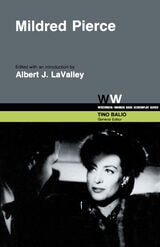
cover of Mildred Pierce

Mildred Pierce

Edited by Albert J. La Valley; Tino T. Balio, Series Editor

University of Wisconsin Press, 1980

Joan Crawford forged a new and successful screen image in this powerful women's noir film; winning her an Academy Award for best actress.

Albert J. LaValley's through and insightful guide to Mildred Pierce at once tells us much about the making of this complex film, the problems and process of transferring the story to the screen, the specific and important roles of the producer, director, and set designer, and how the film relates to broad trends within the industry. It is without a doubt the most thorough treatment of this important American motion picture.

[more]
cover of Mimetic Disillusion: Eugene O'Neill, Tennessee Williams, and U.S. Dramatic Realism

Mimetic Disillusion

Eugene O'Neill, Tennessee Williams, and U.S. Dramatic Realism

Anne Fleche

University of Alabama Press, 1997

Reimagining American dramatic realism through the lenses of mimesis, theory, and theatrical innovation.

This volume focuses on two major writers of the 1930s and 1940s—Eugene O'Neill and Tennessee Williams—one whose writing career was just ending and the other whose career was just beginning. In new readings of their major works from this period, Long Day's Journey into Night, The Iceman Cometh, The Glass Menagerie, and A Streetcar Named Desire, Fleche develops connections to the writings of Jacques Derrida, Paul de Man, and Michel Foucault, among others, and discusses poststructuralism in the light of modern writers such as Bertolt Brecht, Antonin Artaud, and Walter Benjamin. Fleche also extends this discussion to the work of two contemporary playwrights, Adrienne Kennedy and Tony Kushner. The aim of Mimetic Disillusion is not to reject "mimetic" and "realistic" readings but to explore the rich complexities of these two ideas and the fruit of their ongoing relevance to U.S. theatre.
 

[more]
cover of Mirtilla, A Pastoral: A Bilingual Edition

Mirtilla, A Pastoral

A Bilingual Edition

Isabella Andreini

Iter Press, 2018

Isabella Andreini was the most famous actress of the Italian Renaissance, the darling of dukes and kings, as well as of less-moneyed theatergoers. As a founding member with her husband, Francesco, of the Compagnia dei Gelosi, she performed ceaselessly throughout Italy and France, and was prized for the new role she invented for women on stage, that of the ingénue with a comic bent. She was also a playwright; in fact, the first woman to publish a pastoral. This modern edition and translation subtly captures the novelty, as well as the imaginative pyrotechnics, of a brilliant, self-made virtuosa of the stage.

The Other Voice in Early Modern Europe - The Toronto Series: Volume 62
[more]
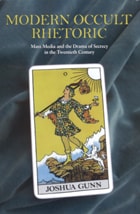
cover of Modern Occult Rhetoric: Mass Media and the Drama of Secrecy in the Twentieth Century

Modern Occult Rhetoric

Mass Media and the Drama of Secrecy in the Twentieth Century

Joshua Gunn

University of Alabama Press, 2005

Uncovering how secrecy, symbolism, and hidden meanings shape modern culture and communication.

The occult has traditionally been understood as the study of secrets of the practice of mysticism or magic. This book broadens our understanding of the occult by treating it as a rhetorical phenomenon tied to language and symbols and more central to American culture than is commonly assumed.

Joshua Gunn approaches the occult as an idiom, examining the ways in which acts of textual criticism and interpretation are occultic in nature, as evident in practices as diverse as academic scholarship, Freemasonry, and television production. Gunn probes, for instance, the ways in which jargon employed by various social and professional groups creates barriers and fosters secrecy. From the theory wars of cultural studies to the Satanic Panic that swept the national mass media in the late 1980s and early 1990s, Gunn shows how the paradox of a hidden, buried, or secret meaning that cannot be expressed in language appears time and time again in Western culture.

These recurrent patterns, Gunn argues, arise from a generalized, popular anxiety about language and its limitations. Ultimately, Modern Occult Rhetoric demonstrates the indissoluble relationship between language, secrecy, and publicity, and the centrality of suspicion in our daily lives.


[more]
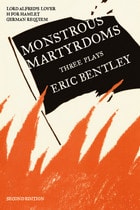
cover of Monstrous Martyrdoms: Three Plays

Monstrous Martyrdoms

Three Plays

Eric Bentley

Northwestern University Press, 2004

Winner of 2006 International Association of Theatre Critics Thalia Prize
Recipient of 2007 The Robert Chesley Foundation Lifetime Achievement Award in Playwriting
Winner of 2006 Village Voice OBIE Awards Lifetime Achievement Award


"The road will be red with monstrous martyrdoms, but we shall win." Oscar Wilde wrote these words at the end of the nineteenth century after serving two years at hard labor for the crime of being homosexual. This modern martyrdom is the subject of Lord Alfred's Lover, Eric Bentley's Brechtian dramatization of Wilde's last days.

H for Hamlet is another variation on the modern martyr play, this time in homage to Pirandello. The protagonist thinks, or once thought, he was Hamlet. Fantasy? Perhaps. But, to paraphrase Marianne Moore, there was a real toad in the imaginary garden--a real martyr in the toy theatre.

In German Requiem, Bentley takes inspiration from Heinrich von Kleist's play The Schroffenstein Family, which in turn is a version of Shakespeare's Romeo and Juliet. The young star-crossed lovers in his play are martyrs of an internecine conflict much like those seen in recent history in Ireland and the Middle East.
[more]
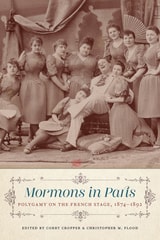
cover of Mormons in Paris: Polygamy on the French Stage, 1874-1892

Mormons in Paris

Polygamy on the French Stage, 1874-1892

Corry Cropper

Bucknell University Press, 2021

Winner of the 2021 Best International Book Award from the Mormon History Association

In the late nineteenth century, numerous French plays, novels, cartoons, and works of art focused on Mormons. Unlike American authors who portrayed Mormons as malevolent “others,” however, French dramatists used Mormonism to point out hypocrisy in their own culture. Aren't Mormon women, because of their numbers in a household, more liberated than French women who can't divorce? What is polygamy but another name for multiple mistresses? This new critical edition presents translations of four musical comedies staged or published in France in the late 1800s: Mormons in Paris (1874), Berthelier Meets the Mormons (1875), Japheth’s Twelve Wives (1890), and Stephana’s Jewel (1892). Each is accompanied by a short contextualizing introduction with details about the music, playwrights, and staging. Humorous and largely unknown, these plays use Mormonism to explore and mock changing French mentalities during the Third Republic, lampooning shifting attitudes and evolving laws about marriage, divorce, and gender roles.

Published by Bucknell University Press. Distributed worldwide by Rutgers University Press.
[more]
cover of Much Ado About Nothing

Much Ado About Nothing

William Shakespeare

Arizona Center for Medieval and Renaissance Studies, 2021

Ranjit Bolt updates Much Ado About Nothing with a merry new translation.
 
In Much Ado About Nothing, a series of miscommunications and misunderstandings spiral out of control, leaving two sets of lovers to untangle their words and their hearts. Ranjit Bolt, an accomplished translator, takes on Shakespeare’s well-loved comedy to update much of the obscure language while maintaining the humor, characterization, and wit that audiences know and love. For modern readers, Beatrice, Benedick, Hero, and Claudio are just as enchanting as always—and perhaps funnier than ever before.

This translation of Much Ado About Nothing was written as part of the Oregon Shakespeare Festival’s Play On! project, which commissioned new translations of thirty-nine Shakespeare plays. These translations present work from “The Bard” in language accessible to modern audiences while never losing the beauty of Shakespeare’s verse. Enlisting the talents of a diverse group of contemporary playwrights, screenwriters, and dramaturges from diverse backgrounds, this project reenvisions Shakespeare for the twenty-first century. These volumes make these works available for the first time in print—a new First Folio for a new era.
[more]
cover of Multi-Mediated Dostoevsky: Transposing Novels into Opera, Film, and Drama

Multi-Mediated Dostoevsky

Transposing Novels into Opera, Film, and Drama

Alexander Burry

Northwestern University Press, 2011

Since their publication, the works of Dostoevsky have provided rich fodder for adaptations to opera, film, and drama. While Dostoevsky gave his blessing to the idea of adapting his work to other forms, he believed that "each art form corresponds to a series of poetic thoughts, so that one idea cannot be expressed in another non-corresponding form." In Multi-Mediated Dostoevsky, Alexander Burry argues that twentieth-century adaptations (which he calls "transpositions") of four of Dostoevsky’s works—Sergei Prokofiev’s opera The Gambler, Leos Janacek’s opera From the Dead House, Akira Kurosawa’s film The Idiot, and Adrzej Wajda’s drama The Devils—follow Dostoevsky’s precept by bringing to light underdeveloped or unappreciated aspects of Dostoevsky’s texts rather than by slavishly attempting to recreate their sources. Burry’s interdisciplinary approach gives his study broad appeal to scholars as well as to students of Russian, comparative literature, music, film, drama, and cultural studies.
[more]
cover of Murder Most Queer: The Homicidal Homosexual in the American Theater

Murder Most Queer

The Homicidal Homosexual in the American Theater

Jordan Schildcrout

University of Michigan Press, 2014

The “villainous homosexual” has long stalked America’s cultural imagination, most explicitly in the figure of the queer murderer, a character in dozens of plays. But as society’s understanding of homosexuality has changed, so has the significance of these controversial characters, especially when employed by LGBT theater artists themselves to explore darker fears and desires. Murder Most Queer examines the shifting meanings of murderous LGBT characters in American theater over a century, showing how these representations wrestle with and ultimately subvert notions of gay villainy.

Murder Most Queer works to expose the forces that create the homophobic paradigm that imagines sexual and gender nonconformity as dangerous and destructive and to show how theater artists—and for the most part LGBT theater artists—have rewritten and radically altered the significance of the homicidal homosexual. Jordan Schildcrout argues that these figures, far from being simple reiterations of a homophobic archetype, are complex and challenging characters who enact trenchant fantasies of empowerment, replacing the shame and stigma of the abject with the defiance and freedom of the outlaw, giving voice to rage and resistance.  These bold characters also probe the darker anxieties and fears that can affect queer lives and relationships.  Instead of sentencing them to the prison of negative representations, this book analyzes the meanings in their acts of murder, confronting the real fears and desires condensed in those dramatic acts.
[more]
cover of Murder Most Queer: The Homicidal Homosexual in the American Theater

Murder Most Queer

The Homicidal Homosexual in the American Theater

Jordan Schildcrout

University of Michigan Press, 2014
The “villainous homosexual” has long stalked America’s cultural imagination, most explicitly in the figure of the queer murderer, a character in dozens of plays. But as society’s understanding of homosexuality has changed, so has the significance of these controversial characters, especially when employed by LGBT theater artists themselves to explore darker fears and desires. Murder Most Queer examines the shifting meanings of murderous LGBT characters in American theater over a century, showing how these representations wrestle with and ultimately subvert notions of gay villainy.

Murder Most Queer works to expose the forces that create the homophobic paradigm that imagines sexual and gender nonconformity as dangerous and destructive and to show how theater artists—and for the most part LGBT theater artists—have rewritten and radically altered the significance of the homicidal homosexual. Jordan Schildcrout argues that these figures, far from being simple reiterations of a homophobic archetype, are complex and challenging characters who enact trenchant fantasies of empowerment, replacing the shame and stigma of the abject with the defiance and freedom of the outlaw, giving voice to rage and resistance.  These bold characters also probe the darker anxieties and fears that can affect queer lives and relationships.  Instead of sentencing them to the prison of negative representations, this book analyzes the meanings in their acts of murder, confronting the real fears and desires condensed in those dramatic acts.
[more]
cover of Museum of Words: The Poetics of Ekphrasis from Homer to Ashbery

Museum of Words

The Poetics of Ekphrasis from Homer to Ashbery

James A. W. Heffernan

University of Chicago Press, 1993

Ekphrasis is the art of describing works of art, the verbal representation of visual representation. Profoundly ambivalent, ekphrastic poetry celebrates the power of the silent image even as it tries to circumscribe that power with the authority of the word. Over the ages its practitioners have created a museum of words about real and imaginary paintings and sculptures.

In the first book ever to explore this museum, James Heffernan argues that ekphrasis stages a battle for mastery between the image and the word. Moving from the epics of Homer, Virgil, and Dante to contemporary American poetry, this book treats the history of struggle between rival systems of representation. Readable and well illustrated, this study of how poets have represented painting and sculpture is a major contribution to our understanding of the relation between the arts.
[more]
cover of Musical Design in Aeschylean Theater

Musical Design in Aeschylean Theater

William C. Scott

Dartmouth College Press, 2000
Musical Design in Aeschylean Theater
[more]
cover of Musical Design in Sophoclean Theater

Musical Design in Sophoclean Theater

William C. Scott

Dartmouth College Press, 2000
William C. Scott extends concepts set forth in his Goodwin Award-winning Musical Design in Aeschylean Theater (1984) by examining scansion patterns in the odes of the seven surviving Sophoclean tragedies. Analyzing the play as performed-its full expression in words, music, and dance-Scott finds that Sophocles' metrical patterns are not a secondary detail of the plays but a central feature of their musical organization. Just as the playwright enhanced awareness of themes with a series of recurring and developing verbal images, he also designed the music to guide the audience's understanding of unfolding, often ambiguous events. The fabric of music and meaning is so tightly woven, Scott argues, that significant portions of the plays cannot be fully realized on stage unless the musical effects created by the poet are incorporated. While his work necessarily centers on the chorus, Scott carefully integrates that role into the meaning of the play as a whole, asserting that the chorus becomes a single persona, a character with partial knowledge, limited perspective, and inconsistent responses. The combination of words, meters, and forms provides a new perspective on each play.
[more]
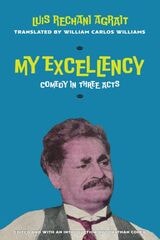
cover of My Excellency: Comedy in Three Acts

My Excellency

Comedy in Three Acts

Luis Rechani Agrait

Swan Isle Press, 2025

William Carlos Williams’s “lost” translation of Luis Rechani Agrait’s masterpiece.

William Carlos Williams’s passion for his matrilineal Puerto Rican roots led him to visit Puerto Rico for the first time in 1941. There at a writers’ conference, he befriended the playwright Luis Rechani Agrait, who gave him his play Mi señoría, staged to acclaim the previous year. 

My Excellency, as Williams calls the play in his translation, is a political farce set in an “imaginary country” that resembles Puerto Rico during the Great Depression, with its high unemployment and labor unrest. The play focuses on the plight of an idealistic but naive man, Buenaventura Padilla, in a completely corrupt political system. Through an unscrupulous election, he becomes the nation’s leader.

The play is successful as a satire largely because of Buenaventura’s hilarious language—recreated by Williams—with its pompous style combined with stunning malapropisms and clownish errors in history and grammar. The play’s very title is a laughable malapropism. My Excellency shows the corrupting power of success and the tragic flaw of materialism. Driving the comedy in Williams’s translation is his firm command of the play’s dialogue interwoven with popular idioms in which the charm of pure nonsense abounds. This edition is Luis Rechani Agrait’s debut as a playwright in English.

[more]
cover of Myth, Magic, and Farce: Four Multicultural Plays by Sterling Houston

Myth, Magic, and Farce

Four Multicultural Plays by Sterling Houston

Sterling Houston

University of North Texas Press, 2005

[more]
cover of Mythic Patterns in Ibsen’s Last Plays

Mythic Patterns in Ibsen’s Last Plays

Orley I. Holtan

University of Minnesota Press, 1970

Mythic Patterns in Ibsen's Last Plays was first published in 1970. Minnesota Archive Editions uses digital technology to make long-unavailable books once again accessible, and are published unaltered from the original University of Minnesota Press editions.

Until recently critics have tended to regard Ibsen principally as a social dramatist, one who was concerned primarily with the political, social, and moral questions of his time. Radical though he was in the Victorian era, his ideas, with the passage o time, ceased to be avant garde,and for this reason many critics have dismissed him as outdated. Professor Holtan examines a major portion of Ibsen's work, his last eight plays, in a new perspective, however, and finds much that is of lasting significance and interest.

Ibsen's initial impact came with the publication in 1879 of A Doll's House,the play which seemingly advocates a woman's right to leave her husband and children. His reputation as a social dramatist was only furthered by the appearance of his next two plays, Ghosts and An Enemy of the People. But Professor Holtan's study of the plays which came after these identifies in the later plays values which transcend the social problems of their time, penetrating questions of the human spirit itself.

The eight last plays which Professor Holtan examines in this study are The Wild Duck, Rosmersholm, The Lady from the Sea, Hedda Gabler, The Master Builder, Little Eyolf, John Gabriel Borkman, and When We Dead Awaken. In these plays he identifies a mythic pattern and unity based in elements of symbolism and mysticism which have puzzled or annoyed readers and critics for years. In his mythic vision Ibsen's lasting contribution far exceeds that of his invention of the social-problem drama, Professor Holtan concludes.
[more]
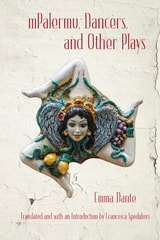
cover of mPalermu, Dancers, and Other Plays

mPalermu, Dancers, and Other Plays

Emma Dante

Swan Isle Press, 2019

Emma Dante’s passionate and brutal plays stem from a need to confront important familial and societal realities in contemporary southern Italy. Her twenty-first century tales challenge stereotypes of the country and stage acts of resistance against the social, political, and economic conditions of Sicily. The seven works in this anthology paint a complex image of the peninsula through stories of disenfranchisement, misogyny, deep-set bigotry, and religious hypocrisy that reveal economic disparities between the north and south of the country, oppressive gender relations, and deep rooted mafioso-like attitudes. Dante’s lyrical and visceral storytelling oscillates between the humorous and the tragic aspects of everyday life, undertaking an irreverent subversion of the status quo with its extreme physicality and unsettling imagery.

This exquisite first English translation of Emma Dante’s work enables English-speaking readers, theatre scholars, and directors alike to encounter character-driven “civic theatre” with its portraits of individuals existing at the fringes of Italy. Ultimately, it allows us to “listen” to those who are not given a voice anywhere else.
[more]