Results by title
304 books match the query 'Entertainment & Performing Arts' and 19 start with m
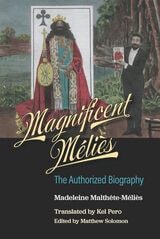
Magnificent Méliès
The Authorized BiographyMadeleine Malthête-Méliès, translated by Kel Pero, edited by Matthew Solomon
University of Michigan Press, 2022
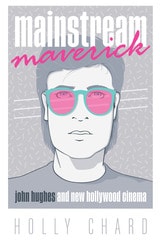
Mainstream Maverick
John Hughes and New Hollywood CinemaBy Holly Chard
University of Texas Press, 2020
Winner, Best First Monograph, British Association of Film, Television and Screen Studies
The first scholarly book on John Hughes examines Hollywood's complex relationship with genre, the role of the auteur in commercial cinema, and the legacy of favorites such as Sixteen Candles and Ferris Bueller's Day Off.
In the 1980s and 1990s, John Hughes was one of Hollywood's most reliable hitmakers, churning out beloved teen comedies and family films such as The Breakfast Club and Home Alone, respectively. But was he an artist? Hughes, an adamantly commercial filmmaker who was dismissed by critics, might have laughed at the question. Since his death in 2009, though, he has been memorialized on Oscar night as a key voice of his time. Now the critics lionize him as a stylistic original.
Holly Chard traces Hughes's evolution from entertainer to auteur. Studios recognized Hughes's distinctiveness and responded by nurturing his brand. He is therefore a case study in Hollywood's production not only of movies but also of genre and of authorship itself. The films of John Hughes, Chard shows, also owed their success to the marketers who sold them and the audiences who watched. Careful readings of Hughes's cinema reveal both the sources of his iconic status and the imprint on his films of the social, political, economic, and media contexts in which he operated.
The first serious treatment of Hughes, Mainstream Maverick elucidates the priorities of the American movie industry in the New Hollywood era and explores how artists not only create but are themselves created.
Manoel de Oliveira
John Randal Johnson
University of Illinois Press, 2006
Understanding the iconoclastic work of a lifelong cinematic pioneer
Manoel de Oliveira's eighty-five year career made him a filmmaking icon and a cultural giant in his native Portugal. A lifelong cinematic pioneer, Oliveira merged distinctive formal techniques with philosophical treatments of universal themes--frustrated love, aging, nationhood, evil, and divine grace--in films that always moved against mainstream currents.
Randal Johnson navigates Oliveira's massive feature film oeuvre. Locating the director's work within the broader context of Portuguese and European cinema, Johnson discusses historical and political influences on Oliveira's work, particularly Portugal's transformation from dictatorship to social democracy. He ranges from Oliveira's early concerns with cinematic specificity to hybrid discourses that suggest a tenuous line between film and theater on the one hand, and between fiction and documentary on the other.
A rare English-language portrait of the director, Manoel de Oliveira invites students and scholars alike to explore the work of one of the cinema's greatest and most prolific artists.
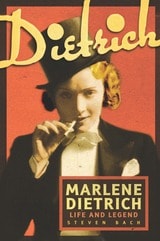
Marlene Dietrich
Life and LegendSteven Bach
University of Minnesota Press, 2011
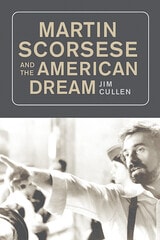
Martin Scorsese and the American Dream
Jim Cullen
Rutgers University Press, 2021
This book is the first study of Scorsese’s profound ambivalence toward the American Dream, the ways it drives some men and women to aspire to greatness, but leaves others seduced and abandoned. Showing that Scorsese understands the American dream in terms of a tension between provincialism and cosmopolitanism, Jim Cullen offers a new lens through which to view such seemingly atypical Scorsese films as The Age of Innocence, Hugo, and Kundun. Fast-paced, instructive, and resonant, Martin Scorsese and the American Dream illuminates an important dimension of our national life and how a great artist has brought it into focus.
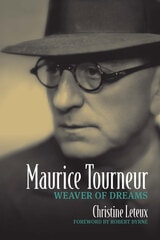
Maurice Tourneur
Weaver of DreamsChristine Leteux, Foreword by Robert Byrne
University of Wisconsin Press, 2026
In 1914, an unknown French filmmaker arrived in New York; within four years, Maurice Tourneur (1876–1961) would become one of America’s most acclaimed directors. In this masterful biography, Christine Leteux shows how intimately connected Tourneur’s life was to major events of the twentieth century as well as to the profound transformations in movie making. A master of directing silent films, he quickly managed the transition to sound. His last major work was created for Continental Films, the German-owned firm that controlled the French film industry during the Nazi Occupation. His son, Jacques, followed in his footsteps, also becoming an acclaimed director.
Drawing heavily on previously unpublished archival documents, Leteux reinvigorates film history and demonstrates that we know far less about this era of filmmaking than we often assume. She reveals not only how Tourneur jumped from France to the United States and back again but also how he shifted from one company to another, moving quickly up the ladder to bigger productions and ever larger studios. Tourneur’s drive, insight, technical proficiency, skill with actors, ability to create new forms of storytelling, and fame on both sides of the Atlantic make it all the more surprising that he is not better known today—an oversight that has now been corrected thanks to Leteux’s impressively detailed research and nuanced storytelling.
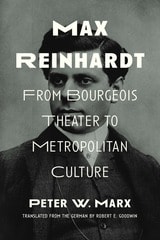
Max Reinhardt
From Bourgeois Theater to Metropolitan CulturePeter W. Marx, translated from the German by Robert E. Goodwin
Northwestern University Press, 2024
At the same time, Reinhardt soon longed for an international range: guest performances throughout Europe and to the US soon made him into a global star – and even a brand. He represents a metropolitan culture that roots in the late nineteenth century but comes to an end when Fasicsm in Europe ended any hopes for an international culture. As a Jew, Reinhardt himself had to flee the Nazis but when he eventually arrived in the US, he could not follow up with his earlier successes. Marx provides a broad panorama of Reinhardt's work, portraying not only his work method and some of his best known productions, but also the cultural conditions of his visionary enterprise.
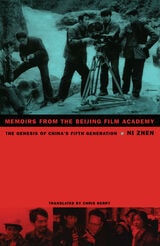
Memoirs from the Beijing Film Academy
The Genesis of China's Fifth GenerationZhen Ni
Duke University Press, 2002
Messiah of the New Technique
John Howard Lawson, Communism, and American Theatre, 1923-1937Jonathan L. Chambers
Southern Illinois University Press, 2006
Messiah of the New Technique: John Howard Lawson, Communism, and American Theatre, 1923–1937 is a critical and political biography and a cultural and social history that focuses on Lawson’s career in the theatre. Using a materialist methodology, Jonathan L. Chambers emphasizes the evolution and interplay of the playwright’s artistic vision and political ideology, considering his art as both a documentation of this evolution and a product of the socio-political and cultural matrix in which he was immersed.
Spanning the playwright’s career, the volume details Lawson’s early indoctrination in and commitment to the avant-garde, his use and development of various nonrealistic playwriting techniques, his subtle though unfocused attacks on bourgeois society, and the varied critical responses he received. Chambers addresses Lawson’s involvement with the New Playwrights’ Theatre and his participation in the protests surrounding the case of Nicola Sacco and Bartolomeo Vanzetti, which stimulated his growing commitment to left-wing politics and radical causes.
Chambers also analyzes the social and cultural factors that shaped Lawson’s growing interest in revolutionary politics, his tutelage in Marxism under Edmund Wilson, and his tenure as president of the Screen Writers Guild. He also covers the final phase of Lawson’s playwriting career, which reveals the playwright’s internal struggle. That struggle, suggests Chambers, pitted Lawson’s view of aesthetics against his political ideology and is reflected in his scripts and theoretical writings.
Messiah of the New Technique provides a wealth of new material about both the playwright and the period, offering a critical synopsis of the artist’s career, addressing his often vehement rebuttals to his critics, and summarizing both his political activism and his creative and critical endeavors in the last forty years of his life.
Method Acting and Its Discontents
On American Psycho-DramaShonni Enelow
Northwestern University Press, 2015
Method Acting and Its Discontents: On American Psycho-Drama provides a new understanding of a crucial chapter in American theater history. Enelow’s consideration of the broader cultural climate of the late 1950s and early 1960s, specifically the debates within psychology and psychoanalysis, the period’s racial and sexual politics, and the rise of mass media, gives us a nuanced, complex picture of Lee Strasberg and the Actors Studio and contemporaneous works of drama. Combining cultural analysis, dramaturgical criticism, and performance theory, Enelow shows how Method acting’s contradictions reveal powerful tensions inside mid-century notions of individual and collective identity.
Michael Moore and the Rhetoric of Documentary
Edited by Thomas W. Benson and Brian J. Snee
Southern Illinois University Press, 2015
Not afraid to tackle provocative topics in American culture, from gun violence and labor policies to terrorism and health care, Michael Moore has earned both applause and invective in his career as a documentarian. In such polarizing films as Bowling for Columbine, Fahrenheit 9/11, and Sicko, Moore has established a unique voice of radical nostalgia for progressivism, and in doing so has become one of the most recognized documentary filmmakers of all time.
In the first in-depth study of Moore’s feature-length documentary films, editors Thomas W. Benson and Brian J. Snee have gathered leading rhetoric scholars to examine the production, rhetorical appeals, and audience reception of these films. Contributors critique the films primarily as modes of public argument and political art. Each essay is devoted to one of Moore’s films and traces in detail how each film invites specific audience responses.
Michael Moore and the Rhetoric of Documentary reveals not only the art, the argument, and the emotional appeals of Moore’s documentaries but also how these films have revolutionized the genre of documentary filmmaking.
Midday with Buñuel
Memories and Sketches, 1973-1983Claudio Isaac
Swan Isle Press, 2007
The text includes sketches, vignettes, and anecdotes from Isaac’s notebooks, revealing his perspective first as a precocious boy and then as a young man. Isaac reflects on Buñuel’s presence among a community of exiles, artists, actors, writers, and intellectuals in Mexico City. These are at once touching, perceptive, and critical glimpses into Buñuel’s roles as husband and father, friend and colleague, surrealist, philosopher, and iconoclast during his last years. Throughout, Isaac’s words reveal his deep admiration and affection for an older friend full of contradictions. Intimate photographs from the Isaac family archive complement the writing, and Bryan Thomas Scoular’s careful translation makes this text available for the first time in English.
Part biography, part memoir, Midday with Buñuel brings to life the creative milieu of Mexico City and gives readers a privileged view of the relationship between these two filmmakers.
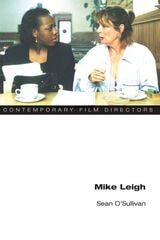
Mike Leigh
Sean O'Sullivan
University of Illinois Press, 2011
O'Sullivan challenges the prevailing characterizations of Leigh's cinema by detailing the complicated constructions of his realism, positing his films not as transparent records of life but as aesthetic transformations of it. Concentrating on the most recent two decades of Leigh's career, the study examines how Naked, Secrets and Lies, Topsy-Turvy, Vera Drake, and other films engage narrative convergence and narrative diffusion, the tension between character and plot, the interplay of coincidence and design, cinema's relationship to other systems of representation, and the filmic rendering of the human figure. The book also spotlights such earlier, less-discussed works as Four Days in July and The Short and Curlies, illustrating the recurring visual and storytelling concerns of Leigh's cinema. With a detailed filmography, this volume also includes key selections from O'Sullivan's several interviews with Leigh.
Modern Nature
Derek Jarman
University of Minnesota Press, 2009
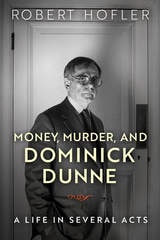
Money, Murder, and Dominick Dunne
A Life in Several ActsRobert Hofler
University of Wisconsin Press, 2019
Dunne admitted to inventing himself, and it was that public persona he wrote about in his own memoir, The Way We Lived Then. Left out of that account, but brought to light here, were his intense rivalry with his brother John Gregory, the gay affairs and relationships he had throughout his marriage and beyond, and his fights with editors at Vanity Fair. Robert Hofler also reveals the painful rift in the family after the murder of Dominick's daughter, Dominique—compounded by his coverage of her killer's trial, which launched his career as a reporter.
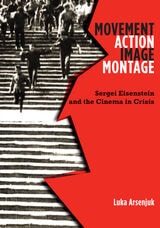
Movement, Action, Image, Montage
Sergei Eisenstein and the Cinema in CrisisLuka Arsenjuk
University of Minnesota Press, 2018
A major new study of Sergei Eisenstein delivers fresh, in-depth analyses of the iconic filmmaker’s body of work
What can we still learn from Sergei Eisenstein? Long valorized as the essential filmmaker of the Russian Revolution and celebrated for his indispensable contributions to cinematic technique, Eisenstein’s relevance to contemporary culture is far from exhausted. In Movement, Action, Image, Montage, Luka Arsenjuk considers the auteur as a filmmaker and a theorist, drawing on philosophers such as Georg Wilhelm Friedrich Hegel and Gilles Deleuze—as well as Eisenstein’s own untranslated texts—to reframe the way we think about the great director and his legacy.
Focusing on Eisenstein’s unique treatment of the foundational concepts of cinema—movement, action, image, and montage—Arsenjuk invests each aspect of the auteur’s art with new significance for the twenty-first century. Eisenstein’s work and thought, he argues, belong as much to the future as the past, and both can offer novel contributions to long-standing cinematic questions and debates.
Movement, Action, Image, Montage brings new elements of Eisenstein’s output into academic consideration, by means ranging from sustained and comprehensive theorization of Eisenstein’s practice as a graphic artist to purposeful engagement with his recently published, unfinished book Method, still unavailable in English translation. This tour de force offers new and significant insights on Eisenstein’s oeuvre—the films, the art, and the theory—and is a landmark work on an essential filmmaker.
Moving Performances
Divas, Iconicity, and Remembering the Modern StageScheper, Jeanne
Rutgers University Press, 2017
Murder in Hollywood
Solving a Silent Screen MysteryCharles Higham
University of Wisconsin Press, 2004
When it was discovered that a famous star of the day had probably killed Taylor, a massive cover-up began—from the removal of crucial evidence to the naming of innocent people as killers—which has continued until now to protect the truth. Murder in Hollywood goes beyond the killing to unearth unknown details about the life of Taylor before his arrival in Hollywood, as well as the stories and histories buried by the crooked authorities and criminals involved the case. The author’s exclusive interviews with the culpable star, his unique possession of long-vanished police records, and the support of the present-day Los Angeles county coroner—who examined the evidence as if the murder had taken place now—have ensured a hair-raising thriller.
Charles Higham successfully presents the most plausible and convincing solution yet to the mystery. In the process he paints a vivid portrait of Hollywood in the 1920s—from its major stars to its bisexual subculture. The result is a compelling answer to a long-standing mystery and a fascinating study of a place, and an industry that, as today, let people reinvent themselves. Murder in Hollywood is more extraordinary than any crime of fiction and more exciting than any action adventure movie.
My Life as a Filmmaker
Yamamoto Satsuo; Translated, Annotated, and with an Introduction by Chia-ning Chang
University of Michigan Press, 2017
In addition to detailed annotations of the autobiography, translator Chia-ning Chang offers a comprehensive introduction to the career and the significance of Yamamoto and his works in the context of Japanese film history. It contextualizes Yamamoto’s life and works in the historical and cultural zeitgeist of prewar, wartime, and postwar Japan before scrutinizing the unique qualities of his narrative voice and social conscience as a film artist.