Results by title
1832 books match the query 'Essays' and 67 start with m
Mad Heart Be Brave
Essays on the Poetry of Agha Shahid AliKazim Ali, Editor
University of Michigan Press, 2017
Make Us Wave Back
Essays on Poetry and InfluenceMichael Collier
University of Michigan Press, 2007
“Michael Collier’s book is refreshing in its refusal to push for one particular aesthetic. He regards his own preference for realism over abstraction as more a matter of temperament than of considered judgment, and respects poets more skeptical than he is about the ability of poetry to connect with the world. The result is an engaging record of his influences and enthusiasms, which are wide enough to include both Whitman and Larkin, both Jorge Borges and William Maxwell.”
—Carl Dennis, Pulitzer Prize–winning author of Unknown Friends and Practical Gods
“Michael Collier combines pietas and wildness in these essays on poetry as inheritance, and poetry as struggle. One feels the young man in his ‘rampage of literature,’ and the older writer reflecting on an art that is at once personal and impersonal, deeply matured in the imagination. This is a wise and well-lived book.”
—Rosanna Warren, author of Departure and Stained Glass
“The essays and remembrances in Make Us Wave Back radiate Michael Collier’s characteristic insight and sagacity on every page. Clear-minded, ardent, brightly illuminating the art of poetry, this is as lucid as writing about writing gets.”
—Campbell McGrath, author of Pax Atomica and Florida Poems
National Book Critics Circle Award finalist Michael Collier explores the influences that have made him one of the most distinguished poets of his generation. Make Us Wave Back includes essays on an expansive list of subjects, among them the literary correspondence of William Maxwell; the meaning of the author’s own role as poet laureate of the state of Maryland; the journals of Louise Bogan and how they reveal Bogan’s struggle with her own personal fears as well as the reconstruction of herself as a writer; and many more.
Michael Collier is Professor of English and Codirector of the creative writing program at the University of Maryland. He is also director of the Bread Loaf Writers’ Conference. He is the author of several books of poems, including The Clasp and Other Poems, The Folded Heart, and The Ledge.
Making Love with the Land
EssaysJoshua Whitehead
University of Minnesota Press, 2024
A moving and deeply personal excavation of Indigenous beauty and passion in a suffering world
The novel Jonny Appleseed established Joshua Whitehead as one of the most exciting and important new literary voices on Turtle Island, winning both a Lambda Literary Award and Canada Reads 2021. In Making Love with the Land, his first nonfiction book, Whitehead explores the relationships between body, language, and land through creative essay, memoir, and confession.
In prose that is evocative and sensual, unabashedly queer and visceral, raw and autobiographical, Whitehead writes of an Indigenous body in pain, coping with trauma. Deeply rooted within, he reaches across the anguish to create a new form of storytelling he calls “biostory”—beyond genre, and entirely sovereign. Through this narrative perspective, Making Love with the Land recasts mental health struggles and our complex emotional landscapes from a nefarious parasite on his (and our) well-being to kin, even a relation, no matter what difficulties they present to us. Whitehead ruminates on loss and pain without shame or ridicule but rather highlights waypoints for personal transformation. Written in the aftermath of heartbreak, before and during the pandemic, Making Love with the Land illuminates this present moment in which both Indigenous and non-Indigenous people are rediscovering old ways and creating new ones about connection with and responsibility toward each other and the land.
Intellectually audacious and emotionally compelling, Whitehead shares his devotion to the world in which we live and brilliantly—even joyfully—maps his experience on the land that has shaped stories, histories, and bodies from time immemorial.
Making Space for Mormon Thought and Culture
The Enduring Influence of Eugene EnglandRobert A. Rees
Signature Books, 2025
This intimate collection brings together a broad array of tributes to Eugene England, a leading Latter-day Saint scholar–teacher of the late twentieth century. It includes the voices of those who knew Gene and his work—family, friends, students, and colleagues—to illuminate the profound impact of one of Mormonism’s most influential thinkers. Through personal narratives and thoughtful reflections, these essays reveal Gene not just as a brilliant theologian and beloved professor, but as a compassionate mentor, faithful questioner, and dedicated disciple.
England’s influence on Latter-day Saint thought, culture, and religion was not only indelible but lasting. His legacy as a founding figure in modern Mormon intellectual life emerges through stories of his classroom teachings, his founding of Dialogue: A Journal of Mormon Thought, and his courageous exploration of difficult questions within a framework of faith. Contributors share how England modeled a life devoted to both unflinching inquiry and deep spiritual commitment—demonstrating that devotion and intellectualism could strengthen rather than threaten one another.
These personal accounts paint a portrait of a man whose theological insights and generous spirit continue to influence Mormon studies and whose example inspires those seeking to harmonize faith with intellectual honesty. For both those who knew England and those discovering him for the first time, this collection offers a window into the heart and mind of a remarkable Mormon thinker and his enduring influence.
Malibu Diary
Notes From An Urban RefugeePenelope O'Malley
University of Nevada Press, 2004
Malinowski, Rivers, Benedict and Others
Essays on Culture and PersonalityEdited by George W. Stocking, Jr.
University of Wisconsin Press, 1988
Mama, PhD
Women Write about Motherhood and Academic LifeEvans, Elrena
Rutgers University Press, 2008
Amid these disadvantages, what is a Mama, PhD to do? This literary anthology brings together a selection of deeply felt personal narratives by smart, interesting women who explore the continued inequality of the sexes in higher education and suggest changes that could make universities more family-friendly workplaces.
The contributors hail from a wide array of disciplines and bring with them a variety of perspectives, including those of single and adoptive parents. They address topics that range from the level of policy to practical day-to-day concerns, including caring for a child with special needs, breastfeeding on campus, negotiating viable maternity and family leave policies, job-sharing and telecommuting options, and fitting into desk/chair combinations while eight months pregnant.
Candid, provocative, and sometimes with a wry sense of humor, the thirty-five essays in this anthology speak to and offer support for any woman attempting to combine work and family, as well as anyone who is interested in improving the university's ability to live up to its reputation to be among the most progressive of American institutions.
Man in the Moon
Essays on Fathers and FatherhoodStephanie G'Schwind
University Press of Colorado, 2014
"Science claims it will one day be able to eliminate fathers from the equation by mating bone marrow with ovum. When that day comes, I imagine this book, along with a handful of other works (King Lear, Fun Home) will become even more necessary. Herein find the blueprints for the mystery, the maps for the uncharted, the keys to the archetype."
—Nick Flynn, author of The Reenactments and Another Bullshit Night in Suck City
"At this moment, I find myself at loose ends, lost in the various vacuums left by my father's dying and my sons' departures out into the voids. Yet this stunning constellation of essays centered me, became for me fine instruments of reckoning of where to stand in the ceaseless entropic dynamic of kin, of paternal keening. These waxing meditations demonstrate the inflationary universe, the heft and velocity of that big ol' nothing. They elegantly fill, with sober hope and the balm of joy, the terrifying, infinite spaces between those waning stars."
—Michael Martone, author of Michael Martone and Four for a Quarter
"What an unreachable mystery the father is, preoccupied, unknowable, pervasive. In these fascinating essays, a shared portrait emerges as writers articulate the perpetual puzzle of the father and, with grace and candor, explore what it means to not know him, to never know him. As one voice, these essays investigate the man—his inventories, his myths, his mere traces—who makes up our horizons, who forever shimmers there beyond our collective grasp."
—Susanna Sonnenberg, author of Her Last Death and She Matters: A Life in Friendships
Selected from the country's leading literary journals and publications—Crazyhorse, Colorado Review, The Nervous Breakdown, Creative Nonfiction, Georgia Review, Gulf Coast, The Missouri Review, The Normal School, and others—Man in the Moon brings together essays in which sons, daughters, and fathers explore the elusive nature of this intimate relationship and find unique ways to frame and understand it: through astronomy, arachnology, storytelling, map-reading, television, puzzles, DNA, and so on. In the collection's title essay, Bill Capossere considers the inextricable link between his love of astronomy and memories of his father: "The man in the moon is no stranger to me,” he writes. "I have seen his face before, and it is my father's, and his father's, and my own.” Other essays include Dinty Moore's "Son of Mr. Green Jeans: A Meditation on Missing Fathers,” in which Moore lays out an alphabetic investigation of fathers from popular culture—Ward Cleaver, Jim Anderson, Ozzie Nelson—while ruminating on his own absent father and hesitation to become a father himself. In "Plot Variations,” Robin Black attempts to understand, through the lens of teaching fiction to creative writing students, her inability to attend her father's funeral. Deborah Thompson tries to reconcile her pride in her father's pioneering research in plastics and her concerns about their toxic environmental consequences in "When the Future Was Plastic.” At turns painfully familiar, comic, and heartbreaking, the essays in this collection also deliver moments of seari
Manzanar Mosaic
Essays and Oral Histories on America's First World War II Japanese American Concentration CampArthur A. Hansen
University Press of Colorado, 2023
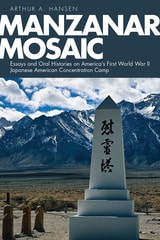
To begin, Hansen presents two essays, the first centering on his work with Ronald Larson in the mid-1970s on the history of Doho, a Japanese and English dual-language newspaper, and the second an article with David Hacker on revisionist ethnic perspectives of the Manzanar “riot.” A second section is composed of five oral history interviews of selected camp personalities—a female Nisei journalist, a male Nisei historical documentarian, a male Kibei Communist block manager, the Caucasian wife and comrade of the block manager, and the male Kibei who was the central figure in the Manzanar Riot/Revolt—that offer powerful insight into the controversial content of the two essays that precede them.
Manzanar can be understood only by being considered within the much wider context of Japanese American community formation and contestation before, during, and after World War II. A varied collection of scholarly articles and interviews, Manzanar Mosaic engages diverse voices and considers multiple perspectives to illuminate aspects of the Japanese American community, the ethnic press, the Manzanar concentration camp, and the movement for redress and reparations.

May Days
Samuel F., Jr. Pickering
University of Iowa Press, 1995
Meander Scars
Reflections on Healing the Willamette RiverAbby Phillips Metzger
Oregon State University Press, 2013
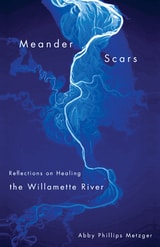
Yet, through canoe trips and intimate explorations of the river, Metzger discovers glints of resiliency: a beaver trolling through a slough, native fish in quiet backwaters, and strong currents that carry undertones of the wild Willamette. Together with tales from farmers and scientists alike, these experiences lead Metzger to ask whether something scarred can fully heal, and whether a disjointed river can be whole again.
A story of re-discovery as told by a learner, Meander Scars will appeal to readers of literary nonfiction, river advocates, naturalists, and outdoor enthusiasts interested in sustaining healthy river systems for themselves, their children, and beyond.
Meaning of Folklore
The Analytical Essays of Alan DundesSimon J. Bronner
Utah State University Press, 2020
Runner-up, the Wayland Hand Award for Folklore and History, 2009
Meaning, Basic Self-Knowledge, and Mind
Essays on Tyler BurgeEdited by María Frápolli and Esther Romero
CSLI, 2003
The authors of the eleven papers here expound their versions of this position and go on to critique Burge's version. Together with Burge's replies, this volume offers a major contribution to contemporary philosophy.
Meaning, Decision, and Norms
Themes from the Work of Allan GibbardEds. Billy Dunaway and David Plunkett
Michigan Publishing Services, 2021
This volume is not a collection of artifacts from past decades of philosophy. Instead, it is a collection of essays that each make a significant contribution to contemporary work in philosophy. This reflects the fact that Gibbard’s work has not only had a massive influence on past discussion in philosophy but also continues to influence new directions of philosophical research.
With contributions from:
Sara Aronowitz, Simon Blackburn, Paul Boghossian, David Braddon-Mitchell, Nate Charlow, Stephen Darwall, Jamie Dreier, Billy Dunaway, Melissa Fusco, Sona Ghosh, Allan Gibbard, Bill Harper, Paul Horwich, Zoë Johnson King, Tristram McPherson, Howard Nye, Lauren Olin, Caleb Perl, David Plunkett, Peter Railton, Connie Rosati, Mark Schroeder, Alex Silk, Daniel J. Singer, Brian Skyrms, and Seth Yalcin.
Mediators
Aesthetics, Politics, and the CityReinhold Martin
University of Minnesota Press, 2014
Forerunners: Ideas First is a thought-in-process series of breakthrough digital publications. Written between fresh ideas and finished books, Forerunners draws on scholarly work initiated in notable blogs, social media, conference plenaries, journal articles, and the synergy of academic exchange. This is gray literature publishing: where intense thinking, change, and speculation take place in scholarship.
Medieval Londoners
essays to mark the eightieth birthday of Caroline M. BarronEdited by Christian Steer and Elizabeth New
University of London Press, 2019

Medieval Merchants and Money
Essays in Honour of James L. BoltonEdited by Matthew Davies
University of London Press, 2016
Meghan Markle
Essays on Monarchy, Race, and ColonialismEdited by Duchess Harris and Julie Schwietert Collazo
University of Arizona Press, 2026
This bold and timely anthology interrogates the British monarchy through the lens of race, gender, and postcolonial critique. The contributors of ten original essays use Meghan Markle’s public life and identity as a nexus for understanding the enduring legacies of empire, white supremacy, and institutional exclusion.
Each chapter blends academic analysis with the authors’ own lived experiences and identities, creating a deeply engaging and multifaceted narrative. Essays cover media representation, mental health, motherhood, and the politics of belonging.
Written in an accessible and engaging style, this volume speaks to readers interested in the intersections of monarchy, race, feminism, and celebrity culture. Through its interdisciplinary approach and critical insight, these essays reveal how one woman’s experience within the royal family brings into focus broader social and historical processes of racial identity making and colonial power. This is essential reading for anyone seeking to understand the cultural and political significance of Meghan Markle’s story—and what it tells us about the world we live in.
Contributors
Lucca Ramone Carlson
Duchess Harris
Marissa Kessenich
Jasmine Mitchell
Sarah Olutola
Portia Owusu
Therí Pickens
Amelia Ryan
Julie Schwietert Collazo
Lily Talmont
Ariane Tulloch
Elwood Watson
Stephanie L. Williams
Sharon D. Wright Austin
Melt with Me
Coming of Age and Other ’80s PerilsPaul Crenshaw
The Ohio State University Press, 2023

Memory Care
Essays on ForgettingJennifer C. Nash
Duke University Press, 2027
Memory Fever
Ray Gonzalez
University of Arizona Press, 1999
Through 29 storylike essays, Gonzalez takes readers into the heart of the desert and the soul of a developing poet. He introduces us to the people who shaped his life. We learn of his father's difficulties with running a pool hall and of his grandmother's steadfast religious faith. We meet sinister Texas Rangers, hallucinatory poets, illegal aliens, and racist high school jocks. His vivid recollections embrace lizard hunts and rattlesnake dreams, rock music and menudo making—all in stories that convey the pains and joys of growing up on the border. As Gonzalez leads us through his desert of hope and vision, we come to recognize the humor and sadness that permeate this special place.
Memory of the Body
Essays on Theater and DeathJan Kott
Northwestern University Press, 1992
Men I Hate
A Memoir in EssaysLynette D'Amico
The Ohio State University Press, 2026
Can a lesbian who loves a trans man still call herself a lesbian? Against the backdrop of a traditional Sicilian American upbringing, Lynette D’Amico identified as a lesbian despite the expectation that her future hinged on the man she married. As a teenager, she fled her St. Louis home in the dark of night to escape her fate. No boys allowed, until one day D’Amico’s life was completely upended when her lover and spouse of twenty years—P. Carl, the acclaimed author of Becoming a Man: The Story of a Transition—told her he was a man.
Seemingly overnight, D’Amico no longer recognized her spouse in photos of past vacations or of the couple celebrating their legal gay marriage. In Men I Hate, she asks: What happens when the people we are closest to change? As D’Amico tries to engage more deeply with the man she is married to, she looks at all the men—historical figures, politicians, men in her family—in search of clear dividing lines between good men and bad, between the men she loves and the men she hates. These lines dissolve as she writes her way toward an understanding of the words marriage,husband, and home—and how we reconcile who we are with who we become.

Mencken’s America
H. L. MenckenS. T. Joshi
Ohio University Press, 2004
Long famous as a political, social, and cultural gadfly, journalist and essayist H. L. Mencken was unafraid to speak his mind on controversial topics and to express his views in a deliberately provocative manner.
Mencken was prolific; much of his best work lies buried in the newspapers and magazines in which it originally appeared. Mencken’s America is a sampling of this uncollected work, arranged to present the wide-ranging treatise on American culture that Mencken himself never wrote.
The core of the book is a series of six articles on “The American” published in the Smart Set in 1913-14. Never before reprinted, they embody the essence of Mencken’s views on the deficiencies of his countrymen.
What was the problem with America? For Mencken, it could be summed up in one word: Puritanism. Puritanism accounted for much that was wrong with American culture: the prevalence of “militant morality” represented by Prohibition, by campaigns against prostitution, and by religious fundamentalism. American hostility toward the fine arts led to furious attempts to suppress any work of art that was thought to contravene conventional morality-attempts that Mencken chronicles with impressive scholarship in the essay “Puritanism as a Literary Force.”
Mencken reserved his greatest scorn for American political institutions. Opposed to the very principle of democracy and universal suffrage, he maintained that, in the absence of an educated electorate, all politicians are compelled to become demagogues.
Bracing, infuriating, and pungent, H. L. Mencken’s writings retain their relevance even after the passage of nearly a hundred years, cogently discussing issues with which Americans of the twenty-first century are still wrestling. Sagaciously edited by S. T. Joshi, one of the country’s foremost Mencken scholars, Mencken’s America is a superb example of America’s turning the looking glass on itself.
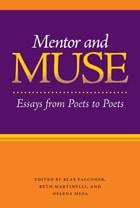
Mentor and Muse
Essays from Poets to PoetsEdited by Blas Falconer, Beth Martinelli, and Helena Mesa
Southern Illinois University Press, 2010
In Mentor and Muse, a collection of twenty-nine insightful essays by some of today’s leading poetic minds, editors Blas Falconer, Beth Martinelli, and Helena Mesa have brought together an illuminating anthology that draws upon both established and emerging poets to create a one-of-a-kind resource and unlock the secrets of writing and revising poetry.
Gathered here are numerous experts eager to share their wisdom with other writers. Each author examines in detail a particular poetic element, shedding new light on the endless possibilities of poetic forms. Addressed within are such topics as the fluid possibilities of imagery in poetry; the duality of myth and the personal, and the power of one to unlock the other; the surprising versatility of traditional poetic forms; and the pleasure of collaboration with other poets. Also explored in depth are the formative roles of cultural identity and expectations, and their effect on composition; advice on how to develop one’s personal poetic style and approach; the importance of setting in reading and meaning; and the value of indirection in the lyric poem. Challenges to conventional concepts of beauty are examined through Shakespeare’s sonnets, and the ghost of Longfellow is called upon to guide students through the rewards and roadblocks of writing popular poetry. Poetic persona is demystified through Newton’s law of gravity, while the countless permutations of punctuation are revealed with analysis of e. e. cummings and W. S. Merwin.
The essays include the full text of the poems discussed, and detailed, relevant writing exercises that allow students the opportunity to directly implement the strategies they have learned. While many advanced topics such as authenticity, discordant music, and prosody are covered, this highly readable volume is as user-friendly as it is informative. Offering a variety of aesthetics and approaches to tackling the issues of composition, Mentor and Muse takes poets beyond the simple stages of poetic terms and strategies. These authorsinvite students to explore more advanced concepts, enabling them to draw on the traditions of the past while at the same time forging their own creative paths into the future.
Chosen as one of the "Best Books for Writers" by Poets & Writers magazine

Merchants and Scholars
Essays in the History of Exploration and TradeJohn Parker
University of Minnesota Press, 1965
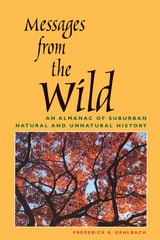
Messages from the Wild
An Almanac of Suburban Natural and Unnatural HistoryBy Frederick R. Gehlbach
University of Texas Press, 2002
Seeking a closer connection with nature than the manicured lawns of suburbia, naturalist Fred Gehlbach and his family built a house on the edge of a wooded ravine in Central Texas in the mid-1960s. On daily walks over the hills, creek hollows, and fields of the ravine, Gehlbach has observed the cycles of weather and seasons, the annual migrations of birds, and the life cycles of animals and plants that also live in the ravine.
In this book, Gehlbach draws on thirty-five years of journal entries to present a composite, day-by-day almanac of the life cycles of this semiwild natural island in the midst of urban Texas. Recording such events as the hatching of Eastern screech owl chicks, the emergence of June bugs, and the first freeze of November, he reminds us of nature's daily, monthly, and annual cycles, from which humans are becoming ever more detached in our unnatural urban environments. The long span of the almanac also allows Gehlbach to track how local and even global developments have affected the ravine, from scars left by sewer construction to an increase in frost-free days probably linked to global warming.
This long-term record of natural cycles provides one of only two such baseline data sets for North America. At the same time, the book is an eloquent account of one keen observer's daily interactions with his wild and human neighbors and of the lessons in connectedness and the "play of life" that they teach.
Metaphysics as Mediating Dialogue
Olivia Blanchette
Catholic University of America Press, 2023
Mexican Soundings
Essays in Honour of David A. BradingEdited by Susan Deans-Smith and Eric Van Young
University of London Press, 2007
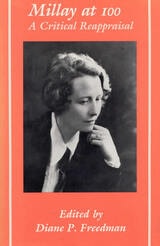
Millay At 100
A Critical ReappraisalDiane F. Freedman
Southern Illinois University Press, 1995
Though finding its occasion in the life of Millay— the centennial of the writer’ s birth— this volume refocuses attention on Millay’ s art by asking questions central to our present concerns: What in the varied body of Millay’ s work speaks to us most forcefully today? Which critical perspectives most illuminate her texts? How might those approaches be challenged, extended, or reoriented? In seeking the answers to such questions, the volume’ s contributors illuminate the means by which Millay’ s early success has been slighted and misunderstood and examine issues of personality, personae, critical stature, and formal experimentation in Millay’ s various genres: lyric poetry, the sonnet, verse drama, fiction, and the personal letter.
In 1920, following the publication of A Few Figs from Thistles, Millay was the "It girl" of American poetry. But by the late 1930s, her popularity waned as her critical reputation declined under the reign of high modernism and its critics. In fact, Millay, like others of her generation, had rejected modernist elitism in favor of public engagement, using her powerful public voice to plead for an end to the Sacco-Vanzetti trials as well as for U.S. entry into World War II. Condemned for both her politicizing and her political poetry, she was the first to admit that she and her poetry suffered in the service of public causes.
Grouped into four parts, these essays focus on Millay’ s relation to modernism, her revisionary perspectives on love, her treatment of time and of the female body, and her use of masquerade and impersonation in life and in art. Throughout, the essayists pose such questions as: Where is Millay’ s place in the literary histories of modern writing and in our hearts? How are we to value, interpret, and characterize the various forms and genres in which she wrote? What is the cultural work Millay achieves and reflects? How does she help us redefine modernism? What do Millay’ s great gifts enable us to see about genre, the social construction of gender, the definition of modernism, and the role of the poet?
Millay’ s considerable productivity, the range and virtues of her forms, and her experimentation clearly argue for a wide-ranging reappraisal of her work.
Millions of Suns
On Writing and LifeSharon Fagan McDermott and M. C. Benner Dixon
University of Michigan Press, 2023
With decades of combined teaching experience, McDermott and Benner Dixon share practical craft-of-writing advice with the reader, including over fifty engaging writing prompts to spark the creative process. These prompts guide readers toward the freedom and joy that comes with finding one’s authentic voice. Embracing both the painful and the playful, Millions of Suns is an ideal text for classrooms, professional development, or daily writing practice. Through humor, lyricism, and poignancy, the fundamental message of the book remains the same for newcomers and career authors, whether they write poetry, fiction, non-fiction, or memoir. Let Millions of Suns open a door for you into your creative work, inviting imagination, memory, and inspiration into your writing life.
Mimesis and the Human Animal
On the Biogenetic Foundations of Literary RepresentationRobert Storey
Northwestern University Press, 1996
A unique approach to the subject of mimesis, Storey's book goes beyond the politicizing of literature grounded in literary theory to develop a scientific basis for the creation of literature and art.
Mind The Gap
The Education Of A Nature WriterJohn Hay
University of Nevada Press, 2006
Mind, Matter, and Method
Essays in Philosophy and Science in Honor of Herbert FeiglPaul K. Feyerabend and Grover Maxwell, Editors
University of Minnesota Press, 1966
Mind, Matter, and Method was first published in 1966. Minnesota Archive Editions uses digital technology to make long-unavailable books once again accessible, and are published unaltered from the original University of Minnesota Press editions.
This volume of twenty-six essays by as many contributors is published in honor of Herbert Feigl, professor of philosophy at the University of Minnesota and director of the Minnesota Center for the Philosophy of Science. Though the majority of the contributors are philosophers, there are also -- as benefits Mr. Feigl's varied intellectual interests -- representatives of psychology, psychoanalysis, and physics.
The first group of ten essays deals with the philosophy of mind, particularly with the mind-body problem, to which Mr. Feigl has devoted much attention. The eleven essays in the second part are concerned with problems of philosophical method, especially with induction and confirmation. The third part is comprised of five essays on the philosophy of the physical sciences. A biographical sketch of Mr. Feigl and a bibliography of his writings are also provided.
Minotaur, Parrot, and the SS Man
Essays on Jorge de SenaGeorge Monteiro
Tagus Press, 2021
Miraculous Simplicity
Essays on R.S. ThomasWilliam V. Davis
University of Arkansas Press, 1993
In the autobiographical essay, Thomas reveals his passion for his homeland and his ever-present hunger for spiritual and natural exploration:
those rocks, I certainly was reminded of the transience of human existence,
and my own in particular. As Pindar put it: “A dream about a
shadow is man.” I began to ponder more the being and nature of God
and his relation to the late twentieth-century situation, which science and
technology had created in the western world. Where did the ancient
world of rock and ocean fit into an environment in which nuclear physics
and the computer were playing an increasingly prominent part? . . .
Miss Southeast
EssaysElizabeth Lindsey Rogers
Northwestern University Press, 2024
A collection of narrative essays on femininity, sexuality, community, and belonging
Miss Southeast explores the strange, often contradictory cultural circumstances of being queer and female in the American South and beyond. Born and raised in North Carolina, the youngest in a family of precocious daughters, Rogers spends her teenage years as a half-closeted lesbian desperate to escape the South, convinced the rest of the United States must be “more enlightened than our cow-dotted corner of the county.”
Adulthood takes Rogers to Ohio, New York, Louisiana, Arkansas, Washington, DC, and China, but each essay finds her reckoning with participation in and resistance to rigid cultural institutions—whether a coming-out story set at a high school beauty pageant or a meditation on swimming pools as emblems of racial divides across the South. In lyric prose enlivened by a poet’s sense of musicality, Miss Southeast considers how both place and our layered identities shape our sense of belonging.
Mistaken for an Empire
A Memoir in TonguesChristine Imperial
The Ohio State University Press, 2023
Modern Spanish Women as Agents of Change
Essays in Honor of Maryellen BiederSmith, Jennifer
Bucknell University Press, 2019
Published by Bucknell University Press. Distributed worldwide by Rutgers University Press.
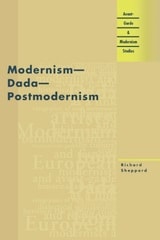
Modernism - Dada - Postmodernism
Richard Sheppard
Northwestern University Press, 1999
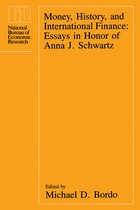
Money, History, and International Finance
Essays in Honor of Anna J. SchwartzEdited by Michael D. Bordo
University of Chicago Press, 1989
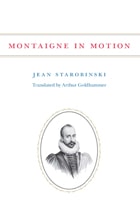
Montaigne in Motion
Jean Starobinski
University of Chicago Press, 1985
Educated in the humanities and trained in psychiatry, Jean Starobinski is a central figure in the Geneva School of criticism. His classic work, Montaigne in Motion, is a subtly conceived and elegantly written study of the Essais of Montaigne, whose deceptively plainspoken meditations have entranced readers and stimulated philosophers since their first publication in 1580 and 1595.
Here Starobinski offers a decidedly postmodern reading of Montaigne. In chapters dealing with the themes of public and private life, friendship, death, the body, and love, Starobinski reveals much that will remind us that Montaigne’s thought is as apropos to our time as it was to his own.
“The most important contribution to Montaigne studies since Friedrich’s work . . . . [It] will be the critical framework in which scholars will discuss Montaigne in the years to come.”—Choice
“Starobinski brings Montaigne to life by treating him as our contemporary and asking him modern questions.”—Hudson Review
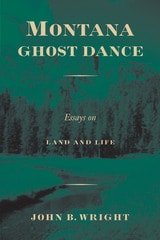
Montana Ghost Dance
Essays on Land and LifeBy John B. Wright
University of Texas Press, 1998
Montana has been the "last best place" for so many people. A century ago, Native Americans gathered here to perform the Ghost Dance—a last, doomed attempt to make white settlers vanish and bring back the old ways of life. Today, people are still pouring into Montana, looking for the pristine wilderness they saw in A River Runs through It.
The reality of Montana—indeed, of all the West—has never matched the myths, but this book eloquently explores how the search for a perfect place is driving growth, development, and resource exploitation in Big Sky country. In ten personal essays, John Wright looks at such things as Montana myths; old-timers; immigrants; elk; ways of seeing the landscape; land conservation and land trusts; the fate of the Blackfoot, Bitterroot, and Paradise valleys; and some means of preserving the last, best places.
These reflections offer a way of understanding Montana that goes far beyond the headlines about militia groups and celebrities' ranches. Montana never was or will be a pristine wilderness, but Wright believes that much can be saved if natives and newcomers alike see what stands to be lost. His book is a wake-up call, not a ghost dance.
Moral Resistance and Spiritual Authority
Our Jewish Obligation to Social JusticeRabbi Seth M. Limmer, DHL and Rabbi Jonah Dov Pesner
Central Conference of American Rabbis, 2019
More City than Water
A Houston Flood AtlasEdited by Lacy M. Johnson and Cheryl Beckett
University of Texas Press, 2022
2022 Art in Service to the Environment Award, Sierra Club Lone Star Chapter
Honorable Mention, 2022 Nonfiction Prize, Writers' League of Texas
Writers explore a city’s relationship with chronic catastrophic flooding.
Shortly after Hurricane Harvey dumped a record 61 inches of rain on Houston in 2017, celebrated writer and Bayou City resident Lacy M. Johnson began collecting flood stories. Although these stories attested to the infinite variety of experience in America’s most diverse city, they also pointed to a consistent question: What does catastrophic flooding reveal about this city, and what does it obscure?
More City than Water brings together essays, conversations, and personal narratives from climate scientists, marine ecologists, housing activists, urban planners, artists, poets, and historians as they reflect on the human geography of a region increasingly defined by flooding. Both a literary and a cartographic anthology, More City than Water features striking maps of Houston’s floodplains, waterways, drainage systems, reservoirs, and inundated neighborhoods. Designed by University of Houston seniors from the Graphic Design program, each map, imaginative and precise, shifts our understanding of the flooding, the public’s relationship to it, and the fraught reality of rebuilding. Evocative and unique, this is an atlas that uncovers the changing nature of living where the waters rise.
More Curious
By Sean Wilsey
University of Texas Press, 2015
More than a Game
The Best of Alf Van HooseAlf Van Hoose
University of Alabama Press, 2009
Although he spent 43 years at the same job, Alf Van Hoose was not a man limited by the boundaries of his profession. As Birmingham News sports editor for 21 years and a columnist for a decade before that, Van Hoose helped define a city, a state, and a region largely known for sports. He was the writer of record for some of the biggest sporting events and personalities in the state of Alabama in the last half of the 20th Century. Wayne Hester, Van Hoose's successor as sports editor of The News, in 1990, said, "To many sports fans over the years, Alf Van Hoose has been The Birmingham News." But he was also much more than the "sports guy," as older generations of Alabama sports fans who read this book will remember and younger ones will learn. He was a man for all seasons, not just those where balls get kicked, hit, or thrown around.
A native of Cuba, Alabama, and a veteran of the Third Army campaigns in WWII (where he won both the Bronze and Silver Stars), Van Hoose became a sportswriter on The News in 1947. He remained in that role until retirement in 1990, with only short breaks to serve as a Vietnam war correspondent, and to reflect on the lessons learned while serving with George Patton. Van Hoose died in 1997 at the age of 76.
This volume contains 90 of Van Hoose's best columns, selected not only to showcase his characteristic style, but also because of the enduring importance and interest of the topics--football and baseball, of course, but also golf, high school heroics, auto racing, and Van Hoose's special favorites: Rickwood Field and its various tenants, especially the Birmingham Black Barons.
Published with the College of Communication and Information Science, The University of Alabama.
Mormon Mavericks
Essays on DissentersJohn Sillito
Signature Books, 2002
Mormon Mavericks summarizes a few famous flashpoints in Mormon history; more importantly, it provides a telling study in human nature. Each contributor is an expert in his or her discipline, and all approach their topic with equal doses of sympathy and objectivity.
The following mavericks are featured in this collection of biographical essays:
Fawn McKay BrodieJuanita Brooks
Thomas Stuart Ferguson
Amasa Mason Lyman
Sterling M. McMurrin
John E. Page
Sarah M. Pratt D. Michael Quinn
William Smith
Fanny Stenhouse
T. B. H. Stenhouse
James Strang
Samuel Woolley Taylor
Moses Thatcher
Morning Light
Wildflowers, Night Skies, and Other Ordinary Joys of Oregon Country LifeBarbara Drake
Oregon State University Press, 2014
Barbara Drake articulates the lessons she’s learned from her long stint of country living in her new book, Morning Light. Replete with records of native wildflowers, an encounter with an elderly man who lived on her farm eighty years ago, and an old family recipe for wild blackberry pudding, Morning Light is an appreciation and exploration of the landscape of western Oregon, and readers will come to know it better through the book.
As entertaining and instructive as it is personal and reflective, Drake’s writing will resonate with anyone who has experienced a convergence of family history with natural history, considered their place in the historical continuum, or wondered if their lifestyle can be sustained with age. In a world where even “the country” is becoming increasingly citified, Morning Light reminds us why we should care for our rural landscapes—while we still can.
Morphology and the Web of Grammar
Essays in Memory of Steven G. LapointeEdited by C. Orhan Orgun and Peter Sells
CSLI, 2003