Results by title
187 books match the query 'Essays & Travelogues' and 8 start with m
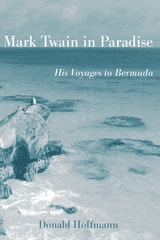
Mark Twain in Paradise
His Voyages to BermudaDonald Hoffman
University of Missouri Press, 2006
This book is the first comprehensive study of Clemens’s love affair with Bermuda, a vivid depiction of a celebrated author on recurring vacations. Donald Hoffmann has culled and clarified passages from Mark Twain’s travel pieces, letters, and unpublished autobiographical dictation—with cross-references to his fiction and infrequently cited short pieces—to create a little-known view of the author at leisure on his fantasy island.
Mark Twain in Paradise sheds light on both Clemens’s complex character and the topography and history of the islands. Hoffmann has plumbed the voluminous Mark Twain scholarship and Bermudian archives to faithfully re-create turn-of-the-century Bermuda, supplying historical and biographical background to give his narrative texture and depth. He offers insight into Bermuda’s natural environment, traditional stone houses, and romantic past, and he presents dozens of illustrations, both vintage and new, showing that much of what Mark Twain described can still be seen today.
Hoffmann also provides insight into the social circles Clemens moved in—and sometimes collected around himself. When visiting the islands, he rubbed shoulders with the likes of socialist Upton Sinclair and multimillionaire Henry H. Rogers; with Woodrow Wilson and his lover, socialite Mary Peck; as well as with the young girls to whom he enjoyed playing grandfather.
“You go to heaven if you want to,” Mark Twain wrote from Bermuda in 1910 during his long last visit. “I’d druther stay here.” And because much of what Clemens enjoyed in the islands is still available to experience today, visitors to Bermuda can now have America’s favorite author as their guide. Mark Twain in Paradise is an unexpected addition to the vast literature by and about Mark Twain and a work of travel literature unlike any other.
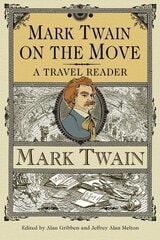
Mark Twain on the Move
A Travel ReaderAlan Gribben
University of Alabama Press, 2008
Journeys, humor, and insight from Mark Twain's travel narratives - America’s literary master.
Mark Twain on the Move gathers the very best passages from all five of Mark Twain’s travel narratives: The Innocents Abroad (1869), Roughing It (1872), A Tramp Abroad (1880), Life on the Mississippi (1883), and Following the Equator (1897). Although Twain’s travel narratives were his best sellers throughout his career, modern readers are largely unfamiliar with them. Thus, readers are not only missing some of Twain’s most hilarious and insightful material, they are also missing a complete understanding of a beloved literary and cultural icon.
Mark Twain on the Move presents the best of these works—sometimes respectful, often irreverent and outlandish—at their most lively and captures his renowned experiences as an American tourist. And they demonstrate why Twain’s greatest popularity in his lifetime derived from his travel writings rather than from his novels. Twain was always entertaining and provocative while on the move and this collection captures that fabled energy for modern readers.
Mark Twain, Travel Books, and Tourism
The Tide of a Great Popular MovementJeffrey Alan Melton
University of Alabama Press, 2008
With the publication of The Innocents Abroad (1869), Mark Twain embarked on a long and successful career as the 19th century's best-selling travel writer. Jeffrey Melton treats Twain's travel narratives in depth, and in the context of his contemporary travel writers and a burgeoning tourism culture. As Melton shows, Twain's five major travel narratives--The Innocents Abroad, Roughing It, Life on the Mississippi, A Tramp Abroad, and Following the Equator--demonstrate Twain's mastery and reinvention of the genre.

Michigan Free
Your Comprehensive Guide to Free Travel, Recreation, and Entertainment OpportunitiesEric Freedman
University of Michigan Press, 1993
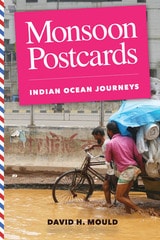
Monsoon Postcards
Indian Ocean JourneysDavid H. Mould
Ohio University Press, 2019
In Monsoon Postcards, journalist David H. Mould, notebook in hand, traverses the Indian Ocean—from Madagascar through India and Bangladesh to Indonesia. It’s an unpredictable journey on battered buses, bush taxis, auto-rickshaws, and crowded ferries. Mould travels from the traffic snarls of Delhi, Dhaka, and Jakarta to the rice paddies and ancestral tombs of Madagascar’s Central Highlands; from the ancient kingdom of Hyderabad to India’s so-called chicken neck—the ethnically diverse and underdeveloped northeast; and from the textile factories and rivers of Bangladesh to the beaches of Bali and the province of Aceh—ground zero for the 2004 tsunami.
Along the way, in markets, shops, roadside cafes, and classrooms, he meets journalists, professors, students, aid workers, cab drivers, and other everyday residents to learn how they view their past and future. Much like its predecessor, Mould’s Postcards from Stanland,Monsoon Postcards offers witty and insightful glimpses into countries linked by history, trade, migration, religion, and a colonial legacy. It explores how they confront the challenges of climate change, urban growth, economic development, land, water and natural resources, and national and ethnic identity.
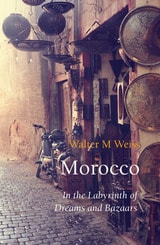
Morocco
In the Labyrinth of Dreams and BazaarsWalter M. Weiss
Haus Publishing, 2016
In Morocco, Walter M. Weiss brings extensive knowledge of the region to bear as he travels the breadth and depth of the country’s social and geographical contrasts. Berber villagers of the mountains are for the most part still illiterate and consider their king to be divinely chosen, while businessmen in Casablanca’s towering offices dream of closer ties to the European Union. Weiss visits the settings of modern legends, such as Tangier, as well as the two medieval centres Fès and Meknès, and sees earthen kasbahs and Marrakech’s bazaar. On the way, he meets acrobats, Sufi musicians, pilgrims, craftsmen, beatniks, rabbis, and Berber farmers—a kaleidoscope of variety and cultural influence.
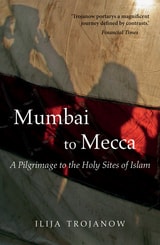
Mumbai To Mecca
A Pilgrimage to the Holy Sites of IslamIlija Trojanow
Haus Publishing, 2017
This book presents Ilija Trojanow’s journey from Mumbai to Mecca in the tradition of the rihla, one of the oldest genres of classical Arabic literature, describing the Hajj, the pilgrimage to the holy sites of Islam. Every Muslim, regardless of geographical location, is implored by tradition to undertake the Hajj at least once in their life if they are able. Trojanow, with the help of his friends, donned the ihram, the traditional garb of the pilgrim, and joined the hundreds of thousands of Muslims who each year go on the Hajj. Over the course of a mere three weeks he experienced a tradition dating back over a thousand years. This personal and enlightening account will provide insights not only for Muslims who have yet to embark on the Hajj, but for those who have already made the journey and want to see a different perspective on it. Mumbai to Mecca also presents a unique glimpse into this pivotal tradition for those non-Muslims who remain barred from the most holy Muslim sites.
the pilgrimage to the holy sites of Islam, through the eyes of a Westener, but with the heart of a Muslim.
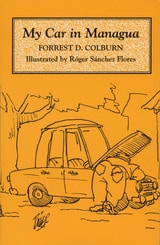
My Car in Managua
By Forrest D. Colburn
University of Texas Press, 1991
Histories of revolutions often focus on military, political, or economic upheavals but sometimes neglect to connect these larger events to the daily lives of "ordinary" people. Yet the peoples' perception that "things are worse than before" can topple revolutionary governments, as shown by the recent defeat of the Sandinista regime in Nicaragua and the governments of Eastern Europe. Providing the kind of prosaic, revealing details that more formal histories have excluded, My Car in Managua offers an objective, often humorous description of the great difficulties and occasional pleasures of life in Nicaragua during the Sandinista revolution.
During a year's work (1985-1986) at the Instituto Centroamericano de Administración de Empresas (INCAE), Forrest Colburn purchased a dilapidated car—and with it an introduction to everyday life in Nicaragua. His discoveries of the length of time required to register the car (approximately six weeks), the impossibility of finding spare parts (except when U.S. dollars were applied to the search), and the fact that "anyone getting into a car in Managua can be charged a small fee [for car watching] by anyone else" all suggest the difficulties most Nicaraguans faced living in a devastated economy.
Drawing on experiences from visits throughout the revolutionary period (1979-1989), Colburn also sheds light on how the Revolution affected social customs and language, gender roles and family relationships, equality and authority, the availability of goods and services, the status of ethnic minorities, and governmental and other institutions. Illustrations by Nicaragua's celebrated political cartoonist Róger Sánchez Flores enliven the lucid text.