Results by title
67 books match the query 'Exile' and 2 start with m
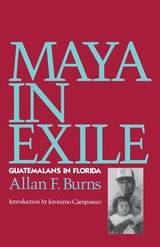
Maya In Exile
Guatemalans in FloridaAllan F. Burns, introduction by Jerónimo Camposeco
Temple University Press, 1993
The Maya are the single largest group of indigenous people living in North and Central America. Beginning in the early 1980s, hundreds of thousands of Maya fled the terror of Guatemalan civil strife to safety in Mexico and the U.S. This ethnography of Mayan immigrants who settled in Indiatown, a small agricultural community in south central Florida, presents the experiences of these traditional people, their adaptations to life in the U.S., and the ways they preserve their ancestral culture. For more than a decade, Allan F. Burns has been researching and doing advocacy work for these immigrant Maya, who speak Kanjobal, Quiche, Mamanâ, and several other of the more than thirty distinct languages in southern Mexico and Guatemala. In this fist book on the Guatemalan Maya in the U.S, he uses their many voices to communicate the experience of the Maya in Florida and describes the advantages and results of applied anthropology in refugee studies and cultural adaptation.
Burns describes the political and social background of the Guatemalan immigrants to the U.S. and includes personal accounts of individual strategies for leaving Guatemala and traveling to Florida. Examining how they interact with the community and recreate a Maya society in the U.S., he considers how low-wage labor influences the social structure of Maya immigrant society and discusses the effects of U.S. immigration policy on these refugees.
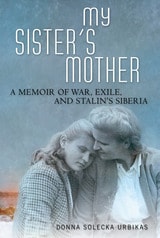
My Sister's Mother
A Memoir of War, Exile, and Stalin’s SiberiaDonna Solecka Urbikas
University of Wisconsin Press, 2019
In 1940, Janina Ślarzynska and her five-year-old daughter Mira were taken by Soviet secret police (NKVD) from their small family farm in eastern Poland and sent to Siberia with hundreds of thousands of others. So began their odyssey of hunger, disease, cunning survival, desperate escape across a continent, and new love amidst terrible circumstances.
But in the 1950s, baby boomer Donna yearns for a “normal” American family while Janina and Mira are haunted by the past. In this unforgettable memoir, Donna recounts her family history and her own survivor’s story, finally understanding the damaged mother who had saved her sister.
Finalist, Best Traditional Non-Fiction Book, Chicago Writers Association