Results by title
52 books match the query 'Fantasy' and 5 start with m

Madge's Mobile Home Park
Volume One of the Peavine ChroniclesJane F. Hankins
Parkhurst Brothers, Inc., 2012
This hilarious send-up of outlandish Southern characters includes a beautician, a luncheonette waitress, a radio evangelist, the widow of a gas and oil distributror and the residents of a fictional mobile home park in Arkansas as they find uproarious ways to enjoy life, needle each other, and remember the dear-departed.
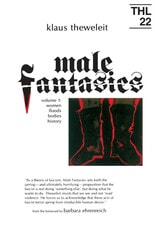
Male Fantasies
Volume 1: Women Floods Bodies HistoryKlaus Theweleit
University of Minnesota Press, 1987
This first volume of Male Fantasies centers on the fantasies that preoccupied a group of men who played a crucial role in the rise of Nazism. These men were officers in the Freikorps--private, volunteer armies that roamed Germany, serving the cause of domestic repression in the aftermath of World War I. Klaus Theweleit draws upon the novels, letters, and autobiographies of these proto-fascists and their contemporaries, as well as cartoons, advertisements, engravings, and posters. He explores these sources, not to discover what their creators thought about fighting or the fatherland, but to seek out and reconstruct their images of women. He shows that the Freikorps male identity was shaped by the dread and revulsion that characterized their relations with women (real or imagined) and that this dread was, in turn, linked to the aggressive racism and anticommunism at the heart of most fascist movements.
Theweleit’s second volume, Male Bodies: Psychoanalyzing the White Terror, carries Male Fantasies from the female image to the self-image of manhood and its ritualized forms of mass behavior, culminating in warfare. It also is available from the University of Minnesota Press.

Male Fantasies
Volume 2: Male Bodies: Psychoanalyzing the White TerrorKlaus Theweleit
University of Minnesota Press, 1989
Theweleit’s project in Male Fantasies is to discover the emotional core of fascism as it was revealed in the novels and memoirs of the Freikorps, mercenary bands that fought Germany’s border disputes and put down worker revolts in the aftermath of World War I. His excavation of Freikorps literary remains (and the writings of some of their protofascist contemporaries) enabled Theweleit to reconstruct the mythical content of the fascist imagination. An integral part of Male Fantasies is Theweleit’s choice of illustrations--cartoons, advertisements, engravings, posters--that serve as an ironic commentary on the text and extend its meaning in time and space.
In this second volume of the two-volume work Theweleit discovers how the repudiation of one’s own body--and of femininity--became a psychic compulsion associating masculinity with hardness, self-denial, and destruction. We are shown how the body becomes a mechanism for eluding the dreaded liquid--the “Red Flood,” lava, mud--and the “feminine” emotions associated with it. Armored, organized by mental and physical procedures like the military drill, the male body is transformed into a “man of steel.” As Theweleit shows, only in war does this body find redemption from constraint.
The first volume of Male Fantasies, also available from the University of Minnesota Press, deals primarily with the image of women in the collective unconscious of the fascist warrior that threatens to engulf the male ego.
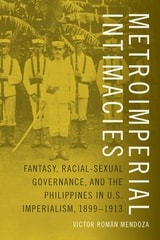
Metroimperial Intimacies
Fantasy, Racial-Sexual Governance, and the Philippines in U.S. Imperialism, 1899-1913Victor Román Mendoza
Duke University Press, 2015

Mindscapes
The Geographies of Imagined WorldsEdited by George E. Slusser and Eric S. Rabkin
Southern Illinois University Press, 1989
Eighteen essays plus four examples from the ninth annual J. Lloyd Eaton Conference on Science Fiction and Fantasy Literature at the University of California, Riverside.
The concept of mindscape, Slusser and Rabkin explain, allows critics to focus on a single fundamental problem: "The constant need for a relation between mind and some being external to mind."
The essayists are Poul Anderson, Wendy Doniger O’Flaherty, Ronald J. Heckelman, David Brin, Frank McConnell, George E. Slusser, James Romm, Jack G. Voller, Peter Fitting, Michael R. Collings, Pascal J. Thomas, Reinhart Lutz, Joseph D. Miller, Gary Westfahl, Bill Lee, Max P. Belin, William Lomax, and Donald M. Hassler.
The book concludes with four authors discussing examples of mindscape. The participants are Jean-Pierre Barricelli, Gregory Benford, Gary Kern, and David N. Samuelson.