Results by title
332 books match the query 'Health & Fitness' and 17 start with m
Malicious Intent
Murder and the Perpetuation of Jim Crow Health CareDavid Barton Smith
Vanderbilt University Press, 2023
Race-related disparities in American death rates, exacerbated once again by the COVID-19 pandemic, have persisted since the birth of the modern US medical system a century ago. A unique but perpetually unequal history has prevented the United States from providing the kind of health care assurances that are taken for granted in other industrialized nations. The underlying story is one of political, medical, and bureaucratic machinations, all motivated by a deliberate Jim Crow systemic design. In Malicious Intent, David Barton Smith traces the Jean Cowsert story and the cold case of her death as a through line to explain the construction and fulfillment of an unequal health care system that would rather sacrifice many than provide for Black Americans.
Cowsert’s suspicious death came at a key moment in the struggle for universal health care in the wealthiest country on earth. Malicious Intent is a history of those failed efforts and a story of selective amnesia about one doctor’s death and the movement she fought for.
Mammographies
The Cultural Discourses of Breast Cancer NarrativesMary K. DeShazer
University of Michigan Press, 2015
While breast cancer continues to affect the lives of millions, contemporary writers and artists have responded to the ravages of the disease in creative expression. Mary K. DeShazer’s book looks specifically at breast cancer memoirs and photographic narratives, a category she refers to as mammographies, signifying both the imaging technology by which most Western women discover they have this disease and the documentary imperatives that drive their written and visual accounts of it. Mammographies argues that breast cancer narratives of the past ten years differ from their predecessors in their bold address of previously neglected topics such as the link between cancer and environmental carcinogens, the ethics and efficacy of genetic testing and prophylactic mastectomy, and the shifting politics of prosthesis and reconstruction.
Mammographies is distinctive among studies of contemporary illness narratives in its exclusive focus on breast cancer, its analysis of both memoirs and photographic texts, its attention to hybrid and collaborative narratives, and its emphasis on ecological, genetic, transnational, queer, and anti-pink discourses. DeShazer’s methodology—best characterized as literary critical, feminist, and interdisciplinary—includes detailed interpretation of the narrative strategies, thematic contours, and visual imagery of a wide range of contemporary breast cancer memoirs and photographic anthologies. The author explores the ways in which the narratives constitute a distinctive testimonial and memorial tradition, a claim supported by close readings and theoretical analysis that demonstrates how these narratives question hegemonic cultural discourses, empower reader-viewers as empathic witnesses, and provide communal sites for mourning, resisting, and remembering.
Mammography Wars
Analyzing Attention in Cultural and Medical DisputesAsia Friedman
Rutgers University Press, 2023
Mammography is a routine health screening performed forty million times each year in the United States, yet it remains one of the most deeply contested topics in medicine, with national health care organizations supporting conflicting guidelines. In Mammography Wars, sociologist Asia Friedman examines cultural and medical disagreements over mammography. At issue is whether to screen women under age fifty, which is rooted in deeper questions about early detection and the assumed linear and progressive development of breast cancer. Based on interviews with doctors and scientists, interviews with women ages 40 to 50, and newspaper coverage of mammography, Friedman uses the sociology of attention to map the cognitive structure of the “mammography wars,” offering insights into the entrenched nature of debates over mammography that often get missed when applying a medical lens. Friedman’s analysis also suggests the sociology of attention’s unique potential for analyzing cultural conflicts beyond mammography, and even beyond medicine.
Man-Made Medicine
Women’s Health, Public Policy, and ReformKary L. Moss, ed.
Duke University Press, 1996
These essays by physicians, lawyers, activists, and scholars present a rare interdisciplinary approach to a complex set of issues. Gender stereotyping and bias in the collection, analysis, and reporting of scientific data and in the ways health-related news is covered by the media are examined. The exclusion of women from the health care policy-making process and the effect such exclusion has on the determination of priorities among potential areas of research are also explored. With discussions of the plight of specific populations of women whose health care needs are not being sufficiently met—for example, immigrants, prisoners, the mentally ill, or women with HIV/AIDS, disabilities, or reproductive health problems—this book considers matters of race and class within the parameters of gender as it builds a fundamental challenge to the existing health care system. A range of current reform proposals are also evaluated in terms of their potential impact on women.
Suggesting no less than a radical rethinking of women’s medicine, Man-Made Medicine gives essential direction to the discussions that will shape the future of health care in this country. It will be of great interest to a wide audience, including health care advocates, policymakers, scholars, and readers generally concerned with women’s health issues.
Contributors. Ellen Barry, Laurie Beck, Joan Bertin, Janet Calvo, Wendy Chavkin, Kay Dickersin, Abigail English, Elizabeth Fee, Carol Gill, Nancy Krieger, Joyce McConnell, Judy Norsigian, Ann Scales, Susan Stefan, Lauren Schnaper, Catherine Teare
Management of Smallpox Eradication in India
Lawrence B. Brilliant
University of Michigan Press, 2025
Managing Sickle Cell Disease
In Low-Income FamiliesShirley A. Hill
Temple University Press, 2003

Marketing Nutrition
Soy, Functional Foods, Biotechnology, and ObesityBrian Wansink
University of Illinois Press, 2007
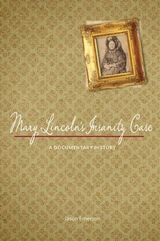
Mary Lincoln's Insanity Case
A Documentary HistoryJason Emerson
University of Illinois Press, 2012
In 1875 Mary Lincoln, the widow of a revered president, was committed to an insane asylum by her son, Robert. The trial that preceded her internment was a subject of keen national interest. The focus of public attention since Abraham Lincoln's election in 1860, Mary Lincoln had attracted plentiful criticism and visible scorn from much of the public, who perceived her as spoiled, a spendthrift, and even too much of a Southern sympathizer. Widespread scrutiny only increased following her husband's assassination in 1865 and her son Tad's death six years later, after which her overwhelming grief led to the increasingly erratic behavior that led to her being committed to a sanitarium. A second trial a year later resulted in her release, but the stigma of insanity stuck. In the years since, questions emerged with new force, as the populace and historians debated whether she had been truly insane and subsequently cured, or if she was the victim of family maneuvering.
In this volume, noted Lincoln scholar Jason Emerson provides a documentary history of Mary Lincoln's mental illness and insanity case, evenhandedly presenting every possible primary source on the subject to enable a clearer view of the facts. Beginning with documents from the immediate aftermath of her husband's assassination and ending with reminiscences by friends and family in the mid-twentieth century, Mary Lincoln's Insanity Case: A Documentary History compiles more than one hundred letters, dozens of newspaper articles, editorials, and legal documents, and the daily patient progress reports from Bellevue Place Sanitarium during Mary Lincoln's incarceration. Including many materials that have never been previously published, Emerson also collects multiple reminiscences, interviews, and diaries of people who knew Mary Lincoln or were involved in the case, including the first-hand recollection of one of the jurors in the 1875 insanity trial.
Suggesting neither accusation nor exoneration of the embattled First Lady, Mary Lincoln's Insanity Case: A Documentary History gives scholars and history enthusiasts incomparable access to the documents and information crucial to understanding this vexing chapter in American history.
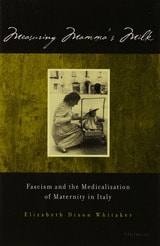
Measuring Mamma's Milk
Fascism and the Medicalization of Maternity in ItalyElizabeth Dixon Whitaker
University of Michigan Press, 2000
Medieval Wellness
From Beauty to BloodlettingLarisa Grollemond
J. Paul Getty Trust, The, 0
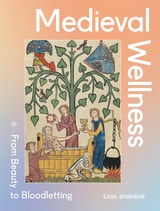
Dispelling myths of a dirty, superstitious Middle Ages, this entertaining volume explores medieval approaches to health and wellness.
Often maligned as an era of darkness and superstition, the Middle Ages in Europe have been stereotyped as lacking standards for basic hygiene, or, at the very least, for having a laughably simplistic approach to self-care and medicine. With wit and expert analysis, medievalist Larisa Grollemond explores everyday practices and beliefs of medieval life. She uncovers a world as nuanced and self-aware as our own while playfully connecting traditions from the Middle Ages to modern wellness culture.
- Challenges misconceptions of medieval Europe with engaging, evidence-based insights into hygiene and healthcare practices.
- Answers popular questions about daily life, including bathing, cosmetics, contraception, and the realities of medieval medical treatments.
- Features over 130 illustrations of illuminated manuscripts, medieval artifacts, and other art works that bring the past vividly to life.
- Connects medieval wellness practices to contemporary self-care trends, offering surprising parallels and fresh perspective.
If you think the Middle Ages were primitive and unsophisticated, this book will change your mind. With Medieval Wellness, you’ll discover a world of care, curiosity, and complexity that will feel familiar to your own.
Mental Health Disorders in Adolescents
A Guide for Parents, Teachers, and ProfessionalsHazen, Eric P
Rutgers University Press, 2010
Additionally, Eric P. Hazen, Mark A. Goldstein, and Myrna Chandler Goldstein have compiled two practical appendices-one provides a list of resources, organizations, books, websites, and phone numbers for further information and support. The other serves as a "treatment organizer" to help parents know what school and medical data to bring to a psychiatric evaluation and teach them how to keep track of important discussions related to their child's treatment.
By recognizing the early symptoms of a psychiatric disorder, adults may be able to save a teen's life. Mental Health Disorders in Adolescents offers real options to anyone searching for ways to help at-risk teens.
Missing Words
The Family Handbook on Adult Hearing LossKay Thomsett
Gallaudet University Press, 1993
Modernizing Medicine in Zimbabwe
HIV/AIDS and Traditional HealersDavid S. Simmons
Vanderbilt University Press, 2012
Combining anthropological, historical, and public health perspectives, Modernizing Medicine in Zimbabwe explores the intersection of African healing traditions and Western health development, emphasizing the role of this historical relationship in current debates about HIV/AIDS. Drawing on diverse sources including colonial records, missionary correspondence, international health policy reports, and interviews with traditional healers, anthropologist David S. Simmons demonstrates the remarkable adaptive qualities of these disparate communities as they try to meet the urgent needs of the people.

More Fire
How to Run the Kenyan WayToby Tanser
Westholme Publishing, 2008
An Essential Book for Runners of All Abilities
All of the Author’s Proceeds Go to Shoes4Africa to Support the Construction of Children’s Hospitals in Kenya
Kenya has produced the greatest concentration of world-class runners, and fellow athletes have long been intrigued by their remarkable success. Toby Tanser has devoted much of his professional career living and training among Kenyan runners in order to better understand the unique status of East African athletes. In More Fire: How to Run the Kenyan Way, the author builds upon the success of his acclaimed Train Hard, Win Easy, the first book to provide insights into the Kenyan "magic" that so many runners and coaches had sought. Instead of special foods or secret techniques, Tanser found that Kenyan runners simply trained incredibly hard, much harder than anyone had realized. By adapting their training regime—which includes three workouts a day—and following their example, runners, whether novices or champions, are able to improve both their performance and enjoyment in running. For those training for a marathon or any other distance race, this book is both practical and inspirational.
Divided into four parts, the book begins with a description of running in Kenya, the landscape, the physical conditions, and the people; the second part concentrates on details of Kenyan training camps, training methods, and their typical training diet; the third profiles individual runners and coaches from the past and present, with each explaining their approach to running so that readers can gain further insight into their methods. The book ends with a discussion on how the reader can adapt Kenyan training practices for their own running requirements. More Fire: How to Run the Kenyan Way is essential reading for runners of all levels and experience.
Mortal Men
Living with Asymptomatic HIVMac Intyre, Richard
Rutgers University Press, 1999
Mothers and Medicine
A Social History of Infant Feeding, 1890–1950Rima D. Apple
University of Wisconsin Press, 1987
In the nineteenth century, infants were commonly breast-fed; by the middle of the twentieth century, women typically bottle-fed their babies on the advice of their doctors. In this book, Rima D. Apple discloses and analyzes the complex interactions of science, medicine, economics, and culture that underlie this dramatic shift in infant-care practices and women’s lives.
As infant feeding became the keystone of the emerging specialty of pediatrics in the twentieth century, the manufacture of infant food became a lucrative industry. More and more mothers reported difficulty in nursing their babies. While physicians were establishing themselves and the scientific experts and the infant-food industry was hawking the scientific bases of their products, women embraced “scientific motherhood,” believing that science could shape child care practices. The commercialization and medicalization of infant care established an environment that made bottle feeding not only less feared by many mothers, but indeed “natural” and “necessary.” Focusing on the history of infant feeding, this book clarifies the major elements involved in the complex and sometimes contradictory interaction between women and the medical profession, revealing much about the changing roles of mothers and physicians in American society.
“The strength of Apple’s book is her ability to indicate how the mutual interests of mothers, doctors, and manufacturers led to the transformation of infant feeding. . . . Historians of science will be impressed with the way she probes the connections between the medical profession and the manufacturers and with her ability to demonstrate how medical theories were translated into medical practice.”—Janet Golden, Isis
Moving Consciously
Somatic Transformations through Dance, Yoga, and TouchEdited by Sondra Fraleigh
University of Illinois Press, 2015