Results by title
438 books match the query 'Hispanic & Latino' and 24 start with m
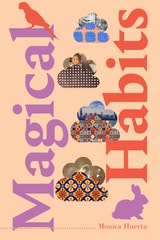
Magical Habits
Monica Huerta
Duke University Press, 2021
Magical Realism
Theory, History, CommunityLois Parkinson Zamora and Wendy B. Faris, eds.
Duke University Press, 1995
Presenting the first English translation of Franz Roh’s 1925 essay in which the term magical realism was coined, as well as Alejo Carpentier’s classic 1949 essay that introduced the concept of lo real maravilloso to the Americas, this anthology begins by tracing the foundations of magical realism from its origins in the art world to its current literary contexts. It offers a broad range of critical perspectives and theoretical approaches to this movement, as well as intensive analyses of various cultural traditions and individual texts from Eastern Europe, Asia, North America, Africa, the Caribbean, and Australia, in addition to those from Latin America. In situating magical realism within the expanse of literary and cultural history, this collection describes a mode of writing that has been a catalyst in the development of new regional literatures and a revitalizing force for more established narrative traditions—writing particularly alive in postcolonial contexts and a major component of postmodernist fiction.
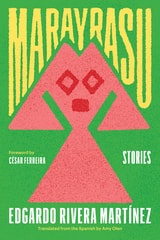
Marayrasu
StoriesEdgardo Rivera Martínez, Amy Olen
Northwestern University Press, 2026
The stories in Marayrasu stage fantastical, mysterious encounters that belie the characters’ often harsh economic and political realities as they seek belonging in modern Peru through art, music, and relationships. Depicted in poetic prose, these characters are loners, orphans, and outcasts experiencing quiet, tender encounters with other people and animals, the creative arts, and the land they find themselves depending on. Living vibrantly within these stories, the leviathan of Inca lore considers its own form, a young boy moves to a mining town and gets involved with a local union leader’s fight for worker rights while feeling the powerful pull of a large mountain overlooking the town, and a Persian cat captures the attention of a family down on its luck. Amy Olen’s translation smoothly captures Rivera Martínez’s impressive stories, offering a unique lens into the region at the heart of this canonical author’s inimitable work.
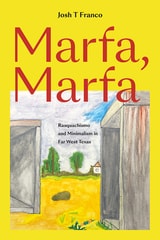
Marfa, Marfa
Rasquachismo and Minimalism in Far West TexasJosh T Franco
Duke University Press, 2026
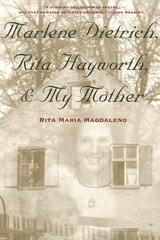
Marlene Dietrich, Rita Hayworth, & My Mother
Rita Maria Magdaleno
University of Arizona Press, 2003
Rita Magdaleno was born near Dachau shortly after World War II to a German mother and a Mexican American GI. Her family moved to Arizona in 1947, and Rita was raised with her father's traditions—but she remains at heart a child of two cultures.
This poetic memoir, recalling Magdaleno's return to the land of her birth, is an intertwining of personal and public history, bridging continents and cultures in search of family secrets. Her poems recall a mother "Marlene Dietrich pretty, / her smoky voice / & those wide Aryan / eyes that promised / never to lie," a war bride who named her child after a Hollywood movie star even before casting eyes on America. They also offer a new, intimate view of the war—and of today's reunified Germany—and show that the consequences of events played out half a century ago continue to resonate with the children of that era.
Magdaleno navigates currents of emotion that would drown less capable poets. With patience, courage, and abiding love, she draws on memories of mother and motherland to show us that healing can come in many forms.
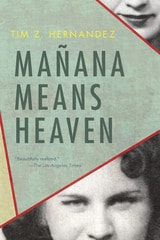
Mañana Means Heaven
Tim Z. Hernandez
University of Arizona Press, 2013
When they meet, Franco is a migrant farmworker with two children and a failing marriage, living with poverty, violence, and the looming threat of deportation, while the “college boy” yearns to one day make a name for himself in the writing world. The significance of their romance poses vastly different possibilities and consequences.
Mañana Means Heaven deftly combines fact and fiction to pull back the veil on one of literature’s most mysterious and evocative characters. Inspired by Franco’s love letters to Kerouac and Hernandez’s interviews with Franco, now in her nineties and living in relative obscurity, the novel brings this lost gem of a story out of the shadows and into the spotlight.
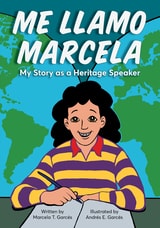
Me llamo Marcela
My Story as a Heritage SpeakerWritten by Marcela T. Garcés and illustrated by Andrés E. Garcés
The Ohio State University Press, 2024
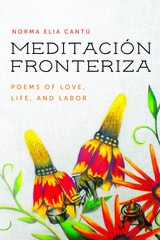
Meditación Fronteriza
Poems of Love, Life, and LaborNorma Elia Cantú
University of Arizona Press, 2019
The poems are a celebration of culture, tradition, and creativity that navigates themes of love, solidarity, and political transformation. Deeply personal yet warmly relatable, these poems flow from Spanish to English gracefully. With Gloria Anzaldúa’s foundational work as an inspiration, Meditación Fronteriza unveils unique images that provide nuance and depth to the narrative of the borderlands.
Poems addressed to talented and influential women such as Gwendolyn Brooks and Adrienne Rich, among others, pour gratitude and recognition into the collection. While many of the poems in Meditación Fronteriza are gentle and inviting, there are also moments that grieve for the state of the borderlands, calling for political resistance.
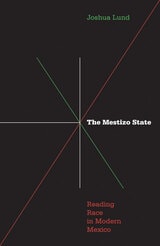
Mestizo State
Reading Race in Modern MexicoJoshua Lund
University of Minnesota Press, 2012
The Mestizo State examines how the ideas, images, and public discourse around race, nation, and citizen formation have been transformed in Mexico from the mid-nineteenth century to the present. Starting with the Porfiriato, Joshua Lund investigates the rise of a racialized “mestizo state,” its reinvention after the Mexican Revolution, and its mobilization as a critical lever that would act both on behalf of and against mainstream Mexican political culture during the long hegemony of the Partido Revolucionario Institucional.
Lund takes race as his object of critical reflection in the context of modern Mexico. An analysis that does not confuse race with mestizaje, indigeneity, African identity, or whiteness, the book sheds light on the history of the materialism of race as it unfolds within the cultural production of modern Mexico, grounded on close readings of four writers whose work explicitly challenged the politics of race in Mexico: Luis Alva, Ignacio Manuel Altamirano, Rosario Castellanos, and Elena Garro.
In seeking to address race as a cultural-political problematic, Lund considers race as integral to the production of the materiality of Mexican national history: constitutive of the nation form, a mediator of capitalist accumulation, and a central actor in the rise of modernity.
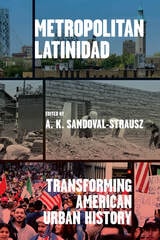
Metropolitan Latinidad
Transforming American Urban HistoryEdited by A. K. Sandoval-Strausz
University of Chicago Press, 2025
Latino urban history has been underappreciated not only in its own right but for the centrality of its narratives to urban history as a field. A scholarly discipline that has long scrutinized economics, politics, and the built environment has too often framed race as literally Black and white. This has resulted in a fundamental misunderstanding of the full social canvas of American cities since at least the early twentieth century.
Traversing metropolitan areas like Atlanta, Chicago, El Paso, Fort Worth, Los Angeles, Miami, and New York, this collection of essays brings together both established and emerging scholars, including long-time urbanists and academics working in the fields of Latino, borderlands, political, landscape, and religious history. Organized at different scales—including city, suburb, neighborhood, and hemisphere—this impressive body of work challenges long-standing narratives about metropolitan America. The contributors—Llana Barber, Mauricio Castro, Eduardo Contreras, Sandra I. Enríquez, Monika Gosin, Cecilia Sánchez Hill, Felipe Hinojosa, Michael Innis-Jiménez, Max Krochmal, Becky M. Nicolaides, Pedro A. Regalado, Iliana Yamileth Rodriguez, and Thomas J. Sugrue—engage a diverse range of subjects, such as urban rebellions, the suburbanization of Latinos, affordable housing, labor, the built environment, transnationalism, place-making, and religious life. The scholars also explore race within Latino communities, as well as the role that political and economic dynamics have played in creating Latino urban spaces. After reading this book, you will never see American cities the same way again.
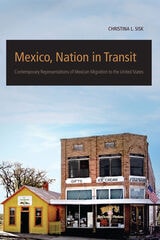
Mexico, Nation in Transit
Contemporary Representations of Mexican Migration to the United StatesChristina L. Sisk
University of Arizona Press, 2011
Sisk’s transnational investigation moves easily across the US–Mexico border, analyzing films made on both sides, literature de la frontera, Mexican rock music, migrant narratives, and texts written by second- and third-generation immigrants. Included are the perspectives of those who left Mexico, those who were left behind, and the children who travel back “home.” Sisk discovers that the loss of Mexicans to the United States through emigration has had an effect on Mexico similar to the impact of the perceived Mexican invasion of the United States.
Spanning the social sciences and the humanities, Mexico, Nation in Transit poses a new transnational alternative to the postnational view that geopolitical borders are being erased by the forces of migration and globalization, and the nationalist view that borders must be strictly enforced. It shows that borders, like identities, are not easy to locate precisely.
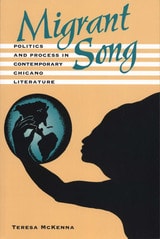
Migrant Song
Politics and Process in Contemporary Chicano LiteratureBy Teresa McKenna
University of Texas Press, 1996
Migration and continuity have shaped both the Chicano people and their oral and written literature. In this pathfinding study of Chicano literature, Teresa McKenna specifically explores how these works arise out of social, political, and psychological conflict and how the development of Chicano literature is inextricably embedded in this fact.
McKenna begins by appraising the evolution of Chicano literature from oral forms—including the important role of the corrido in the development of Chicano poetry. In subsequent chapters she examines the works of Richard Rodriguez and Rolando Hinojosa. She also devotes a chapter to the development of the Chicana voice in Chicano literature. Her epilogue considers the parallel development of Chicano literary theory and discusses some possible directions for research.
In McKenna's own words, "I believe that the future of this literature, as that of all literatures by people of color in the United States, rests largely on its being effectively introduced into the curricula at all levels, as well as its entrance into the critical consciousness of literary theory." This book will be an important step in that process.
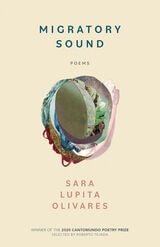
Migratory Sound
PoemsSara Lupita Olivares
University of Arkansas Press, 2020

Milk and Filth
Carmen Giménez Smith
University of Arizona Press, 2013
Adding to the Latina tradition, Carmen Giménez Smith, politically aware and feminist-oriented, focuses on general cultural references rather than a sentimental personal narrative. She speaks of sexual politics and family in a fierce, determined tone voracious in its opinions about freedom and responsibility.
The author engages in mythology and art history, musically wooing the reader with texture and voice. As she references such disparate cultural figures as filmmaker Lars Von Trier, Annie from the film Annie Get Your Gun, Nabokov’s Lolita, Facebook entries and Greek gods, they appear as part of the poet’s cultural critique.
Phrases such as “the caustic domain of urchins” and “the gelatin shiver of tea’s surface” take the poems from lyrical images to comic humor to angry, intense commentary. On writing about “downgrading into human,” she says, “Then what? Amorality, osteoporosis and not even a marble estuary for the ages.”
Giménez Smith’s poetic arsenal includes rapier-sharp wordplay mixed with humor, at times self-deprecating, at others an ironic comment on the postmodern world, all interwoven with imaginative language of unexpected force and surreal beauty. Revealing a long view of gender issues and civil rights, the author presents a clever, comic perspective. Her poems take the reader to unusual places as she uses rhythm, images, and emotion to reveal the narrator’s personality. Deftly blending a variety of tones and styles, Giménez Smith’s poems offer a daring and evocative look at deep cultural issues.
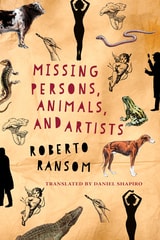
Missing Persons, Animals, and Artists
Roberto Ransom
Swan Isle Press, 2017
Missing Persons, Animals, and Artists is the follow-up to Ransom’s highly acclaimed A Tale of Two Lions, praised by Ignacio Padilla as “the best Mexican literary work I have read in recent years. . . . [It] heralds a pen capable of that rarest of privileges in our letters: attaining the comic and profoundly human through a perfect simplicity.” This collection of short stories has been translated with great care by Daniel Shapiro.
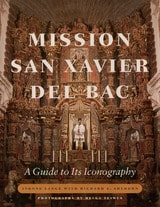
Mission San Xavier del Bac
A Guide to Its IconographyYvonne Lange with Richard E. Ahlborn; Photographs by Helga Teiwes
University of Arizona Press, 2004
This book is the first study of the iconography at San Xavier since its restoration in the 1990s by an international team of professional conservators. It expands our understanding of the numerous Catholic images and emblems of San Xavier through a close analysis of the newly revealed iconographic elements and an interpretation of the significance of their placement. It also proposes that the selection of specific religious themes and their locations was determined by an unfamiliar convention based on a tree-like design, in which the founder of a religious Order appears as the root and followers above in later branchings—an inversion of the more familiar top-to-bottom hierarchy.
Historians Lange and Ahlborn identify all the saintly images and religious elements that adorn San Xavier and suggest how and why they are so arranged. They examine the sculptures and paintings of the church from the façade throughout the cruciform interior in order to determine the organizational concepts that underlie their placement. They note that the selection of images in this Franciscan mission follows traditional Roman Catholic practice for decorating churches in order to instruct novices and reinforce the teaching of conversion in a pictographic catechism of Church doctrine. In short, the book is a dictionary of religious personages and symbols that will help the visitor identify the biblical stories and people portrayed, as well as associated signs and symbols. Entries include a description of the subject, its location, appropriate cross-references, and a bibliography. Recent illustrations by photographer Helga Teiwes and a floor plan facilitate the location of images by visitors.
A handsome, large-format book featuring more than one hundred photographs and supporting line illustrations, Lange and Ahlborn’s work confirms the significance of San Xavier’s iconography for art historians, students of religion, and visitors alike. It is both an incomparable guide and valuable reference source for the famed mission’s magnificent artistic heritage.
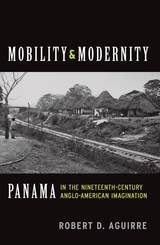
Mobility and Modernity
Panama in the Nineteenth-Century Anglo-American ImaginationRobert D. Aguirre
The Ohio State University Press, 2017
In this study, Robert D. Aguirre provides bold new interpretations of Anthony Trollope, John Lloyd Stephens, and Eadweard Muybridge and also recovers information about literary communities previously lost to history. Mobility and Modernity shows how Panama became defined as a site of incipient globalization and a crucial link of empire. Across this narrow strip of land people and things traveled, technology developed, and political forces erupted. The isthmus became a site of mobility that paradoxically produced varieties of immobility. Parting ways with histories that celebrate the canal as a mighty engineering feat, Mobility and Modernity reveals a more complex story of cultural conflict that began with the first gold rush news in the late 1840s and continued throughout the century.
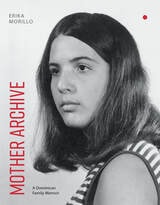
Mother Archive
A Dominican Family MemoirErika Morillo
University of Iowa Press, 2024
2024 NBCC Award Finalist, Autobiography
A family murder kept secret, the mysterious disappearance of her father, the systematic erasing of family photographs, a turbulent relationship with her mother, layers of trauma and abuse. In Mother Archive, Erika Morillo reconciles these demons of her past by searching for and seeking out the roots of her family. Intertwining memories with archival family photographs, news clippings, film stills, and artistic images, Morillo revisits her childhood growing up in the Dominican Republic, a place and time riddled with a history of violence and a tradition of erasure.
Spanning three generations across three different countries, this memoir works as a map in which the author traces incidents in her family history to help her understand herself and her own experience as a mother.
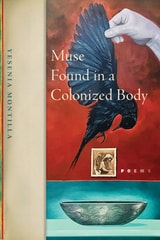
Muse Found in a Colonized Body
Yesenia Montilla
Four Way Books, 2022
In the book's eponymous poem, Yesenia Montilla writes, “How do you not love yourself when you / constantly survive your undoing just by being precious?" Muse Found in a Colonized Body answers this rhetorical question by populating itself with poems that range far and wide in content — observing pop culture, interrogating history, resisting contemporary injustice — but that share the spinal cord of unflinching love. As Rachel Eliza Griffiths notes, Montilla’s “powers orbit and intuit the lives of Philando Castile, Captain America, Christian Cooper, Karl Marx, Ahmaud Arbery, Eartha Kitt, and many more while stitching our wounded identities, memories, and histories in defiant poems of revision and joyous reclamation.” The vertebral odes of this collection at turns uplift desire, affirm life, celebrate protest, and condemn the violent greed of imperial usurpation that has produced the U.S. as we know it. Both in its criticism and its admiration, Muse Found in a Colonized Body calls upon its readers to rise to the occasion of these lyrics’ profound care.
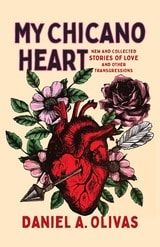
My Chicano Heart
New and Collected Stories of Love and Other TransgressionsDaniel A. Olivas
University of Nevada Press, 2024
Each story is drawn from Olivas’s nearly twenty-five years of experience writing fiction deeply steeped in Chicano and Mexican culture. Some of the stories are fanciful and full of magic, while others are more realistic, and still others border on noir. All touch upon that most ephemeral and confounding of human emotions: love in all its wondrous forms.
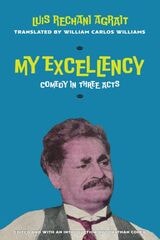
My Excellency
Comedy in Three ActsLuis Rechani Agrait
Swan Isle Press, 2025
William Carlos Williams’s passion for his matrilineal Puerto Rican roots led him to visit Puerto Rico for the first time in 1941. There at a writers’ conference, he befriended the playwright Luis Rechani Agrait, who gave him his play Mi señoría, staged to acclaim the previous year.
My Excellency, as Williams calls the play in his translation, is a political farce set in an “imaginary country” that resembles Puerto Rico during the Great Depression, with its high unemployment and labor unrest. The play focuses on the plight of an idealistic but naive man, Buenaventura Padilla, in a completely corrupt political system. Through an unscrupulous election, he becomes the nation’s leader.
The play is successful as a satire largely because of Buenaventura’s hilarious language—recreated by Williams—with its pompous style combined with stunning malapropisms and clownish errors in history and grammar. The play’s very title is a laughable malapropism. My Excellency shows the corrupting power of success and the tragic flaw of materialism. Driving the comedy in Williams’s translation is his firm command of the play’s dialogue interwoven with popular idioms in which the charm of pure nonsense abounds. This edition is Luis Rechani Agrait’s debut as a playwright in English.
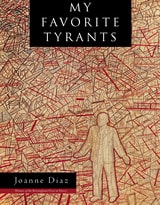
My Favorite Tyrants
Joanne Diaz
University of Wisconsin Press, 2014
Winner, Midwest Book Award for Poetry, Midwest Independent Publishers Association
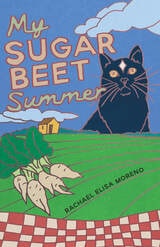
My Sugar Beet Summer
Rachael Elisa Moreno
Michigan State University Press, 2026
In 1928, nine-year-old Teresa leaves everything she knows in San Antonio—including her beloved cat Diamante—and boards a train bound for Michigan, where her parents have found work in the vast sugar beet fields of Saginaw. The long train north is a source of fascination, but stepping into Michigan feels like entering a different world—the cold wind, the strange houses, and the long days helping on the farm instead of going to school. Teresa cares for her little sisters while her parents tend to the sugar beets. She learns to navigate a life shaped by hard work, migration, and constant change. After the harvest, a new season begins, and the whole family must pack up and make the long trip back to Texas, to plant new roots. Based on the stories the author’s grandparents told her about their lives as Texas migrants in Michigan’s Thumb, My Sugar Beet Summer pulls the reader into Teresa and her family’s life in a new land, on a sugar beet farm on the eve of the Great Depression.
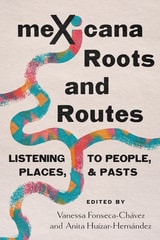
meXicana Roots and Routes
Listening to People, Places, and PastsEdited by Vanessa Fonseca-Chávez and Anita Huízar-Hernández
University of Arizona Press, 2025
In this collection, established and emerging scholars draw upon their rootedness in the U.S. Southwest and U.S.-Mexico borderlands. The meXicana contributors use personal and scholarly inquiry to discuss what it means to cultivate spaces of belonging, navigate language policies, and explore and excavate silences in various spaces, among other important themes.
From the recruitment of Latinas for the U.S. Benito Juárez Squadron in World War II, to the early twentieth-century development of bilingual education in Arizona, to new and insightful analyses of Bracero Program participants and their families, the book details little-known oral histories and archival material to present a rich account of lives along the border with emphasis on women and the working class.
As the inaugural publication of the Arizona Crossroads series, readers will find Arizona featured as a central node of borderlands roots and routes. Each section of the book intentionally centers Arizona within broader comparative and cross-state dialogues, alongside chapters that reflect regional concerns in other southwestern states, including Texas, California, Colorado, and New Mexico. Throughout, this volume highlights the ways in which personal experience, community building, and scholarly perspectives can provide a powerful space for community voices.
Contributors
Vanessa Fonseca-Chávez
Lillian Gorman
Gloria Holguín Cuádraz
Anita Huízar-Hernández
Christine Marin
Valerie A. Martínez
Alina R. Méndez
Karen R. Roybal
Yvette J. Saavedra
Liliana Toledo-Guzmán
Andrea Tovar