Results by title
5448 books match the query 'History and criticism' and 307 start with m
MAKING THE “AMERICA OF ART”
Cultural Nationalism and Nineteenth-Century Women WritersNaomi Z. Sofer
The Ohio State University Press, 2005
By the end of the 19th century it had become possible for American women to identify themselves as serious Artists. This was a relatively new phenomenon, one that became possible only after American women writers had dismantled the conceptual frameworks that had authorized their artistic production since the early days of the Republic.
Making the “America of Art” demonstrates that beginning in the 1850s, women writers challenged the terms of the Scottish Common Sense philosophy, which had made artistic endeavors acceptable in the new Republic by subordinating aesthetic motivation to moral and educational goals. Harriet Beecher Stowe and Augusta Jane Evans drew on Ruskin to argue for the creation of a religiously based national aesthetic. In the postbellum years Louisa May Alcott, Rebecca Harding Davis, Elizabeth Stuart Phelps, and Constance Fenimore Woolson continued the process in a series of writings that revolved around three central areas of concern: the place of the popular in the realm of high art; the role of the genius; and the legacy of the Civil War.
Sofer significantly revises the history of 19th-century American women’s authorship by detailing the gradual process that produced women writers wholly identified with literary high culture at the century’s end. Sofer argues that, counter to conventional wisdom, American women writers produced a large body of theoretical writing on the central aesthetic questions of the day. Although the writers Sofer studies were finally unable to construct viable new models for women’s artistic production, their attempts to do so are an essential piece of American literary history.

MATTERS OF FACT
READING NONFICTION OVER THE EDGEDANIEL W. LEHMAN
The Ohio State University Press, 1998
MIDDLE PASSAGES AND THE HEALING PLACE OF HISTORY
MIGRATION AND IDENTITY IN BLACK WOMEN'S LITERATUREELIZABETH BROWN-GUILLORY
The Ohio State University Press, 2006
This volume reveals that black women across the globe share a common ground fraught with struggles, but the narratives bear out that these women are not easily divided and that they stand upon each other’s shoulders dispensing healing balms. Black women’s history and herstory commingle; the trauma that ensued when Africans were loaded onto ships in chains continues to haunt black women, and men, too, wherever they find themselves in this present moment of the Diaspora.
MUSE IN THE MACHINE
AMERICAN FICTION AND MASS PUBLICITYMARK CONROY
The Ohio State University Press, 2004
Macaronic Sermons
Bilingualism and Preaching in Late-Medieval EnglandSiegfried Wenzel
University of Michigan Press, 2010
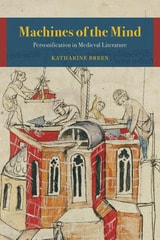
Machines of the Mind
Personification in Medieval LiteratureKatharine Breen
University of Chicago Press, 2021
In Machines of the Mind, Katharine Breen proposes that medieval personifications should be understood neither as failed novelistic characters nor as instruments of heavy-handed didacticism. She argues that personifications are instead powerful tools for thought that help us to remember and manipulate complex ideas, testing them against existing moral and political paradigms. Specifically, different types of medieval personification should be seen as corresponding to positions in the rich and nuanced medieval debate over universals. Breen identifies three different types of personification—Platonic, Aristotelian, and Prudentian—that gave medieval writers a surprisingly varied spectrum with which to paint their characters.
Through a series of new readings of major authors and works, from Plato to Piers Plowman, Breen illuminates how medieval personifications embody the full range of positions between philosophical realism and nominalism, varying according to the convictions of individual authors and the purposes of individual works. Recalling Gregory the Great’s reference to machinae mentis (machines of the mind), Breen demonstrates that medieval writers applied personification with utility and subtlety, employing methods of personification as tools that serve different functions. Machines of the Mind offers insight for medievalists working at the crossroads of religion, philosophy, and literature, as well as for scholars interested in literary character-building and gendered relationships among characters, readers, and texts beyond the Middle Ages.
Mad Heart Be Brave
Essays on the Poetry of Agha Shahid AliKazim Ali, Editor
University of Michigan Press, 2017
Mad Men, Mad World
Sex, Politics, Style, and the 1960sLauren M. E. Goodlad, Lilya Kaganovsky, and Robert A. Rushing, eds.
Duke University Press, 2013
In the introduction, the editors explore the show's popularity; its controversial representations of race, class, and gender; its powerful influence on aesthetics and style; and its unique use of period historicism and advertising as a way of speaking to our neoliberal moment. Mad Men, Mad World also includes an interview with Phil Abraham, an award-winning Mad Men director and cinematographer. Taken together, the essays demonstrate that understanding Mad Men means engaging the show not only as a reflection of the 1960s but also as a commentary on the present day.
Contributors. Michael Bérubé, Alexander Doty, Lauren M. E. Goodlad, Jim Hansen, Dianne Harris, Lynne Joyrich, Lilya Kaganovsky, Clarence Lang, Caroline Levine, Kent Ono, Dana Polan, Leslie Reagan, Mabel Rosenheck, Robert A. Rushing, Irene Small, Michael Szalay, Jeremy Varon
Mad to Be Saved
The Beats, the 50's, and FilmDavid Sterritt
Southern Illinois University Press, 1998
Film critic David Sterritt presents an interdisciplinary exploration of the Beat Generation, its intersections with main-stream and experimental film, and the interactions of all of these with American society and the culture of the 1950s. Sterritt balances the Beat countercultural goal of rebellion through both artistic creation and everyday behavior against the mainstream values of conformity and conservatism, growing worry over cold-war hostilities, and the "rat race" toward material success.
After an introductory overview of the Beat Generation, its history, its antecedents, and its influences, Sterritt shows the importance of "visual thinking" in the lives and works of major Beat authors, most notably Jack Kerouac, Allen Ginsberg, and William S. Burroughs. He turns to Mikhail Bakhtin's dialogic theory to portray the Beat writers-who were inspired by jazz and other liberating influences-as carnivalesque rebels against what they perceived as a rigid and stifling social order.
Showing the Beats as social critics, Sterritt looks at the work of 1950s photographers Robert Frank and William Klein; the attack against Beat culture in the pictures and prose of Life magazine; and the counterattack in Frank's film Pull My Daisy, featuring key Beat personalities. He further explores expressions of rebelliousness in film noir, the melodramas of director Douglas Sirk, and other Hollywood films.
Finally, Sterritt shows the changing attitudes toward the Beat sensibility in Beat-related Hollywood movies like A Bucket of Blood and The Beat Generation; television programs like Route 66 and The Many Loves of Dobie Gillis; nonstudio films like John Cassavetes's improvisational Shadows and Shirley Clarke's experimental The Connection; and radically avant-garde works by such doggedly independent screen artists as Stan Brakhage, Ron Rice, Bruce Connor, and Ken Jacobs, drawing connections between their achievements and the most subversive products of their Beat contemporaries.
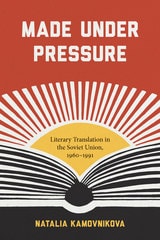
Made Under Pressure
Literary Translation in the Soviet Union, 1960–1991Natalia Kamovnikova
University of Massachusetts Press, 2019
Natalia Kamovnikova chronicles the literary translation process from the selection of foreign literary works to their translation, censorship, final approval, and publication. Interviews with Soviet translators of this era provide insight into how the creative work of translating and the practical work of publishing were undertaken within a politically restricted environment, and recall the bonds of community and collaboration that they developed.
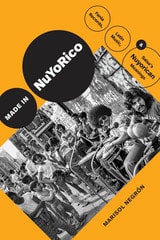
Made in NuYoRico
Fania Records, Latin Music, and Salsa’s Nuyorican MeaningsMarisol Negrón
Duke University Press, 2024
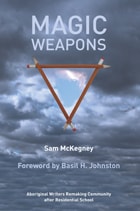
Magic Weapons
Aboriginal Writers Remaking Community after Residential SchoolSam McKegney
University of Manitoba Press, 2007
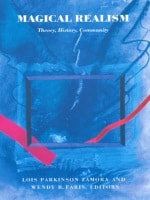
Magical Realism
Theory, History, CommunityLois Parkinson Zamora and Wendy B. Faris, eds.
Duke University Press, 1995
Presenting the first English translation of Franz Roh’s 1925 essay in which the term magical realism was coined, as well as Alejo Carpentier’s classic 1949 essay that introduced the concept of lo real maravilloso to the Americas, this anthology begins by tracing the foundations of magical realism from its origins in the art world to its current literary contexts. It offers a broad range of critical perspectives and theoretical approaches to this movement, as well as intensive analyses of various cultural traditions and individual texts from Eastern Europe, Asia, North America, Africa, the Caribbean, and Australia, in addition to those from Latin America. In situating magical realism within the expanse of literary and cultural history, this collection describes a mode of writing that has been a catalyst in the development of new regional literatures and a revitalizing force for more established narrative traditions—writing particularly alive in postcolonial contexts and a major component of postmodernist fiction.
Mail and Female
Epistolary Narrative and Desire in Ovid's HeroidesSara H. Lindheim
University of Wisconsin Press, 2003
Using feminist and psychoanalytic approaches to examine the "female voice" in the Heroides, Sara H. Lindheim closely reads these fictive letters in which the women seemingly tell their own stories. She points out that in Ovid’s verse epistles all the women represent themselves in a strikingly similar and disjointed fashion. Lindheim turns to Lacanian theory of desire to explain these curious and hauntingly repetitive representations of the heroines in the "female voice." Lindheim’s approach illuminates what these poems reveal about both masculine and feminine constructions of the feminine
Maimonides' "Guide of the Perplexed" in Translation
A History from the Thirteenth Century to the TwentiethEdited by Josef Stern, James T. Robinson, and Yonatan Shemesh
University of Chicago Press, 2019
A collection of essays by scholars from a range of disciplines, the book unfolds in two parts. The first traces the history of the translations of the Guide, from medieval to modern renditions. The second surveys its influence in translation on Latin scholastic, early modern, and contemporary Anglo-American philosophy, as well as its impact in translation on current scholarship. Interdisciplinary in approach, this book will be essential reading for philosophers, historians, and religious studies scholars alike.
Main Street and Empire
The Fictional Small Town in the Age of GlobalizationPoll, Ryan
Rutgers University Press, 2012
In Main Street and Empire, Ryan Poll addresses this need, arguing that the small town, as evoked by the image of “Main Street,” is not a relic of the past but rather a metaphorical screen upon which America’s “everyday” stories and subjects are projected on both a national and global scale.
Bringing together a broad selection of texts—from Thornton Wilder’s Our Town, Grace Metalious’s Peyton Place, and Peter Weir’s The Truman Show to the speeches of William McKinley, Ronald Reagan, Sarah Palin, and Barack Obama—Poll examines how the small town is used to imagine and reproduce the nation throughout the twentieth- and into the twenty-first century. He contends that the dominant small town, despite its innocent, nostalgic appearance, is central to the development of the U.S. empire and global capitalism.
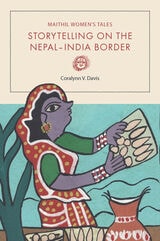
Maithil Women's Tales
Storytelling on the Nepal-India BorderCoralynn V. Davis
University of Illinois Press, 2014
In Maithil Women’s Tales, Coralynn V. Davis examines how these storytellers weave together their own life experiences--the hardships and the pleasures--with age-old themes. In so doing, Davis demonstrates, they harness folk traditions to grapple personally as well as collectively with social values, behavioral mores, relationships, and cosmological questions.
Each chapter includes stories and excerpts that reveal Maithil women’s gift for rich language, layered plots, and stunning allegory. In addition, Davis provides ethnographic and personal information that reveal the complexity of women’s own lives, and includes works painted by Maithil storytellers to illustrate their tales. The result is a fascinating study of being and becoming that will resonate for readers in women’s and Hindu studies, folklore, and anthropology.
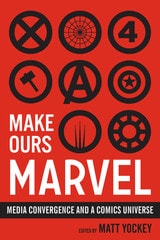
Make Ours Marvel
Media Convergence and a Comics UniverseEdited by Matt Yockey
University of Texas Press, 2017
The creation of the Fantastic Four effectively launched the Marvel Comics brand in 1961. Within ten years, the introduction (or reintroduction) of characters such as Spider-Man, the Hulk, Iron Man, Captain America, and the X-Men catapulted Marvel past its primary rival, DC Comics, for domination of the comic book market. Since the 2000s, the company’s iconic characters have leaped from page to screens with the creation of the Marvel Cinematic Universe, which includes everything from live-action film franchises of Iron Man and the Avengers to television and streaming media, including the critically acclaimed Netflix series Daredevil and Jessica Jones. Marvel, now owned by Disney, has clearly found the key to transmedia success.
Make Ours Marvel traces the rise of the Marvel brand and its transformation into a transmedia empire over the past fifty years. A dozen original essays range across topics such as how Marvel expanded the notion of an all-star team book with The Avengers, which provided a roadmap for the later films, to the company’s attempts to create lasting female characters and readerships, to its regular endeavors to reinvigorate its brand while still maintaining the stability that fans crave. Demonstrating that the secret to Marvel’s success comes from adeptly crossing media boundaries while inviting its audience to participate in creating Marvel’s narrative universe, this book shows why the company and its characters will continue to influence storytelling and transmedia empire building for the foreseeable future.
Making American Boys
Boyology and the Feral TaleKenneth B. Kidd
University of Minnesota Press, 2005

Making Americans
Children's Literature from 1930 to 1960Gary D. Schmidt
University of Iowa Press, 2013
Although some later critics have argued that the books published in this era offered a vision of a safe, secure, simple world without injustice or unhappy endings, Gary D. Schmidt shows that the progressive political agenda shared by many Americans who wrote, illustrated, published, and taught children’s books had a powerful effect. Authors like James Daugherty, Laura Ingalls Wilder, Lois Lenski, Ingri and Edgar Parin D’Aulaire, Virginia Lee Burton, Robert McCloskey, and many others addressed directly and indirectly the major social issues of a turbulent time: racism, immigration and assimilation, sexism, poverty, the Great Depression, World War II, the atomic bomb, and the threat of a global cold war.
The central concern that many children’s book authors and illustrators wrestled with was the meaning of America and democracy itself, especially the tension between individual freedoms and community ties. That process produced a flood of books focused on the American experience and intent on defining it in terms of progress toward inclusivity and social justice. Again and again, children’s books addressed racial discrimination and segregation, gender roles, class differences, the fate of Native Americans, immigration and assimilation, war, and the role of the United States in the world. Fiction and nonfiction for children urged them to see these issues as theirs to understand, and in some ways, theirs to resolve. Making Americans is a study of a time when the authors and illustrators of children’s books consciously set their eyes on national and international sights, with the hope of bringing the next generation into a sense of full citizenship.

Making Believe
Questions About Mennonites and ArtMagdalene Redekop
University of Manitoba Press, 2020
Making Conversation in Modernist Fiction
Elizabeth Alsop
The Ohio State University Press, 2019
If historically dialogue had been treated as a subordinate element in fiction—a tool for developing character or advancing plot—this book demonstrates that writers such as Henry James, Ernest Hemingway, James Joyce, William Faulkner, Virginia Woolf, and Gertrude Stein would increasingly emphasize it as a poetic structure in its own right. In this way, Alsop argues, modernist writers “make” conversation in radically new ways and for a diverse range of expressive and communicative ends. Over the course of five chapters that explore this previously overlooked avenue of modernist innovation, Making Conversation offers readers a radical new paradigm not only for understanding fictional talk but also for interpreting some of the most celebrated examples of early twentieth-century narrative.
Making Girls into Women
American Women's Writing and the Rise of Lesbian IdentityKathryn R. Kent
Duke University Press, 2003
Kent not only analyzes how texts represent queer erotics, but also theorizes how texts might produce them in readers. She describes the ways postbellum sentimental literature such as that written by Harriet Beecher Stowe, Louisa May Alcott, and Emma D. Kelley eroticizes, reacts against, and even, in its own efforts to shape girls’ selves, contributes to the production of queer female identifications and identities. Tracing how these identifications are engaged and critiqued in the early twentieth century, she considers works by Djuna Barnes, Gertrude Stein, Marianne Moore, and Elizabeth Bishop, as well as in the queer subject-forming effects of another modern invention, the Girl Scouts. Making Girls into Women ultimately reveals that modern lesbian identity marks an extension of, rather than a break from, nineteenth-century women’s culture.
Making History Move
Five Principles of the Historical FilmKim Nelson
Rutgers University Press, 2024
Making It Up Together
The Art of Collective Improvisation in Balinese Music and BeyondLeslie A. Tilley
University of Chicago Press, 2019
Through two contrasting Balinese case studies—of the reyong gong chime’s melodic norot practice and the interlocking drumming tradition kendang arja—Tilley proposes and tests analytical frameworks for examining collectively improvised performance. At the micro-level, Tilley’s analyses offer insight into the note-by-note decisions of improvising performers; at the macro-level, they illuminate larger musical, discursive, structural, and cultural factors shaping those decisions. This multi-tiered inquiry reveals that unpacking how performers play and imagine as a collective is crucial to understanding improvisation and demonstrates how music analysis can elucidate these complex musical and interactional relationships.
Highlighting connections with diverse genres from various music cultures, Tilley’s examinations of collective improvisation also suggest rich potential for cross-genre exploration. The surrounding discussions point to larger theories of communication and interaction, creativity and cognition that will be of interest to a range of readers—from ethnomusicologists and music theorists to cognitive psychologists, jazz studies scholars, and improvising performers. Setting new parameters for the study of improvisation, Making It Up Together opens up fresh possibilities for understanding the creative process, in music and beyond.
Making Men
Gender, Literary Authority, and Women’s Writing in Caribbean NarrativeBelinda Edmondson
Duke University Press, 1998
Discussing the canonical Caribbean narrative as it reflects national identity under the domination of English cultural authority, Belinda Edmondson focuses particularly on the pervasive influence of Victorian sensibilities in the structuring of twentieth-century national identity. She shows that issues of race and English constructions of masculinity not only are central to West Indian identity but also connect Caribbean authorship to the English literary tradition. This perspective on the origins of West Indian literary nationalism then informs Edmondson’s search for female subjectivity in current literature by West Indian women immigrants in America. Making Men compares the intellectual exile of men with the economic migration of women, linking the canonical male tradition to the writing of modern West Indian women and exploring how the latter write within and against the historical male paradigm in the continuing process of national definition.
With theoretical claims that invite new discourse on English, Caribbean, and American ideas of exile, migration, race, gender identity, and literary authority, Making Men will be informative reading for those involved with postcolonial theory, African American and women’s studies, and Caribbean literature.
Making Mexican Rock
Censorship, Journalism, and Popular Music after AvándaroAndrew J. Green
Vanderbilt University Press, 2024
Yet in light of the failures of successive democratically elected governments in Mexico, these histories are worth critically revisiting and updating. What stories about music censorship can be told after Mexico’s transition to multi-party democracy? Placing history and ethnography into dialogue, Making Mexican Rock explores historical and recent experiences of censorship and repression against popular music, focusing on the independent rock scene (or “escena independiente”) in Mexico City.
Informed by the so-called new censorship theory, ethnomusicologist Andrew J. Green challenges historical accounts that equate acts of censorship with state activity. The open-ended account of censorship assumed here helps us to understand, instead, how conceptions of censorship and expressive freedom transformed toward the end of single-party rule; how practices of policing live rock adapted to neoliberal securitization; and how histories of rock censorship have been invoked by those seeking to construct and protect emergent music scenes. Making Mexican Rock thus both decenters histories of music censorship from the state, and extends them into the country’s recent history.
Making Music Indigenous
Popular Music in the Peruvian AndesJoshua Tucker
University of Chicago Press, 2019
Making Sense in Life and Literature
Hans Ulrich Gumbrecht
University of Minnesota Press, 1992
“The translation of these essays by Gumbrecht on literary theory and history marks the appearance in English of one of Europe’s most learned, productive, and inventive scholars. Their range is extraordinary. They show that Gumbrecht is not only a sophisticated theorist and historian of literature, but a master practitioner of cultural studies.” --Hayden White, University of California, Santa Cruz
Making Stars
Biography and Celebrity in Eighteenth-Century BritainNora Nachumi
University of Delaware Press, 2022
Making Words Matter
The Agency of Colonial and Postcolonial LiteratureAmbreen Hai
Ohio University Press, 2009
Why should Salman Rushdie describe his truth telling as an act of swallowing impure “haram” flesh from which the blood has not been drained? Why should Rudyard Kipling cast Kim, the imperial child–agent, as a body/text written upon and damaged by empire? Why should E. M. Forster evoke through the Indian landscape the otherwise unspeakable racial or homosexual body in his writing? In Making Words Matter: The Agency of Colonial and Postcolonial Literature, Ambreen Hai argues that these writers focus self–reflectively on the unstable capacity of words to have material effects and to be censored, and that this central concern with literary agency is embedded in, indeed definitive of, colonial and postcolonial literature.
Making Words Matter contends that the figure of the human body is central to the self–imagining of the text in the world because the body uniquely concretizes three dimensions of agency: it is at once the site of autonomy, instrumentality, and subjection. Hai’s work exemplifies a new trend in postcolonial studies: to combine aesthetics and politics and to offer a historically and theoretically informed mode of interpretation that is sophisticated, lucid, and accessible.
This is the first study to identify and examine the rich convergence of issues and to chart their dynamic. Hai opens up the field of postcolonial literary studies to fresh questions, engaging knowledgeably with earlier scholarship and drawing on interdisciplinary theory to read both well known and lesser–known texts in a new light. It should be of interest internationally to students and scholars in a variety of fields including British, Victorian, modernist, colonial, or postcolonial literary studies, queer or cultural studies, South Asian studies, history, and anthropology.
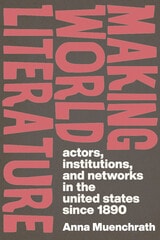
Making World Literature
Actors, Institutions, and Networks in the United States since 1890Anna Muenchrath
University of Massachusetts Press, 2024
From universities to governments, the Big Five publishers to Amazon, the influence of institutions abounds in US publishing. A diverse array of books from around the globe have been made into world literature in the US, selected by editors, publishers, and bureaucrats, produced by non-profits and for-profit presses of all sizes, and distributed through schools, publishing programs, and bookstores. The resulting world literary canon is the product of complex negotiations between individual preferences and institutional mandates, as well as economic, cultural, and pedagogical logics. While book publishing has fallen increasingly under the sway of global capitalism, yet the literary world remains made up of a series of individuals making choices about whom to fund, teach, translate, edit, and publish. The “world” of world literature, Anna Muenchrath argues, is a heterogeneous network of people whose circulation of literature is necessarily imbricated in the market economy, but whose selections might resist that economy and open new literary futures. Through archival research and close readings, this book considers what those participating are trying to do in circulating a text, and what communities they are helping to form or strengthen.
Making World Literature posits that network theory can effectively model the agency of actors and institutions in the literary field, making visible both the long-term accrual of power, as well as the choices of authors, translators, editors, and readers who do not simply replicate the values of a global literary marketplace, but divert, question, and undermine them. Muenchrath closely examines the paratexts and archival documents surrounding moments of global circulation in and through institutions like US world literature anthologies, the Council of Books in Wartime, the Iowa Writer’s Workshop, Oprah’s Book Club, and Amazon’s translation imprint. The granularity of these case studies reveals the increasingly limited agency of the individual in the global literary field, demonstrating how such players are important actors, and how their choices open up further options for later actors seeking to take texts down new paths toward or after publication.
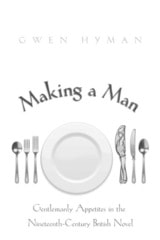
Making a Man
Gentlemanly Appetites in the Nineteenth Century British NovelGwen Hyman
Ohio University Press, 2009
The gentleman, Making a Man argues, is a dangerous alimental force. Threatened with placelessness, he seeks to locate and mark himself through his feasting and fasting. But in doing so, he inevitably threatens to starve, to subsume, to swallow the community around him. The gentleman is at once fundamental and fundamentally threatening to the health of the nation: his alimental monstrousness constitutes the nightmare of the period’s striving, anxious, alimentally fraught middle class.
Making a Man makes use of food history and theory, literary criticism, anthropology, gender theory, economics, and social criticism to read gentlemanly consumers from Mr. Woodhouse, the gruel-eater in Jane Austen’s Emma, through the vampire and the men who hunt him in Bram Stoker’s Dracula. Hyman argues that appetite is a crucial means of casting light on the elusive identity of the gentleman, a figure who is the embodiment of power and yet is hardly embodied in Victorian literature.
Making a Spectacle
Feminist Essays on Contemporary Women's TheatreEdited and with an Introduction by Lynda Hart
University of Michigan Press, 1988
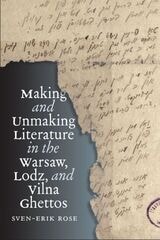
Making and Unmaking Literature in the Warsaw, Lodz, and Vilna Ghettos
Sven-Erik Rose
Brandeis University Press, 2025
A study of literature written by Jewish authors while interned in Nazi ghettos emphasizes how authors processed their horrific experiences through poetry and prose.
Published in Association with the United States Holocaust Memorial Museum
This is the first study devoted to how little known but essential authors grappled with the destitution of ghetto existence by writing within, at the limits of, and against an array of literary scenarios, tropes, plot lines, and generic conventions, including those of nature lyric, modernist interior monologue, the realist social novel, the detective story, and the gothic horror tale. Contending with starvation, disease, desperate housing conditions and the looming threat of being murdered, inhabitants of ghettos in Poland nonetheless made them sites of rich Jewish cultural production. Rose’s readings of these literary works reveal how authors asserted their humanity by insisting on writing works of literature. In such radically dehumanizing circumstances, however, their recourse to established literary genres was not naive. Rather, ghetto authors brilliantly meditated on the grotesque incongruities between established literary models and the extreme conditions of ghetto existence.
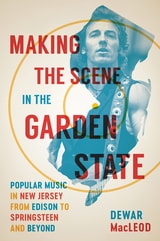
Making the Scene in the Garden State
Popular Music in New Jersey from Edison to Springsteen and BeyondDewar MacLeod
Rutgers University Press, 2020
Maladies of the Will
The American Novel and the Modernity ProblemJennifer L. Fleissner
University of Chicago Press, 2022
What if the modern person were defined not by reason or sentiment, as Enlightenment thinkers hoped, but by will? Western modernity rests on the ideal of the autonomous subject, charting a path toward self-determination. Yet novelists have portrayed the will as prone to insufficiency or excess—from indecision to obsession, wild impulse to melancholic inertia. Jennifer Fleissner’s ambitious book shows how the novel’s attention to the will’s maladies enables an ongoing interrogation of modern premises from within.
Maladies of the Will reveals the nineteenth-century American novel’s relation to a wide-ranging philosophical tradition, highly relevant to our own tumultuous present. In works from Moby-Dick and The Scarlet Letter to Elizabeth Stoddard’s The Morgesons and Charles W. Chesnutt’s The Marrow of Tradition, the will’s grandeur and its perversity emerge as it alternately aligns itself with and pits itself against a bigger Will—whether of God, the state, society, history, or life itself. Today, when invocations of autonomy appear beside the medicalization of many behaviors, and democracy’s tenet of popular will has come into doubt, Maladies of the Will provides a map to how we got here, and how we might think these vital dilemmas anew.
Male Call
Becoming Jack LondonJonathan Auerbach
Duke University Press, 1996
Jonathan Auerbach shows that London’s personal identity was not a basis of his literary success, but rather a consequence of it. Unlike previous studies of London that are driven by the author’s biography, Male Call examines how London carefully invented a trademark “self” in order to gain access to a rapidly expanding popular magazine and book market that craved authenticity, celebrity, power, and personality. Auerbach demonstrates that only one fact of London’s life truly shaped his art: his passionate desire to become a successful author. Whether imagining himself in stories and novels as a white man on trail in the Yukon, a sled dog, a tramp, or a professor; or engaging questions of manhood and mastery in terms of work, race, politics, class, or sexuality, London created a public persona for the purpose of exploiting the conventions of the publishing world and marketplace.
Revising critical commonplaces about both Jack London’s work and the meaning of “nature” within literary naturalism and turn-of-the-century ideologies of masculinity, Auerbach’s analysis intriguingly complicates our view of London and sheds light on our own postmodern preoccupation with celebrity. Male Call will attract readers with an interest in American studies, American literature, gender studies, and cultural studies.
Male Sexuality under Surveillance
Office In American LiteratureGraham Thompson
University of Iowa Press, 2003
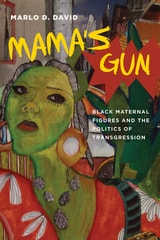
Mama's Gun
Black Maternal Figures and the Politics of TransgressionMarlo D. David
The Ohio State University Press, 2016
Taking inspiration from African American fiction, historical accounts of black life, Afrofuturism, and black popular culture in music and on screen, David turns her attention to Sapphire’s Push, Octavia Butler’s Dawn, and Suzan-Lori Parks’s Getting Mother’s Body as well as the performance art of Erykah Badu and the films of Tyler Perry. She draws out the implications of black maternal figures in these texts who balk at tradition and are far from “ideal.” David’s study shows how representations of blackness are deeply embedded in the neoliberal language of contemporary American politics and how black writers and performers resist such mainstream ideologies with their own transgressive black maternal figures.
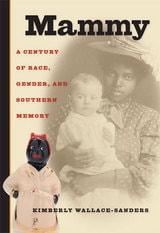
Mammy
A Century of Race, Gender, and Southern MemoryKimberly Wallace-Sanders
University of Michigan Press, 2008
---Choice
"In this insightful analysis of representations of mammy, Wallace-Sanders skillfully illustrates how this core icon of Black womanhood has figured prominently in upholding hierarchies of race, gender, and class in the United States. Far from being a timeless, natural, benign image of domesticity, the idealized mammy figure was repeatedly reworked to accommodate varying configurations of racial rule. No one reading this book will be able to see Gone with the Wind in the same way ever again."
---Patricia Hill Collins, University of Maryland
"Kimberly Wallace-Sanders' interdisciplinary approach is first-rate. This expansive and engaging book should appeal to students and scholars in American studies, African American studies, and women's studies."
---Thadious Davis, The University of Pennsylvania
Her cheerful smile and bright eyes gaze out from the covers of old cookbooks, song sheets, syrup bottles, salt and pepper shakers, and cookie jars, and she has long been a prominent figure in fiction, film, television, and folk art. She is Mammy, a figure whose provocative hold on the American psyche has persisted since before the Civil War.
But who is Mammy, and where did she come from? Her large, dark body and her round smiling face tower over our imaginations to such an extent that more accurate representations of African American women wither in her shadow. Mammy's stereotypical attributes---a sonorous and soothing voice, raucous laugh, infinite patience, self-deprecating wit, and implicit acceptance of her own inferiority and her devotion to white children---all point to a long-lasting and troubled confluence of racism, sexism, and southern nostalgia.
This groundbreaking book traces the mammy figure and what it has symbolized at various historical moments that are linked to phases in America's racial consciousness. The author shows how representations of Mammy have loomed over the American literary and cultural imagination, an influence so pervasive that only a comprehensive and integrated approach of this kind can do it justice.
The book's many illustrations trace representations of the mammy figure from the nineteenth century to the present, as she has been depicted in advertising, book illustrations, kitchen figurines, and dolls. The author also surveys the rich and previously unmined history of the responses of African American artists to the black mammy stereotype, including contemporary reframings by artists Betye Saar, Michael Ray Charles, and Joyce Scott.
Kimberly Wallace-Sanders is Associate Professor of the Graduate Institute of Liberal Arts and Women's Studies at Emory University. She is editor of Skin Deep, Spirit Strong: The Black Female Body in American Culture.
Mande Music
Traditional and Modern Music of the Maninka and Mandinka of Western AfricaEric Charry
University of Chicago Press, 2000
Mandelstam, Blok, and the Boundaries of Mythopoetic Symbolism
Stuart Goldberg
The Ohio State University Press, 2011
“Mandelstam had no teacher,” marveled Anna Akhmatova, reflecting on his early maturity and singularity. But Mandelstam himself spoke of the need and even duty to study a poet’s literary roots. So how did this consummately complex, compelling, multi-resonant poet navigate and exploit the burden of the Russian Symbolist movement from which he emerged? How did this process change and augment his poetry?

Manly Love
Romantic Friendship in American FictionAxel Nissen
University of Chicago Press, 2009
The modern idea of Victorians is that they were emotionless prudes, imprisoned by sexual repression and suffocating social constraints; they expressed love and affection only within the bounds of matrimony—if at all. And yet, a wealth of evidence contradicting this idea has been hiding in plain sight for close to a century. In Manly Love, Axel Nissen turns to the novels and short stories of Victorian America to uncover the widely overlooked phenomenon of passionate friendships between men.
Nissen’s examination of the literature of the period brings to light a forgotten genre: the fiction of romantic friendship. Delving into works by Mark Twain, Henry James, William Dean Howells, and others, Nissen identifies the genre’s unique features and explores the connections between romantic friendships in literature and in real life. Situating love between men at the heart of Victorian culture, Nissen radically alters our understanding of the American literary canon. And with its deep insights into the emotional and intellectual life of the period, Manly Love also offers a fresh perspective on nineteenth-century America’s attitudes toward love, friendship, marriage, and sex.
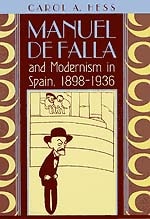
Manuel de Falla and Modernism in Spain, 1898-1936
Carol A. Hess
University of Chicago Press, 2001
Many Gods and Many Voices
The Role of the Prophet in English and American ModernismLouis L. Martz
University of Missouri Press, 1998
In Many Gods and Many Voices distinguished scholar Louis L. Martz addresses works by Ezra Pound, T. S. Eliot, William Carlos Williams, H. D., and D. H. Lawrence, with brief treatment of the relation of Pound's Cantos to Joyce's Ulysses. In a graceful, lucid style, Martz argues that a prophetic tradition is represented in the Cantos, The Waste Land, Paterson, and H. D.'s Trilogy and Helen in Egypt, along with Lawrence's Plumed Serpent and the second version of Lady Chatterley's Lover. Pound's often- cited view that an epic is a poem that "includes history" does not define epic alone, for the books of biblical prophecy also contain history: the history of Israel's misdeeds and continuous redemption.
On the other hand, Martz suggests that the term prophecy should not be limited to works that foretell the future, arguing that the biblical prophet is concerned primarily with the present. The prophet is a reformer, a denouncer of evil, as well as a seer of possible redemption. He hears "voices" and transmits the message of those voices to his people, in the hope of moving them away from wickedness and toward the ways of truth. According to Martz, such was the mission that inspired Walt Whitman and that Whitman passed on to Pound, Eliot, Williams, and Lawrence. (H. D. found her own sources of inspiration in Greek and Egyptian lore.)
Martz's premise is that biblical prophecy, with its mingling of poetry and prose, its abrupt shifts from violent denunciation to exalted poetry, provides a precedent for the texture of these modernist works that will help readers to appreciate the mingling of "voices" and the complex mixture of elements. Examining their interrelationships and their common themes, Many Gods and Many Voices offers fresh insights into these modern writers.

Manyfaced Glass
Tennyson'S Dramatic MonologuesLinda K. Hughes
Ohio University Press, 1987
The hazy settings and amorphous auditors of Tennyson’s dramatic monologues are often contrasted—at Tennyson’s expense—with Browning’s more vivid, concrete realizations. Hughes argues that Tennyson’s achievements in the genre are, in fact, considerable, that his influence can be traced in such major figures as T. S. Eliot, and that the monologue occupies a far more central position in Tennyson’s poetic achievement than has hitherto been acknowledged.
Hughes’ study challenges the traditional view of Tennyson’s inferior achievement, and her account of the elements and operation of the dramatic monologue, especially as demonstrated by three of its most important practitioners, will be of interest to all those concerned with the monologue as a poetic mode.
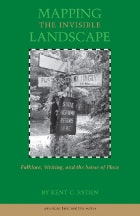
Mapping the Invisible Landscape
Folklore, Writing, and the Sense of PlaceKent C. Ryden
University of Iowa Press, 1993
Any landscape has an unseen component: a subjective component of experience, memory, and narrative which people familiar with the place understand to be an integral part of its geography but which outsiders may not suspect the existence of—unless they listen and read carefully. This invisible landscape is make visible though stories, and these stories are the focus of this engrossing book.
Traveling across the invisible landscape in which we imaginatively dwell, Kent Ryden—himself a most careful listener and reader—asks the following questions. What categories of meaning do we read into our surroundings? What forms of expression serve as the most reliable maps to understanding those meanings? Our sense of any place, he argues, consists of a deeply ingrained experiential knowledge of its physical makeup; an awareness of its communal and personal history; a sense of our identity as being inextricably bound up with its events and ways of life; and an emotional reaction, positive or negative, to its meanings and memories.
Ryden demonstrates that both folk and literary narratives about place bear a striking thematic and stylistic resemblance. Accordingly, Mapping the Invisible Landscape examines both kinds of narratives. For his oral materials, Ryden provides an in-depth analysis of narratives collected in the Coeur d'Alene mining district in the Idaho panhandle; for his consideration of written works, he explores the “essay of place,” the personal essay which takes as its subject a particular place and a writer's relationship to that place.
Drawing on methods and materials from geography, folklore, and literature, Mapping the Invisible Landscape offers a broadly interdisciplinary analysis of the way we situate ourselves imaginatively in the landscape, the way we inscribe its surface with stories. Written in an extremely engaging style, this book will lead its readers to an awareness of the vital role that a sense of place plays in the formation of local cultures, to an understanding of the many-layered ways in which place interacts with individual lives, and to renewed appreciation of the places in their own lives and landscapes.

Marginal Sights
Staging the Chinese in AmericaJames S. Moy
University of Iowa Press, 1994
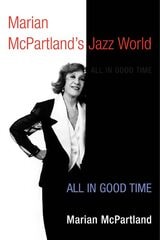
Marian McPartland's Jazz World
All in Good TimeMarian McPartland
University of Illinois Press, 1987
In this collection of musical portraits, jazz pianist and radio host Marian McPartland pays tribute to such beloved and legendary figures as Benny Goodman, Bill Evans, Joe Morello, Paul Desmond, Alec Wilder, Mary Lou Williams, and others. McPartland’s reminiscences and anecdotes about these jazz greats are informed by her encyclopedic knowledge of their music, making this richly detailed collection an important addition to the literature of jazz.
In a preface to this edition, McPartland extends her commentary to include details of her long-running National Public Radio show “Marian McPartland’s Piano Jazz” and memories of her late husband, famed Chicago trumpeter Jimmy McPartland.