Results by title
405 books match the query 'Human Geography' and 14 start with m
Make Prayers to the Raven
A Koyukon View of the Northern ForestRichard K. Nelson
University of Chicago Press, 1986
A powerful account of the deep connection between the Koyukon people of western Alaska and the natural world that sustains them
A blending of ethnography, personal reflections, and natural history, Make Prayers to the Raven is a moving account of the Koyukon people of western Alaska, who follow a traditional lifeway of hunting, trapping, and fishing in remote villages scattered across the boreal forest. Intimacy with nature is the foundation of their existence, and they have accumulated a masterly knowledge of their environment. The Koyukon hunter moves through a watchful forest, kills with humility and respect, and treats his catch as a being filled with power.
In Make Prayers to the Raven, Nelson describes, from a Koyukon point of view, , elements of the earth, sky, and atmosphere of the boreal forest, as well as the significant plants and animals. He retells their origins in the dreamlike Distant Time, their spirit powers, their behavior and personality, and the rules dictating their proper treatment by men and women. Make Prayers to the Raven leads the reader to an appreciation of the power and substantiality of Koyukon beliefs, and it serves the Koyukon people themselves by educating others about their way of life and by providing the Koyukon with a means of passing on traditional knowledge to their children.

Making Space for Empire
Colonial Elites, Whiteness, and the Planning of Modern Puerto RicoJoaquin Villanueva
Duke University Press, 2027
Making a Scene
Urban Landscapes, Gentrification, and Social Movements in SwedenKimberly A. Creasap
Temple University Press, 2022
In the three largest cities in Sweden, social movement “scenes”—networks of social movement actors and the places they inhabit—challenge threats such as gentrification. The geography of the built environment influences their ability to lay claim to urban space and to local political processes. In Making a Scene, Kimberly Creasap emphasizes that it is the centrality, concentration, and visibility of these scenes that make them most effective. Whereas some scenes become embedded as part of everyday life—as in Malmö—in contrast, scenes in Göteborg and Stockholm often fail to become part of the fabric of urban neighborhoods.
Creasap investigates key spaces for scenes, from abandoned industrial areas and punk clubs to street festivals, bookstores, and social centers, to show how activists create sites and develop structures of resistance that are anti-capitalist, anti-fascist, anti-gentrification, queer, and feminist. She also charts the relationship between scenes and city spaces to show these autonomous social movements create their own cultural landscapes. Making a Scene encourages critical thinking about spatiality and place in the sociology of social movements and the role of social movements as important actors in urban development.
Making the Heartland Quilt
A Geographical History of Settlement and Migration in Early-Nineteenth-Century IllinoisDouglas K. Meyer
Southern Illinois University Press, 2000
In Making the Heartland Quilt, Douglas K. Meyer reconstructs the settlement patterns of thirty-three immigrant groups and confirms the emergence of discrete culture regions and regional way stations. Meyer argues that midcontinental Illinois symbolizes a historic test strip of the diverse population origins that unfolded during the Great Migration. Basing his research on the 1850 U.S. manuscript schedules, Meyer dissects the geographical configurations of twenty-three native and ten foreign-born adult male immigrant groups who peopled Illinois. His historical geographical approach leads to the comprehension of a new and clearer map of settlement and migration history in the state.
Meyer finds that both cohesive and mixed immigrant settlements were established. Balkan-like immigrant enclaves or islands were interwoven into evolving local, regional, and national settlement networks. The midcontinental location of Illinois, its water and land linkages, and its lengthy north-south axis enhanced cultural diversity. The barrier effect of Lake Michigan contributed to the convergence and mixing of immigrants. Thus, Meyer demonstrates, Illinois epitomizes midwestern dichotomies: northern versus southern; native-born versus foreign-born; rural versus urban; and agricultural versus manufacturing.
Malaysia's Original People
Past, Present and Future of the Orang AsliEdited by Kirk Endicott
National University of Singapore Press, 2015
The chapters in the present volume provide a comprehensive survey of current understandings of Malaysia’s Orang Asli communities, covering their origins and history, cultural similarities and differences, and they ways they are responding to the challenges posed by a rapidly changing world. The authors, a distinguished group of Malaysian (including Orang Asli) and international scholars with expertise in anthropology, archaeology, biology, education, therapy, geography and law, also show the importance of Orang Asli studies for the anthropological understanding of small-scale indigenous societies in general.
Managing the Infosphere
Governance, Technology, and Cultural Practice in MotionStephen D. McDowell, Philip E. Steinberg and Tami K. Tomasello
Temple University Press, 2007
The authors argue that the roles of these systems in cyberspace cannot be fully understood unless they are seen as mutually constituting each other in specific historical structures, institutions, and practices. With vision and insight, the authors look beyond the Internet to examine the entire networked world, from cell phones and satellites to global tourism and business travel.
Mapping Crisis
Participation, Datafication and Humanitarianism in the Age of Digital MappingEdited by Doug Specht
University of London Press, 2020
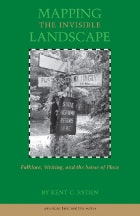
Mapping the Invisible Landscape
Folklore, Writing, and the Sense of PlaceKent C. Ryden
University of Iowa Press, 1993
Any landscape has an unseen component: a subjective component of experience, memory, and narrative which people familiar with the place understand to be an integral part of its geography but which outsiders may not suspect the existence of—unless they listen and read carefully. This invisible landscape is make visible though stories, and these stories are the focus of this engrossing book.
Traveling across the invisible landscape in which we imaginatively dwell, Kent Ryden—himself a most careful listener and reader—asks the following questions. What categories of meaning do we read into our surroundings? What forms of expression serve as the most reliable maps to understanding those meanings? Our sense of any place, he argues, consists of a deeply ingrained experiential knowledge of its physical makeup; an awareness of its communal and personal history; a sense of our identity as being inextricably bound up with its events and ways of life; and an emotional reaction, positive or negative, to its meanings and memories.
Ryden demonstrates that both folk and literary narratives about place bear a striking thematic and stylistic resemblance. Accordingly, Mapping the Invisible Landscape examines both kinds of narratives. For his oral materials, Ryden provides an in-depth analysis of narratives collected in the Coeur d'Alene mining district in the Idaho panhandle; for his consideration of written works, he explores the “essay of place,” the personal essay which takes as its subject a particular place and a writer's relationship to that place.
Drawing on methods and materials from geography, folklore, and literature, Mapping the Invisible Landscape offers a broadly interdisciplinary analysis of the way we situate ourselves imaginatively in the landscape, the way we inscribe its surface with stories. Written in an extremely engaging style, this book will lead its readers to an awareness of the vital role that a sense of place plays in the formation of local cultures, to an understanding of the many-layered ways in which place interacts with individual lives, and to renewed appreciation of the places in their own lives and landscapes.
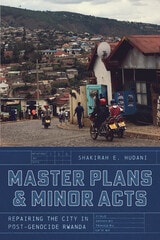
Master Plans and Minor Acts
Repairing the City in Post-Genocide RwandaShakirah E. Hudani
University of Chicago Press, 2024
Master Plans and Minor Acts examines a “material politics of repair” in post-genocide Rwanda, where in a country saturated with deep historical memory, spatial master planning aims to drastically redesign urban spaces. How is the post-conflict city reconstituted through the work of such planning, and with what effects for material repair and social conciliation?
Through extended ethnographic and qualitative research in Rwanda in the decades after the genocide of 1994, this book questions how repair after conflict is realized amidst large-scale urban transformation. Bridging African studies, urban studies, and human geography in its scope, this work ties Rwanda’s transformation to contexts of urban change in other post-conflict spaces, bringing to the fore critical questions about the ethics of planning in such complex geographies.
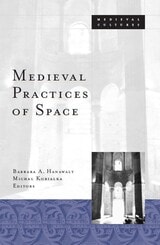
Medieval Practices Of Space
Barbara A. Hanawalt
University of Minnesota Press, 2000
Interprets space and place in the medieval era.
Interprets space and place in the medieval era.
A glance at medieval maps tells us that cartographers of the Middle Ages divided space differently than we do today. In the great mappae mundi, for instance, Jerusalem takes center stage, with an image of the crucified Christ separating one place from another. The architects of medieval cathedrals manipulated space to clarify the roles and status of all who entered. Even in the most everyday context, space was allotted according to gender and class and was freighted with infinitely subtle meanings. The contributors to this volume cross disciplinary and theoretical boundaries to read the words, metaphors, images, signs, poetic illusions, and identities with which medieval men and women used space and place to add meaning to the world.Contributors: Kathleen Biddick, U of Notre Dame; Charles Burroughs, SUNY, Binghamton; Michael Camille, U of Chicago; Tom Conley, Harvard U; Donnalee Dox, U of Arizona; Jody Enders, U of California, Santa Barbara; Valerie K. J. Flint, U of Hull, UK; Andrzej Piotrowski, U of Minnesota; Daniel Lord Smail, Fordham U.Barbara A. Hanawalt is King George III Professor of British History at Ohio State University. Michal Kobialka is associate professor of theatre at University of Minnesota.
Mediterranean Security at the Cross Roads, Volume 8
Nikolaos Stavrou and Raymond C. Ewing
Duke University Press, 0
The potential role of NATO is controversial but crucial to the future of the Mediterranean. Some contributors suggest that the southward expansion of NATO could be an important first step toward stability, while others argue that the Mediterranean should be treated as an integrated geostrategic region, with a central place in Western security considerations.
Highlighting this issue is a foreword by former U.S. Secretary of State George P. Schultz, and a piece focusing on NATO in the Mediterranean by Javier Solana, the Secretary General of NATO. Other essays discuss the comparative experience of UNPROFOR and IFOR in the former Yugoslavia; the role of Italy in the future of the Mediterranean; the economic challenges facing the Middle East; and the role of Israel and its relationship to its neighbors. Mediterranean Security at the Crossroads is one of the first in-depth looks at this region from a strictly post—Cold War perspective.
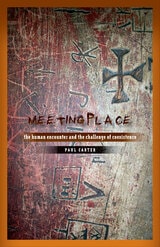
Meeting Place
The Human Encounter and the Challenge of CoexistencePaul Carter
University of Minnesota Press, 2013
In this remarkable and often dazzling book, Paul Carter explores the conditions for sociability in a globalized future. He argues that we make many assumptions about communication but overlook barriers to understanding between strangers as well as the importance of improvisation in overcoming these obstacles to meeting. While disciplines such as sociology, legal studies, psychology, political theory, and even urban planning treat meeting as a good in its own right, they fail to provide a model of what makes meeting possible and worth pursuing: a yearning for encounter.
The volume’s central narrative—between Northern cultural philosophers and Australian societies—traverses the troubled history of misinterpretation that is characteristic of colonial cross-cultural encounter. As he brings the literature of Indigenous and non-Indigenous anthropological research into dialogue with Western approaches of conceptualizing sociability, Carter makes a startling discovery: that meeting may not be desirable and, if it is, its primary objective may be to negotiate a future of non-meeting.
To explain the phenomenon of encounter, Carter performs it in differing scales, spaces, languages, tropes, and forms of knowledge, staging in the very language of the book what he calls “passages.” In widely varying contexts, these passages posit the disjunction of Greco-Roman and Indigenous languages, codes, theatrics of power, social systems, and visions of community. In an era of new forms of technosocialization, Carter offers novel ways of presenting the philosophical dimensions of waiting, meeting, and non-meeting.
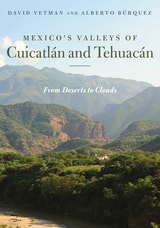
Mexico’s Valleys of Cuicatlán and Tehuacán
From Deserts to CloudsDavid Yetman and Alberto Búrquez
University of Arizona Press, 2023
Through firsthand experience and engaging prose, the authors provide a synthesis of the geology, ecology, history, and cultures of the valleys, showing their importance and influence as Mesoamerican arteries for environmental and cultural interchange through Mexico. It also reveals the extraordinary plant life that draws from habitats ranging from deserts to tropical forests.
The authors, both experts in their respective fields, begin with a general description of the geography of the valleys, followed by an introduction to climate and hydrology, a look at the valleys’ often bewildering geology. The book delves into cultural and linguistic backgrounds of the valleys and discusses archaeological sites that that encapsulate the valleys’ fascinating history prior to the arrival of Europeans. The book concludes by describing the flora that makes the region so singular.
Monstrous Politics
Geography, Rights, and the Urban Revolution in Mexico CityBen Gerlofs
Vanderbilt University Press, 2022
Transdisciplinary by design, Monstrous Politics first moves historically through Mexico City’s turbulent twentieth century, driven centrally by the contentious imbrication of the Institutional Revolutionary Party (PRI) and its capital city. Participant observation, expert interviews, and archival materials demonstrate the shifting strategies and alliances of recent decades, provide the reader with a sense of the texture of contemporary political life in the city during a time of unprecedented change, and locate these dynamics within the history and geography of twentieth-century urbanization and political revolution. Substantive ethnographic chapters trace the emergence and decline of the political language of “the right to the city,” the establishment and contestation of a “postpolitical” governance regime, and the culmination of a century of urban politics in the processes of “political reform” by which Mexico City finally wrested back significant political autonomy and local democracy from the federal state.
A four-fold transection of the revolutionary structure of feeling that pervades the city in this historic moment illustrates the complex and contradictory sentiments, appraisals, and motivations through which contemporary politics are understood and enacted. Drawing on theories of social revolution that embrace complexity, and espousing a methodology that foregrounds the everyday nature of politics, Monstrous Politics develops an understanding of revolutionary urban politics at once contextually nuanced and conceptually expansive, and thus better able to address the realities of politics in the “urban age” even beyond Mexico City.