69 books match the query 'Indiana' and 6 start with m
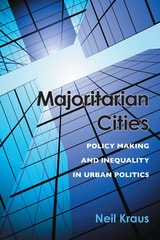
cover of Majoritarian Cities: Policy Making and Inequality in Urban Politics

Majoritarian Cities

Policy Making and Inequality in Urban Politics

Neil Kraus

University of Michigan Press, 2013

Neil Kraus evaluates both the influence of public opinion on local policy-making and the extent to which public policy addresses economic and social inequalities. Drawing on several years of fieldwork and multiple sources of data, including surveys and polls; initiatives, referenda, and election results; government documents; focus groups; interviews; and a wide assortment of secondary sources, Kraus presents case studies of two Midwestern cities, Minneapolis, Minnesota, and Gary, Indiana. Specifically, he focuses on several major policy decisions in recent decades concerning education, law enforcement, and affordable housing in Minneapolis; and education and riverboat casino development in Gary.

Kraus finds that, on these issues, local officials frequently take action that reflects public opinion, yet the resulting policies often fail to meet the needs of the disadvantaged or ameliorate the effects of concentrated poverty. In light of citizens’ current attitudes, he concludes that if patterns of inequality are to be more effectively addressed, scholars and policymakers must transform the debate about the causes and effects of inequality in urban and metropolitan settings.

[more]
cover of Making a Mass Institution: Indianapolis and the American High School

Making a Mass Institution

Indianapolis and the American High School

Kyle P. Steele

Rutgers University Press, 2020
Making a Mass Institution describes how Indianapolis, Indiana created a divided and unjust system of high schools over the course of the twentieth century, one that effectively sorted students geographically, economically, and racially. Like most U.S. cities, Indianapolis began its secondary system with a singular, decidedly academic high school, but ended the 1960s with multiple high schools with numerous paths to graduation. Some of the schools were academic, others vocational, and others still for what was eventually called “life adjustment.” This system mirrored the multiple forces of mass society that surrounded it, as it became more bureaucratic, more focused on identifying and organizing students based on perceived abilities, and more anxious about teaching conformity to middle-class values. By highlighting the experiences of the students themselves and the formation of a distinct, school-centered youth culture, Kyle P. Steele argues that high school, as it evolved into a mass institution, was never fully the domain of policy elites, school boards and administrators, or students, but a complicated and ever-changing contested meeting place of all three.
[more]
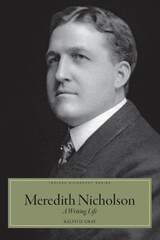
cover of Meredith Nicholson: A Writing Life

Meredith Nicholson

A Writing Life

Ralph D. Gray

Indiana Historical Society Press, 2007
Meredith Nicholson stands as the most Hoosier of all Indiana writers, serving as an outspoken advocate for his state. Indiana literary historian Arthur S. Shumaker called Nicholson the “most rabid” of Indiana’s major authors. In addition to writing such national best-sellers as Zelda Dameron and The House of a Thousand Candles, his best-known work, Nicholson won praise as an insightful essayist, with his work published in such national magazines as the Saturday Evening Post and Atlantic Monthly. "His inherent belief in democracy and democratic values, and his unapologetic patriotism permeate his essays," notes Gray, "some of which excoriated the Ku Klux Klan and upheld the rights and virtues of women, attitudes not always popular at the time."
[more]
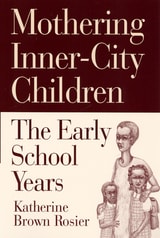
cover of Mothering Inner-City Children: The Early School Years

Mothering Inner-City Children

The Early School Years

Katherine Brown Rosier

Rutgers University Press, 2000

There are few groups more stereotyped and demonized than "welfare mothers," particularly low-income, African American women raising children in the inner city. But what are the day-to-day stories behind the stereotypes? How do African American mothers (both single women and those living with a partner) in poor families handle their roles as parents? What support networks do they rely on to help raise their children? How do their personal histories affect their parenting styles?

Sociologist Katherine Brown Rosier spent three years interviewing and observing Indianapolis mothers as their children made the transition from a Head Start program to kindergarten and through second grade, analyzing the families in their homes, schools, and other social settings. She brings forth the voices of the mothers, children, and their teachers, providing a multifaceted picture of how low-income African American families cope with the daily pressures and responsibilities of child rearing.

Rosier also examines how larger socio-economic factors influence these families' specific circumstances and histories. What child-rearing strategies do these mothers employ, she asks, to promote a smooth transition into school despite complex discontinuities among their homes, schools, and communities? How are these strategies viewed and supported or impeded by teachers, family, friends, and neighbors?

Until now, most research on poor African American families has focused so intently on the problems confronted by this seemingly homogenous group that the routine practices of every day life have been ignored. In this unique project, Rosier allows the families' individual experiences and thoughts to contribute to and complicate current research.
[more]
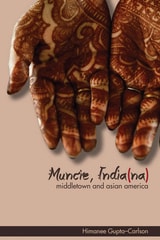
cover of Muncie, India(na): Middletown and Asian America

Muncie, India(na)

Middletown and Asian America

Himanee Gupta-Carlson

University of Illinois Press, 2018

Muncie, Indiana, remains the epitome of an American town. Yet scholars built the image of so-called typical communities across the United States on an illusion. Their decades of studies ignored the racial, ethnic, and religious diversity and tensions woven into the American communities that Muncie supposedly embodied. Himanee Gupta-Carlson puts forth an essential question: what do nonwhites, non-Christians, and/or non-natives mean when they call themselves American? A daughter in one of Muncie's first Indian American families, Gupta-Carlson merges personal experience, the life histories of others, and critical analysis to explore the answers. Her stories of members of Muncie's South Asian communities unearth the silences imposed by past studies while challenging the body of scholarship in fundamental ways. At the same time, Gupta-Carlson shares personal memories and experiences that illuminate her place within the historical, political, and socio-cultural currents she engages in her work. It also reveals how that work informs and transforms her as a scholar and a person. As meditative as it is insightful, Muncie, India(na) invites readers to feel the truth of the fascinating stories behind one woman's revised portrait of an American community.
[more]
cover of Murder in Their Hearts: The Fall Creek Massacre

Murder in Their Hearts

The Fall Creek Massacre

David Thomas Murphy

Indiana Historical Society Press, 2010

In March 1824 a group of angry and intoxicated settlers brutally murdered nine Indians camped along a tributary of Fall Creek. The carnage was recounted in lurid detail in the contemporary press, and the events that followed sparked a national sensation. Murder in Their Hearts: The Fall Creek Massacre tells that, although violence between settlers and Native Americans was not unusual during the early nineteenth century, in this particular incident the white men responsible for the murders were singled out and hunted down, brought to trial, convicted by a jury of their neighbors, and, for the first time under American law, sentenced to death and executed for the murder of Native Americans.
[more]