Results by title
944 books match the query 'Indians of North America' and 40 start with m
Magic Weapons
Aboriginal Writers Remaking Community after Residential SchoolSam McKegney
University of Manitoba Press, 2007
Making Lamanites
Mormons, Native Americans, and the Indian Student Placement Program, 1947-2000Matthew Garrett
University of Utah Press, 2016
Winner of the Juanita Brooks Prize in Mormon Studies
From 1947 to 2000, some 50,000 Native American children left the reservations to live with Mormon foster families. While some dropped out of the Indian Student Placement Program (ISPP), for others the months spent living with LDS families often proved more penetrating than expected.
The ISPP emerged in the mid-twentieth century, championed by Apostle Spencer W. Kimball, aligned with the then national preferences to terminate tribal entities and assimilate indigenous people. But as the paradigm shifted to self-determination, critics labeled the program as crudely assimilationist. Some ISPP students like Navajo George P. Lee fiercely defended the LDS Church before native peers and Congress, contending that it empowered Native people and instilled the true Indian identity; meanwhile Red Power activists organized protests in Salt Lake City, denouncing LDS colonization. As a new generation of church leaders quietly undercut the Indian programs, many of its former participants felt a sense of confusion and abandonment as Mormon distinctions for Native people faded in the late twentieth century.
Making Lamanites traces this student experience within contested cultural and institutional landscapes to reveal how and why many of these Native youth adopted a new notion of Indianness.
Winner of the Francis Armstrong Madsen Best Book Award from the Utah Division of State History.
Making War and Minting Christians
Masculinity, Religion, and Colonialism in Early New EnglandR. Todd Romero
University of Massachusetts Press, 2011
In this book, R. Todd Romero traces the interaction of notions of gender, the practice of religion, and the conduct of warfare in colonial America. He shows how Native and Anglo-American ideas of manhood developed in counterpoint, in the context of Christian evangelization, colonial expansion, and recurrent armed conflict.
For the English, the cultivation of manliness became an important aspect of missionary efforts. Conversion demanded that the English “make men” of the Indians before they could “make them Christians,” a process that involved reshaping Native masculinity according to English patriarchal ideals that the colonists themselves rarely matched. For their part, Native Americans held on to older ways of understanding the divine and defining gender even as they entered English “praying towns” and negotiated the steep demands of the missionaries.
Evolving ideas of masculinity resonated with religious significance and shaped the meaning of warfare for Natives and colonists alike. Just as the English believed that their territorial expansion was divinely sanctioned, Indians attributed a string of victories in King Philip's War to “the Great God” and the perception that their enemies “were like women.” Trusting that war and manliness were necessarily linked, both groups engaged in ritual preparations for battle, believed deeply in the efficacy of the supernatural to affect the outcome of combat, and comprehended the meaning of war in distinctly religious ways.
Man Corn
Cannibalism and Violence in the Prehistoric American SouthwestChristy G Turner
University of Utah Press, 1999
Until quite recently, Southwest prehistory studies have largely missed or ignored evidence of violent competition. Christy and Jacqueline Turner’s study of prehistoric violence, homicide, and cannibalism explodes the myth that the Anasazi and other Southwest Indians were simple, peaceful farmers. Using detailed osteological analyses and other lines of evidence the Turners show that warfare, violence, and their concomitant horrors were as common in the ancient Southwest as anywhere else in the world.
The special feature of this massively documented study is its multi-regional assessment of episodic human bones assemblages (scattered floor deposits or charnel pits) by taphonomic analysis, which considers what happens to bones from the time of death to the time of recovery. During the past thirty years, the authors and other analysts have identified a minimal perimortem taphonomic signature of burning, pot polishing, anvil abrasions, bone breakage, cut marks, and missing vertebrae that closely match the signatures of animal butchering and is frequently associated with additional evidence of violence. More than seventy-five archaeological sited containing several hundred individuals are carefully examined for the cannibalism signature. Because this signature has not been reported for any sites north of Mexico, other than those in the Southwest, the authors also present detailed comparisons with Mesoamerican skeletal collections where human sacrifice and cannibalism were known to have been practiced. The authors review several hypotheses for Southwest cannibalism: starvation, social pathology, and institutionalized violence and cannibalism. In the latter case, they present evidence for a potential Mexican connection and demonstrate that most of the known cannibalized series are located temporally and spatially near Chaco great houses.
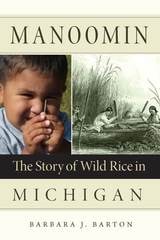
Manoomin
The Story of Wild Rice in MichiganBarbara J Barton
Michigan State University Press, 2018
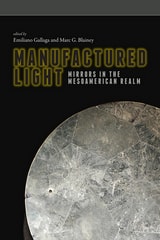
Manufactured Light
Mirrors in the Mesoamerican RealmEmiliano Gallaga
University Press of Colorado, 2015
Complex and time-consuming to produce, iron-ore mirrors stand out among Prehispanic artifacts for their aesthetic beauty, their symbolic implications, and the complexity and skill of their assembly. Manufactured Light presents the latest archaeological research on these items, focusing on the intersection of their significance and use and on the technological aspects of the manufacturing processes that created them.
The volume covers the production, meaning, and utilization of iron-ore mirrors in various Mesoamerican communities. Chapters focus on topics such as experimental archaeology projects and discussions of workshops in archaeological contexts in the Maya, Central Mexico, and northwest Mexico regions. Other chapters concentrate on the employment and ideological associations of these mirrors in Prehispanic times, especially as both sacred and luxury items. The final chapters address continuities in the use of mirrors from Prehispanic to modern times, especially in contemporary indigenous communities, with an emphasis on examining the relationship between ethnographic realities and archaeological interpretations.
While the symbolism of these artifacts and the intricacy of their construction have long been recognized in archaeological discussions, Manufactured Light is the first synthesis of this important yet under-studied class of material culture. It is a must-read for students and scholars of Mesoamerican archaeology, ethnography, religion, replicative experimentation, and lithic technology.
Contirbutors include: Marc G. Blainey, Thomas Calligaro, Carrie L. Dennett, Emiliano Gallaga, Julie Gazzola, Sergio Gómez Chávez, Olivia Kindl, Brigitte Kovacevich, Achim Lelgemann, José J. Lunazzi, John J. McGraw, Emiliano Melgar, Joseph Mountjoy, Reyna Solis, and Karl Taube.
Mapping Indigenous Presence
North Scandinavian and North American PerspectivesEdited by Kathryn W. Shanley and Bjørg Evjen; Foreword by S. James Anaya
University of Arizona Press, 2015
Mapping Indigenous Presence presents a set of comparative Indigenous studies essays with contemporary perspectives, attesting to the importance of the roles Indigenous people have played as overseers of their own lands and resources, as creators of their own cultural richness, and as political entities capable of governing themselves. This interdisciplinary collection explores the Indigenous experience of Sámi peoples of Norway and Native Americans of Montana in their respective contexts—yet they are in many ways distinctly different within the body politic of their respective countries. Although they share similarities as Indigenous peoples within nation-states and inhabit somewhat similar geographies, their cultures and histories differ significantly.
Sámi people speak several languages, while Indigenous Montana is made up of twelve different tribes with at least ten distinctly different languages; both peoples struggle to keep their Indigenous languages vital. The political relationship between Sámi people and the mainstream Norwegian government and culture has historically been less contentious that that of the Indigenous peoples of Montana with the United States and with the state of Montana, yet the Sámi and the Natives of Montana have struggled against both the ideology and the subsequent assimilation policy of the savagery-versus-civilization model. The authors attempt to increase understanding of how these two sets of Indigenous peoples share important ontological roots and postcolonial legacies, and how research may be used for their own self-determination and future directions.
Marked, Unmarked, Remembered
A Geography of American MemoryAndrew Lichtenstein
West Virginia University Press, 2017
These powerful photographs by award-winning photojournalist Andrew Lichtenstein are interspersed with short essays by some of the leading historians of the United States. The book is introduced with substantive meditations on meaning and landscape by Alex Lichtenstein, editor of the American Historical Review, and Edward T. Linenthal, former editor of the Journal of American History. Individually, these images convey American history in new and sometimes startling ways. Taken as a whole, the volume amounts to a starkly visual reckoning with the challenges of commemorating a violent and conflictual history of subjugation and resistance that we forget at our peril.
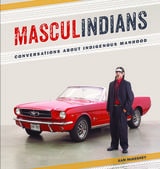
Masculindians
Conversations about Indigenous ManhoodSam McKegney
Michigan State University Press, 2014
Contributors: Taiaiake Alfred, Kim Anderson, Joanne Arnott, Joseph Boyden, Alison Calder, Warren Cariou, Jessica Danforth, Louise Halfe, Tomson Highway, Daniel Heath Justice, Janice C. Hill Kanonhsyonni, Lee Maracle, Neal McLeod, Daniel David Moses, Gregory Scofield, Thomas Kimeksum Thrasher, and Richard Van Camp.

Masked Gods
Navaho and Pueblo CeremonialismFrank Waters
Ohio University Press, 1950
Masked Gods is a vast book, a challenging and profoundly original account of the history, legends, and ceremonialism of the Navajo and Pueblo Indians of the Southwest. Following a brief but vivid history of the two tribes through the centuries of conquest, the book turns inward to the meaning of Native American legends and ritual—Navajo songs, Pueblo dances, Zuni kachina ceremonies. Enduring still, these rituals and ceremonies express a view of life, of man’s place in the creation, which is compared with Taoism and Buddhism—and with the aggressive individualism of the Western world.
Massacre at Camp Grant
Forgetting and Remembering Apache HistoryChip Colwell-Chanthaphonh
University of Arizona Press, 2007
On April 30, 1871, an unlikely group of Anglo-Americans, Mexican Americans, and Tohono O’odham Indians massacred more than a hundred Apache men, women, and children who had surrendered to the U.S. Army at Camp Grant, near Tucson, Arizona. Thirty or more Apache children were stolen and either kept in Tucson homes or sold into slavery in Mexico. Planned and perpetrated by some of the most prominent men in Arizona’s territorial era, this organized slaughter has become a kind of “phantom history” lurking beneath the Southwest’s official history, strangely present and absent at the same time.
Seeking to uncover the mislaid past, this powerful book begins by listening to those voices in the historical record that have long been silenced and disregarded. Massacre at Camp Grant fashions a multivocal narrative, interweaving the documentary record, Apache narratives, historical texts, and ethnographic research to provide new insights into the atrocity. Thus drawing from a range of sources, it demonstrates the ways in which painful histories continue to live on in the collective memories of the communities in which they occurred.
Chip Colwell-Chanthaphonh begins with the premise that every account of the past is suffused with cultural, historical, and political characteristics. By paying attention to all of these aspects of a contested event, he provides a nuanced interpretation of the cultural forces behind the massacre, illuminates how history becomes an instrument of politics, and contemplates why we must study events we might prefer to forget.
Massacre on the Gila
An Account of the Last Major Battle Between American Indians, with Reflections on the Origin of WarClifton B. Kroeber
University of Arizona Press, 1986
"Rarely do the skills of historians and anthropologists mesh so admirably." —Western Historical Quarterly
"Kroeber and Fontana are meticulous professionals. Their study of this neglected slice of Southwestern history deserves applause." —Evan S. Connell, Los Angeles Times Book Review
"A rich feast for the curious and theorist alike." —Pacific Historical Review
"Kroeber and Fontana describe a little-known event, provide an effective analysis of the cultures of Indian groups in southwestern Arizona, and attempt to understand the broader causes of warfare. The result is an interesting and provocative study." —Journal of American History

Mastodons to Mississippians
Adventures in Nashville's Deep PastAaron Deter-Wolf
Vanderbilt University Press, 2021
Was Nashville once home to a giant race of humans?
No, but in 1845, you could have paid a quarter to see the remains of one who allegedly lived here before The Flood. That summer, Middle Tennessee well diggers had unearthed the skeleton of an American mastodon. Before it went on display, it was modified and augmented with wooden “bones” to make it look more like a human being and passed off as an antediluvian giant. Then, like so many Nashvillians, after a little success here, it went on tour and disappeared from history.
But this fake history of a race of Pre-Nashville Giants isn’t the only bad history of what, and who, was here before Nashville. Sources written for schoolchildren and the public lead us to believe that the first Euro-Americans arrived in Nashville to find a pristine landscape inhabited only by the buffalo and boundless nature, entirely untouched by human hands. Instead, the roots of our city extend some 14,000 years before Illinois lieutenant-governor-turned-fur-trader Timothy Demonbreun set foot at Sulphur Dell.
During the period between about AD 1000 and 1425, a thriving Native American culture known to archaeologists as the Middle Cumberland Mississippian lived along the Cumberland River and its tributaries in today’s Davidson County. Earthen mounds built to hold the houses or burials of the upper class overlooked both banks of the Cumberland near what is now downtown Nashville. Surrounding densely packed village areas including family homes, cemeteries, and public spaces stretched for several miles through Shelby Bottoms, and the McFerrin Park, Bicentennial Mall, and Germantown neighborhoods. Other villages were scattered across the Nashville landscape, including in the modern neighborhoods of Richland, Sylvan Park, Lipscomb, Duncan Wood, Centennial Park, Belle Meade, White Bridge, and Cherokee Park.
This book is the first public-facing effort by legitimate archaeologists to articulate the history of what happened here before Nashville happened.
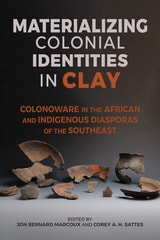
Materializing Colonial Identities in Clay
Colonoware in the African and Indigenous Diasporas of the SoutheastEdited by Jon Bernard Marcoux and Corey A. H. Sattes
University of Alabama Press, 2024
An interdisciplinary excavation of colonoware as a material archive of African, Indigenous, and colonial entanglements across the early American South.
In Materializing Colonial Identities in Clay, Jon Bernard Marcoux, Corey A. H. Sattes, and contributors examine colonoware to explore the active roles that African Americans and Indigenous people played in constructing southern colonial culture and part of their shared history with Europeans.
Colonoware was most likely produced by African and Indigenous potters and used by all colonial groups for cooking, serving, and storing food. It formed the foundation of colonial foodways in many settlements across the southeastern United States. Even so, compared with other ceramics from this period, less has been understood about its production and use because of the lack of documentation. This collection of essays fills this gap with valuable, recent archaeological data from which much may be surmised about the interaction among Europeans, Indigenous, and Africans, especially within the contexts of the African and Indigenous slave trade and plantation systems.
The chapters represent the full range of colonoware research: from the beginning to the end of its production, from urban to rural contexts, and from its intraregional variation in the Lowcountry to the broad patterns of colonialism across the early American Southeast. The book summarizes current approaches in colonoware research and how these may bridge the gaps between broader colonial American studies, Indigenous studies, and African Diaspora studies.
A concluding discussion contextualizes the chapters through the perspectives of intersectionality and Black feminist theory, drawing attention to the gendered and racialized meanings embodied in colonoware, and considering how colonialism and slavery have shaped these cultural dimensions and archaeologists’ study of them.
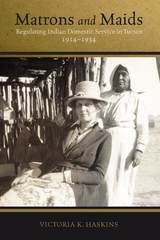
Matrons and Maids
Regulating Indian Domestic Service in Tucson, 1914–1934Victoria K. Haskins
University of Arizona Press, 2012
From 1914 to 1934 the US government sent Native American girls to work as domestic servants in the homes of white families. Matrons and Maids tells this forgotten history through the eyes of the women who facilitated their placements. During those two decades, “outing matrons” oversaw and managed the employment of young Indian women. In Tucson, Arizona, the matrons acted as intermediaries between the Indian and white communities and between the local Tucson community and the national administration, the Office of Indian Affairs.
Based on federal archival records, Matrons and Maids offers an original and detailed account of government practices and efforts to regulate American Indian women. Haskins demonstrates that the outing system was clearly about regulating cross-cultural interactions, and she highlights the roles played by white women in this history. As she compellingly argues, we cannot fully engage with cross-cultural histories without examining the complex involvement of white women as active, if ambivalent, agents of colonization.
Including stories of the entwined experiences of Indigenous and non-Indigenous women that range from the heart-warming to the heart-breaking, Matrons and Maids presents a unique perspective on the history of Indian policy and the significance of “women’s work.”
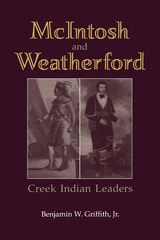
McIntosh and Weatherford
Creek Indian LeadersBenjamin W. Griffith
University of Alabama Press, 1998
The human story behind the Creek War and the coming of Indian Removal.
About the time of the American Revolutionary war, when the Creek Indians owned land that is today approximately the lower two-thirds of Alabama and of Georgia west of the Oconee River, two sons were born to Indian mothers and Scots fathers in obscure towns in the territory of the Creek Nation. Both sons were named William, and both were to become leaders of their mothers’ people.
The two remarkable men lived during a period of war and turbulence along the frontier in Alabama and Georgia. More often the subjects of folk tale and legend than serious historical inquiry, McIntosh and Weatherford fought on opposing sides in the Creek War of 1813-1814. McIntosh allied himself with Andrew Jackson and the friendly Lower Creeks, while Weatherford joined with the hostile Red Stick and was the leader of a band of Upper Creeks in the massacre at Fort Mims. McIntosh, who was given the rank of brigadier general for his military feats, was involved in the machinations that led to the ceding of Creek lands to Georgia. As a result, he died in disgrace at the hands of his fellow Creeks. Weatherford, once hated and feared, died a planter and local hero in Alabama near the site of Fort Mims.
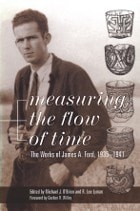
Measuring the Flow of Time
The Works of James A. Ford, 1935-1941James A. Ford, edited by R. Lee Lyman and Michael J. O'Brien
University of Alabama Press, 1999
This collection of Ford's works focuses on the development of ceramic chronology—a key tool in Americanist archaeology.

Mediating Indianness
Cathy Covell Waegner
Michigan State University Press, 2015
Medicinal Plants of Native America, Vols. 1 and 2
Daniel E. Moerman
University of Michigan Press, 1987
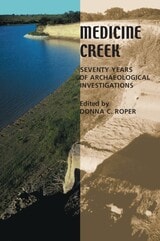
Medicine Creek
Seventy Years of Archaeological InvestigationsEdited by Donna C. Roper
University of Alabama Press, 2002
This valuable book is an excellent overview of long-term archaeological investigations in the valley that remains at the forefront of studies on the First Americans.
In southwest Nebraska, a stretch of Medicine Creek approximately 20 kilometers long holds a remarkable concentration of both late Paleoindian and late prehistoric sites. Unlike several nearby similar and parallel streams that drain the divide between the Platte and Republican Rivers, Medicine Creek has undergone 70 years of archaeological excavations that reveal a long occupation by North America's earliest inhabitants.
Donna Roper has collected the written research in this volume that originated in a conference celebrating the 50th anniversary of the 1947 River Basin Survey. In addition to 12 chapters reviewing the long history of archaeological investigations at Medicine Creek, the volume contains recent analyses of and new perspectives on old sites and old data. Two of the sites discussed are considered for pre-Clovis status because they show evidence of human modification of mammoth faunal remains in the late Pleistocene Age. Studies of later occupation of Upper Republican phase sites yield information on the lifeways of Plains village people.
Presented by major investigators at Medicine Creek, the contributions are a balanced blend of the historical research and the current state-of-the-art work and analysis. Roper's comprehensive look at the archaeology, paleontology, and geomorphology at Medicine Creek gives scientists and amateurs a full assessment of a site that has taught us much about the North American continent and its early people.
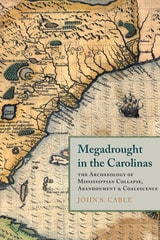
Megadrought in the Carolinas
The Archaeology of Mississippian Collapse, Abandonment, and CoalescenceJohn S. Cable
University of Alabama Press, 2020
A prevailing enigma in American archaeology is why vast swaths of land in the Southeast and Southwest were abandoned between AD 1200 and 1500. The most well-known abandonments occurred in the Four Corners and Mimbres areas of the Southwest and the central Mississippi valley in the twelfth and thirteenth centuries and in southern Arizona and the Ohio Valley during the fifteenth century. In Megadrought in the Carolinas: The Archaeology of Mississippian Collapse, Abandonment, and Coalescence, John S. Cable demonstrates through the application of innovative ceramic analysis that yet another fifteenth-century abandonment event took place across an area of some 34.5 million acres centered on the South Carolina coast.
Most would agree that these sweeping changes were at least in part the consequence of prolonged droughts associated with a period of global warming known as the Medieval Climatic Anomaly. Cable strengthens this inference by showing that these events correspond exactly with the timing of two different geographic patterns of megadrought as defined by modern climate models.
Cable extends his study by testing the proposition that the former residents of the coastal zone migrated to surrounding interior regions where the effects of drought were less severe. Abundant support for this expectation is found in the archaeology of these regions, including evidence of accelerated population growth, crowding, and increased regional hostilities. Another important implication of immigration is the eventual coalescence of ethnic and/or culturally different social groups and the ultimate transformation of societies into new cultural syntheses. Evidence for this process is not yet well documented in the Southeast, but Cable draws on his familiarity with the drought-related Puebloan intrusions into the Hohokam Core Area of southern Arizona during the thirteenth and fourteenth centuries to suggest strategies for examining coalescence in the Southeast. The narrative concludes by addressing the broad implications of late prehistoric societal collapse for today’s human-propelled global warming era that portends similar but much more long-lasting consequences.
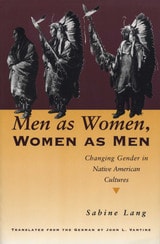
Men as Women, Women as Men
Changing Gender in Native American CulturesBy Sabine Lang
University of Texas Press, 1998
As contemporary Native and non-Native Americans explore various forms of "gender bending" and gay and lesbian identities, interest has grown in "berdaches," the womanly men and manly women who existed in many Native American tribal cultures. Yet attempts to find current role models in these historical figures sometimes distort and oversimplify the historical realities.
This book provides an objective, comprehensive study of Native American women-men and men-women across many tribal cultures and an extended time span. Sabine Lang explores such topics as their religious and secular roles; the relation of the roles of women-men and men-women to the roles of women and men in their respective societies; the ways in which gender-role change was carried out, legitimized, and explained in Native American cultures; the widely differing attitudes toward women-men and men-women in tribal cultures; and the role of these figures in Native mythology. Lang's findings challenge the apparent gender equality of the "berdache" institution, as well as the supposed universality of concepts such as homosexuality.

Men on the Moon
Collected Short StoriesSimon J. Ortiz
University of Arizona Press, 1999
Best known for his poetry, Ortiz also has authored 26 short stories that have won the hearts of readers through the years. Men on the Moon brings these stories together—stories filled with memorable characters, written with love by a keen observer and interpreter of his people's community and culture. True to Native American tradition, these tales possess the immediacy—and intimacy—of stories conveyed orally. They are drawn from Ortiz's Acoma Pueblo experience but focus on situations common to Native people, whether living on the land or in cities, and on the issues that affect their lives. We meet Jimmo, a young boy learning that his father is being hunted for murder, and Kaiser, the draft refuser who always wears the suit he was given when he left prison. We also meet some curious Anglos: radicals supporting Indian causes, scholars studying Indian ways, and San Francisco hippies who want to become Indians too.
Whether telling of migrants working potato fields in Idaho and pining for their Arizona home or of a father teaching his son to fly a kite, Ortiz takes readers to the heart of storytelling. Men on the Moon shows that stories told by a poet especially resound with beauty and depth.
Mimbres during the Twelfth Century
Abandonment, Continuity, and ReorganizationMargaret C. Nelson
University of Arizona Press, 1999
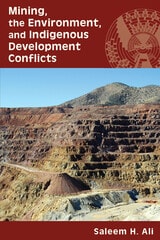
Mining, the Environment, and Indigenous Development Conflicts
Saleem H. Ali
University of Arizona Press, 2003
This book gets to the heart of resource conflicts and environmental impact assessment by asking why indigenous communities support environmental causes in some cases of mining development but not in others. Saleem Ali examines environmental conflicts between mining companies and indigenous communities and with rare objectivity offers a comparative study of the factors leading to those conflicts.
Mining, the Environment, and Indigenous Development Conflicts presents four cases from the United States and Canada: the Navajos and Hopis with Peabody Coal in Arizona; the Chippewas with the Crandon Mine proposal in Wisconsin; the Chipewyan Inuits, Déné and Cree with Cameco in Saskatchewan; and the Innu and Inuits with Inco in Labrador. These cases exemplify different historical relationships with government and industry and provide an instance of high and low levels of Native resistance in each country. Through these cases, Ali analyzes why and under what circumstances tribes agree to negotiated mining agreements on their lands, and why some negotiations are successful and others not.
Ali challenges conventional theories of conflict based on economic or environmental cost-benefit analysis, which do not fully capture the dynamics of resistance. He proposes that the underlying issue has less to do with environmental concerns than with sovereignty, which often complicates relationships between tribes and environmental organizations. Activist groups, he observes, fail to understand such tribal concerns and often have problems working with tribes on issues where they may presume a common environmental interest.
This book goes beyond popular perceptions of environmentalism to provide a detailed picture of how and when the concerns of industry, society, and tribal governments may converge and when they conflict. As demands for domestic energy exploration increase, it offers clear guidance for such endeavors when native lands are involved.
Mississippian Communities and Households
Edited by J. Daniel Rogers and Bruce D. Smith
University of Alabama Press, 1995
During the Mississippian period (approximately A.D. 1000-1600) in the midwestern and southeastern United States a variety of greater and lesser chiefdoms took shape. Archaeologists have for many years explored the nature of these chiefdoms from the perspective common in archaeological investigations—from the top down, investigating ceremonial elite mound structures and predicting the basic domestic unit from that data. Because of the increased number of field investigations at the community level in recent years, this volume is able to move the scale of investigation down to the level of community and household, and it contributes to major revisions of settlement hierarchy concepts.
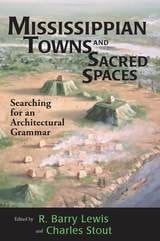
Mississippian Towns and Sacred Spaces
Searching for an Architectural GrammarEdited by R. Barry Lewis and Charles Stout
University of Alabama Press, 1998
Archaeologists and architects draw upon theoretical perspectives from their fields to provide valuable insights into the structure, development, and meaning of prehistoric communities.
Architecture is the most visible physical manifestation of human culture. The built environment envelops our lives and projects our distinctive regional and ethnic identities to the world around us. Archaeology and architecture find common theoretical ground in their perspectives of the homes, spaces, and communities that people create for themselves. Although archaeologists and architects may ask different questions and apply different methods, the results are the same—a deeper understanding of what it means to be human.
In this volume, prominent archaeologists examine the architectural design spaces of Mississippian towns and mound centers of the eastern United States. The diverse Mississippian societies, which existed between A.D. 900 and 1700, created some of the largest and most complex Native American archaeological sites in the United States. The dominant architectural feature shared by these communities was one or more large plazas, each of which was often flanked by buildings set on platform mounds. The authors describe the major dimensions of an architectural grammar, centered on the design of the plaza and mound complex that was shared by different societies across the Mississippian world. They then explore these shared architectural features as physical representations or metaphors for Mississippian world views and culture.
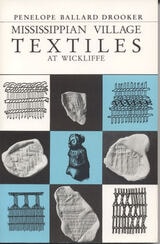
Mississippian Village Textiles at Wickliffe
Penelope Ballard Drooker
University of Alabama Press, 1992
Because textiles rarely are preserved in the archaeological record outside of deserts and permafrost areas, in many regions of the world very little is known about their characteristics, functions, production technology, or socioeconomic importance. While this fact is also true of organic fabrics produced during the Mississippian period in southeastern North Anerica, a wide variety of Mississippian textiles has been preserved in the form of impressions on large pottery vessels. From attribute analysis of 1,574 fabrics impressed on Wickliffe pottery sherds and comparison of the impressions with extant Mississippian textile artifacts, Drooker presents the first comparative analysis of these materials and the most inclusive available summary of information on Mississippian textiles.
Modern Oceans, Ancient Sites
Archaeology and Marine Conservation on San Miguel Island, CaliforniaTodd J Braje
University of Utah Press, 2010
Mogollon Communal Spaces and Places in the Greater American Southwest
Edited by Robert J. Stokes, Katherine A. Dungan, and Jakob W. Sedig
University of Utah Press, 2023
This volume presents the latest research on the development and use of communal spaces and places across the Mogollon region, located in what is now the southwestern United States and northwestern Mexico. New data demonstrate that these spaces and places, though diverse in form and function, were essential to community development and cohesion, particularly during critical formative periods associated with increasing sedentism and farming, and during comparable periods of social change.
The authors ask questions crucial to understanding past communities: What is a communal space or place? How did villagers across the Mogollon region use such places? And how do modern archaeologists investigate the past to learn how ancient people thought about themselves and the world around them? Contributors use innovative approaches to explore the development patterns and properties of communal spaces and places, as well as how and why these places were incorporated into the daily lives of village residents. Buildings and other types of communal spaces are placed into broader cultural and social contexts, acknowledging the enduring importance of the kiva-type structure to many Native American societies of the southwestern United States and northwestern Mexico.
Mogollon Culture in the Forestdale Valley, East-Central Arizona
Emil W. Haury
University of Arizona Press, 1985
Classic site reports establish the Mogollon on their own cultural track distinct from the Anasazi and also document the earliest known association of tree-ring dates with pottery in the Southwest. The excavations of Mogollon sites reported on in this volume were conducted at the early (1939–1941) field schools in Forestdale, Arizona.

Monkey Secret
Diane Glancy
Northwestern University Press, 1995
Mound City
The Place of the Indigenous Past and Present in St. LouisPatricia Cleary
University of Missouri Press, 2025
Nearly one thousand years ago, Native peoples built a satellite suburb of America's great metropolis on the site that later became St. Louis. At its height, as many as 30,000 people lived in and around present-day Cahokia, Illinois. While the mounds around Cahokia survive today (as part of a state historic site and UNESCO world heritage site), the monumental earthworks that stood on the western shore of the Mississippi were razed in the 1800s. But before and after they fell, the mounds held an important place in St. Louis history, earning it the nickname “Mound City.” For decades, the city had an Indigenous reputation. Tourists came to marvel at the mounds and to see tribal delegations in town for trade and diplomacy. As the city grew, St. Louisans repurposed the mounds—for a reservoir, a restaurant, and railroad landfill—in the process destroying cultural artifacts and sacred burial sites. Despite evidence to the contrary, some white Americans declared the mounds natural features, not built ones, and cheered their leveling. Others espoused far-fetched theories about a lost race of Mound Builders killed by the ancestors of contemporary tribes. Ignoring Indigenous people's connections to the mounds, white Americans positioned themselves as the legitimate inheritors of the land and asserted that modern Native peoples were destined to vanish. Such views underpinned coerced treaties and forced removals, and—when Indigenous peoples resisted—military action. The idea of the “Vanishing Indian” also fueled the erasure of Indigenous peoples’ histories, a practice that continued in the 1900s in civic celebrations that featured white St. Louisans “playing Indian” and heritage groups claiming the mounds as part of their own history. Yet Native peoples endured and in recent years, have successfully begun to reclaim the sole monumental mound remaining within city limits.
Drawing on a wide range of sources, Patricia Cleary explores the layers of St. Louis’s Indigenous history. Along with the first in-depth overview of the life, death, and afterlife of the mounds, Mound City offers a gripping account of how Indigenous histories have shaped the city’s growth, landscape, and civic culture.
Mound Excavations at Moundville
Architecture, Elites and Social OrderVernon James Knight, Jr.
University of Alabama Press, 2010
How social and political power was wielded in order to build Moundville
Moundville's Economy
Paul D. Welch
University of Alabama Press, 1991
A Dan Josselyn Memorial Publication
Anthropologists have long talked about chiefdoms as a form of sociopolitical organization, and for several decades Elman Service's description of chiefdoms has been widely accepted as definitive. Nevertheless, in the 1970s, scholars began to question whether all, or any, chiefdoms had the entire range of characteristics described by Service. Most of the questions focused on the (nonmarket) economic organization of these polities, and several contrasting economic models were suggested. None of the models, however, was comprehensively tested against actual chiefdom economies.
This study examines the economic organization of the late prehistoric (A.D. 1000 to 1540) chiefdom centered at Moundville, Alabama. Rather than attempting to show that this case fits one or another model, the economic organization is determined empirically using archaeological data. The pattern of production and distribution of subsistence goods, domestic nonutilitarian goods, and imported prestige goods does not fit precisely any of the extant models. Because Moundville's economy was organized in a way that promoted stability, it may be no accident that Moundville was the dominant regional polity for several hundred years. This research opens a new field of archaeological investigation: the relationship between fine details of economic organization and large-scale political fortunes.
Movement, Connectivity, and Landscape Change in the Ancient Southwest
Margaret C. Nelson
University Press of Colorado, 2026
Particular attention is paid to the various ways that archaeology can and should contribute to contemporary social and environmental issues. Contributors come together to provide a synthetic volume on current research and possibilities for future explorations. Moving forward, they argue that archaeologists must continue to include researchers from across political and disciplinary boundaries and enhance collaboration with Native American groups.
This book will be of interest to professional and academic archaeologists, as well as students working in the field of the American Southwest.

Murder in Their Hearts
The Fall Creek MassacreDavid Thomas Murphy
Indiana Historical Society Press, 2010
Music of the First Nations
Tradition and Innovation in Native North AmericaEdited by Tara Browner
University of Illinois Press, 2009
This unique anthology presents a wide variety of approaches to an ethnomusicology of Inuit and Native North American musical expression. Contributors include Native and non-Native scholars who provide erudite and illuminating perspectives on aboriginal culture, incorporating both traditional practices and contemporary musical influences. Gathering scholarship on a realm of intense interest but little previous publication, this collection promises to revitalize the study of Native music in North America, an area of ethnomusicology that stands to benefit greatly from these scholars' cooperative, community-oriented methods.
Contributors are T. Christopher Aplin, Tara Browner, Paula Conlon, David E. Draper, Elaine Keillor, Lucy Lafferty, Franziska von Rosen, David Samuels, Laurel Sercombe, and Judith Vander.
Mystic Bones
Mark C. Taylor
University of Chicago Press, 2007
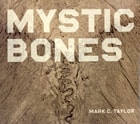
The desert has long been a theme in Mark C. Taylor’s work, from his inquiries into the religious significance of Las Vegas to his writings on earthworks artist Michael Heizer. At once haunted by absence and loss, the desert, for Taylor, is a place of exile and wandering, of temptation and tribulation. Bones, in turn, speak to his abiding interest in remnants, ruins, ritual, and immanence. Taylor combines his fascination in the detritus of the desert and its philosophical significance with his work in photography in Mystic Bones.
A collection of remarkably elegant close-up images of weathered bones—remains of cattle, elk, and deer skeletons gathered from the desert of the American West—Mystic Bones pairs each photograph with a philosophical aphorism. These images are buttressed by a major essay, “Rubbings of Reality,” in which Taylor explores the use of bones in the religious rituals of native inhabitants of the Western desert and, more broadly, the appearance of bones in myth and religious reality.
Meditating on the way in which bones paradoxically embody both the personal and the impersonal—at one time they are our very substance, but eventually they become our last remnants, anonymous, memorializing oblivion—Taylor here suggests ways in which natural processes can be thought of as art, and bones as art objects. Bones, Taylor writes, “draw us elsewhere.” To follow their traces beyond the edge of the human is to wander into ageless times and open spaces where everything familiar becomes strange.
By revealing beauty hidden in the most unexpected places, these haunting images refigure death in a way that allows life to be seen anew. A bold new work from a respected philosopher of religion, Mystic Bones is Taylor’s his most personal statement of after-God theology.
Mémoires of Michilimackinac and the Pays d'en Haut
Indians and French in the Upper Great Lakes at the Turn of the Eighteenth CenturyJosé António Brandao
Michigan State University Press, 2019