Results by title
84 books match the query 'International cooperation' and 7 start with m
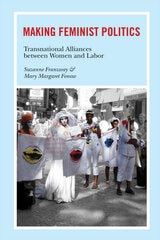
Making Feminist Politics
Transnational Alliances between Women and LaborSuzanne Franzway and Mary Margaret Fonow
University of Illinois Press, 2011
In this timely and detailed examination of the intersections of feminism, labor politics, and global studies, Suzanne Franzway and Mary Margaret Fonow reveal the ways in which women across the world are transforming labor unions in the contemporary era. Situating specific case studies within broad feminist topics, Franzway and Fonow concentrate on union feminists mobilizing at multiple sites, issues of wages and equity, child care campaigns, work-life balance, and queer organizing, demonstrating how unions around the world are broadening their focuses from contractual details to empowerment and family and feminist issues. By connecting the diversity of women's experiences around the world both inside and outside the home and highlighting the innovative ways women workers attain their common goals, Making Feminist Politics lays the groundwork for recognition of the total individual in the future of feminist politics within global union movements.
[more]
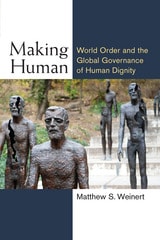
Making Human
World Order and the Global Governance of Human DignityMatthew S. Weinert
University of Michigan Press, 2015
Differences between human beings have long been used to justify a range of degrading, exclusionary, and murderous practices that strip people of their humanity and dignity. While considerable scholarship has been devoted to such dehumanization, Matthew S. Weinert asks how we might conceive its reverse—humanization, or what it means to “make human.”
Weinert proposes an account of making human centered on five mechanisms: reflection, recognition, resistance, replication of dominant mores, and responsibility. Examining cases such as the UN Security Council’s engagements with crises and the International Court of Justice’s grappling with Kosovo’s unilateral declaration of independence, he illustrates the distinct and contingent ways these mechanisms have been deployed. Theoretically, the cases evince a complex, evolving relationship between state-centric and human-centric views of society, ultimately revealing the normative potentialities of both.
Though the case studies concern specific human relations issues on an international level, Weinert argues in favor of starting from the shared problem of being human and of living in a world in which the humanity of countless groups has been demeaned or denied. Working outward from that point, he proposes, we obtain a more pragmatically grounded understanding of the social construction of the human being.
[more]
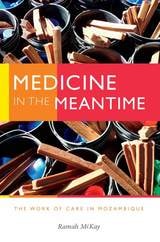
Medicine in the Meantime
The Work of Care in MozambiqueRamah McKay
Duke University Press, 2018
In Mozambique, where more than half of the national health care budget comes from foreign donors, NGOs and global health research projects have facilitated a dramatic expansion of medical services. At once temporary and unfolding over decades, these projects also enact deeply divergent understandings of what care means and who does it. In Medicine in the Meantime, Ramah McKay follows two medical projects in Mozambique through the day-to-day lives of patients and health care providers, showing how transnational medical resources and infrastructures give rise to diverse possibilities for work and care amid constraint. Paying careful attention to the specific postcolonial and postsocialist context of Mozambique, McKay considers how the presence of NGOs and the governing logics of the global health economy have transformed the relations—between and within bodies, medical technologies, friends, kin, and organizations—that care requires and how such transformations pose new challenges for ethnographic analysis and critique.
[more]
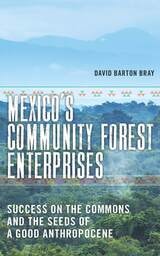
Mexico’s Community Forest Enterprises
Success on the Commons and the Seeds of a Good AnthropoceneDavid Barton Bray
University of Arizona Press, 2020
The road to sustainable forest management and stewardship has been debated for decades. Some advocate for governmental control and oversight. Some say that the only way to stem the tide of deforestation is to place as many tracts as possible under strict protection. Caught in the middle of this debate, forest inhabitants of the developing world struggle to balance the extraction of precarious livelihoods from forests while responding to increasing pressures from national governments, international institutions, and their own perceptions of environmental decline to protect biodiversity, restore forests, and mitigate climate change.
Mexico presents a unique case in which much of the nation’s forests were placed as commons in the hands of communities, who, with state support and their own entrepreneurial vigor, created community forest enterprises (CFEs). David Barton Bray, who has spent more than thirty years engaged with and researching Mexican community forestry, shows that this reform has transformed forest management in that country at a scale and level of maturity unmatched anywhere else in the world.
For decades Mexico has been conducting a de facto large-scale experiment in the design of a national social-ecological system (SES) focused on community forests. What happens when you give subsistence communities rights over forests, as well as training, organizational support, equipment, and financial capital? Do the communities destroy the forest in the name of economic development, or do they manage them sustainably, generating current income while maintaining intergenerational value as a resource for their children? Bray shares the scientific and social evidence that can now begin to answer these questions. This is an invaluable resource for students, researchers, and the interested public on the future of global forest resilience and the possibilities for a good Anthropocene.
[more]
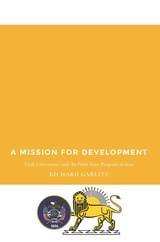
Mission for Development
Utah Universities and the Point Four Program in IranRichard Garlitz
Utah State University Press, 2018
A Mission for Development tells the remarkable story of faculty from three Utah universities who lived and worked in Iran as part of the Point Four Program. Using the experience of these advisors, the book reexamines the rise and fall of the US-Iranian alliance and explores the roles that American universities played in international development during the Cold War.
The Point Four Program sponsored American technical assistance for developing countries during the 1950s—an American Cold War strategy to cultivate friendly governments and economic development in countries purportedly susceptible to Communist influence. Between 1951 and 1964, advisors from Brigham Young University sought to modernize Iranian public education, experts from Utah State University worked to improve agricultural production, and doctors and nurses from the University of Utah helped with the Iranian government’s rural health initiatives. In A Mission for Development, author Richard Garlitz offers a critical and clear-eyed assessment of the challenges the Utahns faced and the contributions they made to Iranian development.
The book also reexamines the Iranian political crisis of the early 1950s and the overthrow of Prime Minister Mohammad Mossadegh through the eyes of the Utah advisors. A Mission for Development provides rare insight into the university role in international development and will be of interest to historians and policy makers.
[more]
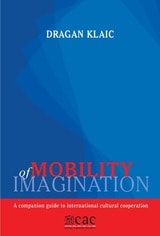
Mobility of Imagination
A companion guide to international cultural cooperationDragan Klaic
Central European University Press, 2006
This concise guidebook explains the purpose and expected benefits of international cultural cooperation, its risks and strategic issues, models and success factors. International cultural cooperation is analyzed here as a trajectory of professional development of individual and institutional operators and as a strategy to build an integrated, inclusive cultural space that will enhance the notion of European citizenship. Examples are offered from all parts of Europe and all disciplines. Cultural cooperation has been traditionally conceived as a matter of national governments and national cultural and foreign policy, not in a broad supranational perspective and not from the point of view of cultural operators themselves. Students previously had to rely on occasional articles and some governmental and academic studies of a rather narrow focus and national perspective.
[more]
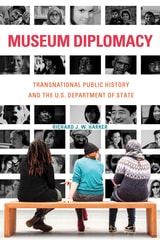
Museum Diplomacy
Transnational Public History and the U.S. Department of StateRichard J. W. Harker
University of Massachusetts Press, 2020
The Museums Connect program stands at the intersection of transnational public history and international diplomacy. Sponsored by the U.S. Department of State and administered by the American Alliance of Museums, this program partners U.S. museums and non-U.S. museums in projects designed to foster community collaboration and engagement. Museum Diplomacy focuses on three Museums Connect projects arranged between the United States and South Africa, Morocco, and Afghanistan, respectively. Utilizing a diverse range of oral interviews, Richard J. W. Harker explores how museums negotiate national boundaries, institutional and local histories, and post-9/11 geopolitical interests. Working in different political and professional contexts, museum partners have built community-driven collaborative exhibitions and projects that tell transnational stories.
As more historic sites and museums seek to surmount social, cultural, and economic barriers between themselves and their communities in their exhibitions and programming, the Museums Connect program provides important lessons on how to overcome entrenched hierarchies of power in public history.
As more historic sites and museums seek to surmount social, cultural, and economic barriers between themselves and their communities in their exhibitions and programming, the Museums Connect program provides important lessons on how to overcome entrenched hierarchies of power in public history.
[more]