Results by title
448 books match the query 'Interviews' and 29 start with m
MAKING STORIES, MAKING SELVES
FEMINIST REFLECTIONS ON THE HOLOCAUSTR. Ruth Linden
The Ohio State University Press, 1995
Urged forward by these silences, Linden, a feminist and sociologist, began to interview Jewish Holocaust survivors in 1983. As Linden interprets survivors' accounts of the death camps and the resistance, she reveals complex ways in which selves are constructed through storytelling. The stories that unfold are continuously fashioned and refashioned—never stripped of context or frozen in time. What emerges is an unexpectedly elegant montage in which interviewee, interviewer, and author are intertwined.
Linden's meetings with survivors and her encounters with their stories transformed her as a feminist, a Jew, and a social scientist. Her analysis reveals the intimate connections between an ethnographer's lived experience and her interpretations of others'. Linden's reflections on the process of ethnography belie the rhetoric of positivism in the social sciences. They will inspire other scholars to break free of research and writing practices in their own disciplines that efface the ineluctable bond between knower and known. All readers will be challenged to reexamine the Holocaust in an intensely personal light and to reconsider the meanings of survival in our own time.
Cutting across the boundaries of ethnography and autobiography to create a new kind of text, Making Stories, Making Selves offers a significant contribution to interpretive social science and the literature of the Holocaust. Linden's original and courageous work is vital reading for Holocaust scholars, students of modern Jewish life, sociologists, feminist theorists, and all readers seeking to understand their own relationship to the Holocaust.
Machinic Eros
Writings on JapanFélix Guattari
University of Minnesota Press, 2015
The French philosopher Félix Guattari frequently visited Japan during the 1980s and organized exchanges between French and Japanese artists and intellectuals. His immersion into the “machinic eros” of Japanese culture put him into contact with media theorists such as Tetsuo Kogawa and activists within the mini-FM community (Radio Home Run), documentary filmmakers (Mitsuo Sato), photographers (Keiichi Tahara), novelists (Kobo Abe), internationally recognized architects (Shin Takamatsu), and dancers (Min Tanaka). From pachinko parlors to high-rise highways, alongside corporate suits and among alt-culture comrades, Guattari put himself into the thick of Japanese becomings during a period in which the bubble economy continued to mutate. This collection of essays, interviews, and longer meditations shows a radical thinker exploring the architectural environment of Japan’s “machinic eros.”
Making Care Work
Employed Mothers in the New Childcare MarketUttal, Lynet
Rutgers University Press, 2002
As ever more women work outside the home, ever more families employ childcare workers. In the absence of government regulations or social models that clearly define the childcare provider’s role, mothers worry about the quality of care their children are getting. By connecting the personal level of mothers’ daily experiences to the larger political, economic, and ideological context of childcare, Lynet Uttal describes and explains how mothers rely on their relationship with the providers to monitor and influence the quality of care their children receive. Whereas other studies have emphasized how mothers undervalue and exploit providers, this book paints a more nuanced picture, arguing that the ties between adults who share in the care of children creates neither heroes nor victims. This ethnography reveals that mothers are often reluctant to discuss their concerns with their childcare providers. Uttal shows how mothers walk a fine line between wanting to believe in the quality of care they have chosen, and the fact that they might have made a mistake. Catalyzed by their worries about the quality of care, mothers develop complex relationships with the women—and most are women—who look after their children.
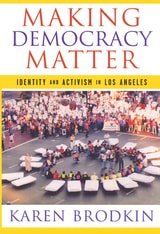
Making Democracy Matter
Identity and Activism in Los AngelesBrodkin, Karen
Rutgers University Press, 2007
This book seeks to answer these questions through conversations and interviews with a generation of activists who came of political age in Los Angeles during the 1990s. Politically schooled in the city's vibrant immigrant worker and youth-led campaigns against xenophobic and racist voter initiatives, these young activists created a new political cohort with its own signature of democratic practice and vision. Combining analytical depth, engaging oral history, and rich description, this absorbing and accessible book will appeal to all those interested in social movements, racial justice, the political activism of women and men of color, and the labor movement today.
Making It
Success in the Commercial KitchenEllen T. Meiser
Rutgers University Press, 2025
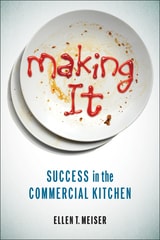
Making It explores how the career path of restaurant workers depends on their accumulation of kitchen capital, a cultural asset based not only on their ability to cook but also on how well they can fit into the workplace culture and negotiate its hierarchical structures. After spending 120 hours working in a restaurant kitchen and interviewing fifty chefs and cooks from fine-dining establishments and greasy-spoon diners across the country, sociologist Ellen Meiser discovers many strategies for accumulating kitchen capital. For some, it involves education and the performance of expertise; others climb the ranks by controlling their own emotions or exerting control over coworkers. Making It offers a close and personal look at how knowledge, power, and interpersonal skills come together to determine who succeeds and who fails in the high-pressure world of the restaurant kitchen.
Making Waves
The Rag Radio InterviewsThorne Dreyer
University of Texas Press, 2022
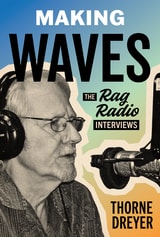
Journalist and activist Thorne Dreyer has interviewed hundreds of people for Rag Radio since it went on the air in 2009. Making Waves features transcripts from twenty-one of those interviews, with everyone from TV anchor Dan Rather to Senator Bernie Sanders to monumental sculptor Bob “Daddy-O” Wade. The Rag Radio archive is now part of the collections at the Briscoe Center for American History at the University of Texas.
As a student at the University of Texas in the 1960s, Dreyer joined the Students for a Democratic Society (SDS) and became heavily involved in civil rights and the movement to end the war in Vietnam. He also helped create and edit two underground newspapers—The Rag in Austin and Space City! in Houston—and later ran a public relations business with a diverse list of clients, including progressive political campaigns. Dreyer credits the influence of his artist mother and writer father and their lively salons plus his journalism career, his political and social activism, and his stage acting experience for his interviewing success—“Put it all in a blender and Rag Radio was bound to whip up.”
Making Waves holds a wealth of information, but Dreyer makes it read like conversations among friends. “I always tell my guests that I want the discussion to be informal,” Dreyer says. “We’re going to record some important history here, but we also want to have fun.”

Making the Most of Your Library Career
Lois Stickell
American Library Association, 2014
Manzanar Mosaic
Essays and Oral Histories on America's First World War II Japanese American Concentration CampArthur A. Hansen
University Press of Colorado, 2023
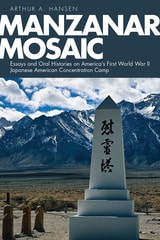
To begin, Hansen presents two essays, the first centering on his work with Ronald Larson in the mid-1970s on the history of Doho, a Japanese and English dual-language newspaper, and the second an article with David Hacker on revisionist ethnic perspectives of the Manzanar “riot.” A second section is composed of five oral history interviews of selected camp personalities—a female Nisei journalist, a male Nisei historical documentarian, a male Kibei Communist block manager, the Caucasian wife and comrade of the block manager, and the male Kibei who was the central figure in the Manzanar Riot/Revolt—that offer powerful insight into the controversial content of the two essays that precede them.
Manzanar can be understood only by being considered within the much wider context of Japanese American community formation and contestation before, during, and after World War II. A varied collection of scholarly articles and interviews, Manzanar Mosaic engages diverse voices and considers multiple perspectives to illuminate aspects of the Japanese American community, the ethnic press, the Manzanar concentration camp, and the movement for redress and reparations.
Marikana
Voices from South Africa’s Mining MassacrePeter Alexander
Ohio University Press, 2013
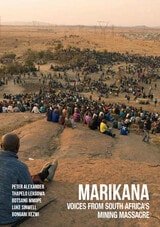
The Marikana Massacre of August 16, 2012, was the single most lethal use of force by South African security forces against civilians since the end of apartheid. Those killed were mineworkers in support of a pay raise. Through a series of interviews conducted with workers who survived the attack, this account documents and examines the controversial shootings in great detail, beginning with a valuable history of the events leading up to the killing of workers, and including eyewitness accounts of the violence and interviews with family members of those who perished.
While the official Farlam Commission investigation of the massacre is still ongoing, many South Africans do not hold much confidence in the government’s ability to examine its own complicity in these events. Marikana, on the other hand, examines the various roles played by the African National Congress, the mine company, and the National Union of Mineworkers in creating the conditions that led to the massacre. While the commission’s investigations take place in a courtroom setting tilted toward those in power, Marikana documents testimony from the mineworkers in the days before official statements were even gathered, offering an unusually immediate and unfiltered look at the reality from the perspective of those most directly affected. Enhanced by vivid maps that make clear the setting and situation of the events, Marikana is an invaluable work of history, journalism, sociology, and activism.
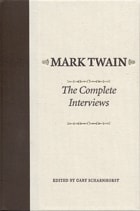
Mark Twain
The Complete InterviewsEdited by Gary Scharnhorst
University of Alabama Press, 2006
Mark Twain: The Complete Interviews is an annotated and indexed scholarly edition of every known interview with Mark Twain. In these interviews that span his entire career, Twain discusses matters as varied as his lecture style, his writings, and his bankruptcy, while holding forth on such timeless issues as human nature, politics, war and peace, government corruption, humor, race relations, imperialism, international copyright, the elite, and his impressions of other writers.
These interviews are oral performances in their own right and a new basis for evaluating contemporary responses to Twain’s writings. The interviews are records of verbal conversations rather than texts written in Twain’s hand. Four interviews are new to scholarship; fewer than a fifth have ever been reprinted.
.
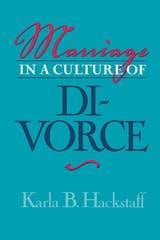
Marriage In A Culture Of Divorce
Karla B. Hackstaff
Temple University Press, 1999
Marriage in a Culture of Divorce examines the shifting meanings of divorce and gender for two generations of middle-class, married couples. Hackstaff finds that new social and economic conditions both support and undermine the efforts of spouses to redefine the meaning of marriage in a culture of divorce. The definitions of marriage, divorce, and gender have changed for all, but more for the young than the old, and more for women than for men. While some spouses in both generations believe that marriage is for life and that men should dominate in marriage, the younger generation of spouses increasingly construct marriage as contingent rather than forever.
Hackstaff presents this evidence in archival case studies of couples married in the 1950s, which she then contrasts with her own case studies of people married during the 1970s, finding evidence of a significant shift in who does the emotional work of maintaining the relationship. It is primarily the woman in the '50s couples who "monitors" the marriage, whereas in the '70s couples both husband and wife support a "marital work ethic," including couples therapy in some cases.
The words and actions of the couples Hackstaff follows in depth - the '50s Stones, Dominicks, Hamptons, and McIntyres, and the '70s Turners, Clement-Leonettis, Greens, Kason-Morrises, and Nakatos -- reveal the changes and contradictory tendencies of married life in the U.S. There are traditional relationships characterized by male dominance, there are couples striving for gender equality, there are partners pulling together, and partners pulling apart.
Those debating "family values" should not forget, Hackstaff contends, that there are costs associated with marriage culture as well as divorce culture, and they should view divorce as a transitional means for defining marriage in an egalitarian direction. She convincingly illustrates her controversial position, that although divorce has its cost to society, the divorce culture empowers wives and challenges the legacy of male dominance that previously set the conditions for marriage endurance.
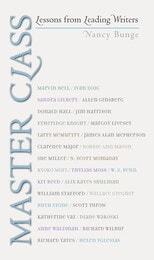
Master Class
Lessons from Leading WritersNancy Bunge
University of Iowa Press, 2005
Master Class: Lessons from Leading Writers gathers more than two decades of wisdom from twenty-nine accomplished authors. It offers previously unpublished interviews along with freshly edited versions of ten interviews from Nancy Bunge's well-received previous collection, Finding the Words. The first section, Theory, incorporates interviews which document the golden age of writing programs in which authors with a strong sense of social and cultural responsibility taught as seriously as they wrote. These conversations delve into the writers' philosophies and teaching methods. The second section, Practice, presents interviews with authors who discuss how they've approached the writing of particular works. Altogether the interviews introduce authors as inspirational models and provide insightful techniques for other writers to try. One piece of advice recurs with striking consistency: to produce fresh, interesting work, aspiring writers must develop a passionate self-trust. This rule has an essential corollary: improving as a writer means constantly stretching oneself with new information and skills. Sure to interest writing and literature teachers as well as writers at every stage of development, Master Class is highly recommended for undergraduate and graduate writing courses.
Interviews with Marvin Bell, Ivan Doig, Sandra Gilbert, Allen Ginsberg, Donald Hall, Jim Harrison, Etheridge Knight, Margot Livesey, Larry McMurtry, James Alan McPherson, Clarence Major, Bobbie Ann Mason, Sue Miller, N. Scott Momaday, Kyoko Mori, Thylias Moss, W. S. Penn, Kit Reed, Alix Kates Shulman, William Stafford, Wallace Stegner, Ruth Stone, Scott Turow, Katherine Vaz, Diane Wakoski, Anne Waldman, Richard Wilbur, Richard Yates, and Helen Yglesias.
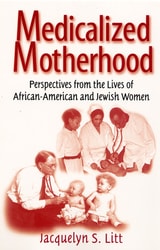
Medicalized Motherhood
Perspectives from the Lives of African-American and Jewish WomenJacquelyn S. Litt
Rutgers University Press, 1999
When Jacquelyn S. Litt interviewed African-American and Jewish women who raised their children in the 1930s and 1940s, she found that these women responded to experts' advice in ways uniquely shaped by their ethnicity, race, and class. For middle-class African-American and Jewish women, medicalization took place in ethnically/racially segregated networks and functioned as a collectively held strategy for social advance as much as a set of technical practices for raising healthy children. For poor, single African-American mothers, everyday networks offered limited access to medical institutions or mainstream norms. Medical discourse was largely controlled by white women and men, which left these women disempowered in medical institutions and marginal to dominant definitions of acceptable mothering.
Litt's book is enriched with many narratives from the mothers themselves. Both the women's voices and her acute sociological research bring to light how medicalized motherhood, while not the single cause of difference and inequality among the women, was a site where they were produced.
Memories of Revolt
The 1936–1939 Rebellion and the Palestinian National PastTed Swedenburg
University of Arkansas Press, 2003
Memphis Tennessee Garrison
The Remarkable Story of a Black Appalachian WomanAncella R. Bickley
Ohio University Press, 2001
As a black Appalachian woman, Memphis Tennessee Garrison belonged to a demographic category triply ignored by historians.
The daughter of former slaves, she moved to McDowell County, West Virginia, at an early age and died at ninety-eight in Huntington. The coalfields of McDowell County were among the richest seams in the nation. As Garrison makes clear, the backbone of the early mining work force—those who laid the railroad tracks, manned the coke ovens, and dug the coal—were black miners. These miners and their families created communities that became the centers of the struggle for unions, better education, and expanded civil rights. Memphis Tennessee Garrison, an innovative teacher, administrative worker at U.S. Steel, and vice president of the National Board of the NAACP at the height of the civil rights struggle (1963-66), was involved with all of these struggles.
In many ways, this oral history, based on interview transcripts, is the untold and multidimensional story of African American life in West Virginia, as seen through the eyes of a remarkable woman. She portrays a courageous people who organize to improve their working conditions, send their children to school and then to college, own land, and support a wide range of cultural and political activities.
Mestizo in America
Generations of Mexican Ethnicity in the Suburban SouthwestThomas Macias
University of Arizona Press, 2006
Metafilm
Materialist Rhetoric and Reflexive CinemaChristopher Carter
The Ohio State University Press, 2018
Ultimately, Metafilm reframes materialism as a multimodal composing-in-action, or reflexive materialism, focusing on movies that dramatize their entanglement in economic and historical trauma while provoking forms of resistance during and after viewing. Carter contends that even as we recognize the division of social power in the films, we must also recognize how the concept is subversive and eludes control. In looking at the interplay between the films’ content and their production, circulation, and reception, Carter explores how the films persuade us to identify with onscreen worlds before probing our expectations—validating some, rejecting others, and sometimes proposing new ways of watching altogether.
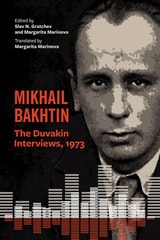
Mikhail Bakhtin
The Duvakin Interviews, 1973Slav N Gratchev
Bucknell University Press, 2019
Published by Bucknell University Press. Distributed worldwide by Rutgers University Press.
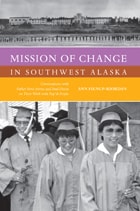
Mission of Change in Southwest Alaska
Conversations with Father René Astruc and Paul Dixon on Their Work with Yup’ik PeopleEdited by Ann Fienup-Riordan
University of Alaska Press, 2012
Mission of Change is an oral history describing various types of change—political, social, cultural, and religious—as seen through the eyes of Father Astruc and Paul Dixon, non-Natives who dedicated their lives to working with the Yup’ik people. Their stories are framed by the an analytic history of regional changes, together with current anthropological theory on the nature of cultural change and the formation of cultural identity. The book presents a subtle and emotionally moving account of the region and the roles of two men, both of whom view issues from a Catholic perspective yet are closely attuned to and involved with changes in the Yup’ik community.
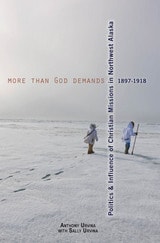
More Than God Demands
Politics and Influence of Christian Missions in Northwest Alaska, 1897-1918Anthony Urvina with Sally Urvina
University of Alaska Press, 2016
Anthony Urvina, whose mother was an orphan raised at one of the missions established as part of this program, draws on details from her life in order to present the first full history of this missionary effort. Smoothly combining personal and regional history, he tells the story of his mother’s experience amid a fascinating account of Alaska Native life and of the men and women who came to Alaska to spread the word of Christ, confident in their belief and unable to see the power of the ancient traditions they aimed to supplant.
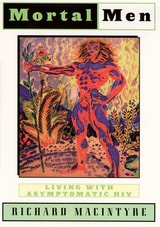
Mortal Men
Living with Asymptomatic HIVMac Intyre, Richard
Rutgers University Press, 1999
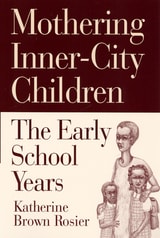
Mothering Inner-City Children
The Early School YearsKatherine Brown Rosier
Rutgers University Press, 2000
There are few groups more stereotyped and demonized than "welfare mothers," particularly low-income, African American women raising children in the inner city. But what are the day-to-day stories behind the stereotypes? How do African American mothers (both single women and those living with a partner) in poor families handle their roles as parents? What support networks do they rely on to help raise their children? How do their personal histories affect their parenting styles?
Sociologist Katherine Brown Rosier spent three years interviewing and observing Indianapolis mothers as their children made the transition from a Head Start program to kindergarten and through second grade, analyzing the families in their homes, schools, and other social settings. She brings forth the voices of the mothers, children, and their teachers, providing a multifaceted picture of how low-income African American families cope with the daily pressures and responsibilities of child rearing.
Rosier also examines how larger socio-economic factors influence these families' specific circumstances and histories. What child-rearing strategies do these mothers employ, she asks, to promote a smooth transition into school despite complex discontinuities among their homes, schools, and communities? How are these strategies viewed and supported or impeded by teachers, family, friends, and neighbors?
Until now, most research on poor African American families has focused so intently on the problems confronted by this seemingly homogenous group that the routine practices of every day life have been ignored. In this unique project, Rosier allows the families' individual experiences and thoughts to contribute to and complicate current research.
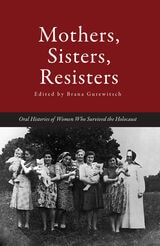
Mothers, Sisters, Resisters
Oral Histories of Women Who Survived the HolocaustBrana Gurewitsch
University of Alabama Press, 1999
Powerful oral histories revealing the unique experiences of women during the Holocaust.
In Mothers, Sisters, Resisters, 25 survivors of the Holocaust furnish compelling and historically vital testimony that illuminates and explores Jewish women's experiences during that terrible period. In entries that preserve each voice, personality, and style, survivors describe their efforts to evade Nazi laws and subsequent dehumanization, protect their children and siblings, and maintain their Jewish identity.
Throughout each narrative, from Brandla Small's description of having her child dragged from her arms at Auschwitz, to Eva Schonbrun's remembrances of her sister who refused to leave her siblings and save herself, to Emilie Schindler's account of rescuing Jews left abandoned on a cattle car, we become intimately involved with each woman's struggle and eventual survival. We also gain a new appreciation and understanding of the Holocaust experiences unique to women.
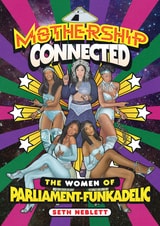
Mothership Connected
The Women of Parliament-FunkadelicSeth Neblett
University of Texas Press, 2025
An oral history with the women of Parliament-Funkadelic, from forming the band to landing the mothership.
Parliament-Funkadelic is perhaps the greatest funk band ever assembled. Yet at the time of the group’s induction into the Rock & Roll Hall of Fame, none of the women who helped create the sound and performed in P-Funk were invited to the ceremony and their contributions have been largely overlooked.
Mothership Connected tells the story of Mallia Franklin, Lynn Mabry, Dawn Silva, Debbie Wright, and Shirley Hayden, all of whom were instrumental in making Parliament-Funkadelic, as well as the spin-off groups Parlet and the Brides of Funkenstein, into the legends they are today. Assembled by Seth Neblett, son of the “Queen of Funk” Mallia Franklin, and filled with the voices of funk icons like George Clinton, Sly Stone, Bootsy Collins, and the women themselves, this oral history makes clear why these “architects” at the “core” of P-Funk were both essential—and erased. From Franklin introducing Bootsy Collins to Clinton, to the Brides’ top-10 hit “Disco to Go,” to the drugs that helped destroy the group, this book reveals the hidden lives and uncomfortable truths of life in P-Funk. More than sex, drugs, and rock and roll, Mothership Connected is about Black women navigating a tumultuous era and industry to become musical pioneers. Now, after decades in the shadows, these genre-defining women are finally telling their story.

Mountains of Music
West Virginia Traditional Music from GoldensealJohn Lilly
University of Illinois Press, 1999
The most complete survey to date of the vibrant strands of this music and its colorful practitioners, Mountains of Music delineates a unique culture where music and music making are part of an ancient and treasured heritage. The sly humor, strong faith, clear regional identity, and musical convictions of these performers draw the reader into families and communities bound by music from one generation to another. For devotees as well as newcomers to this infectiously joyous and heartfelt music, Mountains of Music captures the strength of tradition and the spontaneous power of living artistry.
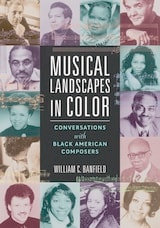
Musical Landscapes in Color
Conversations with Black American ComposersWilliam C. Banfield
University of Illinois Press, 2023
Composers featured: Michael Abels, H. Leslie Adams, Lettie Beckon Alston, Thomas J. Anderson, Dwight Andrews, Regina Harris Baiocchi, David Baker, William C. Banfield, Ysaye Maria Barnwell, Billy Childs, Noel DaCosta, Anthony Davis, George Duke, Leslie Dunner, Donal Fox, Adolphus Hailstork, Jester Hairston, Herbie Hancock, Jonathan Holland, Anthony Kelley, Wendell Logan, Bobby McFerrin, Dorothy Rudd Moore, Jeffrey Mumford, Gary Powell Nash, Stephen Newby, Coleridge-Taylor Perkinson, Michael Powell, Patrice Rushen, George Russell, Kevin Scott, Evelyn Simpson-Curenton, Hale Smith, Billy Taylor, Frederick C. Tillis, George Walker, James Kimo Williams, Julius Williams, Tony Williams, Olly Wilson, and Michael Woods
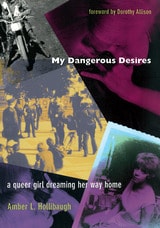
My Dangerous Desires
A Queer Girl Dreaming Her Way HomeAmber L. Hollibaugh
Duke University Press, 2000
In looking at themes such as the relationship between activism and desire or how sexuality can be intimately tied to one’s class identity, Hollibaugh fiercely and fearlessly analyzes her own political development as a response to her unique personal history. She explores the concept of labeling and the associated issues of categories such as butch or femme, transgender, bisexual, top or bottom, drag queen, b-girl, or drag king. The volume includes conversations with other writers, such as Deirdre English, Gayle Rubin, Jewelle Gomez, and Cherríe Moraga. From the groundbreaking article “What We’re Rollin’ Around in Bed With” to the radical “Sex Work Notes: Some Tensions of a Former Whore and a Practicing Feminist,” Hollibaugh charges ahead to describe her reality, never flinching from the truth. Dorothy Allison’s moving foreword pays tribute to a life lived in struggle by a working-class lesbian who, like herself, refuses to suppress her dangerous desires.
Having informed many of the debates that have become central to gay and lesbian activism, Hollibaugh’s work challenges her readers to speak, write, and record their desires—especially, perhaps, the most dangerous of them—“in order for us all to survive.”
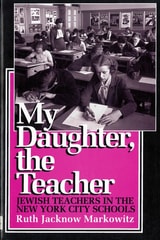
My Daughter, the Teacher
Jewish Teachers in the New York City SchoolsMarkowitz, Ruth Jacknow
Rutgers University Press, 1993
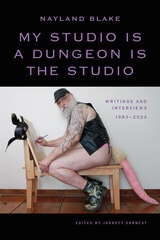
My Studio Is a Dungeon Is the Studio
Writings and Interviews, 1983–2024Nayland Blake. Edited and with an Introduction by Jarrett Earnest.
Duke University Press, 2025