Results by title
645 books match the query 'Judaism' and 56 start with m

MT
Kabbalat Shabbat - CustomElyse D. Frishman
Central Conference of American Rabbis, 0
MT
Weekdays/Festivals: JBI - LP EditionElyse D. Frishman
Central Conference of American Rabbis, 0
Machzor, Volume 1
Challenge and ChangeRabbi Hara E. Person
Central Conference of American Rabbis, 2010
After having developed and published a new High Holy Day machzor, the CCAR invites Reform Jews to engage in study on related themes. This collection includes a wealth of material for individual or group study, including presentations on Un'taneh Tokef, Kol Nidrei, and Avinu Malkeinu, High Holy Day-themed essays from back issues of the CCAR Journal, and discussion questions.
Maimonides and Spinoza
Their Conflicting Views of Human NatureJoshua Parens
University of Chicago Press, 2012
Until the last century, it was generally agreed that Maimonides was a great defender of Judaism, and Spinoza—as an Enlightenment advocate for secularization—among its key opponents. However, a new scholarly consensus has recently emerged that the teachings of the two philosophers were in fact much closer than was previously thought. In his perceptive new book, Joshua Parens sets out to challenge the now predominant view of Maimonides as a protomodern forerunner to Spinoza—and to show that a chief reason to read Maimonides is in fact to gain distance from our progressively secularized worldview.
Maimonides' "Guide of the Perplexed"
A Philosophical GuideAlfred L. Ivry
University of Chicago Press, 2016
Drawing on a lifetime of study, Alfred L. Ivry has written the definitive guide to the Guide—one that makes it comprehensible and exciting to even those relatively unacquainted with Maimonides’ thought, while also offering an original and provocative interpretation that will command the interest of scholars. Ivry offers a chapter-by-chapter exposition of the widely accepted Shlomo Pines translation of the text along with a clear paraphrase that clarifies the key terms and concepts. Corresponding analyses take readers more deeply into the text, exploring the philosophical issues it raises, many dealing with metaphysics in both its ontological and epistemic aspects.

Maimonides' Empire of Light
Popular Enlightenment in an Age of BeliefRalph Lerner
University of Chicago Press, 2000
Lerner describes the brilliant and sometimes wily ways in which Maimonides sought to break through the despair and superstition that gripped the Jewish people's minds, without sacrificing the dignity and core of his message. These writings—presented here in uncommonly accurate, mostly new translations—also reveal that Maimonides was willing to risk the scorn of his contemporaries to enlighten both his own and future generations. By addressing the writings of Maimonides' disciples, including Shem Tov ben Joseph Ibn Falaquera in the mid-thirteenth century and Joseph Albo in the fifteenth century, Lerner shows how this technique was passed on.
In striking contrast to the Enlightenment of the eighteenth century, Maimonides' enlightenment is premised on the inequality of understandings and other differences between the elite and the common people. Instead of scorning the past, Lerner shows, Maimonides' enlightenment invests it with a new and ennobling dignity. A valuable reference for students of political philosophy and Jewish studies, Lerner's elegantly written book also brings to life the richness and relevance of medieval Jewish thought for all those interested in the Jewish tradition.

Maimonides' Ethics
The Encounter of Philosophic and Religious MoralityRaymond L. Weiss
University of Chicago Press, 1991
The gulf between classical philosophy and the Torah made the task of Maimonides extraordinarily difficult. Weiss shows that Maimonides subtly preserves the tension between those traditions while producing a practical accommodation between them. To explain how Maimonides was able to accomplish this twofold goal, Weiss takes seriously the multilevel character of Maimonides' works. Weiss interprets Maimonides as a heterodox thinker who, with utter integrity, faces the Law's encounter with philosophy and gives both the Torah and philosophy their due.
Maimonides' "Guide of the Perplexed" in Translation
A History from the Thirteenth Century to the TwentiethEdited by Josef Stern, James T. Robinson, and Yonatan Shemesh
University of Chicago Press, 2019
A collection of essays by scholars from a range of disciplines, the book unfolds in two parts. The first traces the history of the translations of the Guide, from medieval to modern renditions. The second surveys its influence in translation on Latin scholastic, early modern, and contemporary Anglo-American philosophy, as well as its impact in translation on current scholarship. Interdisciplinary in approach, this book will be essential reading for philosophers, historians, and religious studies scholars alike.
Making History
Studies in Rabbinic History, Literature, and Culture in Honor of Richard L. KalminCarol Bakhos
SBL Press, 2024
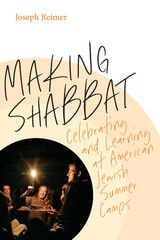
Making Shabbat
Celebrating and Learning at American Jewish Summer CampsJoseph Reimer
Brandeis University Press, 2022
This book tells the story of how Jewish camps have emerged as creators of positive spiritual experiences for Jewish youth in North America. When Jewish camps began at the dawn of the twentieth century, their leaders had little interest in creating Jewish spiritual experiences for their campers. Yet over the course of the past century, Jewish camps have gradually moved into providing primal Jewish experiences that diverse campers can enjoy, parents appreciate, and alumni fondly recall. Making Shabbat Real explores how Shabbat at camp became the focal point for these primal Jewish experiences, providing an interesting perspective on changing approaches to Jewish education and identity in North America.
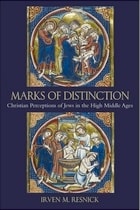
Marks of Distinctions
Christian Perceptions of Jews in the High Middle AgesIrven M. Resnick
Catholic University of America Press, 2012
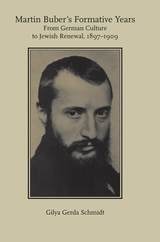
Martin Buber's Formative Years
From German Culture to Jewish Renewal, 1897–1909Gilya Gerda Schmidt
University of Alabama Press, 1995
Martin Buber (1878–1965) has had a tremendous impact on the development of Jewish thought as a highly influential figure in 20th-century philosophy and theology. However, most of his key publications appeared during the last forty years of his life and little is known of the formative period in which he was searching for, and finding, the answers to crucial dilemmas affecting Jews and Germans alike. Now available in paperback, Martin Buber’s Formative Years illuminates this critical period in which the seeds were planted for all of his subsequent work.
During the period from 1897 to 1909, Buber's keen sense of the crisis of humanity, his intimate knowledge of German culture and Jewish sources, and his fearlessness in the face of possible ridicule challenged him to behave in a manner so outrageous and so contrary to German-Jewish tradition that he actually achieved a transformation of himself and those close to him. Calling on spiritual giants of great historical periods in German, Christian, and Jewish history—such as Nicolas of Cusa, Jakob Boehme, Israel Baal Shem Tov, Rabbi Nachman of Brazlav, Johann Wolfgang von Goethe, and Friedrich Nietzsche—Buber proceeded to subvert the existing order by turning his upside-down world of slave morality right side up once more.
By examining the multitude of disparate sources that Buber turned to for inspiration, Gilya Gerda Schmidt elucidates Buber's creative genius and his contribution to turn-of-the-century Jewish renewal. This comprehensive study concludes that Buber was successful in creating the German-Jewish symbiosis that emancipation was to have created for the two peoples but that this synthesis was tragic because it came too late for practical application by Jews in Germany.
Matthew within Judaism
Israel and the Nations in the First GospelAnders Runesson
SBL Press, 2020
In this collection of essays, leading New Testament scholars reassess the reciprocal relationship between Matthew and Second Temple Judaism. Some contributions focus on the relationship of the Matthean Jesus to torah, temple, and synagogue, while others explore theological issues of Jewish and gentile ethnicity and universalism within and behind the text.
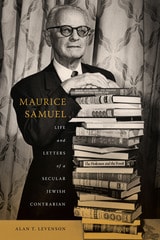
Maurice Samuel
Life and Letters of a Secular Jewish ContrarianAlan T. Levenson
University of Alabama Press, 2022
An intellectual biography that reassesses one of the premier Jewish humanists of the mid-twentieth century
In Maurice Samuel: Life and Letters of a Secular Jewish Contrarian, Alan T. Levenson captures the life, works, and milieu of the Romanian-born, English-educated, American belletrist Maurice Samuel. A diaspora intellectual—or a rooted cosmopolitan, as Levenson describes him—Samuel made an indelible mark on many features of contemporary Jewish thought and culture. A generalist in an age of experts, an independent scholar in an age of rabbis and professors, Samuel was one of the most productive and visible members of the group dubbed the “other” New York Jewish intellectuals.
His fame as a public intellectual and popular speaker were well warranted: no mere popularizer, Samuel contributed significantly to four seemingly unrelated but critical areas of modern Jewish thought. Samuel is characterized by some as principally a Zionist, by others as an accomplished translator and many Americans’ first entrée into the world of Yiddish literature, by still others as a polemicist and campaigner against anti-Semitism, and finally as a media-savvy Biblical critic, essayist, and radio personality. But he was all of these things, since Samuel succeeded in an era when it was possible to be a public intellectual without being an expert.
Drawing on Samuel’s vast literary opus, as well as previously unexplored archival material from three continents, this study writes Samuel back into the history of mid-twentieth-century American letters. Levenson argues that Samuel’s varied and substantive contributions demand reconsideration of our assumptions about the means and ends of cultural transmission, and merit him a place as one of twentieth-century American Jewry’s most significant cultural and intellectual voices.
Meaning and Context in the Thanksgiving Hymns
Linguistic and Rhetorical Perspectives on a CollectionTrine Bjørnung Hasselbalch
SBL Press, 2015
A new reading strategy for the Thanksgiving Hymns
Hasselbalch asserts that current theories about the social background of Thanksgiving Hymns are unable to explain its heterogeneous character. Instead the author suggests a reading strategy that leaves presumptions about the underlying social contexts aside to instead consider the collection’s hybridity as a clue to understanding the collection as a whole.
Features:
- Systemic Functional Linguistics applied to four Hodayot
- Analysis that highlights the role of a mediator in the agency of God
- An approach that highlights the unity of the collection
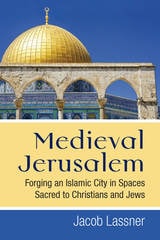
Medieval Jerusalem
Forging an Islamic City in Spaces Sacred to Christians and JewsJacob Lassner
University of Michigan Press, 2017
Examining Muslim historiography and religious lore in light of Jewish traditions about the city, Jacob Lassner points out how these reworked Jewish traditions and the imposing monumental Islamic architecture of the city were meant to demonstrate that Islam had superseded Judaism and Christianity as the religion for all monotheists. He interrogates the literary sources of medieval Islamic historiography and their modern interpreters as if they were witnesses in a court of law, and applies the same method for the arguments about the monuments of the city’s material culture, including the great archaeological discoveries along the south wall of the ancient Temple Mount.
This book will be of interest to a broad range of readers given the significance of the city in the current politics of the Near East. It will in part serve as a corrective to narratives of Jerusalem’s past that are currently popular for scholarly and political reasons.
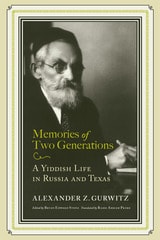
Memories of Two Generations
A Yiddish Life in Russia and TexasAlexander Z. Gurwitz, Edited and Introduced by Bryan Edward Stone
University of Alabama Press, 2022
The 1935 autobiography of Alexander Ziskind Gurwitz, an Orthodox Jew whose lively recounting of his life in Tsarist Russia and his immigration to San Antonio, Texas, in 1910 captures turbulent changes in early twentieth-century Jewish history
In 1910, at the age of fifty-one, Alexander Ziskind Gurwitz made the bold decision to emigrate with his wife and four children from southeastern Ukraine in Tsarist Russia to begin a new life in Texas. In 1935, in his seventies, Gurwitz composed a retrospective autobiography, Memories of Two Generations, that recounts his personal story both of the rich history of the lost Jewish world of Eastern Europe and of the rambunctious development of frontier Jewish communities in the United States.
In both Europe and America, Gurwitz inhabited an almost exclusively Jewish world. As a boy, he studied in traditional yeshivas and earned a living as a Hebrew language teacher and kosher butcher. Widely travelled, Gurwitz recalls with wit and insight daily life in European shtetls, providing perceptive and informative comments about Jewish religion, history, politics, and social customs. Among the book’s most notable features is his first-hand, insider’s account of the yearly Jewish holiday cycle as it was observed in the nineteenth century, described as he experienced it as a child.
Gurwitz’s account of his arrival in Texas forms a cornerstone record of the Galveston Immigration Movement; this memoir represents the only complete narrative of that migration from an immigrant’s point of view. Gurwitz’s descriptions about the development of a thriving Orthodox community in San Antonio provide an important and unique primary source about a facet of American Jewish life that is not widely known.
Gurwitz wrote his memoir in his preferred Yiddish, and this translation into English by Rabbi Amram Prero captures the lyrical style of the original. Scholar and author Bryan Edward Stone’s special introduction and illuminating footnotes round out a superb edition that offers much to experts and general readers alike.
Memory and Identity in Ancient Judaism and Early Christianity
A Conversation with Barry SchwartzTom Thatcher
SBL Press, 2014
Essential reading for scholars and students interested in sociology and biblical studies
In this collection scholars of biblical texts and rabbinics engage the work of Barry Schwartz, Professor Emeritus in the Department of Sociology at the University of Georgia. Schwartz provides an introductory essay on the study of collective memory. Articles that follow integrate his work into the study of early Jewish and Christian texts. The volume concludes with a response from Schwartz that continues this warm and fruitful dialogue between fields.
Features:
- Articles that integrate the study of collective memory and social psychology into religious studies
- Essays from Barry Schwartz
- Theories applied rather than left as abstract principles
Memory, Oblivion, and Jewish Culture in Latin America
Edited by Marjorie Agosín
University of Texas Press, 2005
Latin America has been a refuge for Jews fleeing persecution from 1492, when Sepharad Jews were expelled from Spain, until well into the twentieth century, when European Jews sought sanctuary there from the horrors of the Nazi Holocaust. Vibrant Jewish communities have deep roots in countries such as Argentina, Mexico, Guatemala, and Chile—though members of these communities have at times experienced the pain of being "the other," ostracized by Christian society and even tortured by military governments. While commonalities of religion and culture link these communities across time and national boundaries, the Jewish experience in Latin America is irreducible to a single perspective. Only a multitude of voices can express it.
This anthology gathers fifteen essays by historians, creative writers, artists, literary scholars, anthropologists, and social scientists who collectively tell the story of Jewish life in Latin America. Some of the pieces are personal tales of exile and survival; some explore Jewish humor and its role in amalgamating histories of past and present; and others look at serious episodes of political persecution and military dictatorship. As a whole, these challenging essays ask what Jewish identity is in Latin America and how it changes throughout history. They leave us to ponder the tantalizing question: Does being Jewish in the Americas speak to a transitory history or a more permanent one?
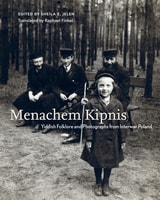
Menachem Kipnis
Yiddish Folklore and Photographs from Interwar PolandSheila E. Jelen
Rutgers University Press, 2026
Menachem Kipnis (1878–1942) was one of the early twentieth-century’s greatest Jewish eastern European ethnomusicologists, folklorists, and photographers. He had a weekly column in the Warsaw Yiddish newspaper Haynt, retelling humorous old folk stories about the fictional Polish town of Chelm, populated exclusively by fools. At the same time, his photographs of Jewish life in eastern Europe regularly appeared in the Forverts (Forward), the most popular Yiddish daily newspaper in the United States. Now, for the first time, Kipnis’s stories and photographs are published together in a single book.
Menachem Kipnis brings these photographs and stories into dialogue with one another, bridging the Jewish communities in Poland and in America during the interwar period. This dialogue, between image and text, between European metropolis and American metropolis, captures a key historical moment when American Jews sought to imagine the lives of their coreligionists in the “Old Country” and eastern European urban Jews sought to distinguish themselves from their Jewish compatriots who were still living in the shtetl. Including an introductory essay, annotations, and an epilogue by Sheila E. Jelen, Menachem Kipnis suggests new ways of understanding both visual and literary depictions of eastern European Jewish culture between the two world wars.
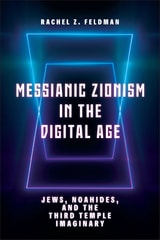
Messianic Zionism in the Digital Age
Jews, Noahides, and the Third Temple ImaginaryRachel Z. Feldman
Rutgers University Press, 2024
Winner of the 2025 American Academy of Religion Award for Excellence in the Study of Religion: Analytical-Descriptive Studies
Winner of the 2023 Association for Jewish Studies Jordan Schnitzer First Book Prize
Judaism in the twenty-first century has seen the rise of the messianic Third Temple movement, as religious activists based in Israel have worked to realize biblical prophecies, including the restoration of a Jewish theocracy and the construction of the third and final Temple on Jerusalem’s Temple Mount. Through groundbreaking ethnographic research, Messianic Zionism in the Digital Age details how Third Temple visions have gained considerable momentum and political support in Israel and abroad .
The role of technology in this movement’s globalization has been critical. Feldman skillfully highlights the ways in which the internet and social media have contributed to the movement's growth beyond the streets of Jerusalem into communities of former Christians around the world who now identify as the Children of Noah (Bnei Noah). She charts a path for future research while documenting the intimate effects of political theologies in motion and the birth of a new transnational Judaic faith.
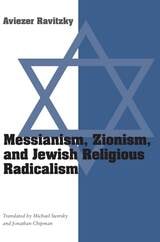
Messianism, Zionism, and Jewish Religious Radicalism
Aviezer Ravitzky
University of Chicago Press, 1996
Ravitzky traces the roots of Haredi ideology, which opposes the Zionist enterprise, and shows how Haredim living in Israel have come to terms with a state to them unholy and therefore doomed. Ravitzky also examines radical religious movements, including the Gush Emunim, to whom the State of Israel is a divine agent. He concludes with a discussion of the recent transformation of Habad Hassidism from conservatism to radical messianism.
This book is indispensable to anyone concerned with the complex confrontation between Jewish fundamentalism and Israeli political sovereignty, especially in light of the tragic death of Israeli Prime Minister Yitzhak Rabin.
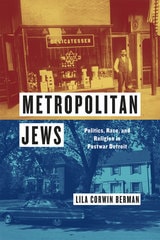
Metropolitan Jews
Politics, Race, and Religion in Postwar DetroitLila Corwin Berman
University of Chicago Press, 2015
Complex and subtle, Metropolitan Jews pushes urban scholarship beyond the tenacious black/white, urban/suburban dichotomy. It demands a more nuanced understanding of the process and politics of suburbanization and will reframe how we think about the American urban experiment and modern Jewish history.
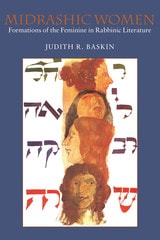
Midrashic Women
Formations of the Feminine in Rabbinic LiteratureJudith R. Baskin
Brandeis University Press, 2002
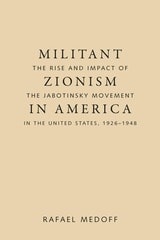
Militant Zionism in America
The Rise and Impact of the Jabotinsky Movement in the United States, 1926-1948Rafael Medoff
University of Alabama Press, 2006
This in-depth look at a controversial faction of American Zionism fills
a void in the story of American Zionism--and in the story of American Judaism.
This book recounts the fascinating and little-known story
of the militant American Zionists who lobbied Congress, rallied American
public opinion, and influenced British-American relations in their campaign
for Jewish statehood in the 1930s and 1940s. Although these activists have
been dismissed as fanatics who fragmented the American Zionist movement,
Rafael Medoff reveals that the faction--which included an Academy Award-winning
screenwriter and several future members of the Israeli parliament--was
more influential than has been previously acknowledged.
These militants stirred America's conscience by placing
controversial newspaper ads, lobbying conservative as well as liberal members
of Congress, and staging dramatic protest rallies. Through these tactics,
Medoff shows, they attracted a wave of support from an extraordinary cross-section
of leading Americans, including comedians Harpo Marx and Carl Reiner, actors
Vincent Price, Marlon Brando, and Jane Wyatt, musician Leonard Bernstein,
and rising young politicians Jacob Javits and Hubert Humphrey. Medoff also
describes the shadowy underground division that smuggled weapons to the
Holy Land in caskets, naming and interviewing for the first time members
of this gunrunning network.
Based on years of archival research and interviews and
written in a compelling style, Militant Zionism in America documents
events that reshaped the American Jewish community, influenced American
foreign policy, and contributed to one of the most extraordinary events
of modern history: the creation of the State of Israel.
Rafael Medoff is a Visiting Scholar at the State University of New York -- Purchase College.
Mishkan Aveilut
Where Grief ResidesRabbi Eric Weiss
Central Conference of American Rabbis, 2019
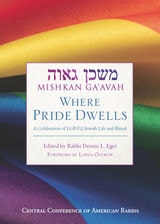
Mishkan Ga'avah
Where Pride Dwells: A Celebration of LGBTQ Jewish Life and RitualRabbi Denise L. Eger
Central Conference of American Rabbis, 2020
This groundbreaking collection of LGBTQ prayers, poems, liturgy, and rituals is both a spiritual resource and a celebratory affirmation of Jewish diversity. Giving voice to the private and public sectors of queer Jewish experience, Mishkan Ga'avah is also a commemoration of the fiftieth anniversary of both the Stonewall Riots and the first pride march, reflecting the longtime advocacy of the Reform Movement for full LGBTQ inclusion.
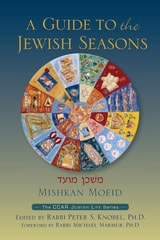
Mishkan Moeid
A Guide to the Jewish SeasonsRabbi Peter S. Knobel, PhD
Central Conference of American Rabbis, 2013
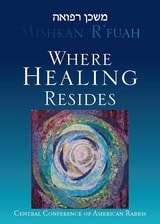
Mishkan R'fuah
Where Healing ResidesRabbi Eric Weiss
Central Conference of American Rabbis, 2013
This beautiful compilation contains contemplative readings and prayers for many different moments of spiritual need, including illness, surgery, treatment, hearing good news, transitions, addiction, infertility, end-of-life, and more.
Mishkan T'filah Weekdays and Festivals Large Print
A Reform SiddurRabbi Elyse D. Frishman
Central Conference of American Rabbis, 2007
This volume is for weekdays and festivals only, and does not include Shabbat liturgy.
This Siddur includes:
- Broad selection of readings, including beloved passages from our Reform liturgical tradition and great poetic writings from throughout Jewish history
- Faithful, elegant translations
- Contemporary, gender-inclusive English
- Theological and stylistic diversity
- Full transliteration
- Extensive commentaries, source notes and usage guides
- More than 100 contemporary and traditional song texts
- Innovative design in two-page spreads
- Two-color printing to enhance usability
Mishkan T'filah Weekdays and Festivals, Non-transliterated
A Reform SiddurRabbi Elyse D. Frishman
Central Conference of American Rabbis, 2007
Includes services for weekdays, festivals, and other occasions of public worship. Mishkan T'filah reflects the full diversity of our Movement, including texts for more than a hundred songs.
This volume is for weekdays and festivals only. This version does not include Shabbat liturgy or transliteration.
This Siddur does include:
- Broad selection of readings, including beloved passages from our Reform liturgical tradition and great poetic writings from throughout Jewish history
- Faithful, elegant translations
- Contemporary, gender-inclusive English
- Theological and stylistic diversity
- Extensive commentaries, source notes and usage guides
- More than 100 contemporary and traditional song texts
- Innovative design in two-page spreads
- Two-color printing to enhance usability
Mishkan T'filah World Union Edition
Elyse D. Frishman
Central Conference of American Rabbis, 2010
Mishkan T'filah for Gatherings
A Reform SiddurRabbi Sue Ann Wasserman
Central Conference of American Rabbis, 2009
A lightweight edition combining weekday and Shabbat services. Perfect for meetings, conferences, kallot, and retreats.
Mishkan T'filah for Shabbat Evening
Rabbi Elsye D. Frishman, Rabbi Hara E Person, Rafael Chaiken, Rabbi Annie Villarreal-Belford
Central Conference of American Rabbis, 2026
Mishkan T’filah: Siddur for Shabbat Evening is a comprehensively revised twentieth-anniversary edition of the prayer book for Friday night. Since its publication in 2007, under the leadership of Rabbi Elyse Frishman, Mishkan T’filah: A Reform Siddur has reinvigorated worship and become a beloved part of the Jewish landscape.
This new edition includes the complete Kabbalat Shabbat and Arvit services, along with the Torah service for communities that read Torah on Friday nights as well as an appendix of favorite songs. This lightweight yet durable hardcover features updated translations, full transliteration, additional liturgical texts, and a refreshed and streamlined layout. A wealth of new readings have been added to the left-hand pages, alongside indispensable classics. Gender-neutral and nonbinary options ensure that all worshipers can feel welcome. Songs that have become integral to Reform services in the past twenty years are conveniently placed next to prayers. Mishkan T’filah: Siddur for Shabbat Evening will rejuvenate your Shabbat experience.
Mishkan T'filah for Travelers
A Reform SiddurRabbi Sue Ann Wasserman
Central Conference of American Rabbis, 2009
Also includes Festival liturgy.
Mishkan T'filah for the House of Mourning, Large Print
A Reform SiddurRabbi Elaine S. Zecher and Rabbi Hara E. Person
Central Conference of American Rabbis, 0
An innovative approach to services in the house of mourning. Includes thoughtful readings and commentary from traditional and contemporary sources. Easy-to-transport paperback format. Available in large print for those with vision impairments.
Mishkan T'filah for the House of Mourning
A Reform SiddurRabbi Elaine S. Zecher and Rabbi Hara E. Person
Central Conference of American Rabbis, 2010
Mishkan T'filah
A Reform Siddur, non-transliterated (Shabbat, Weekdays, Festivals): A Reform SiddurRabbi Elyse D. Frishman
Central Conference of American Rabbis, 2007
Includes services for Shabbat, weekdays, and festivals, as well as other occasions of public worship and texts for more than a hundred songs. Mishkan T'filah reflects the full diversity of our Movement.
This volume does not contain transliteration.
This Siddur includes:
- Broad selection of readings, including beloved passages from our Reform liturgical tradition and great poetic writings from throughout Jewish history
- Faithful, elegant translations
- Contemporary, gender-inclusive English
- Theological and stylistic diversity
- Extensive commentaries, source notes and usage guides
- More than 100 contemporary and traditional song texts
- Innovative design in two-page spreads (additional Shabbat services in linear style also included)
- Two-color printing to enhance usability
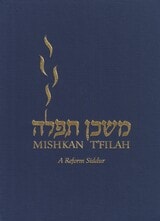
Mishkan T'filah
A Reform Siddur, transliterated (Shabbat, Weekdays, Festivals): A Reform SiddurRabbi Elyse D. Frishman
Central Conference of American Rabbis, 2007
Includes services for Shabbat, weekdays, and festivals, as well as other occasions of public worship and texts for more than a hundred songs. Mishkan T'filah reflects the full diversity of our Movement.
This Siddur includes:
- Broad selection of readings, including beloved passages from our Reform liturgical tradition and great poetic writings from throughout Jewish history
- Faithful, elegant translations
- Contemporary, gender-inclusive English
- Theological and stylistic diversity
- Full transliteration
- Extensive commentaries, source notes and usage guides
- More than 100 contemporary and traditional song texts
- Innovative design in two-page spreads (additional Shabbat services in linear style also included)
- Two-color printing to enhance usability
Mishkan T'filah
Gift EditionElyse D. Frishman
Central Conference of American Rabbis, 2007
Mishkan T'filah
Journal Edition, Non-transliterated: A Reform SiddurRabbi Joel Abraham and Michelle Shapiro Abraham, RJE
Central Conference of American Rabbis, 2010
Note: Page numbers in this special edition are meant to be consistent with the page numbering of the standard, complete edition of Mishkan T'filah. However, because the Journal Edition does not contain some of the material from the complete edition, there are several jumps in page numbering in this edition.
Mishkan T'filah
Journal Edition: A Reform SiddurRabbi Joel Abraham and Michelle Shapiro Abraham
Central Conference of American Rabbis, 2010
Note: Page numbers in this special edition are meant to be consistent with the page numbering of the standard, complete edition of Mishkan T'filah. However, because the Journal Edition does not contain some of the material from the complete edition, there are several jumps in page numbering in this edition.
Mishkan T'filah
Large Print, Shabbat: A Reform SiddurRabbi Elyse D. Frishman
Central Conference of American Rabbis, 0
Including services for Shabbat and texts for more than a hundred songs, Mishkan T'filah reflects the full diversity of our Movement. Available in large print for the visually impaired.
This volume is for Shabbat only, and does not include weekday and festival liturgy.
This Siddur includes:
- Broad selection of readings, including beloved passages from our Reform liturgical tradition and great poetic writings from throughout Jewish history
- Faithful, elegant translations
- Contemporary, gender-inclusive English
- Theological and stylistic diversity
- Full transliteration
- Extensive commentaries, source notes and usage guides
- More than 100 contemporary and traditional song texts
- Innovative design in two-page spreads (additional Shabbat services in linear style also included)
- Two-color printing to enhance usability
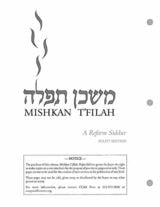
Mishkan T'filah
Pulpit Edition: A Reform SiddurRabbi Elyse D. Frishman
Central Conference of American Rabbis, 2010
Purchase of this volume grants the buyer the right to make copies on a one-time basis for the purpose of practice or preparation only. These pages are not to be used for the creation of new services or for publication of any kind.
Each page contains a copyright notice.
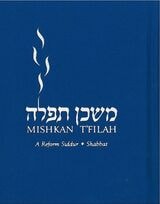
Mishkan T'filah
Shabbat, non-transliterated: A Reform SiddurRabbi Elyse D. Frishman
Central Conference of American Rabbis, 0
Including services for Shabbat and texts for more than a hundred songs, Mishkan T'filah reflects the full diversity of our Movement. This volume is for Shabbat only and does not include weekday and festival liturgy.
This volume does not contain transliteration.
This Siddur includes:
- Broad selection of readings, including beloved passages from our Reform liturgical tradition and great poetic writings from throughout Jewish history
- Faithful, elegant translations
- Contemporary, gender-inclusive English
- Theological and stylistic diversity
- Extensive commentaries, source notes and usage guides
- More than 100 contemporary and traditional song texts
- Innovative design in two-page spreads (additional Shabbat services in linear style also included)
- Two-color printing to enhance usability
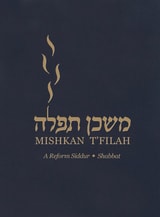
Mishkan T'filah
Shabbat, transliterated: A Reform SiddurRabbi Elyse D. Frishman
Central Conference of American Rabbis, 0
Including services for Shabbat and texts for more than a hundred songs, Mishkan T'filah reflects the full diversity of our Movement.
This volume is for Shabbat only and does not include weekday and festival liturgy.
This Siddur includes:
- Broad selection of readings, including beloved passages from our Reform liturgical tradition and great poetic writings from throughout Jewish history
- Faithful, elegant translations
- Contemporary, gender-inclusive English
- Theological and stylistic diversity
- Full transliteration
- Extensive commentaries, source notes and usage guides
- More than 100 contemporary and traditional song texts
- Innovative design in two-page spreads (additional Shabbat services in linear style also included)
- Two-color printing to enhance usability
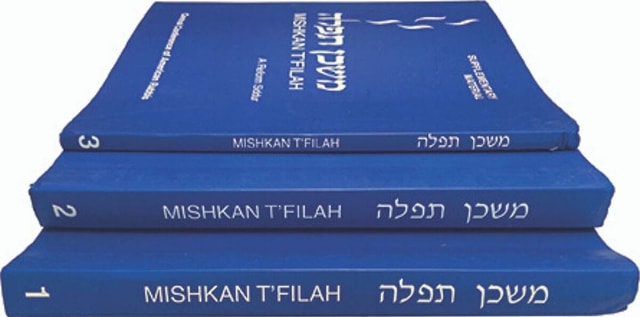
Mishkan T'filah
Special Large Print Edition - Three-Volume Set: A Reform SiddurRabbi Elyse D. Frishman
Central Conference of American Rabbis, 0
This Special Large Print edition is an oversize three volume set, created with the support of Women of Reform Judaism and in consultation with the Jewish Braille Institute. Each spiral bound volume uses specific layout and fonts meant to make the pages of Mishkan T'filah accessible to those with significant visual impairment.
Available only as a set of 3:
Volume 1 - Shabbat
Volume 2 - Weekdays and Festivals
Volume 3 - Supplementary Material (Blessings for the Home, Songs, Sources, Permissions)
Coil Binding
Hebrew-opening
Transliterated
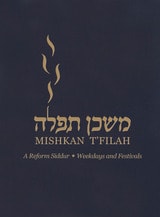
Mishkan T'filah
Weekdays/Festivals, transliterated: A Reform SiddurRabbi Elyse D. Frishman
Central Conference of American Rabbis, 0
Includes services for weekdays, festivals, and other occasions of public worship. Mishkan T'filah reflects the full diversity of our Movement, including texts for more than a hundred songs.
This volume is for weekdays and festivals only and does not include Shabbat liturgy.
This Siddur includes:
- Broad selection of readings, including beloved passages from our Reform liturgical tradition and great poetic writings from throughout Jewish history
- Faithful, elegant translations
- Contemporary, gender-inclusive English
- Theological and stylistic diversity
- Full transliteration
- Extensive commentaries, source notes and usage guides
- More than 100 contemporary and traditional song texts
- Innovative design in two-page spreads
- Two-color printing to enhance usability
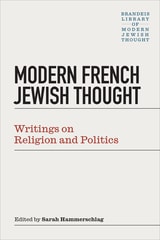
Modern French Jewish Thought
Writings on Religion and PoliticsEdited by Sarah Hammerschlag
Brandeis University Press, 2018
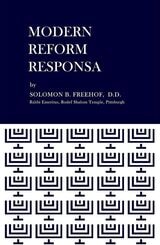
Modern Reform Responsa - PDF Electronic Version
Rabbi Solomon B. Freehof
Central Conference of American Rabbis, 1971
This volume of Responsa deals with such questions as whether Torah can be read on Friday nights, wearing a Tallit in Reform services, and questions related to marriage, conversion, and more. Originally published in 1971, this collection provides insight into questions that were of critical importance at that time.