Results by title
372 books match the query 'Language' and 13 start with m
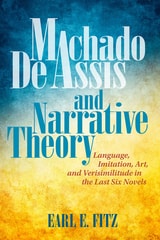
Machado de Assis and Narrative Theory
Language, Imitation, Art, and Verisimilitude in the Last Six NovelsEarl E. Fitz
Bucknell University Press, 2019
This book makes the argument that Machado de Assis, hailed as one of Latin American literature’s greatest writers, was also a major theoretician of the modern novel form. Steeped in the works of Western literature and an imaginative reader of French Symbolist poetry, Machado creates, between 1880 and 1908, a “new narrative,” one that will presage the groundbreaking theories of Swiss linguist Ferdinand de Saussure by showing how even the language of narrative cannot escape being elusive and ambiguous in terms of meaning. It is from this discovery about the nature of language as a self-referential semiotic system that Machado crafts his “new narrative.” Long celebrated in Brazil as a dazzlingly original writer, Machado has struggled to gain respect and attention outside the Luso-Brazilian ken. He is the epitome of the “outsider” or “marginal,” the iconoclastic and wildly innovative genius who hails from a culture rarely studied in the Western literary hierarchy and so consigned to the status of “eccentric.” Had the Brazilian master written not in Portuguese but English, French, or German, he would today be regarded as one of the true exemplars of the modern novel, in expression as well as in theory.
Published by Bucknell University Press. Distributed worldwide by Rutgers University Press.
Published by Bucknell University Press. Distributed worldwide by Rutgers University Press.
[more]
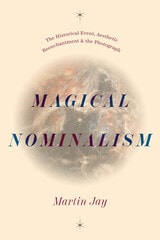
Magical Nominalism
The Historical Event, Aesthetic Reenchantment, and the PhotographMartin Jay
University of Chicago Press, 2025
A bold and wide-ranging study across centuries, examining the conflict between “conventional” and “magical” nominalism in philosophy, history, aesthetics, political theory, and photography.
In this magisterial new book, intellectual historian Martin Jay traces the long-standing competition between two versions of nominalism—the “conventional” and the “magical.” Since at least William of Ockham, according to Jay, the conventional form of nominalism has contributed to the disenchantment of the world, by viewing general terms as nothing more than mere names we use to group particular objects together, rejecting the idea that they refer to a further, “higher” reality. Magical nominalism, instead, performs a reenchanting function, by investing proper names, disruptive events, and singular objects with an auratic power of their own. Drawing in part on Jewish theology, it challenges the elevation of the constitutive subject resulting from Ockham’s reliance on divine will in his critique of real universals.
Starting with the fourteenth-century revolution of nominalism against Scholastic realism, Jay unpacks various “counterrevolutions” against nominalism itself, including a magical alternative to its conventional form. Focusing on fundamental debates over the relationship between language, thought, and reality, Jay illuminates connections across thinkers, disciplines, and vast realms of human experience. Ranging from theology and philosophy of history to aesthetics and political theory, this book engages with a range of artists and thinkers, including Adorno, Ankersmit, Badiou, Barthes, Bataille, Benjamin, Blumenberg, Derrida, Duchamp, Foucault, Kracauer, Kripke, and Lyotard. Ultimately, Magical Nominalism offers a strikingly original way to understand humanity’s intellectual path to modernity.
[more]
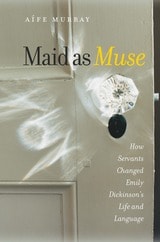
Maid as Muse
How Servants Changed Emily Dickinson’s Life and LanguageAífe Murray
University of New Hampshire Press, 2010
In Maid as Muse, Aífe Murray explodes the myth of the isolated genius and presents an intimate, densely realized story of joined lives between Emily Dickinson and her domestic servants. Part scholarly study, part detective story, part personal journey, Murray's book uncovers a world previously unknown: an influential world of Irish immigrant servants and an ethnically rich one of Yankee, English-immigrant, Native American, and African American maids and laborers, seamstresses and stablemen. Murray reveals how Margaret Maher and the other servants influenced the cultural outlook, fashion, artistic subject, and even poetic style of Emily Dickinson. Irish immigrant Maher becomes the lens to a larger story about artistic reciprocities and culture-making that has meaning way beyond Dickinson. This below-stairs, bottom-up portrait of the artist and her family not only injects themes of class and ethnic difference into the story but also imparts subtle details and intimacies that make the study of Emily Dickinson urgent once again. In the kitchen pantry where she spent a good portion of each day, the outside world came to Dickinson. The "invisible" kitchen was headquarters for people mostly lost from the public record—and it was her interactions with them that changed and helped define who Emily Dickinson was as a person and a poet.
[more]
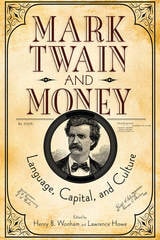
Mark Twain and Money
Language, Capital, and CultureEdited by Henry B. Wonham and Lawrence Howe
University of Alabama Press, 2017
This groundbreaking volume explores the importance of economics and prosperity throughout Samuel Clemens’s writing and personal life.
Mark Twain and Money: Language, Capital, and Culture focuses on an overlooked feature of the story of one of America’s most celebrated writers. Investigating Samuel Clemens’s often conflicting but insightful views on the roles of money in American culture and identity, this collection of essays shows how his fascination with the complexity of nineteenth-century economics informs much of Mark Twain’s writing.
While most readers are familiar with Mark Twain the worldly wise writer, fewer are acquainted with Samuel Clemens the avid businessman. Throughout his life, he sought to strike it rich, whether mining for silver in Nevada, founding his own publishing company, or staking out ownership in the Paige typesetting machine. He was ever on the lookout for investment schemes and was intrigued by inventions, his own and those of others, that he imagined would net a windfall. Conventional wisdom has held that Clemens’s obsession with business and material wealth hindered his ability to write more and better books. However, this perspective fails to recognize how his interest in economics served as a rich source of inspiration for his literary creativity and is inseparable from his achievements as a writer. In fact, without this preoccupation with monetary success, Henry B. Wonham and Lawrence Howe argue, Twain’s writing would lack an important connection to a cornerstone of American culture.
The contributors to this volume examine a variety of topics, such as a Clemens family myth of vast landholdings, Clemens’s strategies for protecting the Mark Twain brand, his insights into rapidly evolving nineteenth-century financial practices, the persistence of patronage in the literary marketplace, the association of manhood and monetary success, Clemens’s attitude and actions toward poverty, his response to the pains of bankruptcy through writing, and the intersection of racial identity and economics in American culture. These illuminating essays show how pecuniary matters invigorate a wide range of Twain’s writing from The Gilded Age, Roughing It,The Adventures of Tom Sawyer, The Prince and the Pauper, and A Connecticut Yankee in King Arthur’s Court, to later stories like “The £1,000,000 Banknote” and the Autobiography.
[more]
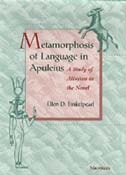
Metamorphosis of Language in Apuleius
A Study of Allusion in the NovelEllen D. Finkelpearl
University of Michigan Press, 1998
Ellen D. Finkelpearl's Metamorphosis of Language in Apuleius studies the use of literary allusion by the Roman author Apuleius, in his second century C.E. novel the Metamorphoses, popularly known as The Golden Ass. Apuleius' work is enticing yet frustrating because of its enigmatic mixture of the comic and serious; a young man is transformed into a donkey, but eventually finds salvation with the goddess Isis. Finkelpearl's book represents the first attempt to place Apuleius' allusive practices within a consideration of the development of the ancient novel.
When Apuleius wrote his Metamorphoses, the novel--indeed the very concept of fiction in prose--was new. This study argues that Apuleius' repeated allusions to earlier Latin authors such as Vergil, Ovid, and Seneca represent an exploration on his part of the relationship between the novel and more established genres of the era. Apuleius' struggle with this tradition, Finkelpearl maintains, parallels the protagonist's move from an acceptance of the dominance of traditional forms to a sense of arrival and self- discovery.
An introductory chapter includes general discussion of the theory and practice of allusion. Finkelpearl then revisits the issues of parody in Apuleius. She also includes discussion of Apuleius' use of Vergil's Sinon, the Charite episode in relation to Apuleius' African origins, and the stepmother episode. Finally a new reading of Isis is offered, which emphasizes her associations with writing and matches the multiformity of the goddess with the novel's many voices.
This book will be of interest to scholars of literature and the origins of the novel, multiculturalism, and classical literature.
Ellen D. Finkelpearl is Associate Professor of Classics at Scripps College, Claremont, California.
[more]
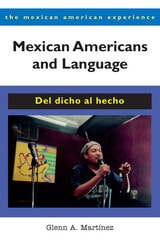
Mexican Americans and Language
Del dicho al hechoGlenn A. Martínez
University of Arizona Press, 2006
When political activists rallied for the abolition of bilingual education and even called for the declaration of English as an official language, Mexican Americans and other immigrant groups saw this as an assault on their heritage and civil rights. Because language is such a defining characteristic of Mexican American ethnicity, nearly every policy issue that touches their lives involves language in one way or another.
This book offers an overview of some of the central issues in the Mexican American language experience, describing it in terms of both bilingualism and minority status. It is the first book to focus on the historical, social, political, and structural aspects of multiple languages in the Mexican American experience and to address the principles and methods of applied sociolinguistic research in the Mexican American community. Spanish and non-Spanish speakers in the Mexican American community share a common set of social and ethnic bonds. They also share a common experience of bilingualism.
As Martínez observes, the ideas that have been constructed around bilingualism are as important to understanding the Mexican American language experience as bilingualism itself. Mexican Americans and Language gives students the background they need to respond to the multiple social problems that can result from the language differences that exist in the Mexican American community. By showing students how to go from word to deed (del dicho al hecho), it reinforces the importance of language for their community, and for their own lives and futures.
[more]
Migrant World Making
Sergio F Juárez
Michigan State University Press, 2023
For most migrants, developing communication strategies in host countries is vital for finding social connections, navigating the pressures of assimilation, and maintaining links to their original cultures. Migrant World Making explores this process of constructing a homeplace by creating a network of communication tools and strategies to connect with multiple communities. Since what it means to be a migrant differs from person to person, the contributors to this edited collection showcase numerous practices migrants adopt to communicate and connect with others as they forge their own identities in globalized yet highly nationalistic societies. With varying aspirations and motives for seeking new homes, migrants build communities by telling stories, engaging in social media activism, protesting, writing scholarly criticism, and using many other modes of communication. To match this variety, the transnational scholars represented here use a wide array of rhetorical, cultural, and communication methodologies and epistemologies to describe what the experience of migration means to those who have lived it.
[more]
Modern Theories of Language
The Empirical ChallengeMortéza Mahmoudian
Duke University Press, 1993
In a controversial look at the study of linguistics today, Mortéza Mahmoudian examines twentieth-century theories of language in light of empirical evidence. In the past, linguists have had to choose between a general linguistic theory aimed at universal explanatory power and specific, limited linguistic models. Arguing that at various levels of linguistic analysis different theories offer more or less explanatory power, Mahmoudian makes a persuasive case for an integrated approach incorporating the strengths of both methods.
The author begins with the identification of principles which, despite differences in terminology, are held in common by most twentieth-century linguists. He shows the implications, merits, and shortcomings of the major schools of linguistic thought, as well as the techniques one can use in gathering data. Ranging over a wide variety of international linguistic thinking, Mahmoudian takes up the question of what he calls experimentation, or the extent to which the application of certain linguistic theories have validity in constucting models.
Simultaneously a survey of the current state of linguistic theory and a case for the necessity of empirical verification in linguistics, Modern Theories of Language builds a bridge across the gulf between many long-standing conflicts in the theory of language. Accessibly written, this provocative work predicts future theorerical and epistemological developments and will prove essential reading for students and scholars of linguistics, as well as specialists in cognitive psychology and Romance languages.
[more]
Moral Politics
How Liberals and Conservatives Think, Third EditionGeorge Lakoff
University of Chicago Press, 2016
When Moral Politics was first published two decades ago, it redefined how Americans think and talk about politics through the lens of cognitive political psychology. Today, George Lakoff’s classic text has become all the more relevant, as liberals and conservatives have come to hold even more vigorously opposed views of the world, with the underlying assumptions of their respective worldviews at the level of basic morality. Even more so than when Lakoff wrote, liberals and conservatives simply have very different, deeply held beliefs about what is right and wrong.
Lakoff reveals radically different but remarkably consistent conceptions of morality on both the left and right. Moral worldviews, like most deep ways of understanding the world, are unconscious—part of our “hard-wired” brain circuitry. When confronted with facts that don’t fit our moral worldview, our brains work automatically and unconsciously to ignore or reject these facts, and it takes extraordinary openness and awareness of this phenomenon to pay critical attention to the vast number of facts we are presented with each day. For this new edition, Lakoff has added a new preface and afterword, extending his observations to major ideological conflicts since the book's original publication, from the Affordable Care Act to the wars in Iraq and Afghanistan, the recent financial crisis, and the effects of global warming. One might have hoped such massive changes would bring people together, but the reverse has actually happened; the divide between liberals and conservatives has become stronger and more virulent.
To have any hope of bringing mutual respect to the current social and political divide, we need to clearly understand the problem and make it part of our contemporary public discourse. Moral Politics offers a much-needed wake-up call to both the left and the right.
[more]
Mother Tongues of the High Andes
Gender, Language, and Indigenous Difference in PeruSandhya Krittika Narayanan
University of Arizona Press, 2025
The Peruvian altiplano, a high plateau around Lake Titicaca, is known for its breathtaking landscapes and the cultivation of commodities like quinoa and alpaca wool. The region also stands out for its history of inter-Indigenous language contact and multilingualism between Quechua- and Aymara-speaking communities. This linguistic ecology predates the Spanish conquest and persists today, making the altiplano, with its capital, Puno, a unique space where Indigenous multiplicity is recognized and celebrated. Yet this celebration is accompanied by additional ideological challenges around defining Quechua and Aymara as distinct Indigenous languages and ethnic groups.
Anthropologist Sandhya Krittika Narayanan begins with these challenges, and asks: What does it mean to be a Quechua or Aymara speaker in Puno today? What does it mean to be an Indigenous ethnic Quechua or Aymara individual?
Mother Tongues of the High Andes opens with these questions, exploring what Quechua and Aymara languages and identities mean for Indigenous puneños as they navigate their past and present. Narayanan argues that understanding inter-Indigenous linguistic and social differences involves examining Indigenous gender roles, responsibilities, and linguistic practices, particularly those of Indigenous puneña women. She shows how these practices have contributed to the maintenance of Indigenous multilingualism and continuity in local modes of understanding Indigenous identity and difference.
Even as ideologies around Indigenous identity and linguistic practices shift due to global discourses on Indigenous ethnic identity and nationalism, Indigenous women continue to play a crucial role, promoting new ways to speak and think about Quechua and Aymara linguistic differences, making the Indigenous roots and histories of Puno recognizable to a global audience. Through a comprehensive ethnographic exploration of gender, language, and Indigenous difference, Narayanan shows how the linguistic and social practices of Indigenous puneña women both contest and reaffirm competing visions of Quechua and Aymara linguistic identity and authority.
[more]

Mu, 49 Marks of Abolition
Sora Y. Han
Duke University Press, 2024
In March 2020, Sora Y. Han learned her father was dying of cancer just as the COVID-19 pandemic arrived on California's shores. These two events led Han to introspection: “Who have I been writing to?” and “Who have I been writing for?” In her observance of the 49 days of mourning in Buddhist tradition, answers come in the form of mu – no thing, nothingness. Han’s poetic meditations on freedom struggle come alive in the empty spaces between words, letters, and pictograms spanning her many languages—English, Korean, Chinese, jazz, law, and poetry. Transliterating and dystranslating the writings of Fred Moten, Theresa Hak Kyung Cha, Jacques Lacan, Frantz Fanon, and others through the Korean alphabet, Han weaves the DMZ, Betty’s Case, the Thirteenth Amendment, Afro-pessimism, and psychoanalytic desire together into the open field of Bay Area radicalism. Mu is both a loving homage to and a playful subversion of political inheritances and the unsayable beyond law.
[more]

My Language Is a Jealous Lover
Adrián N. Bravi
Rutgers University Press, 2023
Many great writers have been fluent in multiple languages but have never been able to escape their mother tongue. Yet if a native language feels like home, an adopted language sometimes offers a hospitality one cannot find elsewhere.
My Language Is a Jealous Lover explores the plights and successes of authors who lived and wrote in languages other than their mother tongue, from Samuel Beckett and Vladimir Nabokov to Ágota Kristóf and Joseph Brodsky. Author Adrián N. Bravi weaves their stories in with his own experiences as an Argentinian-Italian, thinking and writing in the language of his new life while recalling that of his childhood. Bravi bears witness to the frustrations, the soul-searching, the pain, and the joys of embracing another language.
My Language Is a Jealous Lover explores the plights and successes of authors who lived and wrote in languages other than their mother tongue, from Samuel Beckett and Vladimir Nabokov to Ágota Kristóf and Joseph Brodsky. Author Adrián N. Bravi weaves their stories in with his own experiences as an Argentinian-Italian, thinking and writing in the language of his new life while recalling that of his childhood. Bravi bears witness to the frustrations, the soul-searching, the pain, and the joys of embracing another language.
[more]
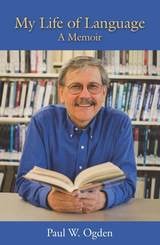
My Life of Language
A Memoirogden
Gallaudet University Press, 2017
Content Notice: ableism, mental illness, and suicide
Paul W. Ogden has dedicated his life to educating young deaf and hard of hearing people and raising awareness of what it means to be deaf in a hearing world. He has taught and mentored a generation of teachers, and his classic volume, The Silent Garden, has served as a guide for parents and educators for over thirty years. Now he tells his personal story of challenges faced and lessons learned, revealing that the critical, guiding factors for him have always been language and successful communication.
Born in a time when many deaf children had no access to language, Paul learned spoken and written language skills at a young age through the painstaking efforts of his mother. His tight-knit family, which included one deaf and two hearing older brothers, facilitated open and constant communication using a variety of methods. His father was a pastor who was involved in the civil rights movement. He struggled with depression, an illness that would take the life of one of Paul’s brothers. As a student at a residential deaf school where the use of American Sign Language (ASL) was suppressed, Paul continued to build on the speech and lipreading skills he had learned at home. He returned home for high school and graduated as co-valedictorian—unaware of the standing ovation he received as he walked to the podium.
Following a rewarding experience as an undergraduate at Antioch College, Paul went on to earn a PhD from the University of Illinois, a rare accomplishment for a deaf person at that time. During his graduate studies, he finally had the opportunity to learn ASL. As an award-winning professor of Deaf Studies at California State University, Fresno, he successfully petitioned for the university to recognize ASL as a language, and he established the Silent Garden program, which has grown into a flourishing provider of training and resources to support the Deaf community. In My Life of Language, Paul offers eloquent reflections on both the joyful and difficult periods of his life as he navigated relationships, faced discrimination, questioned his faith, and found great happiness in his marriage.
[more]