Results by title
622 books match the query 'Language Study' and 20 start with m
MOOCs
What Every ESL Teacher Needs to KnowPamela S.H. Bogart
University of Michigan Press, 2019
Macedonian Audio Supplement
To accompany Macedonian: A Course for Beginning and Intermediate Students, Third EditionChristina E. Kramer
University of Wisconsin Press, 2012
This set of audio CDs is designed to supplement the award-winning language textbook Macedonian: A Course for Beginning and Intermediate Students, Third Edition, by Christina E. Kramer and Liljana Mitkovska. The CDs contain almost two hours of audio tracks that were recorded in Macedonia by native speakers who bring to life the characters from the textbook’s story. The set additionally includes exercises for listening comprehension and the pronunciation of individual sounds.
Macedonian
A Course for Beginning and Intermediate StudentsChristina E. Kramer
University of Wisconsin Press, 2011
Macedonian, the official language of the Republic of Macedonia, is spoken by two and a half million people in the Balkans, North America, Australia, and other émigré communities around the world. Christina E. Kramer’s award-winning textbook provides a basic introduction to the language. Students will learn to speak, read, write, and understand Macedonian while discussing family, work, recreation, music, food, health, housing, travel, and other topics.
Intended to cover one year of intensive study, this third edition updates the vocabulary, adds material to help students appreciate the underlying structure of the language, and offers a wide variety of new, proficiency-based readings and exercises to boost knowledge of Macedonian history, culture, literature, folklore, and traditions.
Winner, Best Contribution to Language Pedagogy, American Association of Teachers of Slavic and Eastern European Languages

Make a Wish
Judy Soloway Kay
University of Michigan Press, 2005
Genre: Romance
Length: about 15,000 words
Level: 4th grade
Making the Transition to Classroom Success
Culturally Responsive Teaching for Struggling Language LearnersHelaine W. Marshall and Andrea DeCapua
University of Michigan Press, 2013
Features a chapter on flipped classrooms!
Learners with no, minimal, or limited exposure to formal education generally do not share the expectations and assumptions of their new setting; as a result, they are likely to find themselves confounded by the ways in which the language and content are presented, practiced, and assessed in Western-style educational settings. Institutions and teachers must tailor therefore their instruction to this population. Making the Transition to Classroom Success: Culturally Responsive Teaching for Struggling Language Learners examines how understanding secondary and adult L2 learners’ educational paradigm, rooted deeply in their past experiences and cultural orientations, provides a key to the solution to a lack of progress.
Making the Transition to Classroom Success builds on and expands on two earlier books, Meeting the Needs of Students with Limited or Interrupted Formal Schooling and Breaking New Ground: Teaching Students with Limited or Interrupted Formal Education in U.S. Secondary Schools. These previous books focused specifically on a subset of struggling L2 learners--those with limited or interrupted formal education (SLIFE) in U.S. secondary schools—and detailed the instructional model (MALP). Making the Transition broadens the applications of the MALP model to include academic thinking tasks, flipped classrooms, project design, and rubrics.
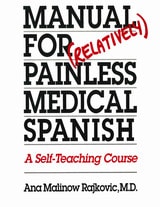
Manual for (Relatively) Painless Medical Spanish
A Self-Teaching CourseBy Ana Malinow Rajkovic
University of Texas Press, 1992
Spanish-speaking patients are no rarity in United States hospitals and clinics, as many English-speaking health care providers have discovered. To help these providers better communicate with the patients they serve, Ana Malinow Rajkovic has prepared the Manual for (Relatively) Painless Medical Spanish, a lively and innovative self-teaching guide to the grammar, pronunciation, and medical vocabulary of Spanish.
Presented in a systematic and highly entertaining fashion, twelve lessons cover some of the most commonly encountered situations. These include the family clinic, the emergency room, appendicitis, the social chat, pregnancy, family planning, pelvic inflammatory disease and urinary tract infection, depression, children with asthma, patients with angina, explaining a venipuncture and a spinal tap, and patients with shortness of breath. Each lesson closes with a bilingual interview that includes vocabulary and grammar introduced in that lesson. A guide to the medical history and physical examination appears in English and Spanish in the appendix.
Excellent in the classroom or for independent learning, the Manual will enable health care providers better to understand and supply the needs of Spanish-speaking patients.
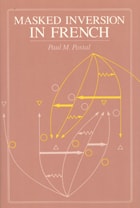
Masked Inversion in French
Paul M. Postal
University of Chicago Press, 1989
This analysis has significant consequences for contemporary syntactic theories. First, the arguments support the view that a sentence's superficial structure cannot be identified with its syntactic structure, even though such an identification is a fundamental assumption of several currently influential grammatical frameworks. Second, even certain theories that do posit abstract aspects of grammatical form fail to allow for the needed Inversion structures. Postal's study supports theories based on the notion of arc and stratification into levels which provide a natural treatment consistent with the factual requirements.
Masked Inversion in French is the first systematic account of this puzzling French syntactic anomaly, and its findings will stimulate research in many areas of natural language grammatical structure.
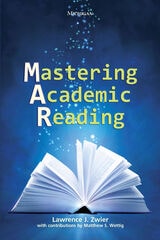
Mastering Academic Reading
Lawrence J. Zwier with contributions by Matthew S. Weltig
University of Michigan Press, 2010
Mastering Academic Reading is meant to challenge advanced academically oriented students of English. The units and the readings within them are long. The comprehension and expansion exercises after them are demanding. The hoped-for outcome is that students trained using this textbook will be able to better hold their own in university classes where the reading volume across disciplines and vocabulary demands are high.
Almost every reading is taken, in minimally adapted form, from a book or academic / professional journal. Two introductory passages have been composed expressly for this book in order to provide narrowly focused background material. Beyond these pieces, readers are in the hands of “real-world” authors and their difficult, lexically diffuse, and allusion-filled creations. Journal articles and book excerpts predominate, but Mastering Academic Reading also offers a book review and a government pamphlet as well.
Since one aspect of reading practice builds on others, the units are laid out in tiers, not in sections. Each unit has been organized into three tiers. In general, there is one reading per tier, although the first tier in Unit 3 contains two passages (both necessary to provide conceptual background for the other two tiers). Each reading is 3,500-5,000 words. The book focuses on the three primary goals of academic reading: reading to learn; reading to integrate, write, and critique texts; and reading for basic comprehension.
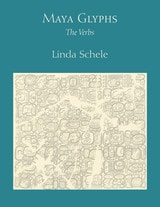
Maya Glyphs
The VerbsBy Linda Schele
University of Texas Press, 1982
The key to the study of the language and history of the Classic Maya (A.D. 293–900) is the verb. Maya Glyphs: The Verbs is a comprehensive study of the verb morphology and syntax of the Maya writing system.
Linda Schele's summary of methodology makes available in a single place many important discoveries and approaches to the Maya language. Hers is the first sourcebook to include so broad a range of dates and to identify for the first time so many Maya rulers and events.
The admirably lucid text provides an excellent introduction to Maya hieroglyphics for the beginner, and, for the experienced Mayanist, it offers a fascinating explanation of methodology, including paraphrasing, and important information about syntactical structures, special verbal constructions, and literary conventions.
Schele's extensive catalog of known verbal phrases is useful for a variety of purposes. Because it is organized according to verbal affix patterns, it provides the only available source for the distribution of such patterns in the writing system. At the same time it registers the date of each event, its agent and patient (if recorded), the dedication date of the monument on which the glyphs occur, and a pictorial illustration, rather than a T-number transcription, of each example. Extensive notes treating problems of dating, interpretation, and dynastic information contain theories about the meaning and function of the events recorded in the Maya inscriptions.
Maya for Travelers and Students
A Guide to Language and Culture in YucatanBy Gary Bevington
University of Texas Press, 1995
The Yucatan Peninsula draws many North American and European travelers each year to view the ruins of the pre-Columbian Classical Maya civilization and the abundant native flora and fauna. For these travelers, as well as armchair travelers and students, Gary Bevington has prepared the first general English-language introduction to Yucatec Maya, the native language of the people indigenous to the region.
Written in nontechnical terms for learners who have a basic knowledge of simple Mexican Spanish, the book presents easily understood, practical information for anyone who would like to communicate with the Maya in their native language. In addition to covering the pronunciation and grammar of Maya, Bevington includes invaluable tips on learning indigenous languages "in the field." Most helpful are his discussions of the cultural and material worlds of the Maya, accompanied by essential words and expressions for common objects and experiences. A Maya-English-Spanish glossary with extensive usage examples and an English-Maya glossary conclude the book.
Note: The supplemental audiocasette, Spoken Maya for Travelers and Students, is now available as a free download through the book's page on the University of Texas Press's website.
Mayan Texts
Volumes I, II, and IIIEdited by Louanna Furbee-Losee
University of Chicago Press Journals, 1976
Media Work
Language Teaching Through Media LiteracyCarla R. Chamberlin
University of Michigan Press, 2025
Media Work offers a practical, hands-on approach to illustrate how language, imagery, and media platforms convey meaning. With almost 100 illustrations for use in teaching and many valuable sample lessons, the book brings to life the processes of observing, interrogating, interpreting, reflecting, and responding to a wide variety of media. Drawing upon critical perspectives from applied linguistics, communication, and media studies (e.g., semiotics, critical discourse analysis, media ecology), it develops a conceptual model that can be adapted for a range of ages and contexts. Chamberlin’s approach enables students to investigate the origins, purposes, and implications of messages that surround them in their everyday lives. With sample topics that range from pets and food to identity and discrimination, teachers can give students opportunities to learn more about their own communities and reflect on their reactions to media messages. By addressing the disinformation and propaganda that are prevalent in today’s media, teachers can also help students confront messages about social issues in order to gain knowledge, confidence, and agency.
Medieval Latin
Second EditionEdited by K. P. Harrington
University of Chicago Press, 1997
To help place the selections within their wider historical, social, and political contexts, Pucci has written extensive introductory essays for each of the new edition's five parts. Headnotes to individual selections have been recast as interpretive essays, and the original bibliographic paragraphs have been expanded. Reprinted from the best modern editions, the selections have been extensively glossed with grammatical notes geared toward students of classical Latin who may be reading medieval Latin for the first time.
Includes thirty-two full-page plates (with accompanying captions) depicting medieval manuscript and book production.
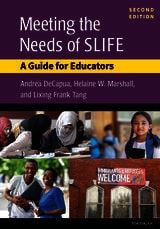
Meeting the Needs of SLIFE, Second Ed.
A Guide for EducatorsAndrea DeCapua, Helaine W. Marshall, and Lixing Frank Tang
University of Michigan Press, 2020
Like its predecessor, this book is grounded in research and is designed to be an accessible and practical resource for teachers, staff, and administrators who work with students with limited or interrupted formal education. Chapters 3-5 focus on classroom instruction, but others address issues of concern to administrators and staff too. For example, Chapter 6 explores different program models for SLIFE instruction, but the planning and commitment to creating a successful program require the involvement of many across the school community, not just teachers.
This edition features case studies, model programs, and teaching techniques and tips; also included is a new chapter focused on the Mutually Adaptive Learning Paradigm (MALP (R)). A major theme of this new edition is moving school personnel away from a deficit perspective, when it comes to teaching SLIFE, and toward one of difference. The goal is to help all stakeholders in the school community create and foster inclusion of, and equity for, a population that is all too often marginalized, ignored, and underserved.
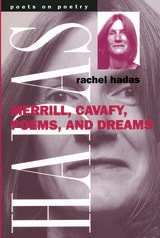
Merrill, Cavafy, Poems, and Dreams
Rachel Hadas
University of Michigan Press, 2000
The second half of the book combines explorations of various corners and horizons of the poetry scene, including neglected American poets and Hadas's thoughts on her own poetics and career. "Two Letters from New York" and "Tangled Web Sites" take bemused looks at literary or cultural landscapes. Hadas also looks inward: to dreams and dreamwork, to her dead mother's address book, to the emblematic drilling of a well in a country house. The range of selections includes essays, interviews, memoir, criticism, and a few of Hadas's own poems.
Rachel Hadas is the author of eleven books of poetry, essays, and translations. Her most recent book is Halfway Down the Hall: New and Selected Poems. She has received a Guggenheim Fellowship in Poetry and an American Academy-Institute of Arts and Letters Award in Literature, and is a member of the American Academy of Arts and Sciences. She is Professor of English at the Newark campus of Rutgers University.

Missing!
Judy Soloway Kay
University of Michigan Press, 2005
The MICHIGAN Reading Plus Readers are original fiction written for students who wish to improve their reading skills. The MICHIGAN Reading Plus Readers support the need for extensive reading on topics of interest to today's students. The Readers offer students books in the genres of mystery, science-fiction, and romance. Activities that practice vocabulary and reading skills are provided on the companion website.
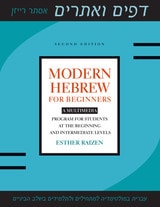
Modern Hebrew for Beginners
A Multimedia Program for Students at the Beginning and Intermediate LevelsBy Esther Raizen
University of Texas Press, 2016
Modern Hebrew for Beginners—which is now revised and updated—and Modern Hebrew for Intermediate Students are the core of a multimedia program for the college-level Hebrew classroom developed at the University of Texas at Austin in the early 2000s. Within an intensive framework of instruction that assumes six weekly hours in the classroom, the program provides for two semesters of instruction, at the end of which most successful students will reach the intermediate-mid or intermediate-high levels of proficiency in speaking and reading, and some will reach advanced-low proficiency, as defined by the American Council on the Teaching of Foreign Languages (ACTFL).
In addition to a variety of written exercises, the workbook includes vocabulary lists, reading selections, discussions of cultural topics, illustrations of grammar points, notes on registers, suggestions for class and individual activities, and glossaries. The workbook is complemented by a website (http://www.laits.utexas.edu/hebrew) that provides short video segments originally scripted and filmed in Israel and the United States, vocabulary flashcards with sound, interactive exercises on topics included in the workbook, sound files parallel to the reading selections in the workbook, and additional materials that enhance the learning experience. The stability of the workbook, combined with the dynamic nature of the website and the internet searches the students are directed to conduct, allows language instructors to reshape the curriculum and adapt it to the needs of their students and the goals of their programs.
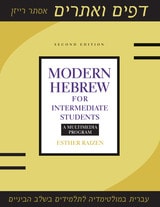
Modern Hebrew for Intermediate Students
A Multimedia ProgramBy Esther Raizen
University of Texas Press, 2016
Modern Hebrew for Intermediate Students—which is now revised and updated—and Modern Hebrew for Beginners are the core of a multimedia program for the college-level Hebrew classroom developed at the University of Texas at Austin in the early 2000s. Within an intensive framework of instruction that assumes six weekly hours in the classroom, the program provides for two semesters of instruction, at the end of which most successful students will reach the intermediate-mid or intermediate-high levels of proficiency in speaking and reading, and some will reach advanced-low proficiency, as defined by the American Council on the Teaching of Foreign Languages (ACTFL).
In addition to a variety of written exercises, the workbook includes vocabulary lists, reading selections, discussions of cultural topics, illustrations of grammar points, notes on registers, suggestions for class and individual activities, and glossaries. The workbook is complemented by a website (http://www.laits.utexas.edu/hebrew) that provides short video segments originally scripted and filmed in Israel and the United States, vocabulary flashcards with sound, interactive exercises on topics included in the workbook, sound files parallel to the reading selections in the workbook, and additional materials that enhance the learning experience. The stability of the workbook, combined with the dynamic nature of the website and the internet searches the students are directed to conduct, allows language instructors to reshape the curriculum and adapt it to the needs of their students and the goals of their programs.
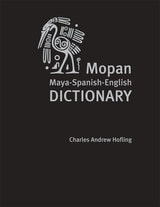
Mopan Maya-Spanish-English Dictionary
Charles A Hofling
University of Utah Press, 2011
Charles Andrew Hofling
Smithsonian-Utah Publications in American Indian Languages
Lyle Campbell and Ives Goddard
Linguistics
This is highly valuable dictionary of the Mopan (Mayan) language. In addition to its many entries, it also provides an introductory grammatical description, as well as general dictionary features such as parts of speech, examples, cross-references, variant forms, homophones, and indexes. The book also contains special sections on orthography and pronunciation unique to this important Mayan language, as well as translations into English and Spanish.
The dictionary has the merits well known from other dictionaries of indigenous languages of the Americas, preserving knowledge systems as they are encoded in vocabulary and providing valuable information for numerous fields, including Mayanists, Mesoamericanists, American Indian scholars, anthropologists, historians, linguists, students of Mayan hieroglyphic writing, and members of modern Mayan communities, among others.
This is the second book in the new Smithsonian-Utah Publications in American Indian Languages (SUPAIL) series, a joint venture of the University of Utah Press and the Smithsonian Institution.

Murder in Montauk
Judy Soloway Kay
University of Michigan Press, 2005
The MICHIGAN Reading Plus Readers are original fiction written for students who wish to improve their reading skills. The MICHIGAN Reading Plus Readers support the need for extensive reading on topics of interest to today's students. The Readers offer students books in the genres of mystery, science-fiction, and romance. Activities that practice vocabulary and reading skills are provided on the companion website.