Results by title
1917 books match the query 'Law' and 65 start with m
Mad River, Marjorie Rowland, and the Quest for LGBTQ Teachers’ Rights
Margaret A. Nash
Rutgers University Press, 2022
In the first in-depth treatment of this foundational legal case, authors Margaret A. Nash and Karen L. Graves tell the story of that case and of Marjorie Rowland, the pioneer who fought for employment rights for LGBTQ educators and who paid a heavy price for that fight. It brings the story of LGBTQ educators’ rights to the present, including commentary on Bostock v Clayton County, the 2020 Supreme Court case that struck down employment discrimination against LGBT workers.
Madison's Nightmare
How Executive Power Threatens American DemocracyPeter M. Shane
University of Chicago Press, 2009
The George W. Bush administration’s ambitious—even breathtaking—claims of unilateral executive authority raised deep concerns among constitutional scholars, civil libertarians, and ordinary citizens alike. But Bush’s attempts to assert his power are only the culmination of a near-thirty-year assault on the basic checks and balances of the U.S. government—a battle waged by presidents of both parties, and one that, as Peter M. Shane warns in Madison’s Nightmare, threatens to utterly subvert the founders’ vision of representative government.
Tracing this tendency back to the first Reagan administration, Shane shows how this era of "aggressive presidentialism" has seen presidents exerting ever more control over nearly every arena of policy, from military affairs and national security to domestic programs. Driven by political ambition and a growing culture of entitlement in the executive branch—and abetted by a complaisant Congress, riven by partisanship—this presidential aggrandizement has too often undermined wise policy making and led to shallow, ideological, and sometimes outright lawless decisions. The solution, Shane argues, will require a multipronged program of reform, including both specific changes in government practice and broader institutional changes aimed at supporting a renewed culture of government accountability.
From the war on science to the mismanaged war on terror, Madison’s Nightmare outlines the disastrous consequences of the unchecked executive—and issues a stern wake-up call to all who care about the fate of our long democratic experiment.

Making Endless War
The Vietnam and Arab-Israeli Conflicts in the History of International LawBrian Cuddy and Victor Kattan, Editors
University of Michigan Press, 2023
Making Endless War is built on the premise that any attempt to understand how the content and function of the laws of war changed in the second half of the twentieth century should consider two major armed conflicts, fought on opposite edges of Asia, and the legal pathways that link them together across time and space. The Vietnam and Arab-Israeli conflicts have been particularly significant in the shaping and attempted remaking of international law from 1945 right through to the present day. This carefully curated collection of essays by lawyers, historians, philosophers, sociologists, and political geographers of war explores the significance of these two conflicts, including their impact on the politics and culture of the world’s most powerful nation, the United States of America. The volume foregrounds attempts to develop legal rationales for the continued waging of war after 1945 by moving beyond explaining the end of war as a legal institution, and toward understanding the attempted institutionalization of endless war.

Making Fathers Pay
The Enforcement of Child SupportDavid L. Chambers
University of Chicago Press, 1979
Making Fathers Pay is David L. Chambers's study of the child-support collection process in Michigan, the state most successful in inducing fathers to pay. He begins by reporting the perilous financial problems of divorced mothers with children, problems faced even by mothers who work full time and receive child support. The study then examines the characteristics of fathers who do and do not pay support and the characteristics of collections systems that work.
Chambers's findings are based largely on records of fathers' support payments in twenty-eight Michigan counties, some of which jail hundreds of men for nonpayment every year. Chambers finds that in places well organized to collect support, jailing nonpayers seems to produce higher payments from men jailed and from men not jailed, but only at a high social cost. He also raises grave doubts about the fairness of the judicial process that leads to jail. While Chambers's total sample includes 12,000 men, he interweaves through his text moving interviews with members of one family caught in the painful predicaments that men, women, and children face upon separation.
To increase support for children at lower social costs, Chambers advocates a national system of compulsory deductions from the wages of non-custodial parents who earn more than enough for their own subsistence.
Making Hate A Crime
From Social Movement to Law EnforcementValerie Jenness
Russell Sage Foundation, 2001

Making Peace With Property
Traces of Post-Conflict ColombiaMeghan L. Morris
Duke University Press, 2027
Making Rights Real
Activists, Bureaucrats, and the Creation of the Legalistic StateCharles R. Epp
University of Chicago Press, 2009
It’s a common complaint: the United States is overrun by rules and procedures that shackle professional judgment, have no valid purpose, and serve only to appease courts and lawyers. Charles R. Epp argues, however, that few Americans would want to return to an era without these legalistic policies, which in the 1970s helped bring recalcitrant bureaucracies into line with a growing national commitment to civil rights and individual dignity.
Focusing on three disparate policy areas—workplace sexual harassment, playground safety, and police brutality in both the United States and the United Kingdom—Epp explains how activists and professionals used legal liability, lawsuit-generated publicity, and innovative managerial ideas to pursue the implementation of new rights. Together, these strategies resulted in frameworks designed to make institutions accountable through intricate rules, employee training, and managerial oversight. Explaining how these practices became ubiquitous across bureaucratic organizations, Epp casts today’s legalistic state in an entirely new light.
Making Sense of the Constitution
A Primer on the Supreme Court and Its Struggle to Apply Our Fundamental LawWalter M. Frank
Southern Illinois University Press, 2012
In Making Sense of the Constitution: A Primer on the Supreme Court and Its Struggle to Apply Our Fundamental Law, Walter Frank tackles in a comprehensive but lively manner subjects rarely treated in one volume.
Aiming at both the general reader and students of political science, law, or history, Frank begins with a brief discussion of the nature of constitutional law and why the Court divides so closely on many issues. He then proceeds to an analysis of the Constitution and subsequent amendments, placing them in their historical context. Next, Frank shifts to the Supreme Court and its decisions, examining, among other things, doctrinal developments, the Court’s decision making processes, how justices interact with each other, and the debate over how the Constitution should be interpreted.
The work concludes with a close analysis of Court decisions in six major areas of continuing controversy, including abortion, affirmative action, and campaign finance.
Outstanding by the University Press Books for Public and Secondary Schools
Making Their Days Happen
Paid Personal Assistance Services Supporting People with Disability Living in Their Homes and CommunitiesLisa I. Iezzoni
Temple University Press, 2022
Most Americans—even those with significant disability—want to live in their homes and communities. Unpaid family members or friends often work as “informal” caregivers, helping those who need assistance— and many feel they have no option but to serve. In contrast, paid personal assistance services workers (PAS) provide a lifeline to those consumers with complex needs and limited social networks. However, there is a crisis looming in the increasing needs for paid PAS and the limited available PAS workforce.
Making Their Days Happen explores disability, health, and civil rights, along with relevant federal and state labor policies related to personal assistance services. Lisa Iezzoni addresses the legal context of paid PAS as well as financing mechanisms for obtaining home-based personal assistance. She also draws upon interviews she conducted with paid PAS consumers and PAS workers to explore PAS experiences and their perspectives about their work.
Offering recommendations for improving future experiences of PAS consumers and providers, Iezzoni emphasizes that people with disabilities want to be a part of society, and PAS workers who do this low-wage work find satisfaction in helping them achieve their goals.
Making and Unmaking Intellectual Property
Creative Production in Legal and Cultural PerspectiveEdited by Mario Biagioli, Peter Jaszi, and Martha Woodmansee
University of Chicago Press, 2011
Rules regulating access to knowledge are no longer the exclusive province of lawyers and policymakers and instead command the attention of anthropologists, economists, literary theorists, political scientists, artists, historians, and cultural critics. This burgeoning interdisciplinary interest in “intellectual property” has also expanded beyond the conventional categories of patent, copyright, and trademark to encompass a diverse array of topics ranging from traditional knowledge to international trade. Though recognition of the central role played by “knowledge economies” has increased, there is a special urgency associated with present-day inquiries into where rights to information come from, how they are justified, and the ways in which they are deployed.
Making and Unmaking Intellectual Property, edited by Mario Biagioli, Peter Jaszi, and Martha Woodmansee, presents a range of diverse—and even conflicting—contemporary perspectives on intellectual property rights and the contested sources of authority associated with them. Examining fundamental concepts and challenging conventional narratives—including those centered around authorship, invention, and the public domain—this book provides a rich introduction to an important intersection of law, culture, and material production.
Managing Legal Uncertainty
Elite Lawyers in the New DealRonen Shamir
Duke University Press, 1995
Applying the insights of Weber and Bourdieu to the sociology of the legal profession, Shamir shows that elite members of the bar had a keen self-interest in blocking the expansion of administrative law. He dismisses as oversimplified the view that elite lawyers were "hired guns" who argued that New Deal legislation was unconstitutional solely because of their duty to represent their capitalist clients. Instead, Shamir suggests, their alignment with the capitalist class was an incidental result of their attempt to articulate their vision of the law as scientific, apolitical, and judicially oriented—and thereby to defend their own position within the law profession. The academic legal realists on the other side of the constitutional debates criticized the rigidity of the traditional judicial process and insisted that flexibility of interpretation and the uncertainty of legal outcomes was at the heart of the legal system. The author argues that many legal realists, encouraged by the experimental nature of the New Deal, seized an opportunity to improve on their marginal status within the legal profession by moving their discussions from academic circles to the national policy agenda.
Market-Augmenting Government
The Institutional Foundations for ProsperityOmar Azfar and Charles A. Cadwell, Editors
University of Michigan Press, 2003
The contributors, renowned experts in their fields on the complex institutional requirements for prosperity, offer arguments from economic theory, economic history, legal theory, and political science. The chapters are simultaneously of high scholarly quality and intensely applicable. Indeed many of the ideas here are being used to design reform projects in developing countries.
Market-Augmenting Government will appeal to legal theorists, economists, and political scientists, and in particular to institutional economists. Its writing is friendly to the general reader, with only a few of the chapters requiring specialized knowledge. The book will also figure importantly in policy circles as governance moves center stage in the practice of reform and development.
Omar Azfar is Research Associate, IRIS Center, University of Maryland, College Park. Charles A. Cadwell is Director and Principle Investigator, IRIS Center, University of Maryland, College Park.

Marriage and Divorce in the Jewish State
Israel's Civil WarSusan M. Weiss and Netty C. Gross-Horowitz
Brandeis University Press, 2012

Marriage by Force?
Contestation over Consent and Coercion in AfricaAnnie Bunting
Ohio University Press, 2016
With forced marriage, as with so many human rights issues, the sensationalized hides the mundane, and oversimplified popular discourses miss the range of experiences. In sub-Saharan Africa, the relationship between coercion and consent in marriage is a complex one that has changed over time and place, rendering impossible any single interpretation or explanation.
The legal experts, anthropologists, historians, and development workers contributing to Marriage by Force? focus on the role that marriage plays in the mobilization of labor, the accumulation of wealth, and domination versus dependency. They also address the crucial slippage between marriages and other forms of gendered violence, bondage, slavery, and servile status.
Only by examining variations in practices from a multitude of perspectives can we properly contextualize the problem and its consequences. And while early and forced marriages have been on the human rights agenda for decades, there is today an unprecedented level of international attention to the issue, thus making the coherent, multifaceted approach of Marriage by Force? even more necessary.

Marshall and Taney
Statesmen of the LawBen W. Palmer
University of Minnesota Press, 1939
Marshall and Taney was first published in 1939. Minnesota Archive Editions uses digital technology to make long-unavailable books once again accessible, and are published unaltered from the original University of Minnesota Press editions.
The tides of social, political, and economic conflict will surge more violently about the Supreme Court in the future than they have in the past. Constantly larger numbers of the people are becoming aware of the tremendous power of the court as final interpreter of the constitution as a check upon Congress and the executive, and as guardian of individuals and minorities against governmental power. As a president of the American Bar Association has said, "Producers of potatoes in Maine, peanuts in Virginia, cotton in South Carolina, cane sugar in Louisiana, wheat in Kansas, corn in Iowa, peaches in Georgia, oranges in California, and thousands of small local enterprises everywhere are coming more and more to realize that their own bread and butter is seriously affected by the personnel of the Supreme Court.
Since public opinion rules in America, the place that the court will occupy in the scheme of things will be determined by the thought and emotions of the people. Thought and emotion alike will, in turn, depend largely upon popular conceptions of the part played by the court. Those conceptions cannot be accurate without a knowledge of the functioning of the individual judge.
We can better comprehend present and future judges if we understand why past ones acted officially as they did. This study contributes materially to that understanding.
In the light of history and the law, Ben W. Palmer has made a clear and thought provoking analysis of the judicial function, indicated revolutionary changes in the law. In the sharply etched portraits of the two chief justices who molded American constitutional law in its formative stages, he has shown how and why these two men affect lawyer and laymen today.
"Law," says historian-lawyer Palmer, "like religion, government, art, science, receives its meaning and value, not because of what it has been or is, but because of what it accomplishes as an instrument for the benefit of humanity."
"The judge's most essential and unavoidable function," thinks Dr. Palmer, "is the attempt to reconcile the contending principles of liberty and order. He stands between rule and discretion, the strict law and one tempered by time, circumstance, abstract justice, popular feeling—all crying out for relaxation of the rule. He must stand between Shylock, with his shining knife of legal right, and the victim who calls to his compassion."
Masculine Births
Milton, Women, and the LawLynne Greenberg
Northwestern University Press, 2026
Examining the legal lives of early modern women through Milton’s literary works
In his History of Britain, John Milton writes, “Laws are Masculin Births . . . nothing [is] more awry from the Law of God and Nature, then that a Woman should give Laws to Men.” In this interdisciplinary study, Lynne Greenberg explores the normative and nonnormative legal lives of early modern women as depicted in Milton’s works—unmarried and married women, mothers, heiresses, widows, and queens—providing cogent overviews of the laws of multiple jurisdictions to offer critical context for each case study. Greenberg explores a wide range of legal-juridical materials and previously unexplored archival and private family documents. As she demonstrates, while Milton’s narratives are at times enmeshed in existing jural paradigms, they also offer resistant responses to marital, custodial, property, inheritance, and criminal laws and even imagine alternative jural paradigms for women. Through Masculine Births: Milton, Women and the Law, Greenberg deftly reveals that Milton both reproduces seventeenth-century legal constructs and gives birth to laws that move us toward greater equality for women.

Mass Torts in a World of Settlement
Richard A. Nagareda
University of Chicago Press, 2007
The traditional definition of torts involves bizarre, idiosyncratic events where a single plaintiff with a physical impairment sues the specific defendant he believes to have wrongfully caused that malady. Yet public attention has focused increasingly on mass personal-injury lawsuits over asbestos, cigarettes, guns, the diet drug fen-phen, breast implants, and, most recently, Vioxx. Richard A. Nagareda’s Mass Torts in a World of Settlement is the first attempt to analyze the lawyer’s role in this world of high-stakes, multibillion-dollar litigation.
These mass settlements, Nagareda argues, have transformed the legal system so acutely that rival teams of lawyers operate as sophisticated governing powers rather than litigators. His controversial solution is the replacement of the existing tort system with a private administrative framework to address both current and future claims. This book is a must-read for concerned citizens, policymakers, lawyers, investors, and executives grappling with the changing face of mass torts.
Mastering the Law
Slavery and Freedom in the Legal Ecology of the Spanish EmpireRicardo Raúl Salazar Rey
University of Alabama Press, 2020
Atlantic slavery can be overwhelming in its immensity and brutality, as it involved more than 15 million souls forcibly displaced by European imperialism and consumed in building the global economy. Mastering the Law: Slavery and Freedom in the Legal Ecology of the Spanish Empire lays out the deep history of Iberian slavery, explores its role in the Spanish Indies, and shows how Africans and their descendants used and shaped the legal system as they established their place in Iberoamerican society during the seventeenth century.
Ricardo Raúl Salazar Rey places the institution of slavery and the people involved with it at the center of the creation story of Latin America. Iberoamerican customs and laws and the institutions that enforced them provided a common language and a forum to resolve disputes for Spanish subjects, including enslaved and freedpeople. The rules through which Iberian conquerors, settlers, and administrators incorporated Africans into the expanding Empire were developed out of the need of a distant crown to find an enforceable consensus. Africans and their mestizo descendants, in turn, used and therefore molded Spanish institutions to serve their interests.Salazar Rey mined extensively the archives of secular and religious courts, which are full of complex disputes, unexpected subversions, and tactical alliances among enslaved people, freedpeople, and the crown.
The narrative unfolds around vignettes that show Afroiberians building their lives while facing exploitation and inequality enforced through violence. Salazar Rey deals mostly with cases originating from Cartagena de Indias, a major Atlantic port city that supported the conquest and rule of the Indies. His work recovers the voices and indomitable ingenuity that enslaved people and their descendants displayed when engaging with the Spanish legal ecology. The social relationships animating the case studies represent the broader African experience in the Americas during the sixteenth and seventeenth centuries.
Material Law
A Jurisprudence of What's RealJohn Brigham
Temple University Press, 2009
Law is part of the process by which people construct their views of the world. In Material Law, distinguished scholar John Brigham focuses on the places where law and material life intersect, and how law creates and alters our social reality. Brigham looks at an eclectic group of bodies and things—from maps and territories and trends in courthouse architecture to a woman's womb and a judge's body— to make connections between the material and the legal.
Theoretically sophisticated, and consistently fascinating, Material Law integrates law and society, political science, and popular culture in a truly interdisciplinary fashion. Brigham examines how the meaning of law is influenced by politics, reviewing, for example, whether the authority of global law supersedes that of national law in the context of anglo-american cultural colonialism. What emerges is a well-reasoned look at how the authority of law constitutes what we see as real in our lives.
Matterphorics
On the Laws of TheoryDaniela Gandorfer
Duke University Press, 2026

Matters of Life and Death
Moral Responsibility, Care, and Dignity in DyingStephanie O'Connor
Haus Publishing, 2026
A thoughtful examination of dignity at the end of life and the ethical limits of choice in modern medicine.
For most of human history, death was shaped by circumstance, custom, and human presence. Today, it is increasingly mediated by medicine, law, and the language of choice. Our expanding capacity to prolong life and manage dying has outstripped the moral habits that once helped us make sense of such moments. What confronts us now is not only the question of what may be done, or what is permitted, but also how moral responsibility is borne when knowledge is partial and responsibility is dispersed.
Resisting moral certainty and procedural comfort, Stephanie O’Connor considers what is revealed and obscured when complex situations are reduced to questions of choice or rights alone. Considering dignity as a guiding moral concern at the limits of life, and drawing on healthcare ethics, case law, and contemporary debates—including those surrounding assisted dying and artificial intelligence—this book examines how decisions made under conditions of vulnerability are shaped not only by autonomy and consent, but also by dependence, unequal power, and institutional practice. Acutely attentive to the tensions that exist between compassion and restraint, as well as personal agency and shared responsibility, O’Connor does not propose solutions or offer moral closure. Instead, she asks what is owed: to those whose lives are ending, to those who care for them, and to the fragile shared moral life that binds personal decisions to their public consequences.
Measuring Judicial Independence
The Political Economy of Judging in JapanJ. Mark Ramseyer and Eric B. Rasmusen
University of Chicago Press, 2003
The Japanese Constitution, like many others, requires that all judges be "independent in the exercise of their conscience and bound only by this Constitution and its laws." Consistent with this requirement, Japanese courts have long enjoyed a reputation for vigilant independence—an idea challenged only occasionally, and most often anecdotally. But in this book, J. Mark Ramseyer and Eric B. Rasmusen use the latest statistical techniques to examine whether that reputation always holds up to scrutiny—whether, and to what extent, the careers of lower court judges can be manipulated to political advantage.
On the basis of careful econometric analysis of career data for hundreds of judges, Ramseyer and Rasmusen find that Japanese politics do influence judicial careers, discreetly and indirectly: judges who decide politically charged cases in ways favored by the ruling party enjoy better careers after their decisions than might otherwise be expected, while dissenting judges are more likely to find their careers hampered by assignments to less desirable positions.
Ramseyer and Rasmusen's sophisticated yet accessible analysis has much to offer anyone interested in either judicial independence or the application of econometric techniques in the social sciences.

Media Freedom and Pluralism
Media Policy Challenges in the Enlarged EuropeBeata Klimkiewicz
Central European University Press, 2010

Media Pluralism and Online News
The Consequences of Automated Curation for SocietyTim Dwyer and Derek Wilding
Intellect Books, 2023
In the transition to a media landscape increasingly dominated by broadband internet distribution and the dominance of US-centric new media behemoths Google, Facebook, Apple, Amazon, and Netflix, Media Pluralism and Online News investigates measures that can be taken to reduce this ongoing march of concentration and the attenuation of media voices. The authors argue that there is an urgent need for revitalized thinking for a media policy agenda to deal with the trend of concentrated media power, which is an ongoing global risk to public interest journalism. Securing the public interest in a vibrant and sustainable news media sector will require that merger decisions assess whether there is a reduction in diversity, calling for a new public interest test and a more expansive policy focus than in the past.
Medical Malpractice and the American Jury
Confronting the Myths about Jury Incompetence, Deep Pockets, and Outrageous Damage AwardsNeil Vidmar
University of Michigan Press, 1997
Written in a thoroughly inviting, jargon-free style, Medical Malpractice and the American Jury places those cases that go to trial in the broader context of litigation, noting that only about ten percent of malpractice cases ever result in trials. Of those that do go to trial, the author notes, more than two out of three cases are decided in the doctor's favor--repudiating the view that jurors are inherently biased against doctors and are motivated more by sympathy for the plaintiff than by the facts of the case.
Neil Vidmar comprehensively addresses all the claims that have been leveled against the performance of malpractice juries. For example, he compares actual jury decisions on negligence with neutral physicians' ratings of whether negligence occurred in the medical treatment and finds a remarkable consistency--repudiating the view that jurors are unable to understand experts or uncritically defer to their opinion.
"Medical Malpractice and the American Jury is quite simply the most compelling, comprehensive examination of the American jury system yet written. It brings reason and fact to the debate in a way that puts the lie to the many myths surrounding medical negligence cases. For anyone genuinely interested in just solutions, this book should be required reading. To act in ignorance of its findings invites disaster." --Trial
"For anyone really interested in the evidence about the daily grind of the courthouse mill, Neil Vidmar's Medical Malpractice and the American Jury is a good place to start." --Washington Post Book World
Neil Vidmar is Professor of Social Science and Law, Duke Law School, and Professor of Psychology, Duke University.
Medical Malpractice
Law, Tactics, and EthicsFrank M. McClellan
Temple University Press, 1993
From practical to philosophical considerations, this succinct, clear presentation of medical malpractice issues is a valuable resource for the classroom and the reference shelf. Frank M. McClellan illustrates the multitude of considerations that impact the merit of each case, never losing sight of the importance of preserving human dignity in malpractice lawsuits.
Early chapters urge the evaluation of legal, medical, and ethical standards, especially the Standard of Care. Part II focuses on assessing and proving compensatory and punitive damages, Part III sets out guidelines for intelligence gathering, medical research, choosing expert witnesses, and preparing for trial.
Students of law, medicine, and public health, as well as lawyers and health care professionals, will find in Medical Malpractice a valuable text or reference book. "Problems" in twelve of the thirteen chapters illustrate the range of issues that can arise in malpractice suits. An appendix lists leading cases that have shaped medical malpractice law.

Medicine, Law, and the State in Imperial Russia
Elisa M. Becker
Central European University Press, 2011
Medieval Church Law and the Origins of the Western Legal Tradition
A Tribute to Kenneth PenningtonWolfgang P. Müller
Catholic University of America Press, 2006
Medieval Public Justice
Massimo Vallerani
Catholic University of America Press, 2012
Men, Mobs, and Law
Anti-Lynching and Labor Defense in U.S. Radical HistoryRebecca N. Hill
Duke University Press, 2008
As Hill explains, labor defense activists first drew on populist logic, opposing the masses to the state in their campaigns, while anti-lynching activists went in the opposite direction, castigating “the mob” and appealing to the law. Showing that this difference stems from the different positions of whites and Blacks in the American legal system, Hill’s comparison of anti-lynching organizing and radical labor defenses reveals the conflicts and intersections between antiracist struggle and socialism in the United States.
Mental Disorder, Work Disability, and the Law
Edited by Richard J. Bonnie and John Monahan
University of Chicago Press, 1996
This book will be of great value to scholars in law and the mental health professions and to policy makers and the administrators of disability programs.
Mexican Americans and the Law
¡El pueblo unido jamás será vencido!Reynaldo Anaya Valencia, Sonia R. García, Henry Flores, and José Roberto Juárez Jr.
University of Arizona Press, 2004
Each chapter highlights historical contexts, relevant laws, and policy concerns for a specific issue and features abridged versions of significant state and federal cases involving Mexican Americans. Beginning with People v. Zammora (1940), the trial that was a precursor to the Zoot Suit Riots in Los Angeles during World War II, the authors lead students through some of the most important and precedent-setting cases in American law:
- Educational equality: from segregation concerns in Méndez v. Westminster (1946) to unequal funding in San Antonio Independent School District vs. Rodríguez (1973)
- Gender issues: reproductive rights in Madrigal v. Quilligan (1981), workplace discrimination in EEOC v. Hacienda Hotel (1989), sexual violence in Aguirre-Cervantes v. INS (2001)
- Language rights: Ýñiguez v. Arizonans for Official English (1995), García v. Gloor (1980), Serna v. Portales Municipal Schools (1974)
- Immigration-: search and seizure questions in U.S. v. Brignoni-Ponce (1975) and U.S. v. Martínez-Fuerte (1976); public benefits issues in Plyler v. Doe (1982) and League of United Latin American Citizens v. Wilson (1997)
- Voting rights: redistricting in White v. Regester (1973) and Bush v. Vera (1996)
- Affirmative action: Hopwood v. State of Texas (1996) and Coalition for Economic Equity v. Wilson (1997)
- Criminal justice issues: equal protection in Hernández v. Texas (1954); jury service in Hernández v. New York (1991); self incrimination in Miranda v. Arizona (1966); access to legal counsel in Escobedo v. Illinois (1964)
With coverage as timely as the 2003 Supreme Court decision on affirmative action, Mexican Americans and the Law offers invaluable insight into legal issues that have impacted Mexican Americans, other Latinos, other racial minorities, and all Americans. Discussion questions, suggested readings, and Internet sources help students better comprehend the intricacies of law.
Michigan Supreme Court Historical Reference Guide, 2nd Edition
David Chardavoyne
Michigan State University Press, 2015

Migrating Borders and Citizenship in Law
Scales, Locales, Themes and PracticesDevyani Prabhat
University of London Press, 2026
Borders not only demarcate nations and territories but also transform people into migrants. Together with law and law enforcement, borders create residents and foreigners. The law ascertains who crosses borders and who does not, and determines who remains foreign despite being within national borders. Migrating Borders and Citizenship in Law argues that law has multiple roles and mechanisms for breathing life into borders, operating at different locales and scales (from worldwide to the nation, and from the family to the workplace), and through different practices, including preventing entry and withholding access to resources.
This book examines case law, legislation, and press accounts relating to several key events in recent times that have changed the legal landscape on migration control, such as the Immigration and Nationality Acts in the United Kingdom, the end of the empire, the arrival of Empire Windrush, Brexit, the COVID-19 pandemic, and the case of Shamima Begum. Focusing on race and ethnicity, gender, and class, as well as crime and control, Migrating Borders and Citizenship in Law contextualizes the legal debates around these historical and political developments, the question of who belongs, the consequences of behavior for immigration status and citizenship, and the links with conduct and national security.
Miles Lord
The Maverick Judge Who Brought Corporate America to JusticeRoberta Walburn
University of Minnesota Press, 2017
The life of a crusading federal judge who stood up and fought for “the little guy”
This is the story of Miles Lord (1919–2016), who rose from humble beginnings on Minnesota’s Iron Range to become one of the most colorful and powerful judges in the country, described as “an unabashed Prairie populist” and “a live-wire slayer of corporate behemoths.” He cut a wide swath through history on his path to the bench: coming of age alongside a cadre of young Midwestern social-gospel progressives, including Hubert H. Humphrey, Eugene McCarthy, and Walter Mondale, in the days before they reached national fame; teaming with Bobby Kennedy as a hotshot prosecutor in pursuit of Jimmy Hoffa; and serving as the secret envoy between his friends Hubert and Eugene in their battle for the soul of the Democratic party in the historic 1968 presidential campaign. Later, after donning his black robe, he reshaped jurisprudence with precedent-breaking rulings—on issues ranging from women’s rights to consumer protection to education reform—and breaking trail when he ordered the shutdown of the Reserve Mining Company in northern Minnesota, which was spewing its waste into Lake Superior, in the most sensational trial of the early environmental era.
One of Judge Lord’s landmark cases—and interlaced as a centerpiece narrative of this book—involved the Dalkon Shield intrauterine device, which caused horrific infections in thousands of women, resulting in infertility and sometimes death. Author Roberta Walburn served as the judge’s law clerk during that litigation in 1983–84, and she provides a page-turning account (both an insider’s view and an in-depth chronicle) of what was called “one of the most disastrous episodes of American corporate misconduct.” In the end, more than 200,000 women received nearly $3 billion in compensation, and the Fortune 500 defendant was left in ruins. But Judge Lord was hauled up on judicial misconduct charges for his no-holds-barred actions that were certainly provocative but also stand as a timely reminder, even (or especially) today, of the challenges in balancing the scales of justice for a legal system that too often skews to the rich and powerful.
The author deftly weaves the Dalkon Shield drama into the larger story of the life of a one-of-a-kind man, crafting a sweeping and spirited true-life tale with not only her first-hand experiences as the judge’s law clerk but also with unrestricted access to the judge’s personal files. This is a rare and compelling portrait of a remarkable man and his place in both Minnesota and U.S. history.
Military Prisons of the Civil War
A Comparative StudyDavid L. Keller
Westholme Publishing, 2021
Over the course of the American Civil War, more than four hundred thousand prisoners were taken by the North and South combined—the largest number in any conflict up to that time, and nearly fifty-eight thousand of these men died while incarcerated or soon after being released. Neither side expected to take so many prisoners in the wake of battles and neither had any experience on how to deal with such large numbers. Prison camps were quickly established, and as the war progressed, reports of sickness, starvation, mistreatment by guards, and other horrors circulated in the press. After the war, recriminations were leveled on both sides, and much of the immediate ill-will between the North and South dealt with prisoners and their treatment.
In Military Prisons of the Civil War: A Comparative Analysis historic preservationist David L. Keller consulted official records, newspaper reports, first-person accounts from prisoners, and other primary source material in order to understand why imprisonment during the Civil War failed on both sides. His research identifies five factors shared among both Union and Confederate prisons that led to so many deaths, including the lack of a strategic plan on either side for handling prisoners, inadequate plans for holding prisoners for long periods of time, and poor selection and training of camp command and guards.
Minorities and Law in Czechoslovakia
Jan Kuklík and René Petráš
Karolinum Press, 2017
Miranda's Waning Protections
Police Interrogation Practices after DickersonWelsh S. White
University of Michigan Press, 2003
Welsh S. White looks at both sides of the issue, emphasizing that Miranda represents just one stage in the Court's ongoing struggle to accommodate a fundamental conflict between law enforcement and civil liberties, and assessing whether the Court's present decisions (including Miranda) strike an appropriate balance between promoting law enforcement's interest in obtaining reliable evidence and the individual's interest in being protected from overreaching police practices.
Welsh S. White is Professor of Law, University of Pittsburgh School of Law. He is best known for his work on capital punishment and has published and lectured on the death penalty for the past twenty years.
Mission Accomplished
On Founding Constitutional Adjudication in Central EuropeRadoslav Procházka
Central European University Press, 2002
Missouri Law and the American Conscience
Historical Rights and WrongsEdited by Kenneth H. Winn
University of Missouri Press, 2016

Mixed-Blood Histories
Race, Law, and Dakota Indians in the Nineteenth-Century MidwestJameson R. Sweet
University of Minnesota Press, 2025
An unprecedented study that puts mixed-ancestry Native Americans back into the heart of Indigenous history
Historical accounts tend to neglect mixed-ancestry Native Americans: racially and legally differentiated from nonmixed Indigenous people by U.S. government policy, their lives have continually been treated as peripheral to Indigenous societies. Mixed-Blood Histories intervenes in this erasure. Using legal, linguistic, and family-historical methods, Jameson R. Sweet writes mixed-ancestry Dakota individuals back into tribal histories, illuminating the importance of mixed ancestry in shaping and understanding Native and non-Native America from the nineteenth century through today.
When the U.S. government designated mixed-ancestry Indians as a group separate from both Indians and white Americans—a distinction born out of the perception that they were uniquely assimilable as well as manipulable intermediate figures—they were afforded rights under U.S. law unavailable to other Indigenous people, albeit inconsistently, which included citizenship and the rights to vote, serve in public office, testify in court, and buy and sell land. Focusing on key figures and pivotal “mixed-blood histories” for the Dakota nation, Sweet argues that in most cases, they importantly remained Indians and full participants in Indigenous culture and society. In some cases, they were influential actors in establishing reservations and negotiating sovereign treaties with the U.S. government.
Culminating in a pivotal reexamination of the U.S.-Dakota War of 1862, Mixed-Blood Histories brings greater diversity and complexity to existing understandings of Dakota kinship, culture, and language while offering insights into the solidification of racial categories and hierarchies in the United States.
Retail e-book files for this title are screen-reader friendly with images accompanied by short alt text and/or extended descriptions.
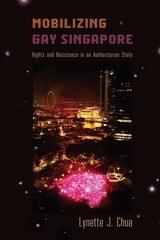
Mobilizing Gay Singapore
Rights and Resistance in an Authoritarian StateLynette J Chua
Temple University Press, 2015
For decades, Singapore's gay activists have sought equality and justice in a state where law is used to stifle basic civil and political liberties. In her groundbreaking book, Mobilizing Gay Singapore, Lynette Chua asks, what does a social movement look like in an authoritarian state? She takes an expansive view of the gay movement to examine its emergence, development, strategies, and tactics, as well as the roles of law and rights in social processes.
Chua tells this important story using in-depth interviews with gay activists, observations of the movement's activities-including "Pink Dot" events, where thousands of Singaporeans gather in annual celebrations of gay pride-movement documents, government statements, and media reports. She shows how activists deploy "pragmatic resistance" to gain visibility and support, tackle political norms that suppress dissent, and deal with police harassment, while avoiding direct confrontations with the law.
Mobilizing Gay Singapore also addresses how these brave, locally engaged citizens come out into the open as gay activists and expand and diversify their efforts in the global queer political movement.
Model Immigrants and Undesirable Aliens
The Cost of Immigration Reform in the 1990sChristina Gerken
University of Minnesota Press, 2013
During 1995 and 1996, President Bill Clinton signed into law three bills that altered the rights and responsibilities of immigrants: the Antiterrorism and Effective Death Penalty Act, the Personal Responsibility Act, and the Illegal Immigration Reform and Immigrant Responsibility Act. Model Immigrants and Undesirable Aliens examines the changing debates around immigration that preceded and followed the passage of landmark legislation by the U.S. Congress in the mid-1990s, arguing that it represented a new, neoliberal way of thinking and talking about immigration.
Christina Gerken explores the content and the social implications of the deliberations that surrounded the development and passage of immigration reform, analyzing a wide array of writings from congressional debates and committee reports to articles and human-interest stories in mainstream newspapers. The process, she shows, disguised its underlying racism by creating discursive strategies that shaped and upheld an image of “desirable” immigrants—those who could demonstrate “personal responsibility” and an ability to contribute to the U.S. economy. Gerken finds that politicians linked immigration to complex issues: poverty, welfare reform, so-called family values, measures designed to combat terrorism, and the spiraling costs of social welfare programs.
Although immigrants were often at the center of congressional debates, politicians constructed an elaborate, abstract terminology that appeared to be unrelated to race or gender. Instead, politicians promoted neoliberal policies as the avenue to a postracist, postsexist world of opportunity for every rational consumer with an entrepreneurial spirit. Still, Gerken concludes that the passage of pathbreaking legislation was characterized by a useful tension between neoliberal assumptions and hidden anxieties about race, class, gender, and sexuality.
Modern Isonomy
Democratic Participation and Human Rights Protection as a System of Equal RightsGerald Stourzh
University of Chicago Press, 2021
The ideal, Stourzh argues, is a state, and indeed a world, in which individual rights, including the right to participate in politics equally, are clearly defined and possessed by all. Stourzh begins with ancient Greek thought contrasting isonomy—which is associated with the rule of the many—with “gradated societies,” oligarchies, and monarchies. He then discusses the American experiment with the development of representative democracy as well as the French Revolution, which proclaimed that all people are born and remain free and with equal rights. But progress on the creation and protection of rights for all has been uneven. Stourzh discusses specifically the equalization of slaves, peasants, women, Jews, and indigenous people. He demonstrates how deeply intertwined the protection of equal rights is with the development of democracy and gives particular attention to the development of constitutional adjudication, notably the constitutional complaint of individuals. He also discusses the international protection human rights. Timely and thought-provoking, Modern Isonomy is an erudite exploration of political and human rights.
Modern Jewish Ethics since 1970
Writings on Methods, Sources, and IssuesEdited by Jonathan K. Crane, Emily A. Filler, and Mira Beth Wasserman
Brandeis University Press, 2025
These deliberate juxtapositions are to encourage scholars and students to develop similar meta-ethical analyses on Jewish ethics, broadly construed. Jewish ethics is not just a set of propositions or principles; nor can it be reduced to a single trajectory of thought or abstracted as an elaborate system of ideas. Jewish ethics is the field of study that engages Jewish texts, ideas, history, and experience in conversations about values and virtues, justice and good judgment, human relations and responsibilities. This volume presents some of those conversations to spark many more.
Molecular Politics
Developing American and British Regulatory Policy for Genetic Engineering, 1972-1982Susan Wright
University of Chicago Press, 1994
In this comparative study of the development of regulatory policy for genetic engineering in the United States and the United Kingdom, Susan Wright analyzes government responses to the struggles among corporations, scientists, universities, trade unions, and public interest groups over regulating this new field. Drawing on archival materials, government records, and interviews with industry executives, politicians, scientists, trade unionists, and others on both sides of the Atlantic, Molecular Politics provides a comprehensive account of a crucial set of policy decisions and explores their implications for the political economy of science.
By combining methods from political science and the history of science, Wright advances a provocative interpretation of the evolution of genetic engineering policy and makes a major contribution to science and public policy studies.

Morality & Imagination
Yi-Fu Tuan
University of Wisconsin Press, 1989
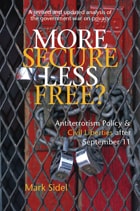
More Secure, Less Free?
Antiterrorism Policy & Civil Liberties after September 11Mark Sidel
University of Michigan Press, 2010
Unlike earlier books published shortly after the September 11 attacks that focus on the Patriot Act, More Secure, Less Free? covers the Patriot Act but goes well beyond, analyzing Total Information Awareness, Terrorist Information and Prevention System (TIPS), Computer Assisted Passenger Prescreening System II (CAPPS II), and a number of other "second wave" antiterror initiatives.
It's also the first book of its kind to go beyond federal measures to explain the devolution of antiterror policies to the states, and now to the military as well. Author Mark Sidel discusses the continuing debates on antiterror law at the state level, with a focus on the important states of New York, California, and Michigan, and explains how the military-through an informant program known as "Eagle Eyes"-is now taking a direct hand in domestic antiterror efforts.
The volume also discusses and analyzes crucially important aspects of American antiterror policy that have been largely ignored in other volumes and discusses the effects of antiterror policy on the American academic world and the American nonprofit sector, for example. And it provides the first comparative perspectives on U.S. antiterror policy yet published in an American volume, discussing antiterror initiatives in Great Britain, Australia, and India and contrasting those to the American experience.
More Secure, Less Free? is important and essential reading for anyone interested in an analytical perspective on American antiterror policy since September 11 that goes well beyond the Patriot Act.
Mark Sidel is Associate Professor of Law at the University of Iowa and a research scholar at the University's Obermann Center for Advanced Studies.
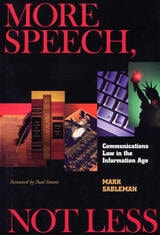
More Speech, Not Less
Communications Law in the Information AgeMark Sableman. Foreword by Paul Simon
Southern Illinois University Press, 1997
On a daily basis we are confronted with "more speech, not less"—more news reports, more television channels, more publications, more electronic communications. Communications laws have expanded in response to the proliferation of communications, and these laws affect everyone.
Communications lawyer Mark Sableman uses recent case studies, practical examples, and plain language to describe and analyze the broad spectrum of modern communications laws and policies. In these essays, Sableman helps communications professionals as well as informed citizens understand the law.
The constitutional foundation for the information age is settled: radical solutions on either side have been rejected. Neither First Amendment absolutism nor untrammeled content-based censorship will rule in America. But within the remaining middle area, many key policy choices are being made by courts and policy makers. Intricate webs of legal do’s and don’ts, practical pitfalls, and effective safe harbors are being developed across the broad spectrum of communications law.
In this guide to existing law, developing trends, and critical policy determinations, Sableman discusses privacy, Internet communications and policy, censorship, libel and slander, copyright and intellectual property, advertising, broadcasting, and journalistic confidentiality. Through actual cases and practical examples, he examines and explains both the existing rules for communications professionals and the developing policies that deserve the attention and scrutiny of informed citizens. Sableman approaches these subjects as a practicing lawyer experienced in both business and media communications.
The phrase "more speech, not less" describes not only the growing cacophony of the information age, but also one approach to legal policy—Justice Louis D. Brandeis’s preference for "more speech, not enforced silence" in all but the most extreme situations. Drawing from his strong advocacy of free speech, Sableman hopes to stimulate informed debate among all who are concerned about the power of information and the magic of words and images.
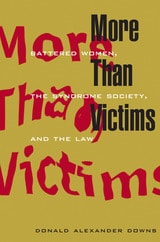
More Than Victims
Battered Women, the Syndrome Society, and the LawDonald Alexander Downs
University of Chicago Press, 1996
"More Than Victims is a powerful step in the right direction. Women as well as men need to be protected from violence, and women, in particular, require better understanding of their sometimes oppressive situations. But they also need to be able to participate fully in the discourse of politics and citizenship. Downs offers a solution that helps to make both possible."—Teresa Godwin Phelps, Review of Politics
"Downs has written an important book on a subject that deserves more of our attention."— Susan Mezey, Law and Politics Book Review
"Comprehensive and compelling. [Downs] demonstrates a masterful grasp of the complex legal and philosophical issues implicated in domestic violence cases."—Annette DeMichele, New York Law Journal